
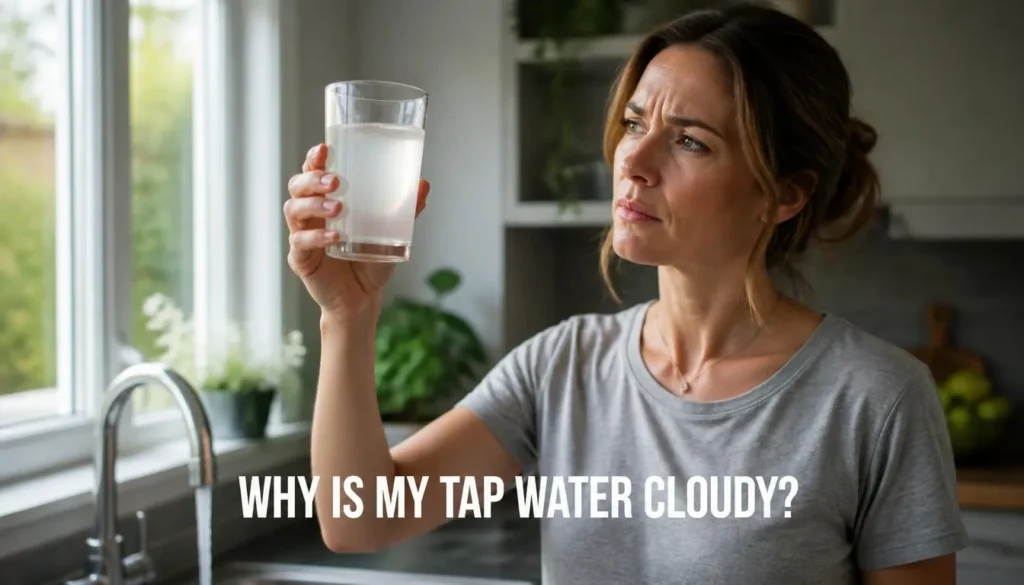
Cloudy tap water is usually caused by tiny air bubbles that clear on their own within a few minutes. Water in your pipes sits under pressure, and the air dissolved in it escapes once the water reaches an open glass. This is the most common reason why your tap water is cloudy, and it is harmless, but cloudiness that does not clear is a different story.
The sections below show you how to tell air from sediment, minerals, or a failing water heater part, so you can decide what to do next. You will learn when cloudy water is safe to drink, when to test it, and how to fix it.
Key Takeaways
- Air bubbles cause most cloudy tap water, and the water clears from the bottom up within minutes.
- Hot water turns cloudy because heating pushes dissolved air out of the water.
- Water that stays cloudy, smells odd, or makes anyone sick needs a utility call or a lab test.
- A sediment filter traps particles, but it cannot remove air bubbles or replace water testing.
Why Is My Tap Water Cloudy? The Short Answer

Tap water looks cloudy when millions of tiny air bubbles are suspended in it. Pressure in the pipes keeps air dissolved, and that air escapes as bubbles when the water reaches open air. The bubbles rise and pop, so the water clears from the bottom up.
According to the USGS, the cloudiness comes from tiny air bubbles that rise to the top of the glass and escape. Water in your supply pipes sits under a bit of pressure, which keeps gas dissolved in it. At the faucet the pressure drops, so the gas comes out of solution as bubbles. That is why cloudy tap water often clears in a minute or two.
Try a simple test by filling a clear glass and setting it on the counter. If the water clears from the bottom up in about three minutes, air is the cause. Cold weather makes this more common, because colder water holds more dissolved gas than warm water does and that extra gas escapes as the water warms up inside your pipes.
Air shows up most often after something changes in the plumbing system. A repair, a new faucet, or a shift in water pressure can all add extra air to the lines. The water may sputter and look milky for a short time. That is normal, and it should settle once the lines fill again, so patience is the only fix you need here.
The word to watch is clears, because water that turns cloudy and then clears within minutes is almost always air. Water that stays cloudy, or leaves a layer of grit at the bottom of the glass, has a different cause. The rest of this article covers each of those causes and what to do about them.
Color matters too. If the water runs brown or rusty instead of cloudy, the causes differ, as our guide on why water turns brown explains.
Why Hot Water Looks Cloudy When Cold Water Runs Clear

If only the hot tap runs cloudy, heat is usually the reason. Warm water holds less dissolved gas than cold water, so heating pushes the air out of solution in the form of tiny bubbles. Your water heater does this every time it warms a tank of water, which is why the hot tap shows the effect more often. Portland’s water bureau notes that bubbles form when water temperature changes or when the water carries extra air.
The same glass test works here. Let a glass of hot water sit for about three minutes. If it clears from the bottom up, you are seeing air. Fill a second glass from the cold tap for comparison, because clear cold water and clearing hot water both point to bubbles rather than a supply problem.
If only the hot water stays cloudy, check the water heater and the hot-water pipes. A failed plastic dip tube (the tube that carries cold water to the bottom of the tank) can shed white flecks. Mineral buildup inside the tank can do the same thing. Those flecks do not clear from the bottom up, and the next section shows how to tell them apart.
Hard water adds to the problem. Hard water carries dissolved calcium and magnesium, which come out of the water as chalky scale when it is heated. Over months, that scale collects at the bottom of the tank, and a sudden burst of hot water can break off white flecks and send them to your tap. Flushing the tank once a year slows the buildup. To see how softeners handle scale, read our guide on whether a water softener filters water.
Why Is My Tap Water Cloudy and White? Less Common Causes
White or milky water that does not clear has a physical cause. Hard white particles often come from the heater, either from a failed dip tube or from mineral buildup that has broken loose. Portland’s water bureau suggests a vinegar test: drop the particles in vinegar and wait a few hours. Mineral buildup dissolves in vinegar, and plastic does not.
Sediment and rust can also cloud water, mostly after a water main repair or a hydrant flush. Those events change the flow in the pipe, and the faster flow can stir up loose deposits that settle in quiet stretches. Discolored water of this kind should usually clear in a few hours or less once the flow settles.
Aerators can play a part too. The small screen at the tip of your faucet traps grit over time, and a clogged screen can break the water stream into a spray of fine bubbles. Unscrew the aerator and rinse it under running water, and if the cloudiness vanishes after that, the screen was the cause.
The table below compares the usual causes and a quick test for each:
| Cause | What you see | Quick test |
| Air bubbles | Milky water that clears from the bottom up | Let a glass sit for three minutes |
| Water heater dip tube or minerals | White flecks, hot tap only | Drop the flecks in vinegar |
| Sediment after pipe work | Tan or gray haze that settles slowly | Wait a few hours, then call the utility |
| Well or pump problem | Haze that keeps coming back | Send a sample to a lab |
Is Cloudy Tap Water Safe to Drink?
Cloudiness from air is safe to drink. Portland’s water bureau calls these harmless air bubbles, and they fade within minutes. Cloudiness that lingers deserves careful investigation, because microscopic particles in the water can sometimes carry harmful germs along with them.
Utilities measure cloudiness as turbidity (how much light fine particles scatter in water), and they report the result in nephelometric turbidity units, abbreviated as NTU. For systems that use conventional or direct filtration, the EPA requires at least 95 percent of monthly samples to read 0.3 NTU or lower. No single sample may ever exceed 1 NTU under that rule.
The EPA also states that higher turbidity is often associated with disease-causing microorganisms such as viruses, parasites, and some bacteria. Those organisms can cause nausea, cramps, and diarrhea. Water that clears from the bottom up is usually air. The test finds the likely cause of the haze, but it cannot prove the water is free of germs or chemicals.
Treat cloudy water as a problem if you notice any of these warning signs:
- Cloudiness that stays after three minutes.
- A new smell, taste, or color along with the haze.
- Nausea, cramps, or diarrhea in your household.
- A private well, because no utility tests it for you.
If you use a private well, the CDC says to test your water at least once a year and sooner after a change in color, taste, or smell. The basic test checks for total coliform bacteria (signs of contamination). It also checks nitrates (chemicals from fertilizer and waste), total dissolved solids (dissolved minerals and metals), and pH (acidity). Total coliforms alone do not prove sewage. If a test finds a problem, our roundup of the best well water filters is a place to start.
City water customers have a head start. Community water systems must send customers an annual water quality report, known as a Consumer Confidence Report, by July 1 each year. Read yours to see how your supplier performed on turbidity and other required measurements. A report cannot explain one cloudy glass, but it shows whether your supplier has a pattern of cloudiness problems.
How to Fix Cloudy Tap Water
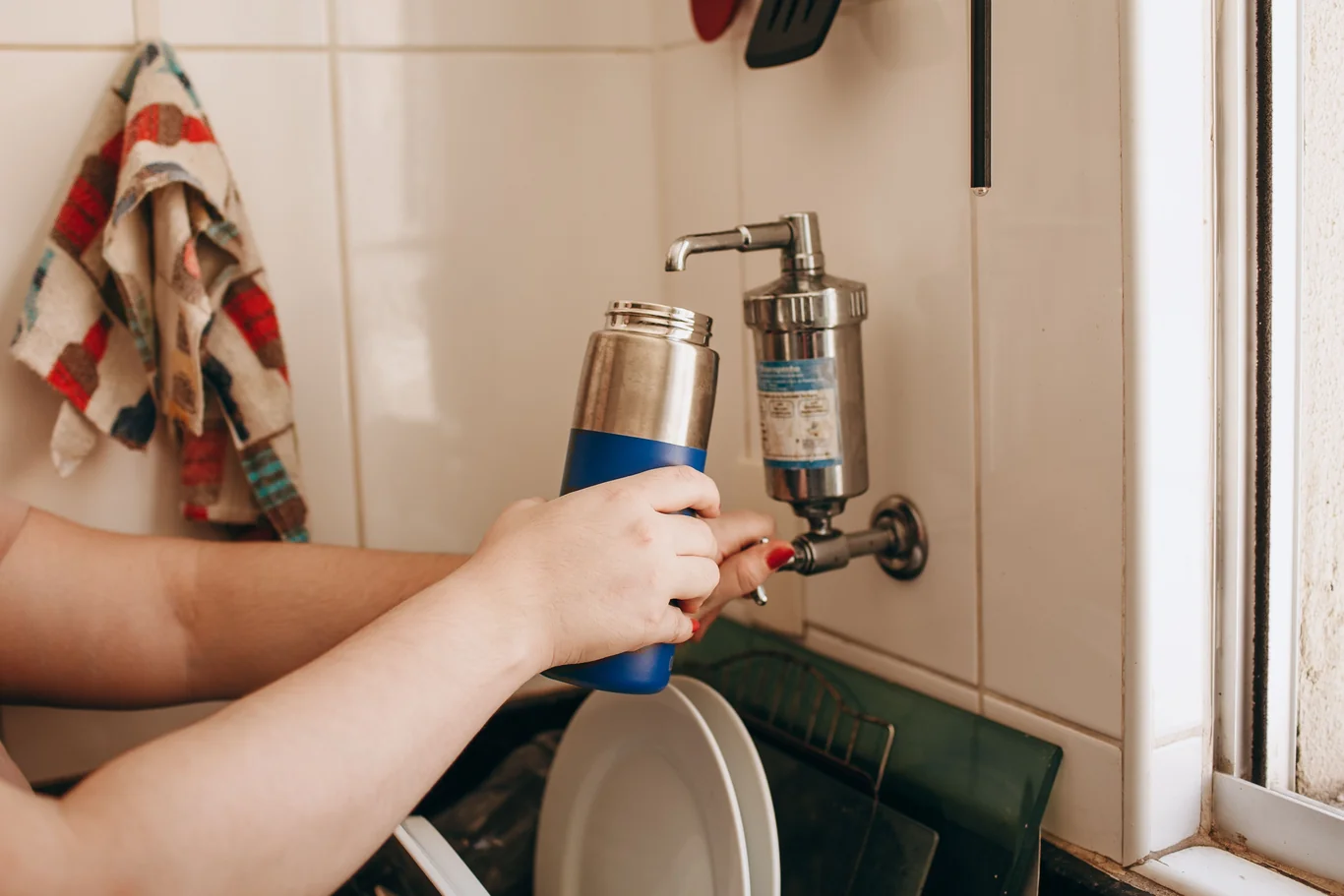
The right fix depends on the cause, so find the cause first. Work through these steps in order:
- Fill a clear glass and wait three minutes, and if the water clears from the bottom up, do nothing because it is only air.
- Compare hot and cold water, and if only the hot tap is cloudy, inspect the water heater.
- Drop any white flecks in vinegar. If they dissolve, ask a plumber to flush the tank. If they do not, the dip tube may need replacing.
- After nearby pipe work, run the cold tap for a few minutes. Sediment often flushes out.
- If the water still looks cloudy, call your water utility. On a private well, book a lab test.
Each step eliminates one possible cause before you spend money on the next, and most households never need to move past step one. Skipping ahead to a filter or a plumber often hides the real cause instead of fixing it.
A filter can help with particles, but only the right kind, and a sediment filter is a screen that catches grit, rust, and silt. Its rating in microns (a micron is one millionth of a meter) shows the particle size used to rate the filter. Check whether the rating is nominal (average) or absolute (strict).
A sediment filter will not remove air bubbles, and it does not make unsafe water safe to drink. The CDC notes that no single treatment type protects against all problems, so check that a system removes the specific germ or chemical you worry about.
A whole-house sediment filter protects every tap and the water heater from incoming sediment, while a filter at a single tap protects only the water you drink and cook with. Choose the option based on where the particles cause trouble in your household. If lab results show a chemical or germ problem, ask a water professional about a treatment built for that exact contaminant. Our guide on how to choose the right water filter compares the main types.
How We Research
We check every claim against primary sources. Federal agencies like the EPA and CDC come first. Certification bodies like NSF and AHAM come next. We verify each standard number against the issuing body. We review this guide on a set schedule.
Why Trust This Guide
Puritisimo covers only water and air quality. Our guidance is editorial and independent. We cite every health figure so you can check it. We never present a promotional claim as fact.
Know When Cloudy Water Needs Action
Most cloudy tap water is harmless air that clears in three minutes. Heat frees air from hot water too. White flecks, tan haze, or cloudiness that never clears point to the water heater, the pipes, or a private well. Those cases call for a vinegar test, a call to your utility, or a lab test. Clearing from the bottom up suggests air bubbles. A change in smell, taste, or health deserves a closer look, but harmful contamination can also show no warning. Start with the glass test to learn why your tap water is cloudy.
Frequently Asked Questions
Why is my tap water cloudy all of a sudden?
Why your tap water is cloudy all of a sudden usually comes down to air, pipe work, or the water heater. Air bubbles clear within minutes and are harmless, but cloudiness that stays after the glass test may mean sediment from a repair or mineral buildup. Check hot and cold water separately, and call your utility if the problem persists.
Why is my well water cloudy then clears up?
Well water that clears after a few minutes usually carries trapped air, often from the pump or low pressure in the system. Use the three-minute glass test to confirm it, and if the haze keeps returning, test the well for bacteria and nitrates, since no utility monitors a private well for you.
What causes hot water to look milky?
Heating releases dissolved air, which makes hot water look milky until the bubbles rise and pop. If white flecks remain, the cause is probably mineral buildup or a failed dip tube in the water heater. A plumber can flush the tank or replace the part.
How to tell if your tap water is making you ill?
Water that makes you ill usually brings nausea, cramps, or diarrhea, often in more than one person in the home. Cloudiness alone does not prove contamination, but you should see a doctor about symptoms and ask your utility or a laboratory about testing your water.
Can tap water cause stomach pain?
Contaminated tap water can cause stomach cramps, but harmless air bubbles do not. Stomach pain along with cloudy water that does not clear, or with a new smell or taste, is a reason to stop drinking it and call your utility. Persistent pain needs a doctor.
References
- EPA. National Primary Drinking Water Regulations. Accessed November 4, 2026.
- USGS. Why does my drinking water look cloudy sometimes? Accessed November 4, 2026.
- Portland Water Bureau. White cloudy water. City of Portland. Accessed November 4, 2026.
- CDC. Guidelines for testing well water. Accessed November 4, 2026.
- CDC. Guidelines for treating well water. Accessed November 4, 2026.
- EPA. Consumer Confidence Report information for consumers. Accessed November 4, 2026.
Medical Disclaimer: This content is for informational purposes only. It is not a substitute for professional medical advice, diagnosis, or treatment. If you have concerns about your water quality or air quality and their effects on your health, consult a qualified healthcare professional.

