


This Big Berkey review comes down to one trade-off: you get a no-power gravity filter with a long element life, but the Black Berkey elements it ships with have no NSF/ANSI certification, only testing that the maker cites. I would buy it for taste and as a backup supply, and I would not buy it if I needed a certified health claim.

I wrote this page for the buyer who is weighing the Big Berkey Gravity Water Filter System against a certified alternative. I cover what the certification record really covers, what the system asks of you day to day, who I would send elsewhere, and where the common problems sit. I mark which statements come from Berkey and which come from the EPA record, so you can weigh each one.
Quick Verdict
Berkey recommends replacing Black Berkey elements every 3,000 gallons per element, and it describes their testing as meeting ANSI/NSF Std. 53 protocol. That is testing, not an NSF certification.
- You get filtered water on the counter with no electricity, no plumbing and no tools.
- You can serve a small household, since Berkey designs it for approximately 1 to 4 people.
- You should not count on it for a certified lead or cyst claim, because the elements it ships with have no NSF listing.
SHOP ON AMAZONAvailability and current price shown on Amazon
Big Berkey Review: What This Gravity System Is
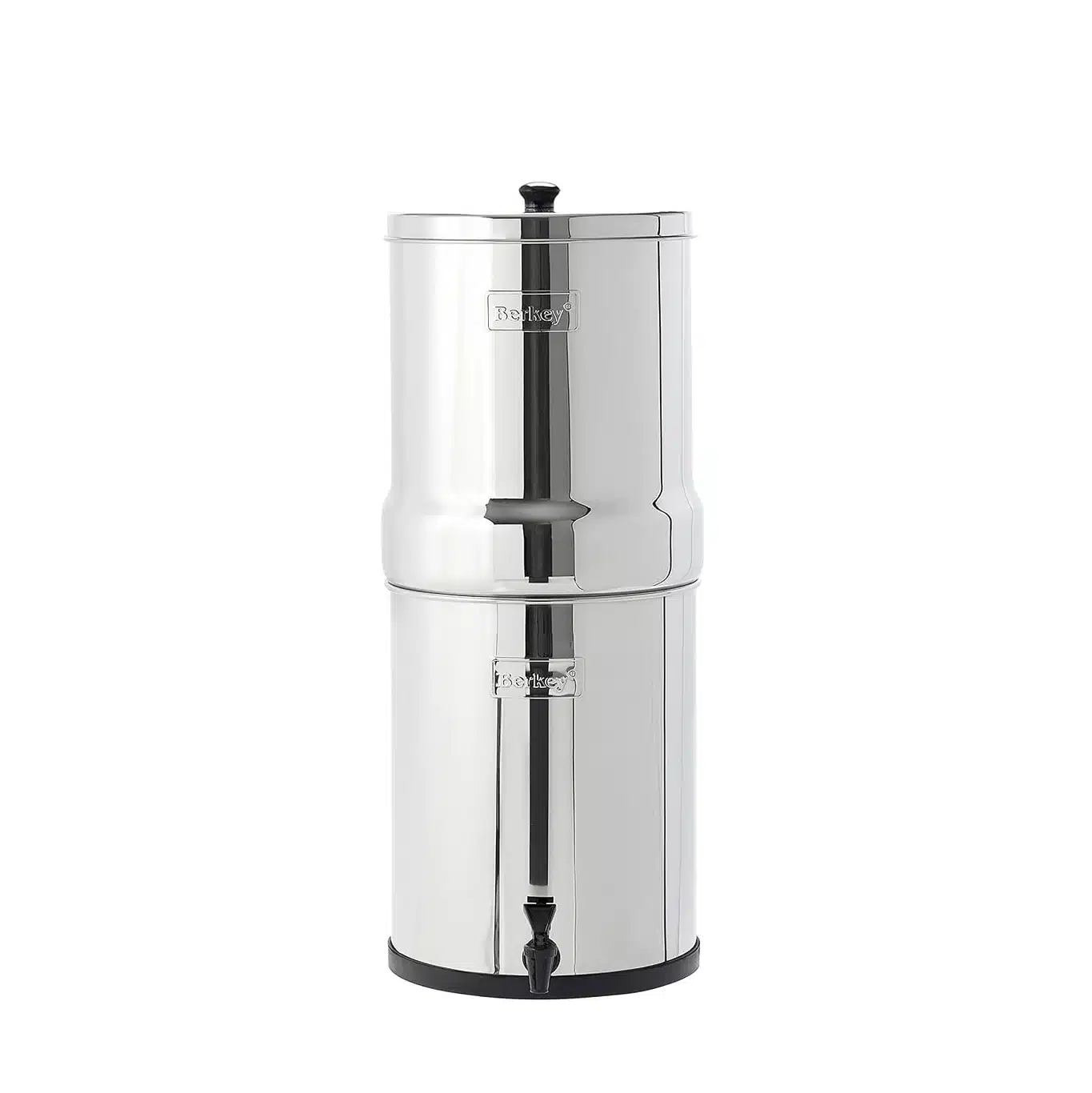
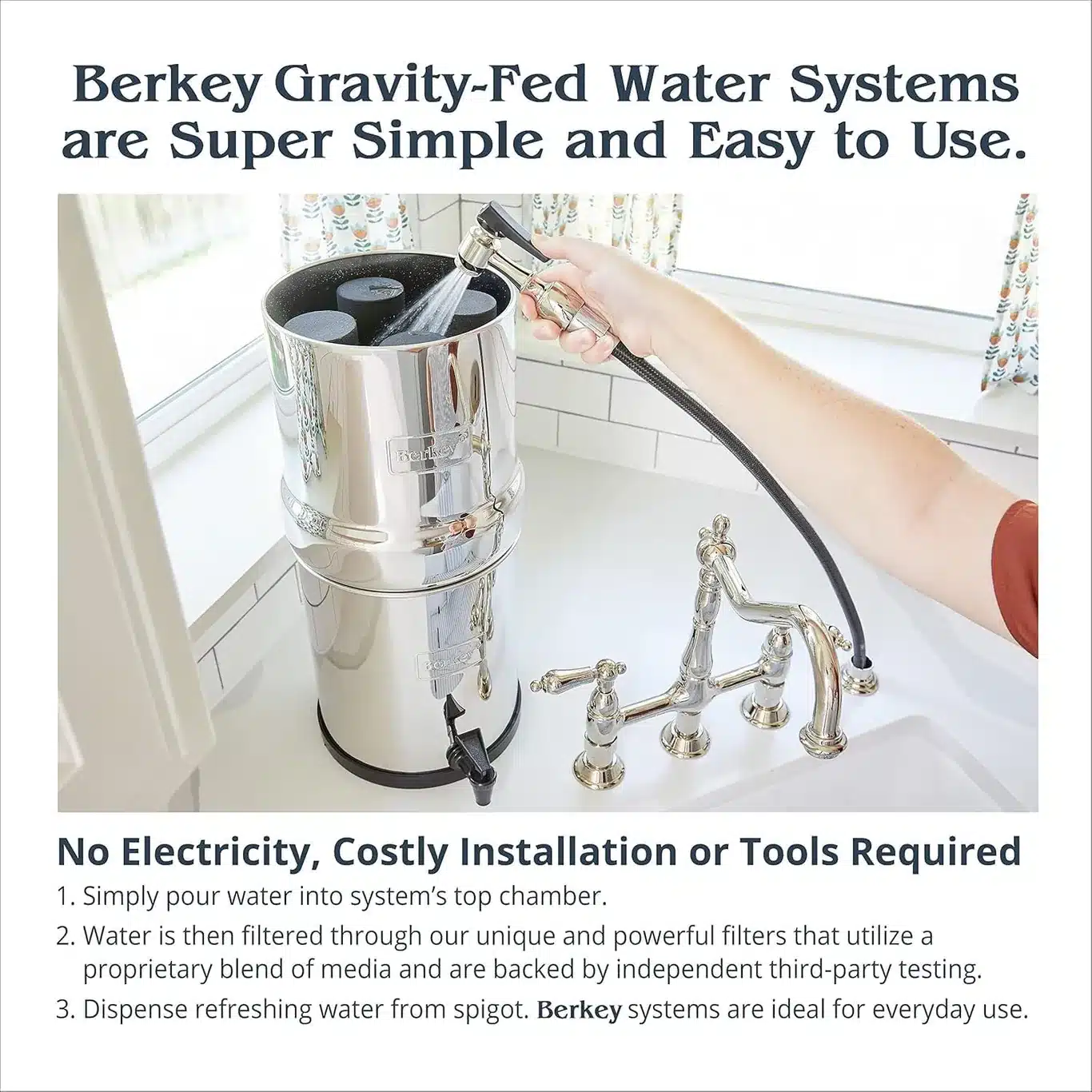
The Big Berkey Gravity Water Filter System is a stainless steel countertop unit with two chambers. You pour tap water into the upper chamber, gravity pulls it through the filter elements into the lower chamber, and a spigot dispenses it. Berkey lists the capacity as 2.25 gallons, and the listing says it needs no electricity or plumbing.
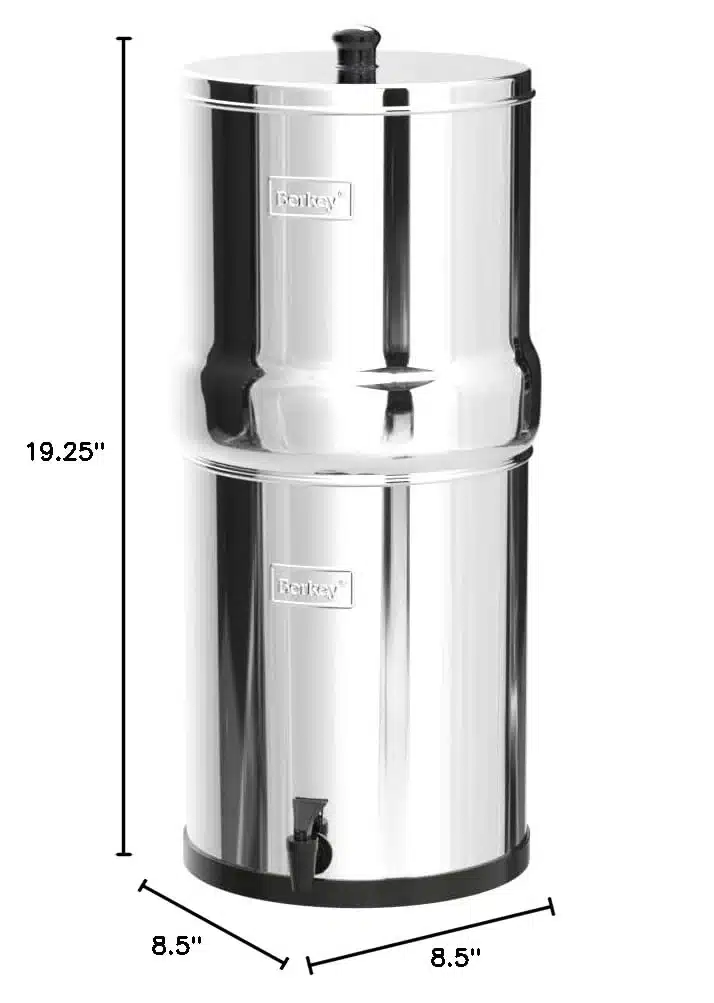
The listing says it includes 2 Black Berkey elements (BB9-2), and the listing gives the diameter as 8.5 inches and the assembled height as 19.25 inches. I would measure the gap under a wall cabinet before ordering, because the height is what catches people out.
If you are still choosing between gravity systems, the gravity water filter roundup covers the alternatives. I keep this page to one question, which is whether the Big Berkey earns its place on your counter, and the answer depends on what you need it to remove.
Specifications
| Specification | Detail |
| Capacity | 2.25 gallons |
| Household size | 1 to 4 people |
| Diameter | 8.5 inches |
| Height | 19.25 inches |
| Material | polished AISI 304 stainless steel |
| Power source | gravity, no electricity or plumbing |
| Elements included | 2 Black Berkey elements (BB9-2) |
| Black Berkey element life | 3,000 gallons per element, 6,000 gallons per pair |
| System warranty | 6 months |
Key Features
- Gravity filtration: the listing says it needs no electricity or plumbing, so it works on a counter and keeps working when the power is out.
- Two Black Berkey elements included: the listing says it includes 2 Black Berkey elements (BB9-2), and Berkey says the system can be expanded to 4 Black Berkey elements.
- Long element life: Berkey recommends replacing Black Berkey elements every 3,000 gallons per element, which is the figure I weigh most.
- Stainless steel build: the listing states polished AISI 304 stainless steel, a material that I find easier to trust than plastic on a kitchen counter.
- Cleanable elements: Berkey says each element can be cleaned up to 100 times with a Scotch-Brite pad, so upkeep is a scrub, not a purchase.
What the Big Berkey Removes and What Its Certification Covers
Start with what the maker says. Berkey says its testing covers over 200 typical contaminants, and says the elements were tested by accredited third-party labs that report they meet ANSI/NSF Std. 53 protocol. I read that as a claim about lab work the maker points to, which is a different thing from a certification you can look up.
The distinction matters. Berkey describes NSF certification as optional, and an authorized Berkey dealer’s own guide says Black Berkey has a history of independent testing, not a comparable current NSF product certification. I would not write that Black Berkey is NSF certified, and I would not buy it believing so.
Berkey does hold an NSF listing, but it is for a different element. Berkey’s site says Phoenix elements are listed under NSF/ANSI 42 for chlorine reduction and taste and odor only, with a service cycle of 1,050 gallons for the Big Berkey configuration. This listing ships with Black Berkey elements, so I do not apply that Phoenix listing to it.
Berkey’s site also lists NSF/ANSI/CAN 372 for those Phoenix configurations, and I would not read it as a lead-reduction claim. That standard covers the lead content of materials that touch water, not lead in your tap water.
Fluoride is the clearest gap. Berkey says the elements will initially address fluoride up to 99.9%, but says that fades early, which is why it sells separate PF-2 elements. I read that as a reason not to buy this system for fluoride.
If your source is a private well, I would test the water first, because the EPA says private well owners are responsible for delivering safe drinking water to their households. Filters better suited to well water are a better starting point than a gravity unit.
Living With the Big Berkey: Filters, Cleaning and Upkeep
Day to day, you refill the upper chamber and draw water from the spigot. Berkey says it filters fastest when the upper chamber is full, but I would check how much room the lower chamber has before I refill, so the water I add cannot overflow it. There is no motor, so there is no noise to report, and I like that in a house with three children asleep upstairs.
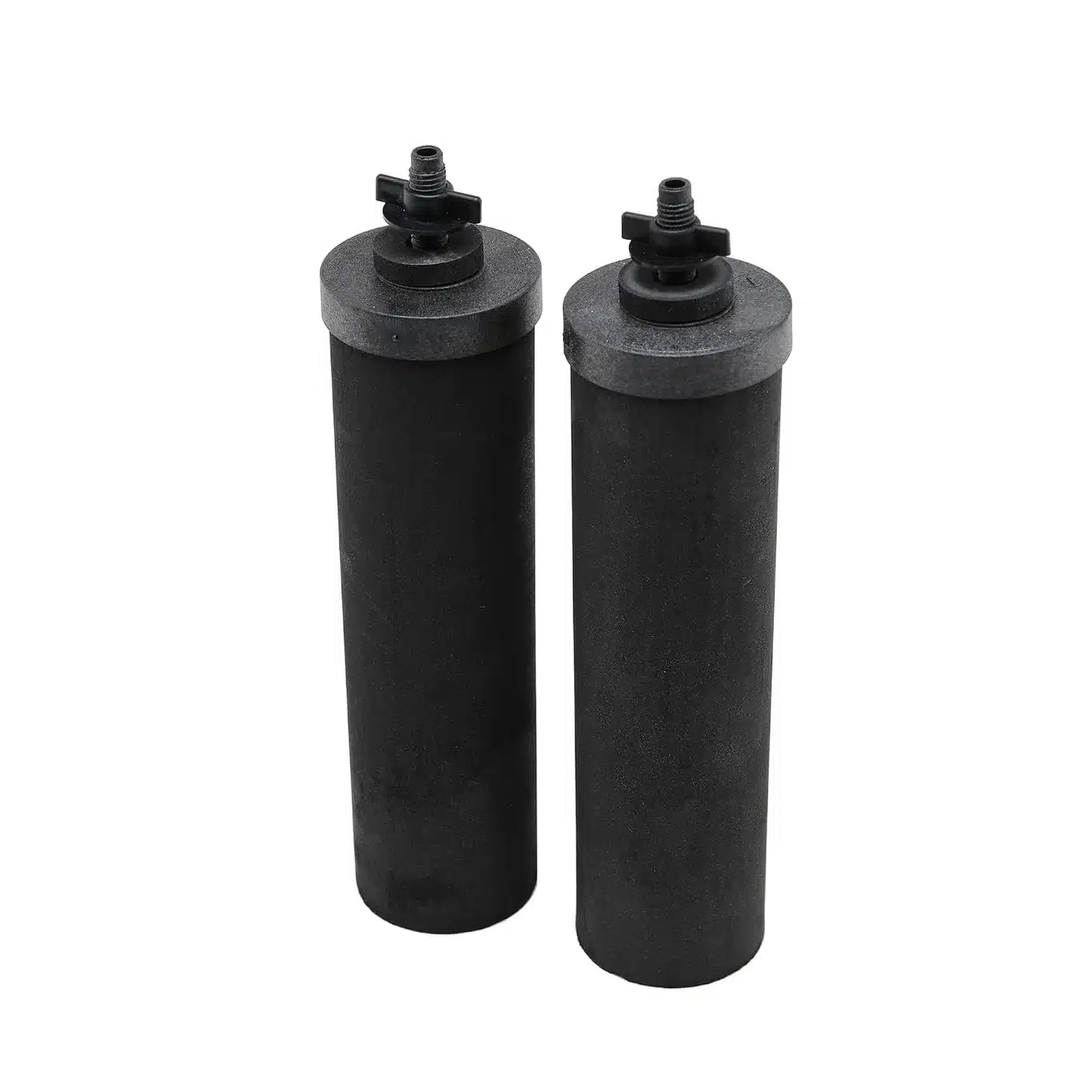
Element life is the number I weigh most. Berkey recommends replacing Black Berkey elements every 3,000 gallons per element, or 6,000 gallons per pair, and says sooner depending on your source water. For a household that drinks and cooks with a few gallons a day, that is years between replacements, so the running cost is modest per gallon on paper.
The catch is supply. Berkey’s site says standalone Black Berkey replacement elements are currently unavailable through normal authorized U.S. distribution, with no confirmed restock date, and it names Phoenix as the current primary replacement. Phoenix is a different element, which Berkey lists at 2,750 gallons per element and 5,500 gallons per pair, so I treat the long-run cost as uncertain.
Cleaning is simple. Berkey says each element can be cleaned up to 100 times with a Scotch-Brite pad, and says not to use soap or detergent on Black Berkey elements. Berkey also says to rotate the water regularly, not let it sit unused for long periods, and I would follow that.
New elements need priming to purge air from the micropores, and the kit includes a priming button. For fluoride, Berkey says PF-2 elements last 1,000 gallons per pair or one year, whichever comes first, and that they attach beneath compatible primary elements. PF-2 elements are an add-on, not a replacement.
The warranty is short on the system itself. The listing’s warranty text gives the system 6 months and gives the elements a 2-year prorated warranty, so I would keep the receipt and the purchase date where I could find them.
Pros
- The listing says it needs no electricity or plumbing
- The listing states polished AISI 304 stainless steel
- Berkey recommends replacing Black Berkey elements only every 3,000 gallons per element
- Berkey says each element can be cleaned up to 100 times with a Scotch-Brite pad
- Berkey says the system can be expanded to 4 Black Berkey elements
- The listing gives the diameter as 8.5 inches, a compact footprint for a countertop
Cons
- The Black Berkey elements have no NSF/ANSI certification, so its contaminant claims rest on testing that Berkey cites, not on a listing you can look up.
Who Should Skip the Big Berkey, and Who It Suits
I would buy this for a household that wants better-tasting water with no power, no plumbing and no installation, or for a backup supply when the grid fails. With three children, I like that there are no under-sink connections to leak. Berkey designs it for approximately 1 to 4 people, and I would use it for drinking and cooking only.
I would skip it if you need a certified reduction claim you can look up. For lead, cysts or other health contaminants, I would point you to a system with an NSF/ANSI 53 listing that names the contaminant, such as a reverse osmosis system. I run an under-sink reverse osmosis system at home for that reason.
I would also skip it if you live in California or Iowa, because the listing says it is not available to ship to either state. The listing gives no reason for the restriction, and I will not guess one. If you only want better taste and less chlorine, a certified pitcher does that job in less space.
One more point matters before you order. EPA Region 8 issued a stop sale order on December 27, 2022, to a Berkey seller, James Enterprise, Inc., naming Black Berkey filters and the Big Berkey systems sold with them as unregistered and misbranded pesticides under FIFRA.
The order concerns pesticide registration and labelling claims about viruses and bacteria, not a finding that the water is unsafe. Berkey-related parties have challenged EPA in federal court, and I could not confirm how that ended, so I would check the current status before you buy.
| Model | How it differs | Pick it instead if |
| Big Berkey Gravity Water Filter System | Berkey lists it at 2.25 gallons and designs it for approximately 1 to 4 people, and the Black Berkey elements it ships with carry no NSF listing. | Pick this one if you want a no-power countertop gravity filter and can accept testing that the maker cites in place of a certification. |
| Royal Berkey | The larger sibling in the same family, which holds more water, and Berkey’s site lists the Royal with Phoenix elements under NSF/ANSI 42 for chlorine and taste and odor. | Your household is larger than Berkey’s guidance of approximately 1 to 4 people for the Big Berkey. |
| Travel Berkey | The smaller sibling, which Berkey’s site also lists with Phoenix elements under NSF/ANSI 42 for chlorine and taste and odor. | You want a compact unit for one person or for travel. |
| A certified filter pitcher | Smaller and kept in the refrigerator, and a pitcher with an NSF listing lets you look up exactly what it is certified to reduce. | You want better taste and less chlorine with a certification you can verify. |
Common Big Berkey Problems and How to Avoid Them
Most problems I would expect trace back to setup, and Berkey’s own guidance points the same way. Slow flow on new or stored elements usually means air is trapped in the micropores. Berkey says to prime new elements to purge it, and to re-prime stored elements until the exterior wall sweats beads of water.
Spigot leaks are the next thing to watch. Berkey says not to overtighten components, and says to replace the affected part if the spigot keeps leaking after correct assembly. I would assemble it slowly with the instructions open, not by feel.
Fluoride fading early is a problem only if you bought it for fluoride, and Berkey says as much by selling separate PF-2 elements. I read that as an honest limit, and I would plan around it.
Lookalike elements are a real risk, because Berkey’s product description warns against compatible and replacement elements that are not its own. With Black Berkey unavailable through normal channels, I would buy only from a seller Berkey names, and I would be wary of an unusually available one.
Standing water is the last one. Berkey says to rotate the water regularly, so I would empty and refill the lower chamber if the unit sits unused. I cannot tell you how often any of these problems occur, because I have no figure for it.
My Overall Verdict
I like the idea and I distrust the paperwork around it. The Big Berkey is a no-power stainless steel gravity filter that I would happily put on a counter for taste and as a backup supply, and Berkey recommends replacing the elements only every 3,000 gallons per element.
The cost of admission is plain. The Black Berkey elements carry no NSF/ANSI certification, replacement elements are hard to find through normal channels, and the EPA order of December 27, 2022 is a reason to check the current status before you buy. I would not buy this for a certified lead, cyst or fluoride claim.
Final Verdict
buy it if you want a no-power countertop filter for taste and a backup supply and you accept maker-cited testing, and skip it if you need a certification you can look up. That is the honest conclusion of this Big Berkey review.
SHOP ON AMAZONAvailability and current price shown on Amazon
Frequently Asked Questions
Are Berkey filters safe?
You can use a Berkey as a countertop filter if you maintain it, but the Black Berkey elements carry no NSF certification, and the EPA issued a stop sale order to a Berkey seller in December 2022 over pesticide labelling claims. You should check that order’s current status, and rely on a certified system for a health claim.
Is Berkey better than Brita?
Neither is better in every case, because a Berkey suits a household that wants a no-power countertop unit and a Brita pitcher suits someone who wants a small refrigerator filter. You should compare what each model is certified to reduce on its own listing, since the Black Berkey elements have no NSF certification to compare.
Will a Berkey filter well water?
Berkey says its testing covers over 200 typical contaminants, but a private well can carry contaminants nobody has checked for. You should test your well water first, because the EPA says private well owners are responsible for delivering safe drinking water to their households, and then choose a treatment certified for what the test finds.
Where can I find the official website for Berkey water filters?
Berkey sells through its own official websites and through authorized dealers, and its product pages warn against lookalike elements. You should buy only from a seller that Berkey names as authorized, and you should be wary of any listing that offers replacement elements without stating clearly that they come from Berkey.
Which is the best water filter for home use?
The best filter for your home is the one certified for the contaminants in your own water report, because no single filter covers every contaminant. You should check the NSF database for the exact model, as the CDC advises, and match the certified claims to your water test before you buy.
References
- U.S. EPA. Stop Sale, Use, or Removal Order, Docket FIFRA-08-2023-0011, Berkey Filters. yosemite.epa.gov/oa/rhc/epaadmin.nsf/Filings/A56B5681D18012EF85258925007F0A58
- U.S. CDC. About Choosing Home Water Filters. cdc.gov/drinking-water/prevention/about-choosing-home-water-filters.html
- Water Quality Association. Learn About Water. wqa.org/learn-about-water
- U.S. EPA. Private Drinking Water Wells. epa.gov/privatewells
Medical Disclaimer: This content is for informational purposes only. It is not a substitute for professional medical advice, diagnosis, or treatment. If you have concerns about your water quality or air quality and their effects on your health, consult a qualified healthcare professional.

