
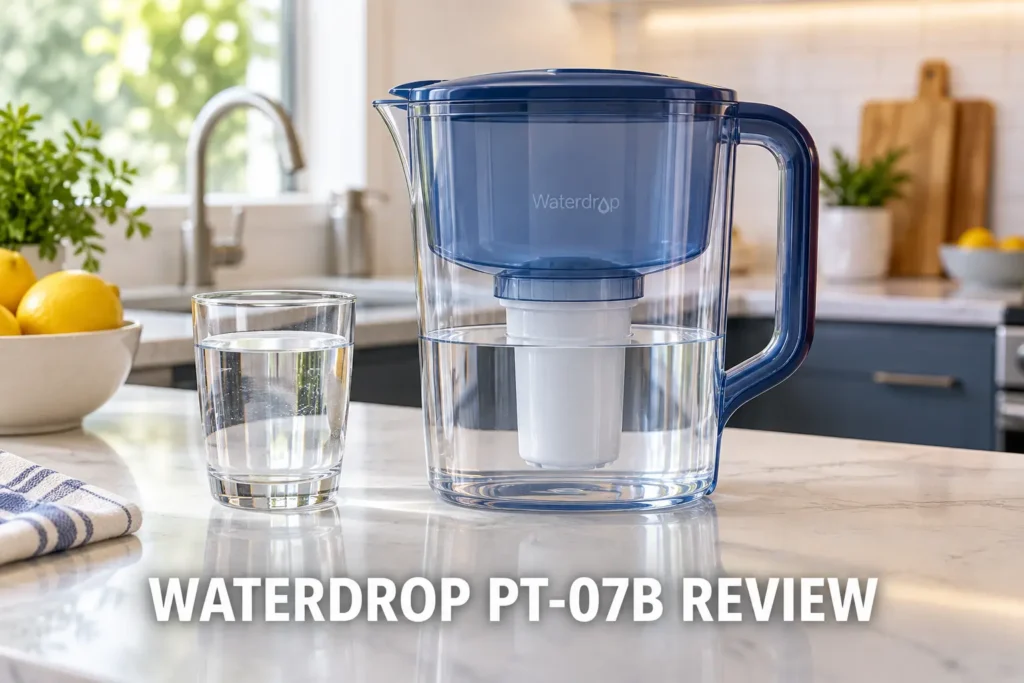
My verdict on this Waterdrop PT-07B review is straightforward: it backs up its taste-and-safety claims with an NSF/ANSI 42 and 372 certification, but it will not touch your TDS reading no matter how long you run it. I would buy it for a small household that wants cleaner-tasting water and clear paperwork behind the claim, and skip it entirely if a lower TDS number is the actual goal.

The rest of this piece breaks down what the Waterdrop PT-07B actually does inside the pitcher, including the 200 gallons or about 3 months filter life that decides your real replacement schedule, the setup steps that determine whether you get clean-tasting water on day one, and which households I think should buy a different Waterdrop pitcher instead.
Quick Verdict
Waterdrop states the PT-07B has passed NSF/ANSI 42 and 372 certification testing, rates the filter at 200 gallons or about 3 months, and caps supported source water at 1,000 ppm TDS, though it will not lower whatever TDS number you start with.
- You get water Waterdrop says has been tested against taste, odor, and metal-ion claims, with no plumbing work required.
- You get a predictable filter swap roughly every 3 months instead of guessing when performance drops off.
- You do not get any change to your TDS reading, so this will not help if a water report or meter reading is what you are trying to fix.
Waterdrop PT-07B Review: What This Pitcher Is and Who Makes It
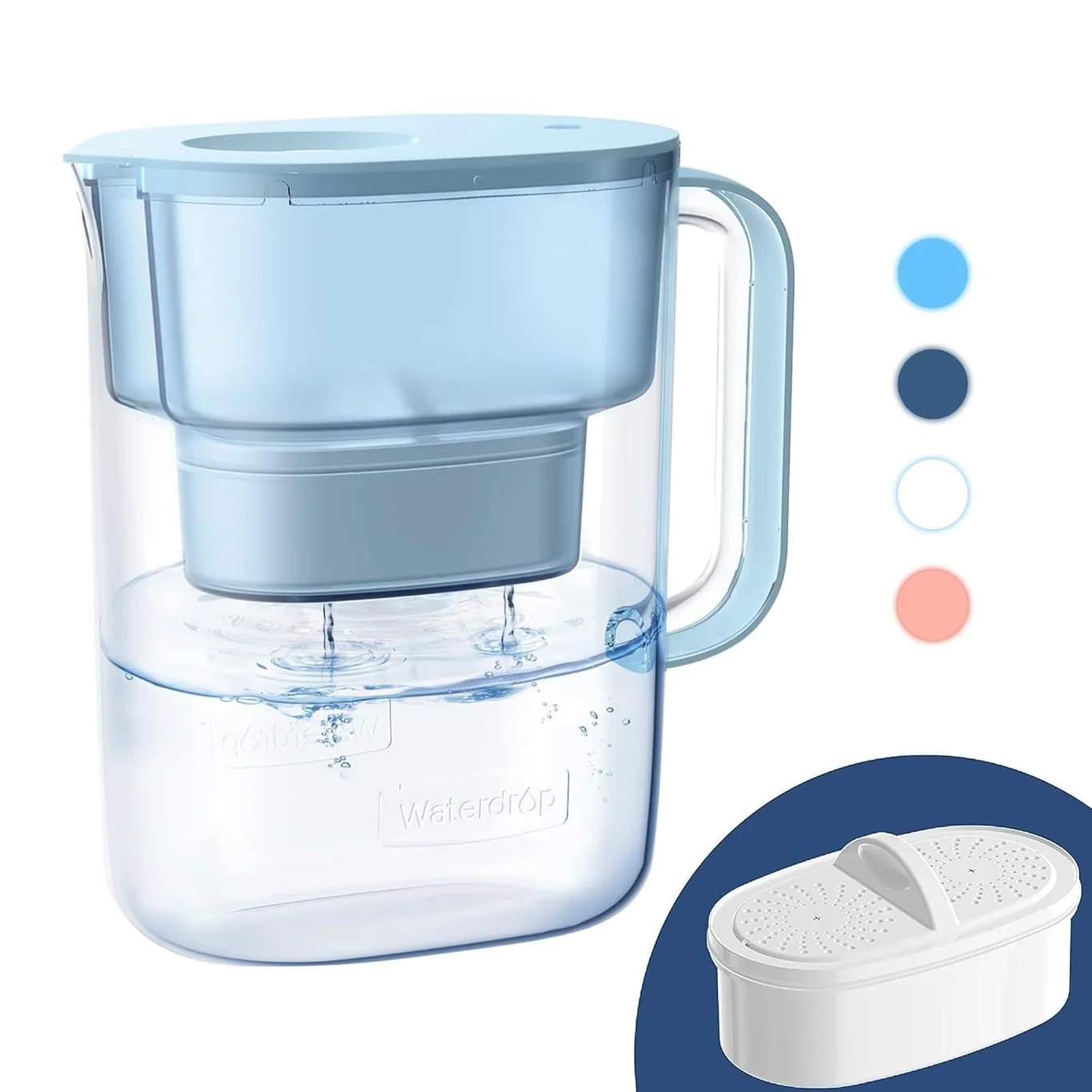
Waterdrop is a water-filtration brand that sells across pitchers, under-sink reverse osmosis systems, and countertop units, and the PT-07B is its straightforward carbon pitcher line, weighing 1.2 kg empty, rather than one of its RO systems. I run an under-sink RO system in my own kitchen, so I come at a pitcher like this looking for what it is honest about, not what it pretends to be.
The PT-07B holds a 2.4-liter, 10-cup capacity and ships in a 10″L x 5″W x 10.1″H footprint, and Waterdrop tells buyers outright to check that footprint against their own fridge door before ordering, which is the kind of detail I would rather see upfront than discover after a return.
Specifications
| Specification | Detail |
| Filter lifespan | 200 gallons or 3 months |
| Filter replacements per year | about 4 filters a year |
| Maximum flow rate | 0.5 gpm |
| Operating water temperature range | 41F to 100F |
| Maximum supported source-water TDS | 1000 ppm |
| Pitcher capacity | 2.4 liters, 10-cup |
| Item weight | 1.2 kg |
| Item dimensions | 10″L x 5″W x 10.1″H |
| Warranty | 30-day return, 90-day replacement at no charge |
Key Features
- NSF/ANSI 42 and 372 certification claims, covering aesthetic (taste, odor) reduction plus lead-free component compliance.
- A 2.4-liter, 10-cup capacity, enough to keep a household in filtered water between refills.
- A 41F to 100F operating range, so it handles cold fridge water and warmer tap water without a manufacturer warning.
- An LED filter-change indicator activated by holding the button for 3 seconds, so you are not guessing at the replacement date.
- A 0.5 gpm maximum flow rate, which sets realistic expectations for how fast a full pitcher actually filters.
What the Waterdrop PT-07B Actually Removes
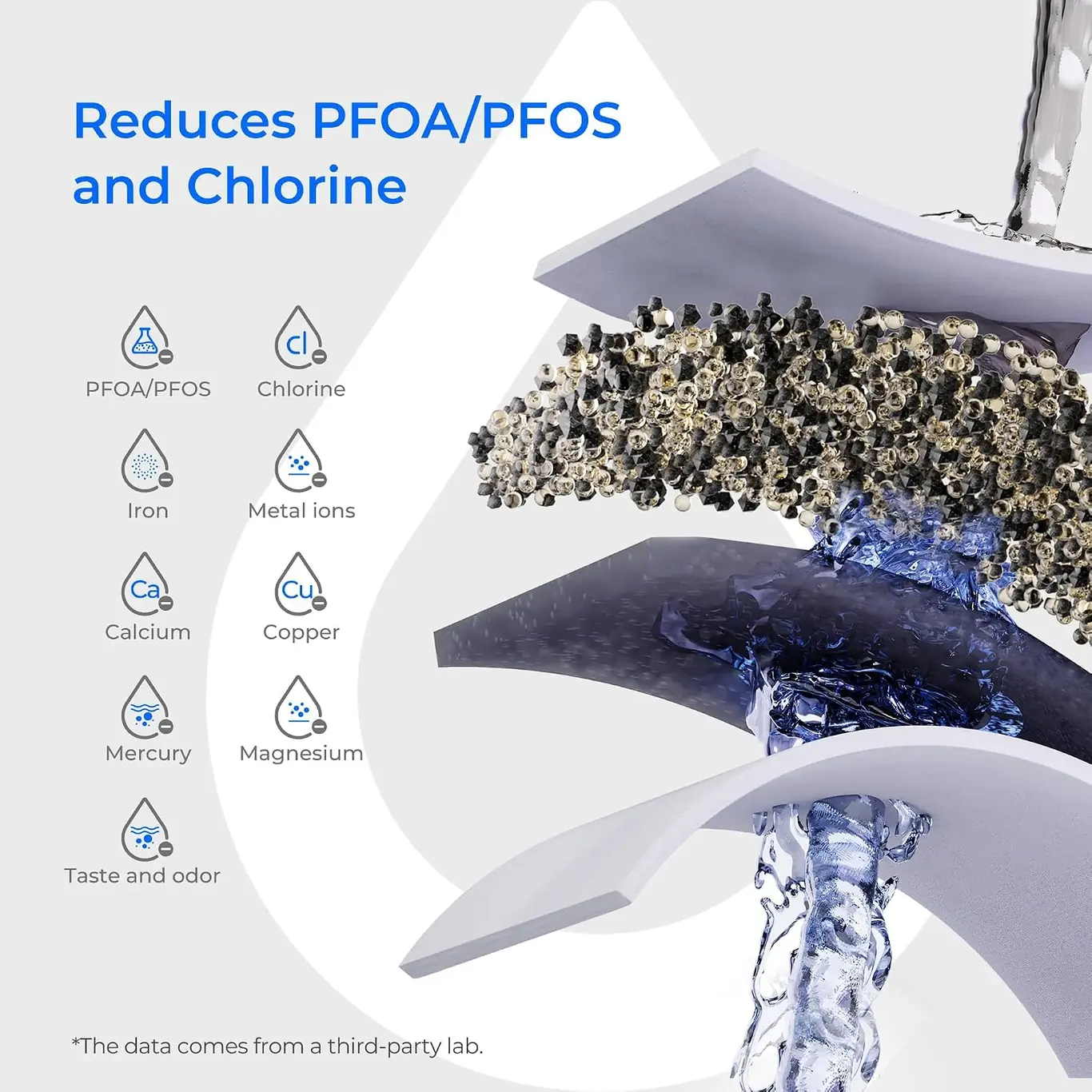
Waterdrop states that the PT-07B has passed NSF/ANSI 42 and 372 certification, tested by a third-party lab for PFOA/PFOS, odor, iron, mercury, copper, and other metal ions. I’d call that a real and specific claim rather than a vague marketing line, but it’s still Waterdrop’s own claim on its own listing, not an independently verified NSF database record I pulled myself. For context on how NSF 42 applies across different filter formats, my PUREPLUS filter review covers another NSF 42-certified option and the trade-offs that come with it.
What I don’t see anywhere in the product data is a claim of NSF/ANSI 53, the standard that covers health-effects contaminant reduction including lead, or NSF/ANSI 58, the reverse-osmosis standard. If lead reduction specifically is the reason you’re shopping, this pitcher’s certification claim doesn’t reach that far.
Waterdrop is also explicit that the system does not lower TDS, and I’d treat that as a plainly stated limit rather than a hidden one. Anyone reading a TDS meter before and after filtering this water should expect the same number both times.
Living With the Waterdrop PT-07B Day to Day
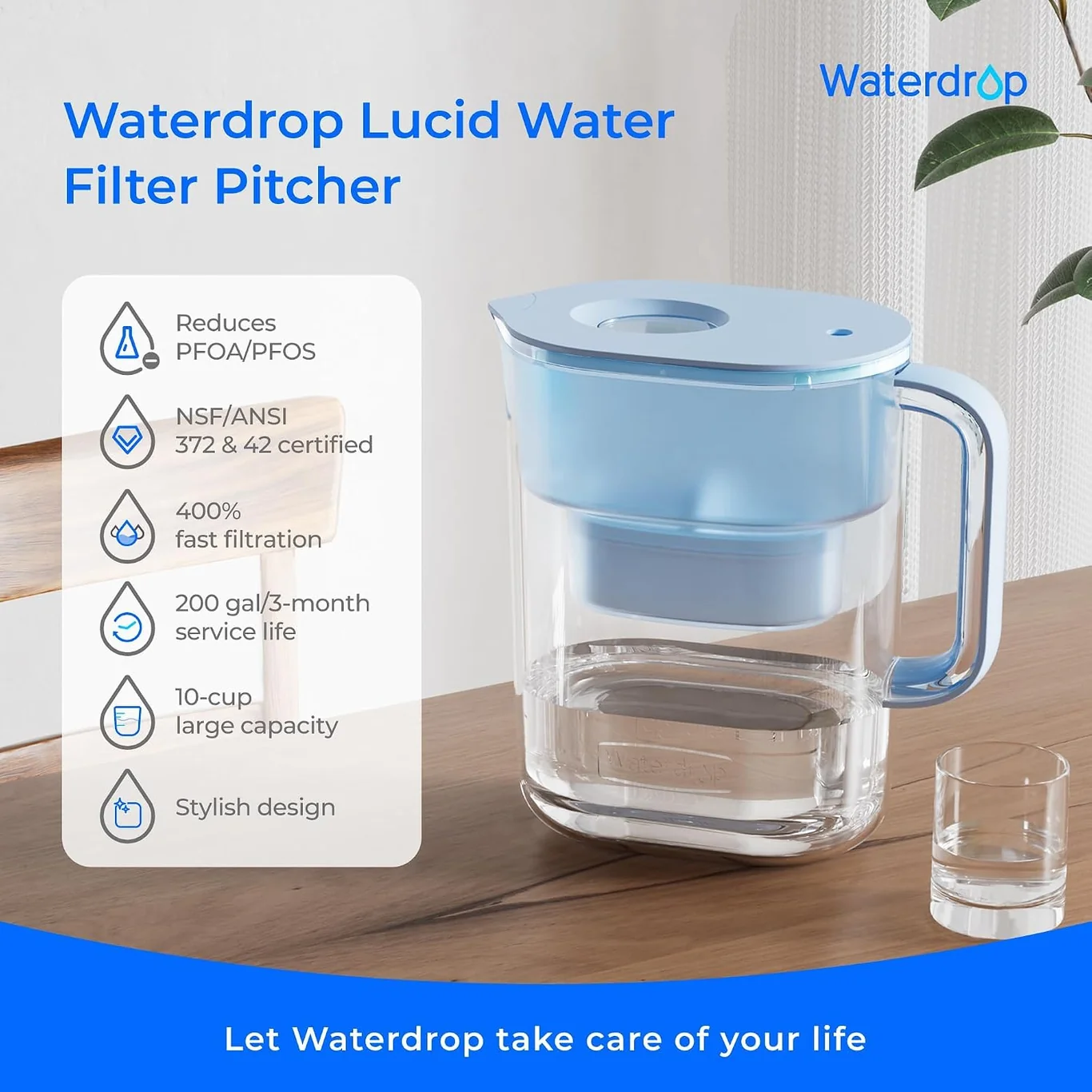
Waterdrop rates the filter at 200 gallons or three months, whichever comes first, and in my experience with pitcher filters generally, the three-month calendar limit is the one that actually decides the replacement schedule for a typical household’s pace of use.
Run the arithmetic on a three-month cadence and you land at roughly four filter changes a year, since 365 days divided by 90 is a little over four. I’d file the running cost of that into a modest, in-line-with-category tier rather than call it cheap or expensive outright. My water filter cartridge guide runs through how replacement costs compare across similar pitchers.
Waterdrop’s own listing tells buyers to search for part WD-PF-01A or ASIN B086ZPR3WM and to confirm your model before ordering, and I read that instruction as an admission that the brand’s overlapping pitcher lines create real room to buy the wrong filter.
The setup routine is manufacturer-specified rather than optional: soak the new filter in cold tap water for 10 minutes, hand-wash the pitcher, lid and reservoir with a mild detergent instead of a dishwasher, seat the filter firmly, and discard the first two pitchers of filtered water before I’d trust what comes out of the third. I hold the indicator button for three seconds to start the LED tracker, which is the one step in the routine I’d actually expect people to forget.
Waterdrop lists the footprint at 10 inches long by 5 inches wide by 10.1 inches tall and tells buyers to check that against their own fridge door before ordering, and I’d take that warning seriously given how often fridge-door pitchers turn out to be a half-inch too tall for the shelf someone had in mind. Buyers who need higher capacity without a fridge-clearance concern might find a gravity counter filter a better fit; my Royal Berkey review covers the 3.25-gallon gravity system that sits on the counter with no fridge required.
Pros
- NSF/ANSI 42 and 372 certification claim covers a wider list, including PFOA/PFOS and select metal ions, than most bargain pitchers file for
- 2.4-liter, 10-cup capacity keeps up with a busy household without constant refilling
- LED filter-change indicator removes the guesswork of tracking replacement dates by memory
- 0.5 gpm flow rate keeps pours reasonably quick for a gravity pitcher
- 30-day return plus a 90-day no-charge replacement warranty runs longer than many pitchers in this price range
- Rated to handle source water up to 1000 ppm TDS coming in, even though it will not lower that number going out
- Wide 41F to 100F operating temperature range means it is not fussy about tap water temperature
Cons
- Does not lower TDS, so anyone judging results by a TDS meter reading will see no change at all
Who Should Skip the Waterdrop PT-07B
I’d put this pitcher in front of a renter or a small household that wants chlorine taste, odor and a manufacturer-claimed PFOA/PFOS reduction handled without installing anything, and that’s genuinely most of the market for a fridge-door pitcher. Renters who prefer a tap attachment over keeping a pitcher in the fridge have a no-install alternative; my faucet water filter guide runs through the attachments that carry an NSF certification.
I would skip it if the goal is a lower TDS reading. Waterdrop is explicit that this model does not reduce TDS and points buyers who care about that number toward the Waterdrop PT-13W instead. If a lower TDS number is the actual goal, a full 5-stage RO setup handles it completely; my iSpring RCC7 review covers what that step up looks like.
I’d also send anyone chasing alkaline or mineral-boosted water somewhere else entirely; that’s the Waterdrop PT-07B-A, and I wouldn’t expect this plain-carbon model to deliver a mineral profile it was never built to produce. An RO system with a built-in re-mineralization stage delivers both TDS removal and a mineral boost at once; my iSpring RCC7AK review covers exactly that setup.
And I would skip it if you specifically need NSF/ANSI 53-certified lead reduction. The certification claim here stops at NSF/ANSI 42 and 372, and there’s no NSF 53 or NSF 58 claim on this listing to fall back on. Buyers who specifically need NSF 53 lead coverage have better-targeted options; my PUR Plus review covers a faucet filter that carries it.
| Model | How it differs | Pick it instead if |
| Waterdrop PT-07B (this review) | Waterdrop rates it for taste, odor, chlorine and PFOA/PFOS reduction, and Waterdrop states it does not lower TDS. | You want a straightforward carbon filter without touching TDS. |
| Waterdrop PT-13W (TDS Reduction Pitcher) | Waterdrop built this line specifically to lower a TDS reading, which Waterdrop’s own PT-07B listing says the PT-07B does not do. | Your tap or well water has high TDS and the reading itself needs to drop. |
| Waterdrop PT-07B-A (Alkaline Water Filter Pitcher) | Target’s listing describes the PT-07B-A as using 6-stage filter technology aimed at alkaline, mineral-boosted output rather than plain carbon filtration. | Alkaline-leaning water matters more to you than a simple taste-and-odor filter. |
| Waterdrop Chubby | Waterdrop positions the Chubby as its budget pitcher line, reviewed mainly on chlorine taste and odor rather than the PFOA/PFOS and metal-ion claims the PT-07B carries. | Budget is the main driver and the wider contaminant list isn’t a priority. |
Common Problems With the Waterdrop PT-07B
The problem I’d expect most often is a buyer checking their water with a TDS meter and seeing no change, since Waterdrop is upfront that this pitcher does not touch TDS at all. My home water filtration system guide covers which system types actually move a TDS reading and which ones do not.
The second is a part-number mix-up: Waterdrop sells several similarly named pitcher and filter lines, and the listing’s own instruction to confirm your model before ordering signals how easy it is to order a filter that doesn’t actually fit. If a like-for-like comparison would help, my best water filter pitcher guide lines up several NSF-certified options side by side.
Third is fridge-door or shelf clearance, which the manufacturer flags directly by telling buyers to check the 10 by 5 by 10.1 inch footprint against their own fridge before buying, a first-week issue across this whole category of pitcher and not something unique to Waterdrop. Buyers who decide a pitcher is not the right format at all have the under-sink route as a step up; my under-sink water filter guide covers what filtration looks like when the unit moves out of the fridge entirely.
The fourth is skipping the priming step. The required 10-minute soak and the two-pitcher discard before first use are easy to shortcut, and skipping them is the standard cause of an off taste or a slow pour in the first days with any carbon pitcher filter, this one included.
My Overall Verdict
I’d describe the Waterdrop PT-07B as a pitcher that does one job cleanly and says so plainly: taste, odor, chlorine and a manufacturer-claimed PFOA/PFOS and metal-ion reduction, with no attempt to touch TDS. That kind of honesty on a spec sheet is rarer than it should be in this category. Buyers who need more filtration coverage without under-sink plumbing have the countertop route as a middle step; my countertop water filter roundup covers what that step up gets you.
I run an under-sink reverse osmosis system at home, so I have a real basis for weighing a countertop pitcher against something bigger, and my take is that this pitcher earns its place for a renter or a small household without the room or budget for RO, not as a replacement for one. The 200 gallons or three months limit is a real maintenance commitment, not a one-time purchase.
Final Verdict
if you want a straightforward carbon pitcher that Waterdrop backs with an NSF/ANSI 42 and 372 certification claim while being upfront about the TDS number it will not move, the PT-07B earns a place on the counter, and that’s the honest conclusion of this Waterdrop PT-07B review.
Frequently Asked Questions
Does Waterdrop actually work?
You’re getting a manufacturer-claimed NSF/ANSI 42 and 372 reduction for taste, odor, chlorine, PFOA/PFOS and select metal ions, which is a real and specific set of aesthetic and lead-free compliance claims rather than a vague ‘it works’ promise. You won’t see any change on a TDS meter, since Waterdrop states plainly that this pitcher does not lower TDS.
Is Waterdrop as good as Brita?
You should judge it spec against spec rather than by brand name, since ‘good’ depends on which contaminants a given model actually targets. This pitcher’s NSF/ANSI 42 and 372 claim covers PFOA/PFOS and select metal ions, a wider list than a typical entry-level filter, though it stops short of the NSF 53 lead-reduction claim some buyers assume any pitcher carries.
How long does a Waterdrop pitcher filter typically last?
Waterdrop rates this filter at 200 gallons or three months, whichever limit you hit first, and for most households the three-month calendar mark arrives before the gallon count does. You can expect roughly four filter changes a year if you replace on that calendar interval instead of waiting for the gallon limit to catch up.
Is Waterdrop a Chinese company?
You won’t find that detail in this pitcher’s spec sheet or certification claims, and honestly it doesn’t change what the PT-07B does or doesn’t filter. What matters for your buying decision is the NSF/ANSI 42 and 372 claim and the plain statement that this model does not lower TDS, not where the company is based.
Which is better, Culligan or Waterdrop?
Neither name tells you which pitcher is actually right for your water, since ‘better’ depends on which contaminants a specific model claims to handle. For this PT-07B, that means weighing its NSF/ANSI 42 and 372 claim and its explicit no-TDS-reduction limit against whatever certification a comparable Culligan model states for itself.
References
- NSF. NSF/ANSI 42: Aesthetic Effects Certification. nsf.org/consumer-resources/water
- NSF. NSF/ANSI 372: Lead-Free Compliance Standard. nsf.org/consumer-resources/lead-free
- U.S. EPA. Drinking Water Contaminants and Consumer Guidance. epa.gov/ground-water-and-drinking-water
- WQA. Point-of-Use Water Treatment Basics. wqa.org/learn-about-water
Medical Disclaimer: This content is for informational purposes only. It is not a substitute for professional medical advice, diagnosis, or treatment. If you have concerns about your water quality or air quality and their effects on your health, consult a qualified healthcare professional.