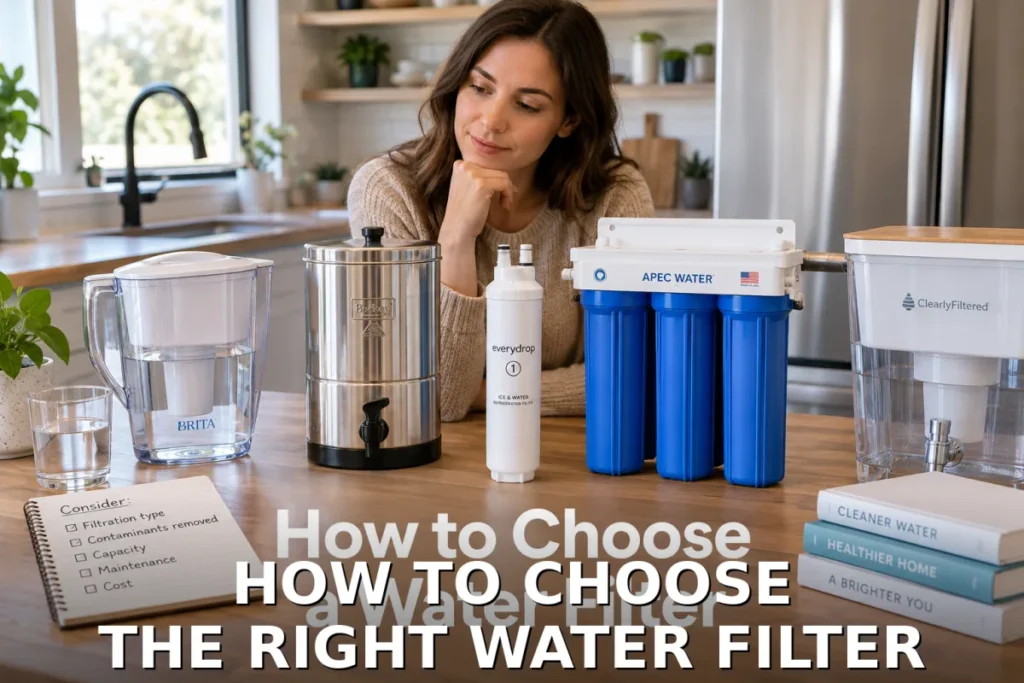
There is no single water filter that is best for everyone. The best water filter is the one certified to remove the exact pollutants in your water. It is also sized for how you’ll use it, one tap or the whole home. City tap water and private well water carry different risks. That means the right filter for one is not always right for the other.

By the end of this guide, you’ll know the main filter technologies and whether your home needs whole-house or point-of-use coverage. You’ll also know which certification language proves a claim. That last part matters most: a ‘NSF certified’ sticker with no named pollutant tells you nothing about what the filter does.
Key Takeaways
- Best depends on your water’s actual pollutants and how you use the filter, not one universal winner.
- Reverse osmosis is the only common technology that removes dissolved solids, heavy metals, and PFAS (persistent man-made chemicals) together.
- Whole-house systems treat every tap; under-sink, countertop, and pitcher filters treat drinking water only.
- Look for the specific standard and pollutant named, like NSF/ANSI 53; a bare ‘NSF certified’ claim proves nothing.
What Is the Best Water Filter?
The best water filter is not one specific product. It is whichever filter is certified to remove the exact pollutants in your water. It must also fit your setup, whether that means a single tap or every faucet in your home. That certification has to name a specific standard and pollutant, such as NSF/ANSI 53. It cannot just claim to be certified in general terms. Water purifier means the same thing as water filter here. What matters is certification to NSF/ANSI 53 or 58.
That specificity matters: the EPA maintains enforceable standards for more than 90 separate pollutants. No single filter is built to capture all of them at once. A filter tuned for chlorine and taste will not touch dissolved lead or nitrates.
Reverse osmosis filtration addresses both dissolved metals and taste simultaneously; my iSpring RCC7 under-sink filter review covers how that process is independently certified on a 5-stage unit.
Buying a filter gets confusing fast. It happens once you start comparing systems with different filter media, install types, and certification badges. The fastest way through that confusion is to work backward. Test what’s in your water first. Then decide whether you need whole-home or single-tap coverage, and match a certified filter to that exact list. The sections below walk through each of those pieces in order.
Faucet-mount filters are one of the most accessible certified options for renters and apartment dwellers; my PUR Plus faucet mount review shows how to read the certification record on a clip-on unit before buying.
Types of Water Filtration Technology
Every water filter relies on one of a handful of core technologies. Each is built to catch a different set of pollutants. Activated carbon (a porous material that adsorbs, or traps, particles on its surface) is the most common type. It removes chlorine and volatile organic compounds (VOCs, chemicals that evaporate easily and affect taste or odor). But it leaves other pollutants untouched. No single filter type is healthiest for every risk. Reverse osmosis removes the widest range of pollutants. That includes PFAS and heavy metals other filters miss.
The main technologies break down like this:
- Activated carbon: Adsorbs chlorine, VOCs, and bad taste or odor. Does not remove dissolved solids, most heavy metals, or bacteria.
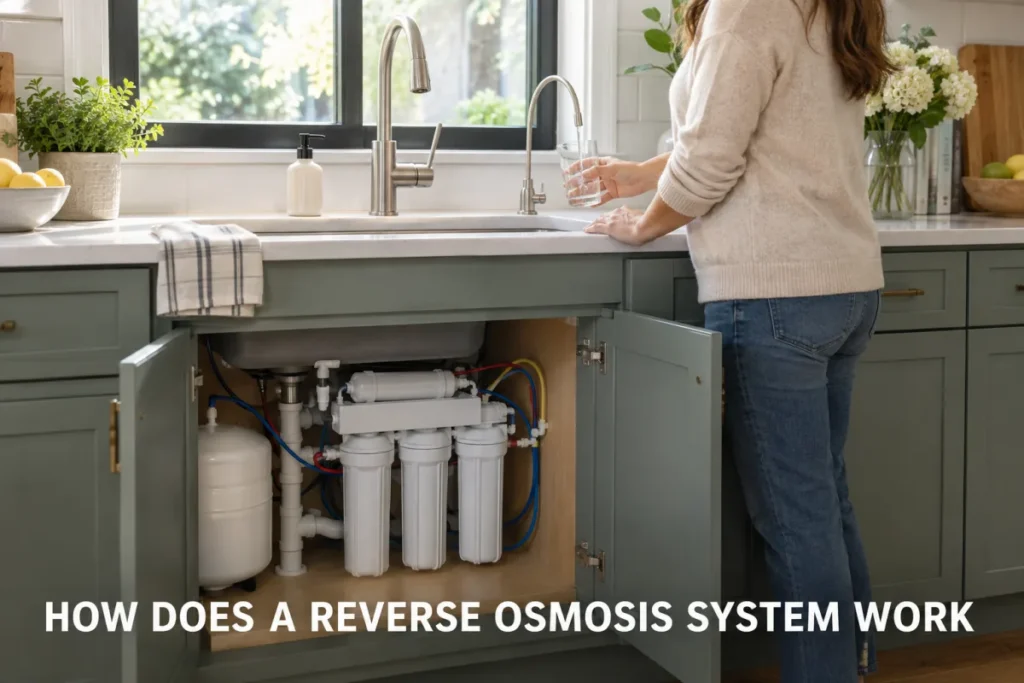
- Reverse osmosis (RO): Forces water through a membrane. It’s fine enough to reject 90 to 99% of total dissolved solids (TDS, the minerals and salts dissolved in water). Also removes heavy metals and PFAS (per- and polyfluoroalkyl substances, a class of persistent chemicals).
- Ultraviolet (UV) light: Kills bacteria and viruses by damaging their DNA. Removes nothing else and does not affect taste, chemicals, or dissolved solids.
- Ceramic filtration: Physically blocks bacteria and cysts through tiny pores. Does not stop viruses, which are smaller than the pore size.
- Ion exchange (water softeners): Swaps hardness minerals like calcium and magnesium for sodium. Treats hardness only, not health pollutants.
- KDF (kinetic degradation fluxion): A copper-zinc media that reduces chlorine and some heavy metals. Keeps working in hot water, unlike most carbon.
One distinction matters more than the micron (a unit of length equal to about 1/25,000 of an inch) number printed on the box. An absolute micron rating means the filter removes at least 99.9% of particles at that size. A nominal rating is closer to 85%, a gap that can decide whether a filter blocks cysts or bacteria.
Under-sink RO membrane systems certified to NSF/ANSI 58 operate far below the 1-micron floor that this gap describes, closing it on dissolved lead, PFAS, and arsenic where micron rating alone cannot; my iSpring RCC7AK breakdown covers a 6-stage system that meets that standard at the whole-system level.
Third-party certification closes that gap. NSF/ANSI 53, the standard NSF International uses for health-effect claims, is awarded pollutant by pollutant. It is not given as a blanket label. It covers more than 50 specific substances, including lead, VOCs, cysts, and, since 2022, PFAS.
For the full pollutant-by-pollutant breakdown of carbon media, see what an activated carbon filter removes. For pitcher filters, see how to choose the right water filter pitcher.
Whole-House vs. Point-of-Use: What Is the Best Water Filter for Your Home?
A point-of-entry system (also called whole-house filtration) installs where the main line enters the home. It treats every tap, shower, and appliance at once. It is the right call for systemic issues: chlorine taste across the whole house, high sediment, or hardness. It often needs a flow rate of 10 to 15 gallons per minute (GPM) or more. That keeps water pressure normal throughout the house.
For a sediment-and-carbon cartridge designed for Big Blue point-of-entry housings, my PUREPLUS filter write-up covers the NSF 42 certification scope and typical running cost on a 5-micron dual-media design.
Point-of-use (POU) filters treat water at a single tap instead of the whole house. Under-sink reverse osmosis, countertop units, pitcher filters, and faucet-mount filters all fall into this category. So do refrigerator filters (the built-in cartridge that also feeds an ice maker). They cost far less to install. They are the practical choice for renters, apartments, or anyone who only needs treated water for drinking and cooking. Brita pitcher filters use activated carbon only. That media leaves lead and PFAS untouched. Switching to an NSF/ANSI 53-certified system closes that gap.
For a specific pollutant like lead, the choice narrows further. The CDC recommends filters certified to NSF/ANSI Standard 53 for lead removal. It notes that no safe blood lead level has been found in young children. The EPA’s action level for lead in drinking water is 10 parts per billion, or ppb. That level was set under the 2024 Lead and Copper Rule Improvements. Under-sink RO and NSF 53-certified carbon block filters are both tested against that benchmark.
The setup most water-treatment experts recommend is not whole-house or under-sink alone, but both together. A whole-house sediment-and-carbon system protects pipes, appliances, and every tap from chlorine and grit. A dedicated under-sink RO unit then handles the tighter drinking-water standard at the kitchen faucet. For a full ranked breakdown of certified options across both formats, see our guide to the best home water filtration system.
Here is how the three most common options compare on cost and use case:
| Feature | Whole-House | Under-Sink RO | Pitcher |
| Install complexity | Professional plumbing install | Some DIY, basic plumbing knowledge helps | None, fill and go |
| Relative cost | Highest, largest upfront investment | Moderate, mid-range investment | Lowest, smallest investment |
| Best for | Whole-home issues such as chlorine, sediment, or hardness | Drinking and cooking water, targeted pollutants | Budget-limited renters, basic taste and chlorine |
Shower Filters: What They Remove and What They Do Not
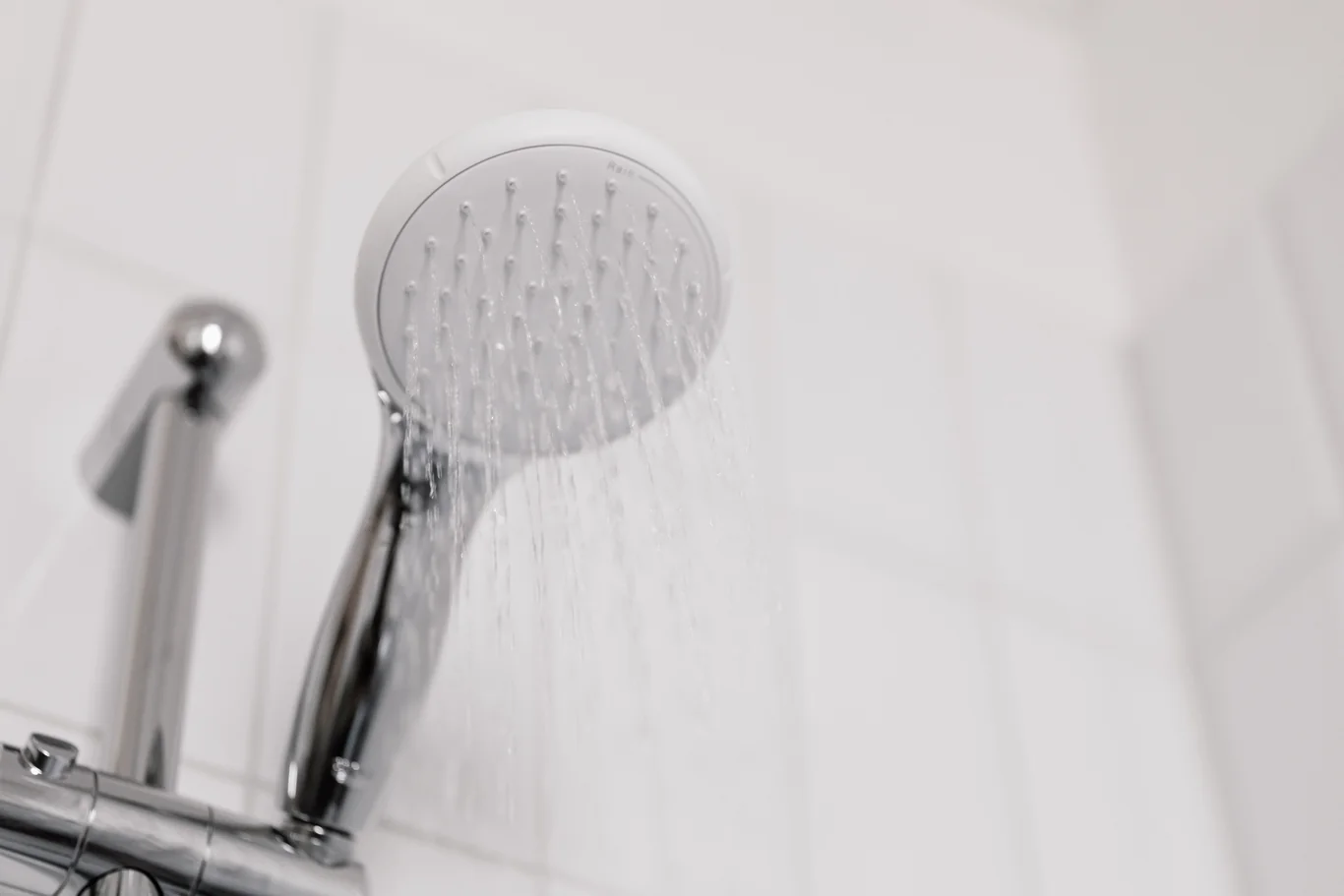
A shower filter is a small cartridge that installs between the shower arm and showerhead. Most rely on KDF-55 (a copper-zinc media that swaps electrons with chlorine to neutralize it). It cuts free chlorine by up to 98%. Filters that add catalytic carbon to the cartridge also reduce chloramine, the combined chlorine-ammonia disinfectant. Plain KDF alone does not touch it as effectively.
NSF/ANSI 177, the standard that governs shower filters, only certifies chlorine reduction of at least 50%. It is not a health-effects standard the way NSF/ANSI 53 is for drinking water filters. A shower filter is a comfort-and-skin product, not a substitute for a certified drinking water filter at the tap.
If chlorine odor and dry skin are your only concerns, a shower filter is worth the low cost. You might also be worried about lead or industrial chemicals in your water. If so, solve that at the tap or the point of entry. A shower filter will not fix it.
Water Filtration for Private Well Systems

Private wells fall outside the EPA‘s authority. The agency’s National Primary Drinking Water Regulations apply to public water systems only. That leaves testing and treatment entirely up to the well owner. There is no Consumer Confidence Report or utility-mandated testing to fall back on.
Well water carries its own set of common problems that city water rarely does. Iron and sulfur cause a metallic taste or a rotten-egg smell. That’s usually solved with KDF-85 media or an aeration system. Bacteria calls for ultraviolet disinfection. Private wells are not chlorinated the way city water is. Sediment, meanwhile, clogs fixtures and appliances unless a dedicated pre-filter catches it first.
Nitrates are the other well-specific risk worth testing for. The EPA’s maximum contaminant level for nitrate is 10 milligrams per liter as nitrogen, or mg/L. That threshold is tied to blue baby syndrome (methemoglobinemia, a blood disorder that lowers oxygen delivery in infants under six months). It applies to public systems only, so private wells are never tested for it on their own.
How We Research
We check every claim against primary sources. Federal agencies like the EPA and CDC come first. Certification bodies like NSF and AHAM come next. We verify each standard number against the issuing body. We review this guide on a set schedule.
Why Trust This Guide
Puritisimo covers only water and air quality. Our guidance is editorial and independent. We cite every health figure so you can check it. We never present a promotional claim as fact.
Matching the Filter to Your Water
Knowing how to filter water for your specific pollutants starts with facts, not guesses. Check your supplier’s Consumer Confidence Report if you use public water.
On a private well, send a sample to an independent lab. Wells are not covered by that report. Once you know which pollutants are present, decide if the problem affects the whole house. Or if it only affects drinking water, like lead, PFAS, or nitrates. That choice decides whole-house versus single-tap coverage. Next, match the certified pollutant list on the product to what your test found. That match, more than the brand name, makes the right filter for your home.
Frequently Asked Questions
What is the best water filter for well water?
The best water filter for well water depends on your specific test results. Wells are not covered by city testing or the EPA‘s public water rules. Common setups include whole-house sediment, carbon, and UV disinfection for microbial and taste issues. Reverse osmosis handles nitrates and dissolved metals. The EPA’s nitrate limit is 10 mg/L, a threshold tied to infant health risk.
What is the most effective water filter?
Reverse osmosis is the most broadly effective option. Its membrane is fine enough to reject 90 to 99% of dissolved solids, along with heavy metals and PFAS. It also blocks microplastics that carbon-only filters pass straight through. How well it works still depends on what is in your water, since no single filter removes every pollutant category equally well.
Which is the best filter for drinking water?
For drinking water, an under-sink reverse osmosis system is the standard answer. So is a countertop or pitcher filter certified to NSF/ANSI 53 or 58. What matters more than the certification badge itself is which specific pollutants it is certified to remove. A bare claim of ‘NSF certified’ with no named substance proves very little.
What is the best drinking water filter to buy?
The buying decision starts with testing your water, not browsing filter reviews. Once you know which pollutants are present, match a filter’s certified pollutant list to that result. Do not trust a vague high-percentage removal claim with no named pollutant or standard attached. Broad claims like that are not the same as a real, pollutant-specific certification. If a gravity-fed countertop system is your preferred format, my Royal Berkey review covers whether its brand claims hold up and what the real certification picture looks like.
Which water filter removes the most toxins?
Reverse osmosis removes the widest range of pollutants, including PFAS and most heavy metals. That’s because its membrane works at the molecular level rather than by size alone. No single filter removes everything, though. Carbon alone misses dissolved solids, nitrates, and most metals, while ceramic filters let viruses pass straight through.
References
- EPA. National Primary Drinking Water Regulations. U.S. Environmental Protection Agency. 2024.
- CDC. Lead in Drinking Water Prevention Guidance. Centers for Disease Control and Prevention. 2024.
- NSF International. Standards for Water Treatment Systems. NSF International. 2024.
Medical Disclaimer: This content is for informational purposes only. It is not a substitute for professional medical advice, diagnosis, or treatment. If you have concerns about your water quality or air quality and their effects on your health, consult a qualified healthcare professional.