

Waterdrop vs Brita comes down to the filter inside each pitcher, not the plastic around it. Pick Brita’s Elite filter for lead, PFAS (man-made “forever chemicals”) and drug-residue test data, and pick Waterdrop for chlorine taste and a longer rated filter life. Both brands sell more than one filter, and the certification labels on those filters differ far more than the logos on the boxes do.
This guide sets the certifications, the rated filter life and the limits of each brand side by side, using only what the makers and the certifiers list. By the end, you will know which NSF/ANSI standards (the lab tests a filter is certified against) each pitcher holds, and how to check any filter yourself.
Key Takeaways
- Brita’s Elite filter lists NSF/ANSI 42, 53 and 401; Waterdrop’s replacement filter lists 42 and 372.
- NSF/ANSI 372 checks lead-free materials. It is not a claim that the filter removes lead.
- Brita’s standard white filter has no lead claim, so match the exact filter model, not the pitcher.
- Neither pitcher treats germs. CDC says most pitcher filters are not designed to remove them.
Waterdrop vs Brita at a Glance
If your water report shows lead or other metals, the certification label matters more than the brand name. Of the two pitchers, only Brita’s Elite filter carries a lead claim. If chlorine taste is your only complaint, either pitcher can do the job, so the choice then rests on filter life and habits.
We compare one pitcher from each brand, the Waterdrop Lucid PT-07B and the Brita Everyday Elite, which are both 10-cup models. Waterdrop’s certification page lists its replacement filters under NSF/ANSI 42 and 372. Brita’s data sheet states that its Elite filter is tested to 42, 53 and 401.
For lead, the EPA tells shoppers to look for a filter evaluated against both NSF/ANSI 53 and 42. The target is lead reduced to 5 ppb (parts per billion, a very small amount) or less, and that is the yardstick for the table below.
The table shows only what each maker lists:
| Factor | Waterdrop | Brita |
| Pitcher compared | Lucid PT-07B, 10-cup | Everyday Elite, 10-cup |
| Filter certifications | NSF/ANSI 42 and 372 | NSF/ANSI 42, 53 and 401 |
| Lead reduction claim | No lead claim listed | Yes, to 5 ppb or less |
| PFAS test data | No PFAS data listed | PFOA and PFOS tested |
| Drug-residue claims | No NSF/ANSI 401 listing | NSF/ANSI 401 listed |
| Rated filter life | Up to 200 gal or 3 months | 120 gal or about 6 months |
| TDS (dissolved minerals) | No TDS claim listed | No TDS claim listed |
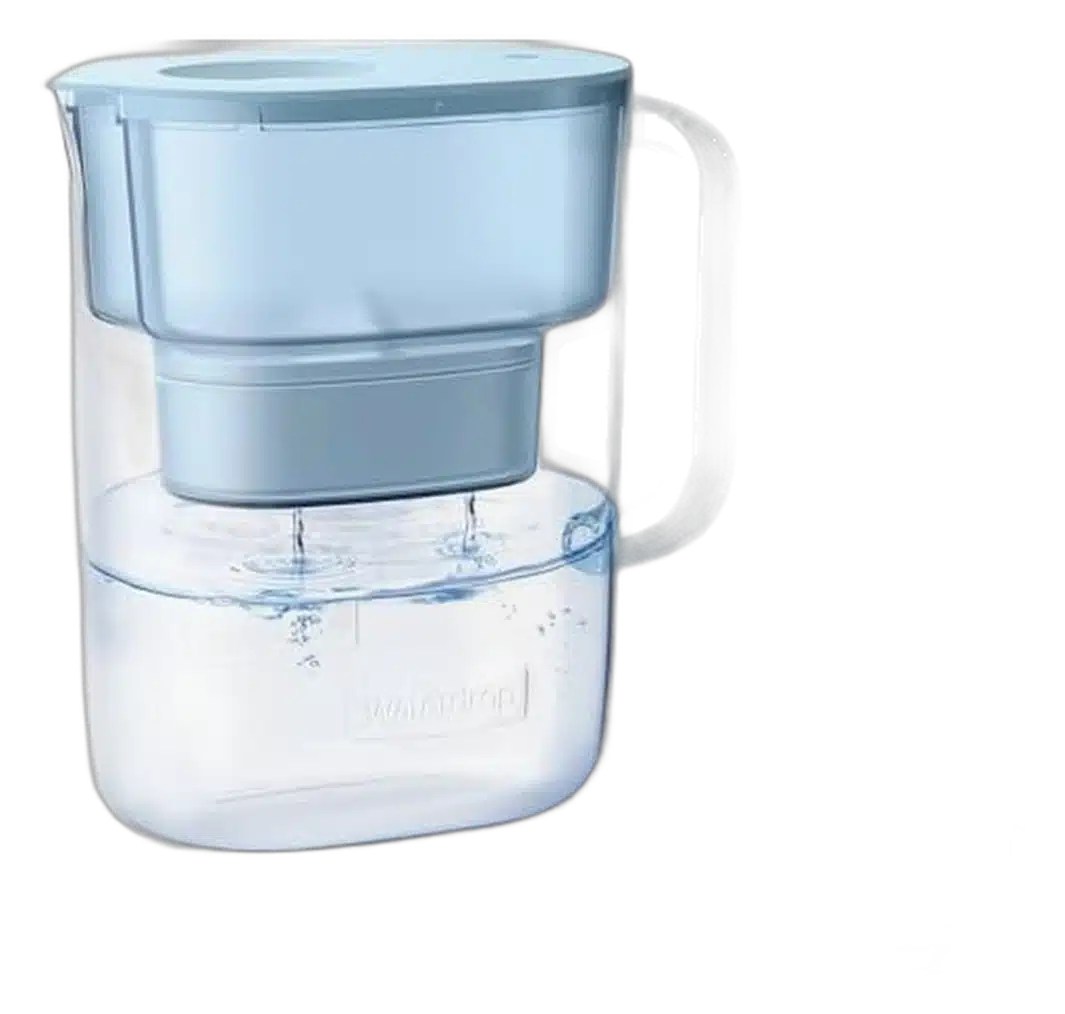
Brita Everyday Elite 10-Cup Water Filter Pitcher

SHOP ON AMAZONAvailability and current price shown on Amazon
Waterdrop Pitcher Filters: What the Maker Lists
The WD-PF-01A Plus filter fits the 10-cup Lucid PT-07 and other gravity-fed Waterdrop pitchers. Waterdrop’s electric ED-series models use a different filter, the WD-EDF. Waterdrop’s certification page lists the Plus filter under NSF/ANSI 42 and 372. The same page describes standard 42 as the one that covers chlorine and other odors, which is a taste and smell test rather than a health test.
The part buyers miss is 372, because Waterdrop’s page says this standard limits the weighted average lead content of wetted parts to 0.25% or less. That makes it a materials test, not a promise that the filter takes lead out of your water.
Waterdrop’s electric pitcher is listed to 372, 42, 53 and 401, but that is a different product, so do not carry those listings over to the Lucid. For lead, the EPA points shoppers to standard 53 with a lead claim, and the Waterdrop pitcher filter does not list one.
Waterdrop’s listings state a rated life of up to 200 gallons or 3 months, whichever comes first. Using all 200 gallons in 3 months takes about 2.2 gallons a day, so a small household that filters less will change the filter on the calendar date. Check your own pack, because listings change. Our Waterdrop PT-07B review covers this pitcher in more depth.
Some retail listings add words like lead or PFAS. A listing is not a certified claim, so confirm any claim in the certifier’s public database before you rely on it.
Brita Pitcher Filters: Elite Versus Standard
Brita sells two pitcher filters that look alike, and the gap between them is large. The standard white filter is tested to NSF/ANSI 42 and 53 for chlorine and metals such as cadmium, copper and mercury. Brita’s data sheet lists no lead, PFAS or NSF/ANSI 401 claim for it and rates it for 40 gallons, or about 2 months.
The Elite filter, the blue one in the Everyday Elite, adds the claims. Brita states it is tested to NSF/ANSI 42, 53 and 401, and that the Water Quality Association (WQA, a trade group that also certifies filters) lists all three. In Brita’s lead test, the filter cut a 150 ppb challenge to 5 ppb or less.
The Elite also lists results for PFOA and PFOS, which are two common PFAS. Brita’s data sheet shows 98.1% reduction from a 1.5 ppb test level, certified by IAPMO R&T (an independent testing lab). The same sheet lists 15 chemical compounds under NSF/ANSI 401, including BPA and the pain reliever ibuprofen, plus microplastic particles. That shows how wide the standard reaches.
Brita rates the Elite for 120 gallons, or about 6 months, and caps use at 2 gallons a day. At 120 gallons over six months, anyone who filters more than about 0.7 gallons a day will reach the gallon limit before the six months pass.
Waterdrop vs Brita Key Differences in Certification
Start with what the numbers mean. Standard 42 covers chlorine taste, odor and fine particles, while standard 53 covers health-related contaminants such as lead, and a filter is certified claim by claim. Standard 401 covers emerging contaminants, such as drug residues and herbicides (weed killers).
Lead: Brita’s Elite filter lists a lead claim under standard 53, and Waterdrop’s lists none, but real results vary by water and by filter. A Water Research review of 23 studies found that 79% of pitcher filters met their applicable lead benchmark, either 10 ppb for older certifications or 5 ppb for newer ones. Of the filters tested on home tap water, 95% passed, while 49% passed on synthetic lab water.
PFAS: Brita lists PFOA and PFOS data for the Elite, and Waterdrop lists none. The EPA says to look for standard 53 or 58 for PFAS, and notes that current standards do not yet show removal down to the levels it has now set. Read the exact claim.
Drug residues: Only the Elite lists standard 401. Waterdrop’s pitcher filter has no 401 listing.
Filter life: Waterdrop’s 200 gallons beats Brita’s 120 gallons on volume, but on months the Elite lasts about twice as long as Waterdrop’s 3 months. Neither pitcher lists TDS (total dissolved solids, the minerals in water) removal, so look elsewhere if minerals are your concern.
ZeroWater: Its data sheet lists standards 42 and 53, 99.6% TDS removal and a 15-gallon rated life, with slower flow. In a three-way comparison with ZeroWater, it suits readers who want dissolved minerals out of the glass, not a longer filter life.
So which pitcher removes the most contaminants? By named test results, Brita’s Elite covers the most of the two. ZeroWater leads only on dissolved solids.
How to Check Any Pitcher Filter’s Certification
Boxes and retail listings do not always match the certifier’s own record. You can check any claim yourself with the same few steps, whichever pitcher you are considering.
Follow these five steps:
- Find the exact replacement filter model on the pack, such as the WD-PF-01A Plus or the Elite filter, not just the pitcher name.
- Open the public listing of the certifier named on the pack: NSF, IAPMO or WQA.
- Read the contaminants listed under standard 53 or 401, not only the standard numbers.
- Match those contaminants to your own water report or a lab test.
- Write down the filter life in gallons and in months, and replace it when the first one ends.
Setup rules differ by filter as well. Brita’s support pages say the Elite needs no pre-rinse, while the standard filter should be flushed with cold water for 15 seconds. Both say to discard the first three pitchers of water, and Brita says its pitchers are not dishwasher safe, so wash them by hand. Follow Waterdrop’s manual for its own first-use steps.
Brita’s Elite also has a status button, and holding it for 6 seconds resets the timer after you change the filter. That small habit keeps the replacement date honest, which matters because the certification only holds while the filter is within its rated life.
Upkeep matters as much as the label does. CDC says to replace filters on the maker’s schedule, because germs that grow in pipe slime can also live and multiply in a filter that is not maintained.
Which Should You Choose?
Neither pitcher is a wrong buy, and the right one depends on what is in your water and on how often you are willing to change a cartridge. If you are still shopping, our guide to the best water filter pitchers compares more options.
Choose Brita if:
- Your water report shows lead, and you want a filter with a listed lead claim.
- You want listed NSF/ANSI 401 coverage for drug residues and other trace compounds.
- You want PFOA and PFOS test data, knowing the EPA’s caution about current standards.
- You prefer to change the cartridge about every 6 months.
Choose Waterdrop if:
- Chlorine taste and odor is your main complaint.
- You filter a lot of water and want 200 gallons of rated life per filter.
- You are happy to change the filter about every 3 months.
- You accept that its filter lists no lead, PFAS or 401 claims.
If you want dissolved minerals removed, look at a filter that lists TDS removal, such as ZeroWater. Neither pitcher compared here makes microbiologically unsafe water drinkable without adequate disinfection. CDC says most pitcher and fridge filters are not designed to remove germs.
How We Research
We check every claim against primary sources. Federal agencies like the EPA and CDC come first. Certification bodies like NSF and AHAM come next. We verify each standard number against the issuing body. We review this guide on a set schedule.
Why Trust This Guide
Puritisimo covers only water and air quality. Our guidance is editorial and independent. We cite every health figure so you can check it. We never present a promotional claim as fact.
Matching the Pitcher to Your Water
Both pitchers make tap water taste better, and both need a fresh filter on schedule, but the real split sits on the label. Brita’s Elite filter lists NSF/ANSI 42, 53 and 401, with a lead claim and PFAS test data. Waterdrop’s filter lists 42 and 372, which covers chlorine taste and lead-free materials but not lead removal. Brita’s standard white filter sits in between, so you should confirm which filter comes in the box. A filter that fits your water beats a famous name, so read the exact filter model before you settle the waterdrop vs brita choice.
Frequently Asked Questions
Waterdrop vs Brita: which pitcher filter lasts longer?
In the waterdrop vs brita comparison, Brita’s Elite lasts longer in months and Waterdrop’s lasts longer in gallons. Brita lists 120 gallons or about 6 months, while Waterdrop’s listings state up to 200 gallons or 3 months. Many small households will end up replacing the filter on the calendar date rather than at the gallon count.
Which water filter pitcher removes the most contaminants?
By named test results, Brita’s Elite filter covers the most contaminants of the two pitchers here, with NSF/ANSI 42, 53 and 401 listings. Waterdrop’s filter lists 42 and 372. ZeroWater lists 42 and 53 plus 99.6% TDS removal, so the best pick depends on whether you worry about metals, drug residues or dissolved minerals.
Is the Waterdrop Lucid better than Brita?
The Waterdrop Lucid gives you more gallons per filter and covers chlorine taste. The Brita Everyday Elite is the better fit when you need a lead, PFAS or drug-residue claim on the label. Neither is better for every home, so you should compare the certification list with your water report before you buy.
Where does ZeroWater fit when you compare Waterdrop and Brita?
ZeroWater suits readers who want dissolved minerals removed. Its data sheet lists NSF/ANSI 42 and 53, 99.6% TDS removal and a 15-gallon rated life, with slower flow. It lists no 401 claim. That makes it a different kind of tool for a different problem, not a better pitcher than the other two.
Can a pitcher filter make unsafe water safe to drink?
It depends on what makes the water unsafe. A certified pitcher can reduce the chemical contaminants on its label under rated conditions, but that does not make water safe overall. Most pitcher and fridge filters are not designed to remove germs, and Brita warns against using its filters with microbiologically unsafe water or water of unknown quality without adequate disinfection. If you get a boil-water notice, follow it.
References
- EPA. Consumer Tool for Identifying Point-of-Use and Pitcher Filters Certified to Reduce Lead in Drinking Water. U.S. Environmental Protection Agency. Accessed November 2026.
- Water Research. Reviewing performance of NSF/ANSI 53 certified water filters for lead removal. 2023;244:120425.
- EPA. Identifying Drinking Water Filters Certified to Reduce PFAS. U.S. Environmental Protection Agency. Accessed November 2026.
- CDC. About Choosing Home Water Filters. Centers for Disease Control and Prevention. Accessed November 2026.
Medical Disclaimer: This content is for informational purposes only. It is not a substitute for professional medical advice, diagnosis, or treatment. If you have concerns about your water quality or air quality and their effects on your health, consult a qualified healthcare professional.

