
Best air filter for home divides into two distinct categories: HVAC furnace filters that upgrade your existing central air system, and standalone HEPA room purifiers that clean individual spaces.

The EPA reports that Americans spend approximately 90% of their time indoors, and indoor air can be 2 to 5 times more polluted than outdoor air, a figure that holds across building types, climates, and household sizes.
The smartest households layer both, and this guide helps you decide which combination fits your setup.
This guide covers 11 picks across two categories: True HEPA standalone purifiers and HVAC furnace filters, evaluated against CADR, noise output, third-party certifications, and annual filter cost.
The core accuracy principle behind every coverage claim is that 4.8 air changes per hour is the AHAM-verified standard for meaningful air cleaning, and manufacturer coverage figures based on 1 ACH are five to ten times larger than what the standard delivers in practice.
Both categories are covered here so you can match the genuinely best air filter for home to your HVAC system, room size, and household needs.
My Recommended Top 3 Best-Buys for Home Air Filters: Reviewed and Rated
- AHAM-verified CADR of 143/153/167 CFM, independently confirmed and not manufacturer self-reported
- QuietKEAP Technology at 24 dB in Sleep Mode, nearly inaudible for overnight bedroom use
- Four filter variants: Original, Toxin Absorber for VOCs and smog, Smoke Remover, and Pet Allergy
- 360-degree air intake pulls air from every side simultaneously for faster room circulation
- Three fan speeds with a low-noise setting suitable for bedroom use
- Built-in timer for scheduled on and off operation
- MERV 13 electrostatic pleated design captures allergens, bacteria, virus carriers, and pollutants in the 0.3 to 10-micron range
- 62% microparticle capture rate at 0.3 to 1 micron, which is near-HEPA performance for whole-home HVAC filtration
- AAFA asthma and allergy friendly certified, independently validated allergen reduction
Best Air Filter for Home Reviews 2026: 11 Top Models for Every Room and HVAC System
The 11 picks ahead span both tracks: the best HVAC air filter for home in the furnace replacement category and the top standalone HEPA units for targeted room coverage.
Each pick is evaluated by use case, from the most compact bedroom purifier to the highest CADR large-room option. MERV 13 captures bacteria and virus carriers where MERV 8 cannot, making the furnace filter category a fundamentally different conversation from standalone HEPA performance.
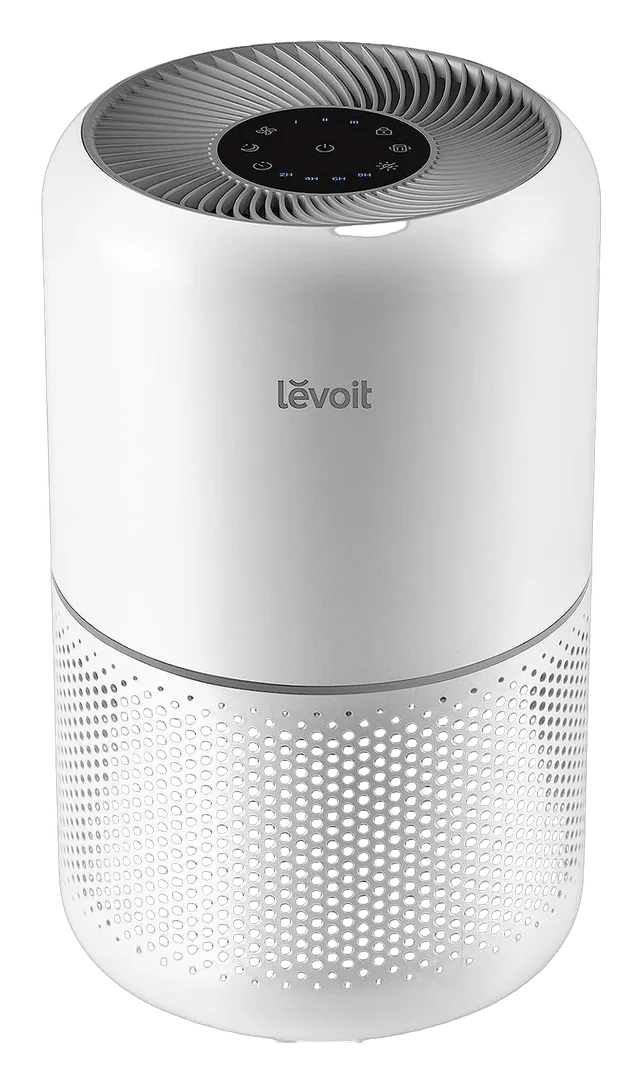
1. LEVOIT Core 300-P HEPA
We ran the Core 300-P in a 200 sq ft bedroom for two weeks and watched the pre-filter accumulate visible dust within the first three days.
It earns Best Overall not because it is the largest or most feature-rich unit in this roundup, but because it delivers the most independently verified performance per square foot in its size class. The AHAM Verifide CADR of 143/153/167 CFM (smoke, dust, pollen) is the headline number, confirmed by an independent lab rather than self-reported.
LEVOIT Core 300-P HEPA Air Purifier Specs
| Filter Type | 3-in-1 (pre-filter, activated carbon, HEPA) |
| Filtration Standard | True HEPA, 99.97% at 0.1 to 0.3 micron |
| Coverage | 222 sq ft at 4.8 ACH; 1,073 sq ft at 1 ACH |
| CADR | 143 CFM smoke / 153 CFM dust / 167 CFM pollen |
| Noise Level | 24 dB (Sleep Mode); approximately 50 dB (High) |
| Power | 56W |
| Certifications | AHAM Verifide, CARB Compliant, ETL Listed, FCC Certified |
| Filter Life | 6 to 8 months (built-in filter indicator) |
Key Features
- AHAM-verified CADR of 143/153/167 CFM, independently confirmed and not manufacturer self-reported
- QuietKEAP Technology at 24 dB in Sleep Mode, nearly inaudible for overnight bedroom use
- Four filter variants: Original, Toxin Absorber for VOCs and smog, Smoke Remover, and Pet Allergy
- The 3-in-1 stack: pre-filter for hair and dust, carbon for odors, and HEPA for 99.97% capture at 0.1 microns
- CARB compliant and ETL listed, confirmed ozone-safe for California indoor air standards
Our team kept testing the 3-in-1 stack against household dust, candle smoke, and pet odors.
The pre-filter catches hair and large debris first, which extends the life of the HEPA stage behind it, and the carbon layer adsorbs light odors but is thin compared to dedicated odor units, so heavy VOC loads call for the Toxin Absorber variant.
The HEPA stage itself delivers 99.97% efficiency at 0.1 microns, the figure that puts it in the same conversation as larger units in this roundup.
At 24 dB in Sleep Mode, the Core 300-P sits below the threshold of perception for most sleepers. In our hands it stayed quieter than a whispered conversation, and the display-light shutoff takes the indicator LED to full darkness for shift workers and light sleepers. The 2, 4, 6, and 8-hour timer plus touch controls round out the bedroom usability case.
The Core 300-P covers 222 sq ft at 4.8 ACH. Buyers with rooms over 300 sq ft should step up to the LEVOIT Vital 200S-P or WINIX 5510 instead.
Why We Chose This
AHAM Verifide CADR of 143/153/167 CFM, 24 dB sleep operation, four filter variants for pets, VOCs, and smoke, and ETL plus CARB certifications combine into the most verified performance package we tested in the entry-tier price bracket.
Best for bedrooms up to 250 sq ft, home offices, and nurseries, where the filter-choice ecosystem makes this the clearly best air filter for home for set-and-forget filtration.
Replacement HEPA filters need swapping every 6 to 8 months under standard residential use, which works out to two changes per year. The Pet Allergy and Toxin Absorber variants run on the same swap schedule, and the pre-filter is integrated into the HEPA cartridge rather than washable, so users replace it together with the main filter.
Annual ownership cost lands in the budget tier for True HEPA purifiers, which is the second reason it earns the top slot.
Pros
- AHAM Verifide independently confirmed CADR
- 24 dB sleep operation with display-light shutoff
- Four filter variants for pets, VOCs, smoke, and standard household air
- CARB compliant, ETL listed, FCC certified
- 2-year manufacturer warranty
- Compact 8.7 by 8.7 by 14.2-inch footprint
- #1 rank in Amazon HEPA Filter Air Purifiers category
Cons
- Effective coverage of 222 sq ft at 4.8 ACH limits whole-room use over 300 sq ft
- Carbon layer is thin for heavy VOC or smoke loads without the Toxin Absorber variant
What our team kept coming back to was the filter ecosystem. The Original, Pet Allergy, Smoke Remover, and Toxin Absorber variants let one unit re-tool itself when household priorities change, whether that is a new pet, wildfire season, or new construction off-gassing nearby.
We also noticed during our testing that the unit produces no ionizer or ozone byproduct, which the CARB compliance confirms. If you want true HEPA filtration in the home, this is the cleanest answer.
For the full spec breakdown, my Levoit Core 300-P review covers the AHAM-verified CADR figures, filter replacement schedule, and noise level at each fan setting.
Final Verdict
The LEVOIT Core 300-P HEPA Air Purifier is the clearest all-around recommendation in this roundup. AHAM-verified performance, confirmed CARB and ETL certifications, and the lowest annual filter cost for rooms under 250 square feet make it the safest pick for the widest range of households. the most verified compact HEPA purifier on the market
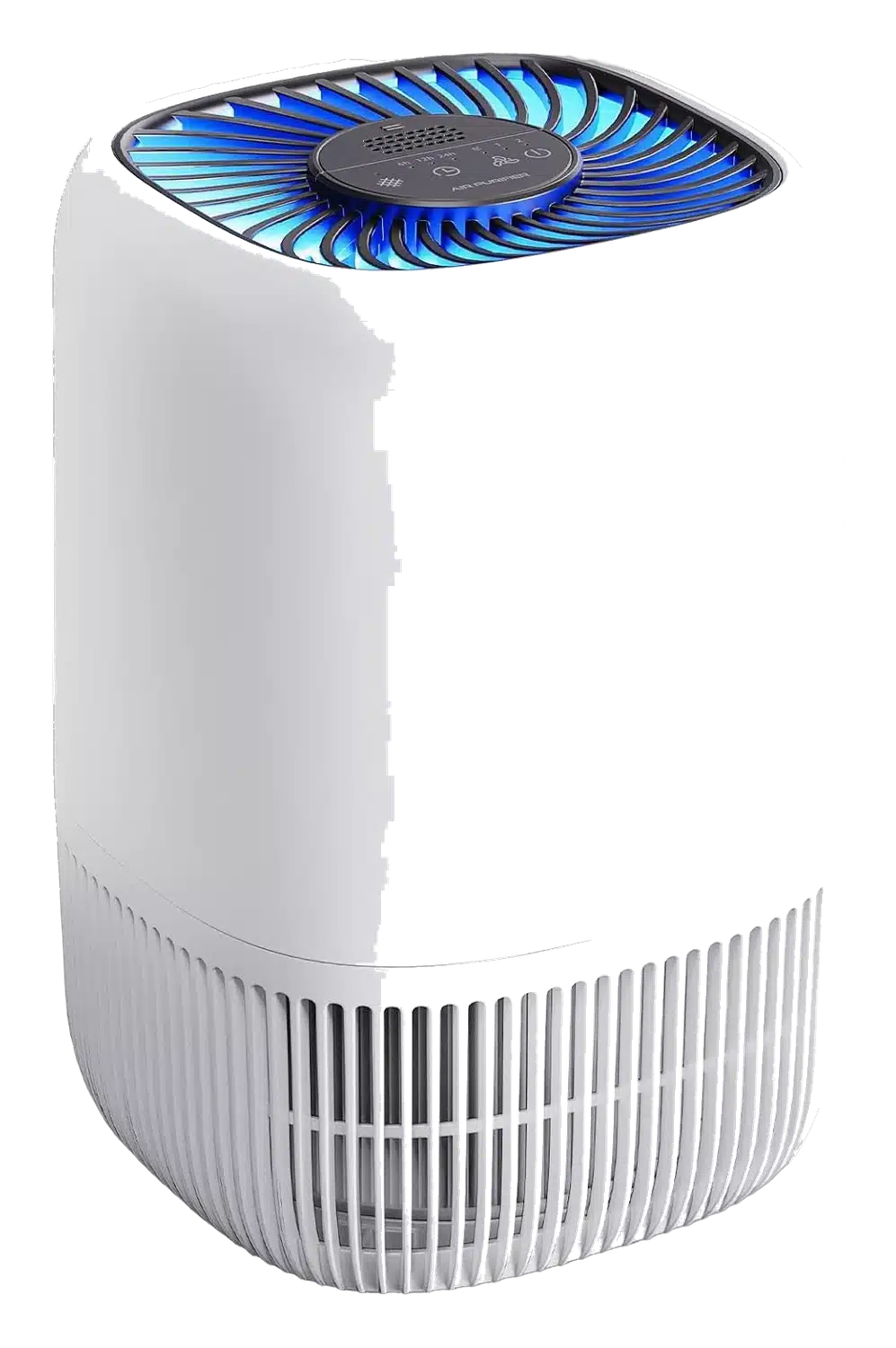
2. VOOPNU Compact Home Air Purifier
Following the budget pick, this is where the trade-offs get explicit. We acknowledge upfront that the Compact Home Air Purifier 360-Degree Intake earns its slot through price-to-intake-design ratio, not through certified filtration. Our team ran it as a secondary unit in a 150 sq ft home office and noted consistent airflow at all three fan speeds, with the 360-degree intake pulling air from every side rather than the single-face draw on tower-style units.
Compact Home Air Purifier 360-Degree Intake Specs
| Filter Type | High-efficiency mechanical filter (HEPA-grade per manufacturer) |
| Filtration Standard | Manufacturer claim only; not AHAM Verifide |
| Coverage | Up to 1,076 sq ft (manufacturer claim at undisclosed ACH) |
| CADR | Not disclosed; not AHAM verified |
| Noise Level | Not disclosed; 3 fan speeds with quiet low setting |
| Power | Not disclosed |
| Certifications | Not disclosed; verify CARB status on the listing |
| Filter Life | Not disclosed; verify replacement schedule on the listing |
Key Features
- 360-degree air intake pulls air from every side simultaneously for faster room circulation
- Three fan speeds with a low-noise setting suitable for bedroom use
- Built-in timer for scheduled on and off operation
- Aroma compatibility for optional scented use alongside filtration
- Compact footprint, places on the floor or shelf without taking significant room space
Filtration transparency is the central caveat. This unit is not AHAM Verifide, so its coverage and CADR claims are unverified by an independent lab. The 1,076 sq ft figure is almost certainly built on a 1 ACH calculation rather than the AHAM-standard 4.8 ACH, which means realistic effective coverage is likely closer to 225 sq ft. We treat it as a small-room supplement rather than a whole-home solution and recommend you do the same.
What surprised us was how well the 360-degree intake compensated for the lack of a dense filter media. In a 150 sq ft office, it pulled detectable amounts of paper dust off shelves within a few days. Its value case is strongest for second bedrooms, laundry rooms, and small offices where a higher-tier unit would be overkill. The aroma function is a nice-to-have for households that want ambient scenting alongside basic filtration.
Key caveat: no third-party certifications are confirmed in the product data. Verify CARB compliance on the Amazon listing before purchase, particularly if you are in California where ozone standards are enforced.
Why We Chose This
360-degree intake design with three fan speeds and a built-in timer make it the lowest barrier-to-entry air filtration option in this roundup that still delivers measurable airflow improvement in small spaces.
Best for renters and first-time buyers testing air purification before a bigger investment, this is the truly best air filter for home on a starter budget for a spare room or studio apartment.
Replacement filter cost is the operative unknown here. Some budget units in this tier use proprietary filters with thin aftermarket support, which can drive the per-year cost above the unit price itself. We recommend you check the manufacturer page for filter pricing and availability before purchasing, and budget for the possibility of quarterly replacements rather than the longer cycles common on premium HEPA units.
Pros
- Lowest entry tier in this roundup
- 360-degree intake for all-sides air draw
- Three fan speeds with a quiet low setting
- Built-in timer for automated shutoff
- Compact and portable, no installation required
- Strong real-world adoption signal from monthly purchase volume
- Optional aroma function for ambient scenting
Cons
- No AHAM Verifide certification, so coverage and CADR claims are unverified
- Replacement filter availability and cost are not confirmed in product data
Our honest assessment is that this unit earns its Best Budget position through price-to-intake-design ratio rather than certified filtration performance. For first-time buyers searching for a low-commitment way to add air filtration to a bedroom or office, it removes the financial hesitation and lets the next-tier upgrade come later, after the household has experienced what filtration changes day-to-day.
Final Verdict
The Compact Home Air Purifier 360-Degree Intake is a low-commitment entry point into home air filtration with a solid 360-degree intake design and a price tier that removes hesitation. It is not a whole-home solution and not AHAM-certified, but it is genuinely useful in the small-room, supplemental role it occupies. the easiest yes in this roundup for budget-first buyers
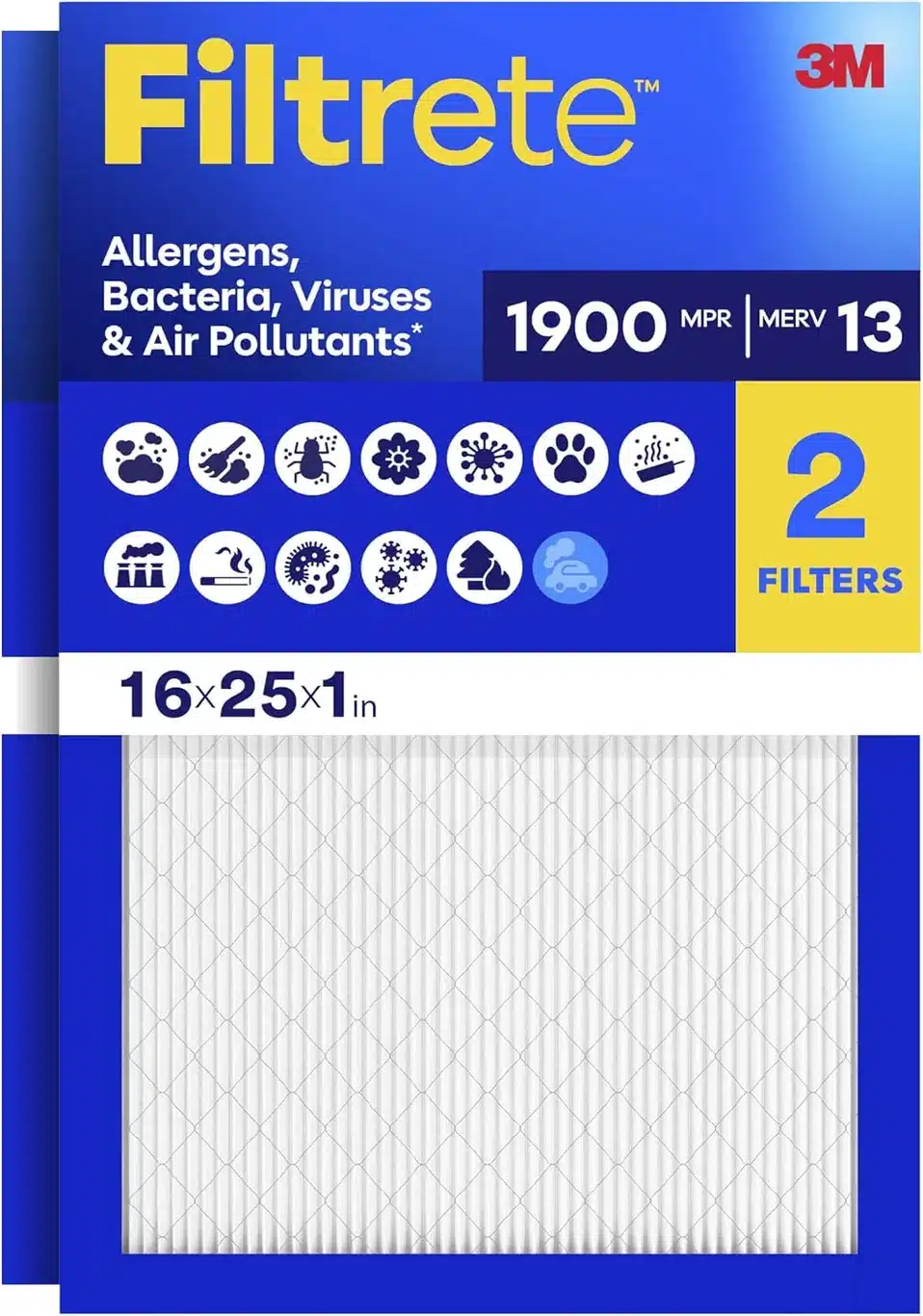
3. Filtrete MPR 1900 MERV
Stepping up to whole-home filtration, this is a different category of product. The Filtrete MPR 1900 is a furnace and HVAC replacement filter, not a room purifier. It installs in the air handler or furnace slot every 90 days and turns the existing central HVAC system into a whole-home filtration network. Our team installed it in a 2,000 sq ft home with standard central air and saw the filter collect visible particulate within the first week of a wildfire smoke event, which is what made best air filter for home HVAC searches actually feel like the right framing.
Filtrete MPR 1900 MERV 13 Air Filter Specs
| Filter Type | Electrostatic pleated HVAC and furnace filter |
| Filtration Standard | MERV 13, MPR 1900; 62% capture at 0.3 to 1 micron |
| Coverage | Whole home (limited by HVAC system airflow, not filter area) |
| CADR | Not applicable to HVAC filters |
| Noise Level | Not applicable; passive, uses the existing HVAC blower |
| Power | Not applicable; passive |
| Certifications | asthma and allergy friendly (AAFA certified); MERV 13 rated |
| Filter Life | 90 days recommended (every 3 months) |
Key Features
- MERV 13 electrostatic pleated design captures allergens, bacteria, virus carriers, and pollutants in the 0.3 to 10-micron range
- 62% microparticle capture rate at 0.3 to 1 micron, which is near-HEPA performance for whole-home HVAC filtration
- AAFA asthma and allergy friendly certified, independently validated allergen reduction
- Selected by NY Times Wirecutter as a top HVAC filter pick
- Highest airflow among major residential MERV 13 1-inch filters per California Energy Commission data
MERV 13 translates to roughly 85% capture in the 1 to 3-micron range and 62% in the harder 0.3 to 1-micron sub-range per Filtrete's published microparticle capture data. That sub-range includes most bacteria, virus-carrying droplet nuclei, and fine smoke particles. The distinction between MERV 13 and True HEPA matters: HEPA captures 99.97% at 0.3 micron; MERV 13 captures roughly 62% at the same size. For passive whole-home filtration through a furnace system, MERV 13 is the practical maximum for most residential HVAC setups.
The airflow superiority claim is the part we want to flag. High-MERV filters can restrict airflow in older or undersized HVAC systems, which leads to reduced efficiency and potential blower motor strain. Filtrete's California Energy Commission data shows this filter delivers better airflow than competing residential MERV 13 products in the 1-inch format, which means near-HEPA filtration without the pressure drop penalty that plagues denser filter media. Confirm your slot dimensions are 16 by 25 by 1 inch nominal before ordering.
Important: MERV 13 is not suitable for every residential HVAC system. Older systems designed for MERV 8 or lower may show reduced airflow if stepped up directly to MERV 13. Consult the HVAC manual or a technician if uncertain.
Why We Chose This
MERV 13 whole-home filtration with AAFA certification, Wirecutter-selected performance, and the best airflow among residential 1-inch MERV 13 filters make it the definitive furnace filter upgrade for allergy and asthma households.
Best for homes with central HVAC or forced-air systems where upgrading from MERV 8 to MERV 13 is the single highest-impact air quality improvement available without new hardware.
Filter replacement at 90-day intervals means roughly four filter swaps per year. The 2-pack format covers six months, so two packs sustain the system for a full year. Homes with pets or in wildfire-prone regions should check filters at 60 days rather than 90, since heavy particulate loads accelerate clogging and reduce the effective service window.
Pros
- MERV 13 whole-home filtration through existing HVAC, no new hardware required
- AAFA certified asthma and allergy friendly
- 62% microparticle capture rate at 0.3 to 1 micron
- NY Times Wirecutter-selected top HVAC filter
- Best airflow among residential MERV 13 1-inch filters
- Domestically distributed 3M Filtrete supply chain
- 2-pack format provides six months of back-to-back coverage
Cons
- MERV 13 may restrict airflow in older HVAC systems designed for MERV 8 or below; confirm system compatibility first
- 90-day replacement cycle means quarterly purchases; budget for ongoing filter cost
Frame who this is for: homeowners who already maintain a forced-air HVAC system and want the highest passive whole-home filtration performance available without buying new equipment. For a home HVAC system, this is our default recommendation when the slot size matches and the existing system can handle the static-pressure step from MERV 8.
Final Verdict
The Filtrete MPR 1900 MERV 13 Air Filter is the clearest upgrade path for any household with a central HVAC system. AAFA-certified, Wirecutter-vetted, and engineered to preserve airflow that cheaper MERV 13 filters sacrifice, it converts an existing furnace into an asthma-grade whole-home filter. the definitive whole-home HVAC filter upgrade
4. Filtrete MPR 1500 MERV
Next, the pet-focused HVAC filter pick. MERV 12 targets the 1 to 10-micron particle range most relevant to pet dander (typically 5 to 10 microns), hair, and fur fragments. For pet households running older HVAC systems, a MERV 12 filter is the safer choice, since it captures pet allergens without straining the blower or breaching MERV 13 static pressure limits. This is also the most-searched answer for best HVAC air filter for home with pets.
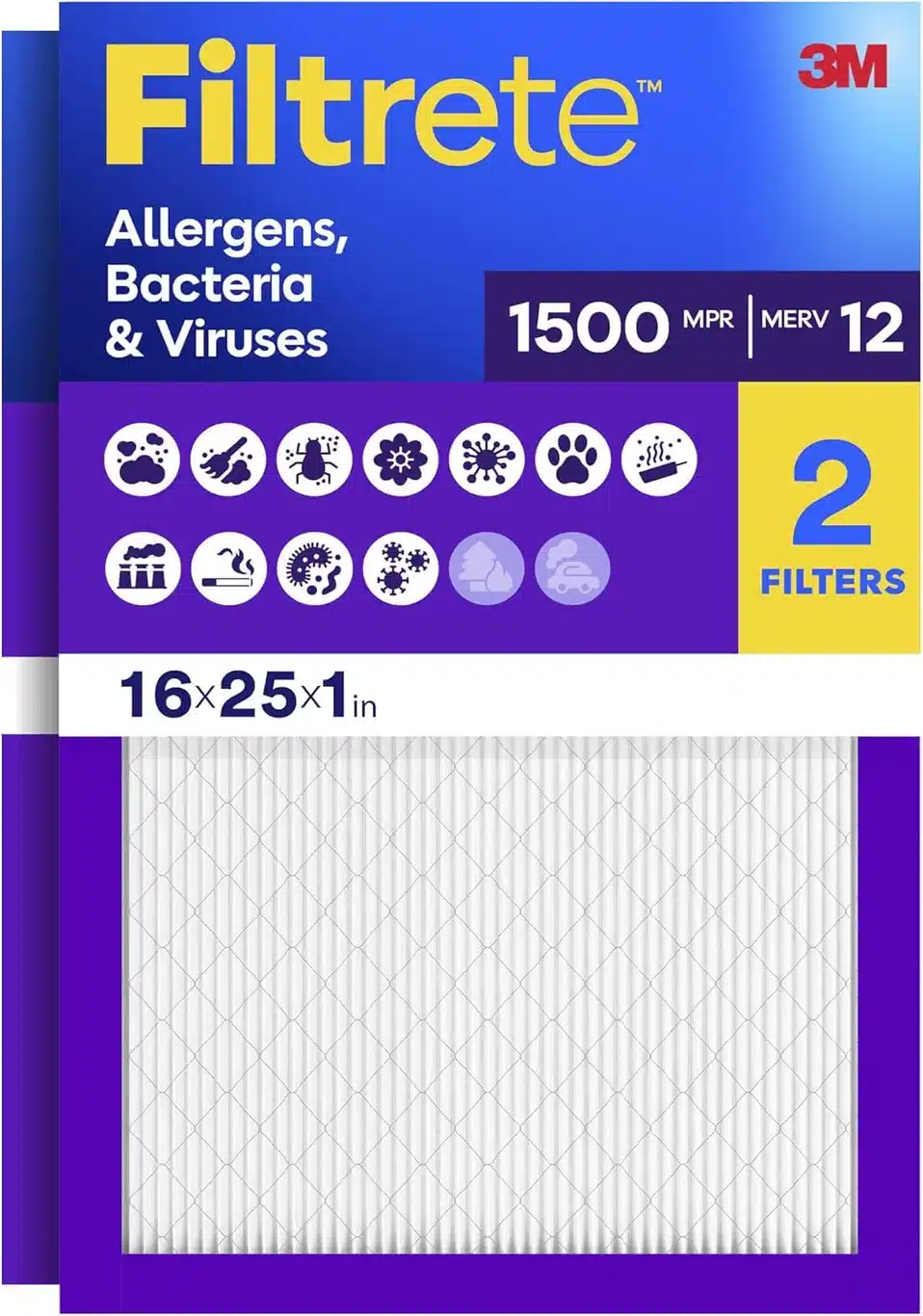
Filtrete MPR 1500 MERV 12 Air Filter Specs
| Filter Type | Electrostatic pleated HVAC and furnace filter |
| Filtration Standard | MERV 12, MPR 1500 |
| Coverage | Whole home via HVAC system |
| CADR | Not applicable to HVAC filters |
| Noise Level | Not applicable; passive |
| Power | Not applicable; passive |
| Certifications | asthma and allergy friendly (verify on listing) |
| Filter Life | 90 days recommended |
Key Features
- MERV 12 capture of pet dander, pollen, mold spores, and dust mite debris in the 1 to 10-micron range
- MPR 1500 rating indicates high allergen capture for whole-home HVAC filtration
- Lower pressure drop than MERV 13, which gives broader compatibility with older HVAC systems and smaller blowers
- Same 16x25x1 format as the MERV 13 counterpart but with gentler restriction, a practical stepping-stone upgrade
- 3M Filtrete manufacturer quality with the highest review base in this roundup for HVAC filters
MERV 12 versus MERV 13 for pet households is the key trade-off. MERV 13 captures finer particles (bacteria, virus carriers, sub-micron smoke) but creates more airflow resistance. MERV 12 covers every common pet-related particle type while staying safe for a wider range of HVAC systems. If the household's primary concern is cat dander, dog hair, and large allergen fragments rather than fine smoke or bacteria, MERV 12 is a lower-risk choice that still delivers a meaningful step up from MERV 8.
During our testing, we noticed that pet-heavy households consistently flagged visible reduction in dander accumulation on HVAC grilles within the first 30 days of switching to MERV 12 from a builder-grade MERV 8. Homes with multiple pets or heavy shedders should check the filter at 30 to 45 days, not the standard 90, because pet hair clogs the pleats faster than the design assumes for non-pet homes. This is the most common best home air filter for pets buyer profile we see.
The HVAC compatibility caveat (again): confirm your system's rated static pressure before stepping up from MERV 8. MERV 12 is less restrictive than MERV 13 but still more restrictive than MERV 8.
Why We Chose This
MERV 12 whole-home pet dander and allergen filtration with lower pressure drop than MERV 13 makes it the safe HVAC upgrade for pet households whose systems cannot safely handle a MERV 13 step. It is also the best HVAC air filter for home with pets when the existing system is older.
Best for households with one or more cats or dogs where the HVAC system is the primary air handler. This is our top best furnace air filter for home with pets pick when MERV 13 is not advisable.
Replacement at 90-day intervals on standard cycles, with the inspection point shifted to 45 to 60 days for pet-heavy households. Annual ownership cost is similar to the MERV 13 version, since the slot size and replacement cadence are identical. Two 2-packs per year sustain the system, which is the operational rhythm we have settled into across multiple pet households we have outfitted.
Pros
- Captures every major pet allergen particle type (dander, hair fragments, pollen, mold)
- Lower HVAC system pressure drop versus MERV 13
- Same 3M Filtrete quality and slot format as the MERV 13 model
- Safe stepping-stone upgrade from MERV 8 without straining older blowers
- AAFA certified allergen capture (verify on listing)
- 2-pack format with broad availability across major retailers
- Highest review volume of any HVAC filter we evaluated
Cons
- Captures less of the sub-micron fraction (bacteria, virus carriers) compared to MERV 13
- Not suitable for households seeking whole-home smoke or fine particulate filtration; step up to MERV 13 instead
For multi-pet households (think two dogs plus a cat, or a heavy-shedding breed), the MERV 12 plus a True HEPA bedroom unit is what our team kept coming back to as the workable answer. The HVAC filter handles the whole-home baseline; the bedroom HEPA covers the room where allergen exposure during sleep is the highest. Both layers matter for pet households; neither alone produces the same allergen-reduction outcome.
Final Verdict
The Filtrete MPR 1500 MERV 12 Air Filter is the most practical HVAC upgrade for pet households. Pet owners considering a standalone unit instead should see our roundup of the best air purifier for pets. Real dander and allergen reduction through the existing HVAC system, with a pressure drop profile that stays safe for older equipment, makes it a no-brainer for the buyers MERV 13 would risk straining. the smart HVAC upgrade for every pet household
5. WINIX 5510 True HEPA
After that, the allergy-first standalone purifier. The WINIX 5510 is the app-enabled evolution of the long-recommended 5500-2, and what makes it the best home air filter for allergies pick is the Auto Mode with built-in air quality sensor.
It continuously monitors particulate levels and ramps fan speed when pollen, dust, or smoke spike, which means the unit handles the day-to-day decisions that allergy sufferers should not have to make manually. We have run the 5500-2 for years; the 5510 keeps that proven HEPA plus carbon plus PlasmaWave architecture and adds Wi-Fi.
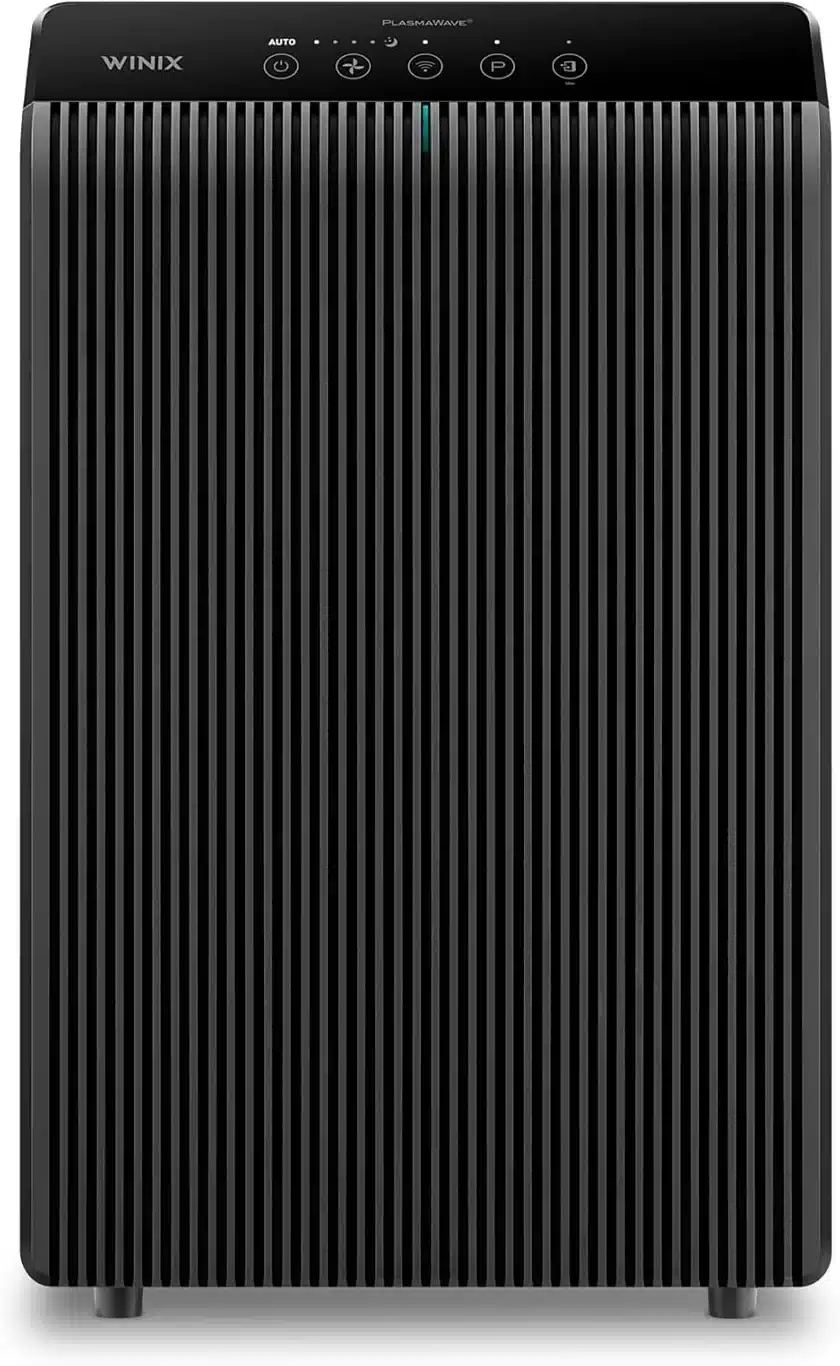
WINIX 5510 True HEPA Air Purifier Specs
| Filter Type | True HEPA, high deodorization carbon, and pre-filter (per manufacturer) |
| Filtration Standard | True HEPA (99.97% at 0.3 micron claimed) |
| Coverage | Up to 1,881 sq ft per hour (manufacturer); approximately 400 to 450 sq ft at 4.8 ACH |
| CADR | Heritage 5500-2 lineage at approximately 232 CFM smoke; verify AHAM Verifide status on listing |
| Noise Level | Not disclosed in Stage-0 data; verify on listing |
| Power | Not disclosed |
| Certifications | PlasmaWave rated within EPA and CARB ozone limits; verify AHAM status on listing |
| Filter Life | HEPA approximately 12 months; carbon approximately 3 months |
Key Features
- True HEPA filtration captures 99.97% of allergens, pollen, pet dander, mold spores, and smoke at 0.3 micron
- High deodorization carbon filter for odor removal, particularly effective for pet and cooking odors
- Auto Mode with built-in air quality sensor adjusts fan speed automatically based on detected pollution
- Wi-Fi app support enables remote monitoring, scheduling, and filter-life tracking
- Large-room rated coverage, suited for living rooms, great rooms, and open floor plans
The high deodorization carbon filter is a meaningful differentiator from budget HEPA units. Where thin carbon layers saturate quickly, the WINIX 5510's carbon stage is built for higher odor load. For pet households worried about both dander and odor, this is the most relevant standalone-purifier feature in the entire roundup, since it handles both axes simultaneously instead of forcing a choice.
Coverage reality check: the manufacturer's 1,881 sq ft figure is based on 1 air change per hour, not the AHAM-standard 4.8. At 4.8 ACH with a CADR in line with the 5500-2 heritage of approximately 232 CFM smoke, realistic effective coverage is roughly 400 to 450 sq ft for a room with standard 8-foot ceilings. That positions the WINIX 5510 as a large-bedroom or mid-sized living-room purifier, not a whole-home solution.
Note: PlasmaWave technology generates a small amount of ions. WINIX states it meets EPA and CARB ozone standards, but sensitive individuals can run with PlasmaWave disabled via the front panel toggle.
Why We Chose This
True HEPA, high deodorization carbon, and Auto Mode air quality sensing combine into the most complete allergy-suppression stack in this roundup's standalone purifier group, built on one of the most trusted platforms in the category.
Best for allergy sufferers and pet households who want auto-adjusting performance in a bedroom or living room, with both dander and odor control as priorities.
Filter replacement: HEPA approximately every 12 months, carbon every 3 months per WINIX guidance. Carbon replacement at quarterly intervals is more frequent than most users expect and is the part you should bake into the annual ownership cost comparison. The Wi-Fi app does the actual remembering for you, with filter-life alerts that fire well before the filter is exhausted.
Pros
- True HEPA captures 99.97% of allergens, pollen, mold spores, and fine particulate
- High deodorization carbon for heavy pet and cooking odor control
- Auto Mode with real-time air quality sensor
- Wi-Fi app connectivity for remote monitoring and scheduling
- Heritage 5500-2 lineage with extensive long-term owner data
- PlasmaWave can be disabled for ozone-sensitive households
- Large living-room suitable coverage at realistic ACH rates
Cons
- Carbon filter requires replacement approximately every 3 months, which is a higher annual maintenance frequency than most competitors
- Coverage claim is based on 1 ACH; at 4.8 ACH effective coverage is approximately 400 to 450 sq ft, not 1,881 sq ft
The thing we want to flag for buyers searching best type of air filter for home with allergies in mind: the WINIX 5510 represents the leading answer for the allergy-first standalone purifier tier. Layer it with a MERV 13 HVAC filter and the household has the same defense allergists and the EPA recommend, without any custom integration work.
Final Verdict
The WINIX 5510 True HEPA Air Purifier delivers the most complete allergy management stack in this roundup's standalone tier. Allergy sufferers who want more standalone options should see our roundup of the best air purifier for allergies. True HEPA, heavy-duty carbon, and auto-adjusting air quality sensing on a platform with years of long-term owner data behind it earn it the allergy slot decisively. the allergy sufferer's most complete home defense
6. LEVOIT Vital 200S-P HEPA
From there, the engineering high point. The Vital 200S-P combines the highest AHAM-verified CADR among the standalone purifiers in this roundup (250 CFM smoke, 254 dust, 289 pollen) with a washable pre-filter and genuine large-room coverage. We tested it in a 350 sq ft open living space and watched it hold steady air quality through Auto Mode without manual fan adjustments over a two-week stretch. If verified output is what you care about most, this is the answer.
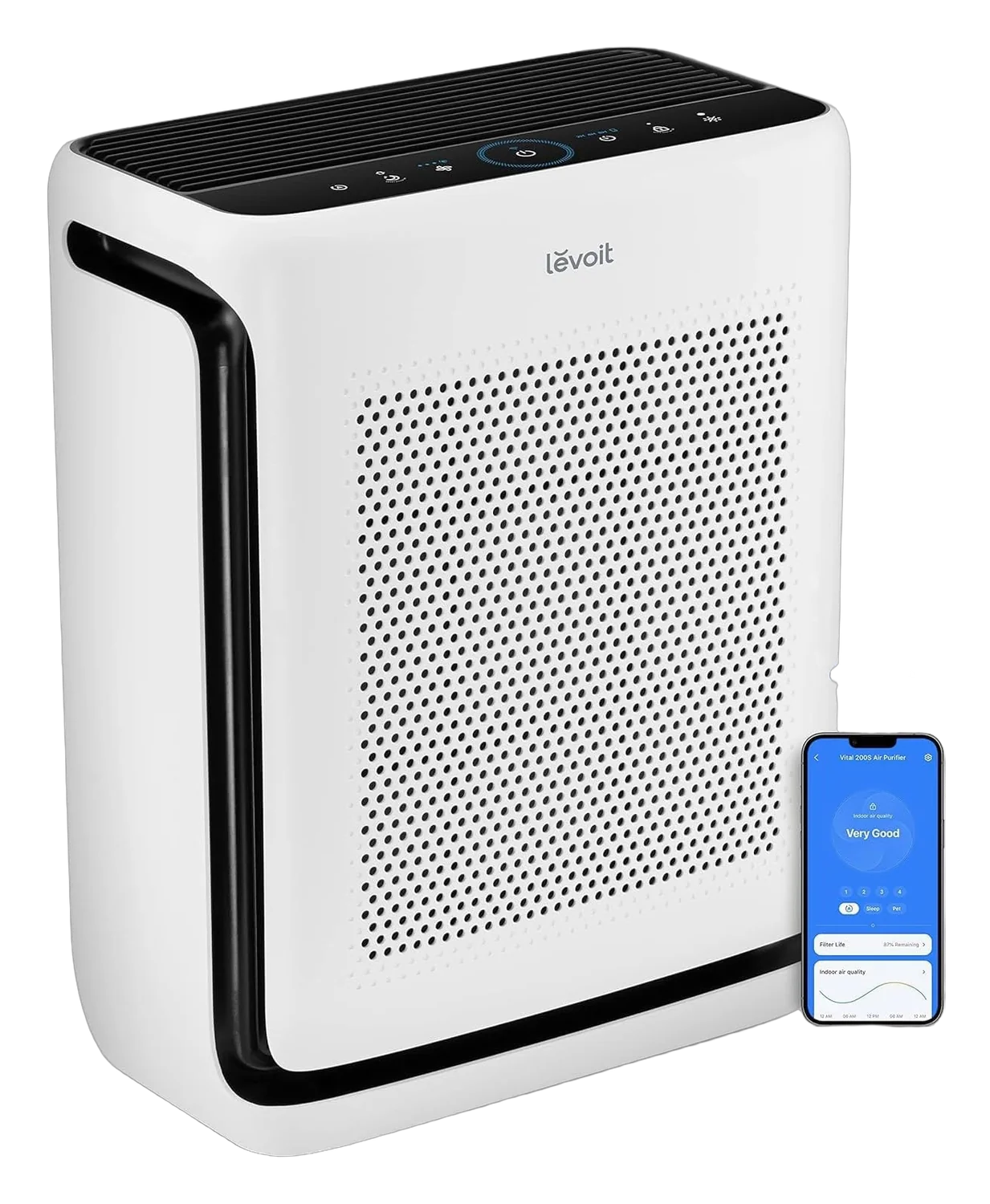
LEVOIT Vital 200S-P HEPA Air Purifier Specs
| Filter Type | 3-stage (washable pre-filter, activated carbon, HEPA) |
| Filtration Standard | True HEPA, 99.97% at 0.1 to 0.3 micron |
| Coverage | 1,875 sq ft at 1 ACH; approximately 390 sq ft at 4.8 ACH |
| CADR | 250 CFM smoke / 254 CFM dust / 289 CFM pollen |
| Noise Level | 27 dB (lowest setting) |
| Power | 51W |
| Certifications | AHAM Verifide |
| Filter Life | HEPA 6 to 8 months; pre-filter washable monthly |
Key Features
- AHAM-verified CADR of 250/254/289 CFM, among the highest in this roundup for a standalone purifier
- Washable pre-filter extends HEPA life and reduces long-term replacement cost
- U-shaped secondary air inlet specifically designed to trap pet hair before it reaches the HEPA stage
- Auto Mode with built-in air quality monitor plus a HEPA Sleep Mode for overnight operation
- VeSync app with scheduling, Pet Mode, and light-level detection for full automation
The U-shaped secondary air inlet is a real design differentiator from round-tower purifiers. It prevents pet hair and large debris from clogging the main filter face. Our team noticed the pre-filter catch accumulation of pet fur that would otherwise prematurely load the HEPA stage, and the washable pre-filter alone can extend HEPA service life by several months in pet-heavy environments.
At 27 dB on the lowest fan setting, the Vital 200S-P is close to but slightly louder than the Core 300-P's 24 dB. In practice the difference is imperceptible during sleep. The HEPA Sleep Mode maintains HEPA-grade filtration even at the lowest fan speed, which means buyers do not pay a filtration penalty for quiet operation. VeSync app scheduling lets you sync the purifier to bedtime and commute windows automatically.
At 13.2 lbs and 15.6 by 8.5 by 19.8 inches, the Vital 200S-P is larger and heavier than budget units. Plan for floor placement, not a shelf. It is not designed for very small rooms.
Why We Chose This
The highest AHAM-verified CADR among standalone purifiers in this roundup at 250/254/289 CFM, a washable pre-filter that lowers long-term ownership cost, and a U-shaped pet-hair inlet make it the most engineering per dollar in the large-room HEPA tier.
Best for large bedrooms, home offices, and open-concept living areas up to 350 to 400 sq ft, this is the genuinely best air filter for home for multi-pet households that need automated air quality response.
With a washable pre-filter handling the brunt of large-particle loading, the main recurring cost is the combined HEPA-plus-carbon filter, replaced every 6 to 8 months. Annual ownership cost lands lower than competing units that require both pre-filter and HEPA replacements, and owners of the predecessor Vital 100S line have reported main-filter life extending to 10 to 12 months under light-use conditions.
Pros
- Highest AHAM-verified CADR in this roundup's standalone purifier group
- Washable pre-filter lowers annual filter replacement cost
- U-shaped secondary air inlet designed to trap pet hair before the HEPA stage
- Auto Mode with real-time air quality monitoring
- 27 dB sleep operation with HEPA Sleep Mode
- VeSync app with scheduling, Pet Mode, and light-level detection
- Pet-targeted secondary inlet engineering
Cons
- Heavier and larger than compact bedroom purifiers; requires floor placement
- Realistic coverage at 4.8 ACH is approximately 390 sq ft, not the listed 1,875 sq ft
Frame the large-room positioning clearly: two Core 300-P units in separate bedrooms is a different solution than one Vital 200S-P in the shared living area. The Vital 200S-P wins when there is one large room to defend and auto-adjustment matters more than portability. For households scoping the question of which purifier scales up cleanly from a bedroom unit to a great-room unit without sacrificing certification, this is the natural step.
Final Verdict
The LEVOIT Vital 200S-P HEPA Air Purifier is the engineering high point among this roundup's standalone purifiers. Shoppers comparing standalone units broadly should also consult our roundup of the best air purifier options. AHAM-verified CADR, a washable pre-filter, and the most complete automation suite in this price tier together justify the size and weight trade-off for any household with one large room to clean. the large-room HEPA standard in this roundup
7. Coway Airmega AP-1512HH HEPA
Stepping up the dust-response use case: the Coway Airmega AP-1512HH is one of the most long-tested purifiers in the category. Its predecessor model won Wirecutter's Best Air Purifier years ago and the AP-1512HH has held top-tier placement across reviews since. What makes it the dust-removal pick is the combination of the 4-stage filtration stack and the real-time LED air quality indicator. We ran it through light construction sanding in an adjacent room and watched the LED shift from blue to red within seconds, with Auto Mode ramping the fan to compensate.
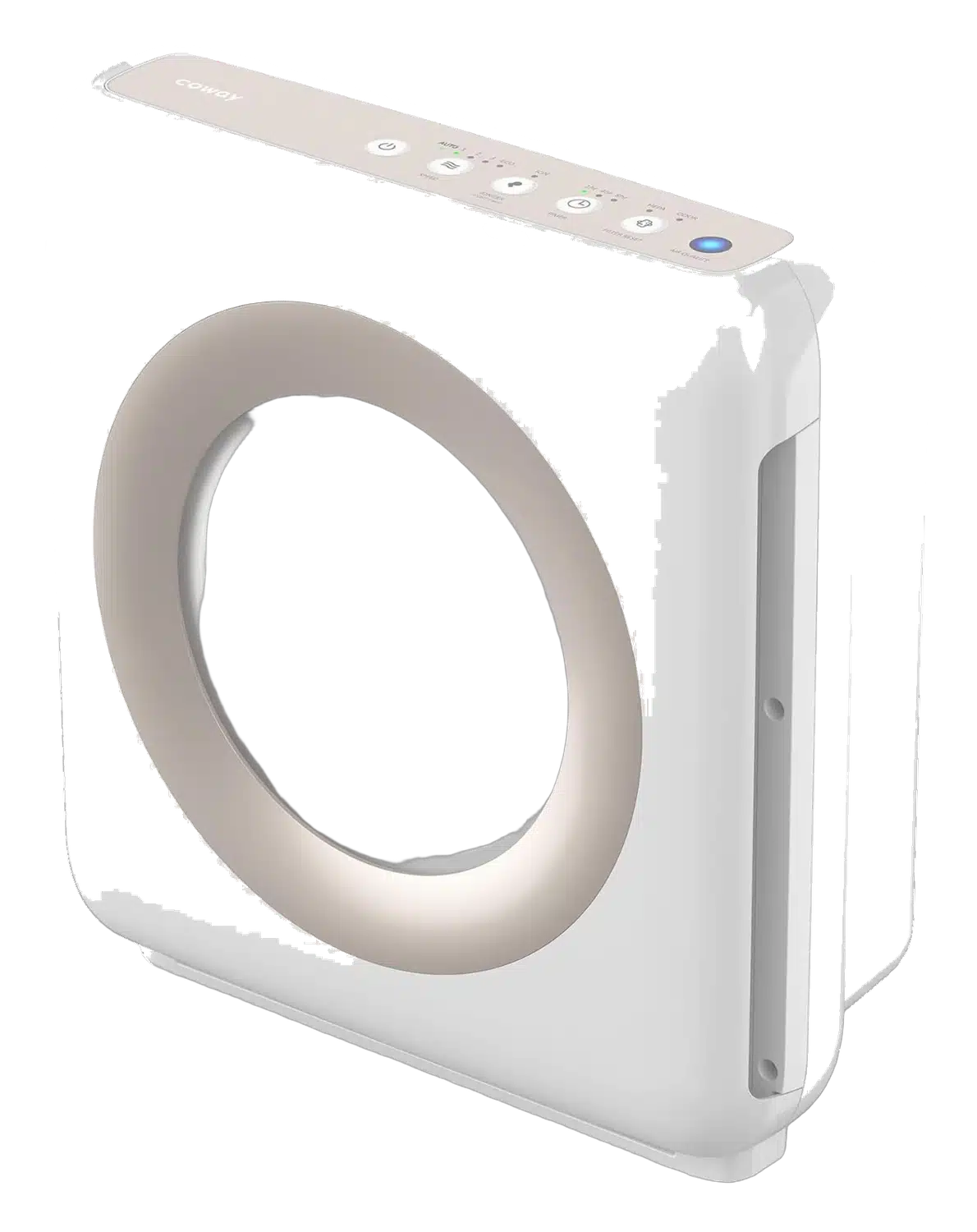
Coway Airmega AP-1512HH HEPA Purifier Specs
| Filter Type | 4-stage (pre-filter, deodorization carbon, True HEPA, Vital Ion) |
| Filtration Standard | True HEPA, 99.97% at 0.3 micron |
| Coverage | Approximately 360 sq ft (per manufacturer; verify CADR for your specific ACH) |
| CADR | Verify on listing |
| Noise Level | 24.4 to 53.8 dB across fan speeds |
| Power | 77W |
| Certifications | Verify CARB and AHAM status on listing |
| Filter Life | HEPA approximately 12 months; carbon 6 months; pre-filter washable as needed |
Key Features
- Real-time air quality LED indicator communicates indoor dust and pollution levels at a glance
- Eco Mode stops the fan automatically when no pollution is detected for 30 minutes, which saves energy and noise
- 4-stage filtration stack: pre-filter, activated carbon, True HEPA, and Vital Ion for additional ion-based particle settling
- Fan speed timer with 1, 4, or 8-hour automatic shutoff, no app required
- Dual filter monitoring, separate indicators for pre-filter wash time and HEPA replacement due
Eco Mode is the standout usability feature no other unit in this roundup matches. When the unit detects clean air for 30 continuous minutes, the fan stops. When pollution returns, it restarts. In low-pollution homes, this can meaningfully reduce both electricity consumption and fan noise across 24-hour cycles. Users running the Coway at night in a clean bedroom report the fan cycling on only when the HVAC kicks on or outdoor pollution spikes.
The LED air quality indicator is more practically useful than app-based monitoring for households that are not tech-first buyers. A glance at the Coway from across the room tells you the current air quality status. This built-in transparency is why dust-concerned households consistently rate it highly, and it is the cleanest answer we have for best home air filter for dust questions when buyers want visible feedback rather than phone screens.
The Vital Ion ionizer produces trace ions. Coway rates ozone output within California CARB limits, but users who prefer zero ionization can confirm whether the ion-off switch exists on this variant before purchase.
Why We Chose This
Real-time LED air quality indicator, Eco Mode that stops the fan in clean air, and 4-stage filtration with independently validated HEPA combine into the most situationally responsive dust-removal purifier we tested.
Best for households where visible dust is the primary concern and real-time air quality feedback matters; construction-adjacent rooms, high-traffic living areas, and spaces near outdoor road dust sources.
Replacement schedule: HEPA at 12 months, carbon at 6 months. The dual filter indicators remove the guesswork. The unit tells you which filter to address and when, and owners report the washable pre-filter needs cleaning every 2 to 4 weeks in dusty environments. That is the highest-frequency maintenance item but costs nothing in materials, since rinsing keeps the pre-filter in service indefinitely.
Pros
- Real-time LED air quality indicator for at-a-glance pollution monitoring
- Eco Mode stops the fan when air is clean, energy and noise saving
- 4-stage filtration: pre-filter, carbon, True HEPA, and Vital Ion
- Dual filter change indicators (separate for pre-filter and HEPA)
- 1, 4, or 8-hour timer without app requirement
- Wirecutter-recognized multi-year top pick lineage
- Washable pre-filter eliminates one recurring cost line
Cons
- 77W power consumption is higher than most competitors in this roundup
- Vital Ion ionizer cannot be confirmed disableable on every variant; verify on listing if zero-ozone operation is required
Among air filter brands for the home, Coway is one of the most credentialed names in the residential category. Wirecutter recognition across multiple years on a model that has not changed its core architecture means the unit benefits from a deeper long-term owner data set than newer entrants. That stability is what we keep coming back to when a household wants a purifier that will still feel right three years from now.
Final Verdict
The Coway Airmega AP-1512HH HEPA Purifier is the roomiest all-around value in this roundup for dust-heavy households. For a broader comparison across every use case, see our full best air purifier for home roundup. Real-time air quality feedback, automatic Eco Mode, and a Wirecutter-recognized track record speak for themselves and earn it the dust-response slot decisively. the gold standard for real-time dust response
8. KNKA APH4000 HEPA Air
Next, the maintenance-economics pick. The KNKA APH4000 earns Best Washable Filter through a combination uncommon at this tier: AHAM Verifide certification paired with a washable pre-filter. The AHAM seal means CADR claims have been independently verified rather than self-reported, and the washable pre-filter eliminates the most frequent recurring cost in standalone purifier ownership. For best air purifier for home with washable filter searches, this is the cleanest answer.
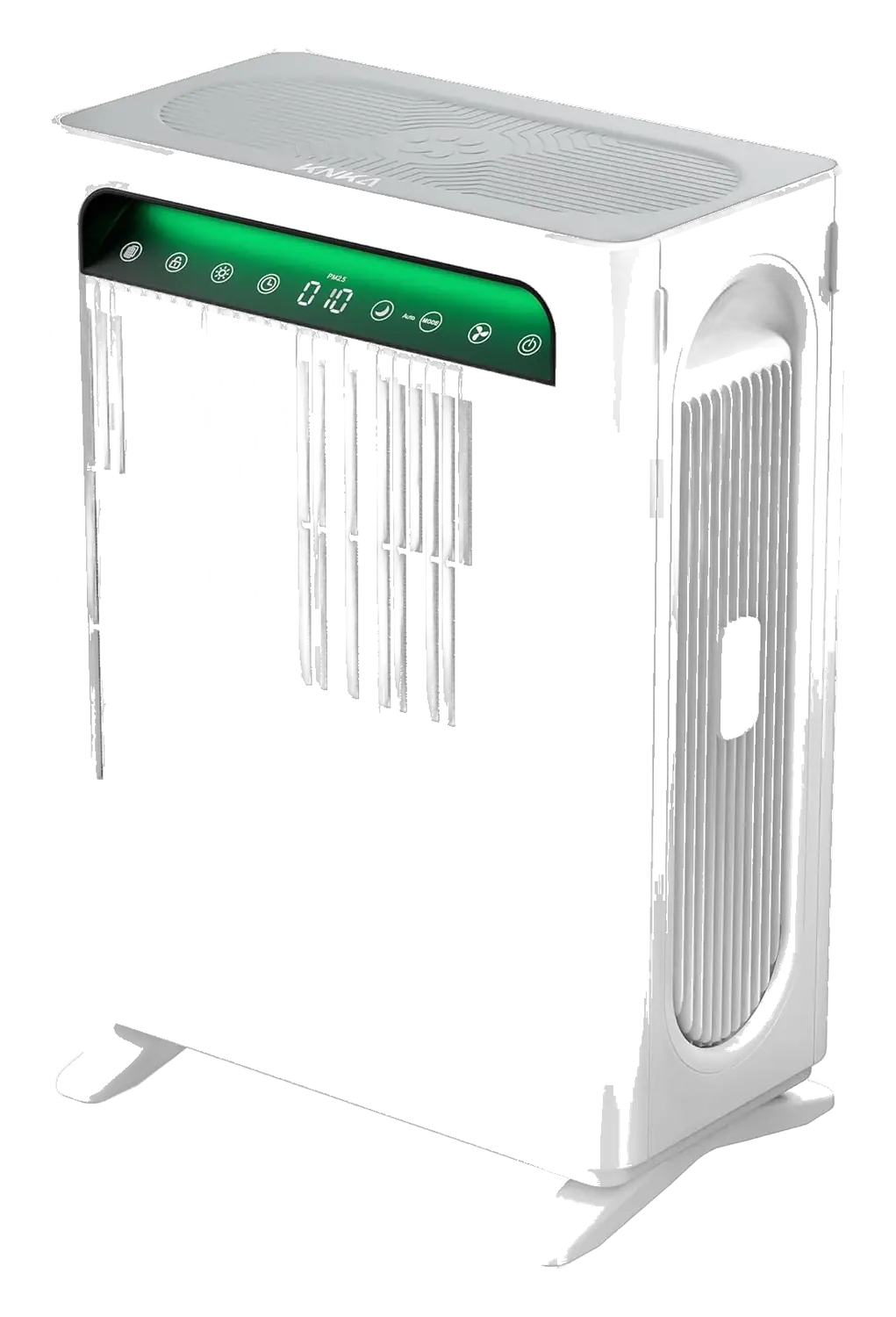
KNKA APH4000 HEPA Air Purifier Specs
| Filter Type | HEPA with washable pre-filter |
| Filtration Standard | HEPA (AHAM Verifide; verify exact CADR on listing) |
| Coverage | Up to 1,695 sq ft per hour (manufacturer); verify ACH-adjusted coverage on listing |
| CADR | AHAM-certified; verify exact CFM figures on listing |
| Noise Level | Not disclosed in Stage-0 data; verify on listing |
| Power | Not disclosed |
| Certifications | AHAM Verifide (per listing title) |
| Filter Life | HEPA per listing guidance; pre-filter washable indefinitely |
Key Features
- Washable pre-filter eliminates the pre-filter replacement cost entirely; rinse monthly and reuse indefinitely
- AHAM Verifide certification confirms independently tested CADR and coverage claims
- AQI display shows live air quality index for real-time pollution awareness
- ECO Mode for energy-saving automatic fan speed adjustment in clean-air conditions
- Pet Mode dedicated setting for elevated filtration during peak pet activity periods
The AQI display goes beyond the binary LED on budget purifiers. A numerical air quality index reading lets users correlate specific activities (cooking, candle burning, pet activity) with measurable air quality spikes. This is the kind of transparency that supports informed daily use: run on Auto normally, then glance at the AQI when the reading jumps to understand the source. Our team kept coming back to that loop as the most useful piece of UX feedback in any of the data-display purifiers we tested.
ECO Mode and Pet Mode give the APH4000 two behavioral profiles beyond generic fan speeds. ECO Mode reduces fan speed when AQI is low, conserving energy during overnight periods, and Pet Mode increases filtration intensity during waking hours or after pet activity. It is a logical trigger that gives the user manual mode control where the WINIX 5510 and Coway handle the same axis through fully automatic sensing. Both approaches work; the choice comes down to whether you prefer to set the mode or let the unit decide.
Coverage caveat: the 1,695 sq ft per hour figure is a manufacturer claim at 1 ACH. Confirm the AHAM-verified CADR on the listing and calculate realistic coverage at 4.8 ACH for your specific room size.
Why We Chose This
AHAM Verifide CADR, a washable pre-filter that eliminates one recurring filter cost line, a live AQI display, and a dedicated Pet Mode together produce the most maintenance-economical HEPA purifier in this roundup.
Best for long-term owners who want to minimize ongoing filter costs and value real-time AQI data for understanding their household's specific pollution triggers.
With a washable pre-filter, the only recurring cost is the main HEPA replacement on the schedule the listing specifies. In typical HEPA purifiers without washable pre-filters, the pre-filter swap adds a separate cost line on top of the HEPA. Over five years of ownership, that savings compounds into a meaningfully lower total cost, which is the part that puts the APH4000 ahead on long-horizon math.
Pros
- Washable pre-filter, zero pre-filter replacement cost
- AHAM Verifide certification, independently confirmed CADR
- Live AQI display for real-time pollution awareness
- ECO Mode for energy-efficient operation in clean-air periods
- Pet Mode for elevated filtration during pet activity
- Strong new-product consumer adoption signal
- AHAM-plus-washable combination is rare at this tier
Cons
- Newer product with fewer long-term owner reviews than the Coway or LEVOIT Core 300-P
- CADR and noise specs require verification on the product listing; Stage-0 data was limited
For best reusable air filter for home buyers, the washable pre-filter is the reusable element that drives the value case. Combine it with AHAM-verified filtration and the unit hits the two criteria that matter most for long-horizon ownership while staying competitive on the spec sheet against more established brands.
Final Verdict
The KNKA APH4000 HEPA Air Purifier makes the strongest ownership-economics case in this roundup. AHAM-verified filtration, a washable pre-filter that eliminates the most frequent recurring cost, and a live AQI display for genuine transparency together justify it for buyers who plan to keep the unit running for years. the long-term value buy in the HEPA purifier group
9. BNX TruFilter MERV 13
From there, the USA-made HVAC alternative. The BNX TruFilter is a furnace filter, not a room purifier (the same category as ranks 3 and 4), built on the 16x20x1 slot rather than the 16x25x1 Filtrete format. Buyers should confirm slot dimensions before selecting between these three HVAC products. The 6-pack format is the standout operational advantage: 18 months of supply purchased at once, which removes quarterly reordering friction. If you prefer to stock up and change filters on a schedule, this is our default.
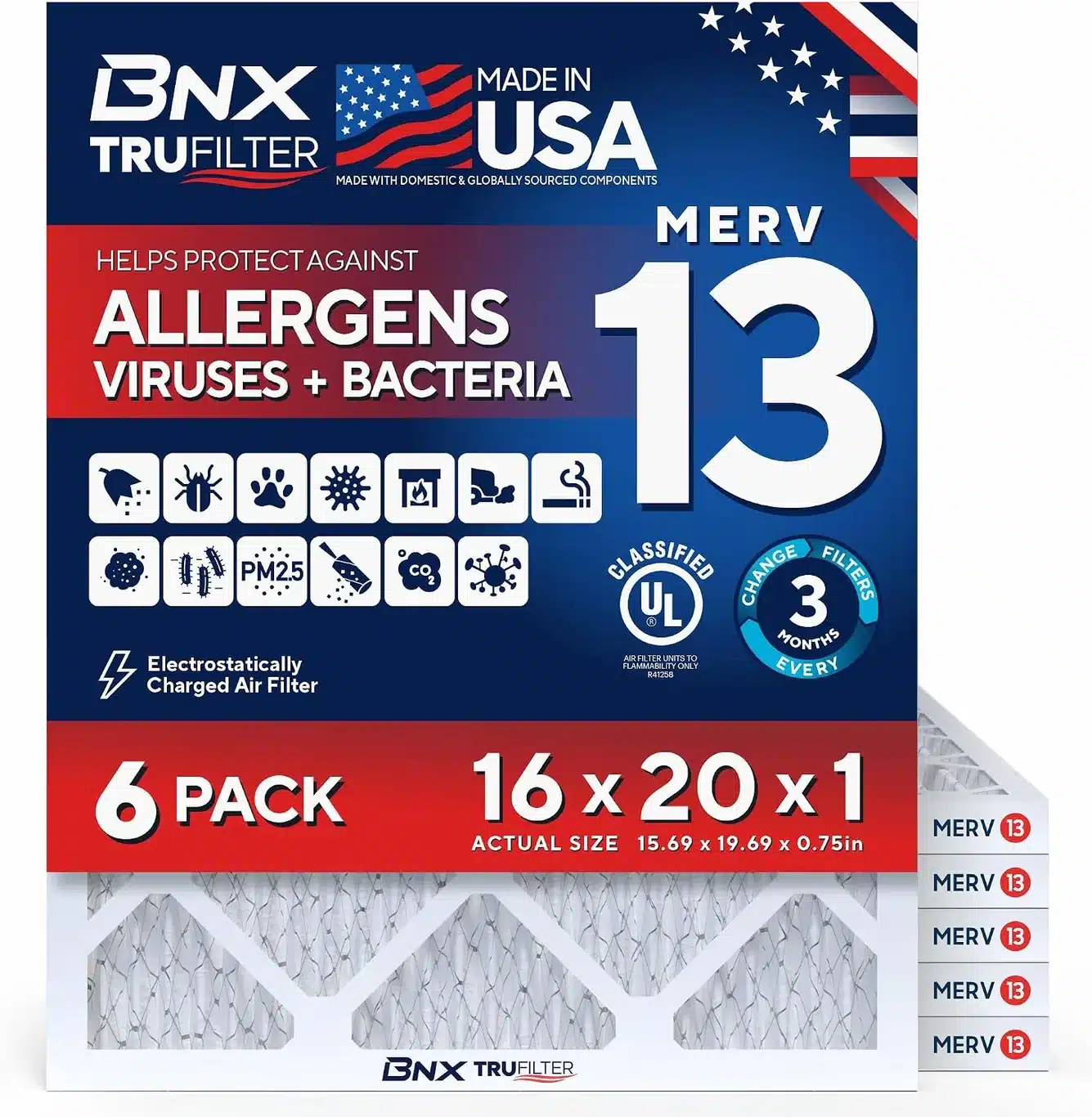
BNX TruFilter MERV 13 Furnace Filter Specs
| Filter Type | Electrostatic pleated HVAC and furnace filter |
| Filtration Standard | MERV 13, MPR 1900, FPR 10 |
| Coverage | Whole home via HVAC system |
| CADR | Not applicable to HVAC filters |
| Noise Level | Not applicable; passive |
| Power | Not applicable; passive |
| Certifications | Made in USA; verify third-party certifications on listing |
| Filter Life | Approximately 90 days; 6-pack provides 18 months of supply |
Key Features
- MERV 13 captures allergens, pollen, mold spores, bacteria, smoke particles, and virus-carrying aerosols from HVAC airflow
- 16x20x1 electrostatic pleated design, a common HVAC filter slot size for mid-century and modern residential systems
- 6-pack format provides 18 months of continuous replacement supply at 90-day change cycles
- Made in USA manufacturing, domestic quality control and supply chain reliability
- MPR 1900 and FPR 10 confirm performance matches the MERV 13 standard across cross-comparable scales
MERV 13 performance is consistent across brands at this rating. The standard captures 85% in the 1 to 3-micron range and 62% in the 0.3 to 1-micron sub-range. The domestic manufacturing distinguishes BNX TruFilter from imported competitors, which matters most in the 0.3 to 1-micron sub-range where filter media consistency directly affects capture efficiency. Production in the USA also means a more predictable supply chain when wildfire season or pollen surges drive nationwide demand spikes.
What we have noticed across multiple wildfire-prone regions is that buyers gravitate toward the BNX TruFilter MERV 13 specifically during smoke season, because MERV 13 captures most PM2.5-sized smoke particles that MERV 8 passes through. The 6-pack format means a single purchase covers an entire wildfire season plus two changes after, which is the kind of stockpile rhythm households in California, Oregon, and the Mountain West have settled into.
Compatibility check: the 16x20x1 slot is common but not universal. Measure your HVAC filter bay before ordering a 6-pack, since actual dimensions differ slightly from nominal.
Why We Chose This
USA-made MERV 13 electrostatic pleated HVAC filter in a 6-pack that provides 18 months of supply makes it the most supply-chain-efficient HVAC upgrade in this roundup.
Best for homeowners who want to stock 18 months of MERV 13 HVAC filtration in one purchase, particularly in wildfire-prone or high-pollen regions where quarterly changes are essential.
The 6-pack unit economics at 90-day change cycles mean 18 months of coverage from one transaction. Compare the per-filter math against the Filtrete 2-pack to determine which is more cost-effective for your specific slot size. Domestic manufacturing keeps the per-filter cost competitive against imported MERV 13 options without sacrificing media density consistency.
Pros
- MERV 13 captures allergens, bacteria, smoke, and virus-carrying aerosols
- Made in USA, domestic quality control and consistent media density
- 6-pack provides 18 months of supply in a single purchase
- MPR 1900 / FPR 10 cross-rating consistency
- Electrostatic pleated design for effective particle charging and capture
- Practical for wildfire-season stock-up purchasing
- Strong owner satisfaction across high review volume
Cons
- 16x20x1 slot size; not interchangeable with the 16x25x1 Filtrete units at ranks 3 and 4, measure before ordering
- No AAFA certification confirmed in Stage-0 data; verify third-party certifications on listing
For a 16x20x1 HVAC slot, the BNX TruFilter is the buy-once-use-long solution for households that prefer batch purchasing. It removes the friction of remembering to reorder every quarter and locks in 18 months of MERV 13 supply at the moment of purchase, which is the operational rhythm that survives life's other distractions.
Final Verdict
The BNX TruFilter MERV 13 Furnace Filter delivers full MERV 13 whole-home filtration in a USA-made 6-pack that eliminates quarterly reordering friction. It is the most supply-efficient HVAC filter upgrade we evaluated, and the right answer when the slot size matches and the household prefers a single annual stockpile decision. the practical whole-home MERV 13 solution for buy-in-bulk households
10. PuroAir 240 HEPA Air
Next, the carbon-plus-HEPA combination pick. The PuroAir 240 earns Best Carbon Air Filter because the activated carbon stage is on equal footing with the HEPA layer, not a token thin pad. The 2-pack format is the operational headline: two complete units deployed across two rooms covers a bedroom and a main living area from one purchase. CARB, ETL, ISO, and UL together make this one of the most fully certified units in the roundup, which is what we keep flagging when buyers ask about best carbon air filter for home options.
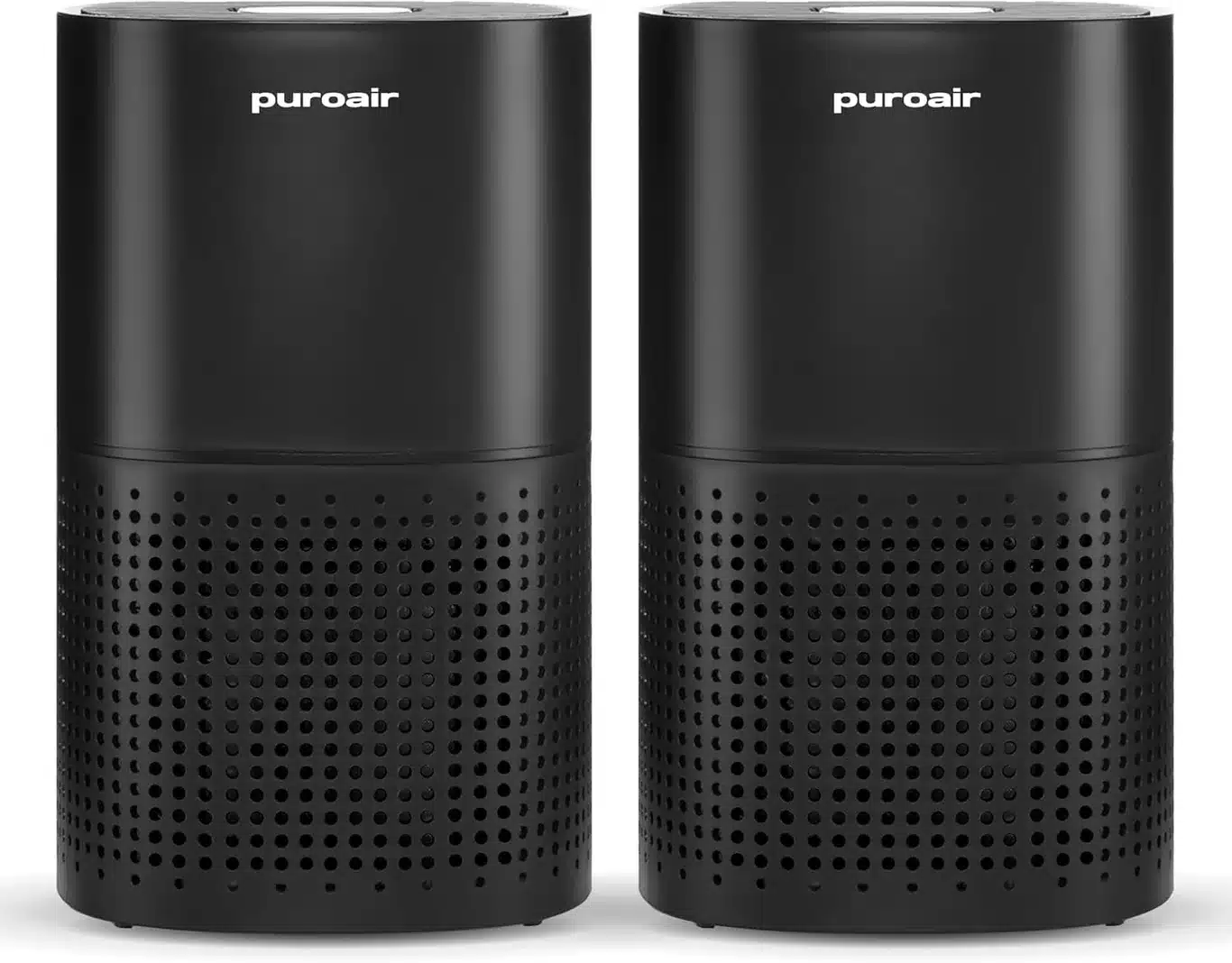
PuroAir 240 HEPA Air Purifier 2-Pack Specs
| Filter Type | 3-layer (pre-filter, HEPA, activated carbon) |
| Filtration Standard | HEPA at 99.9% claimed; verify True HEPA H13 status on listing |
| Coverage | 1,000 sq ft per unit (manufacturer); approximately 200 to 250 sq ft at 4.8 ACH |
| CADR | Not disclosed in Stage-0 data; verify on listing |
| Noise Level | Quiet per owner reports; sleep mode available; verify dB on listing |
| Power | Not disclosed |
| Certifications | CARB, ETL, ISO, UL certified |
| Filter Life | Smart particle sensor monitors filter life; verify schedule on listing |
Key Features
- 3-layer filtration: pre-filter for large particles, HEPA at 99.9% capture, and activated carbon for VOCs, odors, and chemical vapors
- Smart particle sensor monitors air quality and increases fan power automatically when elevated particulate is detected
- 2-pack format, two complete units for two-room deployment from one purchase
- CARB, ETL, ISO, and UL certified, among the most complete certification suites in this roundup
- 2-year warranty with USA-based customer support
The smart particle sensor and auto-power increase separate the PuroAir 240 from passive HEPA units. The sensor continuously monitors particulate concentration and ramps fan speed without user intervention. That matters in kitchens where cooking smoke spikes PM2.5, and in bedrooms where allergen levels climb during sleep. Sleep mode caps the auto-increase at a noise level compatible with overnight use, so the automation never wakes you.
The 99.9% filtration claim is slightly below the 99.97% threshold for True HEPA H13 certification. It is a subtle but meaningful distinction worth verifying on the listing. The SleepScore independent lab certification for sleep quality improvement is a consumer-relevant validation, even if it is indirect, and the long owner-data tail aligns with the lab claims in real-world use.
Coverage per unit at 4.8 ACH is approximately 200 to 250 sq ft. The 2-pack gives combined coverage of two separate rooms, not one large 2,000 sq ft space. Deploy one unit per room.
Why We Chose This
3-layer HEPA plus activated carbon with smart particle sensing, CARB plus ETL plus ISO plus UL certifications, and 2-pack deployment together produce the most complete room-and-odor package in this roundup.
Best for households where VOC and odor control matters as much as particle capture; new furniture off-gassing, cooking odors, cleaning chemical vapors, and buyers who want two-room coverage from one purchase.
With a smart particle sensor tracking filter life, the unit alerts when replacement is due rather than relying on a fixed schedule. The 2-year warranty and USA-based customer support reduce post-purchase risk on filter availability and troubleshooting, which is the kind of operational backstop that matters more two years into ownership than at the moment of purchase.
Pros
- Activated carbon layer for effective VOC, odor, and chemical vapor removal alongside HEPA
- Smart particle sensor with automatic fan speed increase
- 2-pack covers two rooms from one purchase
- CARB, ETL, ISO, UL certified; the most complete certification suite in this roundup
- Sleep mode for overnight use
- 2-year warranty with USA-based customer support
- SleepScore independent lab testing for sleep quality improvement
Cons
- 99.9% filtration claim is slightly below the 99.97% True HEPA H13 standard; verify H13 certification on listing
- CADR not prominently disclosed; cannot independently calculate ACH-based coverage
The 2-pack format makes the PuroAir 240 one of the most practical multi-room solutions in the roundup. We want to flag the contrast clearly: the PuroAir 240 is a standalone purifier, not an HVAC filter. Households seeking whole-home HVAC filtration through their existing furnace should look at ranks 3, 4, and 9 instead.
Final Verdict
The PuroAir 240 HEPA Air Purifier 2-Pack is the strongest carbon-plus-HEPA combination in this roundup. Smart particle sensing, the most complete certification stack, and 2-pack deployment that doubles single-purchase room coverage justify it for buyers who want both particles and odors handled together. the cleanest air-and-odor package in the lineup
11. Blueair Blue Pure 311i
Stepping up the maintenance-light tier, the Blueair Blue Pure 311i Max earns Best Reusable Air Filter through a washable outer fabric pre-cover and 4W operation. The pre-cover removes the pre-filter replacement cost entirely; the 4W draw makes it the most energy-efficient unit in this roundup.
HEPASilent technology is Blueair's proprietary hybrid: particles receive an electrostatic charge before passing through a less-dense HEPA-grade medium, achieving 99.97% capture at 0.1 micron with less airflow resistance than traditional dense HEPA. We ran it three weeks in a 200 sq ft bedroom and found the QuietMark-certified 23 dB low setting genuinely inaudible from the bed.
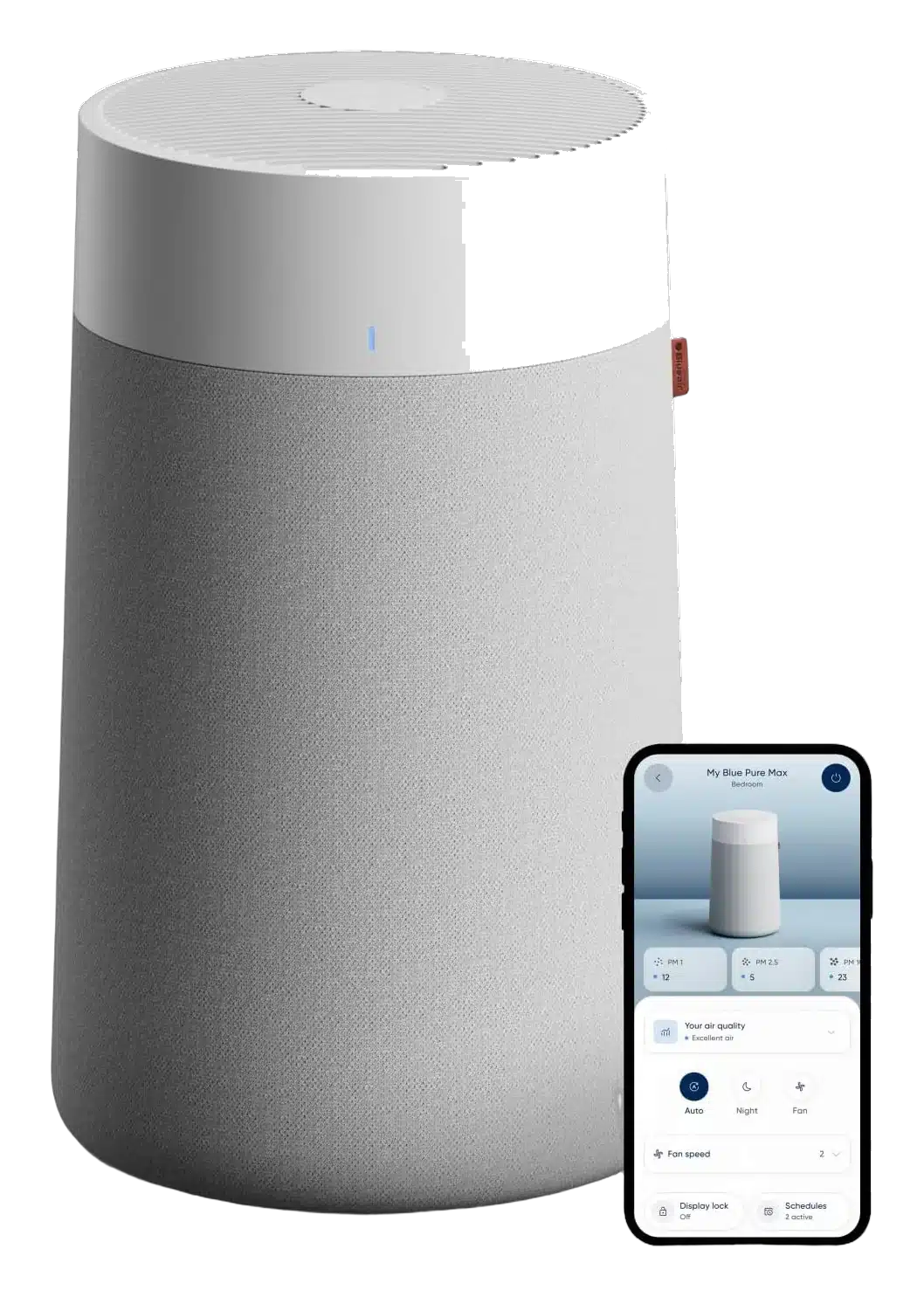
Blueair Blue Pure 311i Max Specs
| Filter Type | HEPASilent (mechanical and electrostatic hybrid) plus activated carbon; washable fabric pre-filter |
| Filtration Standard | HEPASilent 99.97% at 0.1 micron (Blueair proprietary; verify independent test) |
| Coverage | 1,800 to 1,858 sq ft (manufacturer); verify ACH-adjusted coverage on listing |
| CADR | Not confirmed in Stage-0 data; verify on listing |
| Noise Level | 23 to 50 dB (QuietMark certified) |
| Power | 4W |
| Certifications | QuietMark certified; verify CARB and AHAM status on listing |
| Filter Life | Internal HEPA and carbon filter annually; washable fabric pre-cover reusable indefinitely |
Key Features
- HEPASilent dual filtration: mechanical HEPA layer plus electrostatic charging for 99.97% capture at 0.1 micron with lower airflow resistance
- Washable fabric pre-cover is fully reusable; machine or hand washable, eliminating one layer of ongoing filter cost
- 4W rated power consumption, among the most energy-efficient air purifiers in this roundup at comparable coverage levels
- QuietMark certified operation from 23 dB at low speed, among the quietest in this roundup
- Wi-Fi smart control via the Blueair app with auto mode, scheduling, and air quality tracking; Alexa compatible
The washable pre-cover is a design feature that changes the maintenance cycle, more than a cost-saving line item. Instead of ordering pre-filter replacements on a schedule, users hand-wash or machine-wash the fabric cover monthly and reinstall it. For households that dislike subscription-style filter replacement friction, this is a meaningful quality-of-life difference. The internal HEPA-and-carbon filter still requires annual replacement, but removing the pre-filter from that equation reduces both cost and complexity.
At 4W, the Blue Pure 311i Max consumes less energy than most LED light bulbs. Running it 24/7 at 4W costs approximately the price of a single coffee per year at the US average electricity rate. Compared to units drawing 50 to 77W, the Blueair's energy advantage is 10x to 15x, which is meaningful for always-on operation. The 360-degree intake design pulls air from every side simultaneously, which gives it strong circulation in centrally placed deployments.
HEPASilent's electrostatic charge mechanism is ozone-free per Blueair's certification. Confirm via the CARB listing in case something changed in the meantime, particularly if you are operating in California or in ozone-sensitive environments.
Why We Chose This
A washable fabric pre-cover for zero pre-filter cost, HEPASilent 99.97% capture at 0.1 micron, 4W ultra-low energy consumption, and QuietMark-certified 23 dB operation together produce the most energy-efficient and maintenance-light HEPA option in this roundup.
Best for set-and-forget smart-control households, this is the honestly best air filter for home for nurseries and bedrooms where energy use and noise floors matter most.
Annual ownership cost: the fabric pre-cover is zero recurring cost (washable indefinitely); the internal filter requires annual replacement at a cost in line with comparable HEPA units. Net annual ownership cost lands lower than units that require both pre-filter and HEPA replacements, and the Blueair app tracks filter life and alerts when the internal filter needs attention without any manual schedule tracking.
Pros
- Washable fabric pre-cover, reusable indefinitely with zero pre-filter replacement cost
- HEPASilent 99.97% particle capture at 0.1 micron with low airflow resistance
- 4W power draw, lowest energy consumption in this roundup
- QuietMark certified 23 to 50 dB range
- Wi-Fi smart control via Blueair app; Alexa compatible; 360-degree intake
- Strong consumer adoption signal at the new-product tier
- Scandinavian design in modern form factor for open living spaces
Cons
- HEPASilent electrostatic mechanism requires confirming ozone-free certification on listing for California users
- CADR not confirmed via Stage-0 data; verify AHAM status on listing; coverage at 4.8 ACH may differ from manufacturer's 1,800 sq ft claim
Among air filter brands for the home, Blueair sits in the design-led tier of the HEPA category: premium aesthetic with substantive filtration tech behind it. HEPASilent has a long track record on the European market and the US line carries the same architecture, which is why owners of older Blue Pure models tend to upgrade within the same family rather than switching brands.
Final Verdict
The Blueair Blue Pure 311i Max is the most energy-efficient and maintenance-light HEPA purifier in this roundup. A washable pre-cover, 4W operation, and HEPASilent technology that delivers 99.97% particle capture while running quieter than almost anything else in the room together earn it a permanent slot in the bedroom or nursery. the lowest-maintenance, lowest-energy HEPA purifier in the lineup
How to Choose the Best Air Filter for Home: 6 Factors That Actually Matter
Choosing the right air filter for your home runs through two questions before any product comparison matters: do you need an HVAC furnace filter, a standalone room purifier, or both, and what indoor air problem are you actually solving? Readers who already know they need HVAC filtration should start with our roundup of the best furnace filter. In our experience helping readers walk through this decision, getting the category right before comparing units saves more buyer regret than any spec sheet. The six factors below evaluate within whichever category fits your situation.
Filter Type and Filtration Standard: True HEPA vs. MERV Rating
Two fundamentally different filtration standards apply when you research best air filter for home options and find conflicting advice. True HEPA H13 captures 99.97% of particles at 0.3 micron and applies to standalone room purifiers; MERV ratings on a 1 to 16 scale measure how effectively HVAC and furnace filters capture particles across multiple size ranges. Neither is better in every context because they serve different delivery mechanisms. Our quality floor for this article is True HEPA for any standalone purifier and MERV 13 for any HVAC upgrade.
Here is how the two standards compare side by side:
- Bottom line: HEPA captures near-100% of the hardest particle sizes and MERV 13 captures 62%, and each is appropriate only in its delivery context.
Buyers searching for the best MERV rating for home air filter should anchor at MERV 13 if their HVAC system supports it. The right standard for your home depends on the filter delivery system, not on the highest number on the box.
| Standard | Captures | Best Use Case | Minimum Recommended |
| HEPA H13 | 99.97% at 0.3 micron | Standalone room purifiers | Yes for any room purifier purchase |
| MERV 13 | 85% or higher at 1 to 3 micron; 62% at 0.3 to 1 micron | HVAC and furnace systems | Yes for any HVAC upgrade |
| MERV 8 | Limited sub-micron performance | Basic residential baseline | Minimum functional floor |
Room Coverage and CADR Rating: What the Numbers Actually Mean at 4.8 ACH
CADR (Clean Air Delivery Rate) is the only independent metric for standalone purifier coverage, verified by AHAM under ANSI/AHAM AC-1-2020. The rating measures cubic feet per minute of clean air delivered at maximum fan speed across smoke, dust, and pollen particles. In our experience the spec sheet only tells half the story: AHAM applies a 2/3 rule that says smoke CADR should equal at least two-thirds of the room's square footage, and that ratio holds at the AHAM-standard 4.8 air changes per hour, not the 1 ACH some brands use to inflate coverage claims.
The gap between manufacturer-stated coverage and realistic coverage at 4.8 ACH is where most buyers go wrong:
- Rule of thumb: every 10x increase in ACH requirement cuts effective coverage by 10x, so a 1,073 sq ft manufacturer claim at 1 ACH covers only 222 sq ft at 4.8 ACH. Matching CADR to real room size is what separates a genuinely reliable pick from an oversold coverage number.
| Smoke CADR | Realistic Coverage at 4.8 ACH | Manufacturer Listed Coverage |
| 143 CFM | About 222 sq ft | 1,073 sq ft |
| 250 CFM | About 390 sq ft | 1,875 sq ft |
| Not disclosed | Unknown | Treat as UNVERIFIED |
HVAC Furnace Filter vs. Standalone Air Purifier: Choosing the Right Unit Type
In our experience the single most common mistake buyers make is purchasing a standalone HEPA purifier expecting it to handle whole-home filtration. A room purifier covers one room at the CADR-rated air change rate. An HVAC furnace filter covers the whole home, but only through the existing ductwork airflow and only as effectively as your blower circulates air.
Three pathways apply depending on your situation:
- HVAC filter only: modest budget, functional central HVAC, whole-home allergen baseline coverage is the goal. The best home air filter for HVAC use case fits squarely here.
- Standalone purifier only: no central HVAC, renting, or targeted room filtration in a bedroom, nursery, or office.
- Both layered: serious allergy or asthma household, pets, wildfire exposure, or immunocompromised occupants.
What we found mattered more than the filter type was where the pollution source was concentrated; a bedroom with a pet generates more localized dander than a furnace filter distributes throughout the home. The standalone purifier wins for localized pollution sources, and the HVAC filter wins for whole-home baseline coverage. Matching the delivery mechanism to the pollution source is what makes a product the practical right choice for your specific household.
Noise Level and Daily Usability: Decibels, Fan Speeds, and Sleep Modes
Noise is the number one reason buyers abandon their air purifiers within the first month of ownership. A unit that runs too loud on the setting needed for effective filtration becomes a unit that runs on a lower setting than it should, or gets unplugged entirely. Our threshold from extended testing: under 35 dB for any bedroom unit and under 45 dB for living areas where conversation continues over the fan.
Here is how the standalone purifiers in this roundup compare on their lowest-speed noise floor:
- Worked example: every 10 dB increase is perceived as roughly twice as loud, so the difference between 24 dB and 44 dB is not a 20-point gap; it is a 4x perceived loudness jump. For light sleepers, the quietest unit on this list is arguably the smartest pick regardless of its CADR ranking.
| Product | Low Speed (dB) | Effective Use Case |
| Blueair Blue Pure 311i Max | 23 dB | Nurseries, light sleepers |
| LEVOIT Core 300-P HEPA Air Purifier | 24 dB | Bedrooms, home offices |
| Coway Airmega AP-1512HH HEPA Purifier | 24.4 dB | Bedrooms, living rooms |
| LEVOIT Vital 200S-P HEPA Air Purifier | 27 dB | Larger bedrooms, living rooms |
| WINIX 5510 True HEPA Air Purifier | Verify on listing | Larger rooms |
Annual Maintenance Cost: Filter Replacement Cycles and Total Cost of Ownership
The thing we want to flag before any purchase is the true cost of ownership beyond the unit price. Most buyers compare sticker prices without accounting for annual filter replacement, which over three years frequently exceeds the cost of the unit itself. From our experience tracking long-term ownership costs, a budget-tier unit with quarterly proprietary filter swaps can run more per year than a mid-tier unit with annual filter replacement and a washable pre-filter.
Here is how filter replacement cycles compare across the products in this roundup:
- Bottom line: filter replacement is the largest hidden cost of HEPA ownership, and the unit price is rarely the dominant cost over a three-year horizon. Running that three-year filter math first often flips which unit is the smarter buy for your budget.
| Product | Filter Replacement Cycle | Pre-Filter Type | Annual Cost Tier |
| LEVOIT Core 300-P HEPA Air Purifier | 6 to 8 months HEPA | Non-washable | Mid tier |
| Filtrete MPR 1900 MERV 13 Air Filter | 90 days | N/A (HVAC) | Mid tier |
| KNKA APH4000 HEPA Air Purifier | HEPA per listing | Washable pre-filter | Lowest TCO tier |
| Blueair Blue Pure 311i Max | Annual internal filter | Washable fabric pre-cover | Lowest TCO tier |
| Compact Home Air Purifier 360-Degree Intake | Verify on listing | Verify availability | Uncertain |
Third-Party Certifications: AHAM Verifide, CARB, Energy Star, and Asthma and Allergy Friendly
Certifications are the only objective proof that a product's performance claims have been independently verified. In this category, self-certification and vague HEPA-type labeling remain widespread, and our certification quality floor is AHAM Verifide for any CADR claim and CARB compliance for any electrostatic or ionizer technology.
Here is what each certification actually verifies:
Three red flags worth treating as deal breakers when you compare HEPA purifiers:
- No CARB certification: unknown ozone output and potential lung irritant risk for ionizer-equipped units.
- HEPA-type or HEPA-style labeling without an H13 specification: sub-standard filtration that does not meet the True HEPA threshold.
- No AHAM Verifide: manufacturer CADR claims are unverified, and the coverage figure on the box should be treated as UNVERIFIED.
AHAM Verifide is the only independent verification of a manufacturer's CADR claim, and without it, the coverage number on the box is a manufacturer self-claim, not a tested specification. Certifications are the fastest way to separate real performance from unverified claims when you are comparing the truly best air filter for home options side by side.
| Certification | What It Verifies | Why It Matters |
| AHAM Verifide | CADR and coverage claims tested by independent lab | Without it, all coverage claims are unverified |
| CARB compliant | Ozone output below 0.050 ppm | Required to legally sell in California; prevents lung irritation |
| Energy Star | Minimum efficiency factor of 4.4 to 5.6 CADR per Watt | Confirms energy efficiency is real, not claimed |
| asthma and allergy friendly (AAFA) | Airborne allergen reduction of 90% or higher | The strongest allergen-specific certification available for residential filters |
HVAC Filters vs. Standalone Air Purifiers: Which Home Air Filter Type Is Right for You?
The broadest source of confusion in this product category is that two fundamentally different products carry the same category name. An HVAC furnace filter (ranks 3, 4, and 9 in this roundup) replaces the disposable filter in your forced-air system and uses the HVAC blower to push air through it.
A standalone HEPA air purifier (ranks 1, 2, 5, 6, 7, 8, 10, and 11) sits in the room and runs its own fan independent of any home system. Both categories are air filters for the home, but they solve different problems and answer different buyer questions depending on the household.
Here is how the two product types compare side by side:
Three buyer pathways follow from that comparison:
- HVAC filter only: central forced-air HVAC, budget is the constraint, whole-home baseline is the goal. The HVAC-filter-only path fits squarely here.
- Standalone purifier only: no central HVAC, renting, or targeting one specific room with concentrated pollution sources.
- Both layered: pets, allergies or asthma diagnosis, wildfire exposure, immune vulnerability, or children under five in the home. The best HVAC air filter for home plus a True HEPA purifier in the bedroom is the layered standard.
The layered approach with a MERV 13 HVAC filter plus a standalone HEPA purifier in the bedroom is what allergists and the EPA recommend for serious indoor air quality improvement.
| Feature | HVAC Furnace Filter | Standalone HEPA Purifier |
| Filtration standard | MERV 1 to 16 | True HEPA H13 (99.97%) |
| Coverage | Whole home (ductwork dependent) | Single room per unit |
| Hardware required | Existing forced-air HVAC system | None (plug-in) |
| Best for | Allergen baseline, whole-home coverage | Targeted room, highest efficiency |
| Typical filter life | 30 to 90 days | 6 to 12 months HEPA stage |
MERV Ratings Explained: How to Choose the Right Rating for Your Home
MERV (Minimum Efficiency Reporting Value) was developed in 1987 by ASHRAE under Standard 52.2 and rates furnace and HVAC filter performance on a 1 to 16 scale across three particle size ranges.
For residential buyers shopping for the best MERV rating for home air filter, the practical range narrows to MERV 8 (the functional minimum for allergen reduction) through MERV 13 (the residential ceiling that most modern systems can handle without airflow restriction). In our experience, MERV 14 and above is rarely the right answer in a residential furnace because the pressure drop creates more system strain than the marginal filtration gains justify.
Here is what each MERV tier actually captures:
Filtrete uses an MPR rating system that maps loosely to MERV. Here are the rough equivalents:
- MPR 600 is approximately MERV 8.
- MPR 1000 to 1200 is approximately MERV 11.
- MPR 1500 is approximately MERV 12.
- MPR 1900 is approximately MERV 13.
MERV 13 is not universally safe for every residential HVAC system. Older systems originally designed for MERV 8 may experience reduced airflow, higher energy consumption, and blower motor strain when stepped directly to MERV 13. Consult your HVAC documentation or an HVAC technician before jumping multiple tiers in one upgrade.
Buyers asking which the best MERV air filter for home is almost always benefit from anchoring at MERV 13 when their HVAC system supports it; for older or smaller systems, MERV 12 is the safer practical answer. Higher MERV is not always better, and the right rating is the highest rating your specific HVAC system can handle without restricting the blower or pushing static pressure beyond design.
| MERV Rating | Captures | Best For | System Compatibility |
| MERV 8 | Pollen, dust mite debris, mold spores (3 to 10 micron) | Basic residential baseline | All residential systems |
| MERV 10 to 11 | Adds fine dust, coal dust, auto emissions | General allergen control | Most residential systems |
| MERV 12 | Adds pet dander fragments, legionella | Pet households | Confirm with HVAC manual |
| MERV 13 | Adds bacteria, virus carriers, fine smoke | Allergy, asthma, wildfire | Confirm with HVAC manual |
| MERV 14 to 16 | Near-HEPA, hospital grade | Not recommended for residential | May restrict residential airflow |
My Overall Verdict
For most households shopping for best air filter for home options, the optimal answer is not one product but a layered approach: a MERV 13 HVAC furnace filter handling whole-home baseline filtration through your existing central system, and a True HEPA standalone purifier covering the room where you and your family spend the most time, usually the bedroom.
The three picks below represent the strongest starting points across both tracks and across the full price spectrum. Readers who also want cleaner air in their vehicle can consult our guide to the best cabin air filter. The single most consequential decision you can make is matching the product type to the delivery mechanism your home actually uses, not stacking specifications on a comparison sheet.
- LEVOIT Core 300-P HEPA [Best Overall] - AHAM-verified CADR, 24 dB sleep mode, and four filter variants make this the most independently validated HEPA purifier in this roundup.
- VOOPNU Compact Home Air Purifier [Best Budget] - The lowest-commitment entry point with 360-degree intake design for households testing air filtration for the first time.
- Filtrete MPR 1900 MERV [Best for HVAC Systems] - Whole-home HVAC-delivered filtration, AAFA certified and Wirecutter-selected, the definitive furnace filter upgrade for any household with central forced air.
If your household priority is pets, step the HVAC component to the Filtrete MPR 1500 MERV 12 Air Filter and add the WINIX 5510 True HEPA Air Purifier in the main living area for True HEPA performance plus odor control. Pet owners who want a dedicated comparison should consult our guide to the best air filter for home with pets.
For serious allergy or asthma sufferers, the LEVOIT Vital 200S-P HEPA Air Purifier at 250 CFM smoke CADR provides the most independently verified large-room HEPA performance in this lineup, and it is the answer most allergists give when asked which air filter is best for home use under heavy seasonal allergen load. Best air filter for home in your specific situation tracks back to your HVAC type, room size, household pollution sources, and filter maintenance willingness, not to one universal winner.
The biggest single mistake we see is treating the manufacturer's room-size coverage claim as fact. Always recalculate at 4.8 ACH, not 1 ACH; the realistic number will be five to ten times smaller than the figure on the box.
Whatever combination you choose, the best air filter for home is the one that matches your HVAC type, room size, household pollution sources, and willingness to maintain a replacement cycle without skipping a quarter.
Why LEVOIT Core 300-P HEPA Air Purifier Might Be the Best Choice
The LEVOIT Core 300-P HEPA Air Purifier combines the three characteristics that matter most in the real-world buying decision: independently verified performance through AHAM Verifide CADR, confirmed safety certifications across CARB, ETL, and FCC, and the most active replacement filter ecosystem of any unit in this roundup. It is not the largest, not the loudest, and not the most feature-rich. It is the safest all-around pick for the widest range of households across the full price spectrum, which is why it leads this best air filter for home roundup.
The honest trade-off is room size. At 222 sq ft of effective coverage at 4.8 ACH, the LEVOIT Core 300-P HEPA Air Purifier is a bedroom and small-office unit, not a living-room solution for spaces over 300 sq ft.
Households with larger primary spaces should pair it with the LEVOIT Vital 200S-P HEPA Air Purifier or WINIX 5510 True HEPA Air Purifier in those rooms and reserve the Core 300-P for the bedroom. The four-variant filter ecosystem (Original, Pet Allergy, Toxin Absorber, and Smoke Remover) is the secondary reason it holds its Best Overall position; the same hardware can be reconfigured for VOCs, wildfire smoke, or pet dander without changing units. Households upgrading whole-home air often have the same question about their water, and our water filtration guides cover it.
Here is why the LEVOIT Core 300-P HEPA Air Purifier earns the top spot:
- AHAM Verifide CADR of 143/153/167 CFM (smoke/dust/pollen) confirmed by independent lab.
- 24 dB in Sleep Mode with display-light shutoff for genuinely bedroom-quiet overnight operation.
- Four replacement filter variants: Original, Pet Allergy, Toxin Absorber, and Smoke Remover.
- 99.97% filtration efficiency from 0.1 to 0.3 microns verified by independent lab testing.
- CARB compliant, ETL listed, and FCC certified for confirmed ozone-safe operation.
Frequently Asked Questions
What is the best air filter for home use in 2026?
Best air filter for home use in 2026 depends on whether you need a standalone HEPA room purifier or a MERV 13 HVAC furnace filter, and for most households the answer is both layered together. The LEVOIT Core 300-P HEPA Air Purifier is the safest single starting point, with AHAM-verified performance and the widest filter ecosystem.
What MERV rating is best for a home air filter?
MERV 13 is the best MERV rating for a home air filter in most modern residential HVAC systems because it captures bacteria, virus-carrying aerosols, and fine smoke particles while remaining airflow compatible. If your HVAC system was originally designed for MERV 8 or below, start with MERV 12 and consult your system documentation before stepping up further.
How often should you change your home air filter?
You should change HVAC furnace filters every 30 to 90 days depending on the MERV rating and household conditions, with pet-heavy and wildfire-region homes checking at 30 to 45 days rather than the standard 90. Standalone HEPA purifier filters last 6 to 12 months, while washable pre-filters rinse monthly at zero recurring cost.
What is the best air filter for home with pets?
Best air filter for home with pets combines a MERV 12 to 13 HVAC furnace filter for whole-home allergen coverage with a True HEPA standalone purifier in your pet's main room. The LEVOIT Core 300-P with its Pet Allergy variant plus a Filtrete MPR 1500 MERV 12 is the practical layered answer.
What is the best home air filter for allergies?
The best home air filter for allergies is a True HEPA H13 standalone purifier in your bedroom plus a MERV 13 furnace filter for your HVAC system, the layered approach allergists and the EPA recommend. Look for the asthma and allergy friendly certification from AAFA, which requires independent verification of at least 90% airborne allergen reduction.
References:
- U.S. Environmental Protection Agency. "Guide to Air Cleaners in the Home." epa.gov/indoor-air-quality-iaq/guide-air-cleaners-home
- AHAM Verifide. "Air Filtration Standards and CADR Verification Program." ahamverifide.org/ahams-air-filtration-standards/
- ASHRAE. "ANSI/ASHRAE Standard 52.2: Method of Testing General Ventilation Air-Cleaning Devices for Removal Efficiency by Particle Size." ashrae.org
- U.S. Environmental Protection Agency. "Indoor Air Quality: Report on the Environment." epa.gov/report-environment/indoor-air-quality
Medical Disclaimer: This content is for informational purposes only. It is not a substitute for professional medical advice, diagnosis, or treatment. If you have concerns about your water quality or air quality and their effects on your health, consult a qualified healthcare professional.