
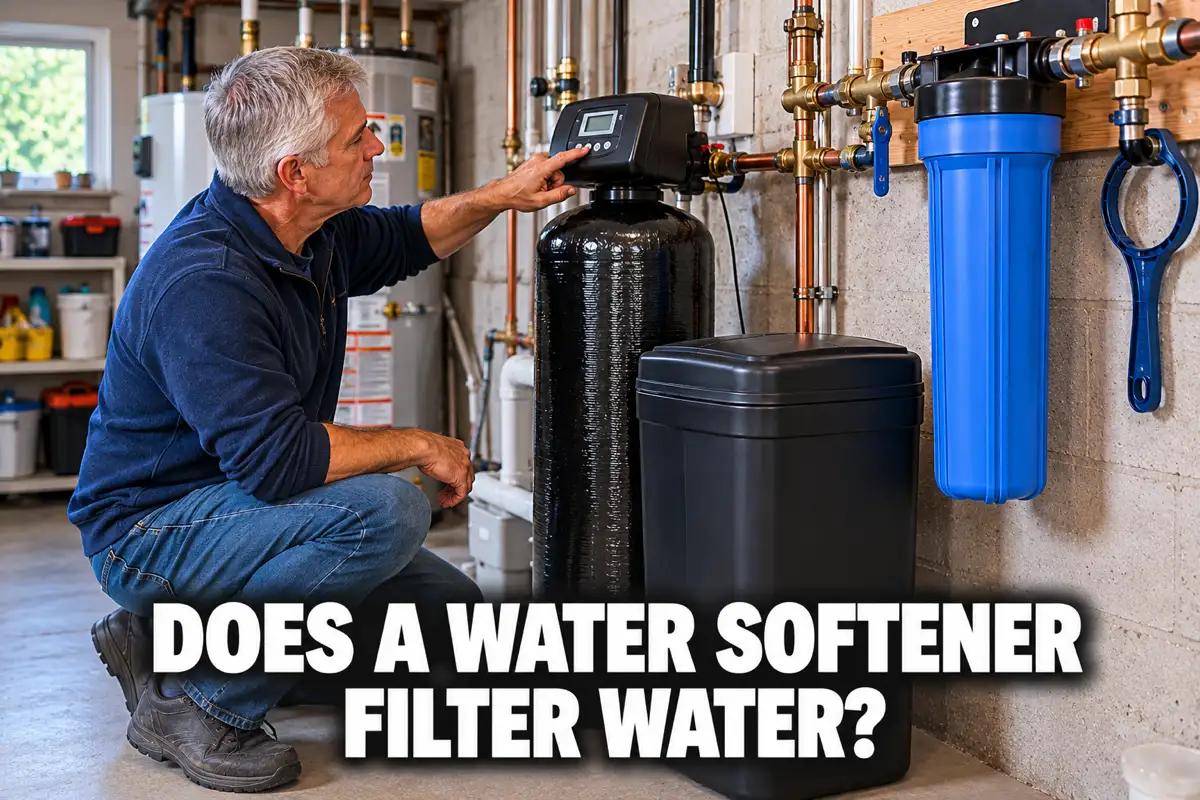
When people ask whether a water softener filters water, the answer is that it softens the water instead. It swaps the calcium and magnesium that make water hard for sodium or potassium, a trade called ion exchange (one dissolved mineral taking the place of another). It does not remove chlorine, lead, or bacteria. A filter does that job.
Hard water and contaminated water are different problems, and each needs a different tool. Here you’ll see how both tools work and where salt fits in. By the end, you’ll know what a softener fixes, what it leaves in the water, and how to look after it.
Key Takeaways
- A water softener targets calcium and magnesium, the minerals that cause scale, spotting, and soap that won’t lather.
- Softeners work by ion exchange, then recharge their resin with salt brine during a regeneration cycle.
- Softeners don’t remove chlorine or lead. Filters certified for those contaminants do.
- With regular care, softener resin often lasts about 10 to 20 years, and the salt level needs checking.
Does a Water Softener Filter Water? The Short Answer
A water softener is a home treatment system that removes the dissolved calcium and magnesium that make water hard. It swaps them for sodium or potassium through ion exchange, so the water gets softer but is not cleaned of contaminants like chlorine or lead.
According to the USGS, water hardness comes from dissolved calcium and magnesium that water picks up from rock and soil. Hardness is often reported in grains per gallon (GPG, a count of how much dissolved mineral sits in each gallon). In your home, it shows up as white scale on fixtures, cloudy spots on dishes, and soap that won’t lather.
Softeners certified to NSF/ANSI 44 (the standard for home softeners that use ion exchange) are tested mainly for reducing hardness. That certification doesn’t show that a unit reduces chlorine, lead, or other contaminants. A few models add optional claims, such as barium or radium, so check the product listing.
A water softener for hard water makes sense when scale builds up in your heater, fixtures, and pipes, or when soap never seems to rinse clean. It makes less sense if your goal is safer or better-tasting drinking water. For that, you need a filter certified for the specific contaminant you want gone.
How Does a Water Softener Work Inside Your Home System
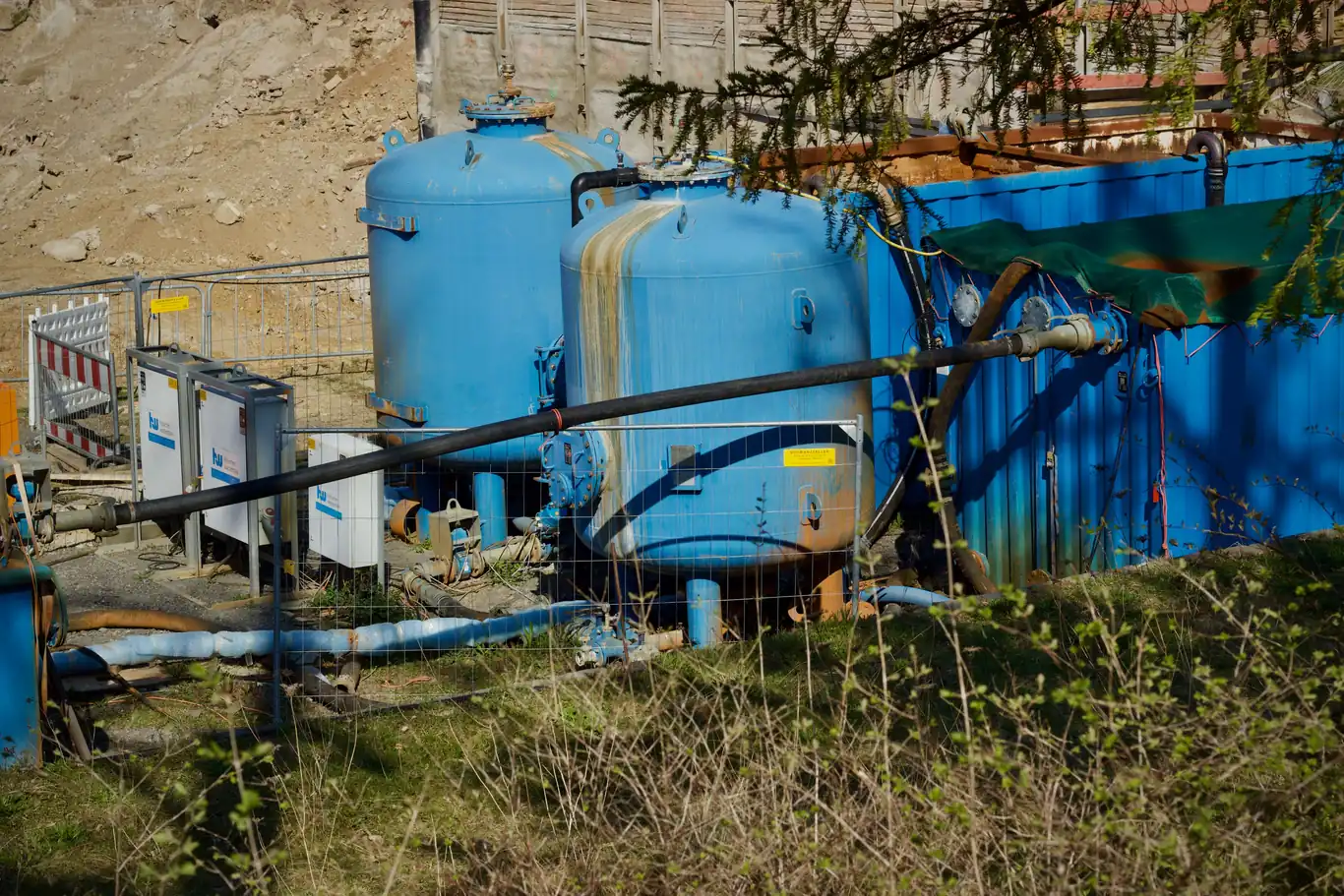
A water softener system uses ion exchange (a swap of one charged particle for another) to treat hard water. According to the USGS, hardness comes from dissolved calcium and magnesium. Inside the tank, resin (small plastic beads) holds sodium. As water flows past, the beads grab the calcium and magnesium and release sodium in their place.
Here is how a water softener works, from the first flow to the final rinse:
- Hard water flows into the resin tank, which holds the sodium-loaded beads.
- The beads trap calcium and magnesium and release sodium in exchange.
- Softened water leaves the tank and moves on to your taps and appliances.
- Over time the beads fill with minerals, and the control valve starts regeneration (a recharge cycle).
- Brine (a strong salt-and-water solution, about 10% salt) flushes the minerals out through the drain and restores the beads.
Resin capacity is measured in grains of hardness it can hold. Water hardness is a concentration, measured in grains per gallon (GPG). Every hard water softener system has a limit, so it must regenerate once the beads fill. A unit certified to NSF/ANSI 44 (the standard for home softeners) must bring hardness below 1 grain per gallon from test water at 20 grains per gallon.
Softener vs Filter: What Each One Removes
Does a water softener filter water the way a true filter does? No. A softener swaps out dissolved hardness minerals, and that is its main job. It does not cut chlorine, lead, PFAS (a group of long-lasting synthetic chemicals) or bacteria. To see how a filter handles those jobs, read about how a water filter works.
Certification is awarded per contaminant. The EPA points shoppers to filters certified to NSF/ANSI 53 for PFAS reduction. It also names NSF/ANSI 58 for reverse osmosis (RO, a filter that forces water through a very fine screen) systems. A softener’s NSF/ANSI 44 label does not show chlorine or lead reduction. The distinction manufacturers rarely make clear is that each standard covers only what its label names.
Here is what each common option targets and what it leaves behind:
| Treatment | What it targets | What it leaves behind |
| Water softener | Calcium and magnesium (hardness) | Chlorine, lead, PFAS and bacteria; it also adds some sodium or potassium |
| Carbon filter (a cartridge of activated charcoal that traps chemicals) | Chlorine, taste, odor and many organic chemicals | Hardness minerals; chloramine (a disinfectant) reduction depends on the carbon type and contact time |
| Sediment filter (a screen that blocks sand and rust) | Sand, silt and rust flakes | Dissolved minerals and chemicals |
| Reverse osmosis | Most dissolved salts and metals (total dissolved solids, or TDS), including hardness minerals | Some chemicals, depending on the model and its certification |
Salt, Sodium and Salty Water From Your Softener
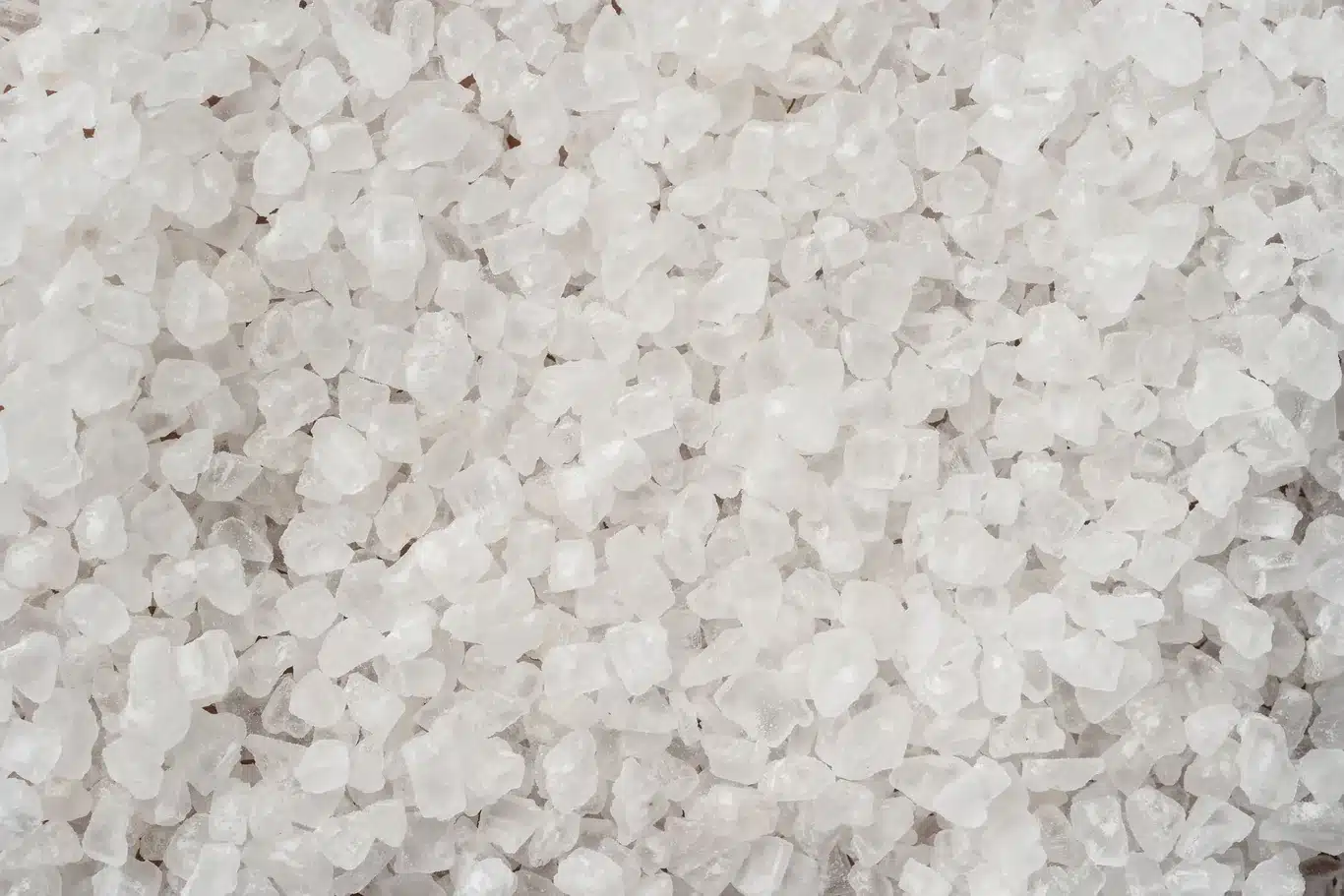
Salt goes into the brine tank, not into your glass. There it dissolves into brine (a strong salt-and-water solution) that recharges the resin. A softener that uses sodium chloride adds sodium to your water, because sodium takes the place of the calcium and magnesium it removes. One that uses potassium chloride adds potassium instead. The amount depends on how much hardness is removed.
Salt for water softener use comes in a few forms. Sodium chloride (ordinary salt, sold as pellets, crystals or blocks) is the standard choice. Potassium chloride is a common alternative, so check your manual to see which one your unit accepts. Pick one type and keep the tank stocked.
Salty water from a water softener often points to a cycle or drain problem:
- Stuck regeneration: If the cycle stops partway, brine can stay in the resin tank and reach your taps.
- Drain or valve fault: A blocked drain line or a worn valve can stop the final rinse from flushing brine out.
- Brine tank trouble: A salt bridge (a hard crust over empty space) or too much water in the tank upsets the brine mix and the cycle that follows.
A salty taste that lasts after a full cycle needs a closer look. Read the manual first. If the taste stays, call a service technician instead of guessing.
Maintenance and Sizing for a Water Softener System for Home Use
Maintenance for a water softener comes down to a few regular checks. Look at the salt level and refill before it runs low. Break up any salt bridge (a hard crust over empty space) you find. Clean the brine tank if sludge builds up at the bottom. Use a resin cleaner (a product that clears iron and other build-up from the beads) only when the manual says to.
A water softener system for home use needs the right capacity for your household. Two things set that capacity: how much water your household uses, and how hard your water is. A water test gives your hardness in GPG. A unit that is too small must regenerate more often, which uses more salt and water.
With proper care, resin often lasts 10 to 20 years. Treat that as a typical range, not a promise. A softener will not clean your drinking water of other contaminants, so add a filter if that is your goal. Our guide to the best water filter is a good place to start.
How We Research
We check every claim against primary sources. Federal agencies like the EPA and CDC come first. Certification bodies like NSF and AHAM come next. We verify each standard number against the issuing body. We review this guide on a set schedule.
Why Trust This Guide
Puritisimo covers only water and air quality. Our guidance is editorial and independent. We cite every health figure so you can check it. We never present a promotional claim as fact.
Softener for Scale, Filter for Contaminants
A softener and a filter solve different problems, and many homes need both. A softener protects pipes, heaters and fixtures from scale by swapping out the calcium and magnesium behind hardness. A filter handles what a softener leaves behind, such as chlorine, lead or PFAS. It must carry the right NSF/ANSI certification for each one. Keep the salt full and test your water first. To learn how to filter water at home, start with our simple guide. Once you know whether a water softener filters water, you can match each problem to the right equipment.
Frequently Asked Questions
Does a water softener filter water?
A water softener does not filter water the way a carbon filter or reverse osmosis system does. It swaps dissolved calcium and magnesium (the minerals that cause hardness) for sodium, and NSF/ANSI 44 is the standard that certifies this job. It does not target chlorine, lead or PFAS.
What are the differences between a water softener and a water filter?
A softener removes dissolved calcium and magnesium by ion exchange. A filter, such as a carbon, sediment or reverse osmosis unit, targets chlorine, particles and other contaminants. Certification is separate for each: NSF/ANSI 44 covers softeners, and NSF/ANSI 53 covers health-related contaminants in filters.
Do water softeners make your water bill go up?
A softener can raise water use slightly, because each regeneration cycle flushes brine to the drain. Softer water can also reduce scale build-up on water heaters and fixtures. The net effect depends on your unit, your water hardness and how often it regenerates.
What is the purpose of a water softener?
A water softener removes the calcium and magnesium that cause scale, spotting and soap that will not lather. The USGS explains that these dissolved minerals are what make water hard. Removing them protects pipes, heaters and fixtures from build-up.
Should your water softener have water in it?
Yes, the brine tank normally holds a mix of salt and water. That solution recharges the resin during regeneration. When you check the unit, look at the salt level, not just the water level, and refill the salt before it runs low.
References
- USGS. Hardness of Water. USGS Water Science School. Accessed 2026.
- NSF International. NSF/ANSI 44 Technical Requirements: Residential Cation Exchange Water Softeners. Accessed 2026.
- US EPA. Identifying Drinking Water Filters Certified to Reduce PFAS. Accessed 2026.
Medical Disclaimer: This content is for informational purposes only. It is not a substitute for professional medical advice, diagnosis, or treatment. If you have concerns about your water quality or air quality and their effects on your health, consult a qualified healthcare professional.

