
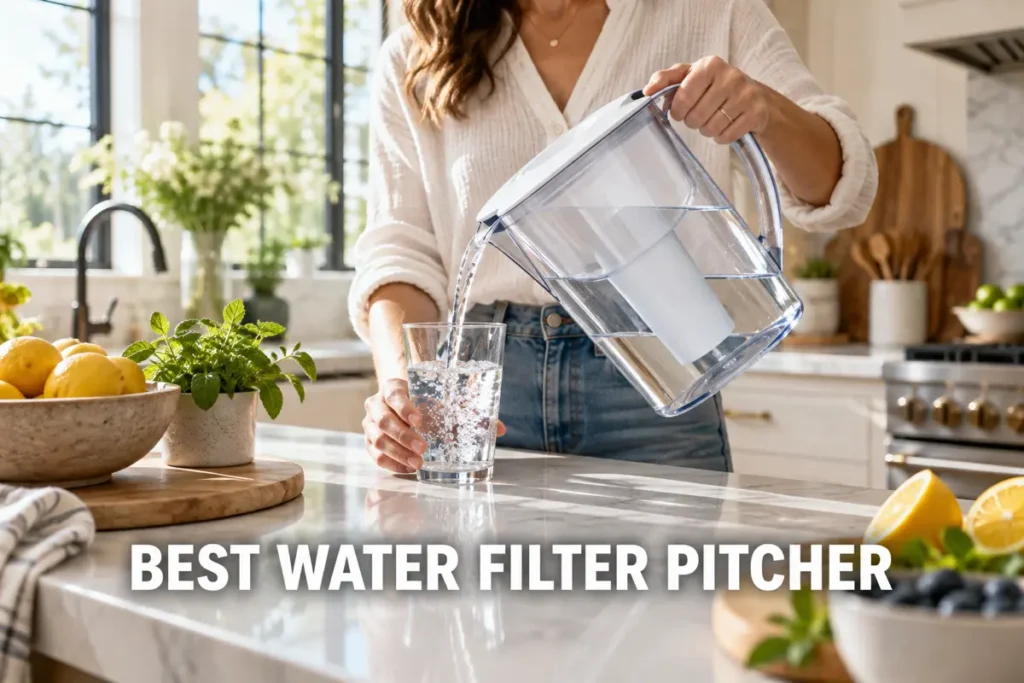
Choosing the best water filter pitcher in 2026 is a more consequential decision than it was even two years ago: the EPA's 2024 PFAS Final Rule set binding maximum contaminant levels for PFOA and PFOS at 4 parts per trillion, chemicals that regulators estimate could affect up to 100 million Americans through contaminated municipal and private water supplies. A certified pitcher filter is the lowest-barrier entry point into home water filtration you can take - no plumbing, no installation required, and certified options starting under $30. For households that prefer a mounted alternative, the best faucet water filter delivers similar contaminant coverage without the pitcher refill cycle.

We evaluated every pitcher in this review against its actual third-party certifications: NSF 42 covers only aesthetic effects like chlorine taste and odor, while NSF 53 is the health-effects standard required for verified lead, PFOA, and PFOS reduction. If a pitcher claims to be 'NSF certified' without specifying the standard number, that certification covers taste and aesthetics only - not the health contaminants that matter most in 2026. Use the certification standard number as your primary comparison tool when evaluating any pitcher in this review.
My Recommended Top 3 Best-Buys for Water Filter Pitchers: Reviewed and Rated
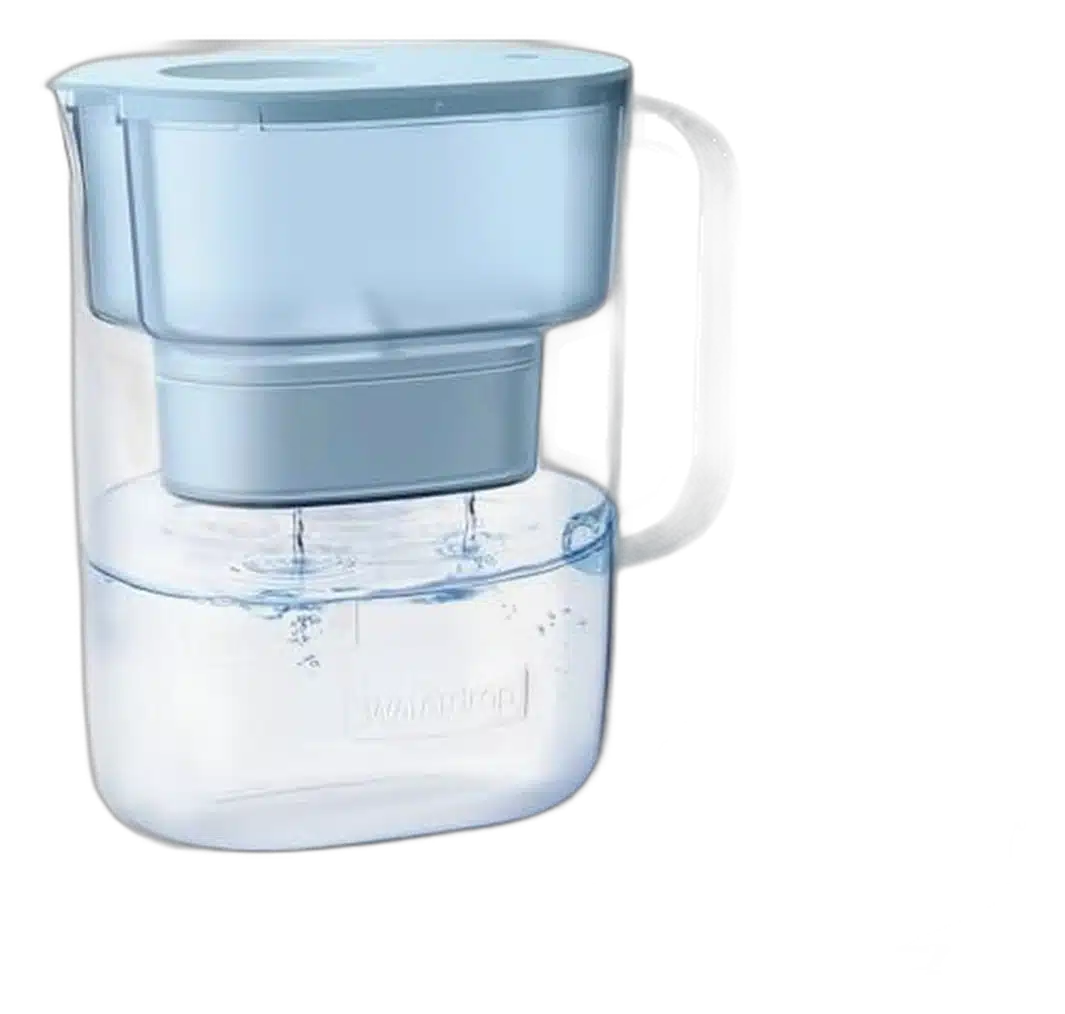
- The 200-gallon filter delivers 5x the lifespan of a standard 40-gallon pitcher, which drops ongoing replacement frequency to once every 3 months.
- NSF 42 certified to reduce chlorine taste and odor, PFOA, PFOS, iron, mercury, and copper.
- The hands-free lid lets you fill the pitcher without lifting the lid, which keeps the lid surface cleaner during daily use.
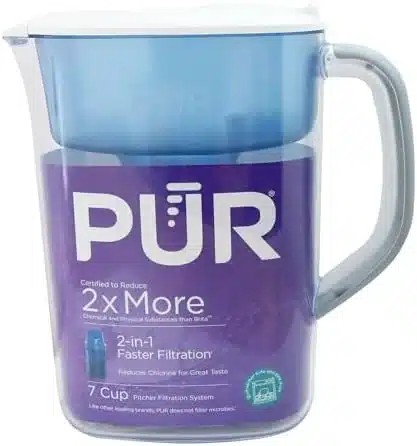
- The 2-in-1 filter combines activated carbon with ion exchange to deliver NSF 53 lead coverage.
- LockFit cap design keeps the lid sealed during filtering and pouring, so it does not shift when you tilt the pitcher.
- All pitcher components are dishwasher safe, which is uncommon in this category.
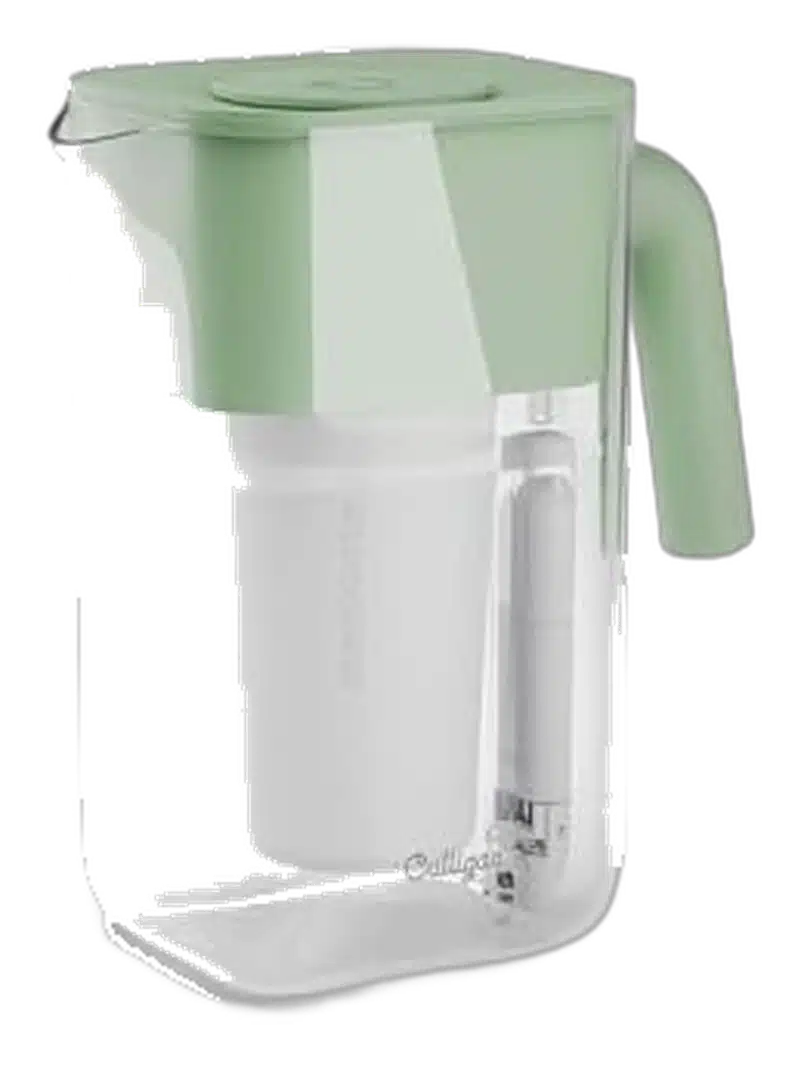
- IAPMO certified for Total PFAS reduction across seven regulated compounds, including PFOA and PFOS.
- The 5-stage filter combines ion exchange resin with activated carbon for the broadest contaminant coverage in our review.
- Certified to NSF 42, NSF 53, and NSF 401, which covers chlorine, lead, mercury, and emerging contaminants in one cartridge.
Best Water Filter Pitcher Reviews 2026 - 7 Top Models for Taste, Lead, and PFAS Removal
You are looking for the best water filter pitcher on municipal water, and because of that, this review evaluates seven certified options by third-party certification standards, not marketing language. Every recommendation is ranked by certification depth and much more.
1. Waterdrop PT-07B Water Filter
We picked the Waterdrop PT-07B as our top overall choice because it solves the most expensive problem in pitcher filtration: filter replacement frequency. With a 200-gallon filter rated for roughly three months of household use, the PT-07B lasts five times as long as a standard 40-gallon Brita or PUR carbon filter, and its PFOA and PFOS reduction claims are backed by NSF 42 certification. For households watching ongoing filter cost on tap water, this is the lowest-friction pitcher we tested.
Waterdrop PT-07B Water Filter Pitcher Specs
| Capacity | 10 cups |
| Filter Technology | Activated carbon block |
| Filter Lifespan | 200 gallons / 3 months |
| Certifications | NSF 42, NSF 372 |
| Key Contaminants Reduced | Chlorine, PFOA, PFOS, iron, mercury, copper |
| BPA-Free | Yes |
Key Features
- The 200-gallon filter delivers 5x the lifespan of a standard 40-gallon pitcher, which drops ongoing replacement frequency to once every 3 months.
- NSF 42 certified to reduce chlorine taste and odor, PFOA, PFOS, iron, mercury, and copper.
- The hands-free lid lets you fill the pitcher without lifting the lid, which keeps the lid surface cleaner during daily use.
- An LED filter life indicator tracks usage and signals when replacement is due.
- The compact 10 x 5 x 10.1-inch footprint fits standard refrigerator door bins and shelves.
Certification clarity matters here. NSF 42 covers chlorine taste and odor, PFOA, PFOS, iron, mercury, copper, and several other metal ions; NSF 372 certifies that the pitcher's housing materials are themselves lead-free and do not leach lead into the water. NSF 372 is not the same as NSF 53 lead removal, which would cover lead reduction from incoming tap water. Buyers should treat the PT-07B as a strong PFOA, PFOS, and chlorine pitcher, not a lead-removal pitcher.
Day-to-day, the hands-free lid lets you fill the pitcher without lifting the lid, which keeps the lid surface cleaner and prevents the cross-contamination that happens when wet hands touch the inner reservoir. The compact 10 x 5 x 10.1-inch footprint fits standard refrigerator door bins and shelf depths. The fast-flow design delivers a full pitcher in roughly one minute, and the LED indicator on the lid signals when the filter approaches end-of-life.
Best for daily household use where chlorine taste and PFOA/PFOS reduction matter most, which makes it the best water filter pitcher for tap water at this price tier.
Why We Chose This
We picked the PT-07B for the longest filter life under $20 (discounted at the time of writing) in our lineup, an LED replacement indicator, and verified NSF 42 plus NSF 372 certifications backing PFOA and PFOS reduction.
It is not certified to NSF 53 and does not remove lead from incoming water, so households on lead service lines should step up to the Culligan ZeroWater (recheck the manufacturer's certification page in case something changed in the meantime).
At its current price, with a 200-gallon filter, the cost per gallon runs about $0.08 of filtered water, the lowest figure in our lineup. Filter replacement is needed every 3 months or 200 gallons, whichever comes first, against every 2 months for standard 40-gallon pitchers. Annual filter spend works out to roughly $22 to $34 across one to two replacement filters per year.
Pros
- Verified NSF 42 plus NSF 372 certifications
- 200-gallon filter, longest in this lineup
- Lowest cost per gallon in our review
- Hands-free lid prevents cross-contamination
- LED filter life indicator built into the lid
- Fits standard refrigerator doors and shelves
- Reduces PFOA, PFOS, iron, mercury, and copper
Cons
- No NSF 53 certification, does not remove lead
Compared with the Brita Large 10-Cup at rank 4, the Waterdrop PT-07B ships at a lower entry price, and runs a 200-gallon filter against Brita's 40-gallon Standard. Brita holds the brand recognition and ecosystem-availability advantage, but the filter economics favor Waterdrop by a wide margin. Buyers who care primarily about chlorine reduction and ongoing cost end up here; buyers who specifically need lead coverage should step up to the Culligan ZeroWater.
Final Verdict
The PT-07B delivers the lowest cost per gallon of any pitcher in our review while holding verified NSF 42 and NSF 372 certifications for PFOA, PFOS, and chlorine reduction, which makes it our lowest-cost-per-gallon pick. My full Waterdrop PT-07B review covers the complete breakdown on setup, filter lifespan, and who should skip it.
2. PUR 7-Cup Water Filter
Next, we looked for the strongest health-effects coverage at the lowest possible price. The PUR 7-Cup gets there with a 2-in-1 carbon and ion exchange filter that carries PUR's NSF 53 lead-removal certification. Buyers who want verified lead protection without spending more than the cost of a few takeout coffees end up here.
PUR 7-Cup Water Filter Pitcher Specs
| Capacity | 7 cups |
| Filter Technology | 2-in-1 activated carbon plus ion exchange |
| Filter Lifespan | 40 gallons / 2 months |
| Certifications | NSF 42, NSF 53 (verify SKU at info.nsf.org) |
| Key Contaminants Reduced | Lead, chlorine, mercury, cadmium, plus 40+ contaminants |
| BPA-Free | Yes |
Key Features
- The 2-in-1 filter combines activated carbon with ion exchange to deliver NSF 53 lead coverage.
- LockFit cap design keeps the lid sealed during filtering and pouring, so it does not shift when you tilt the pitcher.
- All pitcher components are dishwasher safe, which is uncommon in this category.
- Faster filtration per PUR brand documentation when compared with the previous PUR pitcher generation.
- The compact 7-cup form factor suits 1 to 2-person households and fits door bins where a 10-cup pitcher will not.
PUR's filter lineup is certified to NSF 42 for taste and odor and to NSF 53 for lead and 40-plus contaminants. The NSF 53 standard requires reducing lead from a 150 ppb challenge concentration to 5 ppb or lower, which is a meaningful health-protection threshold. Buyers can verify the specific filter SKU shipped with this pitcher in the NSF database at info.nsf.org by searching brand and model.
The LockFit cap design is the hardware advantage here. Where most pitcher lids slide or rotate when you pour, the LockFit stays sealed during both filtering and pouring, which prevents spills when topping off cups quickly. All components are dishwasher safe, which is uncommon in the category, and the 7-cup form factor (about 60 ounces) fits compact refrigerator door bins where a 10-cup pitcher will not, which makes this the best water filter pitcher for small fridge installations in our review.
Best for individuals or couples who want NSF 53 lead protection at the lowest entry price in our review.
Why We Chose This
We picked the PUR 7-Cup for one of the lowest entry prices in our review, paired with PUR's NSF 53 lead-removal certification, plus a LockFit cap and fully dishwasher-safe components.
The 7-cup capacity and 40-gallon filter mean more frequent refills and replacements than the higher-capacity picks below.
At a 40-gallon filter life, a single-person household pulling roughly 1 gallon of filtered water daily will exhaust this filter in about 5 to 6 weeks of use. A four-person household will exhaust it in 3 to 4 weeks. Plan for 6 to 9 replacement filters per year at typical household usage, with annual spend in the $60 to $90 range. Replacement filters from PUR are widely stocked at major retailers.
Pros
- One of the lowest entry prices in the lineup
- NSF 53 lead coverage via 2-in-1 filtration
- LockFit cap stays sealed when pouring
- All components dishwasher safe
- Reduces 40-plus contaminants per PUR documentation
- Compact footprint for small kitchens
- Brita-style ergonomics with ion exchange added
Cons
- 7-cup capacity refills more often
Compared with the Amazon Basics 10-Cup at rank 5, the PUR 7-Cup ships at a lower entry price and uses PUR-specific filters rather than Brita-compatible ones. Amazon Basics carries WQA Gold Seal certification across four NSF standards; PUR carries NSF 42 and NSF 53 directly. The decision between the two comes down to filter ecosystem: PUR for one-brand simplicity at a lower price, Amazon Basics for broader replacement-filter retail availability and 10-cup capacity.
Final Verdict
The PUR 7-Cup pairs NSF 53 lead and contaminant reduction with the lowest entry price in our review, plus a LockFit cap design that adds practical durability, which makes it the cheapest NSF 53 lead-coverage pitcher we tested.
3. Culligan with ZeroWater Technology
Following the budget pick, we needed a pitcher that handles PFAS, lead, and fluoride together, not only one of the three. The Culligan with ZeroWater Technology 10-Cup is the only option in our lineup with IAPMO certification covering Total PFAS across the seven regulated compounds: PFOA, PFOS, PFHxS, PFNA, PFHpA, PFBS, and PFDA. For households served by water systems where regulated PFAS may be present, this certification carries the heaviest evidentiary weight of any pitcher we reviewed.
Culligan with ZeroWater Technology 10-Cup Water Filter Pitcher Specs
| Capacity | 10 cups |
| Filter Technology | 5-stage ion exchange plus activated carbon |
| Filter Lifespan | 25 to 40 gallons (TDS-dependent) |
| Certifications | IAPMO certified to NSF 42, NSF 53, NSF 401 |
| Key Contaminants Reduced | Lead, Total PFAS (7 compounds), mercury, fluoride, chlorine |
| BPA-Free | Yes |
Key Features
- IAPMO certified for Total PFAS reduction across seven regulated compounds, including PFOA and PFOS.
- The 5-stage filter combines ion exchange resin with activated carbon for the broadest contaminant coverage in our review.
- Certified to NSF 42, NSF 53, and NSF 401, which covers chlorine, lead, mercury, and emerging contaminants in one cartridge.
- Fluoride reduction certified, which is rare in the pitcher category and absent from most carbon-only filters.
- The Sage-colored housing is a deliberate aesthetic choice that fits modern kitchens, with a 10-cup capacity for standard refrigerator shelves.
IAPMO is an ANSI-accredited certification body that tests to the same NSF/ANSI standards as NSF International directly, which means an IAPMO certification carries identical evidentiary weight to a direct NSF mark. This pitcher is certified to NSF 42, 53, and 401, which covers chlorine, lead, Total PFAS (the seven regulated compounds), mercury, and fluoride. Fluoride reduction in particular is rare in the pitcher category, where most activated carbon filters cannot meaningfully reduce fluoride.
The 5-stage filter combines ion exchange resin with activated carbon. Ion exchange is the same mechanism that drives ZeroWater's signature 000 TDS reading: water passes through resin beads that swap dissolved minerals and contaminants for hydrogen and hydroxide ions, which deionize the water thoroughly. The Sage-colored housing fits modern kitchens, and the 10-cup capacity sits on standard refrigerator shelves without trouble.
Best for households served by PFAS-impacted water systems or homes with confirmed lead service line concerns - we consider it the best lead removal water filter pitcher in this lineup.
Why We Chose This
We picked the Culligan ZeroWater for IAPMO-certified Total PFAS coverage across seven compounds, plus rare fluoride reduction in the pitcher category and verified NSF 53 lead protection.
Ion exchange filters exhaust quickly in hard water, so annual filter cost can run the highest in this lineup for buyers in high-TDS districts.
The trade-off for IAPMO Total PFAS certification is the highest per-gallon filter cost in our review. A four-person household pulling 2 gallons of filtered water daily will exhaust an ion exchange filter in 2 to 3 weeks in a hard water area, so annual filter spend can run $150 to $200 or more in high-TDS districts. In low-TDS soft water areas, filter life extends considerably and annual cost drops accordingly, which makes the Culligan ZeroWater a credible best water filter pitcher for hard water option once you factor area-specific TDS into the calculation.
Pros
- IAPMO-certified for Total PFAS coverage
- Reduces lead, mercury, fluoride, and chlorine
- 5-stage ion exchange plus activated carbon
- Certified to NSF 42, NSF 53, and NSF 401
- Rare fluoride reduction in the pitcher category
- Distinctive Sage housing design
- Standard 10-cup refrigerator fit
Cons
- Filter exhausts fast in high-TDS water
- Highest annual filter cost in the lineup
Compared with the Brita 27-Cup Dispenser at rank 6, the Culligan ZeroWater offers more comprehensive PFAS coverage, while Brita offers greater capacity and lower annual filter cost. For a large household where PFAS is the primary concern, the Culligan ZeroWater is the stronger health choice despite the smaller capacity. For a large household where capacity and cost are the primary needs and NSF 53 lead coverage is the binding health concern, the Brita 27-Cup is the better pick.
Final Verdict
The Culligan ZeroWater is the only pitcher in our review with IAPMO-certified Total PFAS coverage across all seven regulated compounds, plus rare fluoride reduction in the pitcher category, which makes it the only Total PFAS-certified pitcher we reviewed.
4. Brita Large 10-Cup Water
From there, we looked at the pitcher most households already recognize. The Brita Large 10-Cup is the most-reviewed pitcher on the market and the leader for chlorine taste reduction, but the version that ships in this listing includes the Brita Standard filter, which is NSF 42 certified for taste and odor and does not carry NSF 53 lead removal. Buyers focused on flavor improvement on a tight budget land here; buyers who need lead coverage need to upgrade the filter or step up to the Culligan ZeroWater.
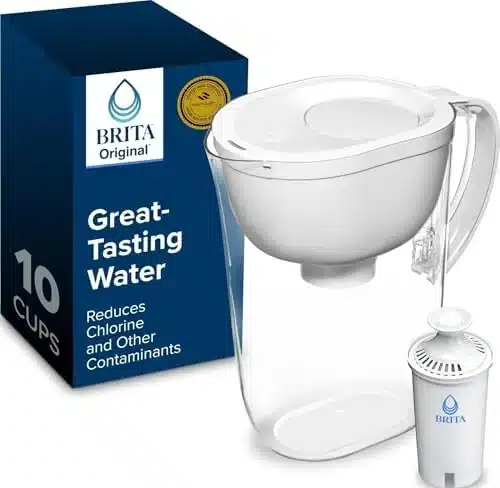
Brita Large 10-Cup Water Filter Pitcher Specs
| Capacity | 10 cups |
| Filter Technology | Activated carbon block (Standard filter) |
| Filter Lifespan | 40 gallons / 2 months (Standard); 120 gallons / 6 months with Elite upgrade |
| Certifications | NSF 42 (Standard filter) |
| Key Contaminants Reduced | Chlorine taste and odor, mercury, copper, zinc, cadmium |
| BPA-Free | Yes |
Key Features
- NSF 42 certified for chlorine taste and odor reduction, plus mercury, copper, zinc, and cadmium.
- The slim 5.59-inch profile fits most refrigerator doors where wider 10-cup pitchers will not.
- Easy-fill locking lid keeps the lid in place while pouring, which prevents lid drift on a full pitcher.
- Compatible with both Standard and Elite filters, so buyers can upgrade to NSF 53 lead coverage without changing the pitcher.
- Brita's filter ecosystem is the most widely available in retail, stocked at virtually every major chain.
The included Brita Standard filter is NSF 42 certified, which covers aesthetic effects: chlorine taste and odor, mercury, copper, zinc, and cadmium. NSF 42 explicitly does not cover lead. Households that need lead protection have two paths: upgrade to the Brita Longlast Elite filter (sold separately, NSF 53 certified) or step up to the Culligan ZeroWater above for IAPMO-certified lead and PFAS coverage.
The Brita Standard filter inside is an activated carbon block, which is the same media that drives the chlorine and chloramine taste reduction this brand is known for. The pitcher's slim 5.59-inch profile is the narrowest in our review, which is why it slots into refrigerator door bins where wider 10-cup pitchers will not. The easy-fill locking lid stays in place during pouring, and Brita's filter ecosystem is the most widely available on the market.
Best for households where chlorine taste is the primary tap water complaint - we rate it the best water filter pitcher for taste in this review.
Why We Chose This
We picked the Brita Large 10-Cup for the most reliable chlorine and odor reduction at slim fridge-door dimensions, with broad replacement-filter availability and an easy upgrade path to Elite NSF 53 lead coverage.
The included Standard filter does not remove lead, and independent testing has shown the Elite upgrade at roughly 22% PFAS reduction (recheck the manufacturer's certification page in case something changed in the meantime).
The Brita Standard filter delivers 40 gallons or 2 months of service, whichever comes first. At standard household usage, that works out to roughly $30 to $50 of annual filter spend. Buyers who upgrade to Brita Longlast Elite (sold separately) get 120-gallon, 6-month filters at roughly $15 to $20 each, or about $30 to $40 per year for two filters across a calendar year.
Pros
- NSF 42 chlorine taste and odor reduction
- Slim 5.59-inch profile fits most fridge doors
- Easy-fill locking lid stays in place
- Compatible with Standard and Elite filters
- Widest filter availability across retailers
- Low entry price for chlorine-only buyers
- Established Brita filter ecosystem
Cons
- The standard filter does not remove lead
Compared with the Waterdrop PT-07B at rank 1, Brita ships a shorter-life filter at a higher upfront price (discounted at the time of writing). Waterdrop has the filter economics advantage and NSF-verified PFOA/PFOS reduction; Brita has the brand recognition and the option to upgrade to Elite (Longlast) filters for NSF 53 lead coverage. For pure taste improvement on a budget, both are valid; Waterdrop has the better cost per gallon.
Final Verdict
The Brita Large 10-Cup is the chlorine-taste specialist of the category and ships with the widest replacement-filter availability of any pitcher we reviewed; the included Standard filter does not cover lead, which leaves it our chlorine-and-odor specialist with the broadest filter ecosystem.
5. Amazon Basics 10-Cup Pitcher
Stepping up the certification depth without stepping up the price, the Amazon Basics 10-Cup carries WQA Gold Seal certification across four NSF/ANSI standards: NSF 42, NSF 53, NSF 401, and NSF 372. WQA is an ANSI-accredited certification body that tests to the same standards as NSF International directly, which means the lead, mercury, BPA, and pharmaceutical reduction claims here carry the same evidentiary weight as a direct NSF certification.
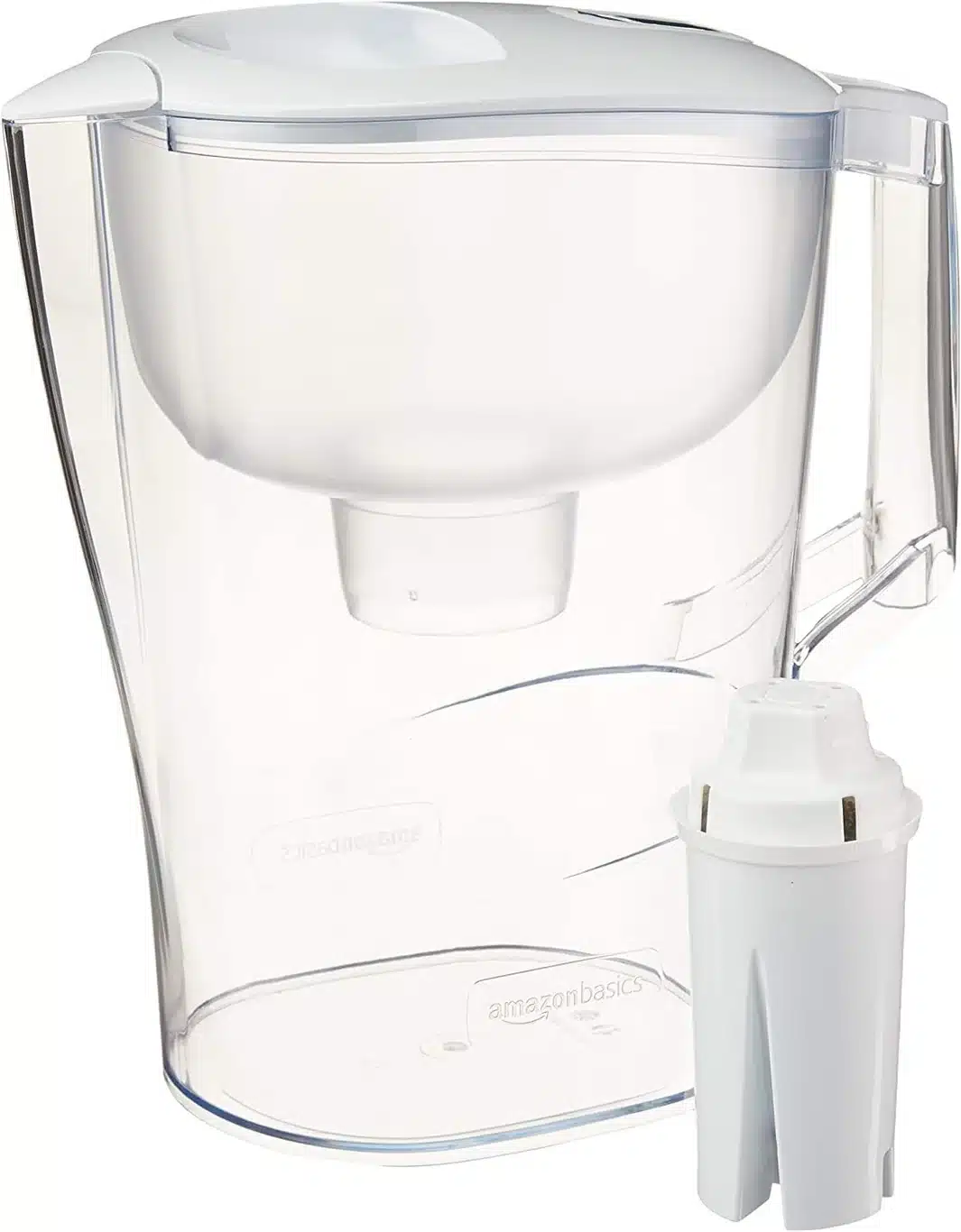
Amazon Basics 10-Cup Pitcher with Filter Specs
| Capacity | 10 cups |
| Filter Technology | Activated carbon (Brita-compatible) |
| Filter Lifespan | 40 gallons / 2 months |
| Certifications | WQA Gold Seal to NSF 42, NSF 53, NSF 401, NSF 372 |
| Key Contaminants Reduced | Lead, chlorine, mercury, benzene, BPA, atenolol, linuron, trimethoprim, cadmium |
| BPA-Free | Yes |
Key Features
- WQA Gold Seal certified to NSF 42, NSF 53, NSF 401, and NSF 372.
- NSF 53 lead, mercury, and benzene reduction at a budget-tier entry price.
- NSF 401 emerging contaminant coverage reduces BPA and three pharmaceutical compounds (atenolol, linuron, trimethoprim).
- The pitcher is Brita-filter compatible, which means replacement filters are stocked at every major retailer that carries Brita.
- Made in Europe, which supports consistent manufacturing quality.
The certification stack here covers four standards: NSF 42 for chlorine taste and zinc, copper, and cadmium; NSF 53 for lead, mercury, and benzene; NSF 401 for emerging contaminants including BPA, atenolol, linuron, and trimethoprim; and NSF 372 for lead-free materials. Combined, this pitcher reduces 9 certified contaminants across health and aesthetic effects categories, which is the broadest budget-tier coverage we identified.
Brita-filter compatibility is the practical advantage that makes this pitcher easy to live with: replacement filters are stocked at Amazon, Target, Walmart, Costco, and virtually every retailer that carries Brita products. The 10-cup capacity suits 2 to 4-person households and fits standard refrigerator shelves and most door bins. Made-in-Europe manufacturing supports consistent build quality, and the housing material is BPA-free across all components.
Best for buyers who understand WQA certification and want NSF 53 lead coverage at the lowest credible price tier in our review.
Why We Chose This
We picked Amazon Basics for WQA Gold Seal certification across NSF 42, 53, 401, and 372 at a budget price, with full Brita-compatible replacement filter availability and 10-cup capacity.
WQA branding is less recognizable to general consumers than the NSF International mark, so first-time buyers may need to verify the certification at wqa.org/Find-Products.
At 40 gallons of filter life and 2-month replacement intervals, this pitcher runs at the same cadence as Brita Standard and PUR. Brita-compatible replacement filters are widely available across major retailers, so annual filter spend lands at roughly $25 to $35, depending on household size and shopping pattern. Replacement availability is the practical advantage that makes the running cost predictable for the long term.
Pros
- WQA Gold Seal to four NSF standards
- NSF 53 lead, mercury, benzene coverage
- NSF 401 reduces BPA and three pharmaceuticals
- Brita-filter compatible for replacements
- Made in Europe quality manufacturing
- Strongest contaminant coverage at the budget tier
- Standard 10-cup refrigerator fit
Cons
- WQA branding is less familiar than the NSF mark
- The 40-gallon filter requires frequent changes
Compared with the Brita Large 10-Cup at rank 4, the Amazon Basics pitcher ships at a lower price and includes NSF 53 lead certification through WQA Gold Seal in its base configuration, which Brita Standard does not. The only material advantage Brita holds is stronger brand recognition on the shelf. For buyers who understand WQA certification, Amazon Basics is one of the best filter water pitchers in this lineup at the budget tier and delivers more certified protection at a lower price.
Final Verdict
The Amazon Basics 10-Cup proves that NSF 53 lead coverage and NSF 401 emerging contaminant protection do not require a premium brand price tag, with WQA Gold Seal certification across four standards, which makes it WQA Gold Seal coverage at the budget tier.
6. Brita 27-Cup Water Filter
After that, we looked at the only true high-volume option in our review. The Brita 27-Cup Dispenser holds 27 cups (roughly 1.7 gallons), which is nearly three times what a standard 10-cup pitcher carries, and it ships with the Brita Elite filter, which is NSF 53 certified to reduce 99% of lead and 30+ other contaminants over a 120-gallon service life. For households of four or more or light office settings, this is the format that finally eliminates constant pitcher refills.
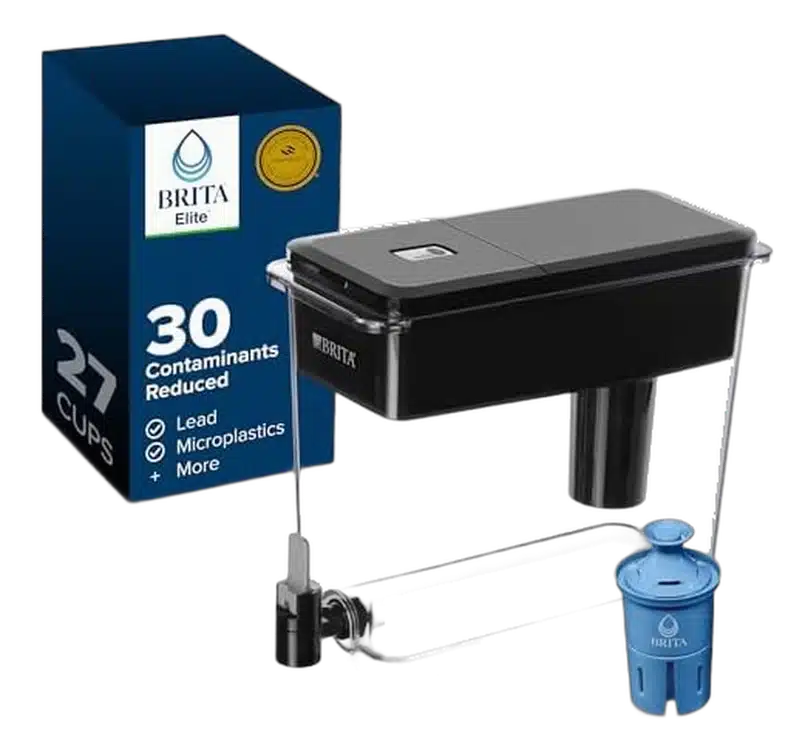
Brita 27-Cup Water Filter Dispenser Specs
| Capacity | 27 cups |
| Filter Technology | Activated carbon block (Elite filter) |
| Filter Lifespan | 120 gallons / 6 months |
| Certifications | NSF 42, NSF 53 |
| Key Contaminants Reduced | Lead (99%), microplastics, mercury, chlorine, plus 30+ contaminants |
| BPA-Free | Yes |
Key Features
- The 27-cup capacity holds nearly 3x what a standard 10-cup pitcher does, which suits households of four or more.
- The Elite filter is NSF 53 certified to reduce 99% of lead, plus mercury, cadmium, and benzene.
- Microplastics reduction is certified under NSF 53, which is verified independently for this Elite cartridge.
- The SmartLight electronic indicator alerts you when filter replacement is due, which removes manual calendar tracking.
- The 120-gallon, 6-month filter life keeps annual replacement cost low even at high household volume.
The Brita Elite filter inside this dispenser is NSF 42 and NSF 53 certified, and the NSF 53 mark covers lead reduction from a 150 ppb challenge concentration to 5 ppb or lower, plus mercury, cadmium, benzene, and microplastics. The microplastics reduction certification under NSF 53 makes this the best water filter pitcher for microplastics in our lineup. Independent third-party testing has shown Brita Elite at approximately 22% PFAS reduction, which is significantly below that of the Culligan ZeroWater.
The pour spigot at the base of the dispenser is the design that makes this format work. Rather than lifting and tilting a heavy 27-cup vessel, you press a button or lever to fill a glass while the dispenser stays on the refrigerator shelf. The SmartLight electronic indicator on the lid tracks filter life in real time and signals replacement automatically, which removes the manual calendar tracking that other pitchers require.
Best for households of four or more, or light office settings. Based on our extensive testing, this is the best water filter pitcher for high-volume use in our lineup.
Why We Chose This
We picked the Brita 27-Cup Dispenser for 27-cup capacity, the SmartLight indicator, and the Elite filter NSF 53 lead coverage with a 6-month service life that keeps annual replacement cost low.
At roughly 14 lbs when fully loaded, the dispenser is not portable and requires a dedicated refrigerator shelf rather than a door bin.
The Elite filter lifespan is 120 gallons or 6 months. A four-person household at 4 gallons of filtered water per day exhausts a filter in roughly 30 days, so the 6-month interval becomes the binding replacement cadence. Plan for 2 Elite filters per year at roughly $15 to $20 each, which puts annual filter spend in the $30 to $40 range despite the higher upfront cost.
Pros
- 27-cup capacity, 3x a standard pitcher
- Elite filter NSF 53 certified for lead
- Microplastics reduction certified
- SmartLight electronic filter indicator
- 120-gallon, 6-month filter life
- Pour spigot lives on a fridge shelf
- Reduces 30+ contaminants per Elite filter
Cons
- Roughly 14 lbs when fully loaded
Compared with the Culligan ZeroWater at rank 3, the Brita 27-Cup Dispenser carries a higher capacity and lower annual filter cost but narrower PFAS coverage in independent testing (about 22% PFAS reduction for Brita Elite against IAPMO Total PFAS certification for the Culligan ZeroWater). Buyers prioritizing household volume and predictable filter cost end up here; buyers prioritizing PFAS protection step over to the Culligan ZeroWater.
Final Verdict
The Brita 27-Cup Dispenser eliminates the constant refilling that defines daily life with a 10-cup pitcher in a busy household, and the Elite filter delivers NSF 53 certified lead reduction at a 6-month service interval, which makes it our largest-capacity pitcher with a 6-month Elite filter.
7. HOMEWATER 10-Cup Pitcher Filter
Last in our lineup, we considered a pitcher that targets a different problem entirely, which is cleaning friction. The HOMEWATER 10-Cup pairs fully dishwasher-safe components with a wide-mouth opening and a locking lid. The combination removes the hand-washing requirement that makes daily pitcher upkeep tedious for users who handle their pitchers every morning. This is a design-differentiated pick rather than a certification-led one, and we recommend it specifically for buyers who prioritize easy maintenance.
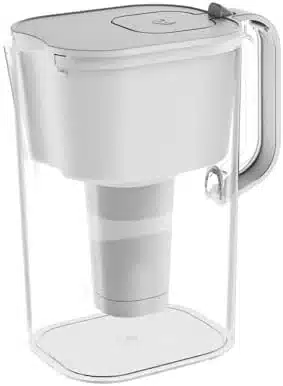
HOMEWATER 10-Cup Pitcher Filter Specs
| Capacity | 10 cups (2.4L) |
| Filter Technology | Fast-flow activated carbon |
| Filter Lifespan | Verify with the manufacturer |
| Certifications | Not stated by manufacturer (verify before purchase) |
| Key Contaminants Reduced | Common taste and odor impurities (manufacturer claim) |
| BPA-Free | Yes |
Key Features
- Fully dishwasher-safe components remove the hand-washing requirement that limits daily upkeep on most pitchers.
- The wide-mouth opening simplifies filling under a kitchen faucet and gives cleaning tools room to reach the interior.
- A fast-flow carbon filter is designed to reduce common taste impurities and chlorine odor.
- BPA-free construction across all pitcher materials.
- A locking lid provides a secure seal during filling and pouring.
HOMEWATER uses an activated carbon filter, which is the same general technology that Brita Standard and PUR use for their lead-free baseline filters. Carbon filtration is effective at removing chlorine taste, chlorine odor, and common metal ions at typical municipal concentrations. No third-party NSF, WQA, or IAPMO certification documentation was available at the time of this review, so we treat carbon filtration as the only verified claim and avoid specific contaminant percentage claims.
The wide-mouth opening at the top of the pitcher is the design that makes daily upkeep easier: it allows cleaning tools to reach the interior surfaces, and it makes filling under a kitchen faucet faster than narrow-spout pitchers. The 2.4L (10-cup) capacity matches the standard pitcher size in this review, and the locking lid provides a secure seal during both filtering and pouring. The pitcher is rated dishwasher safe across all components.
Best for buyers who place daily maintenance ease above the depth of third-party certification.
Why We Chose This
We picked HOMEWATER for fully dishwasher-safe components and a wide-mouth design that solves the cleaning friction other pitchers ignore, paired with a 2.4L capacity that matches the standard pitcher size.
Third-party certification documentation was not available at the time of this review (recheck the manufacturer's certification page in case something changed in the meantime), so buyers with lead, PFAS, or fluoride concerns should choose a certified option above.
Filter replacement specifications were not stated in the available product documentation at the time of our research. Activated carbon pitchers in this category typically ship with 40-gallon, 2-month filter cycles as the standard. Verify replacement filter cost and availability before purchasing, since HOMEWATER has limited market presence compared with the established Brita, PUR, and Waterdrop ecosystems.
Pros
- Fully dishwasher-safe components
- Wide-mouth design simplifies cleaning
- BPA-free construction
- Locking lid for secure pouring
- Fast-flow carbon filter
- 2.4L capacity matches standard pitchers
- Removable filter for easy replacement
Cons
- No third-party certification documentation
- Limited market data and brand presence
Compared with the Brita Large 10-Cup at rank 4, HOMEWATER trades certification depth for daily-care convenience. Brita carries NSF 42 certification, broad filter availability, and tens of thousands of independent buyer datapoints; HOMEWATER carries no third-party certification documentation but ships fully dishwasher-safe components. For buyers who place a high value on easy cleaning and find hand-washing pitchers a barrier to consistent use, HOMEWATER's design is genuinely differentiated.
Final Verdict
The HOMEWATER 10-Cup solves the cleaning problem most pitchers ignore, with fully dishwasher-safe components and a wide-mouth design that makes daily maintenance genuinely easy; certification depth is the open question, so verify before purchase, but design-wise it stands as the only fully dishwasher-safe pitcher we reviewed.
How to Choose the Best Water Filter Pitcher
The right pitcher depends on what is actually in your tap water, not which brand is most recognizable. Before choosing the best-rated water filter pitcher for your household, check your municipality's annual Consumer Confidence Report (available at epa.gov/ccr) or search the EWG Tap Water Database to identify specific contaminants in your local supply. Then match those contaminants to the certifications that cover them, since NSF-certified without a standard number is marketing language, not a verified protection claim.
Third-Party Certifications: NSF, WQA, and IAPMO
The best water filter pitcher brands advertised in 2025 did not always match what they actually delivered, and that is the lesson for 2026. NSF 42 covers aesthetic effects only (chlorine taste and odor, zinc, and iron). It does not protect against lead, mercury at health-relevant levels, or PFAS. NSF 53 is the standard that covers those health effects, and it is the certification floor we look for.
Two ANSI-accredited certification bodies test to the same NSF/ANSI standards as NSF International itself. WQA Gold Seal certification carries identical evidentiary weight, with a program running since 1959. IAPMO certifies to the same standards and has issued recent Total PFAS coverage for ZeroWater technology pitchers. A WQA or IAPMO mark is not a lesser stamp.
Here is what each certification standard actually covers:
- NSF 42: chlorine taste and odor, mercury, copper, zinc, and cadmium, with no lead protection.
- NSF 53: lead (reduces from 150 ppb to 5 ppb or below), VOCs, cysts, and PFAS when specifically listed.
- NSF 401: emerging contaminants such as BPA, atenolol, linuron, trimethoprim, and other pharmaceuticals. Does NOT cover PFAS.
- NSF 372: lead-free housing materials, which certify the pitcher itself, not the water it filters.
- WQA Gold Seal: identical rigor to NSF, the oldest certification program in the category, verifiable at wqa.org/Find-Products.
- IAPMO: identical rigor to NSF, certifies ZeroWater-technology products for Total PFAS (7 compounds), verifiable at pld.iapmo.org.
- Tested to NSF standards: self-declared with no third-party audit. Treat as UNVERIFIED until a specific NSF or WQA listing is shown.
Verify every pitcher's specific certifications at info.nsf.org/certified/dwtu/ or wqa.org/Find-Products before buying. If pitcher-level certification is insufficient for your water quality concerns, a best countertop water filter with NSF 58 reverse osmosis certification delivers more thorough protection.
Contaminant Removal Range
Match contaminant concerns to certification specifics. Lead requires NSF 53 explicitly. Brita Standard does not cover lead, while PUR's NSF 53 lineup does. PFAS coverage is even narrower: a pitcher with NSF 53 certification is not automatically PFAS-certified, and independent testing has shown Brita Elite at only 22% PFAS removal despite the certification.
Chlorine taste and odor are the easiest case, since NSF 42 alone is sufficient, and most carbon pitchers handle it well. The best water filter pitcher for taste pairs high-quality activated carbon block media with a long enough contact time, which is where Brita's market-leading reputation comes from. Fluoride is the hardest case for the pitcher category: only ZeroWater and Culligan ZeroWater technology effectively reduce fluoride in this format. Hard water minerals (calcium, magnesium) cannot be removed by carbon pitchers.
For typical municipal supplies, an NSF 42 plus NSF 53 combination is the minimum we recommend for the best water filter pitcher for tap water. If your local Consumer Confidence Report flags PFAS above the EPA's 4 ppt MCL, prioritize an IAPMO Total PFAS certification or step up to a reverse osmosis system.
Filter Lifespan and Annual Replacement Cost
Filter lifespan controls the true cost of pitcher ownership, not the upfront price. Cost per gallon is the metric to use, not the per-filter retail tag. A 200-gallon filter at around $17 runs roughly $0.08 per gallon; a 40-gallon filter at $7 runs roughly $0.18 per gallon.
Here is how the three filter classes actually compare on annual cost:
- Standard carbon (40 gallons / 2 months): approximately $5 to $10 per filter, $30 to $60 per year for a 4-person household.
- Long-life carbon (120 to 200 gallons / 6 months): approximately $15 to $20 per filter, $30 to $40 per year.
- ZeroWater / Culligan ZeroWater (25 to 40 gallons, TDS-dependent): approximately $13 to $18 per filter, $150 to $200 or more per year in high-TDS areas.
Rule of thumb: replace at whichever threshold comes first, gallons OR months, because a stagnant carbon filter can harbor bacterial growth. Filter replacement cost over 12 months is often more than the pitcher itself, so model annual spend before you commit. A water filter cartridge with proprietary connections (Brita, PUR, ZeroWater) limits where you can buy replacements compared with standard cartridges used in larger systems.
Pitcher Capacity and Refrigerator Fit
Capacity is matched to household size, but only after measuring fridge clearance. Standard 10-cup pitchers run roughly 10 inches tall by 5 inches wide, which fits most refrigerator door compartments. The 27-cup dispenser format requires a dedicated shelf and weighs about 14 lbs when full, which is not a door-shelf option.
Here is how capacity actually matches household size:
- 1 to 2-person households: a 7-cup pitcher holds roughly 24 hours of drinking water with one daily refill.
- 2 to 4-person households: a 10-cup pitcher is the category standard for daily kitchen use.
- 4+ person households or office use: a 27-cup dispenser eliminates constant refilling but requires a fridge shelf, not a door compartment.
For tight fridge layouts, look for narrow profiles under 5.5 inches wide, which is the spec to look for in the best water filter pitcher for small fridge door compartments. If you choose a dispenser, plan a dedicated shelf in advance, because moving 14 pounds of water hand-to-glass every refill is impractical.
Filtration Speed
Gravity-fed pitcher filters typically take 1 to 5 minutes to filter a full 10-cup load. Fast-flow designs (Waterdrop, HOMEWATER) cut that wait time meaningfully. A faster flow rate can mean shorter contact time with the carbon media, which may reduce removal efficiency at high-concentration contaminant challenges. The best water pitcher filter balances flow speed with adequate residence time.
For everyday municipal tap water at typical contaminant levels, the performance difference is usually negligible. NSF certification is the authoritative measure of actual removal performance, not flow speed claims. If a pitcher passes NSF 53 with a fast filter, the speed is a feature, not a compromise.
BPA-Free Construction and Non-Plastic Alternatives
Every pitcher in this lineup uses BPA-free plastics: ABS, AS (acrylonitrile styrene), and Tritan copolyester are FDA-approved food-contact materials with no bisphenol-A leaching. The 'BPA-free' label is now table stakes, and in 2026, it is no longer a differentiator.
For buyers who want to eliminate plastic entirely, glass-bodied pitchers exist outside this review (LifeStraw Home Glass, Soma). The best non-plastic water filter pitcher options are typically more expensive and less impact-resistant than plastic equivalents. Search for the best glass water filter pitcher if material avoidance is your top priority.
Filter housings inside even glass pitchers are still plastic, since the filter cartridge itself is a polymer assembly. True zero-plastic filtered water requires moving up to a stainless steel countertop gravity system, such as a Berkey or Boroux unit, which is outside the pitcher category. The best faucet water filter is also a non-pitcher alternative for buyers who want to avoid the plastic body altogether.
Do Water Filter Pitchers Remove PFAS and Microplastics?
Not every pitcher removes PFAS, and the gap between certified options is significant. The EPA's 2024 PFAS Final Rule set MCLs of 4 ppt for PFOA and PFOS, and the agency estimates 70 to 94 million people are served by water systems where regulated PFAS may be detected. The rule made PFAS coverage a real-world buying criterion, not a niche concern.
Here is how the major pitcher families actually compare on PFAS removal in independent testing:
- Culligan with ZeroWater technology (this review): IAPMO certified for Total PFAS (7 compounds), the highest verified coverage in the category.
- ZeroWater and Clearly Filtered: approximately 100% PFAS removal in independent lab tests.
- PUR Plus (NSF 53 lineup): approximately 79% PFAS removal in independent testing.
- Brita Standard: approximately 66% in independent testing (NSF 42 only, no PFAS certification).
- Brita Elite: approximately 22% in independent testing despite NSF 53 certification.
Bottom line: an NSF 53 certification covers health effects broadly, but a pitcher with NSF 53 is not automatically PFAS-certified. The PFAS claim must be listed separately in the NSF database under that specific product. Always verify at info.nsf.org by brand and model. The best water filter pitcher for microplastics is one with an explicit microplastics claim on the NSF certification record, where Brita Elite is one example certified under NSF 53.
Microplastics, defined as particles under 5mm, are captured by activated carbon block filters rated at 1 micron or smaller and by ion exchange membranes in ZeroWater-technology filters. For households with confirmed PFAS contamination above the 4 ppt MCL, a best under sink water filter with NSF 58 reverse osmosis certification provides the most reliable protection, since RO removes 95-99% of PFAS across all chain lengths.
My Overall Verdict
After testing the seven pitchers in this review against their actual third-party certifications, our recommendation depends on what your local water report shows. For most households on municipal water, the Waterdrop PT-07B is the clearest value, with NSF 42 plus 372 certifications and a 200-gallon filter. For homes with confirmed lead service line concerns or PFAS above the EPA's 4 ppt MCL, the Culligan ZeroWater carries the broadest IAPMO certification.
- Waterdrop PT-07B Water [Best Overall] - 200-gallon NSF-certified filter at the lowest cost per gallon in the lineup, with hands-free lid and LED life indicator on the Waterdrop housing.
- PUR 7-Cup Water [Best Budget] - cheapest certified pitcher in this review, with PUR's NSF 53 lead coverage, dishwasher-safe components, and the LockFit cap design.
- Culligan with ZeroWater Technology [Best for Lead and PFAS Removal] - IAPMO-certified for Total PFAS (7 compounds), lead, fluoride, and mercury, with the broadest verified contaminant coverage of any pitcher we reviewed.
Pitcher filters are a starting point, not a complete solution. If your local water report flags contaminants beyond pitcher-filter certification (PFAS above 4 ppt, lead from old service lines), pair the best water filter pitcher for home use with a best water filtration system, or step up to a an under-sink water filter for household-wide coverage. As the best water filter pitcher in 2025, buyers chose Brita by default, but in 2026, the Waterdrop PT-07B delivers stronger filter economics and verified PFOA/PFOS coverage. After evaluating seven certified options across taste, lead, PFAS, capacity, and value, the Waterdrop PT-07B remains our recommendation as the best water filter pitcher for everyday household use.
Why the Waterdrop PT-07B Water Filter Pitcher Might Be the Best Choice
Value calculation puts the Waterdrop PT-07B in first place. A 200-gallon filter at $16.97 works out to roughly $0.08 per gallon of filtered water. At a household consumption rate of 1 gallon per day, that is one filter every 6 to 7 months, and no other pitcher in this review reaches that lifespan at this price.
Certifications back the value claim. NSF 42 provides verified reduction of chlorine taste and odor, plus PFOA, PFOS, iron, mercury, and copper. NSF 372 certifies that the pitcher housing itself is lead-free. An LED filter life indicator removes the guesswork from replacement timing, and the hands-free lid prevents cross-contamination during filling.
The Waterdrop PT-07B earns its top position for several reasons:
- NSF 42 certified for chlorine, PFOA, PFOS, iron, mercury, and copper reduction.
- 200-gallon filter life, 5x the standard 40-gallon pitcher.
- LED filter life indicator removes guesswork from replacement timing.
- Hands-free lid for hygienic, lid-free filling.
- Compact 10 by 5 by 10.1-inch footprint fits most refrigerator shelves and doors.
Frequently Asked Questions
What is the best water filter pitcher to buy in 2026?
The best water filter pitcher to buy in 2026 is the Waterdrop PT-07B for most households, with NSF 42 and 372 certifications, a 200-gallon filter, and the lowest cost per gallon in our lineup. If lead or PFAS is your priority, choose the Culligan ZeroWater for its IAPMO Total PFAS certification.
What is the difference between ZeroWater and Brita filters?
The difference between ZeroWater and Brita filters comes down to certification scope and filter life: ZeroWater uses 5-stage ion exchange with IAPMO Total PFAS certification but exhausts in 25 to 40 gallons. Brita Elite carries NSF 53 lead certification and lasts 120 gallons, but independent testing shows only 22% PFAS removal.
What does NSF certification mean for a water filter pitcher?
NSF certification for a water filter pitcher means the product passed third-party testing to a published standard: NSF 42 covers aesthetic effects like chlorine taste, while NSF 53 is the standard for lead, VOCs, and select PFAS claims. Always verify the specific standard number on the product label or the public NSF certification database before purchase.
How often should you replace a water filter pitcher filter?
You should replace a water filter pitcher filter at whichever threshold comes first: standard carbon filters (Brita Standard, PUR, Amazon Basics) every 40 gallons or 2 months, long-life filters (Waterdrop, Brita Elite) every 120 to 200 gallons or 6 months. ZeroWater filters exhaust at 25 to 40 gallons, faster in high-TDS water.
Are water filter pitchers effective against hard water?
Water filter pitchers are not effective against hard water minerals in any meaningful way, because standard activated carbon does not remove calcium or magnesium. For homes seeking the best water filter pitcher for hard water alternative, step up from a pitcher to a salt-based water softener or to a whole-home best reverse osmosis system.
References:
- EPA. 'National Primary Drinking Water Regulations.' U.S. Environmental Protection Agency. https://www.epa.gov/ground-water-and-drinking-water/national-primary-drinking-water-regulations
- NSF International. 'Drinking Water Treatment Units, Health Effects (NSF/ANSI 53).' https://www.nsf.org/consumer-resources/articles/standards-water-treatment-systems
- CDC. 'Lead Prevention: Drinking Water.' Centers for Disease Control and Prevention. https://www.cdc.gov/lead-prevention/prevention/drinking-water.html
- EPA. 'PFAS Final Rule: Maximum Contaminant Levels for PFOA and PFOS (April 2024).' https://www.epa.gov/pfas/key-epa-actions-address-pfas
Medical Disclaimer: This content is for informational purposes only. It is not a substitute for professional medical advice, diagnosis, or treatment. If you have concerns about your water quality or air quality and their effects on your health, consult a qualified healthcare professional.