


Purewell vs Berkey comes down to proof and supply. Pick Purewell if you are buying new and want named NSF/ANSI standards, and pick Berkey if you already own one. Both are countertop gravity filters, which pull water through cartridges with no pump, power or plumbing. The EPA’s 2023 stop-sale order on Berkey’s Black Berkey filters is the biggest difference between them.
This guide compares the Purewell 3-Stage model with the Big Berkey 2.25-gallon system. It uses each maker’s own listing, the EPA order and NSF/ANSI standards (product tests set by NSF, an independent testing group). You will leave knowing which claims are certified, which are only stated, and which unit fits your home.
Key Takeaways
- Purewell lists NSF/ANSI 42 and 372, which cover taste and odor and lead in materials, not lead removal.
- EPA ordered Berkey International in May 2023 to stop selling Black Berkey filter products, citing registration and labeling.
- The order we read rests on registration and labeling. It makes no finding that the filters are unsafe.
- Neither maker’s pages we read show a health-effects certification, so verify any lead claim yourself.
Purewell vs Berkey at a Glance
The Purewell unit gives a new buyer a clearer paper trail, and the Big Berkey carries the better-known name with a disputed supply. Both are listed at 2.25 gallons and sit on a counter, so size will not settle the choice.
The table draws on each maker’s listing and on the EPA’s May 2023 order that names the Big Berkey system. Read every row as a stated claim, not a measurement from your tap:
| Factor | Purewell 3-Stage | Big Berkey |
| Model compared | Purewell 3-Stage gravity system, model PW-OB | Big Berkey 2.25-gallon system with BB9-2 filters |
| Listed capacity | 2.25 gallons | 2.25 gallons |
| Filter elements | Two filters with a 0.01 micron (one millionth of a centimeter) pore rating, per Purewell’s listing | A pair of Black Berkey elements, per the EPA order |
| NSF/ANSI standards stated | 42 and 372, per Purewell’s listing | A Berkey dealer says Phoenix-element setups are listed under 42 |
| Health-effects standard (NSF/ANSI 53) | Not named in the listing we reviewed | Not named in the pages we reviewed |
| EPA stop-sale order | Not named in the order we reviewed | Named in FIFRA-08-2023-0038, May 2023 |
| Replacement filters | Sold by model; match the exact model number | A dealer says standalone Black Berkey elements are unavailable and names Phoenix as the replacement |
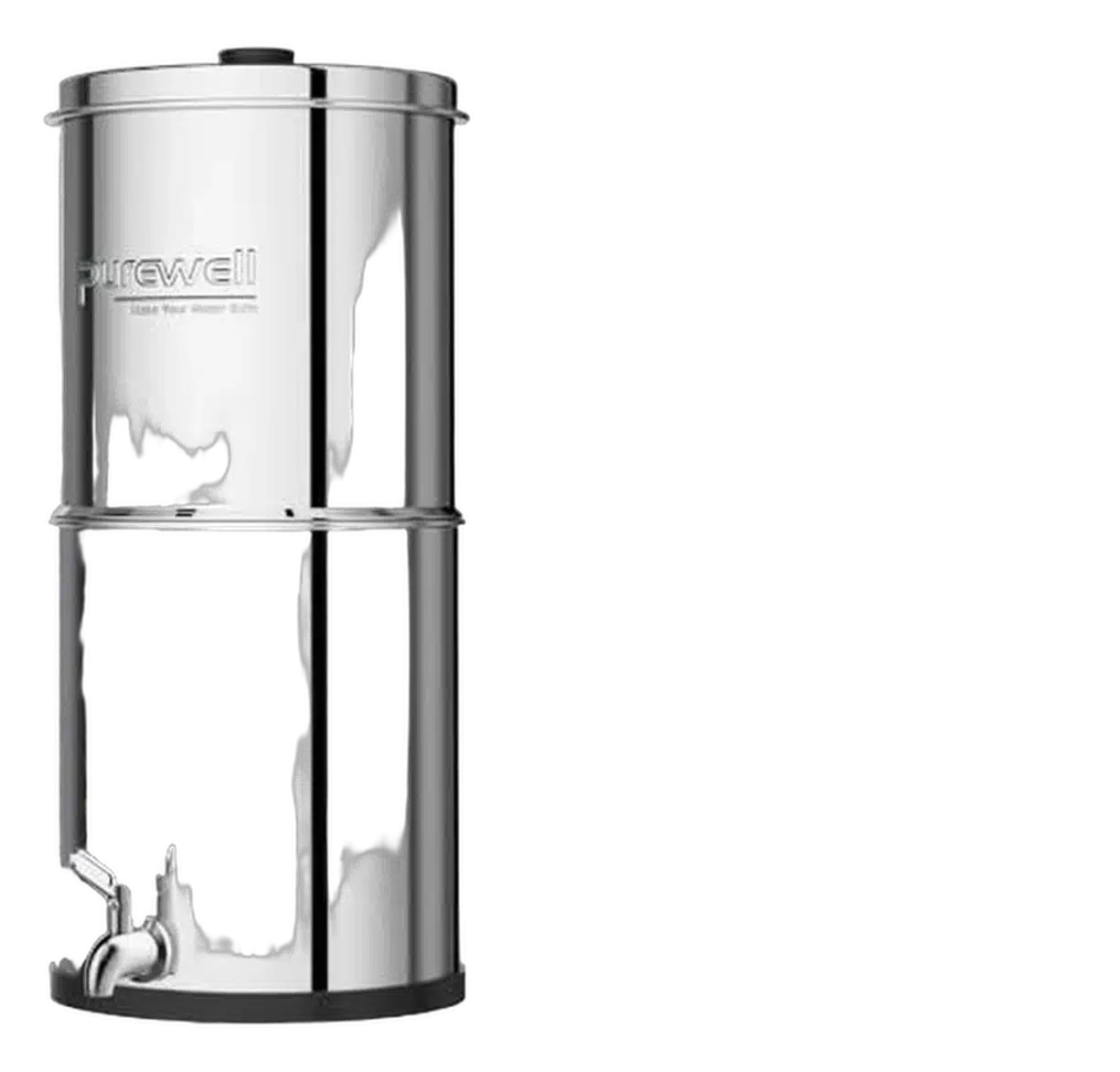
Purewell 3-Stage Gravity Water Filter System
SHOP ON AMAZONAvailability and current price shown on Amazon
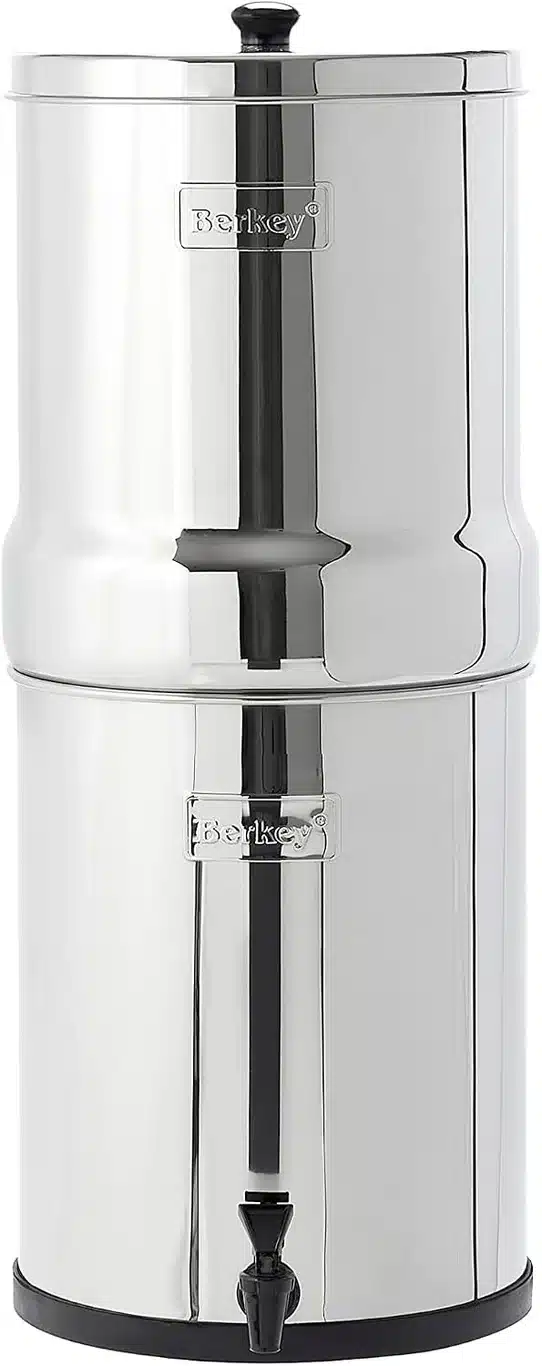
Big Berkey Gravity-Fed Water Filter System
SHOP ON AMAZONAvailability and current price shown on Amazon
What the EPA Order Means for Berkey Buyers
In May 2023, the EPA issued a Stop Sale, Use, or Removal Order to Berkey International. It told the company to cease the sale, use or removal of all Black Berkey Filter Products. The order names the Travel, Big, Royal, Imperial and Crown systems, because each is sold with Black Berkey filters inserted.
The reasoning rests on registration and labeling under FIFRA (the federal pesticide law). The EPA pointed to Berkey’s own pathogen-removal claims and its statement that silver self-sterilizes the elements. It then found that none of the products were registered. The order we read makes no finding that the filters are unsafe or ineffective.
The order quotes the claims that triggered it, and Berkey’s label listed viruses at >99.999% and pathogenic bacteria at >99.9999%. Its website said testing was done by “independent, EPA-approved laboratories”, and those are Berkey’s statements as the EPA recorded them. They are lab claims from the maker, not an NSF listing.
Berkey disagrees, and in March 2024 it sued the EPA in federal court in Puerto Rico, arguing that its mechanical filters ran for twenty-five years without EPA regulation. That filing is Berkey’s side of the dispute, so read it as an argument and not as a finding.
For a buyer, the effect shows up in supply, because a Berkey dealer says that normal authorized distribution of standalone Black Berkey elements remains unavailable, with no confirmed restock date. The dealer names Phoenix elements as the current compatible replacement. Because Black Berkey replacement filters are the part you keep buying, confirm supply before you buy any Berkey water filter.
Another rival to weigh is Boroux, covered in my Boroux and Berkey comparison.
How Purewell Describes Its Filters
The Purewell water filter in this comparison is the 3-Stage model, PW-OB. Its retail listing describes a 304 stainless steel body, two filters and a stand. The listing title states NSF/ANSI 42 and 372 certification plus a 99% chlorine reduction claim. Those are Purewell’s statements, so check them in NSF’s public product database before you count on them.
Purewell is careful about what those standards prove, and its own guide says NSF/ANSI 42 covers aesthetic effects like chlorine taste and odor. It says NSF/ANSI 372 covers lead content in materials, not lead removal from water. A 42 claim is never proof of lead reduction.
The same guide marks several claims as not verified against a model-specific test report. They cover heavy metals, PFAS (man-made “forever chemicals”) and bacteria. Treat any lab figure on a Purewell page as the maker’s claim until you see the report for your exact unit.
The pore rating is the other headline claim, and the listing cites a 0.01 micron filter, which describes how small a particle the filter can block. A pore rating is not a contaminant standard, because it tells you the opening size, not which germs or chemicals a certified test showed the filter reduces.
Replacement matters here too, because Purewell’s guide warns that not every cartridge carries every certification. Match any Purewell water filter replacement to your exact model number before you order.
NSF Standards Explained and How to Check a Claim
A gravity filter’s paperwork matters more than its looks. NSF/ANSI 42 covers aesthetic effects, and NSF/ANSI 53 covers contaminants with health effects. For PFAS, the EPA tells buyers to look for NSF/ANSI 53 or 58 certification on the label. Standard 58 applies to reverse osmosis (a membrane filter) systems.
The Purewell listing title and the Berkey dealer page name only 42 and 372, not 53. Purewell’s guide also separates independently tested to a standard from certified to it. Count a claim only when a listing backs it.
The CDC advises buyers to look for an NSF certification on the filter label and to look the product up in the database. Use these steps before you buy:
- Find the exact model number on the listing, such as PW-OB for the Purewell unit.
- Write down each standard the maker names, such as NSF/ANSI 42, 53 or 372.
- Search the maker and model in NSF’s public product database.
- Check which contaminant each listing covers, because a certificate covers a claim and not the whole filter.
- Ask the maker for the lab report when a claim has no listing behind it.
Replacement Filters and Upkeep
Upkeep is where the two units split. Berkey owners face the supply gap described above: a dealer says standalone Black Berkey elements are unavailable and names Phoenix as the compatible replacement. The same dealer says Phoenix setups for the Big Berkey are listed under NSF/ANSI 42 for chlorine and taste, an aesthetic claim.
Berkey itself argues in its court filing that the order pushes customers toward counterfeit filters. Whatever the merit of that argument, its own filing treats fakes as a real risk. Buy only from authorized sellers, and keep proof of where the filters came from.
For either unit, the CDC says to change filters on the maker’s schedule. Missing that schedule is the quiet failure of any gravity filter, because the water still looks clear. Set a reminder on the day you install new cartridges.
Many shoppers look for a cheaper alternative to a Berkey water filter. Shoppers who want a larger Berkey can read our Royal Berkey review before they decide. Compare the full cost of the system and of each replacement set, not just the unit. The repeat cost of filters usually outweighs the first purchase over several years.
Purewell vs Berkey: Which Should You Choose?
Both units hold 2.25 gallons, so the decision is about paperwork and supply. Neither unit shows NSF/ANSI 53 health-effects certification in the pages we reviewed, so neither is a proven answer for lead or PFAS.
Choose Purewell if:
- You are buying new and want named standards on the product page, such as NSF/ANSI 42 and 372.
- You want to avoid the supply questions around the EPA order on Black Berkey filters.
- You will check each claim in NSF’s database and ask for model-specific lab reports.
Choose Berkey if:
- You already own a Berkey and have confirmed a compatible element, such as Phoenix, from an authorized seller.
- You want the Big Berkey format and accept that Black Berkey elements are hard to get.
- You understand the EPA order rests on registration and labeling, and you will follow the court case.
If you need proven reduction of lead or PFAS, look past both units. The EPA says to look for NSF/ANSI 53 or 58 certification on the label, and a listing for your exact model should back it. Such a listing can sit on another filter type, such as a countertop water filter or an under-sink system.
How We Research
We check every claim against primary sources. Federal agencies like the EPA and CDC come first. Certification bodies like NSF and AHAM come next. We verify each standard number against the issuing body. We review this guide on a set schedule.
Why Trust This Guide
Puritisimo covers only water and air quality. Our guidance is editorial and independent. We cite every health figure so you can check it. We never present a promotional claim as fact.
Making the Right Call on a Gravity Filter
The best gravity filter is the one whose claims you can check and whose filters you can keep buying. Purewell gives a new buyer named standards to look up, while Berkey carries an EPA order that disrupted Black Berkey supply and an open court case. Both makers describe lab results, and a stated result is not a certification. Before you buy, confirm the exact model, the standard and the replacement filter, and ask for reports where a listing is silent. If you weigh Purewell vs Berkey by proof and supply instead of brand, the choice gets much clearer.
Frequently Asked Questions
Purewell vs Berkey: which is better for home use?
Purewell vs Berkey favors Purewell for new buyers who want named standards, and Berkey for owners who have confirmed a compatible filter. Both hold 2.25 gallons, but neither shows a health-effects certification in the pages we reviewed, so verify any lead or contaminant claim before you buy either one.
Why is everyone selling their Berkey?
The sources we reviewed do not give one reason, so we will not guess. What is documented is the May 2023 EPA order and a dealer’s statement that standalone Black Berkey elements are unavailable.
How long do Berkey filters last?
We found no official figure for Berkey filter life, so we are not giving one. Check the rated life the maker states for your exact element, and change filters on that schedule. Running a filter past its rating is the quiet way a gravity unit stops doing its job, because the water still looks clear.
Can you use a Berkey with well water?
The sources we reviewed do not address well water for either unit. A taste-and-odor listing does not cover health contaminants, so test your well water at a certified lab first, then pick a filter whose listed standards match what the test finds.
Is Purewell NSF certified?
Purewell’s retail listing for the PW-OB model states NSF/ANSI 42 and 372 certification. Purewell’s own guide says 42 covers taste and odor and 372 covers lead in materials. Confirm the listing in NSF’s public product database, and match it to your exact model, before you rely on it.
References
- EPA Region 8. Stop Sale, Use, or Removal Order, In the Matter of Berkey International LLC, Docket FIFRA-08-2023-0038. 2023.
- Berkey International LLC v. Environmental Protection Agency. Complaint, Case 3:24-cv-01106, U.S. District Court, District of Puerto Rico. 2024.
- EPA. Identifying Drinking Water Filters Certified to Reduce PFAS. U.S. Environmental Protection Agency. 2024.
- CDC. About Choosing Home Water Filters. Centers for Disease Control and Prevention. Accessed November 2026.
Medical Disclaimer: This content is for informational purposes only. It is not a substitute for professional medical advice, diagnosis, or treatment. If you have concerns about your water quality or air quality and their effects on your health, consult a qualified healthcare professional.

