
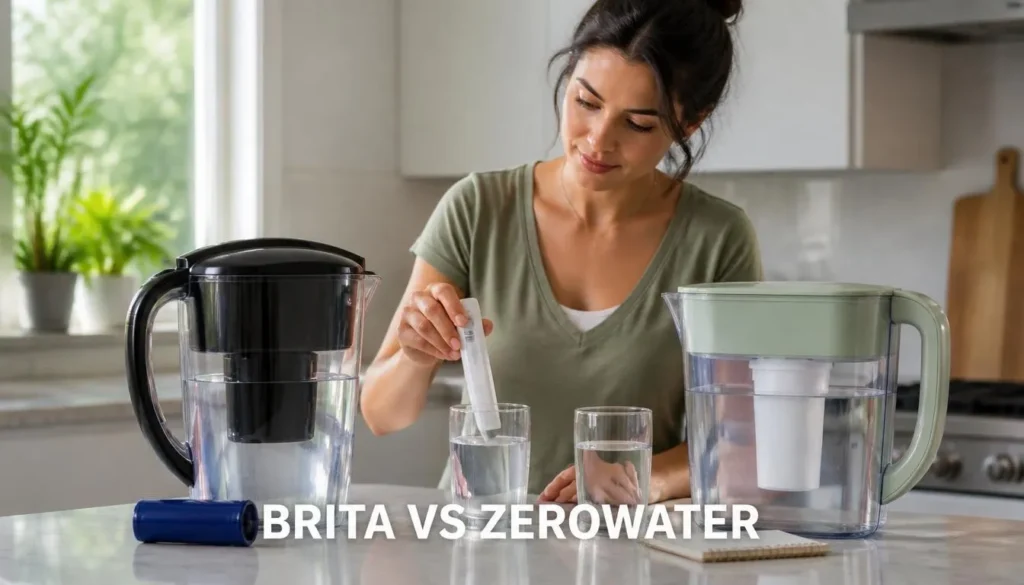

Brita vs ZeroWater is a choice between breadth and purity. Pick Brita Elite for broad contaminant coverage and a 120-gallon filter, and pick ZeroWater for the lowest dissolved solids reading. Both list lead reduction on their data sheets, but they differ on scope, filter life, and taste. Only ZeroWater lists PFOA/PFOS (two man-made “forever chemicals” in the PFAS family) on its current data sheet. Brita’s basic Standard filter covers much less than either of them.
This page compares what each maker’s own data sheet lists, from chlorine to PFAS, so that you can see where the real differences sit. You will know which filter fits your tap water and how often you will replace it. Every spec below is attributed to the maker’s sheet.
Key Takeaways
- Brita Elite lists NSF/ANSI 42, 53, and 401 claims. ZeroWater’s data sheet lists only 42 and 53.
- ZeroWater’s filter is rated for 15 gallons. Brita Elite is rated for 120 gallons and Standard for 40.
- ZeroWater lists PFOA/PFOS reduction and Brita’s current US Elite sheet does not. EPA says current PFAS tests do not yet match its new limits.
- Neither Brita Elite nor ZeroWater is designed to treat unsafe water. Use water that is already microbiologically safe.
Brita vs ZeroWater at a Glance
For most homes on treated city water, Brita Elite is the broader and longer-lasting pick. ZeroWater fits homes that want the lowest dissolved solids reading and accept a short filter life.
Both makers test to NSF/ANSI standards (voluntary product standards for home filters). For PFAS, the EPA tells shoppers to look for NSF/ANSI 53 or 58 on the label. So we compare certification scope first, then the percentages.
The table below puts each maker’s own data sheet figures side by side:
| Factor | Brita | ZeroWater |
| Chlorine taste and smell (NSF/ANSI 42) | Standard 95%, Elite 97.4% | 99.4% |
| Lead (NSF/ANSI 53, pH 6.5) | Elite 99.5%, Standard no claim | 98.9% |
| PFOA/PFOS (NSF/ANSI 53) | No claim on current US sheets | 99.8% |
| Trace compounds (NSF/ANSI 401) | Elite lists 16, Standard none | Not listed |
| Rated filter life | Standard 40 gallons, Elite 120 gallons | 15 gallons |
| Dissolved solids (TDS) | No claim on data sheets | Maker states 99.6% reduction |
| Replacement signal | Gallons or months, indicator on some pitchers | Meter reads 006 |

What Brita Filters Are Certified to Reduce
Brita Standard (filter model OB03) is the narrow option. Brita’s data sheet lists NSF/ANSI 42 (aesthetic effects, meaning taste and smell) for chlorine at 95% and zinc at 64%. Under NSF/ANSI 53 (health effects) it lists cadmium, copper, and mercury, with reductions from 73% to 94% depending on the test water’s pH (a measure of acidity). It makes no lead claim and no PFAS claim, which matters if either is a concern in your home.
Brita Elite (filter model OB06) carries far more. Its data sheet says it was tested to NSF/ANSI 42, 53, and 401. It lists lead reduction of 99.5% at pH 6.5, from a 150 ppb (parts per billion) challenge down to the 5 ppb limit. EPA sets its health goal for lead at zero because it finds no safe level of exposure, so a lead claim is the first thing to look for.
Elite also lists mercury at 95.5% and cadmium at 96.9% at pH 6.5. Its current US sheet has no PFOA/PFOS entry, though an older Canadian Elite sheet lists 98.1%. Under NSF/ANSI 401 (trace compounds such as drugs and plastics chemicals) it lists 16 items. They include bisphenol A (BPA, a plastics chemical), ibuprofen, and microplastics from 0.5 to 1 micron (about 1/100th the width of a human hair).
Brita’s sheet adds two limits. The filter is not intended to purify water, and it should not go on microbiologically unsafe water. Replace it every 120 gallons, about six months for an average family.
What ZeroWater Is Certified to Reduce
ZeroWater’s data sheet lists NSF/ANSI 42 and 53, and it lists no NSF/ANSI 401 claims. IAPMO R&T, an independent testing and certification body, certified the system. Under 53 the sheet lists hexavalent chromium, lead, mercury, and PFOA/PFOS. Under 42 it lists chlorine.
The listed reductions run from 94.2% for mercury at pH 8.5 up to 99.8% for PFOA/PFOS. Lead reads 98.9% at pH 6.5, against 99.5% for Elite. Brita’s current US Elite sheet has no PFOA/PFOS result to compare. These are results from separate laboratory tests, so the percentages alone do not show how the filters will compare in your tap water.
One caution applies to any PFAS claim. The EPA notes that current PFAS certifications do not yet show a filter removes PFAS down to the levels EPA has now set. ZeroWater’s sheet tests against a 1.5 ppb challenge, so a pass on the label does not guarantee that you meet EPA’s drinking water limits. The EPA suggests checking the NSF certification listing for the specific type of PFAS you want to remove.
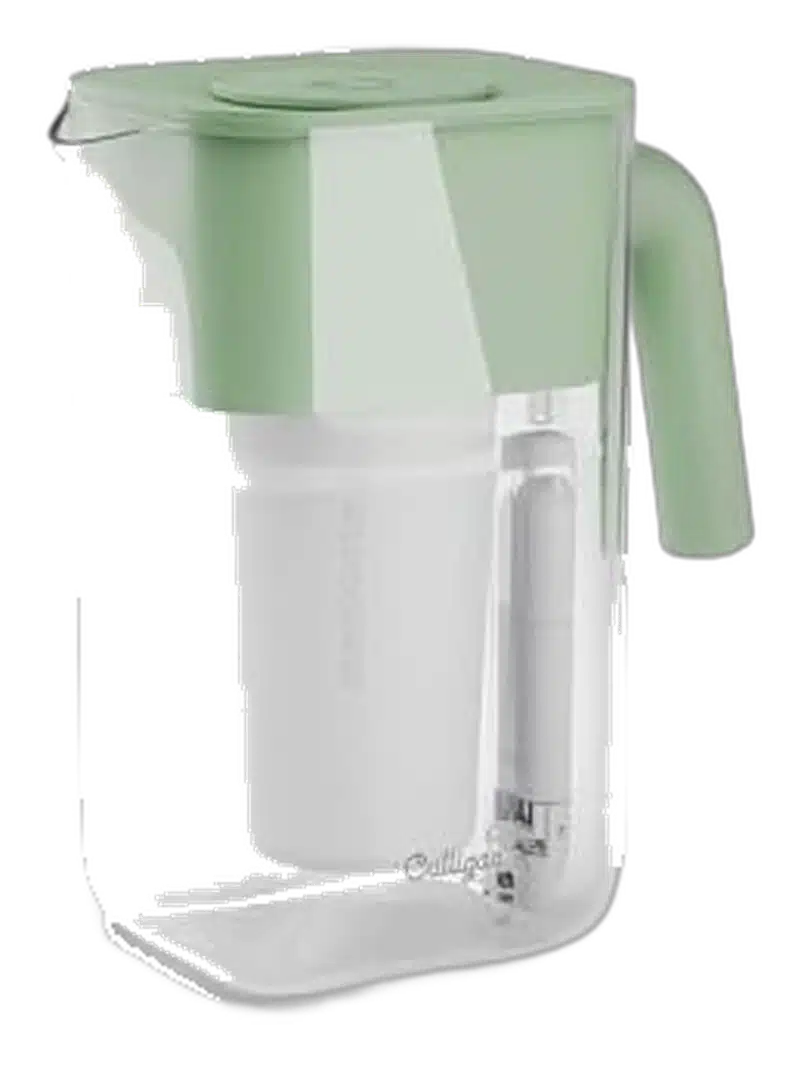
So which pitcher removes the most contaminants? Count the substances, not just the percentages. Brita Elite lists 30 reduction claims, though some apply only to certain pitcher models. ZeroWater lists six: chromium, lead, mercury, PFOA, PFOS, and chlorine. Our ZeroWater pitcher review covers the PFAS wording in detail.
ZeroWater’s own FAQ says the filter will not remove microbiological contaminants. It also says pharmaceuticals have not been tested.
Key Differences in Taste, Speed, and Filter Cost
Dissolved solids: TDS (total dissolved solids, the minerals, salts, and metals dissolved in water) is where the two split. ZeroWater says its filter removes 99.6% of TDS and ships with a meter. Brita’s data sheets list no TDS claim. The EPA calls 500 mg/L a non-mandatory guideline for taste and appearance, not a health limit.
Here is an insider nuance. TDS counts harmless minerals such as calcium along with trace contaminants. A reading of 000 therefore shows low dissolved solids, not that every contaminant is gone. In our editorial view, water with almost no minerals can taste flat to some drinkers. A handheld TDS meter for drinking water lets you check your own reading.
Speed: ZeroWater says its flow is 6.5 ounces per minute and that its filtering is slower than two-stage filters because the extra stages work harder. That is roughly 15 minutes to pass 12 cups (96 ounces). Brita lists no flow rate on its data sheets, so we cannot compare the two on speed with a number.
Filter life and cost: Brita versus ZeroWater cost comes down to rated gallons. The rated capacities differ by a factor of eight for Elite versus ZeroWater (120 gallons divided by 15) and about 2.7 for Standard versus ZeroWater. These ratios do not predict real replacement frequency, because ZeroWater says filter life depends on the TDS in your tap water and your use. It directs users to replace the filter when filtered water reads 006 or higher. We leave out prices because they change often. Divide a filter’s price by its rated gallons to compare.
So is ZeroWater better than Brita? It depends on the job, because ZeroWater is better at lowering dissolved solids while Brita Elite is better at covering many substances and at lasting longer between changes.
Which Should You Choose?
Match each filter’s listed certification scope to your specific problem. Both makers advise that you have your water tested before you buy a filter.
Choose Brita if:
- You want lead and trace compound claims on one filter. That means the Elite.
- You want fewer filter changes, about every six months with Elite.
- You like the usual mineral taste of tap water, since Brita’s sheets list no dissolved solids claim.
Choose ZeroWater if:
- Your main goal is the lowest dissolved solids reading, and you want a meter to check it.
- You want a filter whose data sheet lists hexavalent chromium, lead, mercury, and PFOA/PFOS reduction.
- You can live with slower filtering and a 15-gallon filter.
Hard water changes the math. ZeroWater says its filter life depends on your tap TDS, so very hard water can mean more frequent changes.
Getting the Most From Either Pitcher
A filter performs reliably only when its maintenance is consistent. The CDC says to maintain any filter you use and to change it on the maker’s schedule.
Follow these steps with either pitcher:
- Read your water quality report or get a water test, so you know which substances you need to reduce.
- Match the filter to the problem. For lead or PFAS, find that exact substance on the data sheet.
- Prime a new filter as its instructions say before the first glass.
- Replace on time: Brita Standard at 40 gallons, Elite at 120 gallons, ZeroWater at 15 gallons or when the meter reads 006.
- Use cold tap water only. Brita lists a maximum of 85F, and ZeroWater lists 90F.
How We Research
We check every claim against primary sources. Federal agencies like the EPA and CDC come first. Certification bodies like NSF and AHAM come next. We verify each standard number against the issuing body. We review this guide on a set schedule.
Why Trust This Guide
Puritisimo covers only water and air quality. Our guidance is editorial and independent. We cite every health figure so you can check it. We never present a promotional claim as fact.
Matching the Filter to Your Tap Water
Brita Elite and ZeroWater both list lead reductions, but they solve different problems. Elite covers more substances and lasts 120 gallons. ZeroWater cuts dissolved solids hardest and rates its filter for only 15 gallons. Brita’s Standard filter suits taste and a few metals, but it makes no lead or PFAS claim at all. Remember also that neither filter is designed to treat germs, so each belongs only on water that is already microbiologically safe. Whichever way the Brita vs ZeroWater choice goes in your kitchen, check the sheet for your own contaminant and replace the filter on schedule.
Frequently Asked Questions
Brita vs ZeroWater: which removes more contaminants?
In the Brita vs ZeroWater matchup, Brita Elite lists the wider range, 30 reduction claims including NSF/ANSI 401 compounds. ZeroWater lists six substances on its data sheet, plus a separate dissolved solids claim. Its listed mercury reduction is higher than Elite’s at pH 6.5 and lower at pH 8.5. Brita Standard lists far fewer, with no lead or PFAS claim.
Why is the ZeroWater filter so slow?
ZeroWater says its filter runs slower than two-stage filters because the extra stages work harder. It states a flow of 6.5 ounces per minute. That extra contact time is the price of the lower dissolved solids reading.
What does ZeroWater filter?
ZeroWater’s data sheet lists chlorine under NSF/ANSI 42, and lead, hexavalent chromium, mercury, and PFOA/PFOS under NSF/ANSI 53. ZeroWater also says it removes 99.6% of total dissolved solids. It says the filter will not remove bacteria, and it lists no tests for pharmaceuticals.
What is the best type of water filter?
No single type is best, because each filter fits a different problem. Match the certified claim to your concern, such as NSF/ANSI 53 for lead. Neither of these two pitcher filters is designed to remove germs, so they suit water that is already microbiologically safe.
How does ZeroWater compare with Brita Elite?
Brita Elite lists NSF/ANSI 401 claims and ZeroWater does not, and Elite is rated for 120 gallons against ZeroWater’s 15. ZeroWater claims 99.6% dissolved solids reduction and lists PFOA/PFOS reduction. Its listed mercury reduction exceeds Elite’s at pH 6.5 but is lower at pH 8.5. For lead, Elite lists 99.5% and ZeroWater 98.9% at pH 6.5.
References
- EPA. Identifying Drinking Water Filters Certified to Reduce PFAS. U.S. Environmental Protection Agency.
- EPA. Basic Information about Lead in Drinking Water. U.S. Environmental Protection Agency.
- EPA. Secondary Drinking Water Standards: Guidance for Nuisance Chemicals. U.S. Environmental Protection Agency.
- CDC. About Choosing Home Water Filters. Centers for Disease Control and Prevention.
Medical Disclaimer: This content is for informational purposes only. It is not a substitute for professional medical advice, diagnosis, or treatment. If you have concerns about your water quality or air quality and their effects on your health, consult a qualified healthcare professional.

