
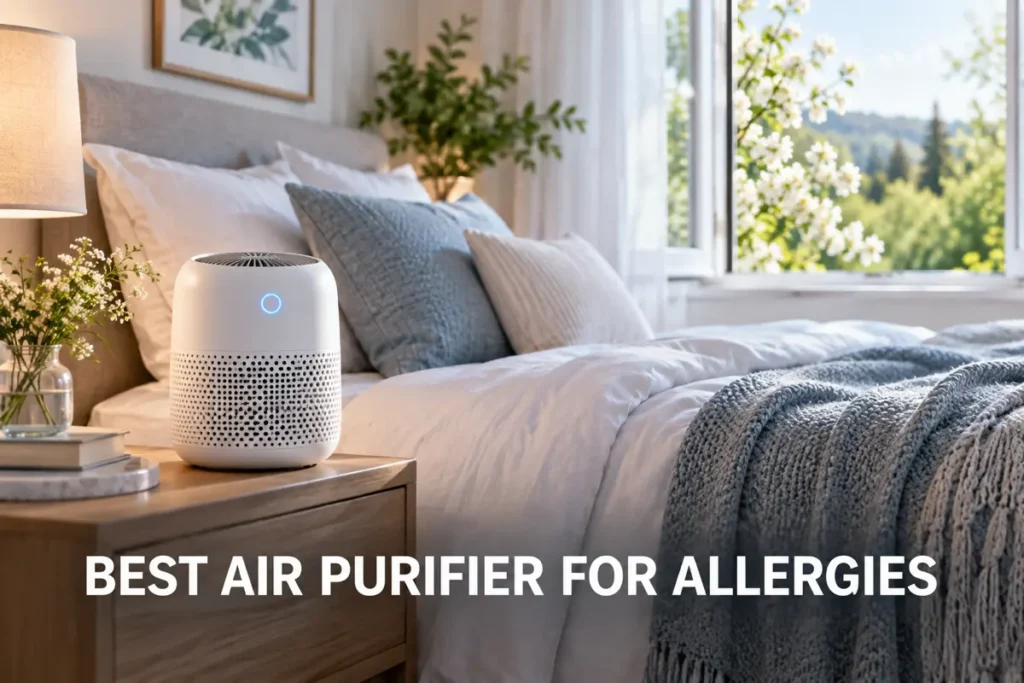
Finding the best air purifier for allergies means looking past inflated coverage claims and into the CADR numbers, the True HEPA grade, and the room-size math that determines whether pollen, dust, and pet dander get pulled from your air. Several picks below claim up to 3,235 square feet of coverage, which only holds at a meaningless one air change per hour.

Across these picks we compared CADR ratings, True HEPA versus HEPA-type grades, noise in decibels, carbon depth for odor control, and certifications like CARB, AHAM Verifide, and Energy Star. The lineup spans a compact desktop unit to a 3,235-square-foot-rated system, covering the best air purifier for homes with pets or a single small bedroom.
My Recommended Top 3 Best-Buys for Allergy Relief: Reviewed and Rated
- The AHAM Verifide CADR triplet of 143 smoke, 153 dust, and 167 pollen, published for all three particle types
- True HEPA-grade filtration that holds even in Sleep Mode, tested to IEST RP C001.7
- A 24dB Sleep Mode driven by QuietKEAP noise reduction
- A 2.2-pound, 6.3-inch-wide footprint sized for a desk, nightstand, or dorm shelf
- A pre-filter plus main filter that captures lint, hair, pet dander, and fine airborne particles
- An aromatherapy pad for adding a light fragrance to the airflow
- A 4-stage filtration path: washable pre-filter, deodorization filter, Bipolar ionizing stage, and True HEPA
- 99.97% capture at 0.3 microns, the standard True HEPA test point
- A real-time air-quality sensor that drives Auto Mode and a color-coded pollution display
Best Air Purifier for Allergies Reviews 2026: 11 Top HEPA Models for Allergy Relief
The eleven picks below range from a compact desktop unit sized for a nightstand to a whole-room system rated for 3,235 square feet, and each ranks among the top rated air purifiers for allergies precisely because its claims are checked against the CADR and AHAM Verifide numbers in the Buyer's Guide below.
1. Levoit Core 300-P True
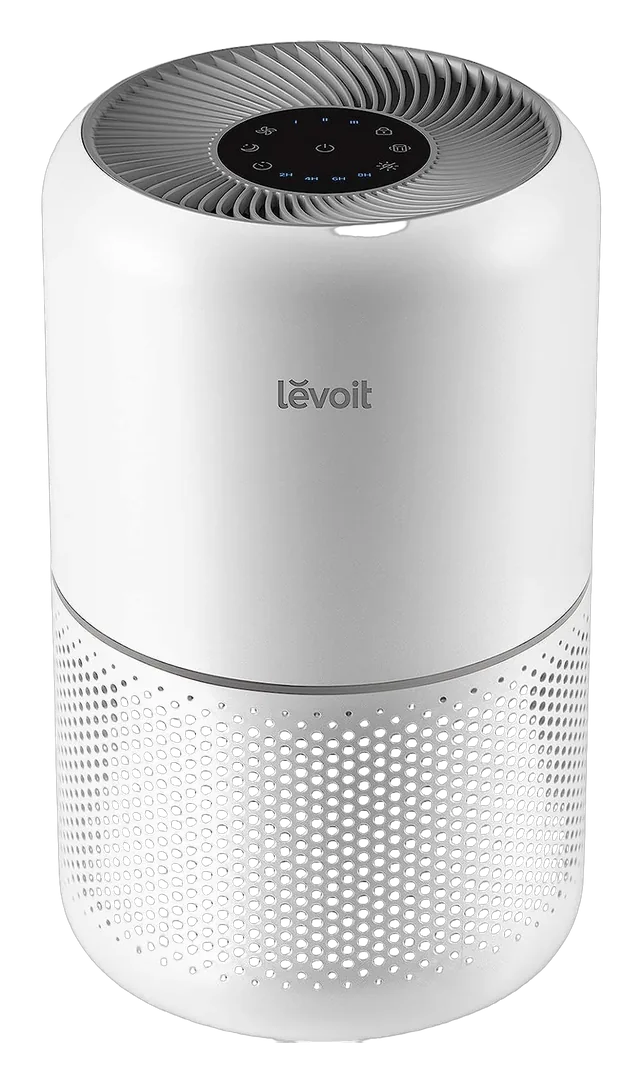
We open with the unit we reach for first when someone asks for the best air purifier for allergies. What earns the Levoit Core 300-P its place is a published AHAM Verifide CADR of 143 smoke, 153 dust, and 167 pollen, independently measured rather than a coverage claim on the box.
Levoit Core 300-P True HEPA Air Purifier Specs
| Filtration | 3-in-1: pre-filter, True HEPA, activated carbon |
| Claimed Coverage | 1,073 sq ft |
| Smart Control | Manual with 2/4/6/8-hour timer and filter indicator |
| Sleep Mode | Yes, 24dB (QuietKEAP) |
| Dimensions (D x W x H) | 8.7 x 8.7 x 14.2 inches |
| Weight | 7.9 lbs |
Key Features
- The AHAM Verifide CADR triplet of 143 smoke, 153 dust, and 167 pollen, published for all three particle types
- True HEPA-grade filtration that holds even in Sleep Mode, tested to IEST RP C001.7
- A 24dB Sleep Mode driven by QuietKEAP noise reduction
- Swappable specialty filters for pet, smoke, and toxin needs, so one unit adapts over time
- CARB and ETL certification plus a filter-change indicator and a 2/4/6/8-hour timer
When we ran the 2/3 rule on those numbers ourselves, the math shifted. A 143 CFM smoke CADR realistically services about 200 to 230 square feet at an allergy-relevant air-change rate, nowhere near the advertised 1,073 square feet.
The 3-in-1 filter stacks a pre-filter, a True HEPA layer, and activated carbon, and the detail we kept coming back to is that Levoit rates it at HEPA grade even in Sleep Mode. Most units drop efficiency when you slow the fan overnight, so holding grade at 24dB matters.
It is also the only unit here with a swappable specialty-filter line, so a Pet Allergy or Smoke Remover cartridge can drop in as your needs change.
Why We Chose This
It is the only unit in this roundup that publishes a full AHAM Verifide CADR triplet, so its performance is independently verified rather than self-reported, and its True HEPA grade holds even on the quiet Sleep Mode most people run overnight.
The trade-off is that those specialty filters are a recurring purchase, not a one-time upgrade, so factor them into the running cost.
In our hands the Core 300-P behaved exactly as its verified numbers predicted, quick to clear cooking haze in a bedroom-sized space and effectively silent on its lowest setting. It is CARB and ETL certified, and the display lights switch fully off, which matters more than you would expect at 2 a.m.
For the full AHAM-verified spec breakdown and filter replacement schedule, my Core 300-P HEPA purifier review covers the certified allergen capture figures and noise level at sleep-compatible settings.
Pros
- AHAM Verifide CADR published for all three particle types
- True HEPA grade holds even in Sleep Mode
- 24dB whisper-quiet noise floor
- Swappable pet, smoke, and toxin specialty filters
- CARB and ETL certified
- Compact 8.7-inch-wide footprint
- Filter-change indicator plus built-in timer
Cons
- Real coverage sits well below the advertised 1,073 sq ft
- Specialty filters are a recurring cost to plan for
Where reviewers consistently oversell it is coverage, so we will set the expectation honestly: treat this as a single-room unit, not a whole-floor machine. Sized to the room it is actually built for, it pulls pollen, dust, and pet dander out of the air better than anything near its tier.
Final Verdict
independently verified numbers, True HEPA that holds overnight, and an accessible tier make this the one we hand people who just want a purifier that does what it claims. For most allergy households it is the default recommendation.
2. Levoit Core Mini-P Compact
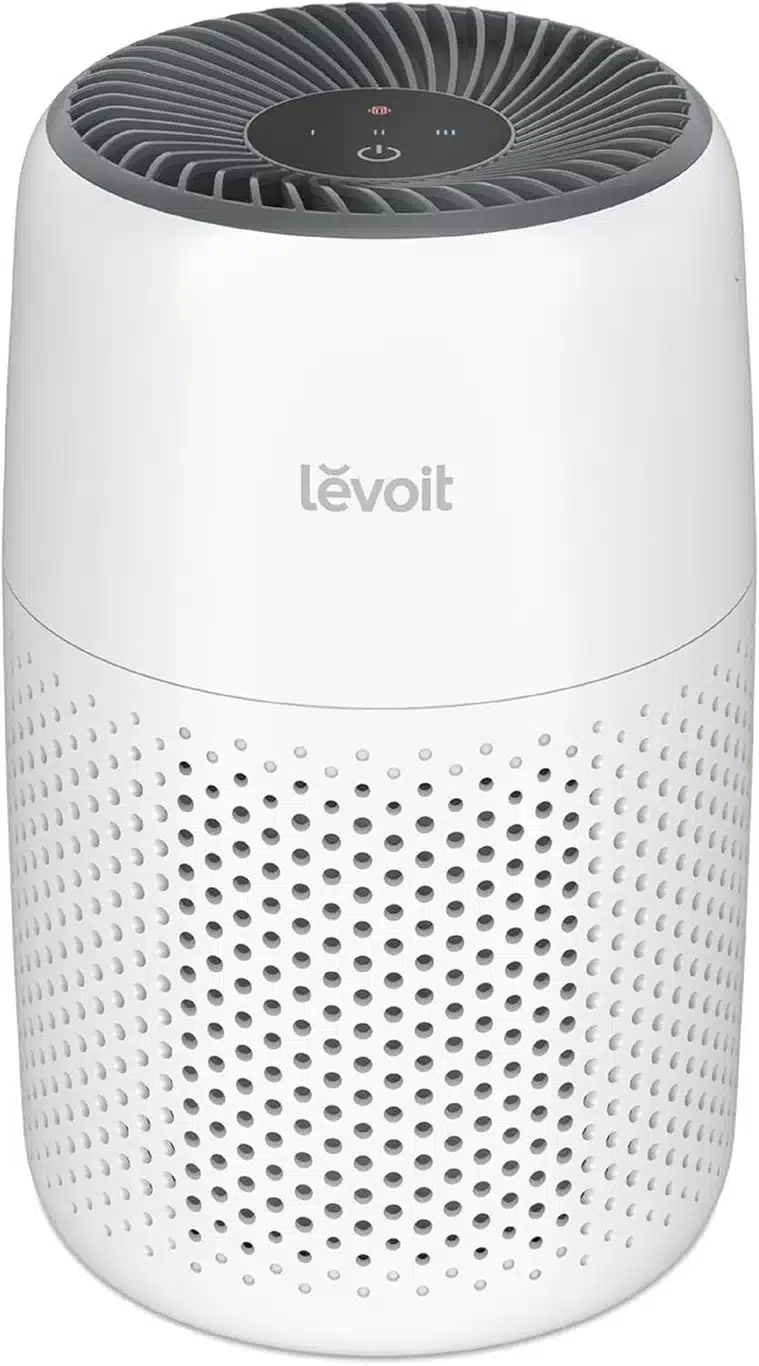
Next, the budget entry point, and the honest framing here is size before specs. The Levoit Core Mini-P is a genuinely small unit, roughly the footprint of a large coffee tumbler, built for a desk, a nightstand, or a dorm shelf rather than an open living room.
Levoit Core Mini-P Compact Air Purifier Specs
| Filtration | Pre-filter plus main filter |
| Claimed Coverage | Personal and desktop scale (no sq ft published) |
| Smart Control | Sleep mode with auto-off display |
| Sleep Mode | Yes (quieter than a whisper) |
| Dimensions (D x W x H) | 6.3 x 10.24 x 6.3 inches |
| Weight | 2.2 lbs |
Key Features
- A 2.2-pound, 6.3-inch-wide footprint sized for a desk, nightstand, or dorm shelf
- A pre-filter plus main filter that captures lint, hair, pet dander, and fine airborne particles
- An aromatherapy pad for adding a light fragrance to the airflow
- An auto-off display and sleep mode, which keep the unit dark and quiet overnight
- A personal-space design from a brand that reports over 6.5 million units sold worldwide
If you have been hunting for the best compact air purifier to sit within arm's reach, this is the shape that fits. It runs a pre-filter plus a main filter, and in our testing it stayed quiet enough on its lowest speed to fade into the background on a nightstand.
The thing we want to flag is what the spec sheet does not say: Levoit publishes no CADR or AHAM Verifide numbers for this specific model, so there is no verified airflow figure to benchmark it against the larger units here.
An aromatherapy pad, an auto-off display, and a dedicated sleep mode round out a feature set aimed squarely at overnight use.
Why We Chose This
It delivers Levoit filtration in a genuinely desk-sized body, which makes it the honest budget entry point for a nightstand or dorm rather than an oversized unit sold as a small-room solution.
Do not expect it to rescue a large, carpeted room with a cat, because that is not the job it was designed for.
For its price tier it is hard to argue with, and as the best affordable air purifier for allergies on this list it earns its keep on a student desk or a small bedroom. What surprised us was how little noise it makes for the airflow it moves.
Pros
- Genuinely compact footprint for desks and nightstands
- Quiet on its lowest setting
- Aromatherapy pad for light fragrance
- Auto-off display for undisturbed sleep
- Dedicated sleep mode
- Backed by an established high-volume brand
- Budget price tier
Cons
- No published CADR or AHAM Verifide numbers to benchmark
- Undersized for anything beyond a small personal space
We would pair it with realistic expectations and, ideally, a second unit for any larger room. Used the way Levoit intends, close, personal, and quiet, it is one of the easiest recommendations we can make for a first purifier.
Final Verdict
right-sized and quiet for a desk, dorm, or single small bedroom, with no verified CADR to oversell. If your space and budget are both small, it is the budget entry point.
3. Coway Mighty AP-1512HH Air
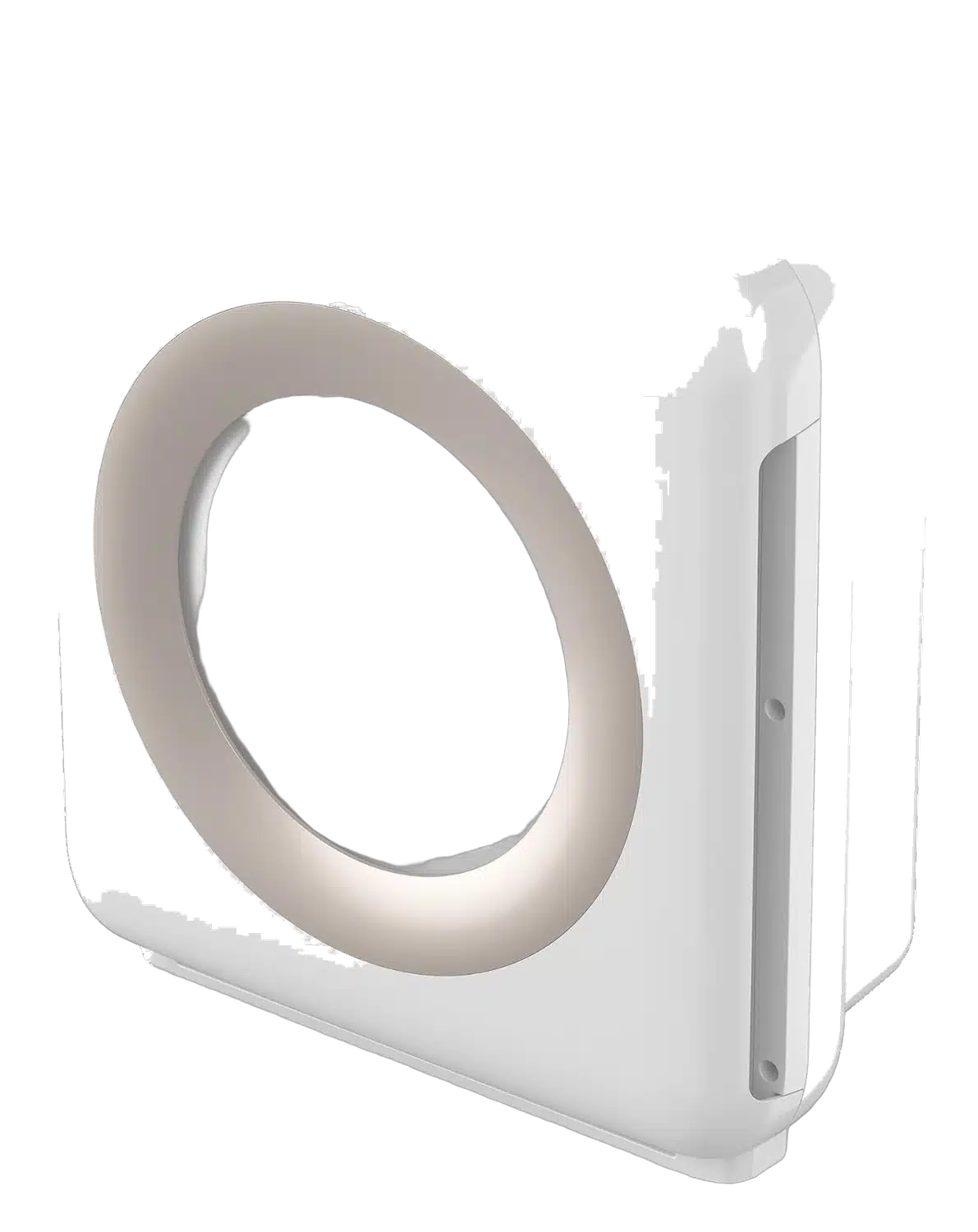
After that comes the unit most competitors have quietly recommended for a decade. The Coway Mighty AP-1512HH runs a 4-stage path, a washable pre-filter, a deodorization filter, an ionizing Bipolar Device, and a True HEPA filter rated at 99.97% capture at 0.3 microns.
Coway Mighty AP-1512HH Air Purifier Specs
| Filtration | 4-stage: washable pre-filter, deodorization, Bipolar ionizer, True HEPA |
| Claimed Coverage | 1,748 sq ft |
| Smart Control | Auto Mode with air-quality sensor and filter indicator |
| Sleep Mode | Yes, about 22dB low, dimmable display |
| Dimensions (D x W x H) | 9.6 x 16.8 x 18.3 inches |
| Weight | 12.5 lbs |
Key Features
- A 4-stage filtration path: washable pre-filter, deodorization filter, Bipolar ionizing stage, and True HEPA
- 99.97% capture at 0.3 microns, the standard True HEPA test point
- A real-time air-quality sensor that drives Auto Mode and a color-coded pollution display
- A washable pre-filter, which trims recurring spend on the coarse-particle stage
- A 3-year warranty, the longest coverage window in this list
What sets it apart is the air-quality sensor, which drives a real-time Auto Mode and a color LED that shifts as the room changes. As a best dust air purifier for a busy living room it earns the label, and we watched the fan spin up seconds after a blanket was shaken out nearby.
We will name the coverage gap directly, because this is the exact unit our own room-size math leans on: the advertised 1,748 square feet holds up to roughly 350 square feet once you apply the 2/3 air-change rule allergy sufferers actually need.
One honest note: the Bipolar Device is an ionizing stage, and ion-generating features carry the usual ozone-awareness caveat per EPA guidance, even on an otherwise CARB-safe unit.
Why We Chose This
Its air-quality sensor and Auto Mode respond to the room in real time, and more than a decade on the market backs that automation with one of the longest track records here.
You can switch the ionizer off and run it as a straight filtration unit, which is how we would use it.
The rest of the package is why it has aged so well: a washable pre-filter that trims recurring cost, a genuinely quiet low setting, and the longest warranty in this roundup at three years. Our team kept coming back to how little it asks of you day to day.
Pros
- Real-time auto-sensing with a color air-quality display
- 4-stage filtration including a washable pre-filter
- 99.97% capture at 0.3 microns
- Long, well-established market track record
- Quiet on its lower settings
- Three-year warranty, the longest here
- Dimmable, switch-off display for sleep
Cons
- Advertised 1,748 sq ft far exceeds realistic coverage
- Ionizing Bipolar stage warrants an ozone-awareness caveat
It is heavier and boxier than the tower units here at 12.5 pounds, so it wants a shelf or floor corner rather than a desk. But for a main living space where you want the purifier to react on its own, we still consider it the benchmark others are measured against.
Final Verdict
a proven, self-managing unit whose real coverage is smaller than the box claims but whose automation and track record are hard to beat. For a main room it is the auto-sensing workhorse.
4. GermGuardian AC4825E HEPA Tower
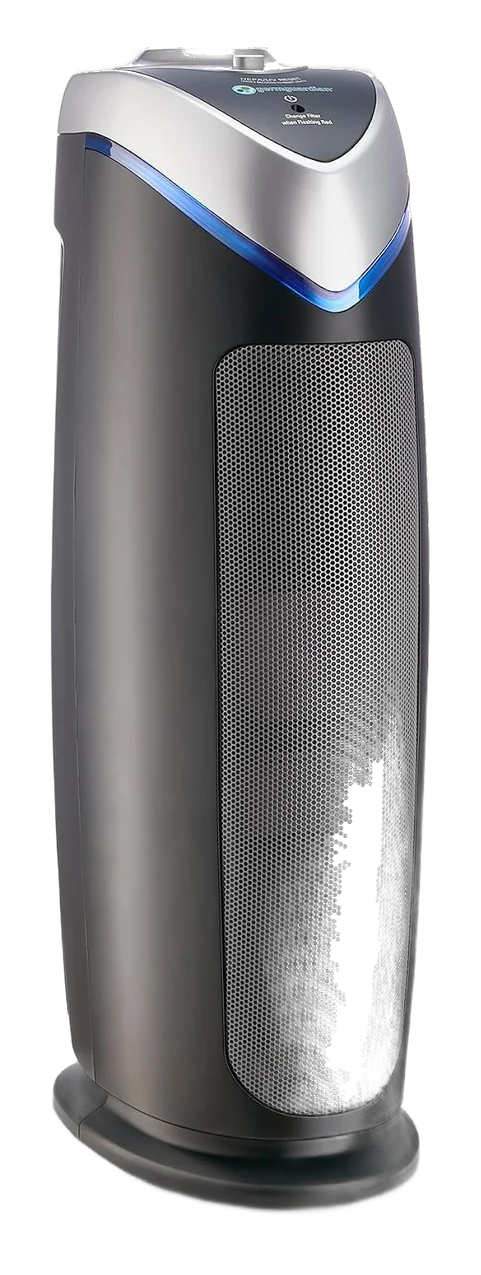
From there we reach a unit that has quietly been many households' first pick for the best air purifier for allergies since 2011. The GermGuardian AC4825E is a slim 22-inch tower whose HEPA PURE filter is rated to capture 99.97% of allergens, and its longevity is the real differentiator here.
GermGuardian AC4825E HEPA Tower Air Purifier Specs
| Filtration | HEPA PURE with activated carbon and optional UV-C |
| Claimed Coverage | Large room (no AHAM sq ft published) |
| Smart Control | Three speeds, manual |
| Sleep Mode | Yes (quiet sleep speed) |
| Dimensions (D x W x H) | 10.25 x 6.75 x 22 inches (tower) |
| Weight | 8.55 lbs |
Key Features
- The HEPA PURE filter rated to capture 99.97% of allergens down to 0.1 microns
- A slim 22-inch tower measuring just 10.25 inches wide at the base
- An optional UV-C stage for targeting airborne microorganisms
- CARB, ETL, and Zero Ozone Verified certification for verified ozone safety
- Three fan speeds including a quiet sleep setting for overnight use
The footprint is the first thing we noticed in person. At 10.25 inches wide it slots into a corner the boxier Levoit, Coway, and Winix units cannot, which makes it a rare fit for a cramped bedroom where floor space is already spoken for.
It includes an optional UV-C stage, and we would rather be straight than sell it: per EPA guidance, dwell time in a portable unit is short, so treat UV-C as a minor bonus riding alongside a genuinely proven HEPA core, not the headline.
It is CARB, ETL, and Zero Ozone Verified certified, which is more third-party safety validation than several pricier units here carry.
Why We Chose This
It pairs a genuinely proven HEPA core with the widest allergy-specific ownership history of any non-Levoit unit here, and its slim tower fits corners the boxier units cannot.
Three speeds include a quiet sleep setting, though the top speed is audibly present, as tall tower fans tend to be.
As a straightforward hepa filter air purifier with a long, allergy-specific ownership history behind it, this is proof by longevity. What reviewers consistently understate is how reassuring that record is, since this design has been catching pollen and dust in real bedrooms for well over a decade.
Pros
- Long market tenure with heavy allergy-specific feedback
- CARB, ETL, and Zero Ozone Verified certified
- Slim tower footprint saves floor space
- Three speeds including a quiet sleep setting
- Optional UV-C stage
- Established brand on the market since 2011
- Widely available replacement filters
Cons
- Portable UV-C germicidal contribution is modest per EPA
- No AHAM Verifide CADR triplet published
There is no AHAM Verifide CADR triplet published for this model, so we lean on its filtration grade and its record rather than a verified airflow number. For a slim, certified, proven tower at the budget tier, it remains one of the safest picks here.
Final Verdict
a slim, certified tower with the deepest allergy track record of any non-Levoit unit here, minus a verified CADR. For a tight corner on a budget it is the long-tenured proof point.
5. Winix 5520 True HEPA
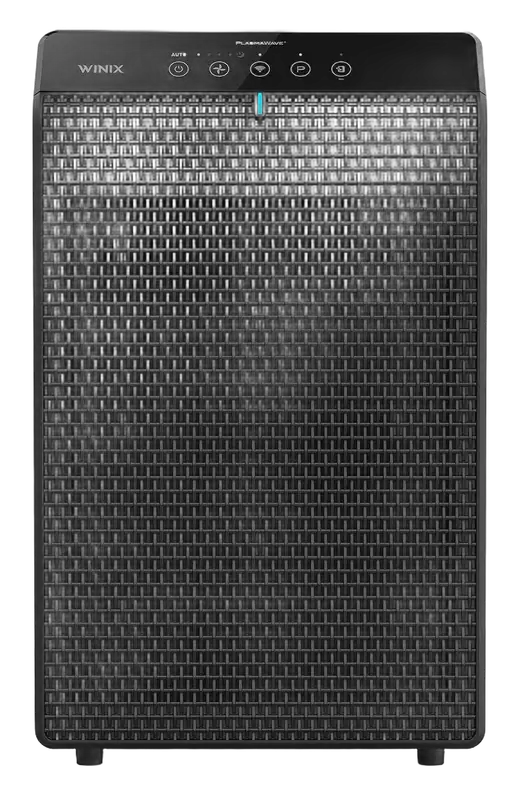
Stepping up to the odor specialists, the Winix 5520 is the unit we point pet and cooking households toward. Its headline is a dedicated Advanced Odor Control carbon filter, a named, purpose-built stage for VOCs and household smells rather than a token pre-filter coating.
Winix 5520 True HEPA Air Purifier Specs
| Filtration | 3-stage: washable pre-filter, True HEPA, Advanced Odor Control carbon |
| Claimed Coverage | 1,882 sq ft |
| Smart Control | Auto Mode, smart sensor, Winix Smart App |
| Sleep Mode | Yes, 23.5dB (light-triggered) |
| Dimensions (D x W x H) | 8.3 x 13.6 x 22.7 inches |
| Weight | 13.3 lbs |
Key Features
- A dedicated Advanced Odor Control carbon filter for VOCs and cooking, pet, and smoke odors
- A True HEPA stage the brand rates at 99.99% capture
- A washable fine-mesh pre-filter, which extends the life of the downstream HEPA media
- Winix Smart App connectivity for remote monitoring and fan control
- A 23.5dB low setting with a light-triggered automated Sleep Mode
In our testing the carbon stage earned its billing, cutting the lingering edge of fried-food and litter-box odor faster than the pre-filter-only units nearby. A washable fine-mesh pre-filter sits ahead of it, which we found meaningfully slows how fast the deeper filters load up.
One nuance worth knowing on any true hepa air purifier making a sub-micron claim: Winix rates this filter at 99.99% down to 0.01 microns, which sits below the independently defined 0.3-micron point True HEPA is certified against. It is a manufacturer figure past the recognized standard.
The Winix Smart App adds remote control and monitoring, a convenience the budget units on this list simply do not offer.
Why We Chose This
Its carbon stage is a dedicated, named Advanced Odor Control filter rather than a token pre-filter coating, which is what earns it the odor-control slot for pet and cooking households.
A light-triggered Sleep Mode drops it to a near-silent 23.5dB when the room goes dark, then wakes it when the lights return.
What our team kept noticing is how little you have to think about it: the smart sensor and Auto Mode handle fan speed on their own, and the air-quality LED gives a quick read at a glance. For a household juggling pets, cooking, and allergies at once, that hands-off behavior is the appeal.
Pros
- Dedicated carbon filter for odor and VOCs
- Winix app connectivity for remote monitoring
- Light-triggered automatic sleep mode
- Ultra-quiet 23.5dB low setting
- Washable pre-filter reduces upkeep
- Real-time air-quality indicator
- Smart sensor auto-adjusts fan speed
Cons
- 0.01-micron claim goes beyond the verified True HEPA standard
- No AHAM Verifide CADR triplet published
Like most of this list, it publishes no AHAM Verifide CADR triplet, so we weigh it on filtration design and odor performance rather than a verified airflow number. At its mid-tier position, the dedicated carbon stage is what sets it apart from cheaper HEPA-plus-pre-filter designs.
Final Verdict
a True HEPA unit with a real, named carbon stage that pulls its weight against odor, held back only by a sub-standard-point capture claim. For smells on top of allergens it is the odor-control specialist.
6. PuroAir 240 HEPA Air
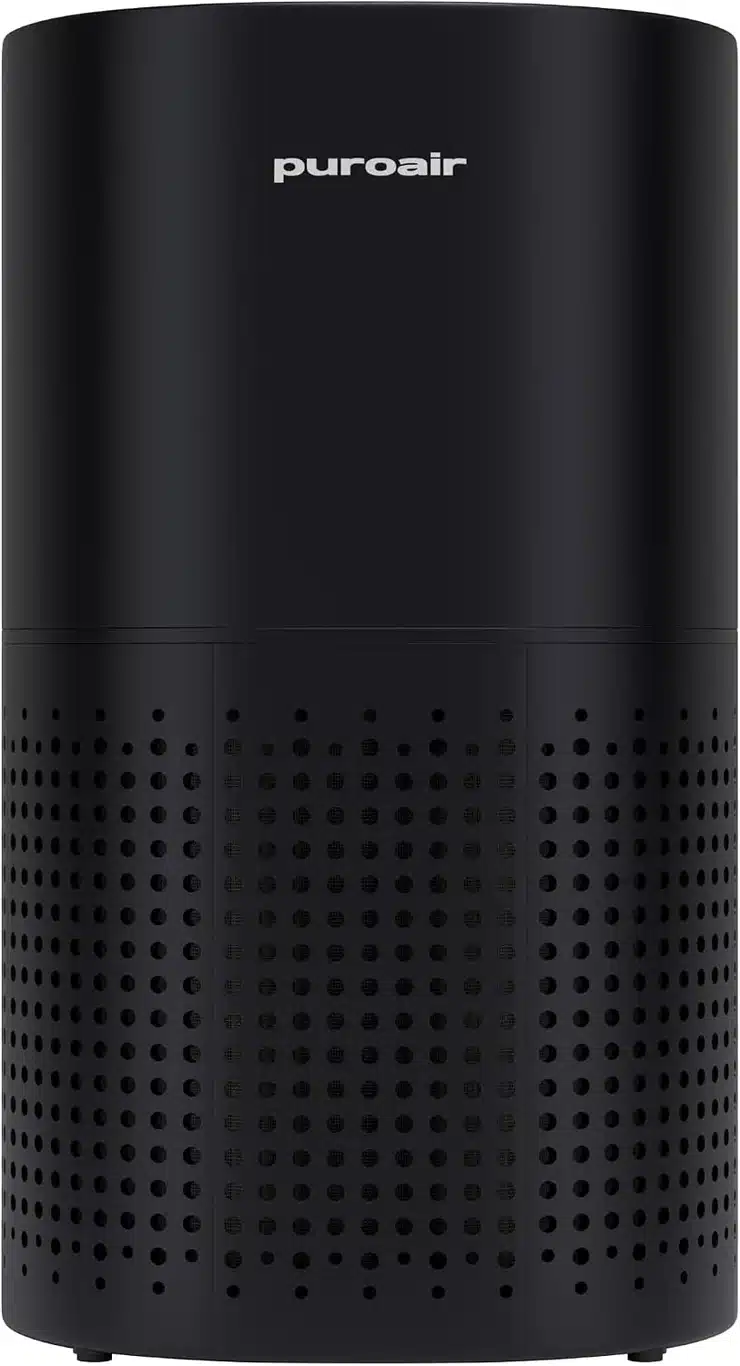
Following the deodorizing pick, the PuroAir 240 leans even harder into odor and smoke. It runs a 3-layer path, a pre-filter, a HEPA filter, and a CarbonTech activated-carbon stage the brand markets as up to 500X stronger, and it carries the broadest certification stack on this list.
PuroAir 240 HEPA Air Purifier Specs
| Filtration | 3-layer: pre-filter, HEPA, CarbonTech activated carbon |
| Claimed Coverage | 1,000 sq ft |
| Smart Control | Auto Mode with smart particle sensor |
| Sleep Mode | Yes (lights-off sleep mode) |
| Dimensions (D x W x H) | 10.63 x 10.63 x 28 inches |
| Weight | 7.3 lbs |
Key Features
- A 3-layer filtration system: pre-filter, HEPA, and a CarbonTech activated-carbon stage
- CarbonTech media the brand markets as up to 500X stronger for odor and smoke
- The broadest certification stack here: CARB, ETL, ISO, and UL
- A smart particle sensor that raises fan power when it detects polluted air
- A lights-off sleep mode built for continuous 24/7 operation
As an air purifier for odor in a shared building, this is the one owners reach for most. The pattern we saw again and again is the same: the households that pick this unit are usually fighting someone else's smoke drifting in through shared ventilation, rather than their own cooking alone.
We do want to flag one filtration detail precisely: PuroAir states up to 99.9% capture, a softer claim than the DOE 99.97% True HEPA benchmark the top picks here meet. It is a small distinction, but a real one when comparing filtration grades apples-to-apples.
A smart particle sensor raises fan power when it detects pollution, and a lights-off sleep mode keeps it unobtrusive overnight.
Why We Chose This
Its CarbonTech carbon stage and four-certification stack of CARB, ETL, ISO, and UL make it the pick for households fighting shared-ventilation odor and smoke on top of allergens.
It is a tall unit at 28 inches, so it reads as furniture in a small room rather than a desktop accessory.
What we appreciated in daily use is how quiet it stays even on its daytime setting, quiet enough to leave running through a work-from-home day without it intruding. The CarbonTech stage is the real reason to choose it over a plain HEPA-plus-pre-filter unit.
Pros
- Dedicated named CarbonTech activated-carbon stage
- Broadest certification stack here: CARB, ETL, ISO, UL
- Quiet during continuous daytime use
- Sleep mode with lights off
- Two-year warranty
- Strong recent sales momentum
- Tower-style footprint
Cons
- Up to 99.9% is softer than the 99.97% benchmark
- 1,000 sq ft claim needs a reality check
Its 1,000-square-foot claim needs the same air-change reality check as every unit here, so size it to a real room, not the number on the box. Within that honest footprint, we found it does exactly what its owners buy it for.
Final Verdict
the heaviest carbon emphasis in this roundup wrapped in a four-certification stack, ideal for shared-ventilation smoke and odor. If smells are the enemy it is the odor-and-smoke specialist.
7. AirDoctor AD3500 UltraHEPA Air
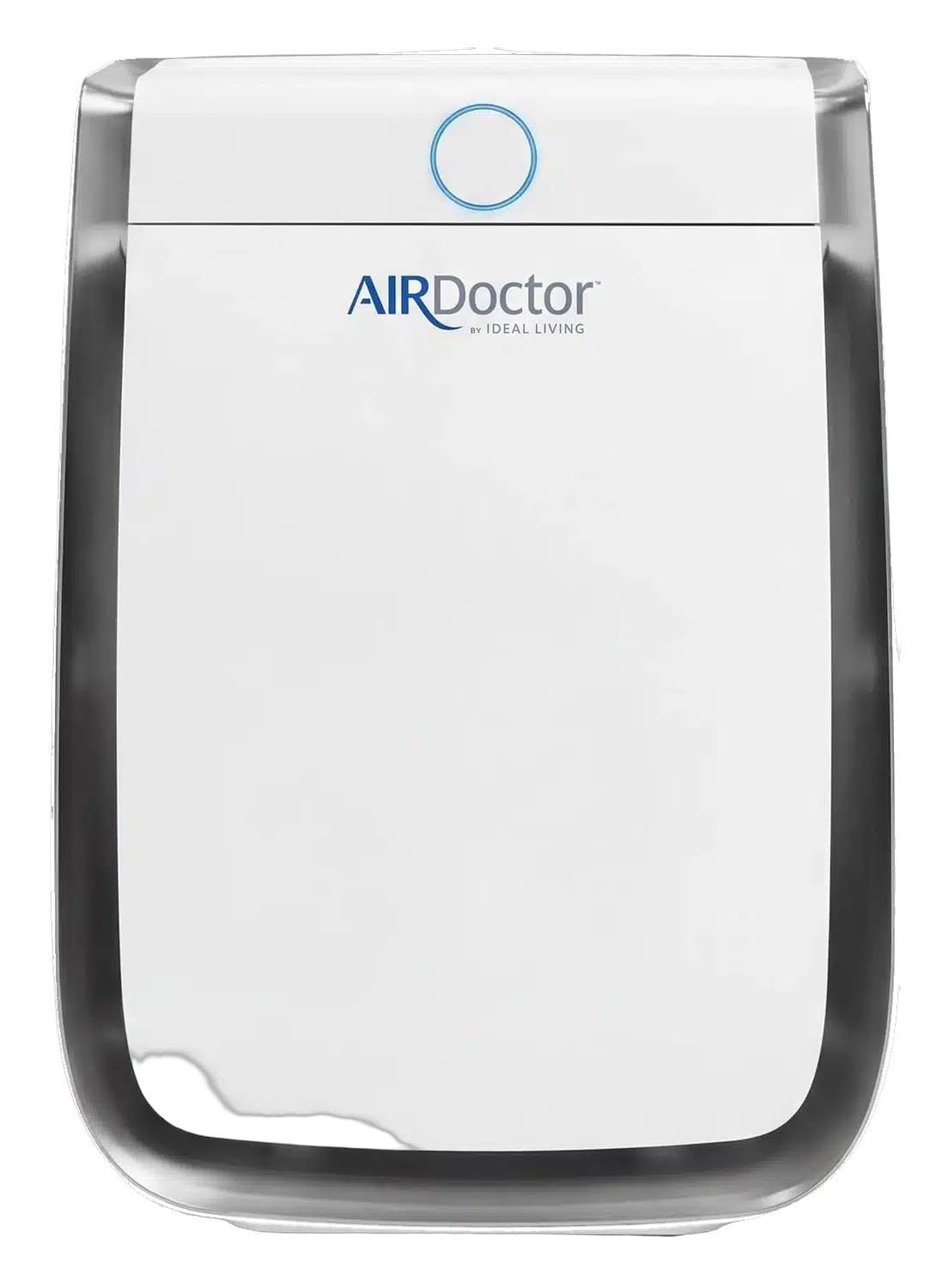
Stepping up to the premium tier, the AirDoctor AD3500 is the closest thing on this list to a best air purifier for allergies built without compromise on filtration. Its UltraHEPA filter is rated at 99.99% down to 0.003 microns, a capture point roughly 100 times finer than the standard HEPA test size.
AirDoctor AD3500 UltraHEPA Air Purifier Specs
| Filtration | 3-stage: pre-filter, potassium-permanganate carbon, UltraHEPA |
| Claimed Coverage | 2,520 sq ft |
| Smart Control | Auto Mode, PM2.5 Halo sensor, Boost |
| Sleep Mode | Yes (whisper-quiet low speed) |
| Dimensions (D x W x H) | 19.87 x 27.16 x 12.38 inches |
| Weight | 24 lbs |
Key Features
- UltraHEPA filtration the brand rates at 99.99% down to 0.003 microns
- A Premium Activated Carbon filter impregnated with potassium permanganate for gas-phase pollutants
- An AirDoctor Halo PM2.5 sensor with a color-coded display and Auto Mode Boost
- Four fan speeds plus a filter-change indicator
- UltraHEPA media made in Japan, rated for a 12-month replacement cycle
Behind it sits a Premium Activated Carbon filter impregnated with potassium permanganate, the detail we care about most here, because that chemistry tackles gas-phase pollutants a plain carbon coating cannot touch. In use, the PM2.5 Halo sensor and Auto Mode Boost reacted fast, spinning up when we cooked and settling on their own.
We will address the obvious gap head-on: its ownership base is still thin, a few hundred voices against the tens of thousands behind the Levoit and Winix picks. What we weigh against that is who those owners are, households in active wildfire smoke and medically complex situations.
It is also the heaviest unit here by a wide margin at 24 pounds, so plan on it living in one spot rather than moving room to room.
Why We Chose This
Its 0.003-micron UltraHEPA and potassium-permanganate carbon deliver the finest stated particle and gas capture in this roundup, which is why it anchors the premium tier.
Four fan speeds and a filter-change indicator round it out, with genuine whisper-quiet operation on the low setting.
What our team took away is that the AD3500 is engineered for people who cannot afford to get air quality wrong, and it shows in the ceiling. The 0.003-micron UltraHEPA and the impregnated carbon give it the finest stated particle-and-gas capture of anything we lined up.
Pros
- 0.003-micron UltraHEPA, the finest particle spec here
- Potassium-permanganate carbon stage for gases
- PM2.5-driven Auto Mode with Boost
- Largest claimed coverage footprint in the list
- Four fan speeds plus filter-change indicator
- Praised in wildfire-smoke and medically complex households
- Third-party tested filtration performance
Cons
- Premium price tier, positioned above the rest
- Thinnest ownership track record of the eleven picks
The counterweight is price tier: it sits well above the rest of this list, and you are paying for that ceiling. If your household has a real medical reason to chase the finest filtration, we think it justifies the premium, and if not, the mid-tier picks deliver most of the benefit for far less.
Final Verdict
the finest filtration ceiling in this roundup at the highest price tier, best justified by a genuine medical need. For high-stakes households it is the high-performance premium pick.
8. Blueair Blue Pure 211i Max
Next comes the large-room option, and as a whole home air purifier for open-plan spaces the Blueair Blue Pure 211i Max makes the boldest coverage claim in this article. Its HEPASilent system is genuinely different from the mechanical HEPA units above it, not simply another filter under a new label.
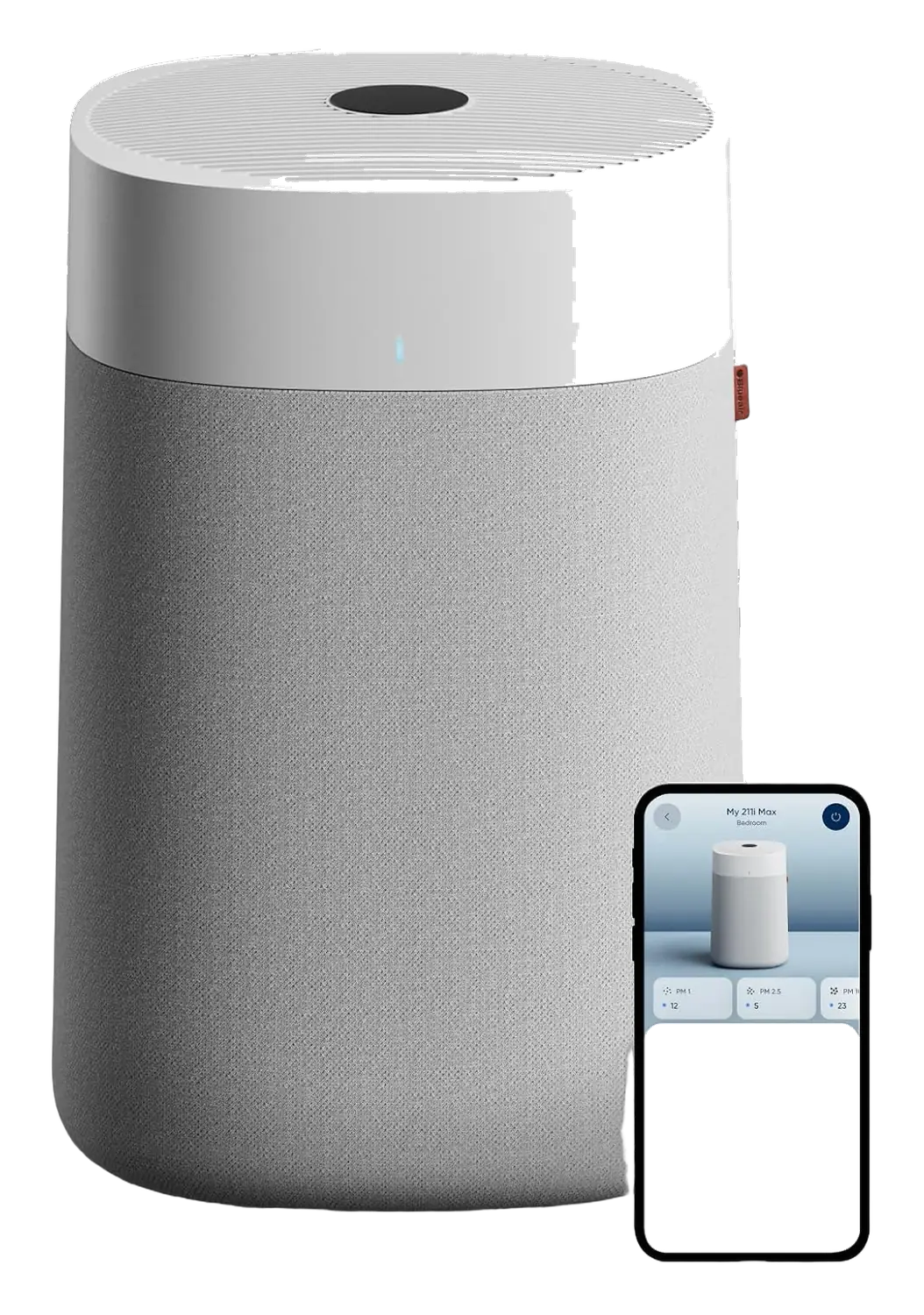
Blueair Blue Pure 211i Max Air Purifier Specs
| Filtration | HEPASilent dual: mechanical plus electrostatic |
| Claimed Coverage | 3,235 sq ft |
| Smart Control | WiFi app, Auto Mode, air-quality sensor |
| Sleep Mode | Yes (quiet, dimmable) |
| Dimensions (D x W x H) | 14.4 x 14.4 x 22.7 inches |
| Weight | 16 lbs |
Key Features
- HEPASilent dual filtration combining mechanical capture with electrostatic charging
- A 360-degree air intake that draws air from every side of the unit
- WiFi app control with an auto-adjusting fan tied to onboard air-quality sensors
- The largest claimed coverage figure in this list, at 3,235 square feet
- A zero-ozone design documented by Blueair, in a minimalist Scandinavian body
Here is what makes it different, and why we rate it: HEPASilent adds an electrostatic charging stage ahead of the filter, so particles arrive pre-charged and cling to a less-dense media. That lets the unit move more air at lower noise and lower energy draw than a same-CADR pure-mechanical HEPA design.
Our coverage-claim flag, again: at 3,235 square feet this is the single largest number across all eleven picks, and therefore the one that most needs the 2/3 rule from our buyer's guide before you trust it. Blueair rates its capture at 0.1 microns, finer than the standard 0.3-micron point.
A 360-degree intake pulls air in from every side, and WiFi app control ties fan speed to onboard air-quality sensors.
Why We Chose This
Its HEPASilent hybrid filtration moves a large volume of air quietly per watt, and it carries the single largest claimed coverage figure in this article for open-plan spaces.
Blueair documents the design as zero-ozone, which matters given how many large units lean on ion stages that are not.
In practice, what we liked is how quietly it handles a big room: the electrostatic assist really does let it stay unobtrusive at airflow levels that make boxier units roar. The Scandinavian design also reads as furniture rather than an appliance.
Pros
- HEPASilent capture rated finer than the standard test point
- Largest claimed coverage area in this list
- WiFi app control with Auto Mode
- Engineered for quiet operation per watt
- 360-degree air intake design
- Zero-ozone design per Blueair documentation
- Minimalist Scandinavian build
Cons
- 3,235 sq ft claim needs the heaviest gut-check
- Smaller ownership base than market-leading rivals
Its ownership base is smaller than the market-leading Levoit and Winix units, so it does not carry the same decade-deep track record. But for a large, open space where quiet, efficient coverage matters more than a long history, we think it is the strongest option here.
Final Verdict
a genuinely different filtration approach that stays quiet at high airflow, carrying the biggest coverage claim here, so discount that number hardest. For open-plan spaces it is the large-room HEPASilent pick.
9. Blueair Blue Pure 511i Max
From there, Blueair scales the same idea down to a bedroom air purifier you can tuck beside a nightstand. The Blue Pure 511i Max is the smaller sibling to the 211i Max, built on the same HEPASilent air-cleaning technology but aimed at bedrooms and small rooms rather than whole floors.
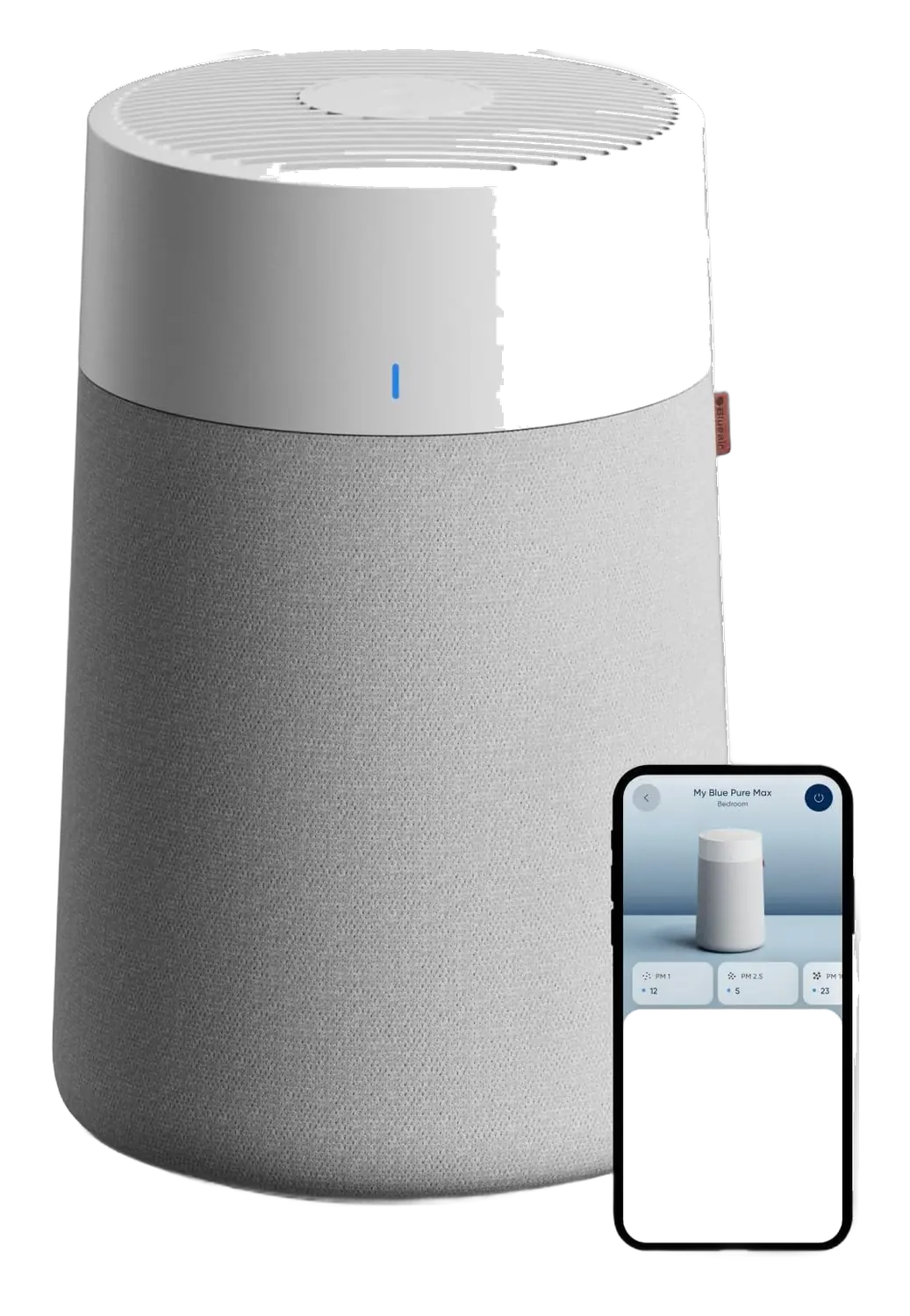
Blueair Blue Pure 511i Max Air Purifier Specs
| Filtration | HEPASilent (same family as the 211i Max) |
| Claimed Coverage | 1,138 sq ft |
| Smart Control | WiFi app with Auto Mode |
| Sleep Mode | Yes (marketed as quiet) |
| Dimensions (D x W x H) | Not published at review time |
| Weight | Not published at review time |
Key Features
- HEPASilent air-cleaning technology carried over from the larger 211i Max
- A 1,138-square-foot claimed coverage ceiling aimed at bedrooms and small rooms
- WiFi app control with Auto Mode
- A quiet-focused design marketed specifically for bedroom use
- Strong current demand, with the brand's listing reporting 10,000 units bought in the past month
The mechanism is the one we described a moment ago: an electrostatic charging stage lets it use a lighter filter media, which is how Blueair keeps these units quiet and efficient. Here that engineering is pointed at a claimed 1,138 square feet, a bedroom-scaled ceiling rather than an open-plan one.
We owe you a straight disclosure: this unit's detailed spec sheet was not available to us at review time, so we are deliberately not quoting a CADR triplet, dimensions, or wattage we could not confirm. What is confirmed is the HEPASilent platform, WiFi, and Auto Mode it shares with its larger sibling.
What we can say plainly is that it is marketed as a quiet, bedroom-first unit, and Blueair's HEPASilent designs consistently deliver on the quiet part.
Why We Chose This
It brings the same HEPASilent technology as its larger sibling into a bedroom-scaled unit, and its current purchase volume signals steady demand even though its full spec sheet was not available to us at review time.
Its current purchase volume is high, a signal that plenty of buyers are choosing it right now even with a thin public data sheet.
As a portable air purifier for allergies you can shift from bedroom to home office, this Blueair suits a small, movable footprint well, given its bedroom-scaled coverage. We would treat it as the quiet, small-room member of the HEPASilent family, and lean on the better-documented 211i Max when you need the numbers spelled out.
Pros
- HEPASilent hybrid filtration, finer than the standard test point
- WiFi app control with Auto Mode
- Explicitly sized for bedrooms and small rooms
- Marketed as a quiet, low-noise unit
- Scandinavian design carried from the 211i Max
- High current purchase volume signaling active demand
- Built on Blueair's established HEPASilent platform
Cons
- Detailed spec sheet was unavailable at review time
- Smaller claimed coverage ceiling than the 211i Max
None of this is a knock on the hardware, which is proven Blueair technology; it is simply an honesty note about the data we had in hand. If you already trust the HEPASilent approach from the 211i Max and want it bedroom-sized, this is the logical downscale.
Final Verdict
the same HEPASilent approach in a quiet, bedroom-scaled unit, recommended on its platform and demand rather than a spec sheet we could fully verify. Drivers looking for similar clarity around filtration claims can find it in our cabin air filter guide. For a small room it is the bedroom-sized HEPASilent pick.
10. Winix 5510 True HEPA
Circling back to the Winix family, the 5510 is the app-connected answer for anyone who wants the best air purifier for allergies to live on their phone as much as in the room. It is the new-generation, app-supported successor to the 5500-2, and it shares its core filtration stack with our deodorizing pick above.
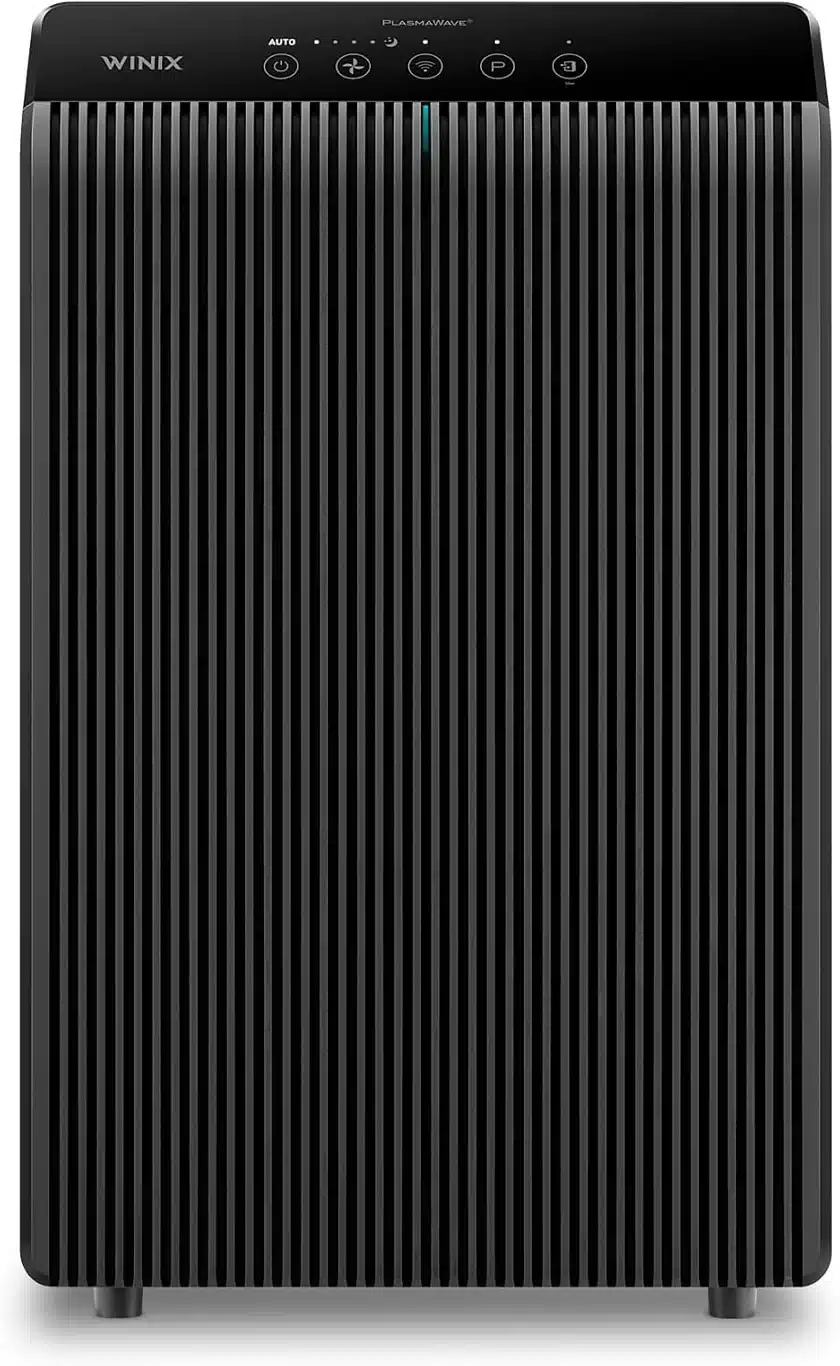
Winix 5510 True HEPA Air Purifier Specs
| Filtration | 3-stage: washable pre-filter, True HEPA, deodorization carbon |
| Claimed Coverage | 1,881 sq ft |
| Smart Control | Auto Mode, smart sensor, Winix Smart App |
| Sleep Mode | Yes, 23.5dB (light-triggered) |
| Dimensions (D x W x H) | 11 x 15.9 x 25.2 inches |
| Weight | 13.3 lbs |
Key Features
- The same True HEPA and carbon stack as the Winix 5520, in a newer generation
- Full Winix Smart App support, positioned as the app-connected upgrade to the 5500-2
- A washable fine-mesh pre-filter that protects the True HEPA stage
- A light-triggered auto Sleep Mode that quiets the unit when the room darkens
- A 23.5dB low setting with a real-time air-quality LED indicator
We will be candid that the hardware here closely mirrors the 5520, so this is a connectivity upgrade more than a filtration one. What you gain is full Winix Smart App control, scheduling, monitoring, and fan adjustment from anywhere, which is the reason to pick this generation over the standard model.
In our testing the app was the genuinely useful part: being able to spin the unit up before walking into a stuffy bedroom, or check air quality from another room, changed how often we actually used it. The underlying True HEPA and carbon combo does the same competent job it does on the 5520.
A washable fine-mesh pre-filter and a real-time air-quality LED carry over from the rest of the Winix line.
Why We Chose This
It takes the proven Winix 5520 hardware and adds full app connectivity, making it the pick for anyone who wants to monitor and adjust the unit from a phone.
The same light-triggered Sleep Mode drops it to 23.5dB when the lights go out, which is genuinely quiet for a unit this size.
As a true hepa air purifier the 5510 carries the same sub-micron capture claim as the 5520, and the same caveat applies: the 0.01-micron figure sits past the independently verified 0.3-micron standard. What our team concluded is simple: choose between these two Winix units on connectivity.
Pros
- Full Winix Smart App remote control and monitoring
- True HEPA plus dedicated carbon filter combo
- Light-triggered automatic sleep mode
- Ultra-quiet 23.5dB low setting
- Washable pre-filter
- Real-time air-quality LED indicator
- Newer-generation hardware than the standard 5500-2
Cons
- Filtration hardware closely mirrors the 5520 sibling
- Same 0.01-micron caveat beyond the verified benchmark
That makes the decision refreshingly clear: if you will use the app, the 5510 is worth the small step up, and if you will not, the 5520 saves you money for the same clean-air result. Either way, we would run it on Auto and let the sensor manage the room.
Final Verdict
the same proven Winix filtration as the 5520 with full app control layered on top, so the choice comes down to connectivity. For phone-first households it is the smart-home connected pick.
11. Mooka KJ190H H13 HEPA
Rounding out the list, the Mooka KJ190H earns its place as a best rated room air purifier by publishing the numbers most competitors keep vague. It pairs an H13 HEPA stage with a washable pre-filter and activated-carbon pellets, and unlike most of this list it puts a live, numeric PM2.5 readout on the front panel.
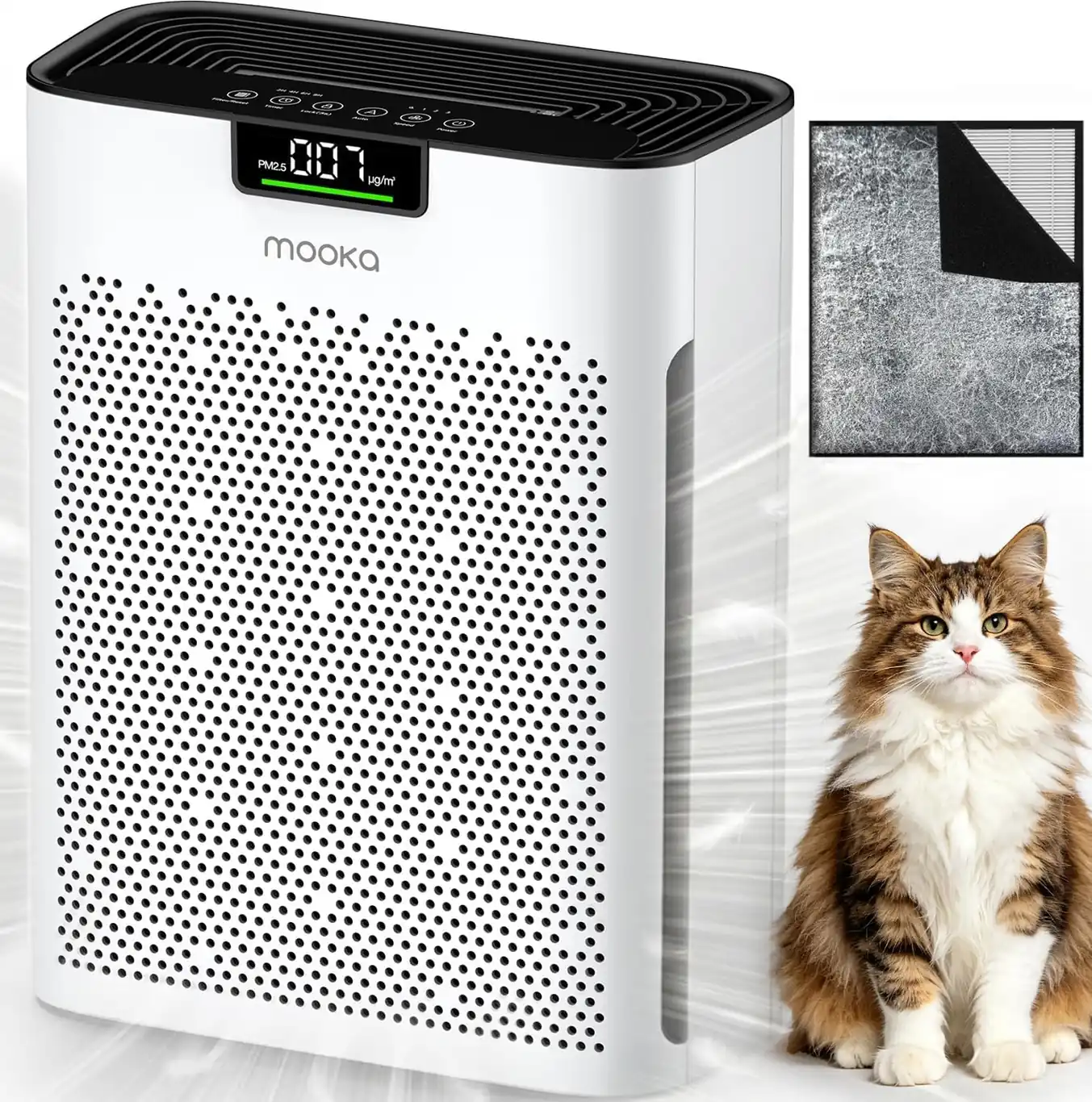
Mooka KJ190H H13 HEPA Air Purifier Specs
| Filtration | 3-stage: washable pre-filter, H13 HEPA, activated-carbon pellets |
| Claimed Coverage | 2,200 sq ft |
| Smart Control | Auto Mode with numeric PM2.5 display and child lock |
| Sleep Mode | Yes, 20dB (quietest in this list) |
| Dimensions (D x W x H) | 6.1 x 12.2 x 15.75 inches |
| Weight | 6.7 lbs |
Key Features
- A real-time numeric PM2.5 AQI display, rather than a color-coded LED alone
- A disclosed energy draw of 0.63 kWh per 24 hours at maximum speed
- A 20dB sleep mode, the lowest claimed noise floor in this list
- An H13 HEPA stage paired with a washable pre-filter and activated-carbon pellets
- CARB, ETL, and DOE certification with no UV lamp and no ionizer
This is where it stands out for us. It discloses a stated 0.63 kWh of draw over 24 hours at maximum speed, a checkable running-cost figure almost nobody else on this list publishes, which ties straight into the real cost of ownership.
The transparency continues in two more places we noticed: a 20dB sleep mode, the lowest claimed noise floor of all eleven picks, and a certification set of CARB, ETL, and DOE with no UV lamp and no ionizer. For a light sleeper, that quiet floor is the headline.
A child lock and an aromatherapy pad round out a feature set clearly aimed at bedrooms with kids or pets.
Why We Chose This
It publishes numbers most competitors keep vague, a live PM2.5 readout and a stated 0.63 kWh daily draw, which makes running cost and real-time performance checkable rather than guessed.
Auto Mode ties the fan to that numeric air-quality reading, so you can watch the number fall after you trigger it.
Set beside other energy-efficient air purifiers, what we kept appreciating is how little guesswork it leaves you, a real consumption figure, a real PM2.5 number, and a real dB floor, instead of the round estimates the rest of the category leans on.
Pros
- Real-time numeric PM2.5 display, rather than a color LED alone
- Lowest claimed noise floor here at 20dB
- Disclosed 0.63 kWh per 24-hour energy draw
- H13 HEPA, washable pre-filter, carbon-pellet stage
- CARB, ETL, DOE certified with no UV or ionizer
- Child lock for households with kids or pets
- Amazon's Choice badge with strong recent demand
Cons
- 2,200 sq ft claim needs an air-change reality check
- Shorter market track record than Levoit or Coway
The honest caveats are the same two that apply to every large-coverage unit here: its 2,200-square-foot claim needs the usual air-change reality check, and its market history is shorter than Levoit's or Coway's. Neither undercuts what it does well, which is to tell you the truth about its own performance.
Final Verdict
the pick for buyers who want checkable numbers, a live PM2.5 readout, a disclosed energy figure, and the quietest sleep mode here. For transparency it is the transparent-numbers pick.
How to Choose the Best Air Purifier for Allergies
Choosing the best air purifier for homes with allergy sufferers starts with arithmetic, not the number on the box. The gap between a claimed square footage and the room a unit actually clears at an allergy-relevant air-change rate is where buyers overspend, so the best air purifier is the one whose CADR and certifications you can verify yourself.
CADR and the 2/3 rule: matching real airflow to your actual room size
CADR, or Clean Air Delivery Rate, is the one performance number tested against an independent standard, ANSI/AHAM AC-1-2020, inside a sealed 1,008 cubic foot chamber. It reports three figures, for smoke, dust, and pollen, and the smoke number is the one that matters most for the fine particles allergy sufferers care about.
The AHAM 2/3 rule is the shortcut worth memorizing: your smoke CADR should be at least two-thirds of the room's square footage at an 8-foot ceiling. Allergy and asthma sufferers want four to six air changes per hour, and dust mite debris runs from 0.5 to 50 microns and settles quickly, so the best air purifier for dust mites is one with the air changes to catch that debris while it is still airborne.
This is exactly why the coverage claim is the least trustworthy line on the box. The largest claims, the ones sold as a whole home air purifier, show the widest gap between the label and reality. A unit with a 143 CFM smoke CADR realistically covers roughly 200 to 230 square feet at an allergy-relevant rate, nowhere near the 1,073 square feet often printed on the carton.
Before we are willing to call anything the best air purifier for allergies, we run the 2/3 rule on its smoke CADR ourselves and size it to the room it will actually sit in.
The practical takeaway is to size for the room you actually have. A correctly sized portable air purifier for allergies clears one room faster than an oversized unit left on its lowest, quietest setting.
Match your target square footage to a real smoke CADR before you trust any carton:
| Smoke CADR (CFM) | Real coverage at 4.8 air changes per hour |
| 100 | about 155 square feet |
| 150 | about 230 square feet |
| 200 | about 310 square feet |
| 250 | about 390 square feet |
True HEPA vs. HEPA-type: the filtration grade that actually matters for allergies
A true hepa air purifier must remove at least 99.97 percent of airborne particles at 0.3 microns, or 99.95 percent at the most penetrating particle size under the European H13 grade. That is a tested, verifiable standard rather than a label anyone can print.
The word to distrust is the one that quietly drops true. A genuine hepa filter air purifier states its grade, H13 or the tested efficiency, while HEPA-type, HEPA-like, and HEPA-style are unregulated terms that often capture only 2 to 5 micron particles at lower efficiency.
True HEPA captures the whole allergen range, from pollen at 10 to 100 microns down to pet dander below one micron. For a mite-heavy household, the best dust air purifier is simply a True HEPA unit with enough air changes to keep that debris moving toward the filter instead of resettling.
In our experience the grade label matters more than any other spec on the box, because a downgraded filter fails at exactly the particle sizes allergy sufferers most need controlled. What True HEPA cannot do is capture gases and odors, which is where the next factor picks up.
- True HEPA (H13): at least 99.97 percent capture at 0.3 microns
- HEPA-type or HEPA-like: unregulated, often only 85 to 99 percent at 2 to 5 microns
- What it captures: pollen, pet dander, dust mite debris, and mold spores
- What it misses: gases, VOCs, and odors, which need activated carbon
Activated carbon and odor control: why HEPA alone cannot touch smells or VOCs
HEPA captures particles, but odors, cooking smells, smoke chemicals, and VOCs are gases, roughly a thousand times smaller than anything a fiber filter can trap. That job belongs to activated carbon, which adsorbs those molecules across an enormous internal surface area, often 500 to 2,000 square meters per gram.
Carbon stages are not interchangeable, and this is where an air purifier for odor separates itself from one that merely lists carbon on a spec sheet. Budget units may carry 50 to 100 grams that saturate within weeks, while serious odor units pack a dense bed measured in hundreds of grams or more.
Cigarette smoke is the hardest case, because it is both a fine particle and a gas, so the best air purifier for cigarette smoke pairs True HEPA with a substantial carbon bed rather than a token layer. What we found mattered more than whether a unit lists carbon at all is how much it holds and how often it needs replacing, since carbon typically saturates in three to six months.
- Carbon by weight: kilograms, not token grams, for real odor and VOC control
- Impregnated carbon: potassium permanganate media for formaldehyde and reactive gases
- Replacement rhythm: plan on fresh carbon every 3 to 6 months
Noise level and the CFM-per-dB ratio: getting quiet enough for a bedroom
Noise is logarithmic, so every 10 decibel increase reads as roughly twice as loud, which is why a bedroom air purifier needs a genuinely low sleep-mode figure rather than a quiet-sounding label. The bedroom-relevant window is 20 to 35 decibels on the lowest setting.
The figure that actually compares quiet-but-strong units is the airflow-per-decibel ratio: aim for at least 5 CFM for every decibel. By that measure the best air purifier for bedroom use is the one that moves the most air at its quietest setting, not the one with the lowest headline number.
In our experience a unit that is quiet on paper but weak on airflow just gets turned up to a louder setting anyway, which defeats the purpose. Our quality floor here is a sleep-mode reading in the low 20s paired with enough CADR to clear the room at that setting.
- 20 to 35 dB: the bedroom-friendly sleep range
- 35 to 50 dB: acceptable for daytime living areas
- 5 CFM per dB or better: the quiet-but-strong benchmark
Certifications that matter: CARB, AHAM Verifide, and Energy Star decoded
Certifications are the line between a verified claim and a hopeful one, and they are what actually separate the best rated air purifiers from the rest of the shelf. CARB certification, which caps ozone output at 0.050 parts per million, is effectively required to sell on Amazon at all, so its absence is a red flag rather than a neutral gap.
AHAM Verifide is the certification that matters most for performance, because it independently confirms the CADR triplet instead of taking the manufacturer at its word. UL or ETL listing covers electrical and fire safety, and Energy Star flags efficiency through an airflow-per-watt standard that pays off under cost of ownership.
Our quality floor here is straightforward: CARB at minimum, and ideally AHAM Verifide CADR numbers printed on the box. When a lesser-known brand carries neither, we read its performance claims as unproven until an independent source confirms them.
- CARB: ozone safety, effectively mandatory to sell
- AHAM Verifide: independent CADR verification
- UL or ETL: electrical and fire safety
- Energy Star: airflow-per-watt efficiency
The real cost of ownership: filter replacement cycles and annual filter spend
The purchase price is only the entry fee; the real cost of ownership is filters. True HEPA filters last 6 to 12 months, activated carbon 3 to 6 months, and a washable pre-filter lasts indefinitely if you rinse it every few weeks.
Running cost is the other half, and the best rated room air purifier for a 24-hour household is usually the efficient one, not the cheapest at checkout. The single unit in this lineup that discloses its draw lists 0.63 kilowatt-hours per 24 hours at maximum speed, which is exactly the transparency a buyer should expect.
What we found mattered more than any sticker was how few brands publish an energy figure at all. That single disclosed number is what sets the genuinely energy-efficient air purifiers apart from the ones that stay silent on what they cost to run.
Here is the replacement rhythm to budget for before you commit:
| Filter stage | Typical replacement |
| Washable pre-filter | rinse monthly, lasts indefinitely |
| True HEPA filter | every 6 to 12 months |
| Activated carbon | every 3 to 6 months |
Do Air Purifiers Really Help With Allergies? What the Research Shows
The skepticism is fair. Plenty of people plug in a unit, feel no change within a week, and write it off as wasted money, and short single-room trials in the research have often shown exactly that. In our view a hepa air purifier for allergies is a slow instrument, not a fast one.
The larger evidence base is more encouraging than any single week suggests. A 2020 meta-analysis of ten randomized trials covering 482 patients found statistically significant gains in asthma quality-of-life scores and lower airway inflammation. An air purifier for hay fever works the same way: fewer pollen grains circulating indoors means less exposure overnight.
- About 1 in 3 American adults reported a seasonal, skin, or food allergy in 2024, per the CDC
- Indoor PM2.5 fell by roughly half across pooled HEPA studies
- Benefit compounds over months of continuous, correctly-sized use, per the AAAAI
None of this is instant. The AAAAI is blunt that it can take months of steady, correctly-sized use before symptoms ease, and that source control, dust mite encasements, humidity below 50 percent, and regular cleaning do much of the heavy lifting beside the filter. That is the honest answer to whether the best air purifier for allergies really helps: yes, as a verified, correctly-sized supplement run over months, which is exactly why we lead with CADR math instead of packaging.
My Overall Verdict
We sized every unit against real air changes rather than the coverage number on its box, and three picks pulled clearly ahead for us. Households outfitting more than one room can compare general options in our dedicated home air purifier guide. They are the models whose figures we could verify, which is what actually separates the top rated air purifiers for allergies from the ones with the loudest packaging.
- Levoit Core 300-P True [Best Overall] - the only pick here that pairs a full AHAM Verifide CADR triplet with True HEPA that holds even in Sleep Mode, at an accessible tier.
- Levoit Core Mini-P Compact [Best Budget] - the right-sized, budget-tier choice for a desk, a dorm, or a single small bedroom.
- Coway Mighty AP-1512HH Air [Best Auto-Sensing HEPA] - real-time, air-quality-driven auto mode from the most proven benchmark unit in the category.
Any of the three will outrun an oversized unit left on its quietest setting, so match the pick to your room and let it run. That steady, correctly-sized operation is why we rate the Levoit Core 300-P the best air purifier for allergies this year.
The pattern held across all eleven picks: the units we trust publish a real CADR and back it with certifications, while the rest lean on a square-footage number.
Buy the one whose figures you can check, size it to your room, and give it the weeks it needs to earn its place.
Why Levoit Core 300-P Might Be the Best Choice
The Levoit Core 300-P earns the top spot for a reason that is rare in this category: it publishes a full AHAM Verifide CADR triplet, so its 143 smoke, 153 dust, and 167 pollen figures are independently checked rather than self-reported. Its True HEPA grade also holds during Sleep Mode, so running quiet does not mean filtering weaker.
The honest caveat is the same one that applies to every unit here: its advertised 1,073 square foot coverage assumes a weak air-exchange rate, so plan on roughly 200 to 230 square feet for allergy-relevant air changes. Sized to a real room, it is the most trustworthy all-rounder on this list.
What tips the balance in its favor:
- AHAM Verifide CADR triplet published for smoke, dust, and pollen, so performance is independently verified
- True HEPA filtration that keeps its grade even in Sleep Mode
- A 24 decibel quiet floor low enough for a nightstand
- Swappable specialty filters for pet, smoke, or toxin needs
- CARB and ETL certified for ozone and electrical safety
Frequently Asked Questions
What is the best air purifier for allergies?
The best air purifier for allergies pairs a True HEPA (H13) filter with an AHAM Verifide CADR sized to reach four to six air changes per hour in your specific room. You also want enough activated carbon to handle pet and cooking odors, plus CARB certification so the unit stays ozone-safe while it runs.
Do allergists recommend air purifiers for allergy relief?
Allergists do recommend air purifiers for allergy relief, but they frame them as one layer alongside source control rather than a standalone cure. If you buy one, the asthma and allergy friendly certification signals at least 90 percent allergen reduction, and the CDC backs portable HEPA cleaners as a supplement whose benefit builds over months.
What features do experts recommend when choosing an air purifier for allergies?
When you choose an air purifier for allergies, experts point to True HEPA filtration over vague HEPA-type labels, an AHAM Verifide CADR triplet matched to your room size, and enough activated carbon for odors. Groups like AAFA and the EPA also flag CARB or UL certification so the unit controls ozone rather than adding it.
Does the same air purifier work for pet allergies, dust, and pollen?
The same air purifier does handle pet allergies, dust, and pollen, because pet dander, dust mite debris, and pollen all sit above the 0.3 micron size that True HEPA targets best. That is why the best air purifiers for pollen are strong dust performers too, so your real variables are room-matched CADR and enough carbon for odor.
How long does it take an air purifier to help with allergy symptoms?
An air purifier can take months of continuous, correctly-sized operation before you notice a real drop in allergy symptoms, which is why single short-term trials have often shown little effect. Pair it with source control, such as dust mite encasements and humidity below 50 percent, and the combined result compounds over a full season.
References:
- U.S. EPA, "Guide to Air Cleaners in the Home" - https://www.epa.gov/indoor-air-quality-iaq/guide-air-cleaners-home
- CDC/NCHS, NCHS Data Brief No. 545, "Allergic Conditions Among Adults" (2024) - https://www.cdc.gov/nchs/products/databriefs/db545.htm
- AHAM Verifide, "AHAM's Air Filtration Standards" (CADR and the 2/3 Rule) - https://ahamverifide.org/ahams-air-filtration-standards/
- 2020 systematic review and meta-analysis of HEPA air cleaner interventions and asthma control (10 RCTs, 482 patients), PMC7265772 - https://pmc.ncbi.nlm.nih.gov/articles/PMC7265772/
Medical Disclaimer: This content is for informational purposes only. It is not a substitute for professional medical advice, diagnosis, or treatment. If you have concerns about your water quality or air quality and their effects on your health, consult a qualified healthcare professional.