
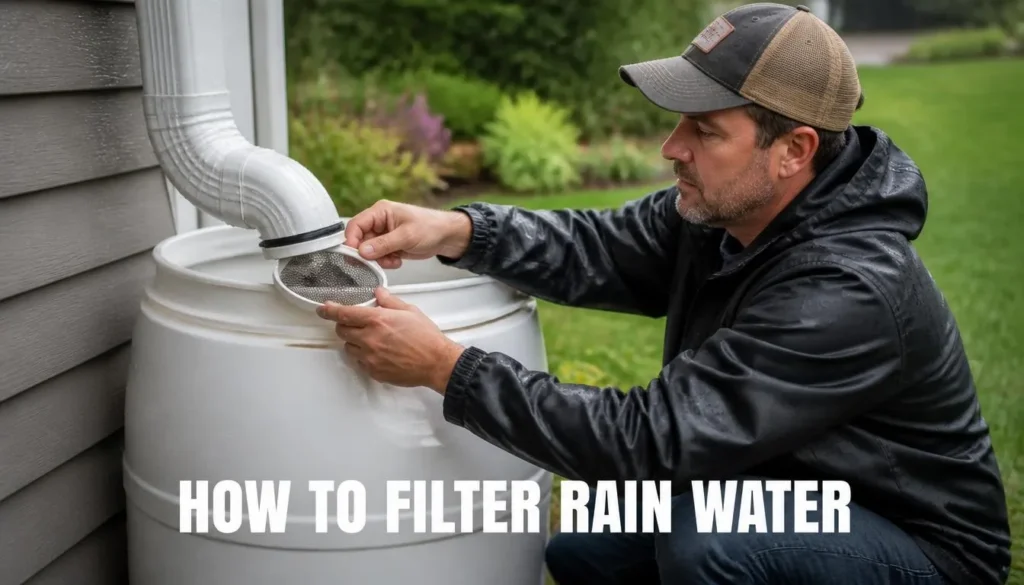
To filter rain water safely, you need a short chain of steps, not a single filter. Screen out debris, let the water settle, pass it through a fine filter, then boil or disinfect it. Each step removes a different problem, and skipping one leaves a gap, because rain can pick up dust, bird droppings, and roof metals on its way to your barrel. Clear water is not always safe water, and that gap is why the order of the steps matters.
Below, you’ll see the five steps in order, what rain water carries, how roof and barrel setups differ, and which treatment stops which germ. By the end, you’ll know how to build a routine that fits a rain barrel or a whole-home system.
Key Takeaways
- Work in order: screen debris, settle, filter, then boil or disinfect the water.
- Clear rain water can still carry germs and roof metals, so looks prove nothing.
- Most portable filters do not remove viruses. Boil for 1 minute, or 3 minutes above 6,500 feet.
- Test water you drink on a regular schedule, and keep barrels and cartridges clean.
How to Filter Rain Water Step by Step
A rain water filter setup works in stages, and each stage stops a different problem. Screens catch leaves, settling drops grit, a fine filter catches parasites, and heat kills the germs that remain. The order matters. According to the CDC, boiling is the top choice for killing germs, and filtering followed by disinfection is the next-best option.
Follow these five steps in order:
- Screen the gutter and barrel inlet. Fit a fine mesh so leaves, bugs, and debris stay out.
- Divert the first flush (the first, dirtiest runoff of a storm). Send it away from your barrel before you start collecting.
- Let the water settle. Keep it in a clean, covered container so the grit sinks to the bottom, then draw off the clear water from the top.
- Filter it. Pour cloudy water through a clean cloth, paper towel, or coffee filter. To catch parasites, choose a filter with an absolute pore size (the largest opening it has) of 1 micron or smaller. That is about one-seventieth the width of a human hair.
- Boil or disinfect it. Bring clear water to a rolling boil for 1 minute, or 3 minutes above 6,500 feet. Let it cool, then store it in a clean, covered container.
What Is in Rain Water and Why It Needs Treatment
Rain looks clean, but it rarely stays that way once it has crossed the air and your roof. The CDC says that even clear-looking rainwater can contain germs and chemicals that could make you sick. Dust, smoke, and other airborne particles can taint it before it ever lands, which means even a perfect roof cannot promise clean water.
The roof adds more, because dirt and germs wash off with the water. Bird droppings are one common source, especially when rain follows several dry days. Roofing, gutters, pipes, and storage materials can also add chemicals such as asbestos, lead, or copper to the water.
Here is a point many guides miss: filters and disinfectants solve different problems, since a fine filter removes particles and parasites while heat kills germs. Still, the CDC notes that boiling and disinfection do not remove harmful chemicals. That is why the source of your water matters as much as the treatment.
Collecting Rain From Your Roof and Barrel
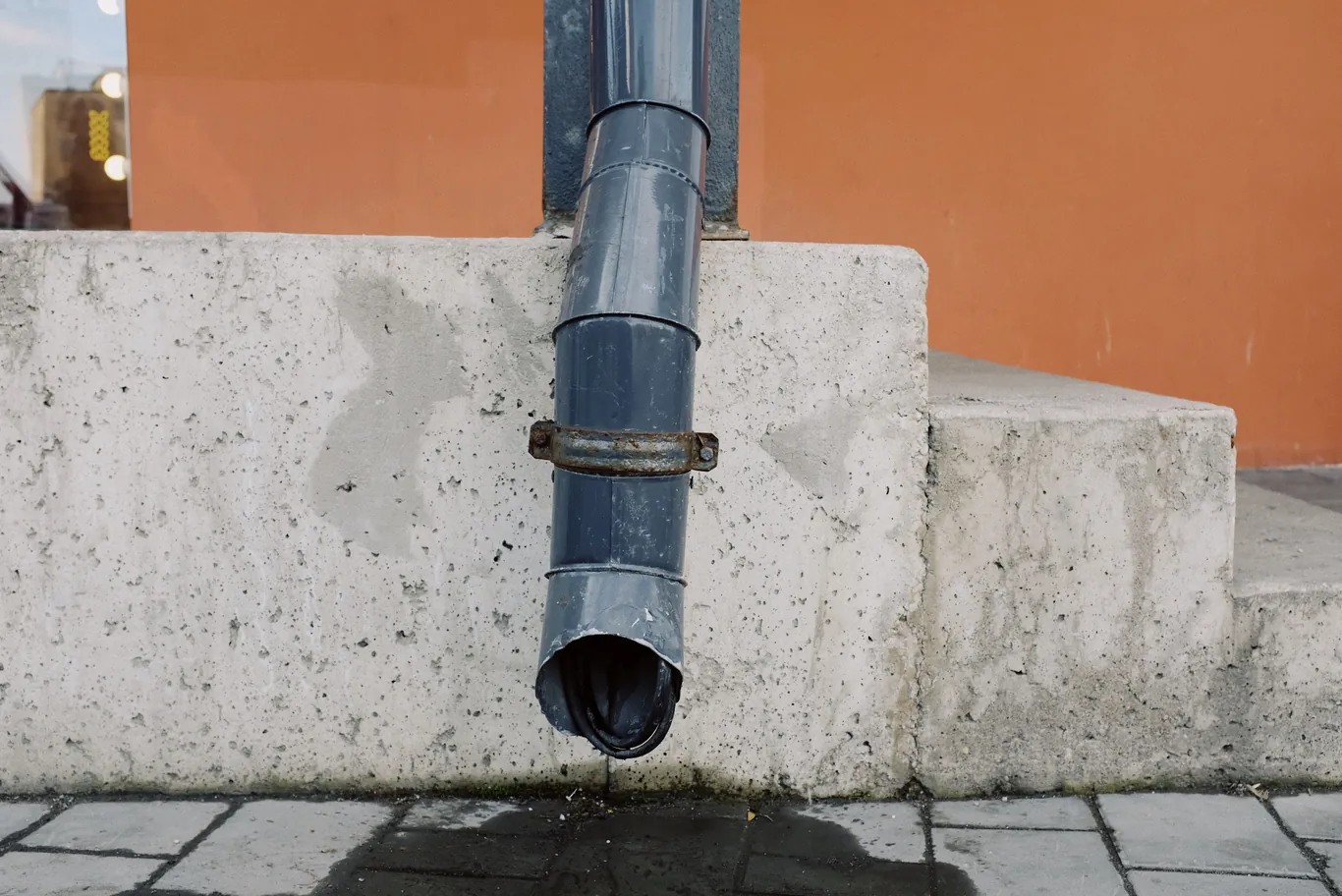
Clean water starts before the barrel, so the best way to filter rainwater from a roof is to keep dirt out of storage in the first place. A first flush diverter (a device that sends the first rain of a storm away from your tank) does most of that work. The CDC notes that this first flow picks up the most dirt, germs, and chemicals.
Size matters when you pick a diverter, and the University of Arizona Cooperative Extension says first flush devices should remove about 10 gallons per 1,000 square feet of roof. A 1,500 square foot roof would divert about 15 gallons.
Stored water is not finished water, so when you filter rain barrel water, run it through the same settle, filter, and boil steps from the first section. The barrel only gives you a cleaner starting point.
A rain barrel setup needs these parts:
- Gutter screen: keeps leaves and grit out of the downspout.
- First flush diverter: sends the dirty early runoff away from the barrel.
- Inlet screen: keeps bugs and debris out. The CDC adds that a screen, or emptying the barrel at least every 10 days, stops mosquitoes from laying eggs.
- Covered barrel: blocks light and animals, which keeps debris out and slows algae.
- Raised spigot: draws clear water and leaves settled sludge behind.
How to Filter Rain Water to Drink: What Each Method Removes
No single method handles every risk, so you pair them. According to the CDC, a filter with an absolute pore size of 1 micron or smaller removes parasites. A micron is about one-seventieth the width of a human hair. A filter certified to NSF/ANSI 53 or 58 (public standards that test filters for specific contaminants) for cyst reduction does the same. A 0.3 micron absolute-rated filter also removes bacteria. Neither particle filter removes viruses.
Heat and disinfectants cover the rest. Boiling kills all types of germs. For chemical disinfection, follow the product directions for drinking water, including dose and contact time. Avoid iodine during pregnancy or with thyroid problems or iodine hypersensitivity, and do not drink iodine-treated water for more than a few weeks. Iodine and chlorine tablets do not kill Cryptosporidium (a parasite that resists chlorine), but chlorine dioxide does when you use it correctly. UV light (a lamp that damages germs with ultraviolet rays) works only on clear water, so filter first.
The table below compares what each method removes:
| Method | Parasites | Bacteria | Viruses |
| 1-micron absolute-rated filter | Yes | Not all | No |
| 0.3-micron absolute-rated filter | Yes | Yes | No |
| Reverse osmosis | Yes | Yes | Yes |
| Boiling | Yes | Yes | Yes |
| Bleach or iodine | Not reliably | Yes | Yes |
| UV on clear water | Yes | Yes | Yes |
Choosing a Rainwater Filtration System for Home or Off-Grid Use
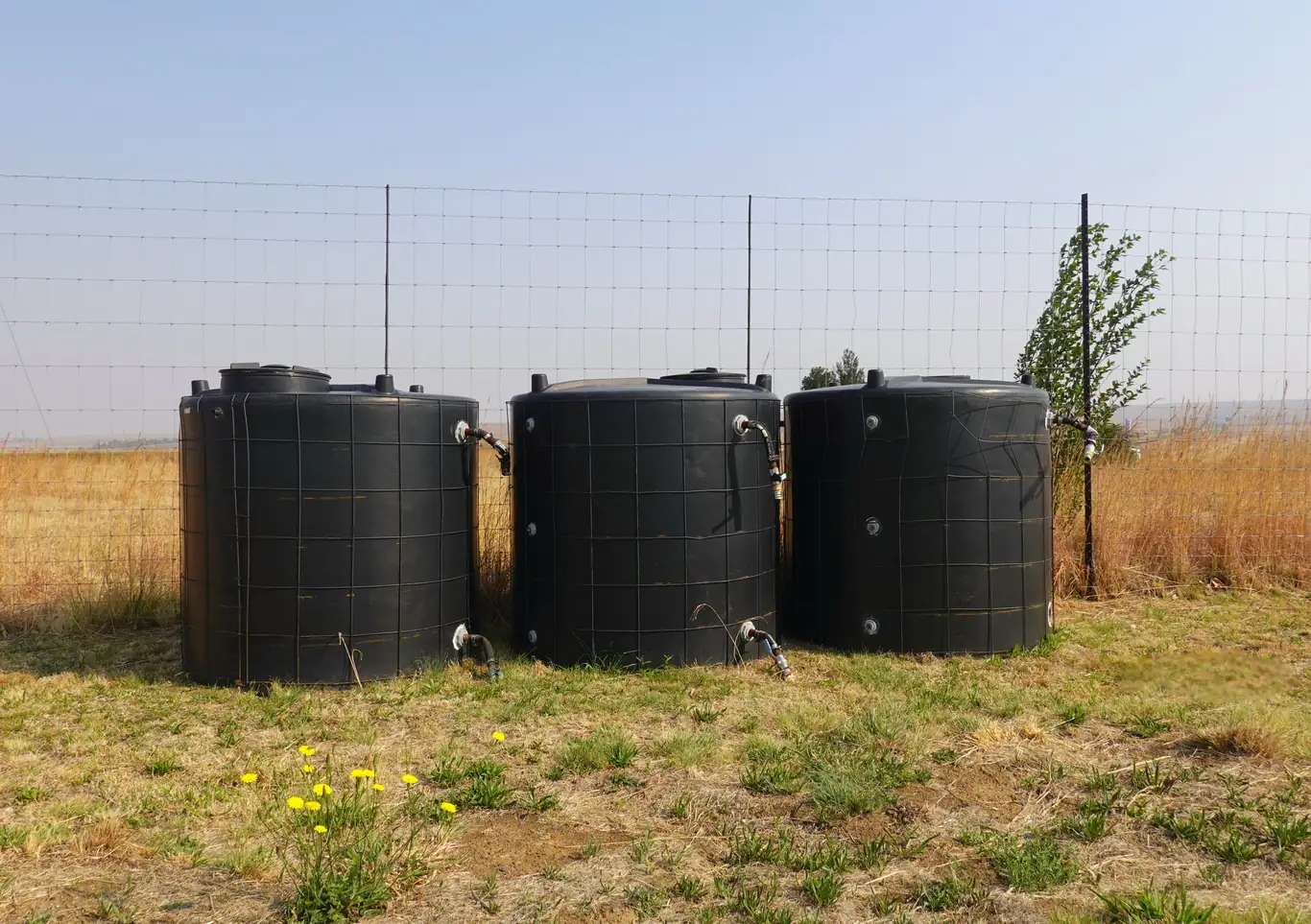
A rainwater filtration system for home use usually adds three stages after the storage tank and pump. The University of Arizona Cooperative Extension describes a 5-micron sediment cartridge, a 3-micron activated carbon filter, and a UV lamp. Activated carbon is charcoal treated to trap chemicals and odors.
Order matters here too, because the sediment cartridge goes first because particles in cloudy water can shield germs from UV light. The same Arizona guide notes that rainwater is soft water, which is easy on filters.
An off-grid rainwater filtration system can run pumps and UV lamps on solar power, batteries, or a generator. Without electricity, the simplest route is a gravity-fed filter plus boiling. Boiling needs only fuel and kills all types of germs, so pick a filter that you can clean or replace by hand.
If your roof or tank may add metals, ask your health department what to test for. Then choose a treatment that removes those specific contaminants, such as a filter certified for them.
Keeping Rain Barrels and Filters Working
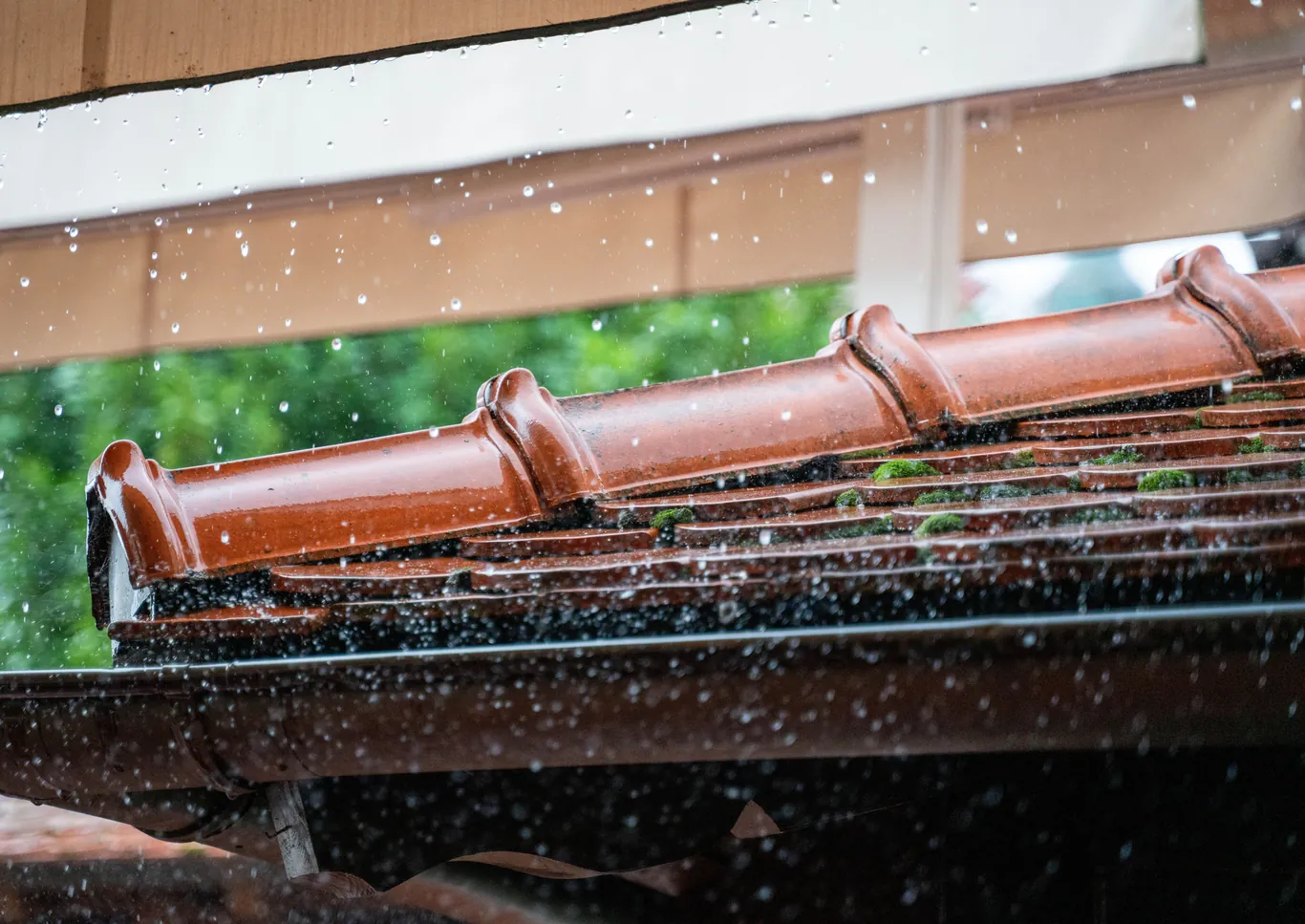
Treatment only works if the system stays clean, and the CDC advises you to fix broken parts and empty rain barrels regularly. It also says to test your water regularly for germs and chemicals if you drink, cook, or bathe with it.
Swap cartridges on the maker’s schedule, and respect any capacity limits. Write the install date on the housing so you can track replacements. A clogged filter also slows the flow.
Keep rainwater and treated water apart, since mixing them can make your treated water less safe, and rainwater should never connect to your drinking water pipes. Also check local rules, because some states regulate rainwater collection.
How We Research
We check every claim against primary sources. Federal agencies like the EPA and CDC come first. Certification bodies like NSF and AHAM come next. We verify each standard number against the issuing body. We review this guide on a set schedule.
Why Trust This Guide
Puritisimo covers only water and air quality. Our guidance is editorial and independent. We cite every health figure so you can check it. We never present a promotional claim as fact.
Putting Your Rain Water Routine Together
Rain water can be a useful source, but it needs a routine, not a shortcut. Start at the roof with a screen and a first flush diverter, then let the water settle and filter out the fine particles. Finish with heat or a disinfectant. Match any extra treatment to what your water test shows. Keep barrels covered, change cartridges on time, and never mix rainwater into treated water.
If you are unsure about a roof material or a local rule, ask your health department before you drink. A few minutes of care at each stage adds up to water you can trust. Filtering rain water well comes down to doing each step, in order, every time.
Frequently Asked Questions
How to filter rain water at home?
To filter rain water at home, screen out debris, let the water settle, and pour it through a fine filter. Then boil it for 1 minute, or 3 minutes above 6,500 feet, to kill germs. Store it in a clean, covered container.
Should rain water be filtered before drinking?
Yes, and filtering alone is not enough, because rain water can carry germs and chemicals even when it looks clean, so it needs treatment too. Filter out particles first, then boil or disinfect it, and test the source regularly.
How can I collect rainwater from my roof?
Use gutters and downspouts that lead to a covered barrel or tank, and add a screen on the gutter and inlet. A first flush diverter sends the dirtiest early runoff away. Roof and gutter materials can add metals, so test the water before you drink it.
How to purify rainwater for drinking naturally?
For low-tech germ control, let grit settle and strain cloudy water through a clean cloth. Bring the clear water to a rolling boil for 1 minute, or 3 minutes above 6,500 feet. Boiling kills germs but does not remove chemicals, so the roof and storage still matter.
How to filter rain water for plants?
A mesh screen and a short settling time are usually enough for ornamental plants. Strain out leaves and grit so they do not clog hoses. For edible plants, use treated tap water, since the CDC advises against watering them with untreated rainwater.
References
- CDC. Collecting Rainwater and Your Health: An Overview. Centers for Disease Control and Prevention.
- CDC. About Water Treatment Options When Hiking, Camping, or Traveling. Centers for Disease Control and Prevention.
- University of Arizona Cooperative Extension. Preparing Rainwater for Potable Use (az1863). 2021.
- CDC. How to Make Water Safe in an Emergency. Centers for Disease Control and Prevention.
Medical Disclaimer: This content is for informational purposes only. It is not a substitute for professional medical advice, diagnosis, or treatment. If you have concerns about your water quality or air quality and their effects on your health, consult a qualified healthcare professional.

