
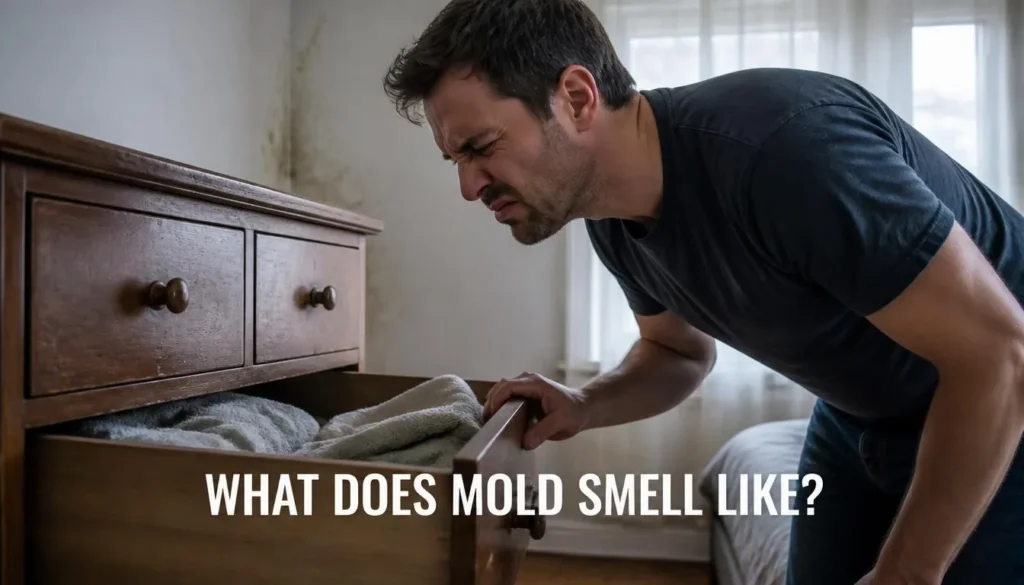
Mold smells musty, damp, and earthy, a bit like wet cardboard, old books, or a closed-up basement. The odor often shows up before you see any growth, which is why it matters so much for finding moisture problems early. Many people notice it first in a bathroom, a closet, or a room that stays damp. Here is what mold smells like in different parts of a home, what causes the odor, and what to do about it.
You will learn how to tell mold from other odors, how to trace the smell to its source, and when to call a professional. You will also see how mildew and black mold compare, and where an air purifier fits into the plan.
Key Takeaways
- Mold usually smells musty, damp, and earthy. The EPA says a moldy odor should be investigated.
- Mildew is another word for mold, so the smell alone cannot tell them apart.
- Cleaning and drying the source eliminates the smell. Masking the odor or filtering the air does not.
- Keep indoor humidity below 60 percent, ideally 30 to 50 percent, to keep mold smells from starting.
What Does Mold Smell Like? The Short Answer
Mold usually smells musty, damp, and earthy, like wet cardboard, old books, or a closed-up basement. The odor comes from gases that molds release as they grow on damp materials. It is often the first sign of a moisture problem, before any stain or fuzzy patch appears.
Health agencies use the same words. The EPA says compounds from molds are the source of the “moldy odor” or musty smell that people often link to mold growth. It adds that a moldy odor suggests mold is growing in the building and should be investigated. The CDC agrees that mold can look like spots of many colors and can smell musty.
People describe the smell in a few ways: some say a damp towel left in a gym bag, while others say soil, old paper, or a cellar. These comparisons help you recognize the odor, but smell is a clue, not proof. A careful visual check is usually the first step. If the source stays hidden or unclear, an experienced professional can look further.
One practical tip: smell a room right after you walk in from outside or from another part of the house. Noses adapt quickly, and the odor can seem to fade after a few minutes in the same room.
Why Mold Gives Off a Smell
As molds grow, they release gases into the air. The EPA says some of these compounds are volatile (they turn into gas easily) and often have strong or unpleasant odors. Scientists call these chemicals microbial volatile organic compounds, or mVOCs (chemical gases that molds give off as they grow).
The science on this topic is still young. The EPA notes that research on mVOCs is still in the early phase, and it links exposure to symptoms in some people. For that reason, treat the smell as a warning about moisture rather than as a measure of risk. See whether mold causes headaches for what health agencies say.
The CDC says damp and moldy places may cause a variety of health effects, or none at all. Some people get a stuffy nose, sore throat, cough, wheezing, burning eyes, or a skin rash, and people with asthma or a mold allergy can react more strongly.
The smell also tends to show up early. Mold needs moisture to grow, and the EPA advises drying water-damaged areas and items within 24 to 48 hours. A musty odor in the days after a leak suggests that this window may already have closed.
Mildew vs Mold Smell, and What Black Mold Smells Like
Mildew does not have its own smell, because the EPA says molds are also called mildew, so the two words describe the same kind of organism. Many people use mildew for flat, powdery growth on bathroom tile or fabric, but the odor is the same musty, damp smell that other molds produce.
Black mold gets special attention in news stories and online posts, but the EPA says black mold is not a species or specific kind of mold. The phrase usually points to a dark mold that people fear is toxic, yet neither the EPA nor the CDC describes a smell that sets one mold apart from another.
That means smell cannot name the mold, and you do not need to know the type before you act. The CDC says to remove mold if you see it or smell it. The table below compares the three terms people use:
| Term | What it means | How it smells | What to do |
| Mold | A fungus that grows on damp materials | Musty, damp, earthy | Find and fix the moisture |
| Mildew | Another word for mold, often for flat growth | The same musty odor | Clean hard surfaces and dry them |
| Black mold | Not a species, usually a dark mold | The same musty odor | Treat it like any other mold |
What Does Mold Smell Like in Walls, Bathrooms and Basements?
The base odor stays musty in every room, but the setting changes how strongly it hits you. The EPA says condensation forms when warm, humid air meets a cold surface, and mold often grows on walls in cold corners behind furniture.
Here is what to expect in each place:
- Walls: A stale, papery smell that gets stronger near electrical outlets, baseboards, or a wall that shares plumbing. It can indicate moisture inside the wall, where you cannot see it.
- Bathroom: A sour, damp-towel smell near the shower, bathtub, or sink cabinet. Showers and cooking add moisture, so a ventilation fan or an open window helps.
- Basement: A cellar smell like wet soil or concrete that lingers after heavy rain. Basements stay cool and damp, which gives mold the environment it needs.
- Closets and clothes: A stale, sour fabric smell that persists after laundering. Clothes stored while damp, or hung against a cold exterior wall, usually absorb the odor first.
- Bedroom: A faint musty note near window sills, behind headboards, or in closed closets. It is often noticeably stronger when you first open the door.
A urine or ammonia smell is a different story. Official sources describe mold odor as musty, not sharp. Pets, pests, or a plumbing malfunction are more likely sources, so look there too.
How to Find Where the Smell Is Coming From
Your nose is a good tool for this job. NIOSH, the CDC’s workplace health institute, reports that thorough visual inspections and musty odors are more reliable than air sampling for spotting mold problems. It does not recommend routine air sampling in building evaluations.
Work through these steps in order:
- Follow the smell. Walk through each room and note where the odor is strongest, then inspect closets, the cabinets under sinks, and the corners of exterior walls.
- Measure humidity. Use a humidity meter (a small gauge that reads moisture in the air). The EPA says to keep indoor humidity below 60 percent, ideally between 30 and 50 percent.
- Look for the water source. Inspect for plumbing leaks, ceiling stains, peeling paint, and condensation on cold exterior surfaces, because any of them indicates persistent moisture.
- Check the hidden areas, particularly behind large furniture, inside storage cabinets, and around window frames.
- Size the problem. The EPA says you can usually handle an area under about 10 square feet (roughly 3 feet by 3 feet) yourself. Larger areas call for a professional.
Getting Rid of Mold Smell and Where Air Purifiers Fit
The smell goes away when the source does. The EPA says to scrub mold off hard surfaces with detergent and water and then dry the area completely. It also says moldy porous materials such as carpet or ceiling tile may have to be thrown away. It says not to paint or caulk over mold.
Speed matters, so repair leaks quickly and dry wet items within 24 to 48 hours. Sprays and air fresheners only cover the odor, which means the smell returns for as long as the damp stays.
An air purifier can help with leftover odor, but it cannot fix the cause, and most filters handle either particles or gases. The EPA recommends an activated carbon filter (a bed of treated carbon that traps gas molecules) or another filter made to remove gases. It adds that carbon works best when the filter holds a large amount of it. A HEPA filter (a dense filter for fine particles) catches airborne particles such as mold spores, but not odor gases.
The EPA also says that filtration does not replace the need to control pollutants and ventilate. Use a purifier after you correct the moisture problem, never as a replacement for fixing it.
How We Research
We check every claim against primary sources. Federal agencies like the EPA and CDC come first. Certification bodies like NSF and AHAM come next. We verify each standard number against the issuing body. We review this guide on a set schedule.
Why Trust This Guide
Puritisimo covers only water and air quality. Our guidance is editorial and independent. We cite every health figure so you can check it. We never present a promotional claim as fact.
Trusting Your Nose, Then Fixing the Cause
A musty, damp, earthy odor is the most common way mold announces itself, and the EPA says it deserves a closer look. The smell is a clue to moisture, not a lab result, so use it to guide your search. Check humidity, look for leaks, and clean or remove what is wet. Handle small patches yourself, and call a professional contractor for large areas or contaminated sewage water.
Add an air purifier with an activated carbon filter only after the source is fixed, because filtration cannot prevent mold from growing. Keep indoor humidity under 60 percent and dry spills within 48 hours, and the smell has little reason to return. That is the practical answer to what mold smells like and what to do when you notice it.
Frequently Asked Questions
What does mold smell like in a bedroom?
What mold smells like in a bedroom matches the rest of the house: stale, musty, and a little damp, like an old closet. It is often strongest near window sills, closets, and walls with cold corners. If the odor fades when you leave and returns when you walk back in, check for moisture behind furniture and around windows.
How can you find hidden mold?
Start with your nose, then look for the water. Musty odors, stains, peeling paint, and condensation point to hidden moisture. Check behind furniture, under sinks, and in cold corners of exterior walls. NIOSH says careful inspection works better than air sampling, so call a professional inspector if you cannot find the source.
What kind of mold smells sweet?
No official source links a sweet smell to one kind of mold. People describe moldy odors in many ways, and the smell changes with the material and the moisture. Any strong, lasting odor is worth tracing, whatever it smells like. Look for the water source instead of trying to name the mold.
What is musty smell?
A musty smell is a stale, damp, earthy odor. It often points to mold or mildew growing where moisture lingers. The EPA says molds release gases with strong, unpleasant odors, which is where the smell comes from. Dry the area and find the leak before you attempt to cover the odor.
Does mold smell like urine?
Mold is usually described as musty or earthy, not like urine. An ammonia or urine smell more often comes from pets, pests, or plumbing problems. Still, check for moisture if the odor stays after cleaning. A smell you cannot place is a good reason to look closer.
References
- EPA. Mold Course Chapter 1. U.S. Environmental Protection Agency. 2026.
- CDC. About Mold. Centers for Disease Control and Prevention. 2026.
- EPA. Guide to Air Cleaners in the Home. U.S. Environmental Protection Agency. 2026.
Medical Disclaimer: This content is for informational purposes only. It is not a substitute for professional medical advice, diagnosis, or treatment. If you have concerns about your water quality or air quality and their effects on your health, consult a qualified healthcare professional.

