
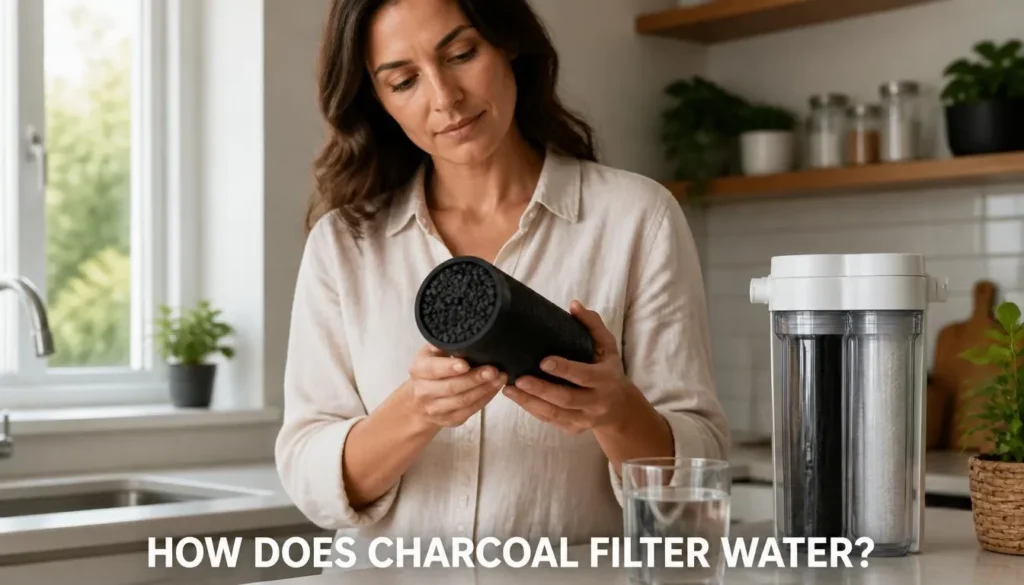
Here is how charcoal filters water: it holds contaminant molecules on the surface of its tiny pores. That process is called adsorption (sticking to a surface, not soaking in like a sponge). It mainly removes chlorine, taste and odor compounds, and many organic chemicals (carbon-based compounds such as solvents). Most dissolved minerals pass straight through.
Below, you’ll see why activation matters, how granular carbon differs from a carbon block, and what NSF/ANSI labels (the standards that test home filters) prove. By the end, you’ll know what carbon removes, what it leaves behind, and how contact time sets the result.
Key Takeaways
- Carbon works by adsorption: contaminants stick to pore surfaces, and activated carbon can have over 1,000 square meters of surface per gram.
- Granular carbon and carbon block use the same material, but block forces water through the carbon.
- Check which contaminants a label names under NSF/ANSI 42 or 53, not a blanket NSF claim.
- Carbon leaves most dissolved minerals, nitrate and fluoride in the water; slower flow and fresh cartridges raise results.
How Does Charcoal Filter Water? The Adsorption Process
Charcoal cleans water by adsorption, which holds contaminant molecules on the carbon’s surface while the water keeps moving. Here is the path your tap water takes.
- Water enters the filter and flows into a bed of carbon pieces or a solid carbon block.
- It moves through the narrow gaps between the pieces and into the tiny pores (microscopic holes) inside each one.
- Organic molecules meet the pore walls and stay there. Chlorine reacts with the surface and becomes chloride, a negatively charged ion.
- Water molecules and most dissolved minerals keep moving, because they do not stick to the carbon well.
- Filtered water leaves the bed with fewer of these compounds, until the pore surfaces fill up.
The Water Quality Association (WQA) says adsorption is the main way carbon removes organic compounds. The molecules stay on the surface through van der Waals forces (weak attractions between molecules).
The U.S. Environmental Protection Agency (EPA) describes granular activated carbon (GAC, carbon broken into small grains) as a porous medium with a very high inner surface area. Contaminants collect in its empty pore spaces, so more surface area means more room to hold them.
Chlorine is a special case. The WQA notes that carbon acts as a catalyst (a material that speeds up a reaction without being used up), turning chlorine into chloride. So chlorine removal is closer to a surface chemical reaction than to simple sticking.
This guide covers carbon only. For the other stages a filter can include, read how a water filter works.
Why Activated Charcoal Beats Plain Charcoal
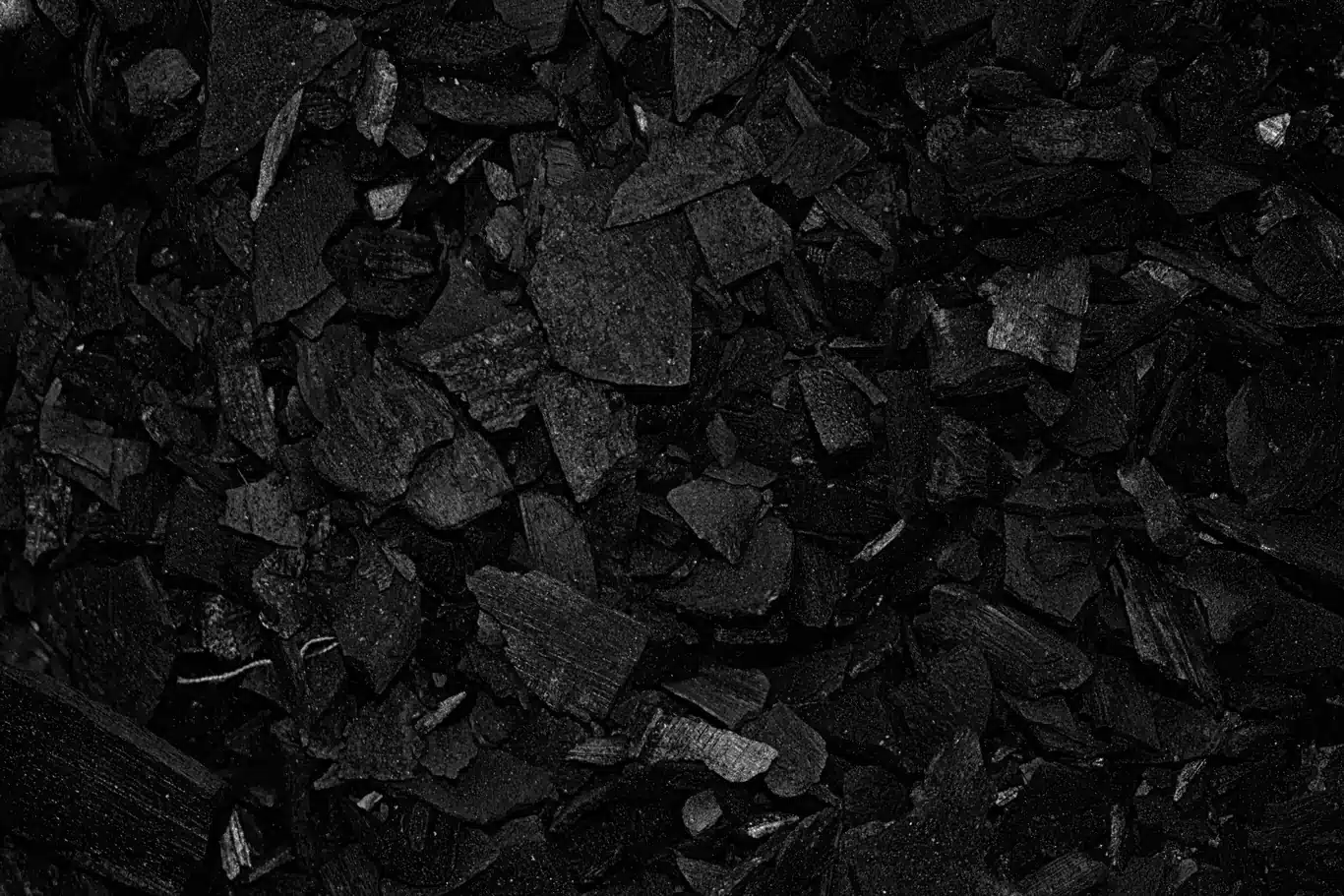
Plain charcoal is just burned wood or other plant material. Activated charcoal, which filter makers call activated carbon, is charcoal heated with steam or chemicals until it fills with tiny holes (pores). The Water Quality Association (WQA) notes that this step, used in water treatment since about 1906, greatly improves pore volume and surface area.
The payoff is surface area. The WQA says a single gram of activated carbon can have more than 1,000 square meters of surface. Contaminants stick to that surface by adsorption (clinging to a surface rather than soaking in). Only accessible pore surfaces help, and a contaminant must cling to the carbon more strongly than it stays dissolved.
Pore size sorts the work. Micropores (very small holes within the carbon) adsorb small organic molecules that fit inside them. Macropores (the widest holes) suit larger ones, such as color-causing compounds. The EPA says performance varies with the raw material, which can be coal, wood or coconut shell. The WQA adds that coconut shell carbon has more micropores, wood has more macropores, and coal sits in between.
Buyers rarely see it. Makers often rate drinking-water carbon by iodine number (a lab test of how much iodine a gram holds, which tracks small-pore volume). The WQA puts the range for drinking-water carbon at 900 to 1,050.
Granular Carbon vs. Carbon Block: Same Material, Different Geometry
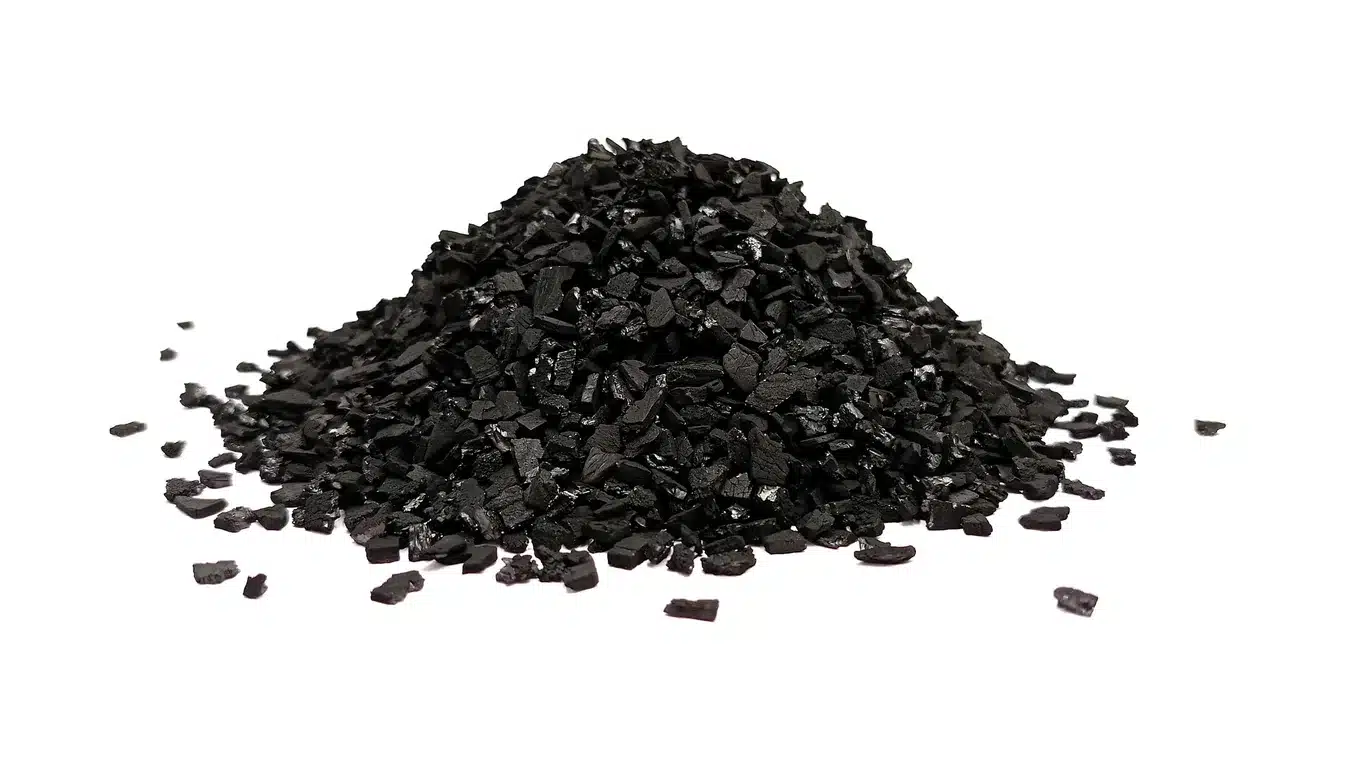
Granular activated carbon (GAC) is loose carbon grains packed into a bed. A carbon block is fine carbon fused with a binder into one solid piece. Both use the same material, so the difference is geometry: how water travels through it.
Grain size changes speed. The WQA says smaller mesh (a finer grain size) reacts faster. A 12×40 mesh reacts at twice the rate of 8×30, and a 20×50 mesh reacts at twice the rate of 12×40. Cartridges use 20×50 mesh. The WQA also lists channeling (water carving a shortcut that skips most of the carbon) as a risk in large filters.
Shape alone does not prove a filter catches parasites. The CDC says filters certified to NSF standards 53 or 58 for cyst reduction can remove parasites. NSF International is an independent group that tests filters, and a cyst is the hardy shell some parasites form. Check the label, not the design. For the basics of filter types, see our guide to what a water filter is.
Here is how the two forms compare side by side:
| Property | Granular carbon | Carbon block |
| Form | Loose grains | Fused solid |
| Flow rate | Higher | Slower |
| Shortcut paths | Channeling possible | Few by design |
| Contact time | Shorter at high flow | Longer at slow flow |
What NSF/ANSI 42 and 53 Certify for Carbon Filters
Two standards from NSF International matter most here. NSF/ANSI 42 covers aesthetic effects: chlorine, taste and odor, chloramine (a disinfectant made from chlorine and ammonia), and particulates. NSF/ANSI 53 covers health-related contaminants, such as lead, Cryptosporidium (a chlorine-tolerant parasite), and VOCs (volatile organic compounds, carbon-based chemicals that evaporate easily).
A label covers one pollutant at a time. A label that says only “NSF certified” tells you very little. Read which contaminants the filter was tested for and under which standard. NSF lists more than 50 contaminant reduction claims under NSF/ANSI 53.
This is where the charcoal water filter benefits are real and provable. The CDC says filters that use activated carbon or carry NSF Standard 42 certification improve taste and smell. It adds that the main purpose of pitcher and refrigerator filters is taste and smell, not safety. Anything more, such as lead, needs a label that names it under NSF/ANSI 53.
What a Charcoal Water Filter Does Not Remove
Carbon is built to catch organic chemicals, not dissolved ions (charged particles such as minerals). The EPA’s treatment overview lists other tools for inorganics. These are anion exchange (a resin that swaps one negative ion for another) for nitrate, activated alumina for fluoride, and reverse osmosis (RO, a membrane filter) for many dissolved solids.
The chemistry explains the gap. The WQA says carbon holds organic molecules through weak surface attractions called van der Waals forces. Ions are charged and tied up with water molecules, so they tend to stay dissolved. That is Puritisimo’s reading of the mechanism, and it fits the EPA’s tool list. For hardness minerals, see whether a water softener filters water.
A carbon filter leaves these mostly untouched:
- Dissolved minerals: TDS (total dissolved solids, the minerals and metals in water) mostly passes through.
- Nitrate: the EPA lists anion exchange, not carbon, as a treatment tool for it.
- Fluoride: the EPA lists activated alumina for this job.
- Germs: the CDC says most pitcher and refrigerator filters are not built to remove germs.
- Small alcohols: methanol and ethanol dissolve so readily that, per the WQA, carbon does not remove them.
The real side effect belongs to the filter, not the water. The CDC says maintenance is needed to stop germs growing in the filter, so change cartridges on the maker’s schedule. People who ask about charcoal water filter side effects are usually asking about this. Some new cartridges also shed fine carbon dust, so follow the flushing directions.
How Does Charcoal Filter Water Over Time? Contact Time and Filter Life
Contact time, not soaking time, sets the result. Engineers use empty bed contact time (EBCT, a nominal design time based on the full bed volume). It is not the actual time water spends in the bed. The WQA gives the formula: bed volume divided by flow rate. A one-cubic-foot carbon bed occupies about 7.5 US gallons, so at 2.5 US gallons per minute the EBCT is 3 minutes.
Each pollutant needs its own time. Chlorine removal is fast: the WQA says it needs only 30 to 40 seconds of EBCT. The reason is chemical. At the carbon surface, free chlorine is reduced to chloride ions. Free chlorine includes hypochlorous acid and hypochlorite, and the mix depends on pH (a measure of acidity). That is a surface reaction, not simple sticking.
Pesticides and THMs (trihalomethanes, byproducts that form when chlorine meets organic matter) need far longer. Municipal systems aiming for single-digit ppb (parts per billion) THM levels often run 25 minutes or more. Chloramine is harder than chlorine: it needs a bed about four times larger, or catalytic carbon (carbon treated to speed the reaction) at about 5 minutes. Our guide explains what chloramine is and why cities use it.
So one cartridge can be finished for one contaminant and still work for another. The EPA says carbon capacity is finite, and other adsorbable substances in the water use up sites the target contaminant needs. Cold water can also slow removal of some organics, per the WQA.
How long a charcoal water filter lasts has no single answer. Follow the maker’s rated gallons or months, whichever comes first, as the CDC advises. The WQA’s 2,500-gallon chlorine example is an illustration, not a lifespan rule.
Can You Make a Charcoal Water Filter at Home?
Layers of gravel, sand and charcoal do filter water, but only partly. Gravel and sand catch coarse particles, and charcoal can take out some color and odor. That makes the setup a good classroom demonstration of layered filtering.
Campfire and cooking charcoal is not activated, so it has far less surface area than the carbon in a store-bought filter. With fewer pores, there is much less room for contaminants to stick. A home build also has no label proving what it removes.
Germs are the bigger problem. The CDC says filters certified to NSF 53 or 58 for cyst reduction can remove parasites. A homemade filter has no such test, so you cannot assume it removes germs. This is Puritisimo’s editorial view: use the layers to show the idea, and give water of uncertain safety a tested treatment method instead.
How We Research
We check every claim against primary sources. Federal agencies like the EPA and CDC come first. Certification bodies like NSF and AHAM come next. We verify each standard number against the issuing body. We review this guide on a set schedule.
Why Trust This Guide
Puritisimo covers only water and air quality. Our guidance is editorial and independent. We cite every health figure so you can check it. We never present a promotional claim as fact.
What Charcoal Can and Cannot Do for Your Tap Water
Charcoal is a strong tool for a narrow job. Activated carbon adsorbs many organic chemicals, including taste and odor compounds, while chlorine undergoes a surface chemical reaction. Contact time affects how much it removes. It does not stop most dissolved minerals, nitrate, fluoride or germs, and a spent cartridge stops working well. Check the label for the standard and the contaminant, not just a brand claim. Replace cartridges on the maker’s schedule, and treat a homemade filter as a demonstration only. Knowing these limits is the clearest way to understand how charcoal filters water. A coffee maker cartridge is a small example, and our guide shows how to replace a Keurig water filter.
Frequently Asked Questions
How does charcoal filter water?
Adsorption (sticking to a surface) is how charcoal filters water: contaminant molecules cling to the surfaces inside its tiny pores. Water flows past that huge surface, where many organic chemicals, including taste and odor compounds, stick. Chlorine is removed by a surface chemical reaction. Most dissolved minerals flow on through.
Does charcoal actually purify water?
Charcoal does not purify water on its own. Carbon improves taste and odor and cuts many organic chemicals, but it does not make microbiologically unsafe water (water carrying harmful germs) safe. Most dissolved minerals pass through too. The CDC notes that most pitcher and refrigerator filters are not built to remove germs.
What are the side effects of a charcoal water filter?
The main side effects are limits of the device, not harm from the water. A carbon filter leaves minerals, nitrate, fluoride and most germs alone. A spent or neglected cartridge can grow bacteria, and new ones can shed fine carbon dust. Replace cartridges on the maker’s schedule, and it stays what it is: a taste and odor tool.
How long does it take charcoal to purify water?
It takes seconds to minutes of contact time, not hours of soaking. Engineers use empty bed contact time (the total bed volume divided by water flow rate) to compare filter designs. Chlorine needs only 30 to 40 seconds, while pesticides and THMs need minutes. Slower flow gives the carbon more time to work.
What do carbon filters remove from water?
Carbon filters mainly remove chlorine, taste and odor compounds, many VOCs (volatile organic compounds, carbon-based chemicals that evaporate easily) and some pesticides. Most dissolved minerals, nitrate and fluoride stay in the water. Check the label for the contaminants and standard, such as NSF/ANSI 42 or 53, because results vary by product.
References
- Water Quality Association. Granular Activated Carbon (GAC) Fact Sheet. Water Quality Association. 2013.
- US EPA. Overview of Drinking Water Treatment Technologies. US Environmental Protection Agency.
- CDC. About Choosing Home Water Filters. Centers for Disease Control and Prevention.
- NSF International. NSF/ANSI 42, 53 and 401 Filtration Systems Standards. NSF International.
Medical Disclaimer: This content is for informational purposes only. It is not a substitute for professional medical advice, diagnosis, or treatment. If you have concerns about your water quality or air quality and their effects on your health, consult a qualified healthcare professional.

