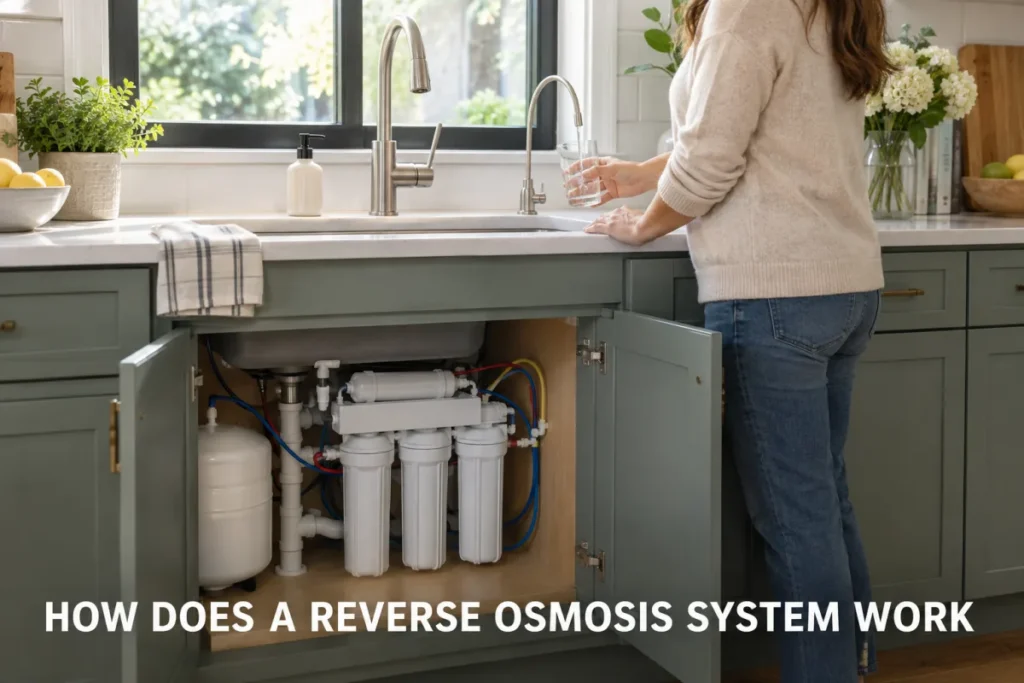

A water filter is a device that removes contaminants from water. It clears out sediment, chlorine, heavy metals, and other unwanted particles. This happens before you drink, cook with, or use the water. The filter works by forcing water through a physical barrier or a chemical process. Some filters use both. Filters range from a small pitcher on your counter to a large system installed where water enters your home.
That whole-house category includes sediment-and-carbon replacement cartridges for standard Big Blue housings; my PUREPLUS whole-house cartridge review covers a 5-micron NSF 42 certified option in that format.

By the end of this guide, you’ll know what a water filter really does. You’ll also learn the types available for your home. You’ll also learn how to check whether a filter is certified for your specific contaminants. That last step is the one most buyers skip. It’s also the one that matters most.
Key Takeaways
- A water filter reduces contaminants through a physical or chemical process, such as sediment, chlorine, or sometimes lead.
- Filters range from pitcher and faucet models to whole-house systems installed at the main water line.
- No single filter removes everything; NSF/ANSI 53 certification confirms which specific contaminants yours really reduces.
- Filters reduce named contaminants, while purifiers add a disinfection step, like UV, to inactivate pathogens more completely.
What Is a Water Filter?
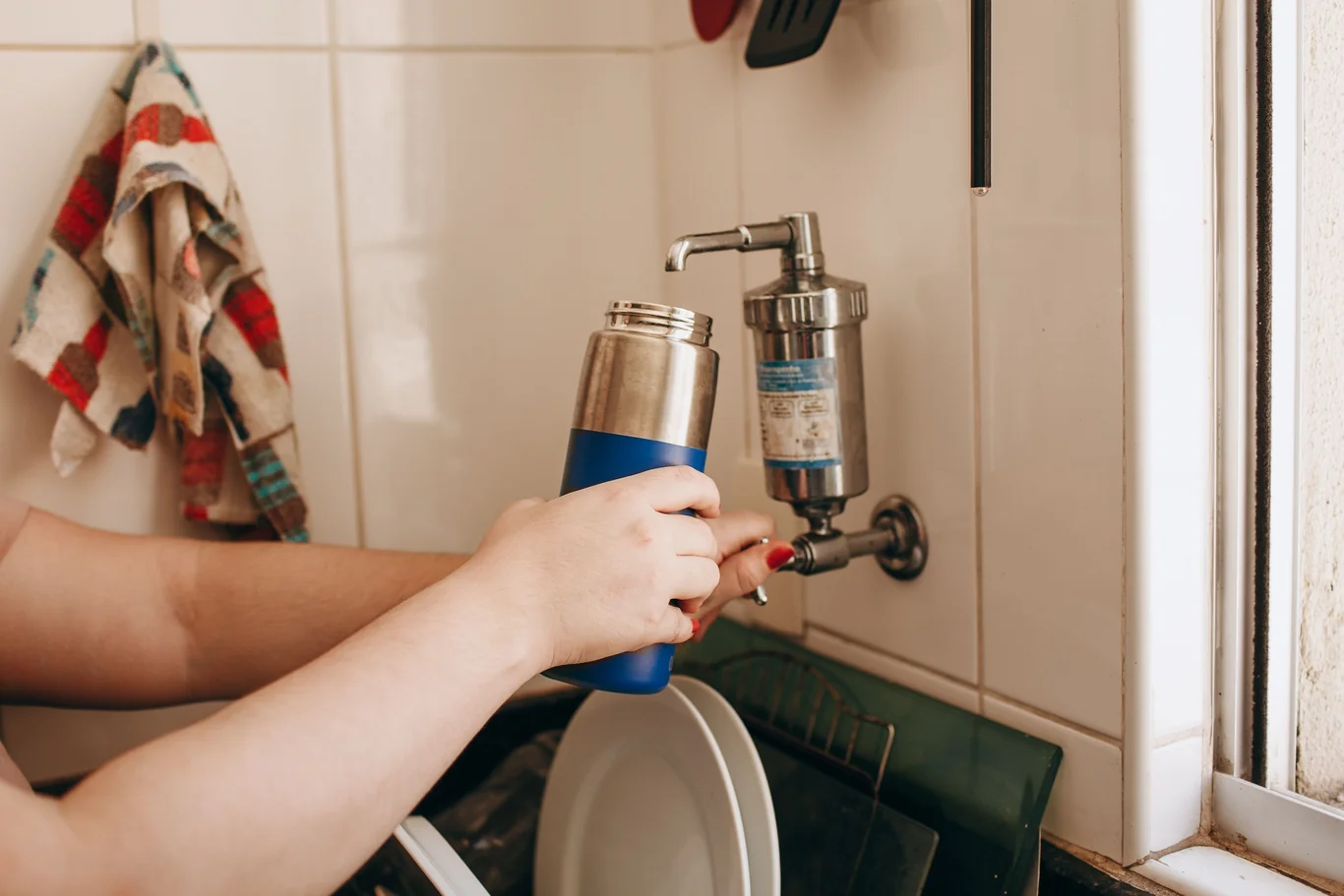
A water filter is a device that treats water. It removes or reduces unwanted substances, such as sediment, chlorine, heavy metals, or specific chemicals. This happens before the water reaches your glass, faucet, or appliance. It works through mechanical straining, chemical adsorption, or both. That depends on the filter’s design and what it’s built to catch.
A water filter can be as small as a single cartridge under your sink. It can also be as large as a system installed where water enters your home. What connects them is purpose, not size. Each is built to change the water passing through it in some measurable way.
Under-sink multi-stage reverse osmosis systems combine several of those mechanisms in one housing; my iSpring RCC7 under-sink review covers how the combination performs under a certified test.
People have used sand, charcoal, and cloth to make a water filter for thousands of years. The goal was mainly to clear out debris and improve taste. Modern filters rely on the same basic idea. The materials are designed to target specific contaminants at a much smaller, often invisible scale.
The CDC says to check your utility’s Consumer Confidence Report.
What Is a Water Filter Made Of? How Filtration Works
Most water filters combine two or three of four core filtration technologies rather than relying on one mechanism to do everything. Each technology is built from its own material. It physically screens, absorbs, or exchanges specific contaminants out of the water. The mix used determines what a given filter can and cannot remove.
Faucet-mounted clip-on filters use carbon and ion exchange to remove specific contaminants; my PUR Plus write-up covers how that process is certified and what it actually pulls from tap water.
The four core mechanisms break down like this:
- Mechanical (sediment) filtration. A fine mesh or spun fiber strains out sand, rust, and silt by particle size.
- Adsorption (activated carbon). Porous carbon traps chlorine, some pesticides, and taste-and-odor compounds as water passes through it.
- Ion exchange. A resin bed swaps unwanted ions, such as calcium and magnesium in hard water. It exchanges them for sodium or hydrogen ions.
- Membrane separation (reverse osmosis). A semi-permeable membrane blocks dissolved salts, nitrates, and many heavy metals. It rejects whatever cannot pass through.
There’s one nuance most buyers miss. Standard activated carbon removes chlorine far better than it removes chloramine (a more stable chlorine-ammonia compound that many utilities now use instead). Standard carbon often captures 40 to 65% of chloramine. Catalytic carbon, a modified version of the same material, often captures over 97%. Roughly a third of U.S. utilities now disinfect with chloramine. That means the carbon type a filter uses matters more than its price tag.
A 6-stage under-sink RO system combines carbon and membrane stages in sequence to cover both the chloramine and the dissolved-solid groups in a single certified unit; my iSpring RCC7AK system review covers an NSF/ANSI 58 certified option using that combined approach.
Types of Water Filters for the Home

Water filters split into two broad categories based on installation point. These are point-of-entry (POE) systems and point-of-use (POU) systems. A point-of-entry system treats all the water entering a house at the main line. A point-of-use system treats water at a single tap or appliance. According to NSF International, a whole-house filter is a point-of-entry install. An under-sink filter is a point-of-use device. People often use different search phrases for this same idea. They search for a water filter for the entire home, a whole-home system, or a whole-house filter system. These all describe the same point-of-entry category.
Refrigerator filters are the exception to that installation-point split. That is because they sit inside the appliance itself. A refrigerator water filter replacement is often needed every six months. It’s sooner with hard water or heavy ice-maker use. The cartridge is small enough to clog well before a larger under-sink unit would.
The most common types break down like this:
| Filter Type | Installation Point | Best Use Case |
| Whole-House / Point-of-Entry System | Main water line, before it splits to fixtures | Treats every tap, shower, and appliance in the home |
| Under-Sink Filter | Beneath the kitchen sink, dedicated faucet | Drinking and cooking water only |
| Countertop / Pitcher Filter | Sits on the counter, no installation | Renters or small households wanting a low-cost option |
| Faucet-Mount Filter | Attaches directly to the tap | Quick, tool-free setup for drinking water |
| Showerhead Filter | Replaces the showerhead | Reduces chlorine exposure during bathing |
| Refrigerator Filter | Built into the fridge’s water and ice line | Ice and dispenser water only |
What Water Filters Remove (and What They Don’t)
No single water filter removes every contaminant. Checking which one a filter is really certified against matters most. It matters more than any claim printed on the box. The CDC notes that filters remove both beneficial and harmful substances from water. Matching certification to your specific contaminant of concern is the only sure way to know what a filter really does.
EPA rules set the maximum contaminant level for lead in drinking water at 10 parts per billion (ppb). This limit comes from the 2024 Lead and Copper Rule Improvements. PFOA and PFOS, two common PFAS chemicals, are capped at 4 parts per trillion (ppt). Nitrate is capped at 10 milligrams per liter (mg/L). NSF-certified filters are tested against these exact thresholds, contaminant by contaminant. That is why a filter’s certification list matters more than its brand name.
The most common water filter certification, NSF/ANSI 42, covers only taste, odor, and chlorine reduction. It clearly excludes every health-related contaminant. NSF/ANSI 53 is the certification that really covers health effects, like lead, cysts, and volatile organic compounds. A filter can carry the cheaper NSF 42 badge. That badge says nothing at all about whether it removes anything dangerous. For a practical look at where an NSF 42-certified pitcher sits in terms of what it does and does not remove, my Waterdrop pitcher review walks through a specific model in detail.
Water Filter vs. Water Purifier: What’s the Difference?
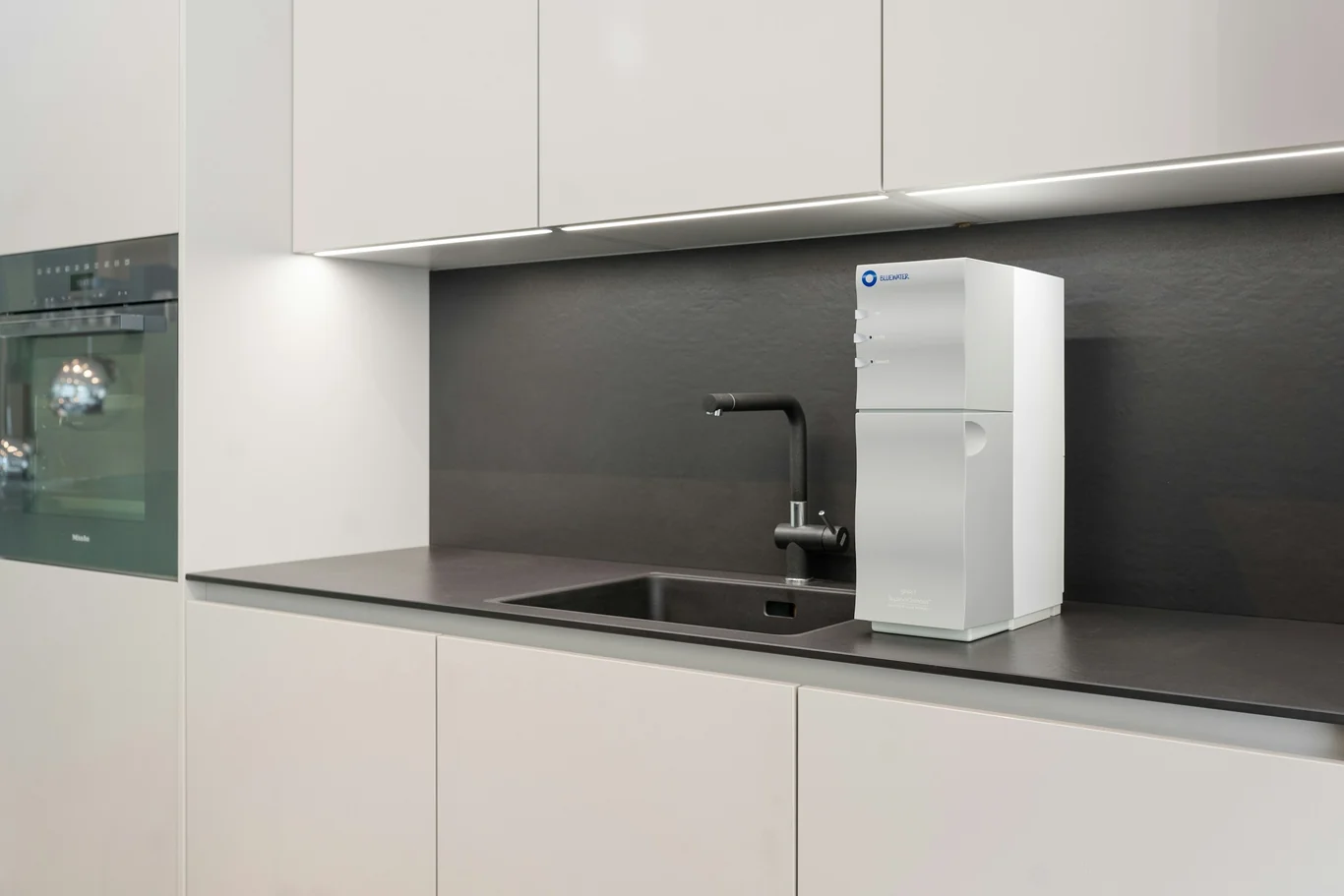
A water filter reduces specific contaminants, such as chlorine, sediment, or lead. It works by trapping or exchanging them out of the water. A water purifier does that same job. It also adds a disinfection step, often ultraviolet (UV) light or distillation. This step inactivates or removes pathogens like bacteria and viruses more completely. According to NSF International, filtration and purification are certified differently. A purifier must meet a separate microbiological performance standard. A standard filter is never tested against that standard.
Product listings often use the words filter and purifier interchangeably. The two terms describe different levels of care, though. Filtration alone is usually enough for municipal tap water. That is because public utilities already disinfect before it reaches the tap. A purifier becomes relevant for well water, water from unreliable sources, or travel. There, pathogen removal is the real concern, not taste or scale buildup. The certification is what to read, not the label’s chosen word. That is the only way to know which one you really have.
Matching a Water Filter to Your Water and Household Setup
Choosing the right water filter comes down to a short, ordered sequence, not trial and error. Skipping the first step, checking your actual water quality, is the most common reason people buy a filter that solves nothing.
Work through these four steps in order:
- Check your local water quality report. The CDC says to start with your utility’s annual Consumer Confidence Report. An independent lab test works if you’re on a private well. Do this before choosing any filter.
- Decide whole-house or point-of-use. A whole-house system treats every fixture at once. A point-of-use filter costs less and targets one specific problem, such as drinking water.
- Match NSF/ANSI certification to your contaminant. Look up the standard number tied to whatever your report flagged. An activated carbon filter handles chlorine and odor, but not heavy metals or nitrates.
- Weigh installation and maintenance cost. Under-sink and whole-house systems need periodic cartridge changes. Some also need expert setup. A pitcher only needs a filter swap every two to three months.
None of these steps require special expertise. A short water quality check, a clear sense of what the filter needs to do, and a matching certification are usually enough. Together, they narrow a crowded market down to the right choice fast. For a practical look at how that process plays out with a gravity-fed unit, my Royal Berkey breakdown covers one of the most widely discussed models in that category.
How We Research
We check every claim against primary sources. Federal agencies like the EPA and CDC come first. Certification bodies like NSF and AHAM come next. We verify each standard number against the issuing body. We review this guide on a set schedule.
Why Trust This Guide
Puritisimo covers only water and air quality. Our guidance is editorial and independent. We cite every health figure so you can check it. We never present a promotional claim as fact.
Finding the Right Filter for Your Water
Picking a water filter is less about brand names. It is more about matching a specific technology to a specific problem. Sediment and chlorine call for basic mechanical or carbon filtration. Lead, PFAS, or hard water often call for ion exchange or reverse osmosis. Sometimes a whole-house system does the heavy lifting first. Then a countertop or under-sink model refines the water further at the tap.
The right mix depends entirely on what a local water quality report really shows. It does not depend on which brand spends the most to get noticed. Once that report is in hand, the next step is simple. Just match the filter’s certification to your contaminant. That is the real answer to what a water filter should do for your home.
Frequently Asked Questions
What Is a Water Filter Used For?
A water filter serves different purposes depending on where it’s installed. It can serve drinking and cooking water at a single tap. It also covers whole-home supply at the main line. Or it covers a single appliance, such as a fridge dispenser or showerhead. A whole-house system treats every fixture at once. A countertop or under-sink model, though, handles only drinking and cooking water. Showerhead filters and refrigerator dispensers cover narrower, single-purpose uses.
Do I Need a Water Filter for Drinking Water?
The CDC says to check your utility’s Consumer Confidence Report. Do this before assuming you need a filter. Most U.S. tap water already meets EPA safety standards anyway. Many people filter anyway for chlorine taste or lead risk in older plumbing. Others do it for PFAS concerns a report might not fully catch.
What Is the Difference Between a Water Purifier and a Water Filter?
A water filter reduces specific named contaminants, such as chlorine or sediment. It works by trapping or exchanging them out. A water purifier adds a disinfection step, often UV light or distillation, that inactivates or removes pathogens more completely. NSF International certifies this distinction separately.
What Are the 4 Types of Water Filters?
The four main types are mechanical (sediment), adsorption, ion exchange, and membrane separation. Mechanical filtration strains out particles by size, while adsorption, often activated carbon, traps chlorine and odor compounds. Ion exchange swaps unwanted minerals like calcium for sodium, and membrane separation, such as reverse osmosis, blocks dissolved salts and heavy metals.
What Is a Water Filter for Kids?
There is no separate kids’ filter category. The same certified filters work for a household regardless of age. What matters most for children is lead. The CDC states there is no known safe blood lead level for kids. There is only lower and higher risk. That is why NSF/ANSI 53-certified lead reduction matters more here. It matters most in homes with older plumbing and young children.
References
- EPA. National Primary Drinking Water Regulations. 2024.
- CDC. About Choosing Home Water Filters. 2024.
- NSF International. Home Water Treatment System and Solutions. 2024.
Medical Disclaimer: This content is for informational purposes only. It is not a substitute for professional medical advice, diagnosis, or treatment. If you have concerns about your water quality or air quality and their effects on your health, consult a qualified healthcare professional.