
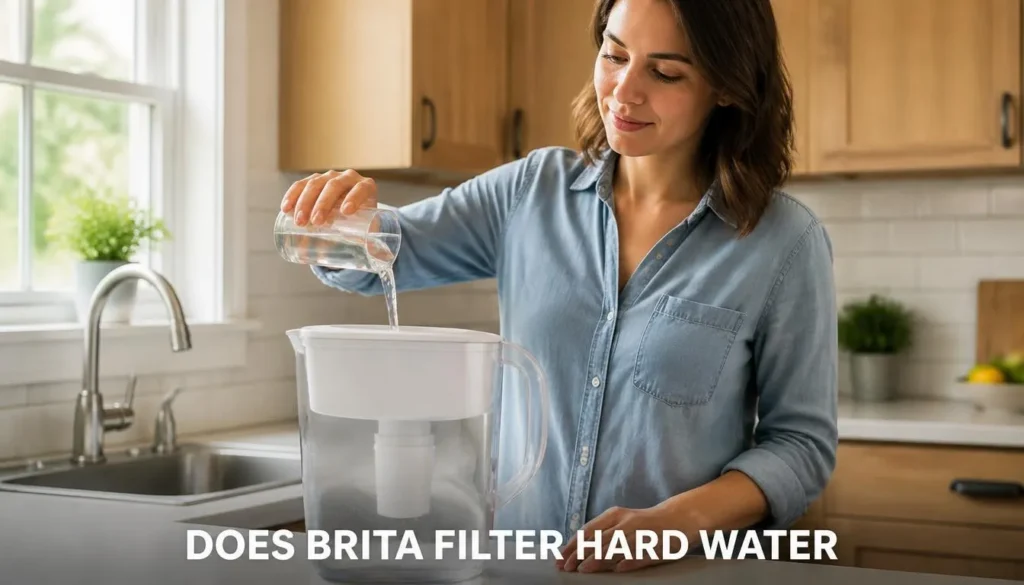
Brita’s US Standard and Elite pitcher filters do not soften hard water. It is a carbon-based taste and odor filter (carbon is a porous material that grabs chlorine and some metals). Hard water is water with a lot of dissolved calcium and magnesium, and those minerals pass straight through the filter. That is why a kettle at home can still scale up after you filter.
Below, you’ll see how a Brita handles hard water, what it removes, and what it leaves behind in your glass. By the end, you’ll know whether a pitcher fits your tap water and which fix to use if scale is the real problem.
Key Takeaways
- Brita’s US pitcher filters do not remove the calcium and magnesium that make water hard.
- The Elite filter adds lead reduction and lasts about 120 gallons. The Standard lasts about 40.
- Brita does not claim to remove fluoride or bacteria, and it makes no arsenic claim.
- For scale on kettles and heaters, use a softener or a limescale cartridge, not a pitcher.
Does Brita Filter Hard Water? The Short Answer
A Brita pitcher is a gravity-fed filter that runs tap water through activated carbon (carbon full of tiny pores that trap chemicals). It improves taste and cuts some metals, but it does not remove the dissolved calcium and magnesium that make water hard.
The change you notice in the glass is chlorine taste and odor. Brita’s performance sheet for its Standard filter lists chlorine taste and odor reduction under NSF/ANSI 42 (the standard for aesthetic effects, such as taste and smell). Hardness is a separate property of the water. So the glass can taste better while the water stays just as hard.
That is also why a pitcher is a fair choice for tap water you just want to taste better, and a poor choice for fighting scale. If your main complaint is white crust on the kettle or spots on glasses, the filter is aimed at a different problem than the one you have.
If you use Brita for taste improvement, follow the replacement schedule for your cartridge. Our guide on how to change a Brita filter covers Standard and Elite replacement timing, which filters need rinsing, and indicator resets.
Why Hard Water Slips Through a Carbon Filter
Hard water gets its name from minerals that water picks up as it moves through soil and rock. According to the USGS, nearly all of that hardness comes from calcium and magnesium. These minerals are dissolved, so they travel as tiny charged particles, not as bits you could strain out.
Carbon captures many organic chemicals by adsorption (chemicals stick to its surface). It also reduces free chlorine through a chemical reaction that turns it into chloride. Calcium and magnesium ions are not captured this way, so they flow through with the water. For a closer look at the basics, see how a water filter works.
Brita’s own guidance points the same way. It says households with hard water may need to change filters more often. Nothing in that advice promises softer water. It only tells you the cartridge wears out sooner.
The USGS sorts water into four hardness classes, measured in milligrams per liter (mg/L, a way to count minerals in a liter of water) as calcium carbonate:
| Class | Hardness (mg/L) | Brita pitcher effect on hardness |
| Soft | 0 to 60 | None claimed |
| Moderately hard | 61 to 120 | None claimed |
| Hard | 121 to 180 | None claimed |
| Very hard | Over 180 | None claimed |
What Brita Filters Do Remove
Brita sells two main pitcher filters in the US, and they do different jobs. Both reduce chlorine taste and odor, which falls under NSF/ANSI 42. NSF certifies each contaminant on its own, so a filter certified for chlorine taste is not automatically certified for lead.
Here is how the two filters differ:
- Standard filter: reduces chlorine taste and odor. Brita rates it for about 40 gallons, or 2 months.
- Elite filter: adds lead reduction, tied to NSF/ANSI 53 (the standard for health-effect contaminants). Brita’s performance data sheet also lists certain pesticides and pharmaceuticals, with some claims limited to specific pitcher models. Replace it every 120 gallons, about 6 months.
- Both filters: cut suspended particles, such as sediment, that make water cloudy.
- Metals: Brita lists reductions in copper, mercury and cadmium for its pitcher filters. Check the package for your exact model.
If microplastics are your worry, look at the Elite. Brita lists microplastic reduction for that filter, not for the Standard. Lineups change, so confirm the claim on the package you buy.
What Brita Does Not Filter Out
Brita says its filters are not meant to purify water. That one line explains most of what they leave behind. Dissolved hardness minerals stay in, as covered above, and a few other gaps matter more for your health.
Fluoride is one example. For fluoridated city water, Brita says its filters keep a healthy level of fluoride in the glass. Brita’s Standard and Elite filters are not designed to reduce fluoride. Some other pitcher filters may, so check each model’s verified results. Reverse osmosis is the usual alternative (a method that pushes water through a very fine membrane).
Microbes are the other big gap. Brita tells users not to use its filters with water that is microbiologically unsafe or of unknown quality without disinfection. A pitcher is for water that is already safe to drink, such as treated city water.
Arsenic is a gap by omission. Brita does not list arsenic reduction among its claims, and the absence of a claim is your answer. The EPA limit for arsenic in public water is 10 ppb (parts per billion, a tiny measure of how much of a substance is in water). The limit covers public water systems, not private wells, so well owners should test their water.
Does Brita Filter Hard Water Well Enough to Protect Your Kettle?
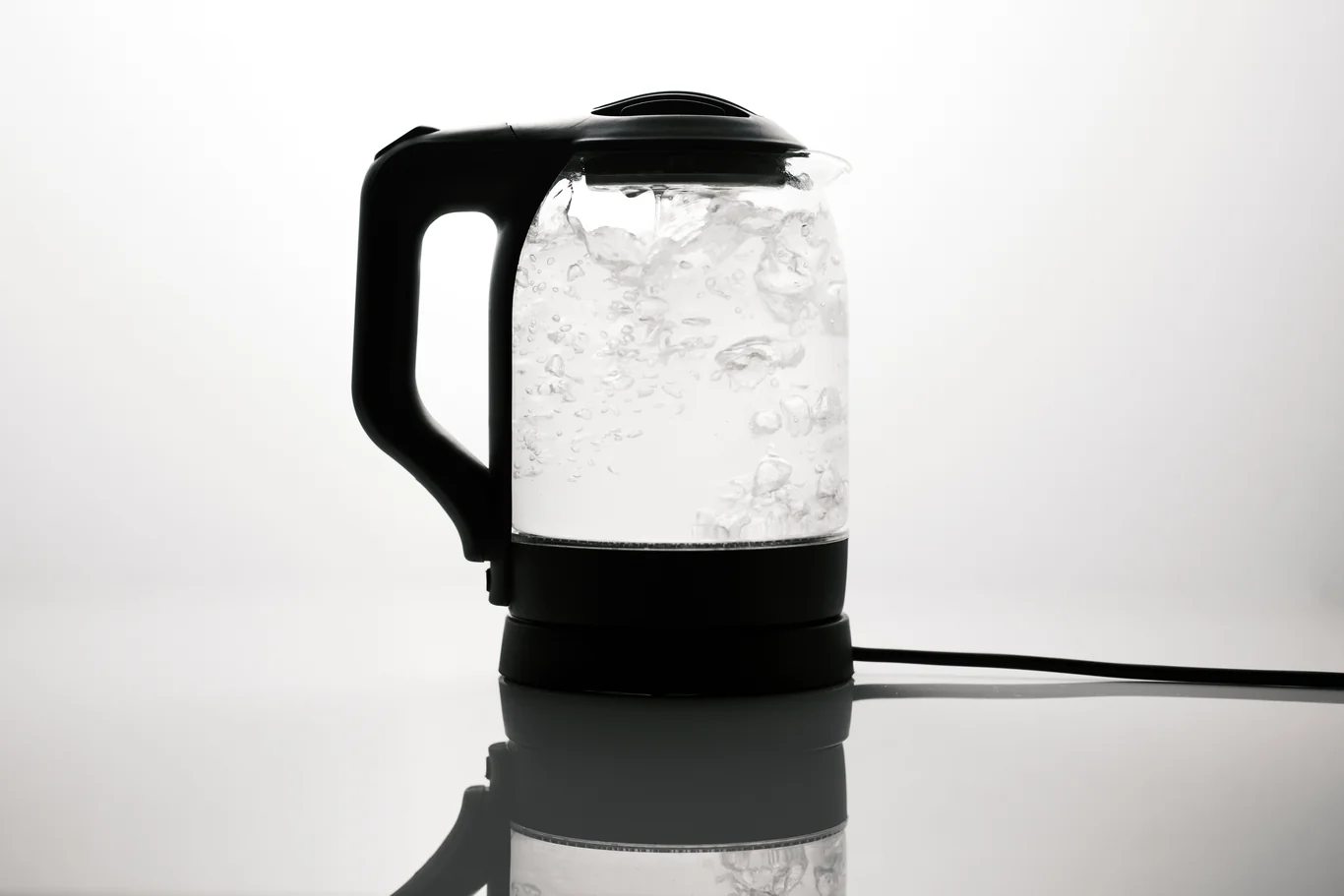
No. The calcium stays in the water, so a kettle filled from a Brita pitcher still builds scale. The USGS explains that heated hard water can form calcium carbonate deposits (a hard, white crust).
Over time, those deposits can shorten the life of equipment, raise heating costs and narrow pipes. The same source also notes that hardness is not a health concern, only a nuisance. The same minerals react with soap, which leaves soap scum and spots on glassware.
That changes how you should judge a pitcher. A Brita can make a drink taste better. Standard and Elite filters do not treat hardness in the water you pour into a kettle or coffee maker. A pitcher also does not treat the supply to your water heater. If you also own a Keurig brewer, see how to replace a Keurig water filter.
Brita Limescale Filters and Other Ways to Handle Hard Water
In the US, Brita’s Standard and Elite pitcher filters carry no hardness claim. Elsewhere the picture differs. Brita’s own cartridge guidance says MAXTRA PRO cartridges, sold in markets such as Europe and Australia, reduce carbonate hardness and limescale. Those use ion exchange resin (tiny beads that swap hardness minerals for other ions). Capacity depends on how hard your water is, and product names overlap, so check the exact cartridge name.
A simple order of steps helps you pick the right fix:
- Test your water: Use a hardness test strip, or ask your water utility for its hardness report.
- Name your problem: Chlorine taste calls for a carbon filter. Scale on kettles, heaters and fixtures calls for hardness treatment.
- Match the tool: A salt-based softener treats hardness for the whole home. Read more on whether a water softener filters water.
- Check the shower: For hardness, consider a water softener. Ordinary shower filters may reduce chlorine, but they do not soften water.
- Keep the pitcher for taste: A Brita still works well for chlorine taste once hardness is handled.
How We Research
We check every claim against primary sources. Federal agencies like the EPA and CDC come first. Certification bodies like NSF and AHAM come next. We verify each standard number against the issuing body. We review this guide on a set schedule.
Why Trust This Guide
Puritisimo covers only water and air quality. Our guidance is editorial and independent. We cite every health figure so you can check it. We never present a promotional claim as fact.
Matching the Filter to the Problem
A Brita pitcher is a taste and odor tool first. The Standard filter handles chlorine taste; the Elite adds lead reduction and fine particle claims. Neither removes the dissolved calcium and magnesium that cause scale, or purifies unsafe water. If your kettle crusts or your glasses spot, the pitcher is not the fix. Start with a hardness test, then choose a softener for household hardness or a compatible limescale cartridge for kettle water. That is the full answer to whether Brita filters hard water: it improves the taste, and it leaves the hardness for a different tool to handle. If you use a ZeroWater pitcher instead, see when to change a ZeroWater filter.
Frequently Asked Questions
Does Brita filter hard water?
Brita’s US pitcher filters will not turn hard water into soft water. They lower chlorine taste and odor and some metals, but the calcium and magnesium stay in. If scale is your concern, you need a softener or a limescale cartridge, not a standard pitcher filter.
Can Brita filters remove bacteria?
No. Brita says its filters are not meant to purify water and tells users not to use them with water that is microbiologically unsafe or of unknown quality without disinfection. A pitcher is for water that is already safe to drink. Follow a boil notice if your utility issues one.
Does Brita filter microplastics?
Brita lists microplastic reduction for its Elite filter, not for the Standard filter. The Elite is also the model rated for about 120 gallons or 6 months. Check the package for your exact model, because product lineups change over time.
Does a Brita filter remove fluoride?
No. For fluoridated city water, Brita says its filters keep a healthy level of fluoride in the glass, so Brita’s Standard and Elite will not lower it. To reduce fluoride, check each model’s verified results or use a different filter type, such as reverse osmosis, which uses a very fine membrane to block dissolved ions.
Does Brita filter out arsenic?
Brita does not list arsenic reduction among its claims, so treat it as no help for arsenic. The EPA limit in public water is 10 ppb (parts per billion), and city utilities test for it. If you use a private well, test the water and pick a filter certified for arsenic.
References
- USGS. Hardness of water. USGS Water Science School. Accessed November 3, 2026.
- NSF. Standards for water treatment systems. NSF Consumer Resources. Accessed November 3, 2026.
- EPA. National Primary Drinking Water Regulations. U.S. Environmental Protection Agency. Accessed November 3, 2026.
Medical Disclaimer: This content is for informational purposes only. It is not a substitute for professional medical advice, diagnosis, or treatment. If you have concerns about your water quality or air quality and their effects on your health, consult a qualified healthcare professional.

