
Most air purifier filters need replacing every 6 to 12 months for the HEPA (high-efficiency particulate air) stage. Activated carbon and washable pre-filters wear out sooner. They need care every few months. The exact interval shifts based on how many hours a day you run the unit. It also depends on how dusty the room gets, and whether pets or wildfire smoke add extra strain.

By the end of this guide, you will know how HEPA, carbon, and pre-filter timelines differ. You will also know the warning signs a filter has stopped working. And you will know how to adjust your replacement schedule for heavy-use conditions. That includes pets, allergies, or 24/7 operation.
Key Takeaways
- Most air purifier filters need replacing every 6 to 12 months, depending on filter type and usage.
- HEPA filters often last 6-12 months; activated carbon filters saturate faster and need changing every 3-6 months.
- Reduced airflow, lingering odors, and a slower drop in AQI readings are the clearest signs a filter has stopped working.
- Pets, wildfire smoke, and running a unit 24/7 all shorten a filter’s usable lifespan.
How Often to Change Air Purifier Filter
Most air purifier filters need replacement every 6 to 12 months for the HEPA stage. Activated carbon and pre-filters wear out sooner. Filter media has a fixed capacity to trap particles and gases. It clogs and stops working properly once that capacity fills. Factoring in this replacement cost is a useful step when weighing whether an air purifier is worth the investment for your home.
Regular filter changes are not optional if you want the unit to keep performing as advertised. The EPA’s guidance on residential air cleaners ties real-world results directly to filter maintenance. It means keeping a filter within its rated service life. A loaded filter restricts airflow and lets more particles pass through unfiltered.
Filter type decides how fast that capacity fills up. A HEPA filter traps solid particles until its fibers pack too tightly for air to pass through. Carbon works another way. It uses adsorption, a chemical process. Adsorption fills its pores with odor and gas molecules until none are left free. The next section breaks down how long each type lasts.
Most HEPA filters last 6 to 12 months, while carbon and pre-filters wear out sooner, according to the EPA’s guidance on maintaining residential air cleaners.
Heavier conditions, like pets or wildfire smoke, push both intervals toward the shorter end faster than the box label suggests, per AHAM Verifide’s testing standard.
How Long Each Filter Type Actually Lasts

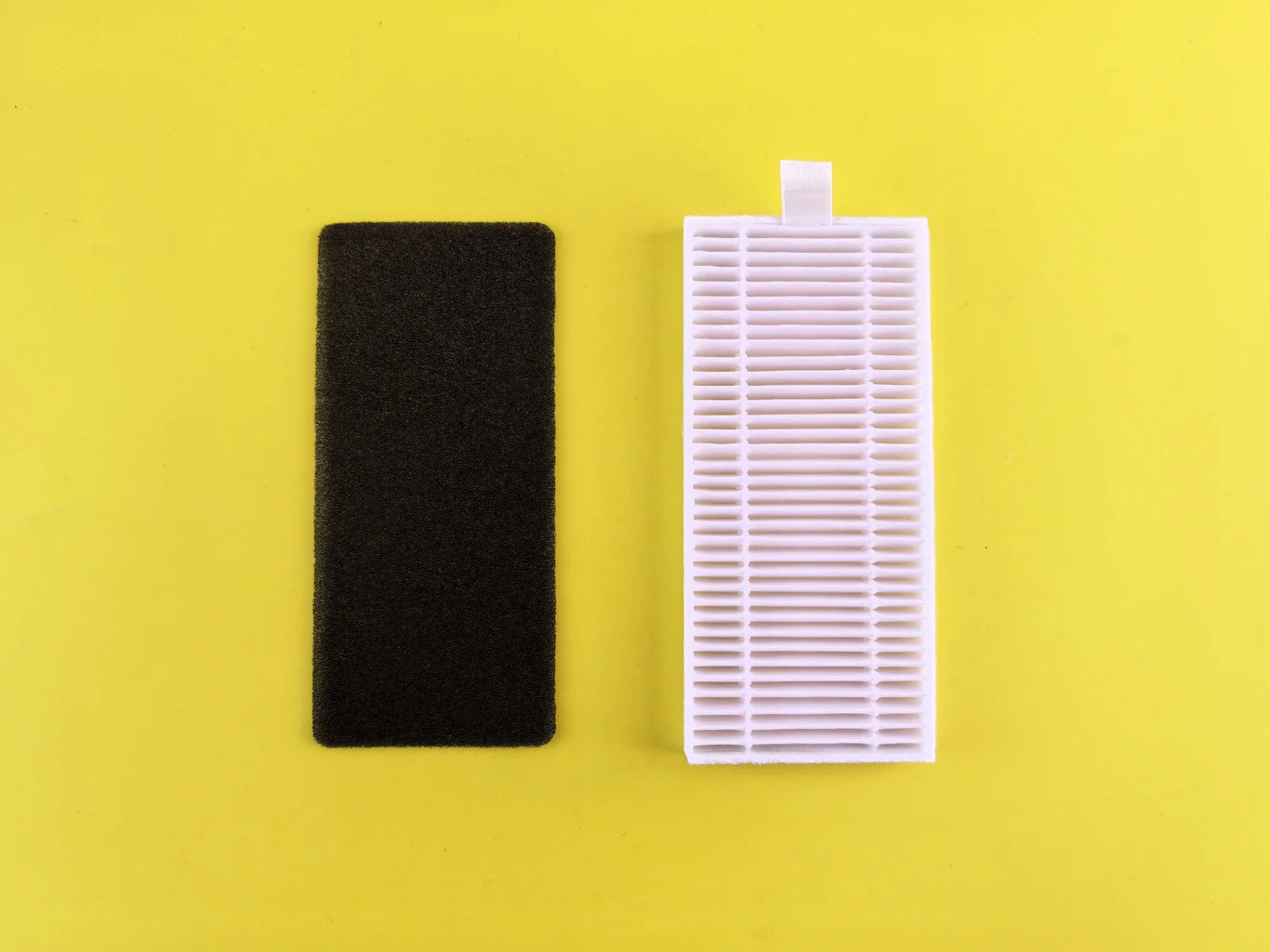
The 6 to 12 month window most makers quote is an average, not a fixed rule. A True HEPA filter traps particles in dense fibers and often holds up for 6 to 12 months before airflow drops. An activated carbon filter works another way: it adsorbs gases and odors onto a porous surface that saturates faster, often within 3 to 6 months. That is why it almost always needs changing before the HEPA stage does.
HVAC furnace filters follow a separate calendar-based interval regardless of runtime hours; my Filtrete 20x25x1 review covers the MERV 11 3M option with a standard 90-day swap window.
Makers rarely mention one nuance. A clean pre-filter can meaningfully extend the life of the HEPA stage behind it. Knowing how to clean an air purifier filter, and wiping or vacuuming the pre-filter every two to four weeks, keeps large debris from reaching the HEPA media early. Clean Air Delivery Rate, or CADR, is verified under the AHAM (Association of Home Appliance Manufacturers) Verifide program’s ANSI/AHAM AC-1-2020 standard. Testing uses brand-new filters. Real output drops as the media loads up between changes.
The full breakdown by filter type looks like this:
| Filter Type | Typical Replacement Interval | Why |
| Pre-Filter | Every 2 to 4 weeks (clean); replace every 6 to 12 months | Traps large particles like dust and hair, protecting the HEPA stage from clogging early |
| True HEPA Filter | 6 to 12 months | Captures fine particles until the fibers load up and airflow drops |
| Activated Carbon Filter | 3 to 6 months | Adsorbs odors and gases onto a porous surface that saturates faster than HEPA media |
Signs Your Air Purifier Filter Needs Replacing
A filter rarely announces its own expiration date, but the unit gives off clues before output quietly drops. A saturated HEPA filter loses its grip on PM2.5 (fine particles 2.5 microns or smaller). The drop happens well before the filter looks visibly dirty. That timing matches the EPA’s air-quality standards for that pollutant class. Watching for a handful of signs is more reliable than counting months on a calendar.
A car’s cabin air filter follows the same sign-based replacement logic in an enclosed vehicle cabin; my top cabin air filter options covers the top-rated picks and their wear signals.
The same sign-based approach applies to a vehicle’s cabin air filter, which traps PM2.5 but wears on mileage rather than air-hours; my Spearhead BE-157 cabin air filter review covers how to read the replacement signals for that use case.
The clearest signs to check for:
- Weaker airflow: the unit noticeably pushes less air even at the same speed setting, since a clogged filter restricts flow.
- A lit replacement indicator: most units track runtime internally and light up automatically once the filter passes its rated hours.
- Lingering odors: smoke, pet, or cooking smells that used to clear quickly now stick around, a sign the carbon layer has stopped adsorbing.
- Visible discoloration: a filter that has gone from white or light gray to dark gray or black has trapped about as much as it can hold.
- A slower drop in AQI (Air Quality Index) readings: on units with a built-in sensor, the number takes longer to fall after you turn the unit on.
What Affects How Often to Change Air Purifier Filter
The standard range assumes typical household air, but several factors shift it in either direction. Homes with shedding pets add hair and dander that clog the pre-filter and HEPA stage faster. Wildfire smoke or heavy outdoor pollution near a busy road pushes far more particulate into the intake. A quiet suburban block sees far less. How often to run an air purifier also shifts the timeline: running it nonstop instead of a few hours a day shortens the interval.
Occupancy matters too. A crowded living room feeds a unit more dust and skin cells than a rarely used guest room does. Households with asthma or allergy symptoms have the most to lose from a degraded filter. More than 27 million Americans live with asthma, according to the CDC. They are disproportionately affected when airborne triggers go uncontrolled. Pet owners and wildfire-prone regions should plan on the shorter end of the range. The same goes for anyone running a unit 24/7. A furnace filter conditions the air across the rest of the home and follows its own separate replacement schedule.
How to Replace an Air Purifier Filter
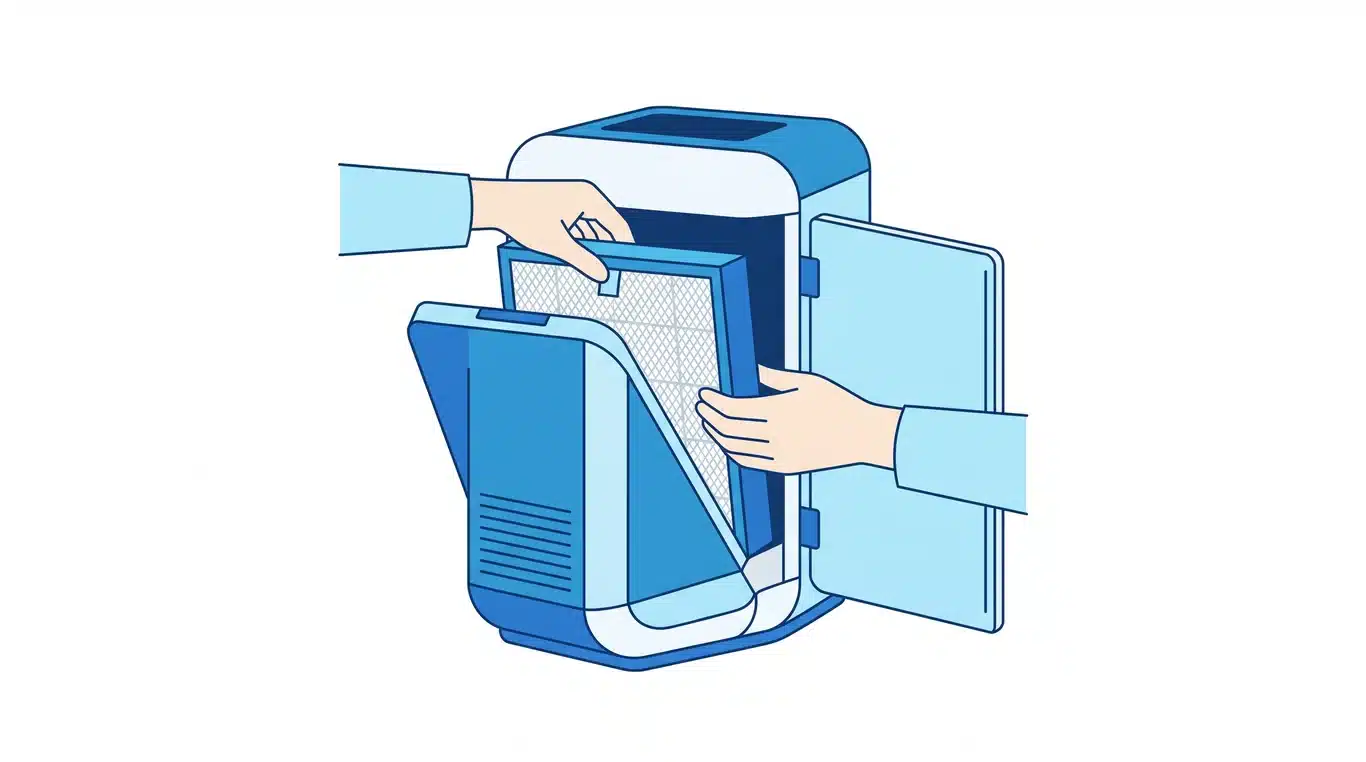
The air purifier filter replacement process takes only a few minutes once you know the order of operations. Skipping a step, like leaving the unit powered on, causes the most common damage. It usually hits a filter housing or a static-sensitive HEPA media.
- Power off and unplug the unit before opening anything, since some housings sit close to internal electronics.
- Open the filter housing or back panel using the release tabs or screws specific to your model.
- Remove the old filter and note which side faced the airflow intake, since most filters are directional.
- Unwrap the new filter completely, including any plastic film around the frame, before inserting it in the same orientation.
- Close the housing until it clicks or seats fully, so no unfiltered air bypasses the media through a gap.
- Reset the filter-life indicator if the unit has one; our step-by-step reset guide can help.
How We Research
We check every claim against primary sources. Federal agencies like the EPA and CDC come first. Certification bodies like NSF and AHAM come next. We verify each standard number against the issuing body. We review this guide on a set schedule.
Why Trust This Guide
Puritisimo covers only water and air quality. Our guidance is editorial and independent. We cite every health figure so you can check it. We never present a promotional claim as fact.
Building a Filter Replacement Habit That Sticks
None of this needs constant tracking. A quick visual check once a month is usually enough. Pair it with watching for weaker airflow, stale odors, or a lit indicator light. Set a reminder toward the shorter end of the range. This applies if pets, wildfire smoke, or nonstop runtime affect your household.
Lean toward the longer end if the unit runs only a few hours a day. That works best in clean indoor air. Maker defaults are a starting point, not a guarantee. Real air quality and usage shift the timeline more than the calendar does. Building a simple monthly check into your routine is the easiest way to stay on top of your filter. That covers how often you need to change your air purifier filter.
Frequently Asked Questions
How often to change air purifier filter?
How often you need to change your air purifier filter depends mostly on filter type. Most HEPA filters last 6 to 12 months, while carbon and pre-filters wear out sooner, according to the EPA’s guidance on maintaining residential air cleaners. The full type-by-type breakdown covers exactly how each interval differs.
How long do air purifier filters really last?
In real-world use, HEPA filters often run 6 to 12 months and activated carbon filters closer to 3 to 6 months, though maker defaults assume light, average use. Heavier conditions, like pets or wildfire smoke, push both intervals toward the shorter end faster than the box label suggests, per AHAM Verifide’s testing standard.
What is the 2/3 rule for air purifiers?
The 2/3 rule is a sizing guideline, not a filter-change schedule. A unit’s smoke CADR (Clean Air Delivery Rate) should equal at least two-thirds of the room’s square footage for effective coverage, per AHAM Verifide’s testing standard. It tells you whether the unit is powerful enough for the space, while filter life still depends on usage and air quality.
Is it okay to run air purifiers all the time?
Yes, running an air purifier nonstop is how these units are designed to work. It also matches public-health guidance that assumes constant air turnover for healthier indoor air. The trade-off is that nonstop runtime is why heavy-use households should plan on the shorter end of the replacement range. That includes households with asthma or allergy triggers, according to the CDC.
How can I tell if my air purifier needs a new filter?
The clearest signs are reduced airflow, stale odors that used to clear quickly, and a slower drop in AQI readings after you turn the unit on. A lit replacement indicator, when the unit has one, is the most direct signal. These changes show up because a saturated filter has lost much of its ability to capture fine particulate matter, per EPA air-quality standards.
References
- AHAM Verifide. Air Filtration Standards: CADR and ANSI/AHAM AC-1-2020. 2020.
- EPA. Guide to Air Cleaners in the Home. 2018.
- CDC. Asthma Statistics, FastStats. 2024.
Medical Disclaimer: This content is for informational purposes only. It is not a substitute for professional medical advice, diagnosis, or treatment. If you have concerns about your water quality or air quality and their effects on your health, consult a qualified healthcare professional.