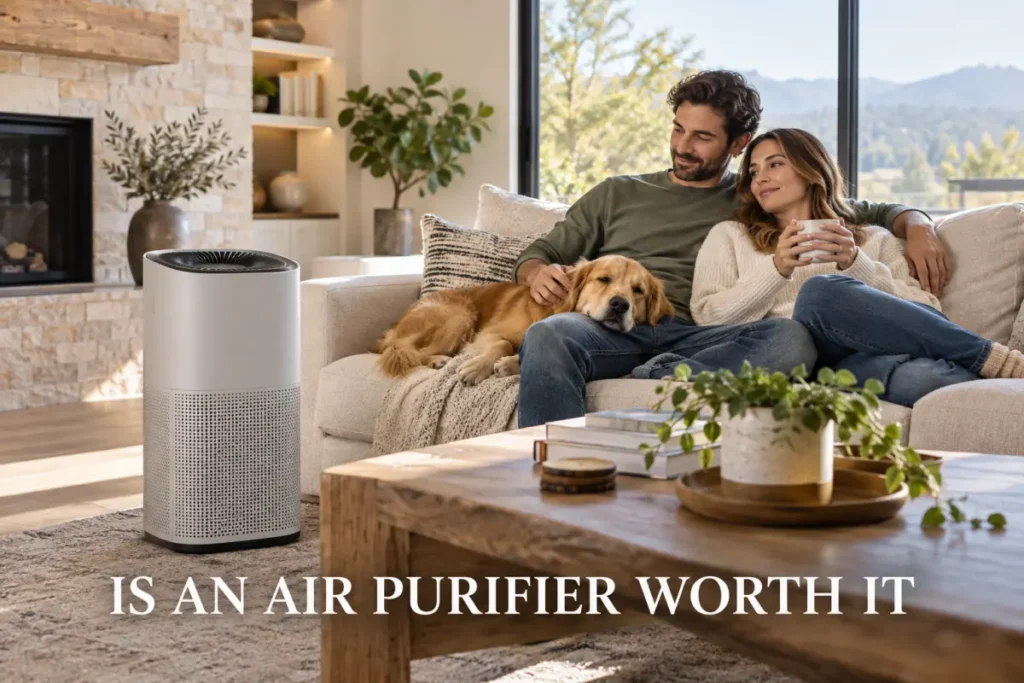
An air purifier is worth it for most households dealing with allergies, asthma, pets, or poor outdoor air quality. It will not fix every dust or odor complaint. For those groups, a quality filtration unit gives a real but limited boost to indoor air quality, cutting the fine particles that trigger symptoms. For a household without those issues, the payoff is smaller and easy to miss day to day.

Here’s what that means for your specific home. By the end of this guide, you’ll know which health conditions and living situations justify one. You’ll also know what an air purifier cannot do and roughly what it costs to run year to year. Not every household needs one, but plenty do.
Key Takeaways
- High-efficiency filters catch 99.97% of the hardest-to-trap particles, not the smallest ones.
- Research links high-efficiency filtration to real drops in PM2.5 and asthma symptoms, especially for allergy and asthma sufferers.
- An air purifier can’t remove gases, odors, or radon, and doesn’t replace source control or ventilation.
- Filter replacements, not electricity, drive most of a purifier’s yearly running cost.
Is an Air Purifier Worth It? What It Actually Does
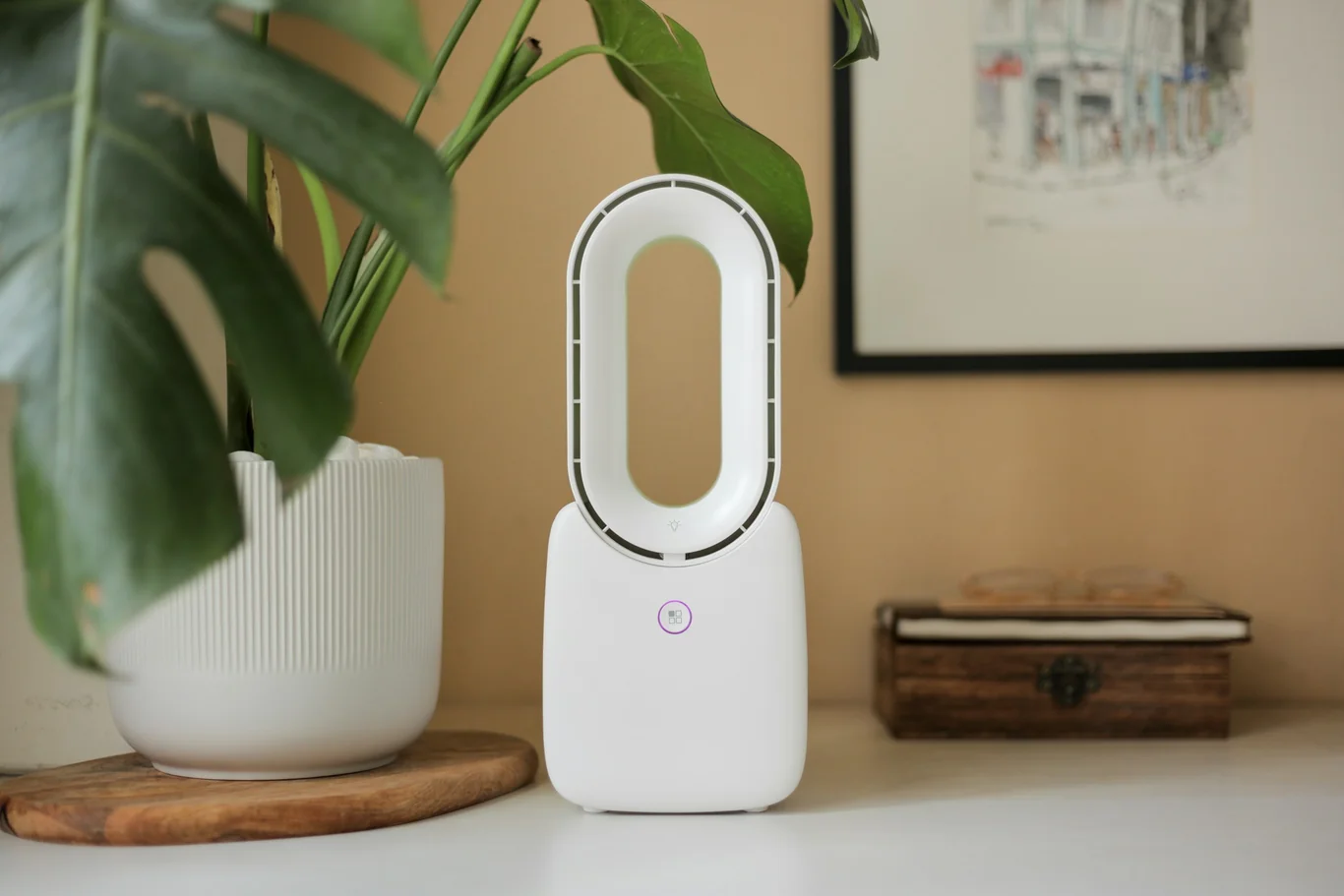
An air purifier is a device that pulls room air through one or more filters, most often a true HEPA (high-efficiency particulate air) filter. It returns cleaned air to the room, trapping particles as they pass through instead of changing them chemically. True HEPA media is often built to meet the same efficiency standard used in medical and cleanroom filtration. Not every unit sold with a HEPA label meets it.
Americans spend about 90% of their time indoors, where pollutant levels can run two to five times higher than the air outside, according to the EPA. That gap is the basic case for filtering the air you breathe most. A true HEPA filter is defined by capturing at least 99.97% of particles at 0.3 microns (about 1/100th the width of a human hair). That is the hardest particle size to trap, not the smallest one the filter can catch.
The direct answer here: for filtering fine particles and common allergens, an air purifier is worth it, within limits. It is not a cure-all: it will not fix moisture problems, remove gases, or replace basic cleaning habits, points covered later in this guide.
Pooled research across 148 studies shows HEPA units cut indoor PM2.5 by a mean of 49%, a real, clear change rather than an assumption.
A HEPA filter only captures particles, so it won’t help with gases, cooking odors, or volatile organic compounds unless your unit also has an activated carbon stage.
The American Lung Association reports that 46% of Americans live in areas with a failing air quality grade, which alone can justify running one.
Who Benefits Most: Allergies, Asthma, and Newborns
The clearest benefit shows up if your symptoms start or worsen indoors. According to the CDC, more than 27 million Americans have asthma. If you’re in that group, you’ll likely notice the fastest change once fine particles and allergens drop. That effect is strongest in the bedroom, so knowing where to put an air purifier matters as much as buying one.
A few groups get the most steady payoff:
- Allergy sufferers: pollen, dust, and pet dander trigger year-round symptoms that ease fast with steady filtration.
- Asthma and COPD (chronic obstructive pulmonary disease): removing fine particles cuts one of the most common indoor triggers for flare-ups.
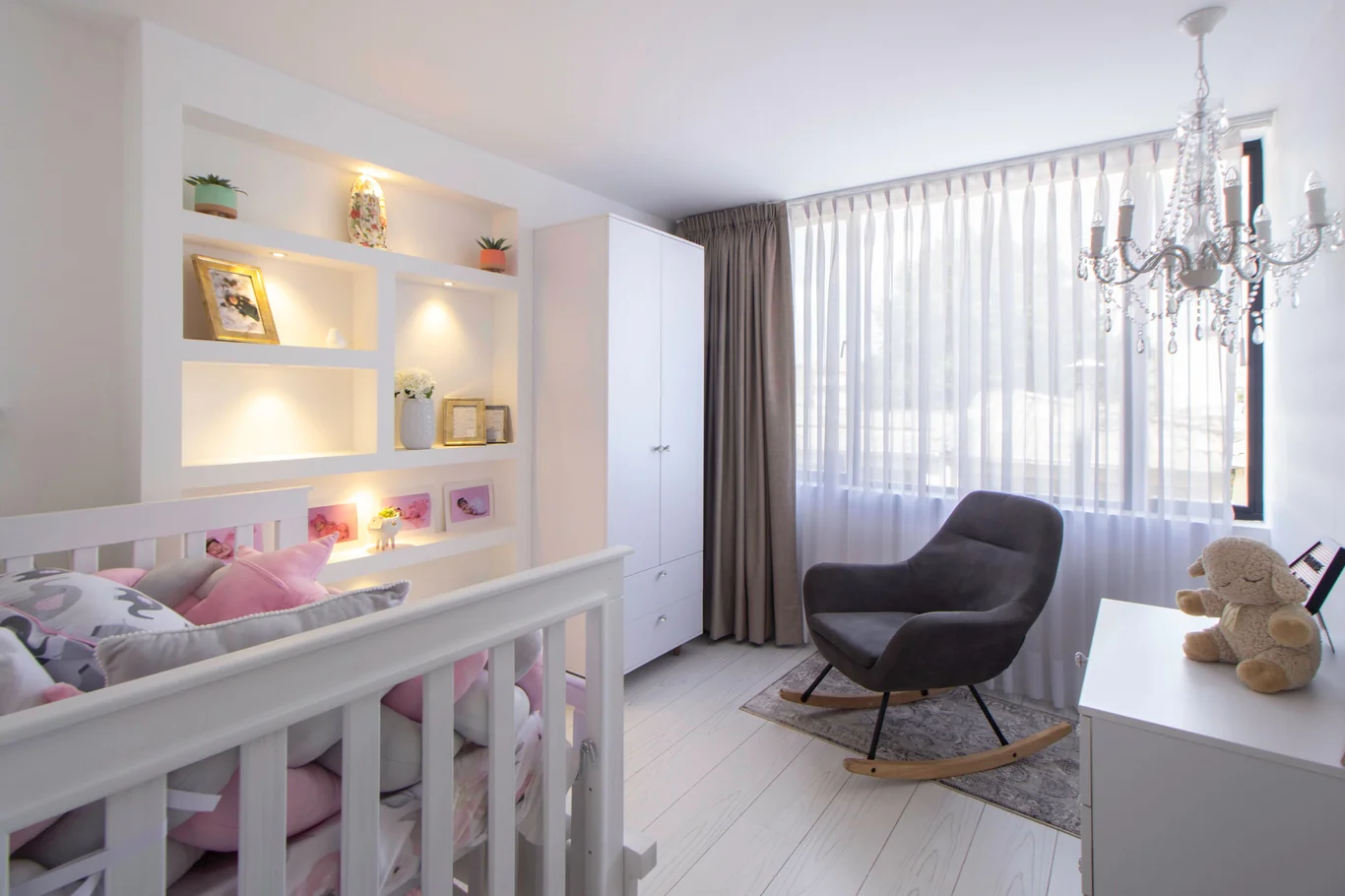
- Newborns and nurseries: infants breathe faster and stay closer to the floor. A HEPA (high-efficiency particulate air) unit in the nursery lowers early exposure to dust and smoke. Allergy-specific benefits still take months to show.
- Pet owners: dander stays airborne for hours, and a purifier catches what vacuuming misses.
- Wildfire-prone or high-AQI (air quality index) areas: outdoor smoke and ozone alerts show up as indoor particle spikes without a running purifier.
The strongest evidence comes from a 2023 pooled review of 148 studies. It found that HEPA purifiers cut indoor PM2.5 (fine particulate matter, 2.5 microns or smaller) by a mean of 49%. That number blends basic units with high-end ones, and filter quality and room size still decide how much of it any single household gets.
For a large room where continuous running matters most, my Levoit Core 400S-P purifier review covers how a 400-square-foot HEPA unit performs when run at the steady pace that drives those measured gains.
The Downsides No One Mentions
An air purifier only handles part of what’s in your air. HEPA (high-efficiency particulate air) filters trap particles, not gases. Cigarette smoke odor, cooking fumes, and volatile organic compounds (VOCs, chemical vapors from paint, cleaners, and furniture) pass straight through unless your unit also has an activated carbon layer.
Ionizer and ozone-generating models carry a real risk that most sales listings leave out. The EPA has found that some of these units produce ozone at levels far above what health experts call harmful to breathe. A true HEPA unit without an ionizing add-on is the safer choice for your home.
Here’s where a purifier really helps and where it doesn’t:
| Contaminant or Concern | Does an Air Purifier Help? |
| Fine dust and pollen | Yes, HEPA traps most airborne particles this size. |
| Pet dander | Yes, though settled dander on furniture still needs vacuuming. |
| Wildfire smoke particles (PM2.5) | Yes, this is where HEPA units show the clearest measured benefit. |
| VOCs and cooking or paint odors | Only with an added activated carbon layer, not with a plain HEPA filter. |
| Mold spores | Partially, it captures airborne spores but will not treat mold already growing on a surface. |
| Radon gas | No, radon needs sub-slab or ventilation mitigation, not air filtration. |
Signs Your Home Actually Needs One
A few practical cues make deciding whether you need an air purifier easier than debating specs. If dust comes back on your shelves within days of cleaning, that’s a sign. If the air smells faintly stale even after you open the windows, that’s a sign too. Both mean your room is holding more airborne dust than normal ventilation clears out.
Local air quality matters just as much as anything happening inside your house. The American Lung Association found that 156.1 million people, about 46% of the US population, live in areas with a failing grade for ozone or particle pollution. If you’re in one of those regions, you have a clear outdoor-driven case for running a purifier, even without allergies.
A recurring allergy or asthma flare-up that eases when you’re away from home is one sign. A newborn in the house, or a family member with a weak immune system, raises the stakes too. These groups have the least tolerance for whatever is already floating in the air.
For households that also filter through their HVAC, my Filtrete 20x25x1 furnace filter review covers how the MERV 11 rating stacks up for whole-home dust and allergen reduction.
Running Costs: Electricity, Filters, and Whether It Pays Off
Is an air purifier worth the money? The honest answer comes down to two main costs: power and replacement filters, not the price of the unit itself. Filters, not the wall outlet, are almost always the bigger line item over a full year of regular use.
Estimating your real yearly cost takes a few steps:
- Check the unit’s rated wattage, often printed on the base or in the manual.
- Estimate how many hours a day you’ll really run it, most units work best left on for eight or more hours, not just short bursts.
- Multiply wattage by runtime and your local power rate to get a rough daily energy cost.
- Add the yearly filter-replacement cost on top, HEPA filters often last six to twelve months and carbon filters three to six, and that line often outweighs the power cost.
Efficiency ratings help narrow the power side of that math. ENERGY STAR certified units must hit a minimum Integrated Energy Factor, which is clean air output divided by watts used. On average, they use about 27% less energy than standard models, which trims the smaller of your two costs but won’t replace the filter budget.
How We Research
We check every claim against primary sources. Federal agencies like the EPA and CDC come first. Certification bodies like NSF and AHAM come next. We verify each standard number against the issuing body. We review this guide on a set schedule.
Why Trust This Guide
Puritisimo covers only water and air quality. Our guidance is editorial and independent. We cite every health figure so you can check it. We never present a promotional claim as fact.
Making the Call for Your Own Home
The honest picture sits between two extremes. An air purifier won’t fix a leaky roof, a smoking habit, or a home that never gets ventilated. It also won’t remove gases, odors, or radon, no matter how good the filter is. What it reliably does is pull fine particles, allergens, and wildfire smoke out of the air you breathe indoors. Matching those capabilities to your room size and specific air problem is worth doing before choosing a specific model.
That matters most if you have asthma, allergies, a newborn, or a pet. The running cost is real but modest, and filters, not electricity, drive most of it. What makes sense for your household comes down to who lives there and what your local air already looks like. That’s exactly why whether an air purifier is worth it comes down to who’s asking.
Frequently Asked Questions
Is an air purifier worth it?
An air purifier is worth it mainly for certain households, especially if you deal with allergies, asthma, pets, or heavy outdoor smoke, since you’ll see the clearest payoff. Pooled research across 148 studies shows HEPA units cut indoor PM2.5 by a mean of 49%, a real, clear change rather than an assumption. A correctly sized room and a maintained filter both affect whether you hit that number.
Is there a downside to using an air purifier?
Air purifiers have real limits worth knowing before you buy one. A HEPA filter only captures particles, so it won’t help with gases, cooking odors, or volatile organic compounds unless your unit also has an activated carbon stage. Running one also adds a steady hum, a filter-replacement bill every six to twelve months, and no help with dust that’s already settled on furniture.
What are signs you need an air purifier?
A few practical cues suggest it’s time: a dust film that returns within days of cleaning, or allergy and asthma symptoms that ease when you’re away from home. A newborn, a family member with a weak immune system, or wildfire smoke in your area are other clear signs. The American Lung Association reports that 46% of Americans live in areas with a failing air quality grade, which alone can justify running one.
Do home air purifiers really make a difference?
Yes, within limits, pooled research across 148 studies found HEPA purifiers cut indoor PM2.5 by a mean of 49%, a clear difference you can notice. Public health guidance is clear that a purifier adds to source control and ventilation rather than replacing them. Opening a window and fixing pollution sources still matters more than any single device.
Are air purifiers worth it for newborns?
Mostly, yes, with a few conditions. Choose an ozone-free, CARB (California Air Resources Board)-certified HEPA unit paired with activated carbon for nursery odors and off-gassing from new furniture. Infants breathe faster and stay closer to the floor, so cleaner air in that room has an outsized effect. Allergy-specific benefits still take a few months of steady use to show.
References
- US EPA. Volatile Organic Compounds and Indoor Air Quality. 2024.
- CDC/NCHS. Asthma Fast Stats, 2024 National Health Interview Survey. 2024.
- Systematic review, Science of the Total Environment. HEPA air purifiers and indoor PM2.5 reduction: a meta-analysis of 148 studies. 2023.
Medical Disclaimer: This content is for informational purposes only. It is not a substitute for professional medical advice, diagnosis, or treatment. If you have concerns about your water quality or air quality and their effects on your health, consult a qualified healthcare professional.