
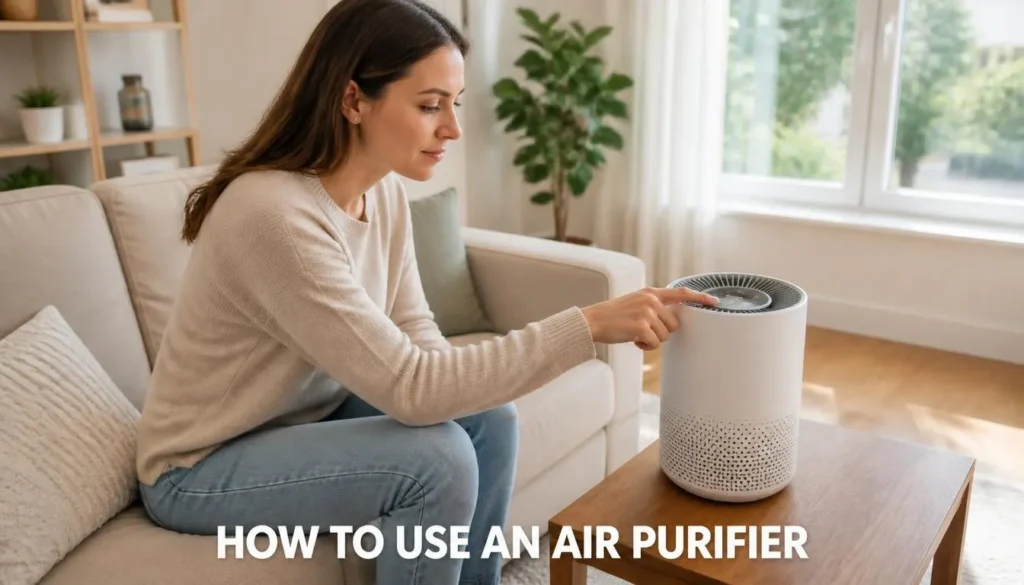
Learning how to use an air purifier takes about five minutes. Unwrap the filters, set the unit in an open spot, close the room, and leave it running on Auto or a medium speed. A purifier only cleans the air that passes through it, so fit, airflow, and steady running decide how well it works at home.
Most people get the setup mostly right and then lose the benefit through small habits. By the end, you’ll know the setup steps, which mode to pick, how to match a unit to your room, and what to skip.
Key Takeaways
- Remove all plastic from the filters first, then place the unit with clear space around it.
- Use the highest fan speed you can comfortably tolerate, especially while pollution levels are elevated.
- Match the unit’s CADR (clean air delivery rate, in cfm) to your room size, at least two-thirds of the floor area.
- Skip ionizer and ozone modes, and never add water to a standard filter purifier.
How to Use Air Purifier: Six Setup Steps
A purifier uses a fan to pull room air through a filter and push cleaner air back out. The EPA says that higher fan speeds and longer run times filter more air. The steps below aim to give the fan an easy path and a steady schedule.
- Unwrap the filters. Remove every bag, tape strip, and foam insert, then seat the filters as the manual shows. A filter left in plastic blocks the airflow.
- Choose a clear spot. Leave open space around the unit and keep it away from curtains, which the EPA warns can block airflow.
- Close the room. Keep the door shut. Close windows when outdoor air is polluted. Otherwise ventilate as needed, because a purifier supplements fresh air and does not replace it.
- Plug in and power on. Pick Auto if your model has it. If not, start on a medium speed.
- Check the room size. Compare the room to the largest area printed on the box. Most packaging lists it, and a unit that is too small works harder for less result.
- Leave it running. Steady operation filters more air than short bursts, so keep it on in the room you use most.
For help choosing the best spot, see our guide on where to put an air purifier. Placement matters, but the other five steps matter just as much.
Pick the Right Fan Speed and Mode
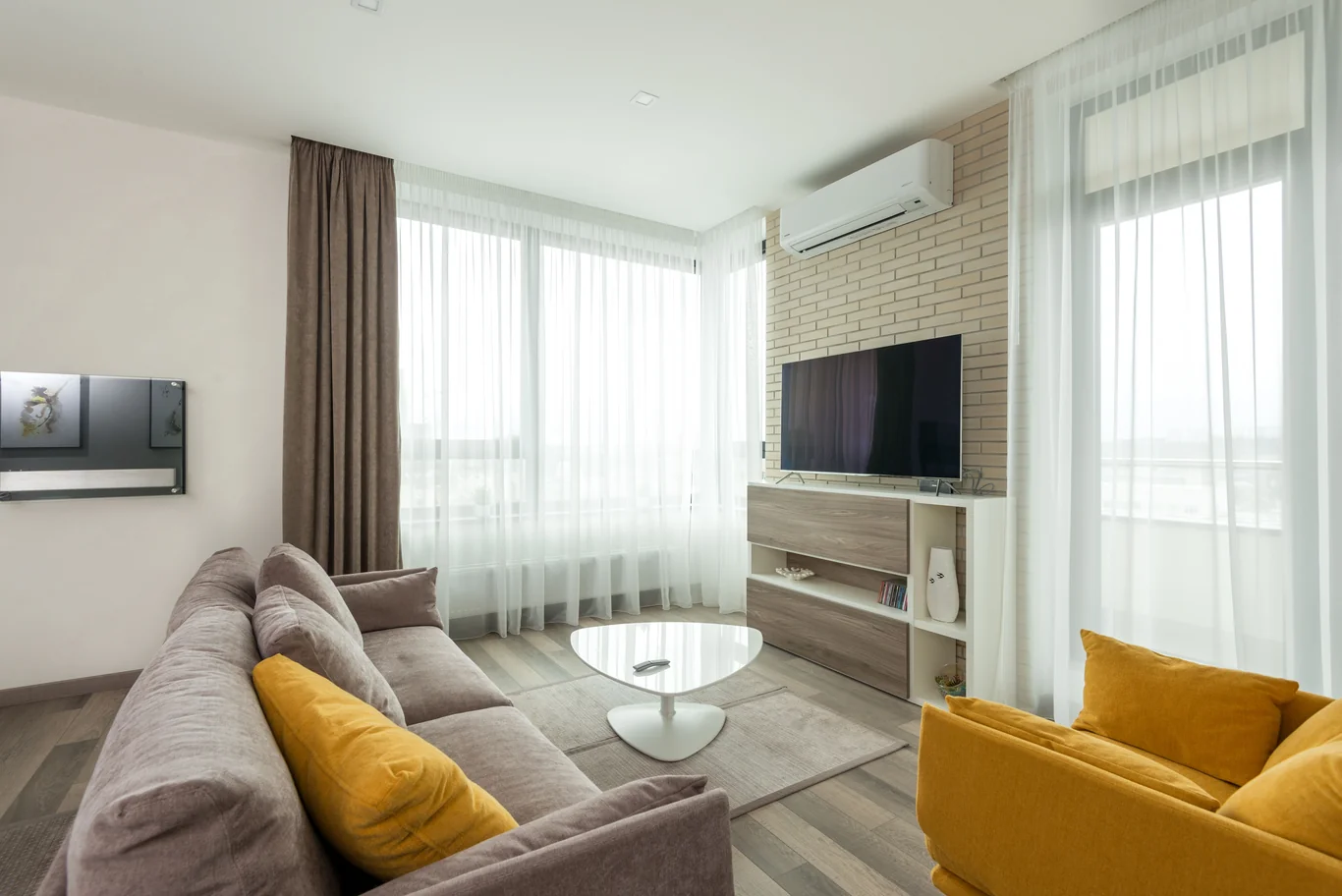
Higher speeds clean more air but make more noise, and the EPA notes that higher fan speeds and longer run times increase the amount of air filtered. Daily comfort comes from picking the mode that balances both. Modes and fan speeds vary by model, and the table below lists common options.
Auto mode is the easiest choice, because the unit reads a built-in sensor and raises or lowers the fan for you. Without Auto, Medium is a sound default for a living room, with Sleep or Low kept for the bedroom at night. Sleep mode also dims the display lights on many models, which helps if you’re a light sleeper. Check the manual for what yours does.
How long to run it is a separate question, covered in our post on how long to run an air purifier. This table shows what each setting is for:
| Mode | Use | Limitation |
| Auto | Adjusts speed using sensor readings | Depends on what the sensor detects |
| Sleep or Low | Reduces noise at night | Filters less air than higher speeds |
| Medium | Balances noise and airflow | Airflow depends on the model |
| High or Turbo | Increases filtration while pollution is elevated | Usually louder than lower speeds |
Match Your Air Purifier to Your Room Size
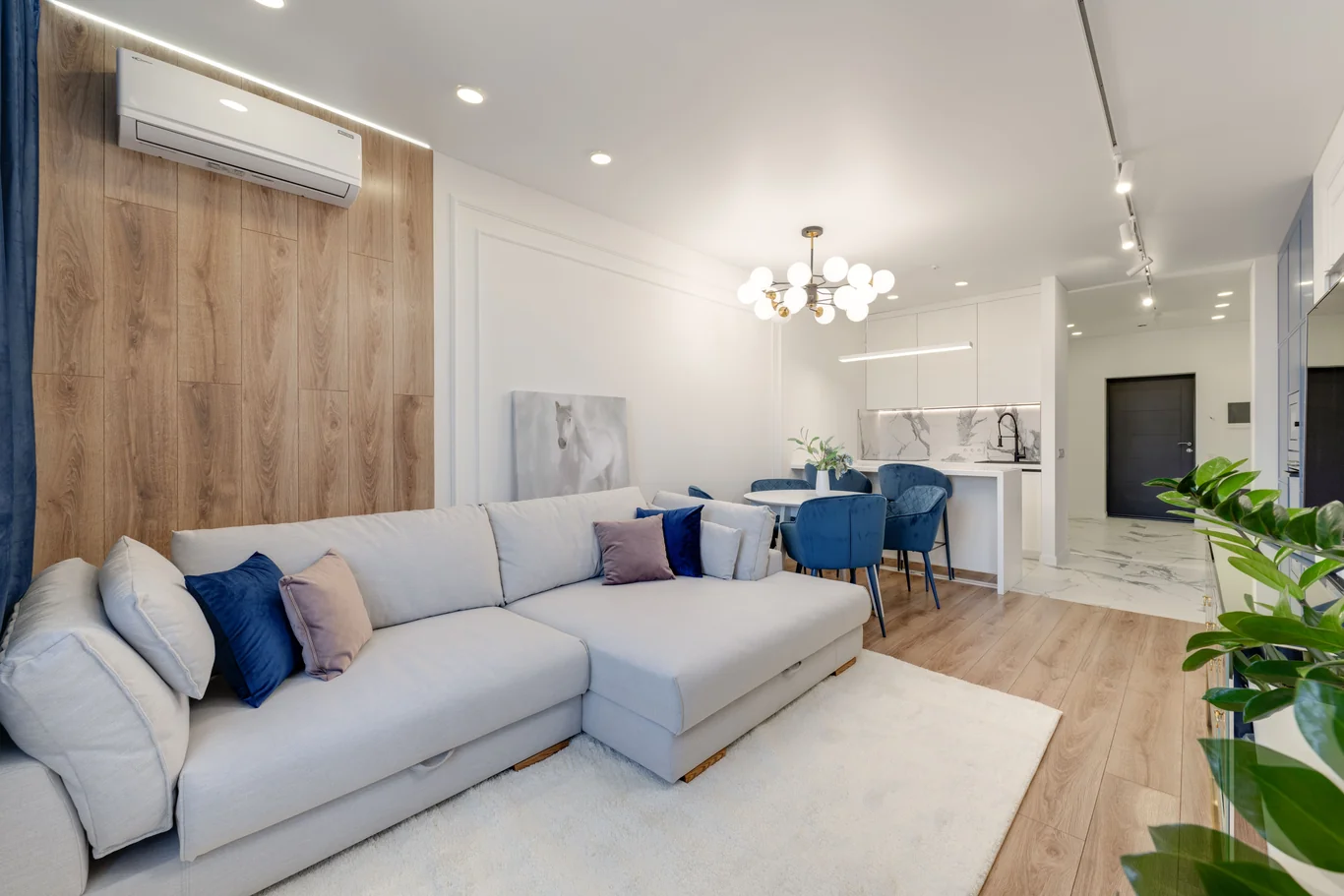
A strong unit in the wrong room still falls short. The key number is CADR (clean air delivery rate, the volume of clean air a unit produces per minute), and it should fit the space. The EPA says the rating should be large enough for the room or area you will use it in.
For an 8-foot ceiling, AHAM says the CADR in cubic feet per minute (cfm) should be at least two-thirds of the room’s floor area. A 12 by 15 foot room has 180 square feet, so look for at least 120 cfm. Taller ceilings need a higher CADR.
Smoke events need more, and for wildfire smoke, AHAM recommends a smoke CADR in cfm at least equal to the room area in square feet. That room needs 180 cfm. To decide when to turn the unit on, check the AQI levels for when to use an air purifier.
Here is a detail many buyers miss. The EPA notes that CADR is typically measured at the unit’s highest speed. At the quiet speed you actually use, the unit moves less air, so give yourself some margin. A compact unit suits a small room or desk well, but it will struggle in an open living space. If your room is large, choose a unit with enough CADR at a fan speed you can comfortably tolerate.
Settings and Habits to Skip
A few common habits cut the benefit or add risk. Check this list against your own setup:
- Ionizer or ozone modes: the EPA says ion generators can indirectly produce ozone, a lung irritant, at levels above those thought harmful. The agency also advises avoiding cleaners that intentionally produce ozone.
- Blocked intake: furniture, curtains, or a wall right against the unit choke airflow.
- Running without filters: a unit with the wrapping still on, or a filter removed, does little real work.
- Adding water or oils: a standard filter purifier takes neither. Check the manual before adding scents of any kind.
- Constant moving: shifting the unit every day breaks up a steady routine, so pick a spot and keep it there.
None of these is hard to fix, and fixing them helps the unit do the job you bought it for. Also remember that all filters need regular replacement, and a dirty, overloaded filter won’t work well.
How to Use Air Purifier and Humidifier Together
A standard air purifier and a humidifier do different jobs, since the purifier cleans air through a filter and adds no moisture, so it needs no water. A humidifier adds moisture and does need water. Treat them as two separate devices with two separate maintenance routines.
Some combination units carry a water tank, and if yours does, follow its manual for filling and cleaning the tank, since damp parts need regular care. Give each device its own spot with clear space around it. Keeping them apart also stops the humidifier’s mist from landing on the purifier’s intake and wetting the filter. See how to clean a humidifier for the full routine.
Watch the humidity if you run a humidifier. The EPA advises keeping indoor humidity below 60 percent, ideally between 30 and 50 percent relative humidity. A small humidity meter makes it easy to check, and too much moisture invites mold, which a purifier cannot fix at the source.
Using an Air Purifier for Allergies, Dust, and Pets
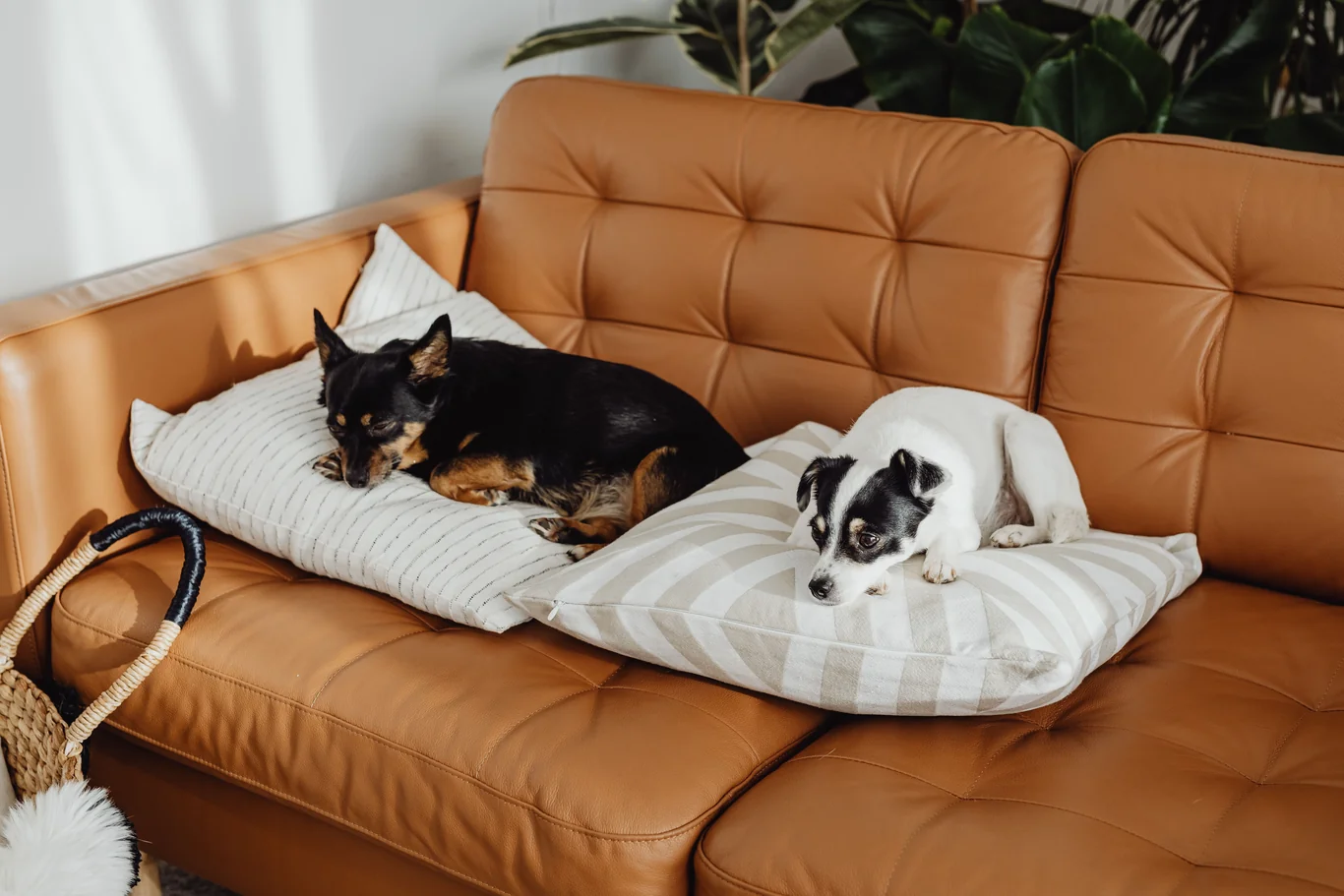
For allergies, look for a unit with a HEPA filter (high-efficiency particulate air, a dense mesh that traps tiny particles such as dust, pollen, and pet dander). Put it in the room where you spend the most time, and keep the door closed so it can clean the same air all day. The EPA suggests placing a unit in the room(s) you spend the most time in, and for many people that means the bedroom. Run it there overnight and during the day, so the room stays ready for you.
Dust and cat dander are light and keep drifting back into the air after you disturb them, which is why steady running matters more than a short burst. Wipe the pre-filter (the outer screen that catches hair and lint) as the manual allows, so the fan keeps strong airflow.
Keep the limits in mind, since the EPA calls filtration a supplement to other steps, and cleaners cannot remove all pollutants. Vacuuming, washing bedding, and cleaning surfaces still do work a purifier cannot do. A compact unit on a nightstand helps with pet dander near the pillow, but it does not replace those habits.
How We Research
We check every claim against primary sources. Federal agencies like the EPA and CDC come first. Certification bodies like NSF and AHAM come next. We verify each standard number against the issuing body. We review this guide on a set schedule.
Why Trust This Guide
Puritisimo covers only water and air quality. Our guidance is editorial and independent. We cite every health figure so you can check it. We never present a promotional claim as fact.
Getting Steady Results at Home
A good routine is simple. Unwrap the filters, pick a clear spot, close the room, and choose Auto or Medium. Match the unit to the room using the two-thirds rule, skip ionizer and ozone settings, and keep the filters fresh. Check on it now and then: listen for a rattle, look at the intake for lint, and note whether the room feels fresher. If you want to know what happens inside the unit first, read how an air purifier works.
Small steps like these turn a box in the corner into a tool that really cleans your air. They are all you need to know about how to use an air purifier well.
Frequently Asked Questions
Should an air purifier be on all the time?
Knowing how to use an air purifier well usually means leaving it on in the rooms you use most. Longer run times filter more air, so a low or Auto setting all day works well. Turn it down at night if the noise bothers you.
What is the 2/3 rule for air purifiers?
The rule says a unit’s CADR should equal at least two-thirds of the room’s floor area, so a 180 square foot room needs 120 cfm or more. Wildfire smoke calls for a higher CADR in cfm, equal to the full room area.
Is it okay to sleep with an air purifier on?
Yes, if the unit does not produce ozone. Use the Sleep or Low mode, which is quieter, and keep the intake clear of bedding and curtains. Skip any ionizer setting in the bedroom.
Do I need to put water in my air purifier?
No. A standard filter purifier uses no water, and it never adds moisture to the air. Only a humidifier or a combination unit with a tank needs water, and its manual explains how to fill and clean it.
Should an air purifier be on the floor or on a table?
It depends on the model, so check the manual for where the intake sits. Either spot works if the unit has clear space around it and no curtain or furniture blocks the airflow. Avoid corners that trap the air.
References
- EPA. Guide to Air Cleaners in the Home. U.S. Environmental Protection Agency.
- AHAM Verifide. AHAM’s Air Filtration Standards. Association of Home Appliance Manufacturers.
- EPA. What are ionizers and other ozone-generating air cleaners? U.S. Environmental Protection Agency.
- EPA. A Brief Guide to Mold, Moisture and Your Home. U.S. Environmental Protection Agency.
Medical Disclaimer: This content is for informational purposes only. It is not a substitute for professional medical advice, diagnosis, or treatment. If you have concerns about your water quality or air quality and their effects on your health, consult a qualified healthcare professional.

