
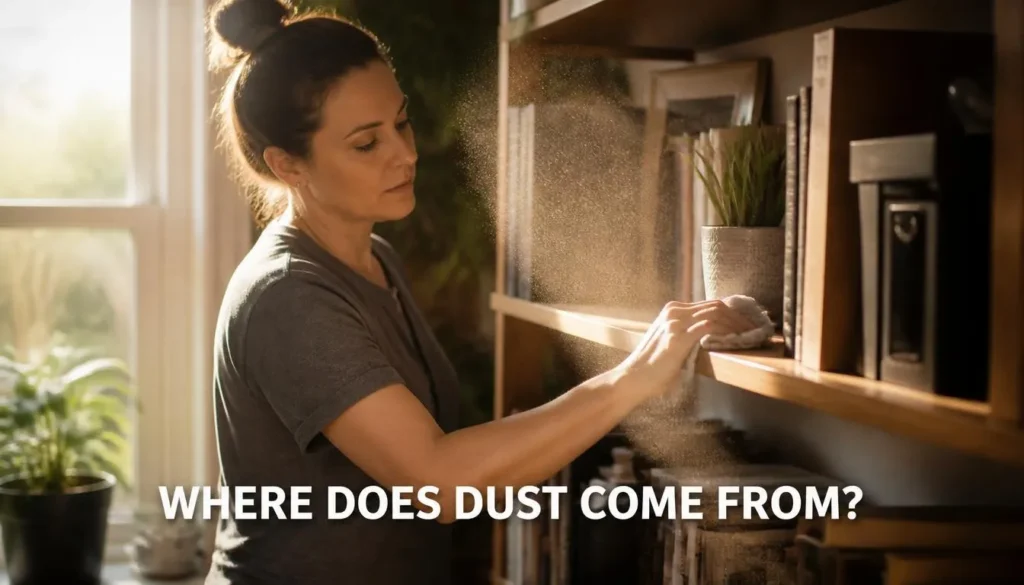
Dust comes from two places: the outdoors and your own home. Soil, pollen, and fine particles from outside air get carried in on shoes, pets, clothes, and air leaks. Your household then adds skin flakes, fabric fibers, pet dander, and dust mite waste. Most of what you wipe off a shelf started outside, then mixed with the material that your home sheds every day.
This guide explains where dust comes from, what it contains, and which parts matter for your health, so you can decide what deserves your attention. By the end, you will know which sources to block first and which cleaning habits actually cut dust.
Key Takeaways
- About two-thirds of house dust comes from outdoor soil and air, and one-third forms indoors.
- Indoor dust is shed skin, fabric fibers, pet dander, and particles from cooking and burning.
- Dust mites eat skin flakes and need humidity, so keep indoor humidity below 50%.
- Doormats, damp wiping, and weekly hot bedding washes cut dust at its source.
Where Does Dust Come From? Outdoor and Indoor Sources
House dust is a mix of tiny solid particles that settle on surfaces. It combines soil and outdoor air particles carried in from outside with skin flakes, fibers, pet dander, and dust mite waste made inside. Most of it starts outdoors.
Researchers at the University of Arizona estimate that about two-thirds of the dust in a home is soil and outdoor air particles carried inside. The other third comes from indoor sources, and the exact split changes from home to home. A 2009 study in Environmental Science & Technology describes house dust as shed skin cells, organic fibers, tracked-in soil, and fine outdoor particles.
The table below sorts the main dust sources by what each one adds and how it gets in:
| Source | What it adds | How it gets in |
| Outdoor soil | Dirt and mineral grains | Shoes, clothes, and pet paws |
| Outdoor air | Pollen, soot, and fine particles | Open doors, windows, and air leaks |
| Skin | Shed skin flakes | People and pets, all day long |
| Fabrics | Fibers from clothes, carpet, and bedding | Wear, washing, and walking |
| Pets | Hair and dander | Shed indoors and tracked in |
| Dust mites | Droppings and body fragments | Live in bedding and upholstery |
Where Does Household Dust Come From? Mostly Outdoors
Shoes are one of the main doorways. Soil rides in on shoes, clothes, bags, and pet paws, and the EPA notes that soil is tracked into homes on shoes, clothes, and other objects. Once inside, the soil dries and crumbles into fine grains that mix with everything else on your floor.
This is why the entryway matters more than any shelf. Every pair of shoes is a small delivery of outdoor soil. The finest grains settle onto floors and lift back into the air whenever someone walks through the room.
Air is the second route. Particles from outdoor air slip in through open windows, doors, and small gaps. Scientists measure these particles in micrometers (one-millionth of a meter). Particulate matter (PM, tiny solid or liquid specks in the air) called PM10 is 10 micrometers or smaller, and PM2.5 is 2.5 micrometers or smaller, according to the EPA. For scale, an average human hair is about 70 micrometers wide. That is 30 times larger than the largest fine particle.
Outdoor dust also carries traces of the surrounding neighborhood. A 2009 modeling study estimated that outdoor airborne particles supplied nearly 60% of arsenic entering floor dust in the Midwestern homes studied. Its Sacramento reconstruction suggested that tracked-in and resuspended soil became the main lead sources as leaded gasoline emissions declined.
What Is Dust in the House Made Of Indoors? Skin, Fibers, and Pets
Your household makes dust every day, and a 2009 study names shed skin cells and organic fibers as part of the mix. University of Arizona researchers add that lint from carpets and furniture, clothing fibers, and pet hair and dander also contribute to indoor dust.
So where does dust come from when nobody tracks anything in? A sealed home still holds people, pets, and fabrics, so it keeps making dust from the inside. The EPA also lists cooking, candles, fireplaces, unvented heaters, and smoking as more sources of indoor particles.
The main indoor contributors are:
- Skin flakes: every person and pet sheds them daily. Dust mites feed on those flakes; our guide explains how to get rid of dust mites.
- Fabric fibers: lint from clothes, carpet, curtains, upholstery, and bedding.
- Pet hair and dander: tiny flakes from the skin of cats, dogs, and other furry pets.
- Cooking and burning: particles from stoves, candles, fireplaces, and unvented heaters.
Where Do Dust Mites Come From, and Why Do They Thrive?

Dust mites feed on dead skin flakes from people and pets, says the American Lung Association. They are insect-like animals too small to see, and they live in bedding, mattresses, upholstered furniture, carpets, and curtains.
Humidity is the biggest factor in mite populations. Mites absorb moisture from the air, so they thrive in warm, humid rooms and cannot survive when indoor air is very dry. The American Lung Association reports that about 4 out of 5 U.S. homes have dust mite allergens in at least one bed.
Dust mite allergens are proteins found in mite waste and body fragments. People react to these proteins when they breathe them in. Unlike pet allergens, these particles settle quickly into dust and fabrics instead of floating in the air. That is why most exposure happens during sleep, according to the American Lung Association.
Is Dust Dangerous? What the Evidence Says
For many people, dust is mainly a nuisance, but it still carries allergens and fine particles that matter for some households. The American Lung Association reports that up to 85% of people with asthma have an allergic reaction to dust mites that worsens their asthma.
Particle size matters too. The EPA is most worried about particles 10 micrometers across or smaller, since they can reach deep into the lungs. Most of the fluff you see on a shelf is larger than that, so the finest part of airborne dust is the part you cannot see.
Health risks depend on what the dust contains and how much you breathe in. The EPA notes that inhalable particles can affect the lungs and heart. If you notice sneezing, itchy eyes, or night-time coughing that eases when you leave the house, mite allergy is a reasonable thing to raise with your doctor.
Older homes add one more concern. Household dust may contain lead, and the EPA warns that settled lead dust can re-enter the air when you sweep, vacuum, or walk through it. That is why it advises weekly damp cleaning.
How to Prevent Dust in Room Air and on Every Surface
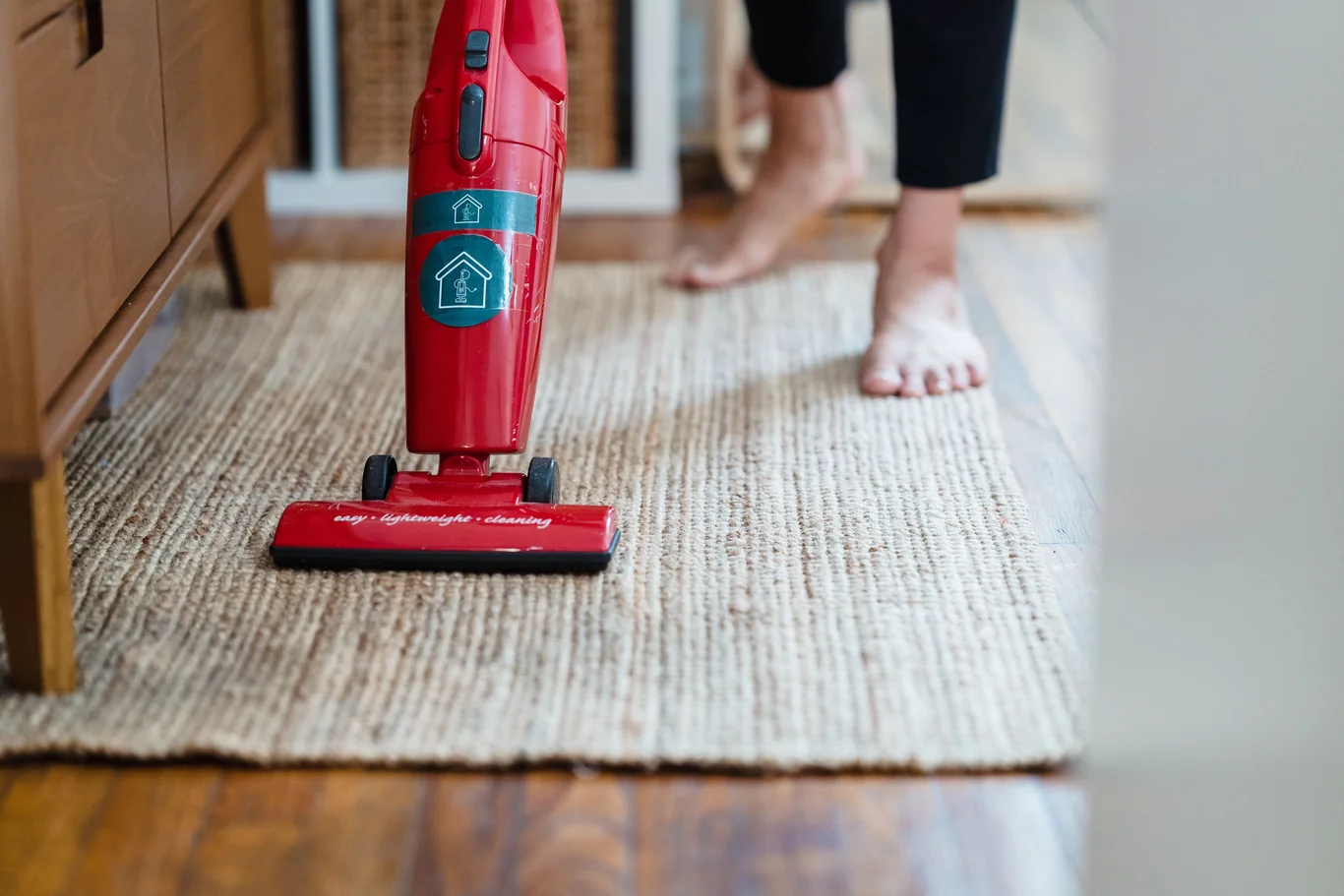
You cannot stop dust completely, but you can block entry, trap what lands, and starve the mites. It is easiest to start at the door and then work toward the bedroom.
Follow these six steps in order:
- Block it at the door: put doormats outside and inside every entry, take shoes off, and wipe pet paws after walks, as the EPA advises.
- Wipe, don’t flick: dust with a damp or microfiber cloth that traps dust instead of stirring it up, per the American Lung Association.
- Wet mop hard floors: the EPA says to wet mop, because dry sweeping lifts settled dust back into the air.
- Keep humidity below 50%: read it with a hygrometer (a small gauge for humidity), and use a dehumidifier or bath fan, as the American Lung Association suggests.
- Wash bedding weekly: use water at least 120F, and add allergen encasements (zippered covers that block mites) to mattresses and pillows.
- Vacuum carpet weekly: use a HEPA vacuum (one with a filter that traps very fine particles), or swap carpet for hard flooring if allergies are a concern.
The EPA also advises that you change heating, cooling, and air cleaner filters as the maker directs. For the filter side of the story, read whether an air purifier helps with dust and what a HEPA filter can and cannot catch.
How We Research
We check every claim against primary sources. Federal agencies like the EPA and CDC come first. Certification bodies like NSF and AHAM come next. We verify each standard number against the issuing body. We review this guide on a set schedule.
Why Trust This Guide
Puritisimo covers only water and air quality. Our guidance is editorial and independent. We cite every health figure so you can check it. We never present a promotional claim as fact.
What to Do With What You Know About Dust
Dust is outdoor soil and air particles that follow you inside, plus the skin, fibers, dander, and mite waste that your household makes. About two-thirds starts outdoors, so the door is the best place to start. Doormats, shoes off, and wiped paws stop much of it before it settles indoors. Indoors, damp cloths, wet mopping, low humidity, and weekly hot bedding washes handle the rest. If someone in your home has asthma or allergies, treat the bedroom as the priority. Once you know where dust comes from, you can stop it at the source. Our plan to reduce dust in the house builds on that.
Frequently Asked Questions
Where does dust come from in a closed house?
Closing a house changes where dust comes from, not whether it forms at all. People, pets, and fabrics keep shedding skin, hair, and fibers indoors all day. Shoes, clothes, pets, and small gaps around doors and windows still bring in some outdoor dust as well.
Is it unhealthy to sleep in a dusty room?
It can be, mainly for people with dust mite allergy or asthma. Mites live in bedding and mattresses, and most mite exposure happens during sleep. Allergen-proof covers and a weekly hot wash of sheets lower the load. Other sleepers may notice nothing at all.
Should I dust wet or dry?
Use a damp or microfiber cloth. A dry cloth or feather duster mostly flings dust into the air, where it settles back onto surfaces. Wring the cloth well so it stays damp, not dripping, and rinse it often. On hard floors, wet mop instead of dry sweeping.
Why does my house get so dusty every day?
Dust settles fast and gets stirred up again each time you walk, sweep, or vacuum. New dust also arrives daily on shoes, clothes, pets, and outdoor air. Your household adds skin flakes and fibers too, so a clean shelf starts collecting dust again soon after you wipe it.
Can air purifiers reduce dust?
Yes, for dust floating in the air. A purifier with a HEPA filter catches airborne dust, but it cannot lift dust that has already settled on shelves and floors. Source control and damp cleaning still do most of the work, so use a purifier as a helper, not a replacement.
References
- University of Arizona. Dust particles are probably quite toxic. Southwest Environmental Health Sciences Center.
- Layton DW, Beamer PI. Migration of contaminated soil and airborne particulates to indoor dust. Environmental Science & Technology. 2009.
- EPA. Particulate Matter (PM) Basics. U.S. Environmental Protection Agency.
- EPA. Indoor Particulate Matter. U.S. Environmental Protection Agency.
- EPA. Protect Your Family From Sources of Lead. U.S. Environmental Protection Agency.
- American Lung Association. Dust Mites. American Lung Association.
Medical Disclaimer: This content is for informational purposes only. It is not a substitute for professional medical advice, diagnosis, or treatment. If you have concerns about your water quality or air quality and their effects on your health, consult a qualified healthcare professional.

