
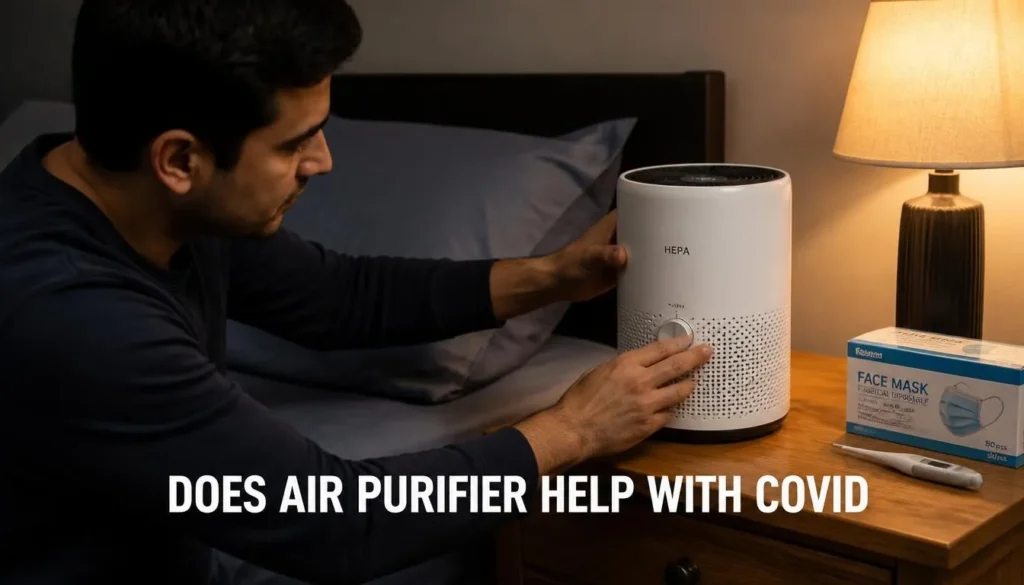
An air purifier can help with COVID, but only as one layer of protection. A unit with a True HEPA filter (a filter built to trap 99.97% of tiny airborne particles) pulls virus-carrying particles out of the air. That figure is measured at 0.3 microns (millionths of a meter, far finer than a hair). A purifier does not shield you on its own, and it does not treat an infection. How much an air purifier helps with COVID depends on your room and on what else you do.
This guide covers what EPA and CDC say, what lab tests show, and how to size a unit for your room. You will also learn how to read an FDA approved claim and which add-on features to skip.
Key Takeaways
- A True HEPA purifier can reduce airborne virus particles, but EPA says air cleaning alone is not enough.
- Pick a purifier rated for your room size, and aim for CDC’s 5 or more air changes per hour.
- FDA does not oversee ordinary household purifiers, so an FDA approved claim on a box needs a closer look.
- Skip ozone generators. EPA says ozone irritates lungs and does not effectively remove viruses at levels that meet health standards.
Does Air Purifier Help With COVID? What the Evidence Shows
A True HEPA air purifier can help reduce the virus-carrying particles floating in a room. It works as one layer in a larger plan, not as a shield. It cleans the air that passes through it, so it lowers exposure but cannot stop every infection.
The EPA, the US environmental agency, is direct about the limits. It says that by itself, air cleaning or filtration is not enough to protect people from COVID-19. It describes filtration as one part of a plan that can reduce the chance of airborne spread indoors.
Lab data shows why filtration still earns a place. A 2022 study in mSphere, a virology journal, ran a HEPA air cleaner in a sealed test chamber filled with live SARS-CoV-2 (the virus that causes COVID-19). The unit captured 85.38%, then 96.03%, then more than 99.97% of the virus after one, two, and about seven room volumes of air passed through it.
The distinction worth keeping in mind is where those numbers come from. A chamber test measures particles removed. It does not measure infections prevented in a real home, where people move around and doors open. The same study found that a HEPA filter coated with an antiviral agent performed about the same as a plain one, so a coating, on this evidence, adds little.
Air Purifier With True HEPA Filter: What It Catches
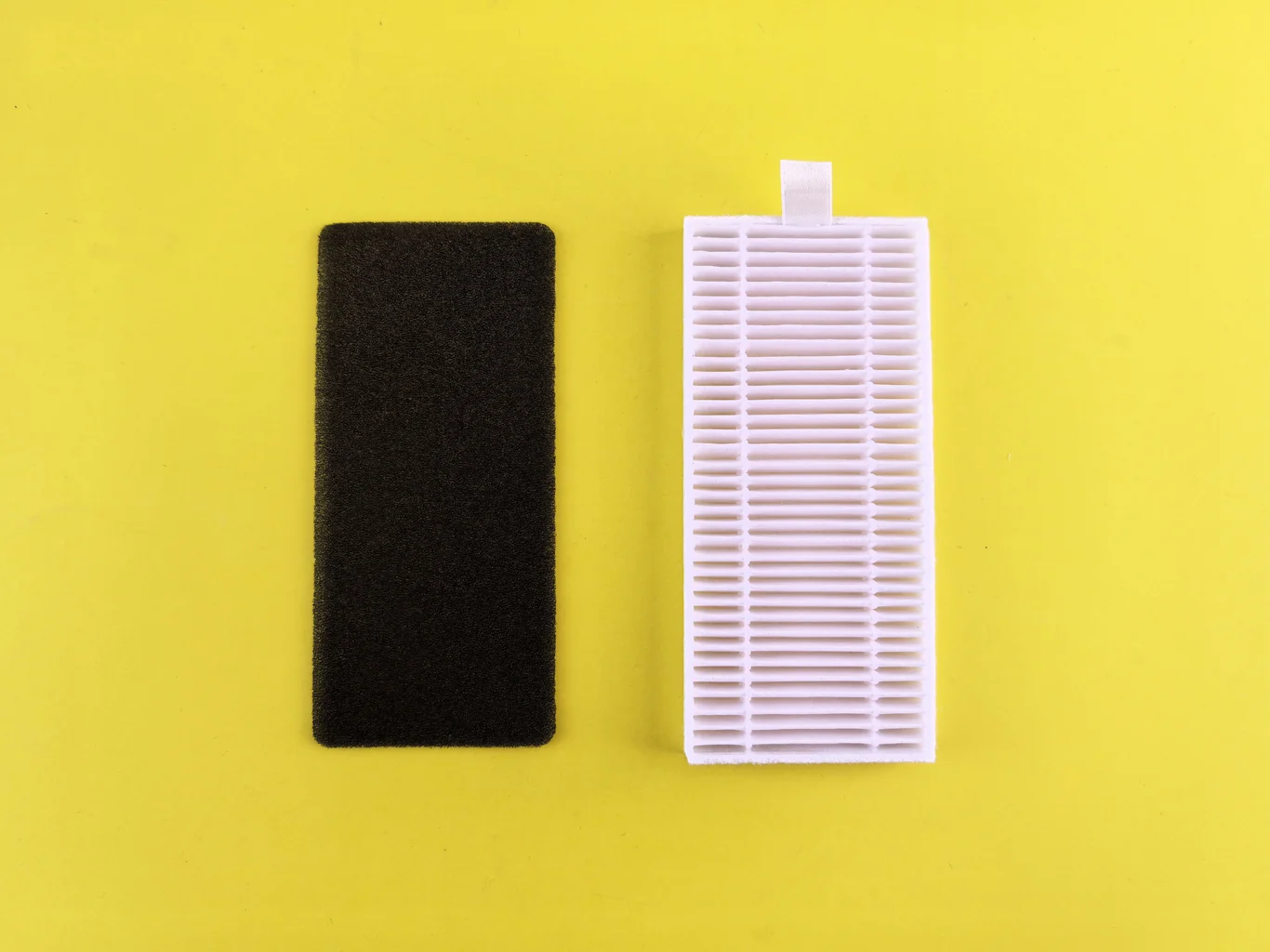
HEPA stands for high-efficiency particulate air. According to the EPA, a HEPA filter can theoretically remove at least 99.97% of dust, pollen, mold, bacteria, and other airborne particles. That figure holds at 0.3 microns, a size far finer than a human hair.
That size is the hardest case, not the smallest one. The 0.3-micron (a tiny size) figure marks the most penetrating particle size, or MPPS, which is the size a filter catches least well. EPA notes that particles larger and smaller than that are captured with even greater efficiency.
For COVID, EPA says to look for one of three things:
- A HEPA label: the unit is designated as a HEPA air cleaner.
- A smoke CADR rating: CADR (clean air delivery rate, the amount of filtered air a unit delivers each minute) is shown for smoke.
- A maker statement: the manufacturer says the unit removes most particles smaller than 1 micron.
EPA says the unit should handle particles in the 0.1 to 1 micron range, which is the range that matters for virus removal. Any of the three markers fits that need, but a plain HEPA label is the easiest one to check on a product page. Our guide on how an air purifier works explains the rest.
Sizing a Purifier: CADR and Air Changes per Hour
A strong filter does little in a room that is too big for the unit. CADR shows how fast a unit cleans air. EPA says that the higher the CADR, the more particles the air cleaner will remove, and the larger the area it can serve.
CDC gives a target to work toward: 5 or more air changes per hour (ACH, how many times the room’s full volume of air is cleaned each hour). Fresh air, central ventilation, or a portable HEPA cleaner can all contribute to that number.
EPA’s sizing guide gives two reference points for a room with 8-foot ceilings: a CADR of about 65 for 100 square feet and about 390 for 600 square feet. Taller ceilings need a unit rated for a larger room. By our own math, a unit at EPA’s ratio cycles an 8-foot room about five times an hour, which lines up with CDC’s target.
The table below applies EPA’s ratio to common room sizes, with cfm, cubic feet per minute, as the unit:
| Room size (sq ft) | Minimum CADR (cfm) |
| 100 | 65 |
| 200 | 130 |
| 400 | 260 |
| 600 | 390 |
FDA Approved Air Purifiers for COVID-19: What the Label Means
A home purifier sold to clean dust and pollen usually falls outside FDA’s reach. In a December 2020 webinar, FDA said its guidance covers air purifiers intended for medical purposes. Non-medical air purifiers, it said, are not within its purview.
FDA gave examples of medical claims: stating a medical purpose, reducing or preventing infection, or easing allergies and asthma. It said it reviews a device’s claims and intended setting to decide which side a product falls on. Our medical grade air purifier guide explains what that label really means.
FDA also issued a temporary policy for air purifiers during the COVID-19 public health emergency. It said it did not intend to object to limited changes in claims about SARS-CoV-2, for devices that were cleared, approved, or neither. The policy was written to last only as long as the emergency, so it is an enforcement policy, not a seal of proven protection.
Our advice is to treat FDA approved on a regular purifier’s box as a prompt to check, not as proof. Ask which model the FDA decision covers and which claim it supports. A decision about one medical-use unit says nothing about the rest of a brand’s line.
Two more claims deserve doubt. Ozone generators intentionally make ozone, a lung irritant. EPA says no federal agency has approved these devices for occupied spaces, and ozone does not effectively remove viruses at levels that meet health standards.
Bipolar ionization, a method that charges particles so they clump, has limited research outside labs, according to EPA. It can create ozone and other by-products unless it is designed and kept up to prevent that. If you use one, EPA suggests a unit certified to UL 2998 (a standard for zero ozone emissions).
Does Air Purifier Help With COVID if Someone at Home Is Sick?

A purifier can lower the number of virus-carrying particles that linger in a shared room, which matters most when someone at home is sick. EPA still calls it a supplement: air cleaning is not a substitute for ventilation or source control.
The steps below follow CDC and EPA advice, in a sensible order:
- Bring in fresh air: open doors and windows, use exhaust fans, or move activities outdoors when you can.
- Run a sized purifier: CDC advises a portable HEPA cleaner, matched to the room.
- Upgrade the furnace filter: EPA says to use the highest-efficiency filter your system supports, and CDC says to change pleated filters every three months or as the maker directs.
- Skip ozone add-ons: ozone irritates the lungs and does not effectively remove viruses at levels that meet health standards.
No single step is a guarantee. Together they are meant to lower the amount of virus in shared air, which is the most an air purifier can honestly promise. If allergies are also a concern, read our guide on whether an air purifier helps with allergies.
How We Research
We check every claim against primary sources. Federal agencies like the EPA and CDC come first. Certification bodies like NSF and AHAM come next. We verify each standard number against the issuing body. We review this guide on a set schedule.
Why Trust This Guide
Puritisimo covers only water and air quality. Our guidance is editorial and independent. We cite every health figure so you can check it. We never present a promotional claim as fact.
Where an Air Purifier Fits in Your COVID Plan
A True HEPA purifier helps when you size it for your room and pair it with other steps. Lab data shows that HEPA filtration can remove infectious virus from air, and CDC includes portable HEPA cleaners among its recommended steps for cleaner indoor air. EPA is clear that filtration alone is not enough. Open a window, size the unit by its CADR, upgrade your furnace filter, and question FDA approved or virus-killing claims. That is the plain answer to how much an air purifier helps with COVID: it helps as one layer, not as a shield.
Frequently Asked Questions
Does air purifier help with covid recovery?
An air purifier helps with COVID by cleaning a room’s air, not by treating the person who is sick. Neither EPA nor CDC presents it as a treatment. It can lower the virus-carrying particles that other people in the home breathe.
Are air purifiers good when sick?
Air purifiers are a reasonable supporting step, not a fix. They clean the air in one room, which can lower what others breathe. Fresh air, a well-sized unit, and a good furnace filter work together, and none of them replaces the others.
How long does COVID remain in the air in a room?
No single number applies, because it depends on airflow, room size, and how often the air is swapped. A room with more air changes per hour clears faster than a closed one. CDC uses 5 or more air changes per hour as a rough target for reducing exposure, not as a guarantee of safe re-entry.
What kills COVID-19 in the house?
Filters trap virus-carrying particles rather than kill them, and fresh air dilutes what is left in the room. EPA says ozone generators do not effectively remove viruses at levels that meet health standards, so they are not a fix.
Do air purifiers help with viruses?
Purifiers with a True HEPA filter trap particles in the size range that airborne viruses travel in, so they can lower exposure. The strongest virus data here is for SARS-CoV-2 in a lab chamber. Results in homes depend on room size, airflow, and how long the unit runs.
References
- US Environmental Protection Agency. Air Cleaners, HVAC Filters, and Coronavirus (COVID-19). Accessed 2026.
- Ueki H, et al. Effectiveness of HEPA filters at removing infectious SARS-CoV-2 from the air. mSphere. 2022.
- US Environmental Protection Agency. What is a HEPA Filter? Accessed 2026.
- US Environmental Protection Agency. Guide to Air Cleaners in the Home. Accessed 2026.
- Centers for Disease Control and Prevention. Cleaner air for respiratory virus prevention. Accessed 2026.
- US Food and Drug Administration. Enforcement Policy for Sterilizers, Disinfectant Devices, and Air Purifiers During the COVID-19 Public Health Emergency: webinar transcript. 2020.
Medical Disclaimer: This content is for informational purposes only. It is not a substitute for professional medical advice, diagnosis, or treatment. If you have concerns about your water quality or air quality and their effects on your health, consult a qualified healthcare professional.

