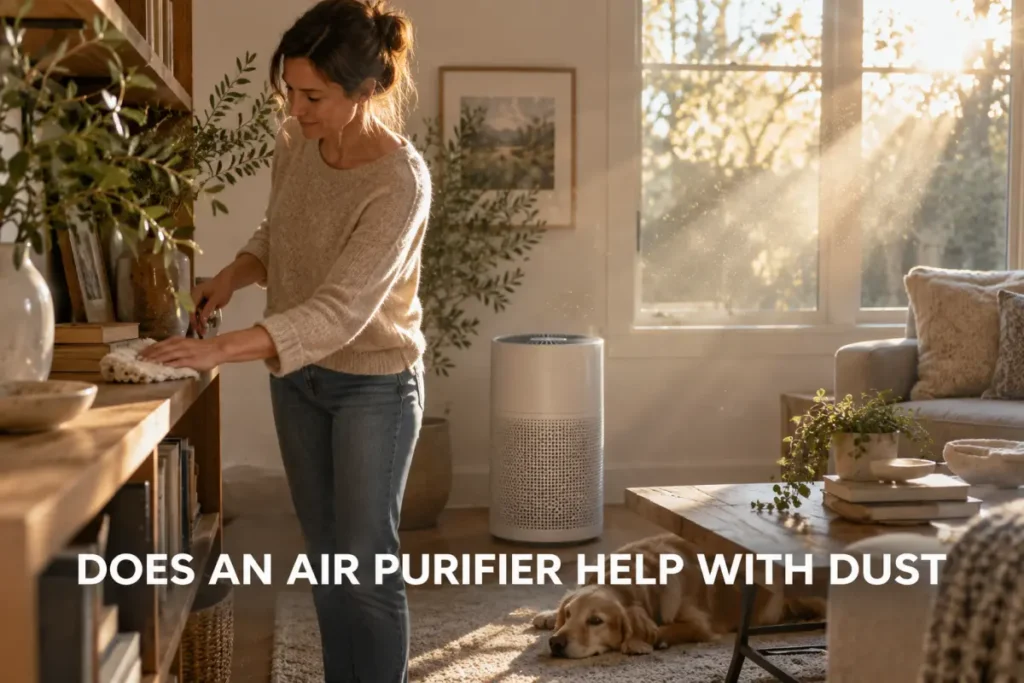
Yes, an air purifier helps with dust. A true HEPA (high-efficiency particulate air) unit pulls room air through a dense filter mesh, capturing airborne dust before it settles anywhere in the room. That filtration works continuously while the unit runs, so the dust floating in your air right now keeps dropping. It cannot remove dust that has already settled on shelves, blinds, or the floor.

By the end, you will know the filter grade to look for, the sizing rule that keeps a purifier from being overwhelmed, and where its dust control stops. True HEPA changes the outcome more than any other spec, and sizing it wrong wastes most of that capability.
Key Takeaways
- True HEPA filters capture 99.97% of particles down to 0.3 microns (about 1/100 a hair’s width), the EPA-recognized standard.
- Only filters graded True HEPA or H13 hit that bar; HEPA-type filters catch far less.
- AHAM’s 2/3 rule: purifier smoke CADR (Clean Air Delivery Rate) should be at least two-thirds of room square footage.
- An air purifier reduces airborne dust between cleanings; it will not remove dust already settled on surfaces.
Does an Air Purifier Help With Dust? The HEPA Mechanism
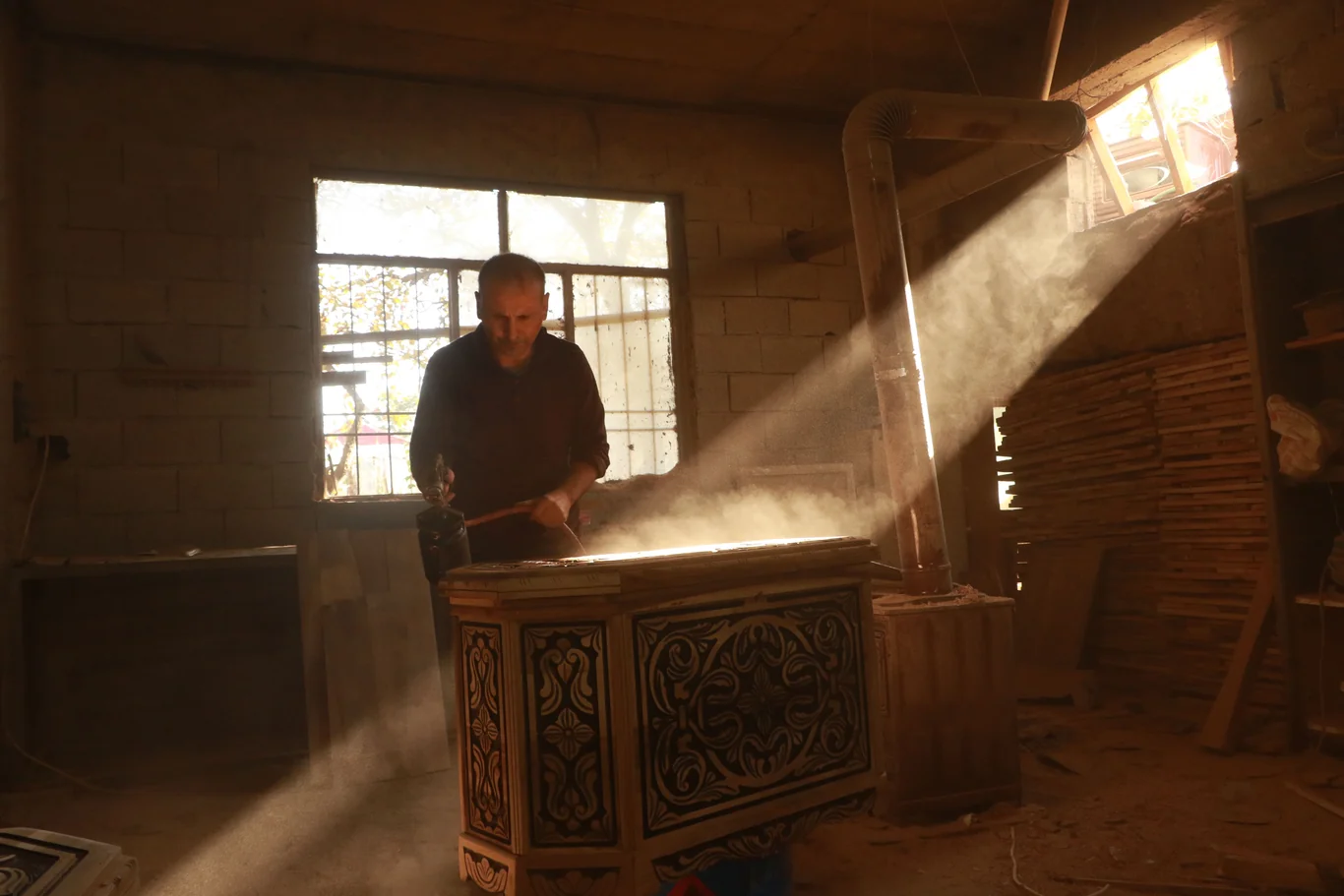
A HEPA filter forces room air through a mat of tightly woven fibers. The fibers physically trap dust particles as air passes through, removing them from circulation. This is different from masking their smell or letting them settle elsewhere in the room.
Independent testing backs this up. A certified True HEPA filter captures at least 99.97% of particles down to 0.3 microns (a micron is about 1/100th the width of a human hair), the EPA’s official benchmark. Dust falls squarely in that range, along with pollen, pet dander, and mold spores.
Here’s the detail most guides skip: 0.3 microns isn’t the smallest particle a filter has to handle, it’s the hardest one. Very large particles get trapped by simple impact, and very small ones drift and stick to fibers on their own. Mid-size particles like household dust slip through more easily, which is why the 0.3-micron mark became the industry’s toughest test case rather than an arbitrary cutoff.
A true HEPA filter pulls air through a fine mesh rated to capture at least 99.97% of particles down to 0.3 microns, the EPA’s benchmark for the term.
True HEPA vs. HEPA-Type Filters: Why the Difference Matters for Dust
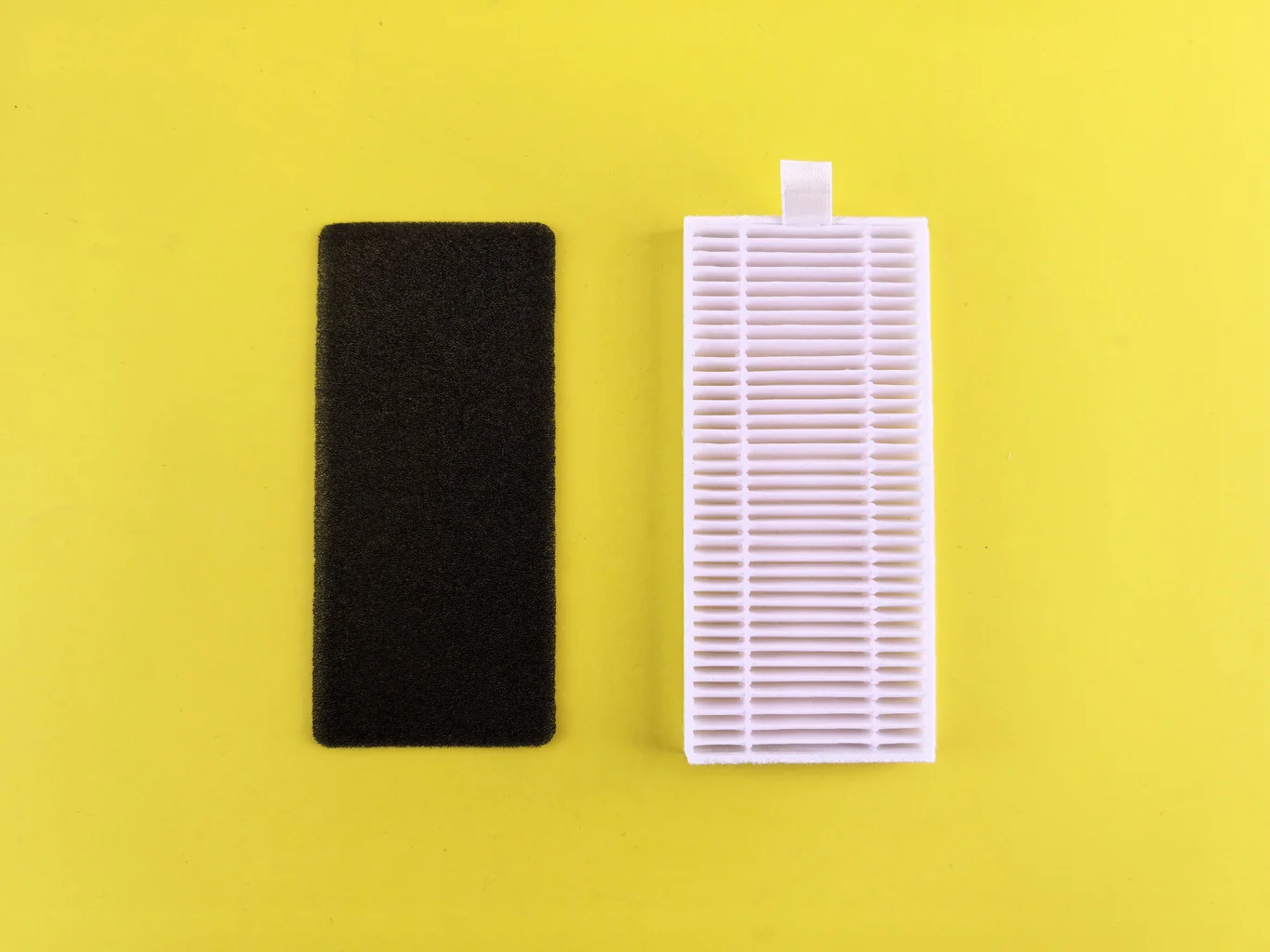
Not every filter labeled ‘HEPA’ meets the same bar. A true HEPA filter, also written H13, has to remove at least 99.97% of particles down to 0.3 microns in an independent lab test. That figure, not the word ‘HEPA’ alone, is the standard the EPA sets for the term.
‘HEPA-type’ and ‘HEPA-like’ are unregulated labels with no legal definition behind them. They routinely capture far less dust than a certified true HEPA filter does. The American Lung Association lists true HEPA air purifiers among the most effective air cleaners for a home. That endorsement only applies to units carrying the actual rating, not the softer HEPA-type wording.
The gap between the two shows up fastest side by side:
| Filter Type | Efficiency Standard | What It Actually Catches |
| True HEPA (H13) | 99.97% at 0.3 microns, independently tested | Fine dust, pet dander, most pollen and mold spores |
| HEPA-Type | No fixed testing standard | A visibly smaller dust pile, but misses the finest particles |
| HEPA-Like | No fixed testing standard, filter often not replaceable | Little more than a standard furnace filter would catch |
How an Air Purifier Helps With Dust in Every Room of Your Home
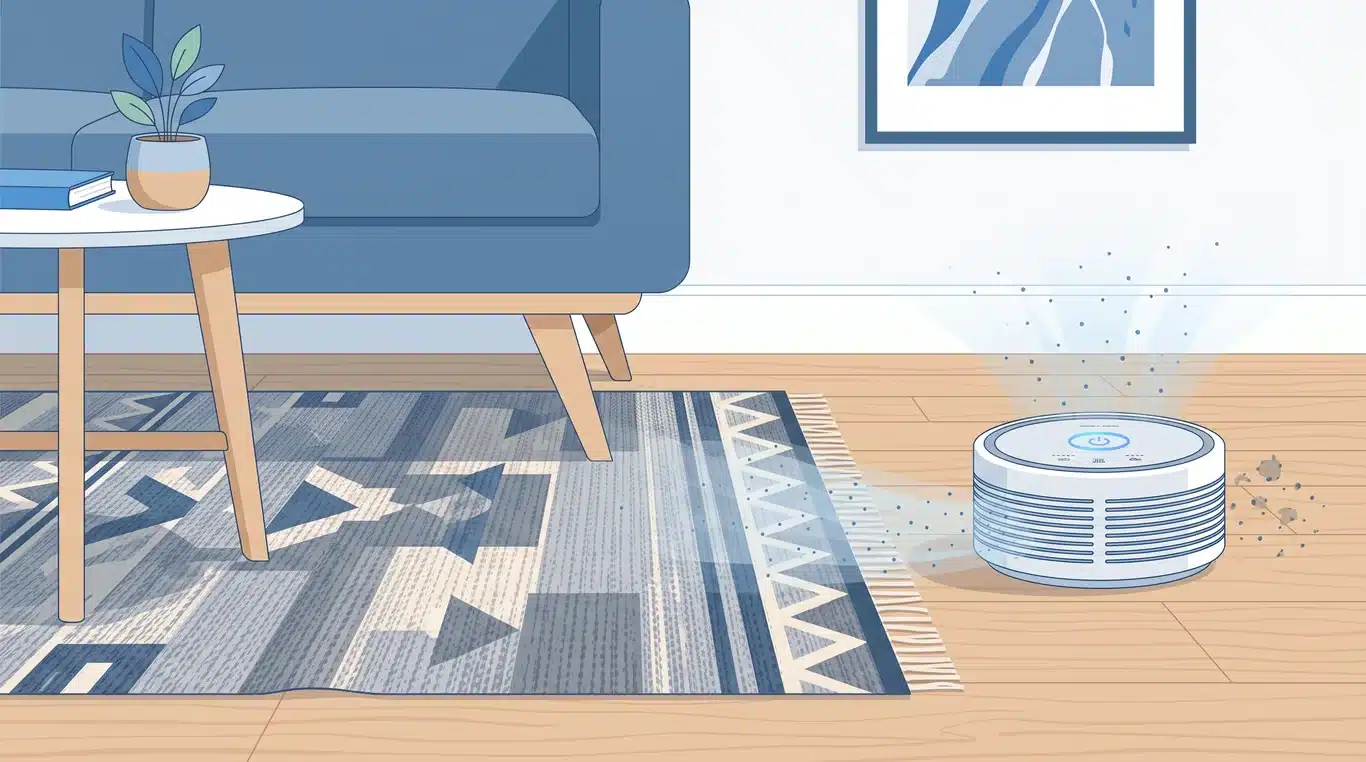
How an air purifier helps with dust in your home comes down largely to fit. A unit sized for a single bedroom barely dents the dust in an open living and kitchen area with the same foot traffic.
The sizing rule most manufacturers point to is the two-thirds rule, set by AHAM (the Association of Home Appliance Manufacturers). A purifier’s smoke Clean Air Delivery Rate (CADR), a measure of how much filtered air it puts out each minute, should equal at least two-thirds of the room’s square footage. A 300-square-foot living room, for example, needs a smoke CADR of roughly 200 or higher.
Coverage looks different depending on how you use the purifier:
- Compact air purifier: covers a single bedroom or home office, roughly 150 to 300 square feet, the simplest way to start if dust bothers you most while you sleep.
- Whole-home coverage: most houses need more than one unit. A central HVAC filter upgrade plus a portable purifier in the rooms used most usually works better than one purifier for the entire home.
- Open-plan spaces: measure the full connected square footage, not just the room the purifier sits in, since air, and dust, moves freely between them.
Whichever setup you land on, a purifier only clears the air within its reach. Placement ends up mattering as much as the coverage number on the box.
For homes relying on HVAC to extend coverage beyond a single room, my furnace filter roundup covers the top MERV-rated options for whole-house dust reduction.
Air Purifiers, Dust, and Allergy Relief: What the Connection Really Is
Airborne dust rarely travels alone. It carries pet dander, pollen fragments, and dust-mite debris, the particles most often linked to allergy and asthma symptoms indoors.
Filtration actually gets harder as particles shrink toward the 0.3-micron mark. That size is too small for the filter to simply block and too large to drift into the fibers on its own. It is, counterintuitively, the hardest particle size for any filter to catch.
The American Lung Association lists true HEPA air purifiers among the tools worth using to manage indoor allergens. That recommendation reduces triggers; it does not replace an allergy diagnosis or treatment plan. The mechanics work the same way if dust mites specifically are the trigger, though placement near bedding matters more in that case.
Getting the Most Dust Reduction From Your Air Purifier
An air purifier only ever catches dust that is airborne the moment it passes through the filter. It has no effect on dust already sitting on shelves, blinds, or baseboards. Getting real reduction out of one is mostly a matter of habits, not settings.
Four habits make the biggest difference:
- Run it continuously rather than switching it on and off. Filtration only works while air is moving through the unit, so a low setting all day removes more total dust than short bursts on high.
- Replace or wash the filter on the manufacturer’s schedule, typically every 6 to 12 months for a true HEPA filter. A clogged filter restricts airflow and pulls less dust through it, even with the fan still running.
- Keep the unit a few feet from walls, curtains, and furniture. Blocked intake or exhaust vents cut the volume of air the purifier can actually process.
- Keep vacuuming and dusting surfaces on a normal schedule. A purifier and a vacuum solve different halves of the same problem: one clears the air, the other clears what has already settled.
One more nuance worth knowing: a purifier’s coverage rating, its 350-square-foot rating, for example, is measured at maximum fan speed. Run the same unit on its quiet, sleep-friendly setting, and the effective coverage area drops well below that number. That is one more reason continuous operation on a moderate speed usually beats occasional blasts on high.
How We Research
We check every claim against primary sources. Federal agencies like the EPA and CDC come first. Certification bodies like NSF and AHAM come next. We verify each standard number against the issuing body. We review this guide on a set schedule.
Why Trust This Guide
Puritisimo covers only water and air quality. Our guidance is editorial and independent. We cite every health figure so you can check it. We never present a promotional claim as fact.
Choosing the Right Purifier for Your Dust Problem
The short version is straightforward. A true HEPA air purifier meaningfully reduces the dust floating in your air. It will never replace a vacuum or a dust cloth for dust that has already landed on your furniture. Getting real results comes down to three choices. Size the unit using AHAM’s two-thirds CADR rule. Pick a filter that actually carries the true HEPA rating, not the vaguer ‘HEPA-type’ label. Run it continuously rather than only when a room looks dusty.
None of that requires guesswork once you know what to check on the box. A room that used to need dusting every few days can often stretch to once a week. An air purifier is not a humidity fix, since it filters particles rather than adding or removing moisture from the room. Choose a true HEPA purifier if dust is the main concern.
The 2/3 rule, set by AHAM (the Association of Home Appliance Manufacturers), says a purifier’s smoke Clean Air Delivery Rate should equal at least two-thirds of the room’s square footage.
Frequently Asked Questions
Does an air purifier help with dust?
An air purifier does help with dust, specifically the portion floating in the air rather than what has already settled on surfaces. A true HEPA filter pulls air through a fine mesh rated to capture at least 99.97% of particles down to 0.3 microns, the EPA’s benchmark for the term. Regular vacuuming still handles the rest.
Do air purifiers actually remove dust?
Yes, but only the dust currently in the air. A true HEPA filter captures at least 99.97% of airborne particles down to 0.3 microns on each pass, per the EPA standard, then traps them until the filter is replaced. Dust already resting on shelves or floors needs a vacuum or cloth.
What are the disadvantages of an air purifier?
A few tradeoffs are worth weighing. Filters need replacing every 6 to 12 months, an ongoing cost most buyers do not budget for upfront. Running one at high fan speed adds noticeable noise, and none of them touch odors or gases like VOCs (volatile organic compounds), the gases released by paint and cleaning products. They also do nothing for dust already settled on furniture.
In a vehicle, dust and cabin odors are handled by a separate cabin air filter rather than a room purifier; my Spearhead BE-157 activated carbon cabin filter review covers the specs and replacement interval for everyday drivers.
Is it okay to sleep with an air purifier on all night?
Yes, running an air purifier on low or a dedicated sleep mode overnight is safe and often more effective than shutting it off. Most units on a quiet setting run around 20 to 35 decibels, close to a whisper. Leaving it on keeps clean air moving through the room at a steady rate instead of only in short bursts.
What is the 2/3 rule for air purifiers?
The 2/3 rule, set by AHAM (the Association of Home Appliance Manufacturers), says a purifier’s smoke Clean Air Delivery Rate should equal at least two-thirds of the room’s square footage. A 300-square-foot room, for example, needs a smoke CADR of roughly 200 or higher.
References
- US EPA. What Is a HEPA Filter? US Environmental Protection Agency. 2024.
- AHAM Verifide. AHAM’s Air Filtration Standards, the 2/3 Rule. Association of Home Appliance Manufacturers. 2024.
- American Lung Association. Air Cleaning Devices. American Lung Association. 2024.
Medical Disclaimer: This content is for informational purposes only. It is not a substitute for professional medical advice, diagnosis, or treatment. If you have concerns about your water quality or air quality and their effects on your health, consult a qualified healthcare professional.