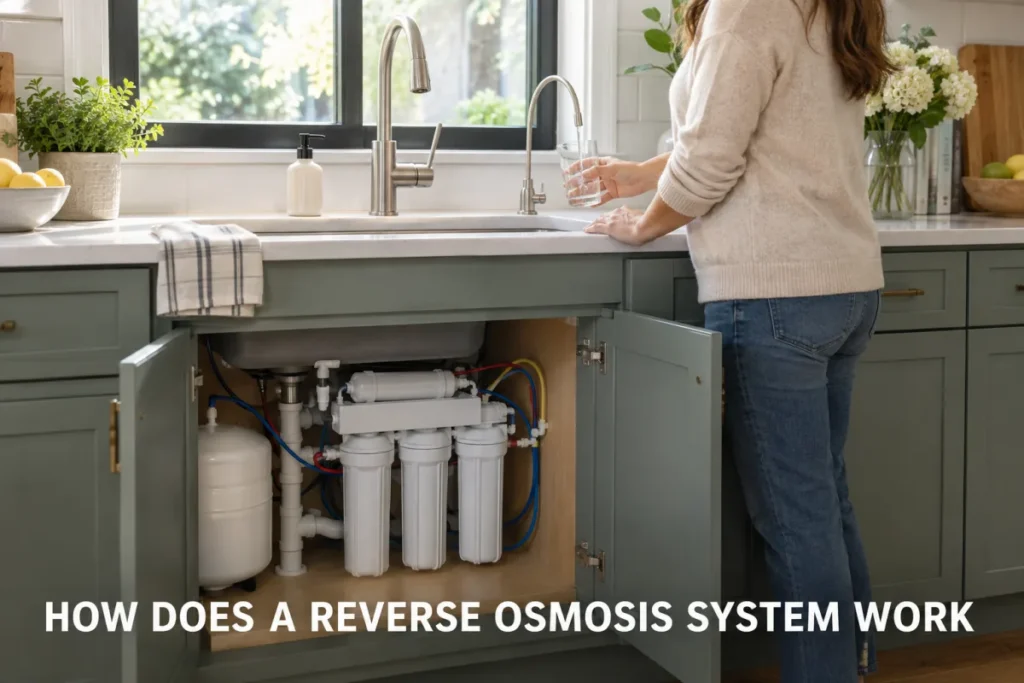
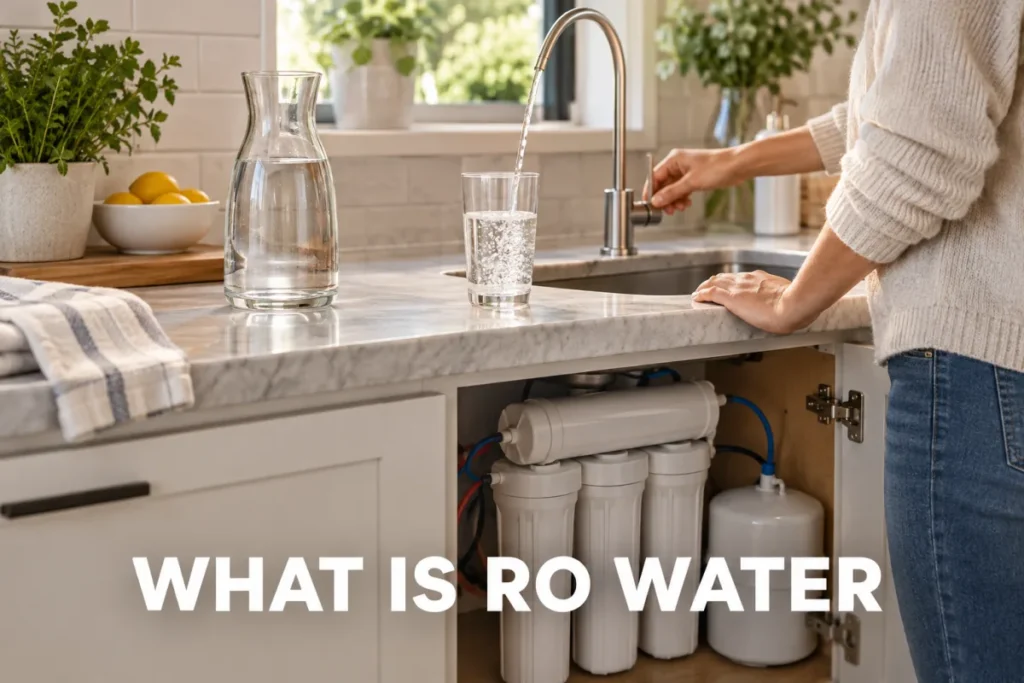
RO water is water pushed through a semipermeable membrane (a filter so fine it blocks nearly everything except water molecules) under pressure. This process is called reverse osmosis. The membrane strips out dissolved solids, salts, and many contaminants. This happens as water passes through it. That is why RO water almost always tests far lower for total dissolved solids. Tap water typically measures much higher. Homes and offices use this process for cleaner drinking water.

By the end of this guide, you’ll know how RO systems make water. You’ll also see how RO water compares to a standard filter pitcher. You’ll learn whether it’s safe to drink daily. You’ll also learn how to add minerals back if you want them.
Key Takeaways
- RO (reverse osmosis) water is pushed through a fine membrane that blocks nearly everything except water molecules.
- Certified RO systems reduce total dissolved solids by at least 75 percent, often 90 to 96 percent, per NSF/ANSI 58.
- RO water is safe for most healthy adults to drink daily, though it also strips out helpful minerals.
- A remineralization filter (adds minerals back) or mineral drops can restore calcium and magnesium.
What Is RO Water?
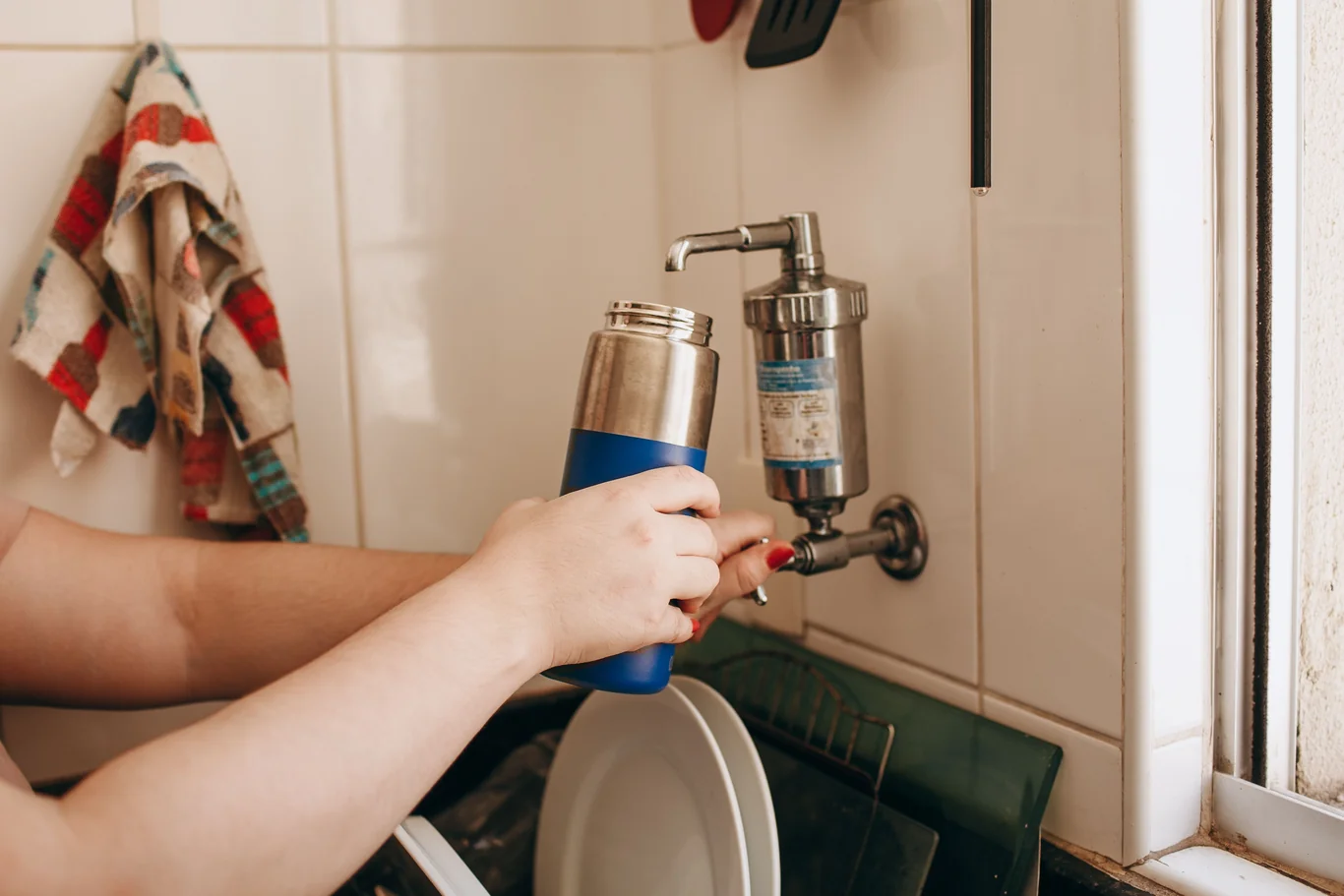
RO water is water that has passed through a semipermeable membrane under pressure. The membrane blocks dissolved minerals, salts, and most contaminants while letting water molecules through. That leaves water with a much lower total dissolved solids count than what entered the system.
Standard RO systems are what most under-sink and countertop units use to treat drinking water. The EPA says a point-of-use RO system relies on a semipermeable-membrane mechanism to reduce dissolved solids. It also cuts other contaminants in tap water. Some labs and aquariums use a stricter version called RO/DI (reverse osmosis plus deionization). It adds a deionization stage after the membrane, which strips out nearly all remaining minerals. That is more than plain RO water needs for drinking.
Most residential RO systems mount under the kitchen sink and pair with a small storage tank. This follows the same basic steps covered in our guide to installing a water filter. They deliver treated water on demand at the faucet.
How RO Water Is Made
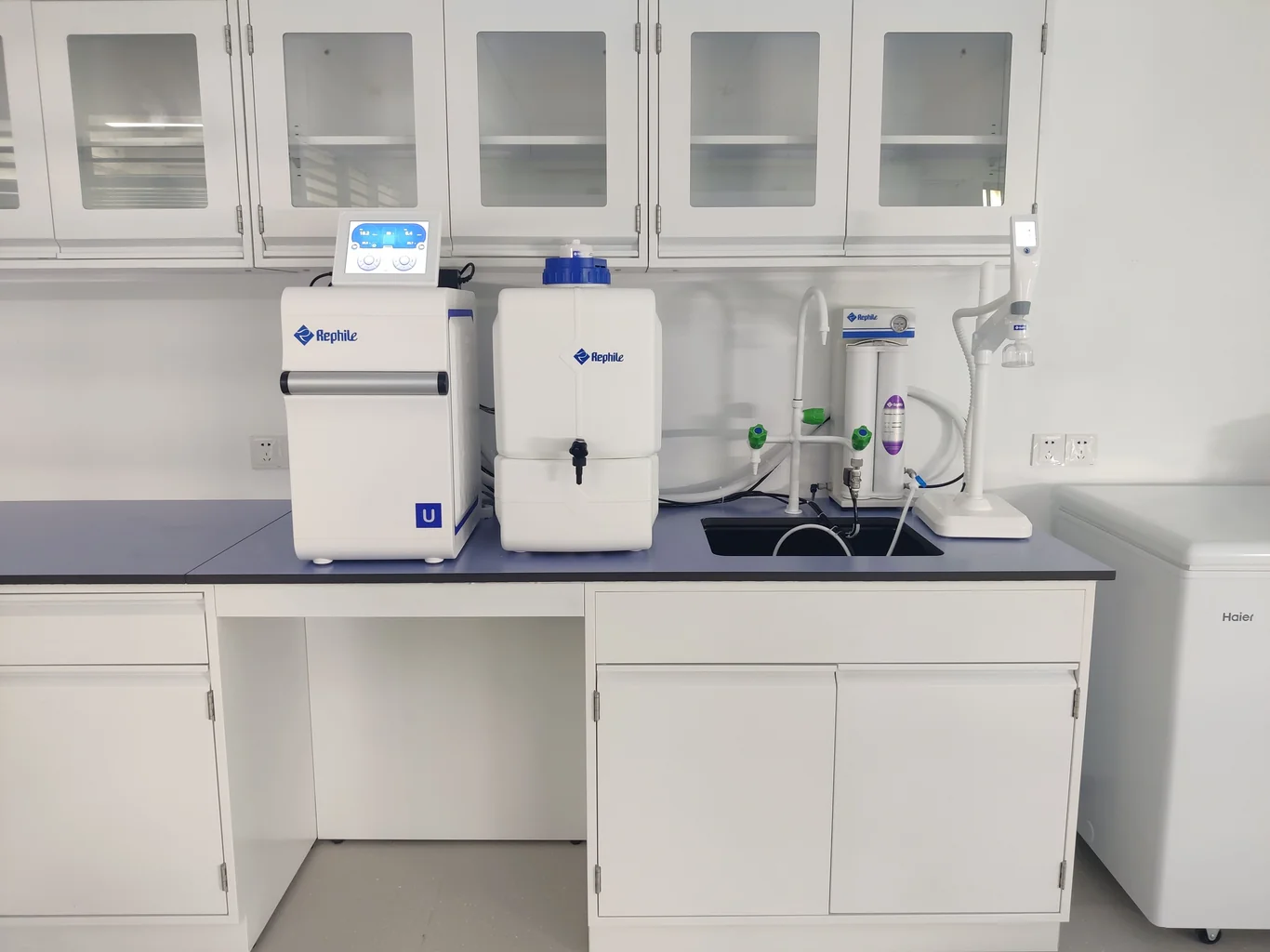
Making reverse osmosis (RO) water is a straightforward mechanical process, not a chemical treatment. A semipermeable membrane sits at the center of the system. Pre-filters and post-filters do supporting work before and after it.
Making RO water follows four consistent steps:
- Pre-filtration: sediment and carbon filters strip large particles and chlorine before the water reaches the membrane. This protects it from early damage.
- Pressurization: a pump pushes the water against the membrane at high pressure. This overcomes natural osmotic pressure.
- Membrane separation: the membrane blocks dissolved solids, salts, and most contaminants. Only water molecules pass through.
- Storage and final filter: purified water collects in a storage tank. It often passes through one more carbon filter just before the tap for taste.
The system needs a pump. That is because of osmotic pressure (the natural pull of water toward a solution with more dissolved particles). Left alone, plain water would move the wrong way, from clean to contaminated. Mechanical pressure reverses that natural flow so the membrane can do its job.
What Is RO Water Compared to Filtered Water?
Standard filtered water relies on activated carbon to trap chlorine, sediment, and taste compounds. That is the same core technology found in countertop pitchers and the portable filters people rely on when filtering water while camping. It does little to reduce dissolved minerals or salts. RO water is different because pressure forces it through a membrane fine enough to block dissolved solids and heavy metals. Carbon media simply lets those pass through.
That difference shows up in the numbers. Certified RO systems usually cut total dissolved solids (TDS) by 90 to 96 percent. This is according to the Water Quality Association. Meanwhile, a carbon pitcher barely moves the reading. RO output also tends to sit slightly acidic. It usually falls in the 5 to 7 pH (a scale for how acidic or alkaline water is) range. That happens because stripping out minerals removes some of the buffering. This normally keeps tap water closer to neutral.
Here is how the two methods compare on TDS reduction, pH, and contaminants removed:
That is why certified systems reach 90 to 96 percent TDS reduction, according to the Water Quality Association.
The iSpring RCC7 is a certified 5-stage under-sink system that consistently reaches the high end of that band; my iSpring RCC7 system review covers the verified removal rates and the maintenance schedule behind sustained performance.
| Feature | RO Water | Filtered Water |
| TDS reduction | 90-96% typical | Minimal, low single digits |
| pH effect | Slightly acidic, 5-7 | Close to source water |
| Contaminants removed | Dissolved solids, metals, nitrates | Chlorine, taste, sediment |
| Typical setup | Under-sink, multi-stage | Pitcher or faucet mount |
Is RO Water Good for Your Health?
For most healthy adults, drinking RO water every day is safe. The CDC includes reverse osmosis among the home water treatment options it accepts. It applies once a household understands what the system does and does not remove.
The trade-off is that RO strips out helpful minerals like calcium and magnesium along with contaminants. The membrane cannot tell a helpful mineral from a harmful one. For someone eating a varied diet, that loss is minor. Major hospital systems that publish consumer guidance on drinking water generally describe RO water as safe for regular use. They do not flag it as a risk for most adults.
Three groups should think it through before relying on RO water full-time:
- Infants on RO-mixed formula: formula already supplies most needed minerals. Exclusive long-term reliance on demineralized water is still worth discussing with a pediatrician.
- Low-sodium or mineral-restricted diets: anyone counting on tap water for part of their daily mineral intake. That intake will not come from RO water.
- Neglected systems: a membrane past its service life can foul and let more through than a fresh one. Filter schedules matter as much as the technology itself.
Sharing RO water with a dog is fine in moderation too. Pets get the bulk of their minerals from food, not water. The same low-mineral profile that applies to humans is not a concern for everyday use. If you are ready to compare actual systems, our guide to the best reverse osmosis systems breaks down the full lineup.
How to Remineralize RO Water
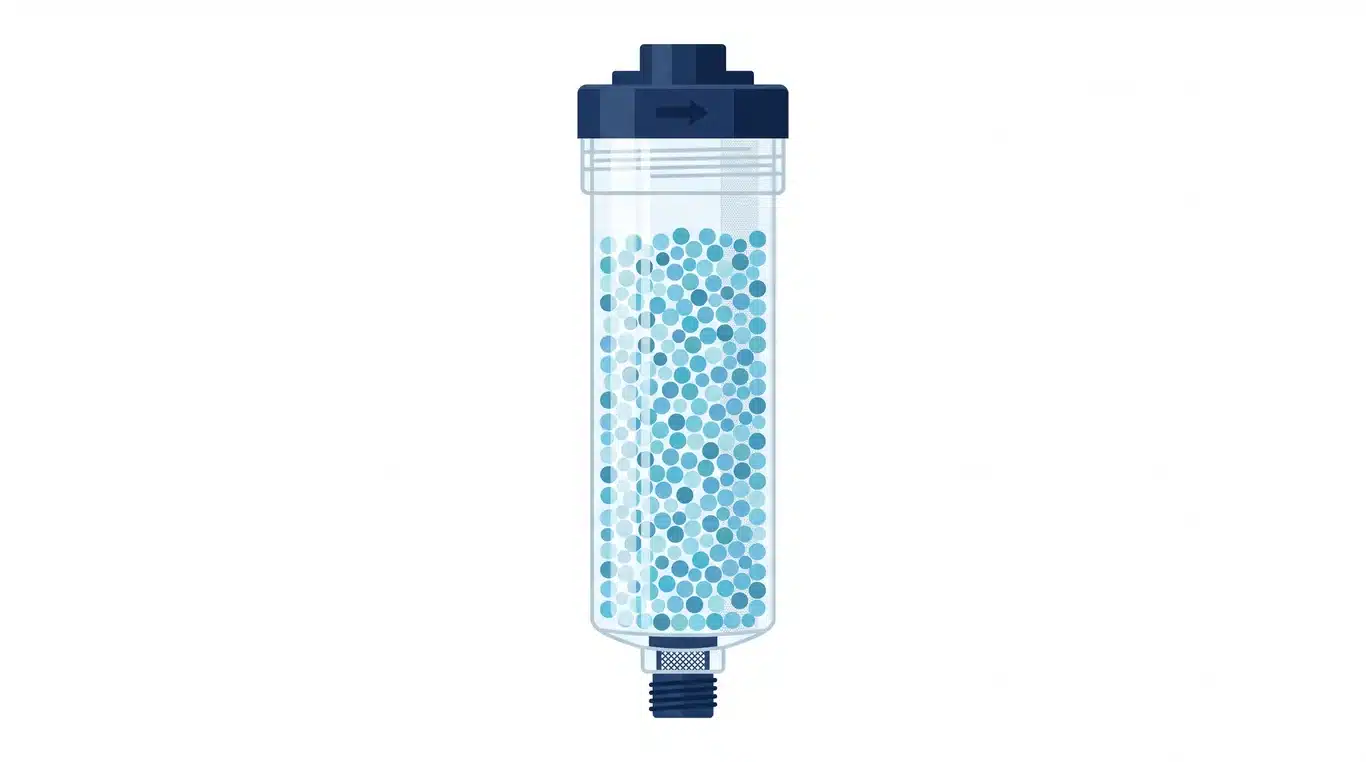
Because RO strips out minerals along with contaminants, some homes choose to add them back. The World Health Organization‘s 2022 drinking water guidelines note that very low-mineral water is not inherently harmful for occasional use. Remineralization is still a reasonable step for anyone drinking RO water as their main source long term.
The iSpring RCC7AK includes a dedicated alkaline stage that handles remineralization without a separate add-on cartridge; my iSpring RCC7AK remineralization review covers how that sixth stage restores pH and what the full certified system removes.
The simplest fix is an in-line remineralization filter. This is a small cartridge added after the RO membrane that redissolves calcium and magnesium into the water as it passes through. Mineral drops work the same way in liquid form, measured out by the glass or pitcher. A third option is simpler still. It blends a small amount of untreated tap water back into RO output. That restores some minerals without new hardware. This works as long as the tap source is not the reason someone installed RO in the first place.
Is RO Water Banned in Europe?
No, RO water and RO systems are not banned in Europe. Homes and businesses across the EU use reverse osmosis for drinking water. They also use it for industrial processes and desalination without restriction.
The myth likely traces back to a real but narrower rule. This falls under the EU Drinking Water Directive (EU) 2020/2184. Water that has been desalinated or treated by reverse osmosis must be remineralized before it enters a public water supply. That requirement targets large-scale utilities feeding water to entire cities. It does not apply to someone running an under-sink RO unit at home or a business using RO for its own processes.
How We Research
We check every claim against primary sources. Federal agencies like the EPA and CDC come first. Certification bodies like NSF and AHAM come next. We verify each standard number against the issuing body. We review this guide on a set schedule.
Why Trust This Guide
Puritisimo covers only water and air quality. Our guidance is editorial and independent. We cite every health figure so you can check it. We never present a promotional claim as fact.
Deciding If RO Water Is Right for Your Home
Reverse osmosis systems trade a small mineral loss. In exchange, they offer one of the most thorough home filtration methods available. That trade-off is worth it for homes dealing with hard water. It also helps with high TDS, or contaminants a carbon filter cannot touch. RO’s main disadvantage is water sent down the drain. Standard systems waste five gallons per gallon treated, per EPA WaterSense. WaterSense-labeled units cut that waste to 2.3 gallons or less. The RO process also runs slower than a simple pitcher filter.
If your main concern is taste and chlorine, a simpler filter may cover it. If you want measurable reductions in dissolved solids, heavy metals, or nitrates, RO is the stronger tool. It pairs with a remineralization stage to offset the minerals it removes. Before you decide, it is worth checking our breakdown of what does ro remove from water for your specific setup. Public water supplies vary widely. Once you understand what RO water is and how it is made, you are ready to choose the right system. It comes down to matching the process to your water quality.
Frequently Asked Questions
What is RO water?
RO water is water that has passed through a semipermeable membrane under pressure. This strips out most dissolved solids, salts, and contaminants that ordinary tap water carries. The result is water with a much lower mineral count and a cleaner taste in most public water supplies.
Is RO water just filtered water?
No. A carbon filter mainly traps chlorine, taste, and sediment. An RO membrane works differently. Pressure physically forces water through pores that block dissolved salts and metals. That is why certified systems reach 90 to 96 percent TDS reduction, according to the Water Quality Association. This is far beyond a carbon pitcher.
Is distilled water and RO water the same?
Distilled water and RO water are not made the same way. Even so, both end up with very low mineral content. Distillation boils water and condenses the steam, leaving contaminants behind in the boiling chamber. RO forces water through a membrane at room temperature instead. Distillation uses more energy and heat-built equipment. RO relies on a pump and pressure instead.
Is it safe to drink RO water?
Yes, RO water is safe to drink every day for most healthy adults. The CDC includes reverse osmosis among the home water treatment options it accepts. This applies when systems are maintained on schedule. The main trade-off is a lower mineral count, since the membrane removes calcium and magnesium along with contaminants. That is why some homes add a remineralization step.
Is RO water 100% pure?
No single home filtration method, RO included, produces water with zero dissolved solids. Certified RO systems must hit at least a 75 percent TDS reduction under NSF/ANSI 58. Most well-maintained units land between 90 and 96 percent. A small mineral fraction usually remains. That is still a substantial improvement over untreated tap water. It is just not an absolute guarantee of total purity.
References
- EPA. Point-of-Use Reverse Osmosis Systems. WaterSense. 2024.
- Water Quality Association. Reverse Osmosis (RO). 2024.
- CDC. About Home Water Treatment Systems. 2024.
Medical Disclaimer: This content is for informational purposes only. It is not a substitute for professional medical advice, diagnosis, or treatment. If you have concerns about your water quality or air quality and their effects on your health, consult a qualified healthcare professional.