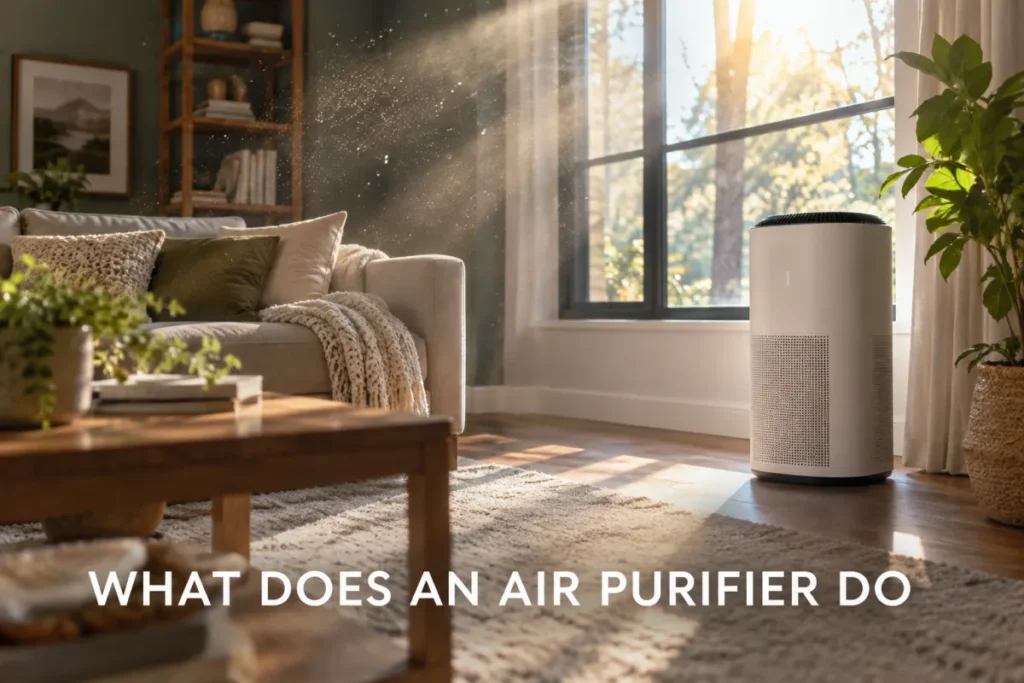
An air purifier is a device that pulls room air through a filter to trap airborne particles. It then pushes the cleaned air back into the room. Its job is capturing dust, pollen, and pet dander, not adding scent, adjusting humidity, or treating drinking water. Most models build around a dense mesh filter, sometimes paired with an activated carbon layer for odors and gases.

By the end, you will know what an air purifier removes from the air and what it leaves behind entirely, including gases, odors, and humidity. That gap shapes its real effect on allergies, wildfire smoke, and pet dander in your home.
Key Takeaways
- True HEPA filters (a fine mesh that traps the tiniest particles) catch at least 99.97% of the hardest-to-catch particles.
- HEPA filtration meaningfully reduces airborne allergens like pollen, dust mites, and pet dander.
- Standard HEPA filters cannot remove gases or odors; that requires a separate activated carbon filter.
- An air purifier removes particles from the air; a humidifier adds moisture, so the two solve different problems.
What Does an Air Purifier Do?
An air purifier is a device that draws room air through a fan and one or more filters. It traps airborne particles such as dust, pollen, mold spores, and pet dander. It pushes the filtered air back into the room on a continuous loop.
True HEPA (High-Efficiency Particulate Air, a filter standard rated to trap very fine particles) media captures at least 99.97% of particles at 0.3 microns. That size is the most penetrating particle size (MPPS), the hardest size for any filter to catch. A U.S. Department of Energy test method verifies that rate. It is not a number manufacturers assign themselves.
An air purifier’s job stops at particles unless it also carries a layer of activated carbon. That material traps gases, odors, and chemical fumes instead of solid particles. The next section breaks down how each filter stage works inside the unit, from the pre-filter to the fan that pushes air back out.
How the HEPA Filter Inside an Air Purifier Works

Inside most units, the process is simple, and knowing how to clean an air purifier filter keeps it running at full strength. A fan pulls room air in, pushes it through one or more filters, and sends the cleaned air back out. The filter doing the heaviest lifting is usually a HEPA filter (high-efficiency particulate air), a dense mat of fibers built to trap tiny particles rather than let them pass through. Per the EPA, true HEPA media is verified to capture at least 99.97% of particles at 0.3 microns, the hardest particle size to catch.
Here’s the order the air actually moves through:
- Pre-filter: a coarse mesh screen catches large debris, hair, and lint before it can clog the finer filter underneath.
- HEPA media: traps the 99.97% figure cited above, concentrated on particles around the most-penetrating particle size (MPPS), the size hardest for the filter to stop.
- Activated carbon (where present): adsorbs odors, smoke smell, and volatile organic compounds (VOCs) that pass straight through HEPA media untouched, per the EPA.
- Fan exhaust: pushes the filtered air back into the room, restarting the cycle.
One detail surprises most people: HEPA filters are rated at their worst-performing particle size, not their best. Particles larger or smaller than 0.3 microns are easier to trap, through impaction or diffusion. That is why a HEPA-rated unit often performs better than the 99.97% figure suggests, on typical household dust and smoke. Independent groups such as AHAM Verifide test and certify a purifier’s Clean Air Delivery Rate (CADR). CADR measures how much filtered air the unit delivers per minute for smoke, dust, and pollen.
Standard HEPA filtration also does nothing for gases, VOCs, or odors on its own, per the EPA.
Does an Air Purifier Help With Allergies and Pet Dander?
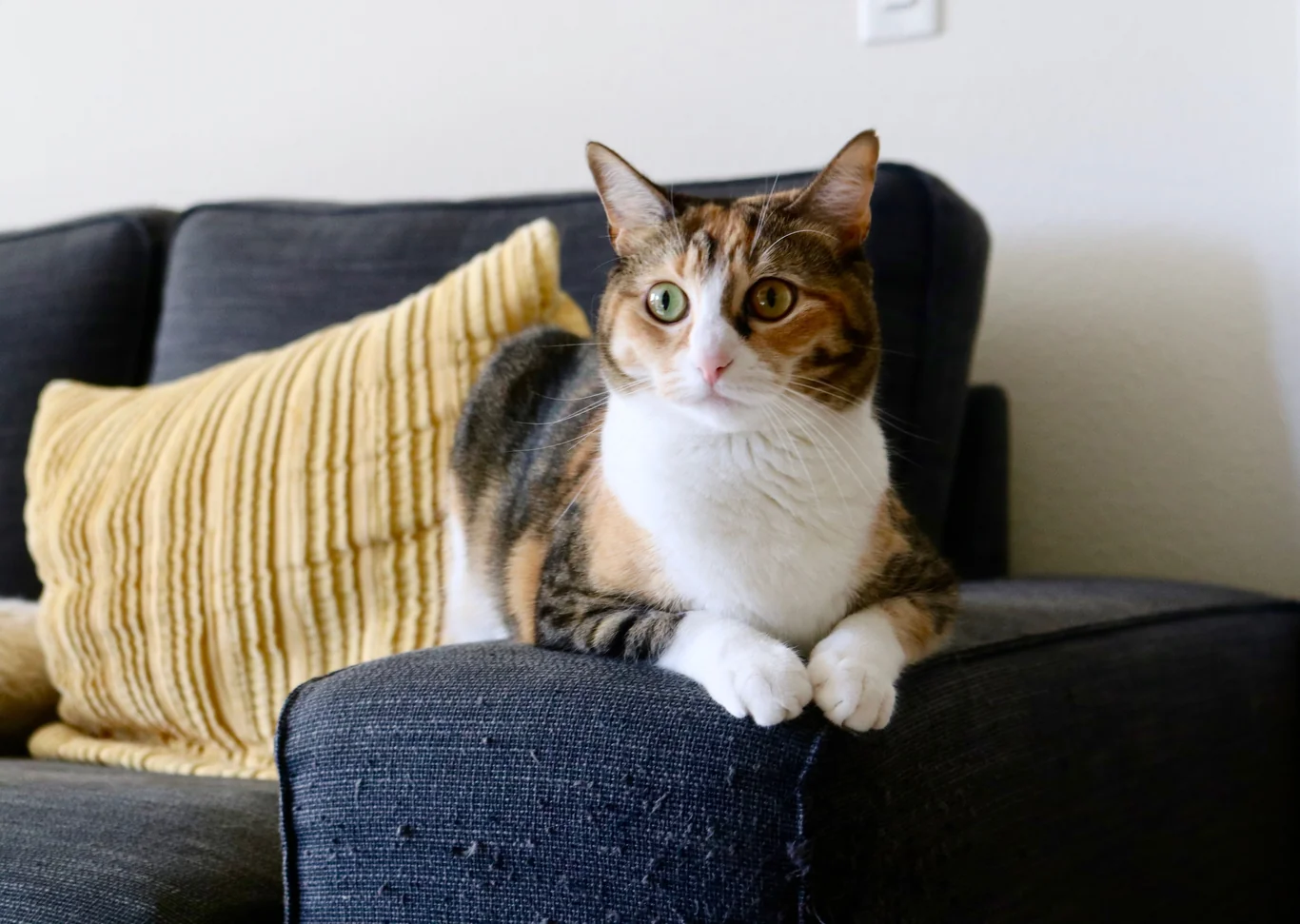
Allergies are common enough that a purifier’s filtering job matters to more households than you might expect. The CDC reports that nearly 1 in 3 U.S. adults had a diagnosed seasonal allergy, eczema, or food allergy in 2024. A HEPA-equipped unit will not cure an allergy. It does reduce the airborne triggers that set off symptoms indoors, including pollen, dust mites, pet dander, and mold spores.
Here’s how a purifier handles each common trigger:
- Pollen: seasonal grains small enough to stay airborne for hours, easily pulled into a HEPA filter’s fiber mat.
- Dust mites: microscopic waste particles from mites in bedding and carpet, a leading trigger of year-round indoor allergy symptoms.
- Pet dander (Fel d 1): the primary cat allergen, detectable in 99.9% of U.S. homes for 20+ weeks after a cat leaves, per PubMed Central.
- Mold spores: fungal particles that thrive in damp bathrooms and basements, captured by HEPA media the same way pollen is.
The research here is encouraging but not a guarantee. Reviews of HEPA-based interventions show a consistent reduction in airborne allergen levels, though results vary by home and by how steadily the unit runs. One point worth knowing: Fel d 1 clings to soft surfaces long after a cat is gone. That is why an air purifier alone will not fully clear a home’s cat-allergen load without also washing bedding and vacuuming upholstery.
What Does an Air Purifier Do Beyond Removing Allergens?
Allergy relief is only part of the picture. Americans spend about 90% of their time indoors, per the EPA, where pollutant levels often run two to five times higher than outdoors. That makes an air purifier’s job broader than most buyers assume. It also pulls in general household dust, fine particles from wildfire smoke, and airborne mold spores. That cuts down what settles on surfaces and what gets breathed in over a normal day.
The reduction is measurable. A 2023 systematic review of 148 studies found that HEPA air purifiers cut indoor fine particulate matter, or PM2.5. PM2.5 means particles 2.5 microns and smaller, small enough to reach deep into the lungs. The cut averaged 49%. Where a unit includes an activated carbon layer, it also reduces cooking odors, pet smell, and other volatile organic compounds. Plain HEPA media cannot touch those on its own, though no air cleaner removes every indoor pollutant.
Air Purifier vs. Humidifier: What Is the Difference?
These two devices solve completely different problems, even though buyers often shop for them together. An air purifier removes particles and, in some models, gases from the air already in a room. A humidifier does the opposite: it adds moisture to air that is too dry, rather than filtering out anything. Running one does not replace the job of the other.
| Feature | Air Purifier | Humidifier |
| Primary function | Removes airborne particles, and some gases with a carbon layer | Adds moisture to the air |
| What it changes | Particle count, and odor level if it has carbon | Relative humidity level |
| Typical use case | Allergies, dust, smoke, pet dander | Dry skin, static, dry winter air, sinus discomfort |
| Solves the same complaint? | Rarely, dry-air symptoms need humidity, not filtration | Rarely, allergy and dust symptoms need filtration, not humidity |
| Can they run together? | Yes, no interference between the two | Yes, no interference between the two |
How We Research
We check every claim against primary sources. Federal agencies like the EPA and CDC come first. Certification bodies like NSF and AHAM come next. We verify each standard number against the issuing body. We review this guide on a set schedule.
Why Trust This Guide
Puritisimo covers only water and air quality. Our guidance is editorial and independent. We cite every health figure so you can check it. We never present a promotional claim as fact.
Where an Air Purifier Fits in Your Home
An air purifier is not a fix for every air-quality complaint. It excels at one job: pulling particles out of the air you are already breathing. That includes pollen, pet dander, dust, and wildfire smoke. It will not add humidity, and a standard HEPA model will not touch gases or odors without an added carbon layer.
The CDC found nearly 1 in 3 U.S. adults had a diagnosed allergy in 2024, and reduced airborne triggers can mean fewer flare-ups at home.
For a breakdown of the top-rated options suited to whole-home use on that steady runtime, my best air filter for home covers the verified CADR leaders across room sizes.
Some models add an ionizer for extra particle capture, and it is worth knowing what that feature changes before you pay extra for it. Matching the unit to the pollutant that bothers your home most helps you find the best air purifier for the space, whether that means allergens, smoke, or lingering odors. Then you will know what an air purifier does for the room it sits in.
Frequently Asked Questions
What does an air purifier do?
An air purifier works by drawing room air through a filter, most often a HEPA filter, that traps airborne particles before sending the cleaned air back into the room. Per the EPA, true HEPA media captures at least 99.97% of particles at 0.3 microns. That is why it is effective against dust, pollen, and pet dander.
What are signs you need an air purifier?
A few signs point to needing one: visible dust settling on surfaces within days of cleaning, or pet odor that lingers no matter how often you clean. Seasonal allergy symptoms that flare up more indoors than outdoors are another sign. A recent wildfire smoke event or living near heavy traffic are also strong reasons to add one.
Is there a downside to air purifiers?
Yes, a few trade-offs are worth knowing. Filters need regular, sometimes costly, replacement, and units can get noisy at higher fan speeds. Standard HEPA filtration also does nothing for gases, VOCs, or odors on its own, per the EPA. Models that use ionizing technology, however, carry a separate ozone risk that standard HEPA units do not.
What are the benefits of an air purifier?
The core benefit is cleaner air, with less dust, smoke, and mold settling in the room. It also brings meaningful relief from common allergens like pollen and pet dander. That relief matters given how many people it affects. The CDC found nearly 1 in 3 U.S. adults had a diagnosed allergy in 2024, and reduced airborne triggers can mean fewer flare-ups at home.
Should I leave my air purifier on all the time?
Running it continuously at a low speed generally works better than switching it on and off. A unit only clears a room’s air by cycling through it repeatedly, a rate known as air changes per hour (ACH). That works best when the unit runs steadily, not just briefly when symptoms are already bad.
References
- U.S. EPA. What Is a HEPA Filter? Indoor Air Quality (IAQ). 2024.
- AHAM Verifide. AHAM’s Air Filtration Standards. Association of Home Appliance Manufacturers. 2024.
- PubMed Central. Persistence of the cat allergen Fel d 1 in the home environment. National Institutes of Health. 2013.
Medical Disclaimer: This content is for informational purposes only. It is not a substitute for professional medical advice, diagnosis, or treatment. If you have concerns about your water quality or air quality and their effects on your health, consult a qualified healthcare professional.