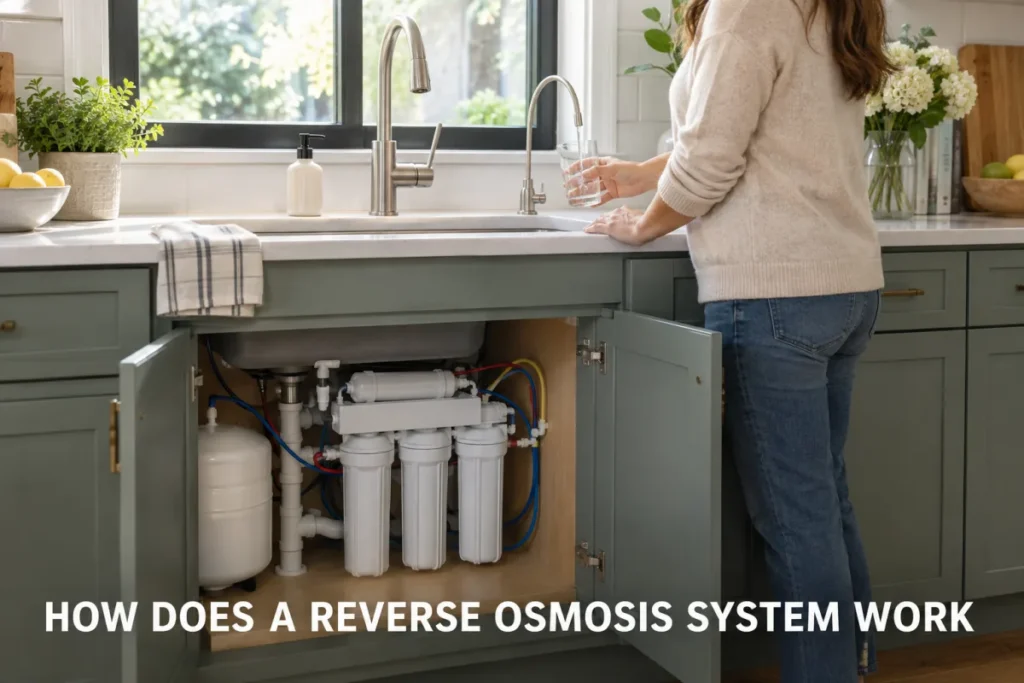
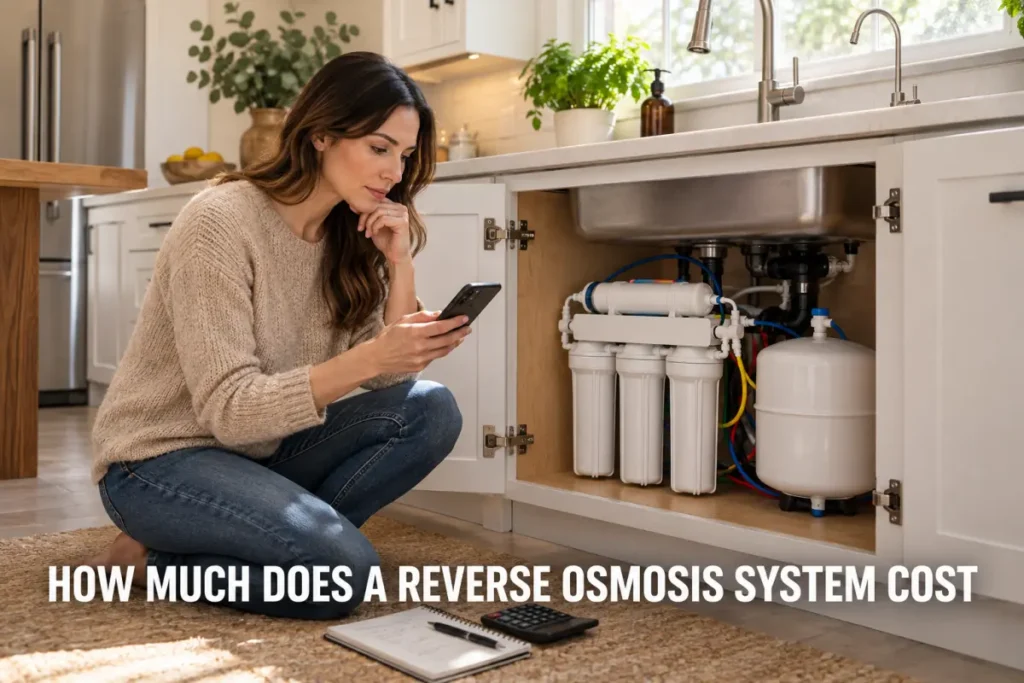
A reverse osmosis system often costs $150 to $600 for a basic under-sink unit. A whole-house system can run $2,000 to $10,000 and up once it is fully installed. How much you pay depends mainly on system type and output capacity. It also depends on whether a plumber handles the install. Under-sink units are the cheapest way in. Whole-house setups cost more but treat water at every tap.

By the end of this guide, you will see exactly what drives reverse osmosis pricing up or down. You will also know how to budget for the ongoing costs. Filters, membrane changes, and labor all show up after the unit is installed.
Key Takeaways
- $150-$600 for the unit alone; under-sink installs add $150-$300 with a plumber.
- Whole-house reverse osmosis systems often run $2,000-$10,000+ installed, far more than a $150-$600 under-sink unit.
- The real price drivers are system type, GPD rating, NSF/ANSI 58 certification, and remineralization (adding minerals back into the water).
- Budget roughly $80-$180 a year for filters, plus $150-$1,200 if a plumber installs the system.
How Much Does a Reverse Osmosis System Cost on Average?
A reverse osmosis system often costs $150 to $600 for the unit alone. It costs $2,000 to $10,000 and up once you include a full whole-house install with a plumber. The gap between those numbers comes down to one choice. Do you buy just the equipment, or pay for professional setup too? Knowing what a reverse osmosis system actually includes makes that choice easier to weigh.
Part of that spread comes down to certification. NSF/ANSI 58 (the industry standard for residential reverse osmosis systems) requires a minimum 75% reduction in total dissolved solids (TDS) under standardized test conditions. Certified systems often reach 90-96% removal in real-world use. That extra engineering and testing is one reason a certified unit costs more than an uncertified one.
The iSpring RCC7 is one of the certified under-sink units at the value end of that certified range; my iSpring RCC7 cost review covers the full cost picture from initial install through replacement filters and membrane over a typical service life.
Install adds the biggest jump between low and high estimates. A do-it-yourself under-sink kit needs no labor cost at all. A professional whole-house install can add $200 to $1,200 in plumbing, drain-line, and labor costs on top of the equipment. That gap, not the filter cartridges, is often why one reverse osmosis system costs a few hundred dollars. Another can cost several thousand.
For households where RO cost is prohibitive, a faucet-mount filter handles chlorine and lead at a fraction of the price with no installation required.
Reverse Osmosis Cost by System Type
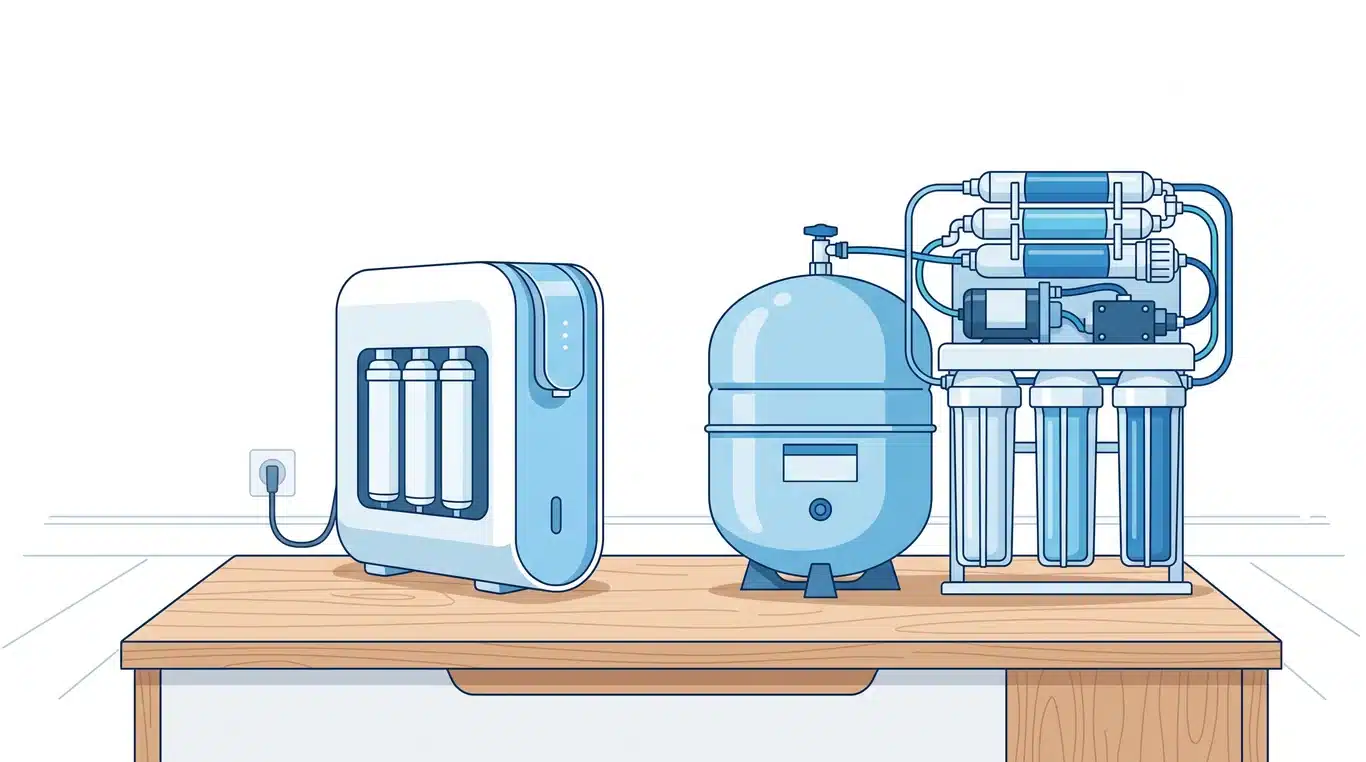
The type of reverse osmosis (RO) system you choose swings the price more than any other single factor. A basic under-sink tank unit starts around $200. A whole-house system built for a family’s full water supply can run past $10,000 installed.
Under-sink tank systems cost $200 to $400 for the unit alone. Tankless under-sink models skip the tank and filter on demand, which pushes the price to $400 to $800 because of the added pump and electronics. If you are comparing under-sink reverse osmosis system cost between the two styles, expect roughly a $200 gap.
Countertop units need no install and cost a similar $300 to $500, making them the easiest entry point for renters. Whole-house systems are the real outlier. Whole-house systems treat every tap in the home. A whole-house reverse osmosis system often runs $2,000 to $10,000 installed. Homes on well water should budget toward the top of that range.
The price gap between these four types is easiest to see side by side:
| System Type | Typical Unit Price | Typical Installed Price | Best For |
| Under-Sink Tank | $200 to $400 | $250 to $600 | Renters and single-faucet use |
| Under-Sink Tankless | $400 to $800 | $450 to $1,000 | Compact kitchens wanting on-demand flow |
| Countertop | $300 to $500 | $300 to $500 (no install needed) | Renters with no plumbing access |
| Whole-House | $2,000 to $10,000+ | $2,500 to $10,000+ | Full-home filtration and well water |
How Much Does a Reverse Osmosis System Cost? What Actually Drives the Price
Two systems that look nearly identical on a shelf can carry a $300 price gap. The difference almost always comes down to a handful of specs most buyers never compare directly. In plain terms, what a reverse osmosis system costs comes down to a short list of variables. It is not one sticker number. Knowing how a reverse osmosis system works helps explain each factor below.
Here’s what actually moves the number:
- System type and output rating (GPD): Tankless and higher-GPD (gallons per day) units cost more upfront because they add a booster pump and larger membrane.
- Number of filtration stages: More pre- and post-filters add material cost but also extend membrane life, which lowers long-term spend.
- Remineralization or alkaline post-filter: Adding a stage that reintroduces minerals RO strips out often adds $50 to $150 to the unit price.
- NSF/ANSI 58 certification: Certified units cost more because independent testing confirms performance claims. NSF/ANSI 58 sets a minimum 75 percent TDS reduction requirement, and certified residential systems often reach 90 to 96 percent in real-world use.
- Brand and warranty length: A longer warranty, five years or more instead of one, often reflects a higher build cost passed on to the buyer.
- Water pressure and booster pump needs: Homes under 40 PSI need an added booster pump, which can add $100 to $200 to the total.
Certification costs also trace back to regulation. The EPA finalized the first national PFAS (man-made chemicals that resist breakdown and are linked to health risks) drinking water standards in April 2024. PFAS limits are set at 4 parts per trillion for PFOA and PFOS. That is why RO systems carrying a PFAS-reduction claim under NSF/ANSI 58 are priced above base models without it.
Total dissolved solids (TDS, the minerals and salts dissolved in water) factor in too. The EPA’s secondary standard sets 500 mg/L as the aesthetic threshold. Homeowners near or above that line often pay more for a higher-capacity system. Someone on cleaner municipal water needs less.
Ongoing and Installation Costs to Budget For
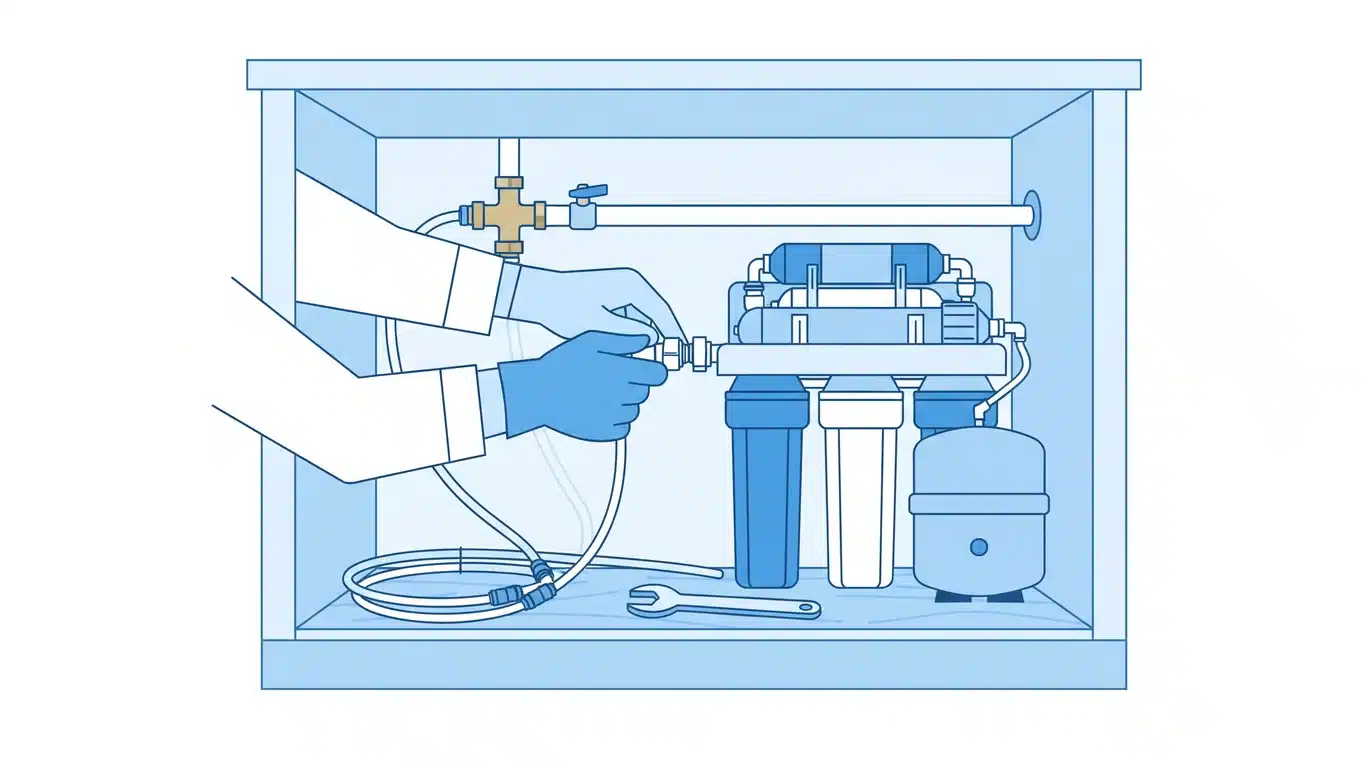
The unit price is only part of what you’ll pay. Install labor and recurring filter changes add up over the system’s life. Skipping that math is why year-two costs catch buyers off guard. A no-tools DIY under-sink kit needs no labor line at all, while a professional under-sink install often runs $150 to $300.
Whole-house installs cost more to labor. A plumber has to tie into the main line, add a bypass valve, and often mount a booster pump. Professional whole-house install runs $200 to $1,200 or more, depending on how far the unit sits from existing plumbing.
Once it’s installed, here’s the maintenance timeline that determines your real cost per gallon:
- Install (one-time): DIY under-sink costs nothing beyond the unit; a professional install adds $150 to $1,200 or more depending on system type.
- Sediment and carbon pre-filters, every 3 to 6 months: Replacement cartridges often run $10 to $30 each and protect the membrane from clogging early.
- RO membrane, every 2 to 3 years: A new membrane costs $30 to $100 and can last up to five years with good pre-filtration.
- Remineralization filter, roughly annually: If the system adds minerals back in, this stage needs its own $20 to $40 cartridge on a separate schedule.
- Electricity for tankless booster pumps: Tankless models draw continuous power for the pump, adding a small but real cost to the monthly electric bill.
Averaged over a system’s working life, filters and membrane replacements often add $80 to $180 a year. That is the real number behind any reverse osmosis system cost per gallon estimate you’ll see online.
The iSpring RCC7AK runs on a staggered replacement schedule across three filter intervals rather than one annual date; my iSpring RCC7AK cost breakdown covers which stages come due at which point and what that staggered cadence adds up to per year.
How We Research
We check every claim against primary sources. Federal agencies like the EPA and CDC come first. Certification bodies like NSF and AHAM come next. We verify each standard number against the issuing body. We review this guide on a set schedule.
Why Trust This Guide
Puritisimo covers only water and air quality. Our guidance is editorial and independent. We cite every health figure so you can check it. We never present a promotional claim as fact.
What You’ll Actually Pay for a Reverse Osmosis System
Pricing a reverse osmosis (RO) system comes down to matching the type to where you need filtered water, then budgeting past the sticker price. A basic under-sink unit can start around $200. A whole-house system built for well water can run past $10,000 installed. If you want the basics first, see what reverse osmosis actually is.
The number that trips people up isn’t the unit itself. It’s the maintenance behind it: filter swaps every few months and a new membrane every two to three years. If you’re not doing it yourself, factor in how much it costs to have a reverse osmosis system installed, on top of the unit price. Add the unit, the install, and a year of filter changes together. That’s roughly what a reverse osmosis system really costs a household in practice.
Frequently Asked Questions
How much does a reverse osmosis system cost per gallon?
How much a reverse osmosis system costs per gallon comes down to averaging the unit price and filter changes across its working life. That often lands between 5 and 25 cents per gallon. Higher-capacity and tankless systems tend to sit toward the lower end, since each filter cycle treats more water before a swap is needed.
Is a reverse osmosis system worth the money?
A reverse osmosis system tends to be worth it for households dealing with elevated TDS, PFAS, or lead. It makes a real difference in what comes out of the tap. For a home already on municipal water that meets EPA drinking water standards, the upgrade is more about taste and peace of mind than necessity. The value comes down to a personal call.
Is there a downside to reverse osmosis water?
Yes, reverse osmosis has two real trade-offs. Traditional systems waste roughly 3 to 4 gallons of water for every gallon they purify. The process also strips total dissolved solids down to 5 to 25 ppm. That removes beneficial calcium and magnesium unless the system adds them back with a remineralization filter.
What is the lifespan of a reverse osmosis system?
Individual components wear out on different schedules. Sediment pre-filters often last 3 to 6 months. Carbon cartridges run 6 to 12 months. The RO membrane itself lasts 2 to 3 years, stretching to five years with good pre-filtration. The full housing and system often holds up for 10 to 15 years before it needs full replacement.
How much does it cost to have a reverse osmosis system put in?
Install labor is separate from the unit price. A DIY under-sink kit needs no labor cost at all. Hiring a plumber for an under-sink install often runs $150 to $300. Whole-house install costs more, often $200 to $1,200 or more, depending on how far the system sits from existing plumbing.
References
- NSF International. Standards for Water Treatment Systems. NSF Consumer Resources. 2024.
- US EPA. Key EPA Actions to Address PFAS. 2024.
- US EPA. National Primary Drinking Water Regulations. 2024.
Medical Disclaimer: This content is for informational purposes only. It is not a substitute for professional medical advice, diagnosis, or treatment. If you have concerns about your water quality or air quality and their effects on your health, consult a qualified healthcare professional.