
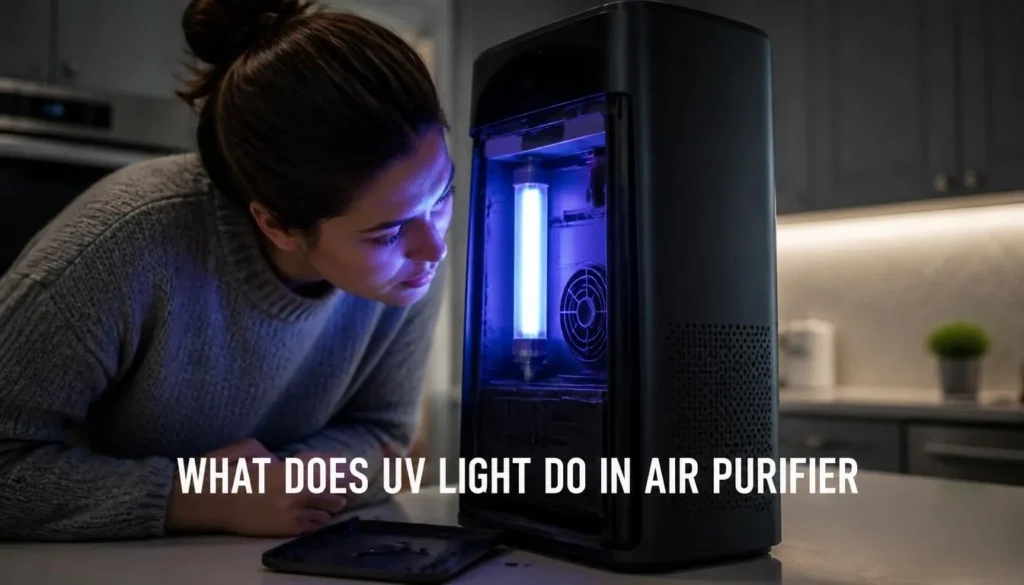
UV light in an air purifier comes from a germicidal lamp. It can damage the DNA or RNA (the genetic code inside a cell or virus) of germs as air flows past it. It does not catch dust, pollen, or smoke, because the filter does that job. In most home units the air passes the lamp in only a few seconds, so UV works as a small extra layer rather than as the main cleaner.
This guide explains what UV light does in an air purifier and what it cannot do. You will also learn about ozone and eye safety, when to switch the lamp on, and how UV compares with an ionizer. By the end, you will know whether the UV setting is worth using in your home.
Key Takeaways
- UV-C light damages the DNA of germs, but home units give it only a few seconds of contact.
- UV does not capture particles, so a filter still does the real cleaning of dust and allergens.
- Some UV lamps can make ozone, a lung irritant, so choose a unit tested for ozone.
- Never look at a lit UV-C lamp, and keep the unit closed while it runs.
What Does UV Light Do in Air Purifier Systems?
UV light in an air purifier is a lamp that gives off UV-C light to damage the DNA or RNA of germs in the air that passes it. UV-C is short-wave ultraviolet light from 100 to 280 nanometers (billionths of a meter). Most home lamps are low-pressure mercury lamps that glow mainly at 254 nanometers. For viruses in particular, see whether an air purifier helps with COVID.
According to the EPA, given enough exposure time and lamp power, UV light can enter a germ’s cell and change its DNA. That change stops the germ from copying itself and can kill the cell, which is the whole idea behind the lamp. The lamp usually sits just after the filter, so it treats air that the filter has already cleaned.
Here is the part that product labels rarely explain: a germ that UV has killed is not gone. Dead or deactivated particles can still carry allergens and irritants, which is why the lamp is a bonus and the filter is the core of the machine.
How UV-C Light Works Inside the Unit
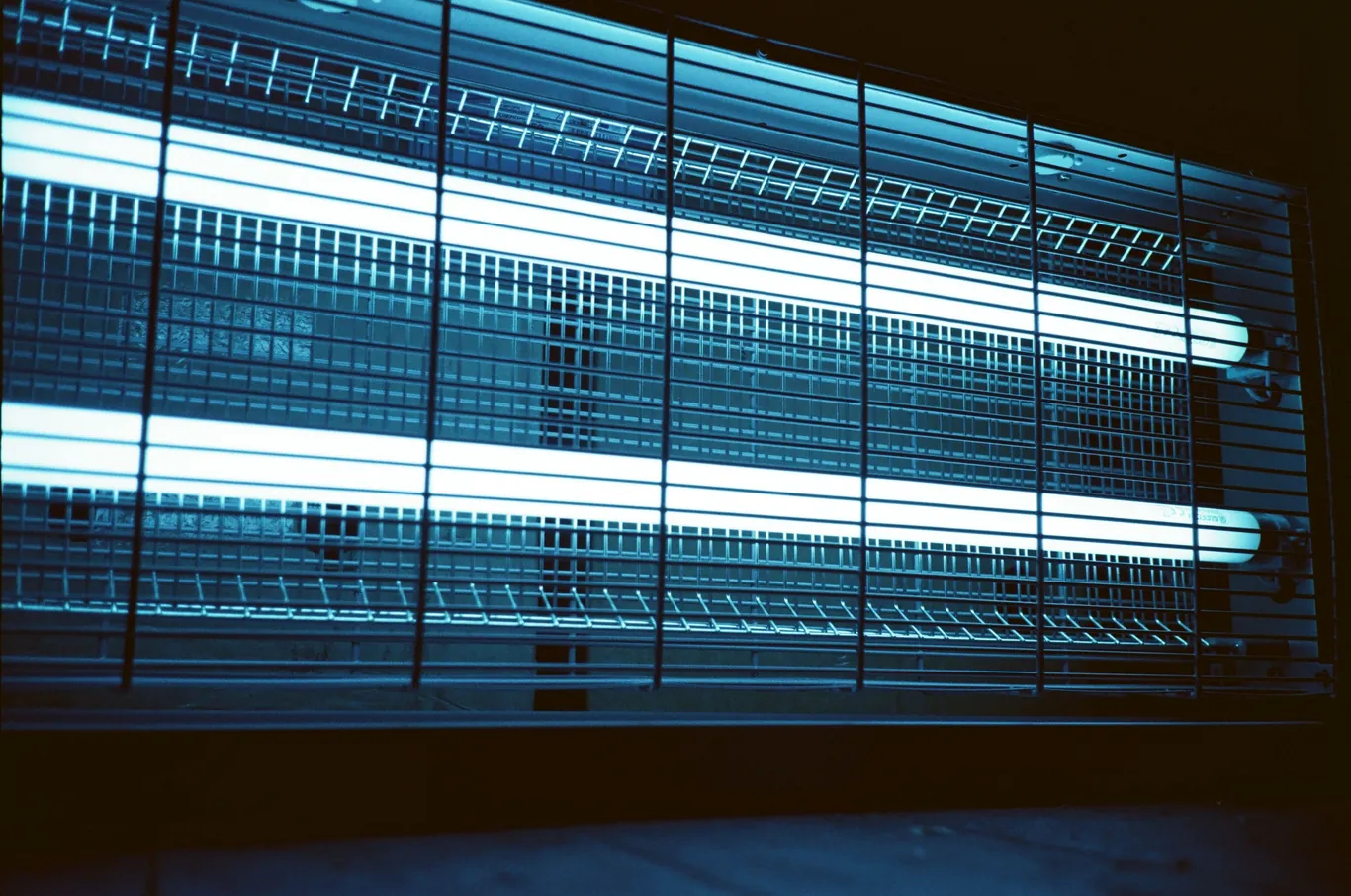
Air moves through a purifier quickly. A lamp in a portable unit, or in a home’s HVAC (heating and cooling) ducts, lights each pocket of air for only a few seconds. The EPA says that reliable killing of spores (tough, dormant forms of bacteria and mold) needs high lamp power. It also needs exposure that lasts minutes to hours. Most UVGI (ultraviolet germicidal irradiation) air cleaners give only a few seconds.
UV dose depends on the light intensity that reaches a germ and how long it stays in the light. Lamp power alone does not tell you the dose. A 2024 study in Aerosol Science and Technology tested a prototype UV-C air cleaner. It worked out doses from modeled residence times (how long air stays in the light).
Time is also why the same lamp works better on a surface than in moving air. The EPA notes that UVGI can be effective at slowing growth on HVAC cooling coils and drain pans because those surfaces stay lit for long periods. The agency lists air speed, humidity, temperature, and lamp type among the most important performance factors, so a faster fan can shorten the lamp’s reach. It also says no standard test existed to rate or compare home UVGI cleaners when it was written. Ask the maker for test results on your exact model.
What Does UV Light Do in Air Purifier Units Against Germs, Spores, and Gases?
UV works best on fragile germs and worst on spores, allergens, and gases. When it is properly designed, the EPA says, an airstream lamp can reduce vegetative bacteria and molds (germs in their active, growing stage). It can also give low to moderate reductions in viruses, but it gives little, if any, reduction in bacterial and mold spores.
UV also does not grab or hold anything in the airstream. The EPA found no research showing that UV disinfection reduces dust mite or mold allergens, or that it removes gases. Both dead and live fungal particles can still cause allergic reactions. So a HEPA (high-efficiency particulate air) filter stays the tool for particles, and activated carbon (a charcoal-like material with tiny pores) handles odors.
The table below sums up where UV helps and where another part of the purifier does the work:
| Target | UV effect in home units | Better tool |
| Active bacteria and mold | Some reduction possible | HEPA filter |
| Viruses | Low to moderate reduction | HEPA filter |
| Spores | Little, if any | HEPA filter |
| Dust mite and pollen allergens | No effect shown | HEPA filter |
| Gases and odors | No effect shown | Carbon filter |
UV Light Air Purifier Dangers: Ozone, Eyes, and Skin
The risk is low when the lamp stays sealed and makes no ozone, but two risks are real and worth understanding before you buy. The first is ozone. The CDC’s NIOSH warns that lamps built to emit 184.9 nanometers make ozone, which is hazardous to people even at low concentrations. The EPA adds that uncoated UV-C lamps can generate ozone, so some makers coat the glass to block it.
The second risk is direct exposure. NIOSH reports that short-term overexposure can inflame the cornea (the clear front of the eye), and the pain may start 6 to 12 hours later. Skin overexposure feels like sunburn, although it does not cause tanning. The agency sets its limit for a full work shift at 6 millijoules per square centimeter at 254 nanometers, a measure of light energy landing on a surface.
The main hazards fall into three groups:
- Ozone: a lung irritant that some lamps can make, depending on the glass and wavelength.
- Eyes: light from an exposed lamp can cause painful corneal inflammation.
- Skin: a burn like sunburn after exposure to an unshielded lamp.
Is UV-C light safe in air purifier designs? NIOSH also describes five hospital workers who were injured near an unshielded lamp, and a lamp sealed inside the housing is a different case. Still, the lesson holds: never run the unit with the cover open, and never look at a lit lamp.
When to Use the UV Setting, Step by Step
Treat the UV setting as optional, because the filter is the part that keeps working whether the lamp is on or off. The EPA says that if UVGI is used, it should be applied with, not as a replacement for, filtration.
Follow these steps to use the UV setting well:
- Check that the filter is clean and the right size for your room.
- Look for a unit tested for ozone before you turn the lamp on.
- Switch UV on only when you want the extra layer.
- Keep the cover closed, and unplug the unit before you open it.
- Clean the lamp and replace it on the maker’s schedule.
The last step matters more than it looks. The EPA says regular upkeep means cleaning dust off the lamps and replacing old ones
Air Purifier With UV Light and Ionizer: What the Pairing Adds
An air purifier with UV light and ionizer adds a second, separate technology, not a stronger clean. An ionizer (a part that releases electrically charged particles called ions) acts on dust, while UV acts on germs. Together they give you two parts to check for ozone.
The EPA says bipolar ionization has the potential to make ozone and other harmful by-products. It recommends cleaners certified to UL 2998, the standard for zero ozone emissions. Treat that mark as the deciding detail when you shop for a combo unit.
If you already own a combo unit, check if the ionizer and the UV lamp can be switched off on their own. A unit that lets you turn each part off gives you control, and a unit with a printed ozone test result gives you proof. Control and proof matter more than the number of features on the box.
How We Research
We check every claim against primary sources. Federal agencies like the EPA and CDC come first. Certification bodies like NSF and AHAM come next. We verify each standard number against the issuing body. We review this guide on a set schedule.
Why Trust This Guide
Puritisimo covers only water and air quality. Our guidance is editorial and independent. We cite every health figure so you can check it. We never present a promotional claim as fact.
Is a UV Setting Worth It for Your Home?
UV light is a modest extra, not a cure-all. It can reduce some germs that pass the lamp, but contact time is short, spores resist it, and it does not capture a single particle. A good filter still does the main work, so judge any unit by its filter first. If the UV lamp is sealed, ozone-tested, and easy to maintain, it is a fair bonus that costs you little.
Keep the cover closed, never rely on the lamp alone, and replace it when the maker says it is time. Choose the filter first, then treat UV as a bonus. That is what UV light does in an air purifier, and it is why the filter should stay at the center of your choice.
Frequently Asked Questions
What does UV light do in air purifier units, and are they worth it?
What UV light does in an air purifier is damage the DNA or RNA of germs that pass the lamp. Contact time is short, so it is a modest bonus. A unit is worth buying for its filter first, and you should think of UV as an extra layer that never replaces that filter.
Should I leave the UV light on the air purifier on?
Follow the schedule in your purifier manual, because the benefit of constant use depends on the unit. Lamps also lose output with every hour they burn. Run it when you want the added layer. Either way, keep the cover closed and make sure the unit has been tested for ozone.
Is UV-C light safe in air purifier units?
It is generally safe when the lamp is sealed inside the housing and the unit makes little or no ozone, but exposed lamps can burn the eyes and skin. Pick a unit that is tested for ozone, never run it open, and unplug it before any lamp work.
What are the downsides of using a UV air purifier?
The main downsides are short contact time, no particle capture, and possible ozone from some lamps. Lamps also need regular cleaning and replacing, and germs that UV kills can still carry allergens, so the filter must keep running alongside the lamp.
When should I use the UV setting on my air purifier?
Use it as an optional extra layer on top of a working filter, for example when you want added protection against germs in shared air. Skip it if ozone is a worry, and remember that it does not reduce dust or pollen, so the filter is what matters most for those.
References
- EPA. Residential Air Cleaners: A Technical Summary, 3rd Edition. U.S. Environmental Protection Agency. 2018.
- EPA. Guide to Air Cleaners in the Home. U.S. Environmental Protection Agency. May 2008.
- CDC/NIOSH. Basic Upper-Room Ultraviolet Germicidal Irradiation Guidelines for Healthcare Settings. DHHS (NIOSH) Publication 2009-105. 2009.
- Aerosol Science and Technology. Air cleaner prototype: reduction of airborne viruses and effects of UV-C irradiation on virus concentration and RNA copy numbers considering modeled residence times and doses. 2024.
- EPA. Air Cleaners, HVAC Filters, and Coronavirus (COVID-19). U.S. Environmental Protection Agency. Accessed 2026.
Medical Disclaimer: This content is for informational purposes only. It is not a substitute for professional medical advice, diagnosis, or treatment. If you have concerns about your water quality or air quality and their effects on your health, consult a qualified healthcare professional.

