
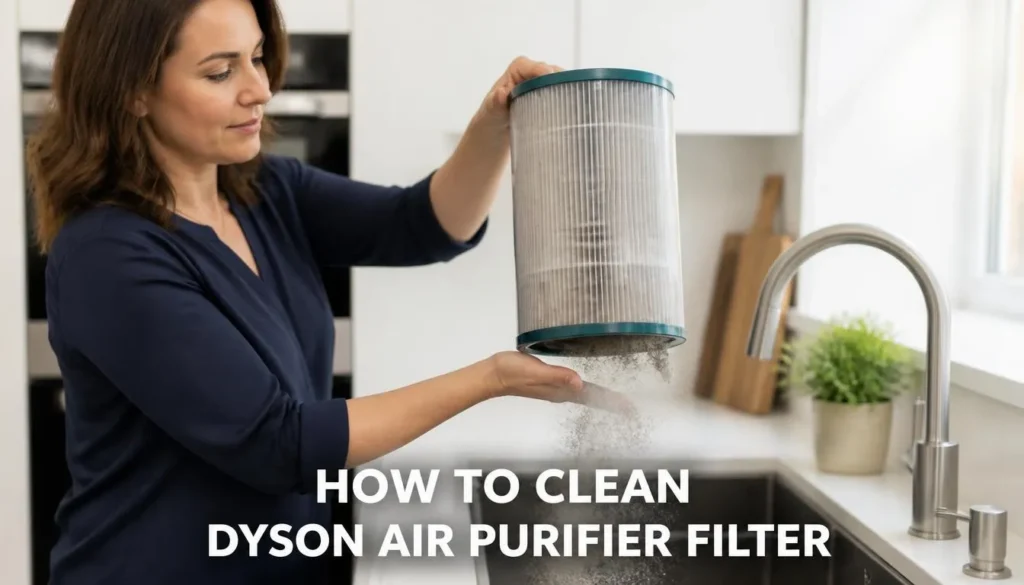
You can’t wash the filter in a Dyson air purifier, but you can clean most of the machine around it. Dyson’s guides show how to replace the filter and give no steps for washing it. They tell you to wipe the casing and brush the sensor inlets and the amplifier (the top section that shapes and sends out the airflow) instead. This guide shows what to clean, what to replace, and what to leave alone.
Below you’ll find how to clean a Dyson air purifier filter and the parts around it, as Dyson’s own guides describe it, with notes on how the models differ. By the end, you’ll know which parts take a soft brush, which take a damp cloth, and when only a new filter will do.
Key Takeaways
- Dyson’s guides give replacement steps for the filter and no washing steps, so plan to replace it.
- Wipe the casing with a damp, lint-free cloth and brush the sensor inlets and the amplifier.
- Skip detergents and polishes on the casing, and never run a purifier without its filter in place.
- The EPA says to follow the maker’s advice on filters and to change them sooner when they look soiled.
How to Clean Dyson Air Purifier Filter: The Safe Routine
A Dyson filter is a sealed, pleated unit that traps dust deep inside its folds, so you clean the surfaces around the filter and replace the filter itself.
Use this five-step routine each time you clean your Dyson air purifier:
- Unplug the purifier before you touch any part of it.
- Wipe the casing with a damp, lint-free cloth. Skip detergents and polishes.
- Look at the sensor inlets for dust, and brush off any you find with a soft brush.
- Brush dust from the outer cover and the amplifier, working gently.
- Replace the filter when the app or the screen says its life is low.
According to the EPA, all filters need regular replacement, and a dirty, overloaded filter will not work well. That is why the routine ends with a new filter, not a rinse, and resetting the filter life afterward is a separate step with its own guide.
Why Dyson Filters Are Replaced, Not Washed
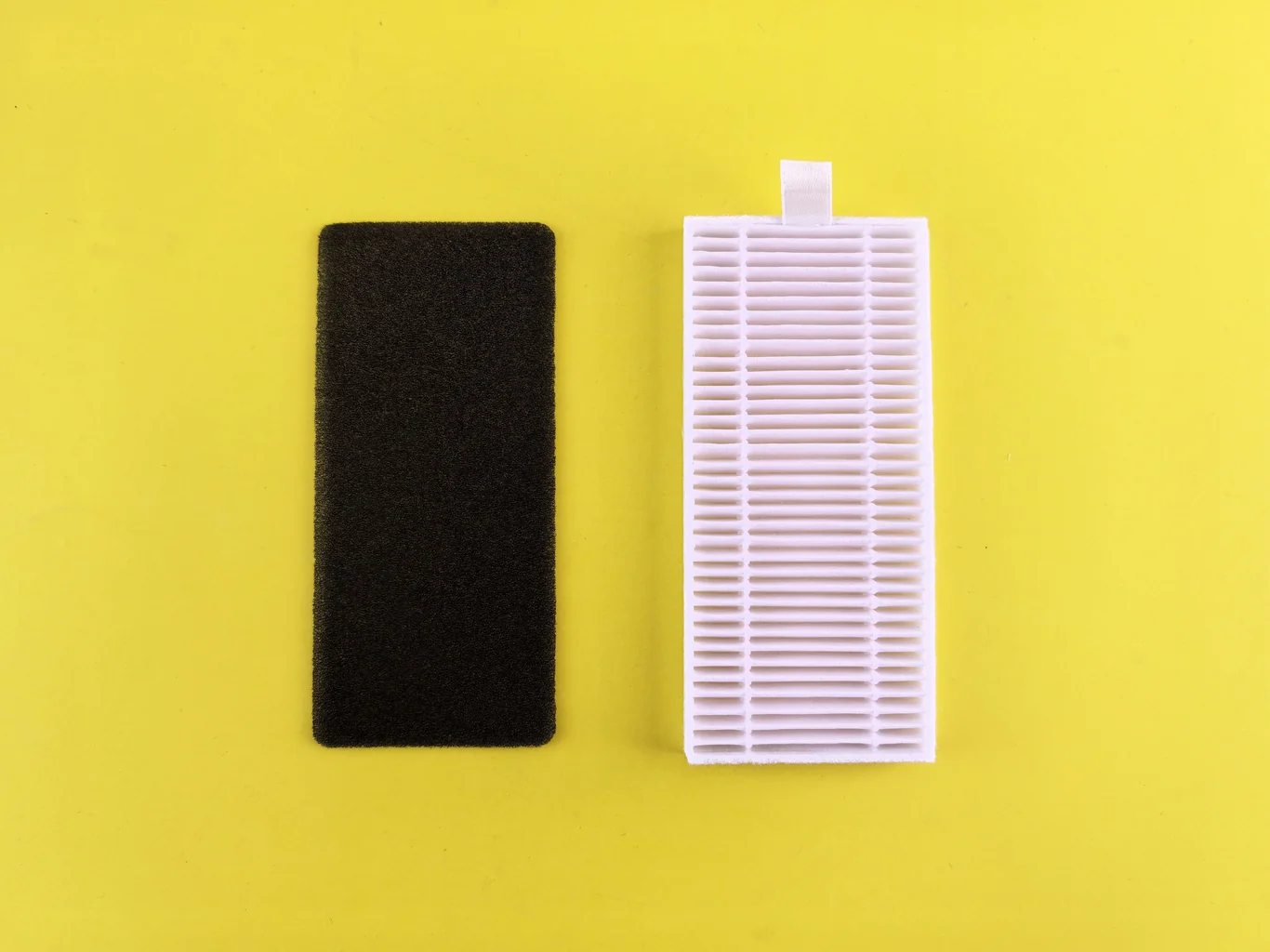
Dyson’s guides for the Purifier Big+Quiet Formaldehyde and the personal purifying fan both show how to lift the filter out and dispose of it. Neither guide includes a rinse or wash step, which fits the way the filter is built and the way its layers trap particles.
An air purifier HEPA (high efficiency particulate air) filter is a pleated mechanical filter. According to the EPA, it can theoretically remove at least 99.97% of particles that are 0.3 microns (a micron is one millionth of a meter) in size.
The Big+Quiet model adds a carbon filter (a layer that traps gases and odors) wrapped around the central body. It also has a catalytic filter that Dyson says never needs replacing. So on that model, only the HEPA and carbon layers ever come out.
Filter life differs by model. Dyson says the electrostatic filter in its Hushjet Compact lasts up to five years, and our Dyson Hushjet Compact review covers what that claim leaves open.
A gray, dusty filter is not a broken filter. The dirt on the surface of the pleats shows that the filter has caught particles from your room, which is exactly its job. Wiping that dirt off by hand does not reset the filter. Removing surface dust does not show that the filter is fit for more use.
The Puritisimo editorial read is this: pleats and carbon granules were not made to take water or a hard brush. The guides never invite you to try, so the safe call is to treat the filter as a part you swap. The EPA backs the same habit. It says all filters need regular replacement, and that a dirty, overloaded filter will not work well.
How to Clean Dyson Air Purifier Filter Areas: What Is Safe to Touch?
The parts you can clean have one thing in common: they all sit outside the filter. Dyson’s guides name each one, and the list is short.
Here are the parts the guides tell you to clean:
- Outer casing: wipe it with a damp, lint-free cloth when it looks dusty.
- Sensor inlets: on the Big+Quiet they sit on the left side of the amplifier. Check them for dust and debris.
- Amplifier and outer cover: look for dust and debris, then clear it with a soft brush.
- Mesh: on the personal purifying fan, brush the outside with a soft brush to lift debris from the mesh.
- Base: on the personal purifying fan, use a crevice tool or a long-handled, clean paintbrush to clear debris during a filter change.
When you brush, start at the top of the machine and work down, so loose dust falls onto parts you have not cleaned yet. Use light strokes and stop when the visible dust is gone. Pressing hard on a mesh or an inlet can bend it, and it gains you nothing.
Dyson’s Big+Quiet guide adds one firm rule: do not use detergents or polishes on the machine. Keep the cloth damp rather than dripping. Do not skip the sensor check, because Auto mode relies on those sensors to match your room’s air.
Cleaning Differences Across Dyson Purifier Families
Dyson writes a separate care guide for each family, so the exact parts and tools differ from one model to the next. The routine itself stays much the same: wipe, brush, and replace.
The Big+Quiet Formaldehyde has three filters. The HEPA filter sits in the outer cover, so you lift the outer cover off to reach it. The carbon filter wraps around the central body, and you take the HEPA filter out of the way before you reach it. The personal purifying fan is simpler, with one filter behind a ball that you release with two side buttons.
The HP09 adds a permanent catalytic formaldehyde filter, but its HEPA+Carbon filter still needs replacement. Our Dyson HP07 vs HP09 comparison explains the filter differences and replacement steps.
The same logic applies to other Dyson purifiers, such as the tower, fan heater, and humidifier models. Each one has its own release buttons and its own filter names. Open the care guide that matches the model name on your machine before you take anything apart.
The table below sums up what each guide says:
| Model family | What to wipe or brush | How the filter comes out |
| Purifier Big+Quiet Formaldehyde | Damp, lint-free cloth for the casing. Soft brush for the outer cover, amplifier, and sensor inlets. | Slide the release button behind the amplifier and lift it off. Lift the outer cover and filter assembly off the base. Press the inner rim release buttons, then lift the cover off the HEPA filter. |
| Personal purifying fan | Soft brush for the mesh. Soft, dry, lint-free cloth for the ball and dome. | Push the side buttons together to release the ball. Lift the old filter out by its tabs. |
| Other Dyson purifiers | Check the care guide for your own model. | Check the care guide for your own model. |
When an Air Purifier Filter Change Beats Cleaning
Cleaning keeps dust off the casing and out of the inlets, but it cannot restore a full filter. Dyson’s guide says the app and the screen alert you when filter life runs low, and that alert is your cue for an air purifier filter change.
The EPA gives the same advice for any air cleaner. It says to replace filters according to the manufacturer’s recommendations, and to change them sooner if they look heavily soiled when you take them out.
When you buy a new filter, match it to the model name on your machine. The HEPA and carbon filters differ between Dyson families, so a filter made for another model may not fit or seal the way the original did. After you remove the old filter, follow the guide’s disposal step and fit the new one in the reverse order.
On the Big+Quiet, the HEPA filter and the carbon filter each track their own life, so one can come due before the other. Dyson’s personal purifying fan guide also warns you not to run the machine without the filter in place. Resetting the filter life is a separate step after the swap.
Keeping Your Dyson Cleaner Between Filter Changes
Both Dyson guides open their care section with the same line: to get the best performance, clean the machine regularly and check for blockages. A short wipe and brush on a fixed day each month is an easy habit to keep. Dyson does not set that schedule, so choose one that fits your home.
Cleaning the purifier does not remove the sources of dust. The American Lung Association says air cleaners cannot eliminate pollutants and do not replace source control or ventilation. The EPA adds that air cleaners cannot remove all pollutants from the air.
So use the purifier as one layer. Vacuum often, keep the windows closed on high-pollen days, and let the sensors do their job by keeping the inlets clear.
How We Research
We check every claim against primary sources. Federal agencies like the EPA and CDC come first. Certification bodies like NSF and AHAM come next. We verify each standard number against the issuing body. We review this guide on a set schedule.
Why Trust This Guide
Puritisimo covers only water and air quality. Our guidance is editorial and independent. We cite every health figure so you can check it. We never present a promotional claim as fact.
The Short Answer on Cleaning Your Dyson Filter
Replace the HEPA and carbon filters instead of washing them. Clean the parts around them only as your model guide directs, using a cloth or a soft brush. That covers the casing, inlets, amplifier, cover, and mesh. Skip detergents and polishes, and never run the machine without its filter in place. When the app or screen says filter life is low, swap the filter and reset its life. Check for heavy soiling before the alert, since a dirty filter works poorly. That is the practical answer to how to clean a Dyson air purifier filter safely.
Frequently Asked Questions
How to clean Dyson air purifier filter?
The honest answer to how to clean a Dyson air purifier filter is that Dyson’s guides show you how to replace it, not wash it. Brush dust from the casing, inlets, and amplifier instead. Treat the filter itself as a part you swap when the alert says it is time.
Do I leave my Dyson air purifier on all the time?
Dyson’s Big+Quiet guide describes an Auto mode for that. The sensors adjust the settings to the air quality, and the machine pauses once it reaches the target level. It switches on again when the air quality drops, so it runs only when the room needs it.
Can you take a Dyson apart to clean it?
Only as far as the guides show. They tell you to lift off the amplifier or release the ball, remove the outer cover, and take out the filter. They describe nothing beyond that. If something inside needs attention, contact Dyson support instead of opening the casing.
Can I wash a Dyson vacuum filter?
Dyson sells vacuums and purifiers with different filters, and each product has its own care guide. For a purifier, the guides show replacement, not washing. For a vacuum, follow that model’s guide, because the purifier steps do not carry over.
How often should you do an air purifier filter change?
An air purifier filter change is due when your machine says so. Dyson’s guide says the app and the screen alert you when filter life runs low. The EPA also advises following the manufacturer’s recommendations and changing a filter sooner if it looks heavily soiled.
References
- EPA. Guide to Air Cleaners in the Home. U.S. Environmental Protection Agency. Accessed November 4, 2026.
- EPA. What is a HEPA filter? U.S. Environmental Protection Agency. Accessed November 4, 2026.
- American Lung Association. Air Cleaning. American Lung Association. Accessed November 4, 2026.
- EPA. Air Cleaners and Air Filters in the Home. U.S. Environmental Protection Agency. Accessed November 4, 2026.
Medical Disclaimer: This content is for informational purposes only. It is not a substitute for professional medical advice, diagnosis, or treatment. If you have concerns about your water quality or air quality and their effects on your health, consult a qualified healthcare professional.

