
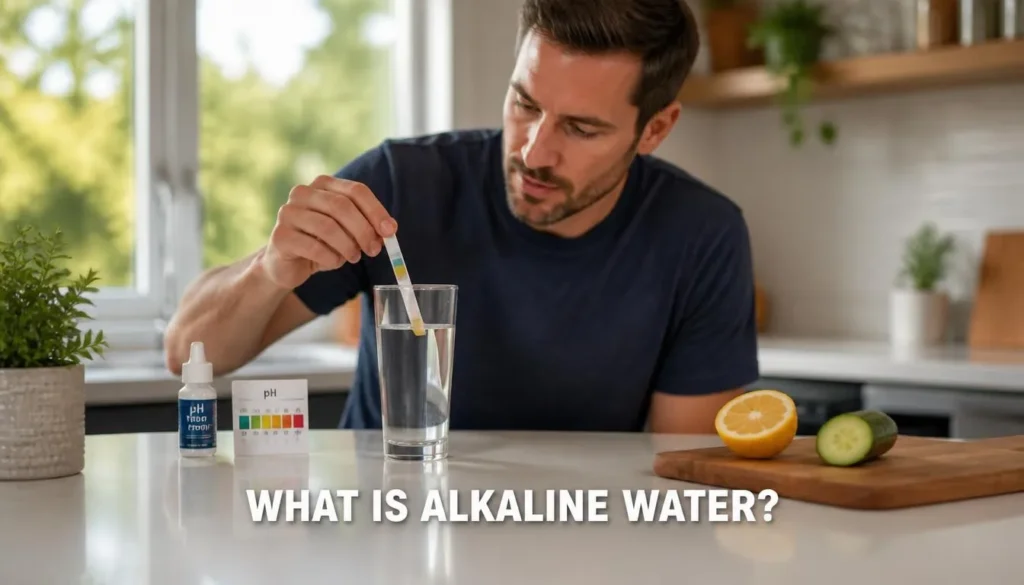
Alkaline water is drinking water with a pH above 7, usually between 8 and 10. The pH scale (0 to 14) shows how acidic or basic water is. Dissolved carbonate minerals can raise pH and add bicarbonate (an ion that helps water neutralize acids), and calcium and magnesium may come with it. A machine that splits water into alkaline and acidic streams can do it too. Brands sell it for hydration and wellness, but the evidence behind many claims is thin.
This guide explains what alkaline water is, how its pH compares with tap water, and what the research says about benefits, side effects, and daily amounts. You will also see how to make it at home and who should check with a clinician first.
Key Takeaways
- Alkaline water has a pH above 7, usually 8 to 10, while most tap water runs 6.7 to 7.4.
- Minerals, not pH alone, likely drive any effect, and a pH change does not show the water is cleaner.
- A systematic review found no clear difference from mineral water in urine pH, blood markers, or fitness.
- People with kidney disease, or on acid-reducing medicine, should ask a clinician before drinking it daily.
What Is Alkaline Water? Definition and Origins
Alkaline water is drinking water with a pH above 7, typically between 8 and 10, so it sits on the basic side of the pH scale. It gets that higher pH either from minerals that dissolve into the water naturally or from devices and additives that raise the pH on purpose.
According to a 2026 review in Frontiers in Medicine, groundwater that moves through carbonate-rich rock (such as limestone) picks up bicarbonate, calcium, magnesium, and potassium. Those minerals raise the pH. Makers can also raise it on purpose. Some use electrolysis machines (devices that run an electric current through water), and others add calcium carbonate or magnesium oxide.
So what is alkaline water used for? Most people drink it in place of tap or bottled water. They hope for better hydration, less heartburn, or a general wellness boost. The sections below test each hope against the research.
What Is Alkaline Water pH? Reading the Scale
The pH scale runs from 0 to 14, and 7 is neutral. According to the USGS, each whole number is a tenfold change in how acidic or basic the water is. That means water at pH 9 is 100 times more basic than neutral water, which is a bigger gap than the numbers suggest.
Your tap water already varies. A 2012 laboratory study notes that typical tap and bottled water falls between pH 6.7 and 7.4. The EPA also lists 6.5 to 8.5 as a pH range for public water systems. That range is a guideline for taste, smell, and appearance, not an enforceable health limit.
So what is the difference between regular water and alkaline water? Mostly a higher pH number, as the table below shows.
| Water type | Typical pH | What it means |
| Neutral water | 7 | Scale midpoint |
| Typical tap or bottled | 6.7 to 7.4 | Near neutral |
| EPA guideline range | 6.5 to 8.5 | Aesthetic guidance only |
| Alkaline water | Usually 8 to 10 | Basic side of scale |
| Artesian water in the 2012 study | 8.8 | Inside alkaline range |
What Is Ionized Alkaline Water?
Ionized alkaline water is water that has passed through an electrolysis machine, a device that sends an electric current through water. The Frontiers review describes these devices as splitting water into alkaline and acidic fractions. You drink the alkaline stream and discard the acidic one.
The distinction product pages rarely make clear is that pH and purity are different things. The same review says the effects of alkaline water are modest and likely driven more by mineral composition than pH alone. A machine can raise the pH of your water without changing which minerals your source water started with.
A pH change also does not, by itself, reduce lead, PFAS (man-made “forever chemicals”), or chlorine byproducts. Pick a system with independently verified reduction claims for the contaminants in your water, since one filter medium may reduce several. Reverse osmosis (RO, a filter that pushes water through a very fine screen) and distillation strip out most dissolved minerals. Some RO systems therefore add a final remineralization stage (putting minerals back), which is where many “alkaline filter” products get their name.
How to Make Alkaline Water at Home
You have four common ways to raise the pH of drinking water, and each has a trade-off. Raising pH alone does not make water safe, so start with source water that meets the rules of the device maker.
Here are four common options:
- Baking soda: dissolve a small pinch in a glass of water. Baking soda is sodium bicarbonate, so it adds sodium. The EPA advises no more than 20 mg/L (milligrams per liter) of sodium in drinking water for people on a very low sodium diet.
- Mineral drops or tablets: these add minerals such as magnesium or calcium. Some makers add calcium carbonate or magnesium oxide. This can push total dissolved solids (TDS, the minerals dissolved in water) above recommended levels, according to the Frontiers review.
- Alkaline filter pitchers or bottles: a cartridge adds minerals as water passes through. Check the label for what the whole system reduces, because a mineral stage is not a contaminant filter.
- Ionizer machines: these use electrolysis to split water into alkaline and acidic streams. They are the most involved option, and the section above explains how they work.
All four methods aim to raise pH, and contaminant reduction depends on whether the system also filters. If your tap water has a taste or safety problem, a filter chosen for that specific contaminant is a better first step than a pH tweak.
Alkaline Water Benefits and Risks: What the Research Shows
On alkaline water benefits and risks, the research is smaller than the sales pitch. A 2024 systematic review (a review that gathers every study meeting set rules) covered ten studies, two of them on alkaline water. It found no clear difference from mineral water in gut bacteria, urine pH, blood markers, or fitness results.
What is alkaline water good for, then? The most consistent signal is reflux. In a 2012 laboratory study, pH 8.8 water inactivated pepsin (a stomach enzyme tied to throat damage in reflux). The authors suggested it may help people with reflux. That result came from a test tube, not a patient trial, so treat it as a lead, not proof.
The Frontiers review reaches a similar view. It reports modest effects on hydration markers and urine pH, mostly with bicarbonate-rich water. It calls the evidence for metabolic, antioxidant, and immune benefits mixed and mostly from small or early studies. It says doctors should not routinely recommend alkaline water in primary care.
Alkaline Water Side Effects and Kidney Concerns
Alkaline water side effects are not well mapped, because long-term studies are scarce. The Frontiers review warns that chronic intake of highly alkaline water may cause metabolic alkalosis, a state where the blood turns too basic. It also notes that overdrinking can cause water intoxication. It adds that acid-reducing drugs may change how the body absorbs some medicines.
So is alkaline water good for kidneys? It has no proven kidney benefit, and the review says claims about disease prevention lack robust clinical evidence. Healthy kidneys already manage the body’s acid-base balance. People with chronic kidney disease have a reduced ability to do that. The review urges caution for them, for people on acid-reducing medicine, for pregnant women, and for children.
Added minerals matter too. Effects seem to track mineral content more than pH. A bottle with extra sodium, calcium, or magnesium changes what a person with kidney disease or a low-sodium diet takes in. The label tells you more than the pH number does. If you filter at home, our alkaline water filter picks show which ones add minerals back.
How Much Alkaline Water Can I Drink a Day?
The research reviewed here gives no daily amount for alkaline water. Overdrinking any water carries a risk of water intoxication, and added sodium or minerals can add up fast. A short checklist is a safer guide than a number.
Before you make it a daily habit:
- Ask a clinician first if you have kidney disease, take acid-reducing medicine, or are pregnant.
- Read the label for sodium, calcium, and magnesium, and compare the sodium with the EPA’s 20 mg/L advice for very low sodium diets.
- Mix alkaline water in with your regular water instead of replacing all of it.
- Drink to thirst, and stop if the water makes you feel unwell.
Treat these steps as a general safety check, not medical advice. A clinician who knows your history can set an amount that fits you.
How We Research
We check every claim against primary sources. Federal agencies like the EPA and CDC come first. Certification bodies like NSF and AHAM come next. We verify each standard number against the issuing body. We review this guide on a set schedule.
Why Trust This Guide
Puritisimo covers only water and air quality. Our guidance is editorial and independent. We cite every health figure so you can check it. We never present a promotional claim as fact.
Making Sense of the Alkaline Water Claims
Alkaline water is ordinary drinking water with a higher pH. It can come from mineral-rich ground or from a machine. The research so far shows modest effects, and those look tied to minerals more than to the pH number. The best-supported signal is a lab result for reflux. The strongest cautions apply to people with kidney disease or acid-reducing medicine. For cleaner, better-tasting water, a filter matched to your contaminants will do more than a pH change. Once you know what it is, you can decide whether the pH on the label matters.
Frequently Asked Questions
What is alkaline water and where do you get it?
Alkaline water is drinking water with a pH above 7, usually 8 to 10. You can get it from natural springs and wells in mineral-rich rock, from bottled brands, from filters that add minerals, or from ionizer machines at home. Check the label for the minerals it contains, since they likely matter more than the pH.
What does an alkaline filter do?
An alkaline filter adds minerals such as calcium and magnesium to water after filtering, which raises the pH a little. It changes the pH and often the taste. A mineral stage does not show that the water was cleaned, so check the label for the contaminants the whole system is tested to reduce.
Does alkaline water help with weight loss?
Alkaline water has no proven effect on weight loss. A 2026 review calls the evidence for metabolic benefits inconsistent and mostly based on small or preclinical studies. Weight depends mainly on calorie intake and activity, not on the pH of your drinking water.
Is alkaline water good for kidneys?
Alkaline water has no proven kidney benefit. Healthy kidneys already manage acid-base balance, while people with chronic kidney disease have a reduced ability to do so. If you have kidney disease, ask your care team before drinking it daily, because added minerals and sodium can matter.
Does drinking alkaline water make you thirsty?
The research reviewed here does not link alkaline water to thirst. Thirst follows how much fluid your body loses. Added sodium or minerals can change the taste, and taste may change how much you drink. If you feel unusually thirsty all the time, talk with a clinician.
References
- USGS. pH and Water. USGS Water Science School.
- EPA. Secondary Drinking Water Standards: Guidance for Nuisance Chemicals.
- EPA. Drinking Water Advisory: Consumer Acceptability Advice and Health Effects Analysis on Sodium. 2003.
- Koufman JA, Johnston N. Potential benefits of pH 8.8 alkaline drinking water as an adjunct in the treatment of reflux disease. Annals of Otology, Rhinology and Laryngology. 2012.
- Sunardi D, et al. Health effects of alkaline, oxygenated, and demineralized water compared to mineral water among healthy population: a systematic review. Reviews on Environmental Health. 2024.
- Alebrahim H, et al. The health benefits of alkaline water: is it a fact or marketing myth? Frontiers in Medicine. 2026.
Medical Disclaimer: This content is for informational purposes only. It is not a substitute for professional medical advice, diagnosis, or treatment. If you have concerns about your water quality or air quality and their effects on your health, consult a qualified healthcare professional.

