
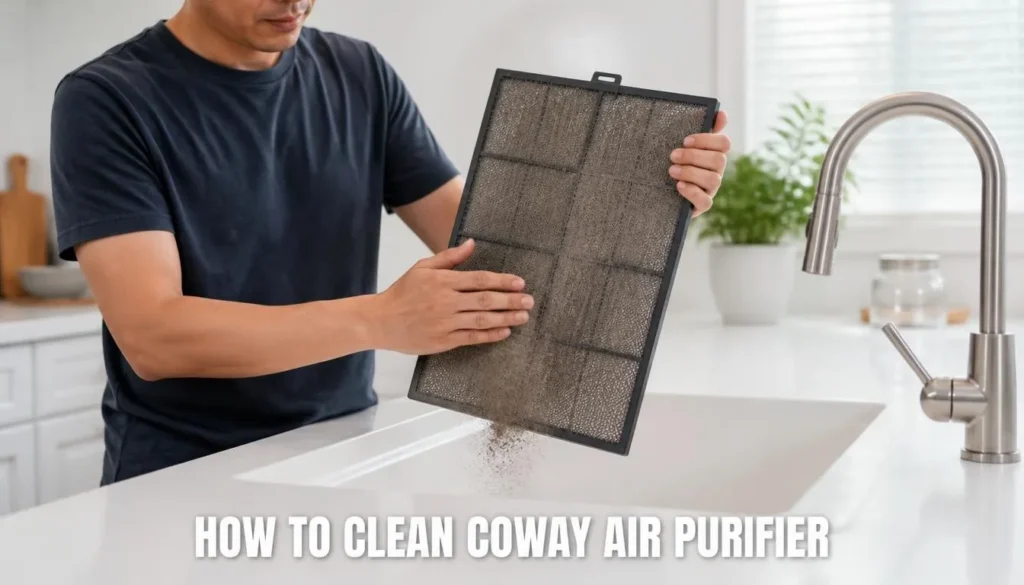
Cleaning a Coway air purifier means cleaning the pre-filter, wiping the sensor, and dusting the case. The pre-filter (the coarse first screen that traps hair, lint, and large dust) is the only filter you wash or vacuum. The main filters get replaced when the filter light comes on. Wash the wrong one and you can ruin a filter that still has months left.
The whole routine is short and needs only a vacuum, a soft cloth, and a cotton swab. By the end, you will know the steps, how often to repeat them, and which parts must stay dry.
Key Takeaways
- Clean only the pre-filter, approximately every 2 to 4 weeks, and rinse it only if your manual allows washing.
- The HEPA (high efficiency particulate air) and carbon layers get replaced, never washed, because water ruins what makes them work.
- Let the pre-filter dry completely before you put it back, so damp fibers cannot grow mold.
- Wipe the air quality sensor with a dry cotton swab approximately every 2 months.
How to Clean Coway Air Purifier Step by Step
The pre-filter catches hair, lint, and large dust first, so the filters behind it stay cleaner and last longer, and cleaning it takes a few minutes. Follow these instructions:
- Turn the purifier off and unplug it.
- Reach the pre-filter as your manual directs, since some models open at the front, side, or top.
- Lift out the pre-filter, the mesh screen in front of the main filters. Some models have two.
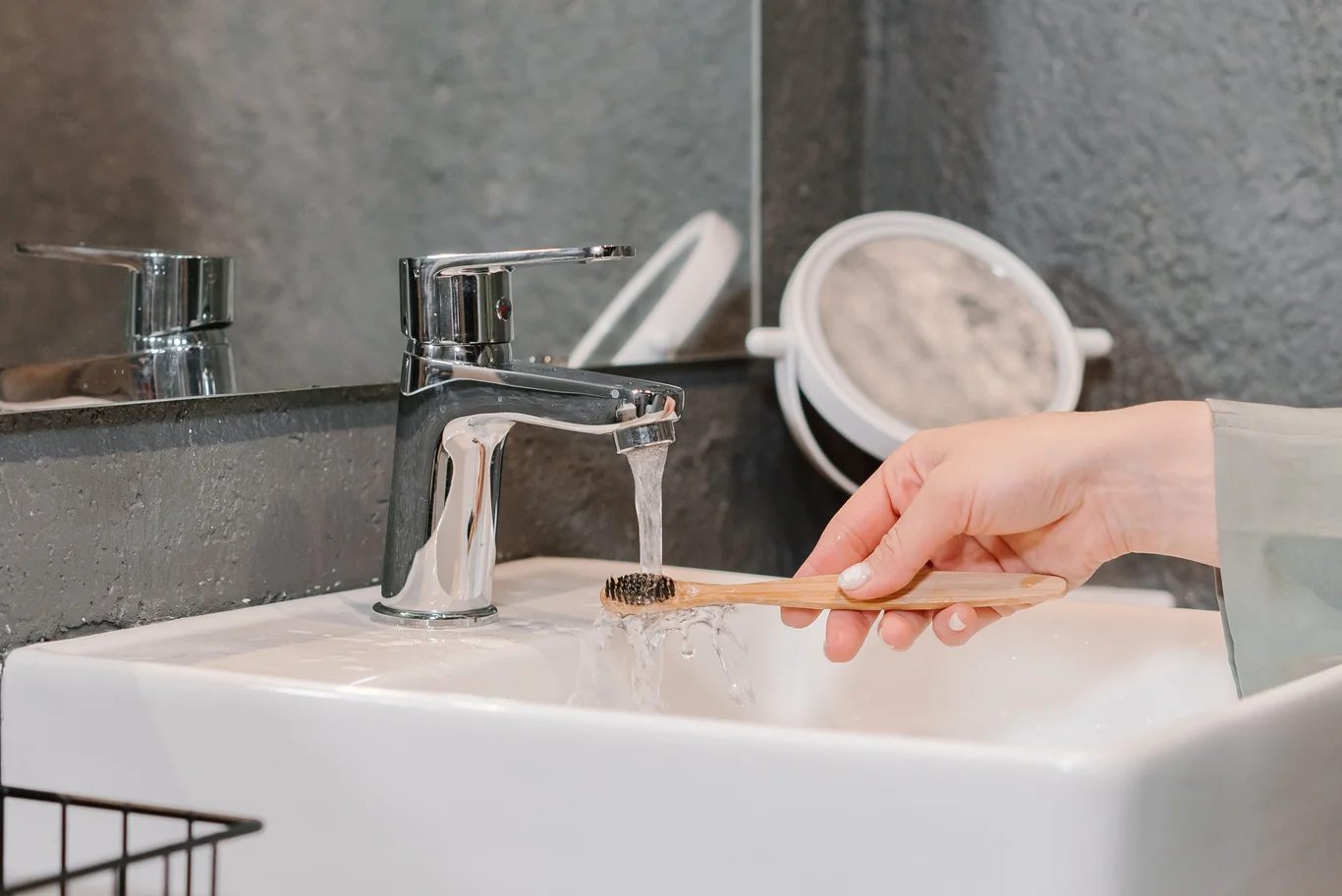
- Vacuum both sides with a brush attachment, or rinse it in cool water with no soap. Use a soft brush on stubborn dust.
- Let it dry completely, and do not use heat or put it back damp.
- Reinstall the pre-filter, close the cover, and plug the unit back in.
Not every model takes water, because some pre-filters are vacuum only, so check your manual before you rinse. Do not let the job slide for long, because according to the EPA, a dirty and overloaded filter will not work well. Repeat the clean every 2 to 4 weeks.
What You Can Clean and What You Must Replace
Your Coway has up to three filter layers, and they do not get the same care. The pre-filter is the only washable layer, and it catches large debris so the layers behind it last longer.
Behind it sits the HEPA filter (high efficiency particulate air, a pleated mesh that traps tiny particles). The EPA says a HEPA filter can theoretically remove at least 99.97% of particles at 0.3 microns (a micron is one millionth of a meter), the hardest size to catch. Rinsing can mat the fine fibers, so you replace this layer instead.
The third layer is carbon (treated charcoal that traps odors and gases by letting molecules stick to its surface). Water does not bring that ability back, so this layer is replaced, not washed, though some Coway models combine the layers into one cartridge, so check what yours has. If the smell returns after cleaning, our guide explains possible reasons why an air purifier smells.
Here is the care for each layer at a glance:
| Layer | What it catches | Care |
| Pre-filter | Hair, lint, large dust | Vacuum or rinse in cool water, dry fully |
| HEPA filter | Fine particles such as dust and pollen | Replace when the filter light comes on |
| Carbon filter | Odors and gases | Replace, never wash |
How Often to Clean With Dust, Pets, or Mold Worries
Start with a clean every 2 to 4 weeks, then adjust for your home. A clogged pre-filter hurts the whole unit, because the EPA says a dirty and overloaded filter will not work well.
Use these rules of thumb to set your own schedule:
- Dusty rooms: check the pre-filter every 2 weeks, because fine dust shows up as a gray film on the mesh.
- Homes with pets: fur and dander clog the mesh fast. Plan on the shorter end of the range, or a little sooner.
- Damp rooms or mold worries: stay on the short end and let the filter dry fully each time. A purifier traps airborne mold spores, but it does not fix the damp that feeds mold.
- Light-use rooms: a clean every 4 weeks is usually enough.
When the mesh looks gray, furry, or blocked, clean it whatever the calendar says. The EPA also advises changing filters more often if they look heavily soiled at replacement time.
Drying the Pre-Filter Without Inviting Mold
Drying is the step people rush. A damp pre-filter that goes back into a closed case can grow mold, and then the purifier pushes musty air into the room. Let it dry completely before you reinstall it.
The EPA says wet items should be dried within 24 to 48 hours to prevent mold growth, because mold needs moisture to grow. The same logic applies to a wet filter. Humidity also matters: the EPA notes that high temperature and humidity can raise the level of some indoor pollutants.
Skip the hair dryer and the radiator, since direct heat can warp the frame. Set the filter flat or upright in a dry, ventilated spot, and wash it in the evening and put it back the next day, so it has time to dry. Shark owners can follow our steps to clean a Shark air purifier filter.
How to Clean Coway Air Purifier Sensors and Outer Housing
The filters are not the only part that gathers dust, since many Coway models have an air quality sensor behind a small cover. In auto mode, the fan speed follows what that sensor reads, so a dusty sensor can misread the room.
For the Airmega 150 and 160, Coway recommends sensor cleaning every 2 months. Turn off and unplug the purifier first. Open the sensor cover and use a dry cotton swab on the lens, dust inlet, and outlet. Do not use water or spray, and follow your manual for the cover location.
For the case, use a soft dry cloth every 2 to 4 weeks. Use a slightly damp cloth only on stubborn marks, and never let water drip inside. Avoid abrasive cleaners and solvents, which can damage the finish, and spend additional time on the air inlet and outlet, where dust gathers.
A quick wipe and a glance at the pre-filter every week or two is an inexpensive habit.
When to Replace Filters and Reset the Indicator
Cleaning the pre-filter does not replace a filter change, so check which indicator is lit. On the Airmega 400, Pre Wash means clean, while Max2 Change means replace. Typical figures are approximately 12 months for the main filter and 6 to 12 months for the deodorization (carbon) layer, and less in dusty homes. Your model’s manual has the exact schedule.
The EPA says all filters need regular replacement and that you should follow the manufacturer’s recommendations. Note which way the old filter faces before you pull it out, then install the replacement the same way. Use authentic Coway filters designed for your model so the seal fits.
After the swap, restore power and follow your model’s reset steps. The Airmega 400 uses Max2 Change, held for 2 to 3 seconds, while the Pro X uses the airflow speed button, held for 3 seconds. Skip the reset and the light stays on even though the filter is new.
How We Research
We check every claim against primary sources. Federal agencies like the EPA and CDC come first. Certification bodies like NSF and AHAM come next. We verify each standard number against the issuing body. We review this guide on a set schedule.
Why Trust This Guide
Puritisimo covers only water and air quality. Our guidance is editorial and independent. We cite every health figure so you can check it. We never present a promotional claim as fact.
A Simple Cleaning Routine You Can Keep
Most of the work is one small habit: every 2 to 4 weeks, vacuum or rinse the pre-filter and let it dry. Every 2 months, swab the sensor, and when the light comes on, swap the filters and reset the indicator. Leave the HEPA and carbon layers dry, because they are made to be replaced, not washed.
If you have pets, dust, or a damp room, lean toward the short end of each range. Put a reminder on your phone and the routine runs itself. Done on schedule, it keeps airflow strong and the filters behind the pre-filter working for their full life. That is how to clean a Coway air purifier without harming the parts that matter.
Frequently Asked Questions
How to clean Coway air purifier filter?
How to clean a Coway air purifier filter comes down to one rule: clean only the pre-filter. Vacuum it with a brush attachment or rinse it in cool water, then let it dry fully. The HEPA and carbon layers are replaced when the filter light comes on, never washed.
How to clean Coway Airmega pre filter?
The Airmega pre-filter cleans up in a few minutes: unplug the unit, then follow your manual to reach the screen, which pulls out from the top on the Airmega 150. Vacuum both sides or rinse it in cool water with no soap, dry it completely, and put it back. Check your manual in case your model is vacuum only.
How to clean Coway Airmega 150?
The Airmega 150 generally follows the same routine as other Coway models. Wash or vacuum only the pre-filter, wipe the case with a dry cloth, and clean the sensor with a dry cotton swab. Replace the main filters when the indicator comes on, and the Airmega 150 manual has the exact intervals.
Can you wash the carbon filter for Coway Airmega 150?
No, the carbon layer is replaced, not washed. Water does not restore its ability to trap odors and gases, and a damp filter can grow mold. Coway’s guidance is to swap the filter when the indicator light comes on. Washing it only shortens the life of a filter you paid for.
How to clean Coway AP-1512HH?
The AP-1512HH uses the same basic routine: clean the pre-filter, then replace the main filters on schedule. Vacuum or rinse the pre-filter, dry it fully, and reinstall it. Wipe the case and sensor as needed, and the AP-1512HH manual lists the exact pre-filter schedule.
References
- US EPA. What is a HEPA filter? Indoor Air Quality.
- US EPA. Guide to Air Cleaners in the Home. Indoor Air Quality.
- US EPA. A Brief Guide to Mold, Moisture, and Your Home. Mold.
- US EPA. Introduction to Indoor Air Quality. Indoor Air Quality.
Medical Disclaimer: This content is for informational purposes only. It is not a substitute for professional medical advice, diagnosis, or treatment. If you have concerns about your water quality or air quality and their effects on your health, consult a qualified healthcare professional.

