
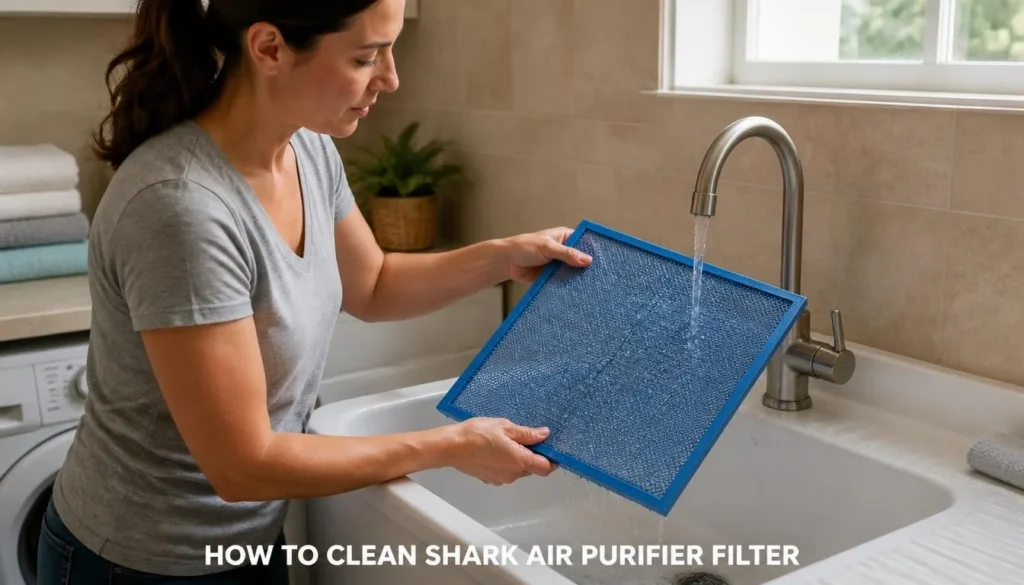
On the Shark NeverChange HP300 series, only the mesh dust filters can be washed. Vacuum them first, then rinse them in room temperature water only if they are still visibly dirty. The HEPA filter (a dense pleated filter that catches very fine particles) behind them never gets wet. Your Shark air purifier needs both layers working properly, and each layer has its own maintenance requirements.
This guide shows the steps in order, the drying time Shark asks for, and the parts that must stay dry. You will understand which part to wash, which to vacuum, and which to replace.
Key Takeaways
- Only the two mesh dust filters on the sides can be rinsed. The HEPA filter is never washed.
- Vacuum or wipe the mesh screens first. Rinse with room temperature tap water only if needed.
- Dry rinsed screens for 12 hours, and never run the purifier while they are wet.
- A dirty HEPA filter is replaced, not cleaned. Shark says one lasts up to 5 years under test conditions.
How to Clean Shark Air Purifier Filter: The Washable Dust Screens
Your Shark NeverChange air purifier cleans air in two stages. Two washable mesh dust filters on the sides catch hair, dust, and lint particles initially, while the HEPA filter behind them handles the fine particles. The steps below follow Shark’s guide for the NeverChange HP300 series.
Clean screens keep the HEPA filter behind them from clogging early because, according to the EPA, a filter that is dirty and overloaded won’t work well.
For dry screen maintenance, Shark says to keep the purifier plugged in and running, but turn it off if you rinse a screen. Never run it while a screen is still wet.
Follow these steps when the display asks for it:
- Remove the screens: Slide each mesh dust filter upward and out of its side slot. Check it for dust and debris.
- Vacuum or wipe: Use a vacuum cleaner on low speed with a soft brush attachment, or a cloth or towel. Skip abrasive chemical cleaners.
- Rinse only if needed: If the screen is still dirty, rinse it with room temperature tap water.
- Dry fully: Let rinsed screens dry for 12 hours before they go back in.
- Reinstall: Push each screen into its slot until it sits flush with the body. The purifier then recalibrates, shown by rotating lights.
When the Check Dust Filters Message Means It Is Time
Your Shark air purifier tells you when the screens need attention, so you don’t have to guess. The front display shows a pulsing red ring and the words “check dust filters.” The Dust Filter Life reading counts down, and at 0% the filter icon flashes.
The message asks you to look, not to wash, so slide a screen out and inspect it for debris. If it carries light dust accumulation, a vacuum pass is generally sufficient, and you rinse only when vacuuming leaves it dirty.
Do not confuse this with an air purifier filter change, because the screens are a cleaning job and the HEPA filter is the part you replace. The Shark never change air purifier manual says one filter can last up to 5 years under Shark’s test conditions. The EPA also says to replace filters according to the maker’s recommendations, and for timing across brands, see our guide on how often to change an air purifier filter.
What Gets Wet: How to Clean Shark Air Purifier Filter Parts
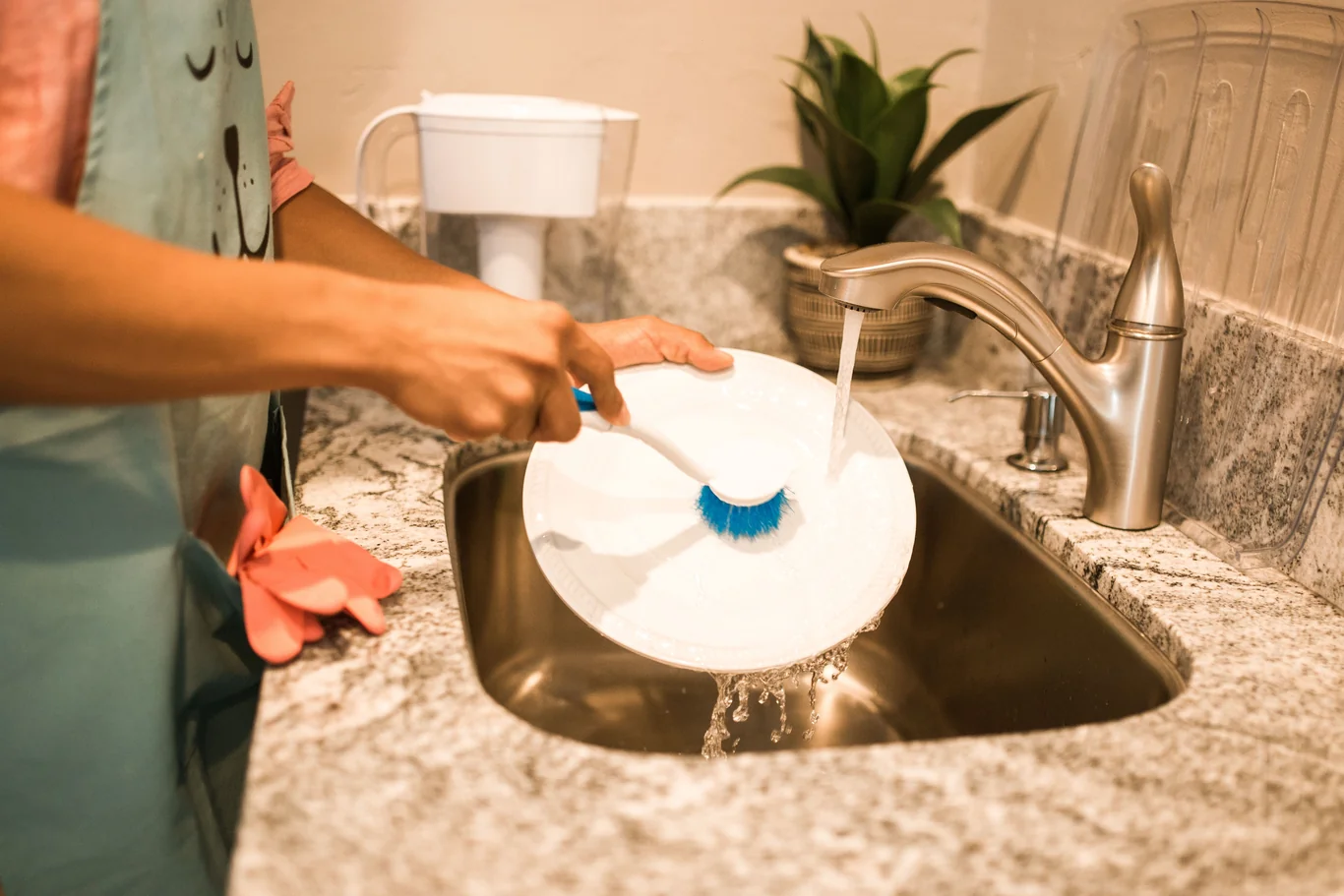
Four parts of your purifier need cleaning, and only one takes a real rinse. The mesh dust filters can be rinsed, while everything else stays dry or nearly dry.
The air purifier hepa filter is a different kind of part. A HEPA (high-efficiency particulate air) filter can theoretically remove at least 99.97% of dust, pollen, mold, bacteria, and other airborne particles, according to the EPA. That rating applies to particles 0.3 microns in diameter (a micron is a millionth of a meter), so not every pollutant listed is that size. Shark says its HEPA filter is not washable, so keep it away from moisture and replace it when it is dirty.
This table shows what Shark’s guide allows for each part:
| Part | Water allowed? | How to clean it |
| Mesh dust filters | Yes, if needed | Vacuum on low speed or wipe with a cloth. Rinse in room temperature tap water. Dry for 12 hours. |
| HEPA filter | No | Do not wash it, so replace it when it is dirty. |
| Inside of the purifier | No | Unplug the unit. Take out the HEPA filter. Vacuum or wipe with a microfiber cloth. |
| Outside of the purifier | A little | Wipe with a microfiber cloth dampened with warm, soapy water. Avoid excess water. |
Drying Time and Mistakes That Ruin a Clean Filter
Drying is the step people rush, and Shark asks for a full 12 hours before rinsed screens go back in. Damp material invites mold, and the EPA says to dry water-damaged items within 24 to 48 hours to prevent mold growth. Shark also says not to run the unit without a filter in place, so rinse the screens when the purifier can sit off.
Follow these maintenance precautions:
- Running it wet: Shark says not to use the purifier while the mesh filters are wet.
- Washing the HEPA filter: Shark says it is not washable and should stay away from water.
- Harsh cleaners: Shark warns against abrasive chemical cleaners on the screens, the inside, and the outside.
- Half-seated screens: Push each screen in until it sits flush with the body.
- Skipping the vacuum pass: The rinse is the backup step, not the first move.
- Off-brand filters: Shark’s safety notes say to use only Shark branded filters and accessories.
Cleaning the Inside and Outside of the Purifier
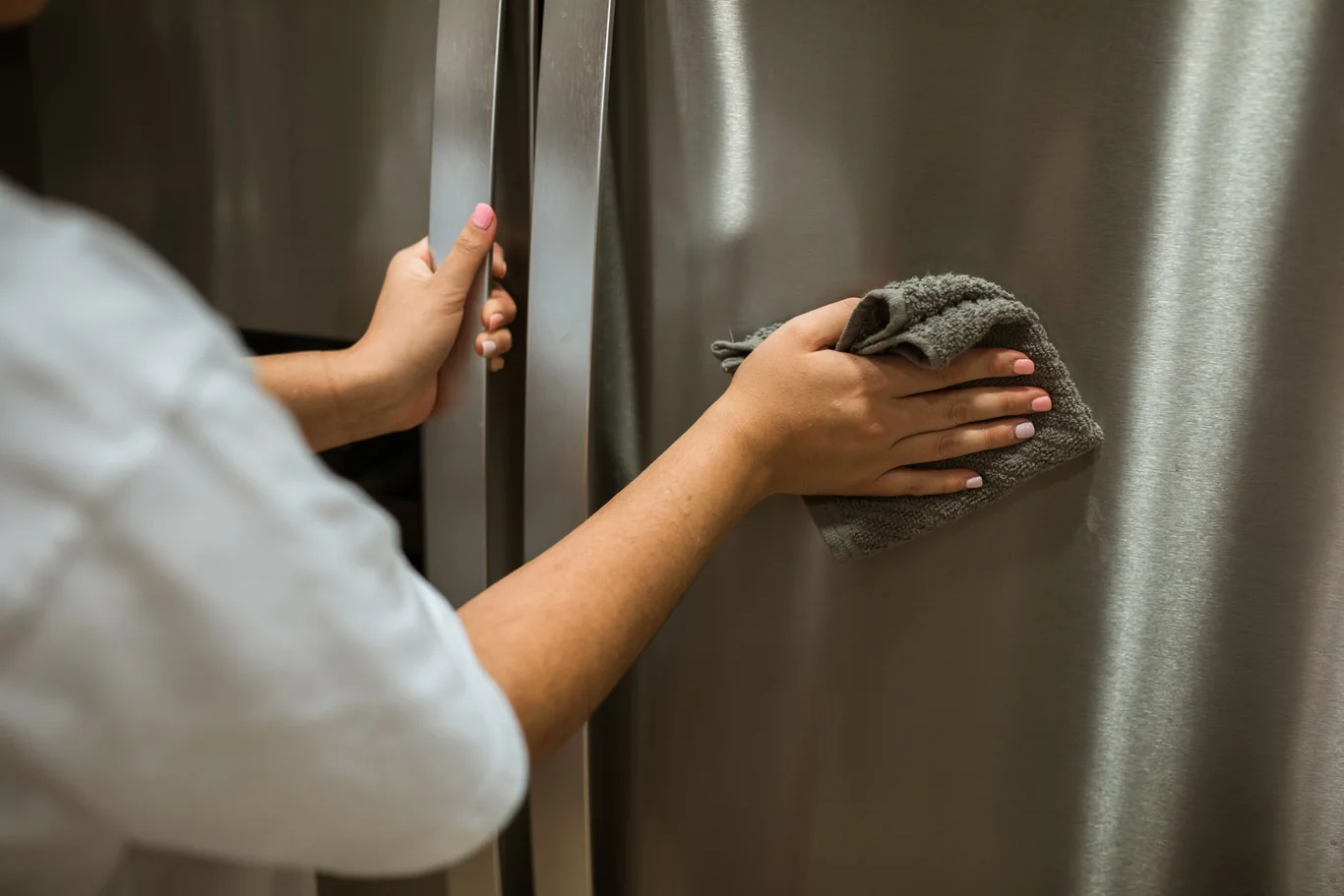
The screens are not the only dirty surface, because dust also settles inside the tower and on the shell. Shark suggests cleaning the inside and the outside every two months, or sooner if necessary.
Unplug the appliance first, then carefully turn it upside down on a level floor. Rotate the bottom filter door counterclockwise, lift it off, and take out the HEPA filter. Then use a vacuum or a microfiber cloth on the inside. Keep water and abrasive cleaners away from the interior.
This is worth the additional effort, because the EPA notes that particles smaller than 10 micrometers can penetrate deep into your lungs. That is the dust your purifier exists to catch, so keep its housing clean too. For the shell, wipe with a microfiber cloth dampened with warm, soapy water, and use minimal water.
These steps follow Shark’s guide for the NeverChange HP300 series. Shark makes other purifiers with different filter designs. If you want to know how to clean shark clean sense iq air purifier filter parts, read that model’s own guide first. Keep water away from any filter it does not clearly allow. Other brands differ too, and our Philips 1000 series cleaning guide covers one example.
After You Clean: Reset, Then Plan the Filter Change
Once the screens are back in, the purifier recalibrates, and the rotating lights show it reading the air again. Clearing the dust filter indicator afterward is covered in our Shark air purifier reset guide.
Cleaning does not renew the HEPA filter, because clean screens only keep it from clogging early. When the HEPA filter itself is dirty, replace it with a Shark branded one. Shark says one filter can last up to 5 years under its test conditions, but your home is not a test lab, so treat that number as a ceiling. Blueair owners can follow our steps to clean a Blueair air purifier.
A straightforward routine works well: check the display for the dust filter notification, and wipe the inside and outside every two months. Write the maintenance date on a calendar so the job does not slip.
How We Research
We check every claim against primary sources. Federal agencies like the EPA and CDC come first. Certification bodies like NSF and AHAM come next. We verify each standard number against the issuing body. We review this guide on a set schedule.
Why Trust This Guide
Puritisimo covers only water and air quality. Our guidance is editorial and independent. We cite every health figure so you can check it. We never present a promotional claim as fact.
Keep the Screens Clean and the HEPA Filter Dry
Shark makes this job easy once you know where each layer ends. The mesh dust filters on the sides are the only parts meant for water, and even they need a vacuum pass first and a 12-hour dry after a rinse. The HEPA filter stays dry and needs replacing when dirty. Wipe the inside and outside every two months, and use only Shark branded parts. For other brands, our general air purifier filter cleaning guide covers the basics. Regular cleaning keeps the HEPA filter from clogging early. Now you know which Shark parts to wash and which to leave alone.
Frequently Asked Questions
How to clean Shark air purifier filter?
Cleaning a Shark air purifier starts with telling the layers apart. Vacuum or wipe the two side mesh dust filters, rinse them in room temperature tap water only if needed, and dry them for 12 hours. The HEPA filter is never washed, so replace it when it is dirty.
How do you get the filter out of a Shark?
It depends on the layer: the mesh dust filters slide up and out of the slots on the sides of the tower. The HEPA filter sits behind the filter door, so unplug the unit and turn it upside down on a level floor. Rotate the door counterclockwise to unlock it, then lift it off. Use only Shark branded replacements.
Why does my Shark air purifier say check dust filters?
The message appears when the mesh dust filters need a check for debris. The front display shows a pulsing red ring, and the filter icon flashes once Dust Filter Life reaches 0%. Slide the screens out and look them over, because a vacuum pass is often sufficient.
Are Shark vacuum filters machine washable?
This guide covers the air purifier, so it speaks only for purifier parts. Shark’s NeverChange guide describes a hand rinse in room temperature tap water for the mesh dust filters and does not describe machine washing. Shark vacuum filters are different parts with their own care guide, so check that manual first.
What does the dust filter do in a Shark air purifier?
Each mesh dust filter catches large debris such as hair, dust, and lint, and that helps protect the 3-layer HEPA filter behind it, which handles the fine particles. The screens are also the only filter layer Shark calls easy to clean.
References
- U.S. Environmental Protection Agency. Guide to Air Cleaners in the Home. 2026.
- U.S. Environmental Protection Agency. What is a HEPA filter? 2026.
- U.S. Environmental Protection Agency. A Brief Guide to Mold, Moisture, and Your Home. 2026.
- U.S. Environmental Protection Agency. Indoor Particulate Matter. 2026.
Medical Disclaimer: This content is for informational purposes only. It is not a substitute for professional medical advice, diagnosis, or treatment. If you have concerns about your water quality or air quality and their effects on your health, consult a qualified healthcare professional.

