
If you’re wondering where the water filter is on your Whirlpool refrigerator, the answer depends on which model you own. Most French door and bottom-freezer units keep it inside the fresh food compartment’s upper-right corner. Older side-by-side models hide it behind a push-button grille near the floor instead. Whirlpool changed the design over time. The spot that worked on an older fridge will not match a newer one.

By the end of this guide, you’ll be able to spot which type your kitchen has and locate the cartridge in under a minute. You’ll also know when it’s time to swap it out. We’ll also cover the twist-lock and push-button release steps so you don’t force the wrong panel.
Key Takeaways
- Most Whirlpool models keep the water filter in the fresh food compartment’s upper-right corner.
- French door and bottom-freezer models use Filter 1, released with a quarter twist.
- Older side-by-side models hide the filter behind a push-button base grille instead.
- Replace the cartridge every 6 months, even in low-use kitchens, to limit bacterial buildup.
Where Is the Water Filter on a Whirlpool Refrigerator?
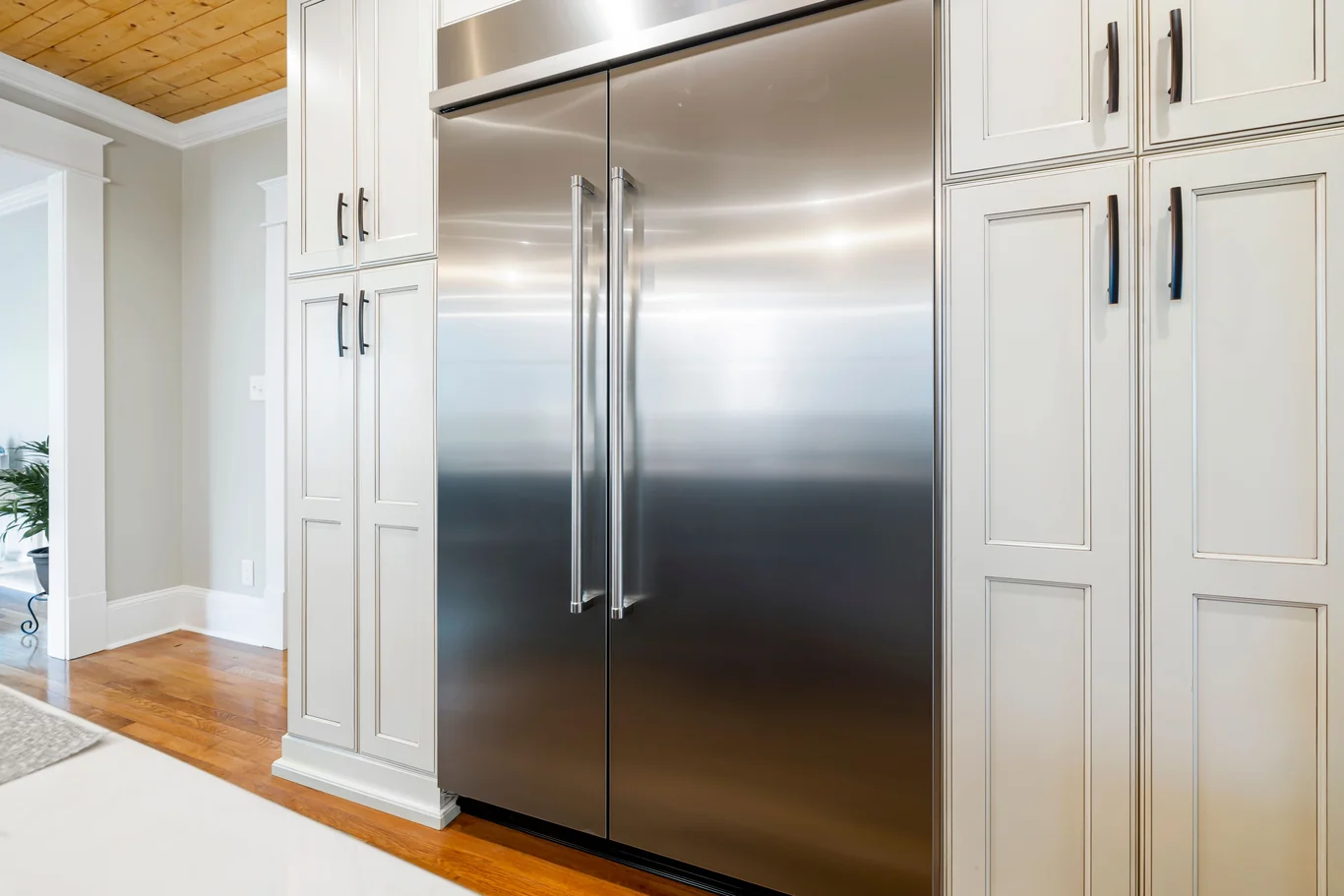
Whirlpool has changed where it puts the water filter over the years. Most current French door and bottom-freezer models keep it in the fresh food compartment’s upper-right corner. Older side-by-side units hide it behind a push-button grille near the floor instead.
On French door and bottom-freezer fridges, the filter sits behind a small door inside the fresh food compartment. It sits in the upper-right corner near the produce bins. Open that door and you will see a cylindrical cartridge labeled Filter 1. It twists out by hand, with no screwdriver or trip to the basement shutoff valve needed.
Side-by-side models built before Whirlpool’s newer platform take a different approach. Instead of an interior door, the cartridge sits behind a push-button grille at the base of the fridge. It sits near floor level, often close to the kick plate. You press a release button instead of twisting anything. That is the easiest way to tell the two designs apart at a glance.
How to Find and Release Filter 1 on French Door Models
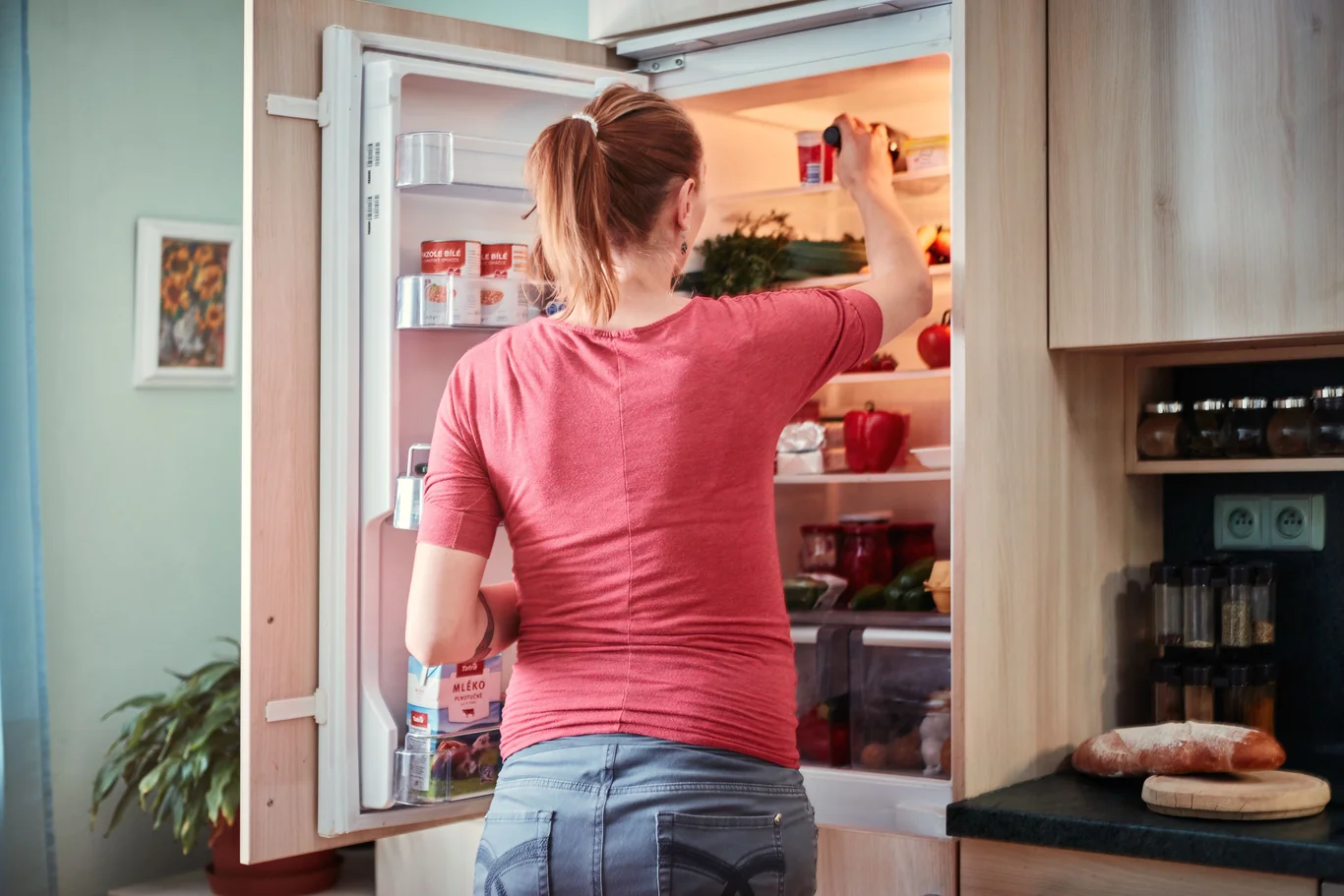
The WRF555SDFZ, one of Whirlpool’s most common French door models, uses the same Filter 1 cartridge found on most bottom-freezer lines. Locating and releasing it takes four simple steps, and you will not need any tools.
- Open the fridge door and locate the small filter access panel in the upper-right corner of the fresh food compartment.
- Press the release tab so the panel pops open toward you.
- Turn the cartridge counter-clockwise about a quarter turn until it unlocks from the housing.
- Pull the old cartridge straight out and set it aside for disposal.
Before you install a replacement, check its certification mark. Genuine Whirlpool cartridges are certified by NSF International (an independent standards and certification organization). Certification covers NSF/ANSI 42 for taste and odor reduction, NSF/ANSI 53 for health-effect contaminant reduction such as lead, or both. Confirming this before you buy is the easiest way to avoid an uncertified lookalike filter.
This quarter-turn twist-lock release is not unique to the WRF555SDFZ. Whirlpool built it into the entire Filter 1 family. The same motion works whether your fridge is six months old or six years old.
Finding the Filter on Side-by-Side Models
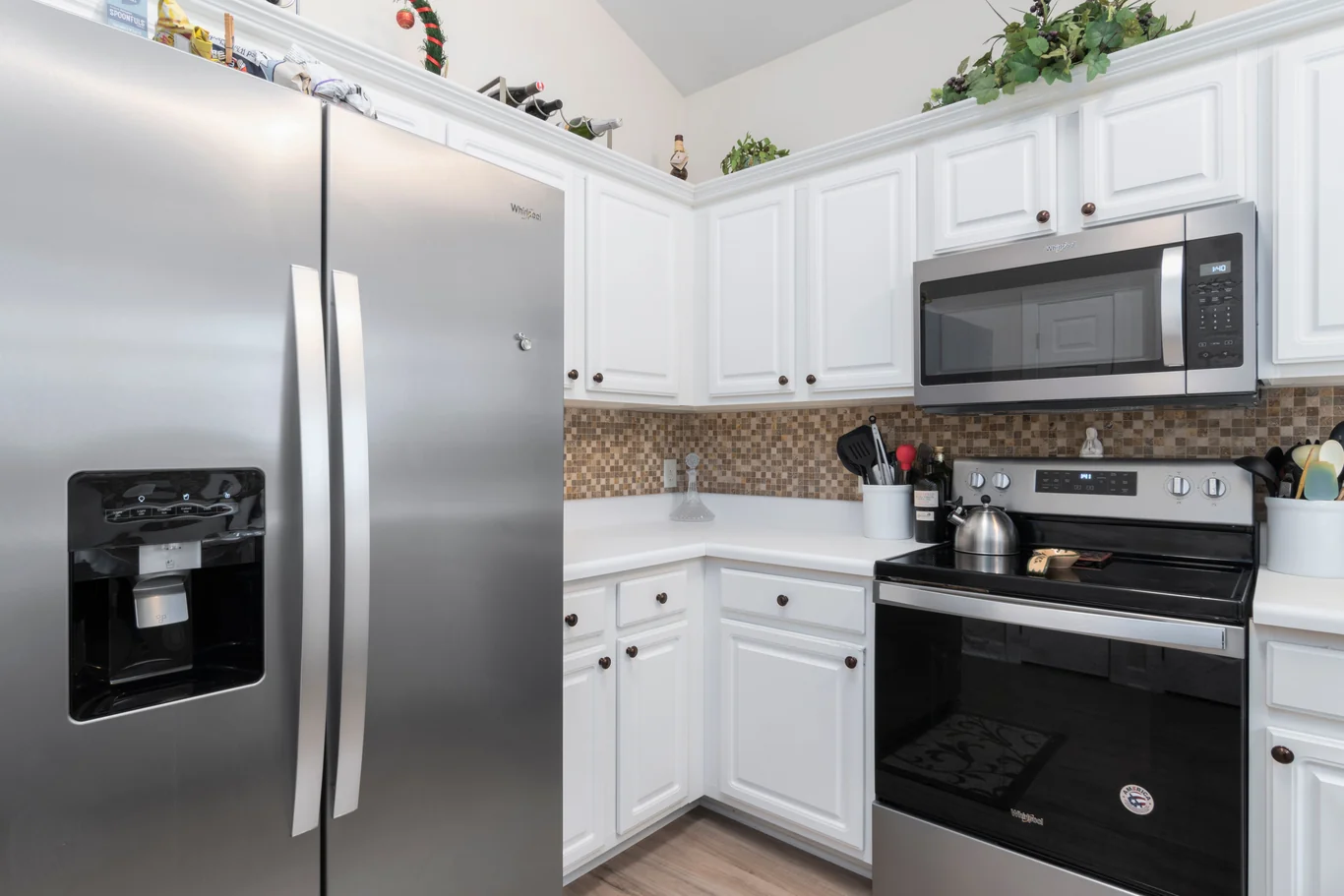
On a side-by-side layout, the filter is not inside the fresh food compartment at all. It sits behind a push-button housing built into the base grille near the floor instead. That is the opposite of where French door models keep it.
Older side-by-side models, including the WRS325SDHZ01, use this base-grille design almost without exception. Your fridge might have two vertical doors side by side instead of a French door section over a freezer drawer. If so, check the floor-level grille before looking inside the compartment.
A few signals confirm you are looking at a base-grille model:
- A side-by-side door layout, rather than French doors over a bottom freezer.
- A small filter icon molded directly into the base grille panel.
- A model number starting with WRS or WRX, including the WRS325SDHZ01.
- A push-and-release housing instead of an interior filter door.
That push-and-release motion is the real difference from the French door design. Press the housing in, let it pop forward, and slide the old cartridge free, no twisting required.
How Filter Location Compares Across Refrigerator Brands
If you searched this while standing in front of a GE Profile or LG fridge, the same logic still applies. The exact spot still changes by brand. GE Profile models most often keep the filter inside the fresh food compartment or in the base grille, depending on the specific line. LG models typically use a base-grille housing or a filter built into the rear interior wall.
The certification mark is what actually determines what the filter removes, not the release mechanism. That holds true no matter which brand’s fridge you own.
Whichever brand you own, the same checkpoint applies. The CDC (the Centers for Disease Control and Prevention) recommends choosing a filter certified to NSF/ANSI 53 when lead reduction matters, regardless of manufacturer.
Here is how the three brands compare at a glance:
| Brand | Typical Filter Location | Release Mechanism |
| Whirlpool | Fresh food compartment on French door and bottom-freezer models, base grille on older side-by-side models | Quarter twist or push-and-release |
| GE Profile | Fresh food compartment interior wall or base grille, depending on model | Twist-and-pull cartridge |
| LG | Base grille or rear interior wall | Push-button release or twist cartridge |
Replacing the Filter Once You’ve Found It
Once you’ve found it, replacing the filter is a two-minute job. Households that want filtered water from the kitchen tap as well can add a countertop water filter at the sink alongside the refrigerator setup. You can put it on a repeating schedule instead of guessing. Whirlpool recommends swapping the cartridge roughly every six months, even in a low-use kitchen. Filter performance depends on time in service, not only on gallons consumed.
That schedule matters even if your household barely uses the dispenser. According to Consumer Reports, a carbon filter left sitting in stagnant, unreplaced water can allow bacteria to grow inside the cartridge. Replace it on a fixed timeline rather than waiting until the water tastes or looks different.
After installing the new cartridge, reset the filter indicator light using the control panel. Usually, this is a press-and-hold on the water or filter icon for three seconds. This clears the countdown so the light does not falsely flag a fresh filter as due for replacement. The NSF/ANSI 42 versus 53 distinction from earlier still applies to whatever replacement you buy. Check the certification mark before checkout, not just the brand name on the box.
How We Research
We check every claim against primary sources. Federal agencies like the EPA and CDC come first. Certification bodies like NSF and AHAM come next. We verify each standard number against the issuing body. We review this guide on a set schedule.
Why Trust This Guide
Puritisimo covers only water and air quality. Our guidance is editorial and independent. We cite every health figure so you can check it. We never present a promotional claim as fact.
Finding Your Filter Comes Down to One Thing: Your Model
Every Whirlpool refrigerator hides its filter in one of two places. Which one applies to your kitchen depends on the model you own. French door and bottom-freezer refrigerators, like the WRF555SDFZ, keep Filter 1 in the fresh food compartment, released with a quarter twist. Older side-by-side models, including the WRS325SDHZ01, hide the filter behind a push-button base grille near the floor instead.
If you own a side-by-side model and want the full walkthrough, see this guide. It covers where the water filter is on a Whirlpool side-by-side refrigerator. Once you match your fridge to the right type, swapping the cartridge every six months takes two minutes. Once you know where the water filter is on your Whirlpool refrigerator, the rest of the upkeep is simple.
Frequently Asked Questions
Where is the water filter on a Whirlpool refrigerator?
The water filter on a Whirlpool refrigerator sits in one of two spots depending on the model. French door and bottom-freezer units keep it in the upper-right corner of the fresh food compartment. Older side-by-side models use a push-button base grille near the floor instead. Checking your owner’s manual confirms which layout applies to you.
Does my Whirlpool refrigerator ice maker have a filter?
No, the ice maker does not have its own cartridge. It draws from the same in-line water filter that supplies the dispenser. A clogged or overdue filter can slow ice production and dispenser flow at the same time. Replacing the single shared filter fixes both.
Do all Whirlpool refrigerators have a filter?
Not every model ships with a replaceable cartridge. Some basic, non-dispenser Whirlpool fridges are unfiltered or use a simple inline canister instead of the twist-lock or push-button designs covered here. Check your owner’s manual or the model number sticker inside the compartment to confirm which type yours uses.
Where is the water filter located in my fridge?
Location varies by brand, not just by model. Whirlpool fridges typically place it in the fresh food compartment or base grille. Brands like GE Profile and LG use their own interior or grille placements. See the brand comparison above for the specific differences.
How do I change the water filter in a Whirlpool side-by-side refrigerator?
Locate the push-button housing in the base grille near the floor. Press it in until it pops forward, and slide the old cartridge free. Install the new one the same way. Then replace it again on a six-month schedule regardless of how often the dispenser gets used.
References
- NSF International. Standards for Water Treatment Systems. 2024.
- CDC. Lead Prevention: Drinking Water. 2024.
- Consumer Reports. Best Countertop Water Filters of the Year. 2025.
Medical Disclaimer: This content is for informational purposes only. It is not a substitute for professional medical advice, diagnosis, or treatment. If you have concerns about your water quality or air quality and their effects on your health, consult a qualified healthcare professional.