
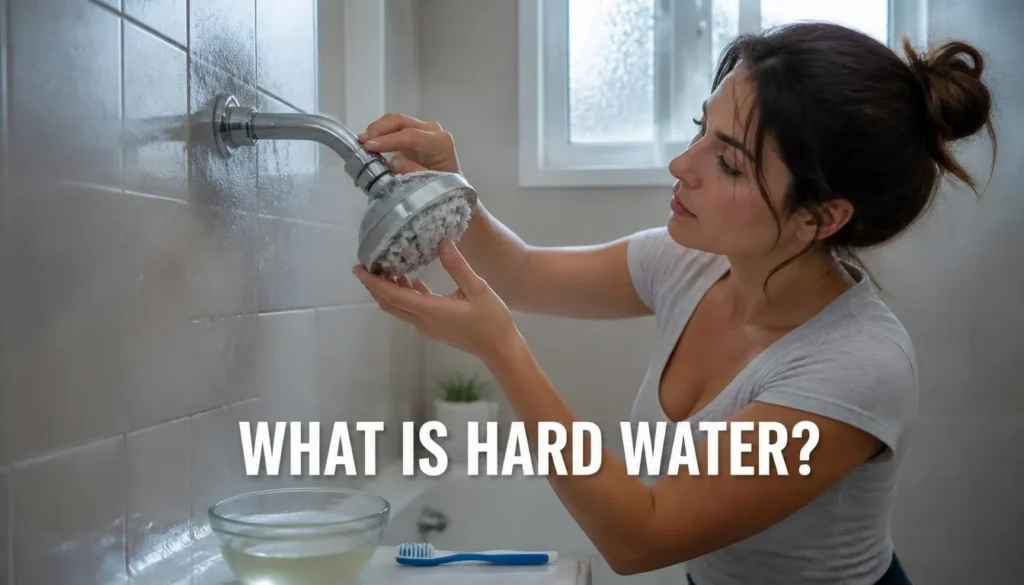
Hard water is tap water that carries a lot of dissolved calcium and magnesium. These minerals come from the rock and soil that water passes through. They are not harmful by themselves, but you can see their effects as white crust on faucets, spots on glasses, and soap that will not lather well.
This guide explains what hard water is, how to tell how hard yours is, and whether it is worth fixing. By the end, you will know the hardness levels, the signs to look for, and what research says about your health and your home.
Key Takeaways
- Hard water carries high levels of dissolved calcium and magnesium, picked up as water moves through rock and soil.
- Water above 120 milligrams per liter of hardness counts as hard, and above 180 it counts as very hard.
- Hardness is a nuisance, not a health concern, but its scale can shorten the life of your equipment.
- Check your supplier’s yearly report for hardness before buying treatment; if it is missing, ask or test.
What Is Hard Water? A Plain Definition
Hard water is water with a high amount of dissolved calcium and magnesium. Water hardness is simply the amount of those two minerals in the water, so the more of them there are, the harder the water is.
According to the USGS, water picks up these minerals as it moves through soil and rock, dissolving small amounts along the way. Hard water also tends to follow the places where carbonate aquifers (underground rock layers rich in calcium carbonate, such as limestone) supply the water.
Labs express calcium and magnesium as calcium carbonate equivalents before adding them to report total hardness, which makes results from different places easy to compare. Well water can also carry iron, which some labs count toward the total.
Hardness is not a measure of cleanliness. Clean, well-treated tap water can still be hard, because hardness counts minerals and says nothing about germs or chemicals. That is why a hard water problem is usually about scale and soap, not safety. Our guide shows how to remove hard water stains safely.
What Is Considered Hard Water? Hardness Levels Explained
Water counts as hard once it passes about 120 mg/L, which equals 7 grains per gallon, according to the EPA. Here hardness is reported in milligrams per liter (mg/L) as calcium carbonate equivalent, not as the actual mass of dissolved minerals. Grains per gallon (gpg) is an older unit that many softener labels still use.
One grain per gallon equals about 17 mg/L, so you can convert either way, according to NDSU Extension. The same source notes that people tend to feel they have a problem once hardness passes about 6 to 7 grains per gallon.
The USGS sorts hardness into four levels, shown below as mg/L of calcium carbonate:
| Level | mg/L as calcium carbonate | Grains per gallon |
| Soft | 0 to 60 | Up to 3.5 |
| Moderately hard | 61 to 120 | 3.5 to 7.0 |
| Hard | 121 to 180 | 7.0 to 10.5 |
| Very hard | More than 180 | More than 10.5 |
Where Hard Water Is Found and How to Check Yours
Hard water is common wherever the local supply runs through mineral-rich rock. As the USGS explains, water dissolves small amounts of natural minerals as it moves through soil and rock. Hardness can change from one town to the next, and even between two sources that feed the same utility.
To find your own number, follow these steps:
- Find your water supplier’s yearly water quality report, also called a Consumer Confidence Report. Suppliers must send it by July 1 each year.
- Look for a line named hardness, or for calcium and magnesium. If you cannot find one, call the supplier and ask for hardness in mg/L or grains per gallon.
- If you use a private well, test the water yourself, because no supplier report covers it.
- Convert the result if you need to. Multiply grains per gallon by 17 to get mg/L.
A zip code lookup gives only a rough guide. Suppliers can blend more than one source, so a report for your own address is a better starting point than a regional map.
What Is Hard Water Scale? Examples You Can See at Home
Scale is the hard, chalky crust of calcium carbonate that forms when hard water is heated. According to the USGS, this scale can shorten the life of equipment, raise the cost of heating water, and clog pipes.
Soap also reacts with calcium in hard water to form soap scum, so you need more soap or detergent to get things clean.
Common examples of hard water at home include these signs:
- Crust on kettles and faucets: white or gray buildup where water gets hot or dries.
- Soap scum: a dull film on shower doors, tubs, and sinks.
- Spotted dishes and glasses: mineral spots left behind when the water dries.
- A less efficient water heater: scale on the heating parts slows heat transfer.
- More cleaning product: you need extra soap or detergent for the same result.
Heaters take the biggest hit. NDSU Extension explains that calcium and magnesium carbonates coat the heating elements in electric water heaters, and heaters with large mineral buildup have shorter life spans.
The effect of hard water falls mostly on your plumbing and appliances, not on the safety of your tap water.
Is Hard Water Bad for You? What the Evidence Says
For drinking, hard water is generally not a health concern. The USGS calls hardness a nuisance, not a health concern.
The WHO adds that drinking water can contribute calcium and magnesium to your diet. That could matter for people who get little of either from food.
Removing hardness is also not needed to protect your health, according to NDSU Extension. People mostly choose softening because they prefer softened water for bathing, cleaning, and washing.
Skin is where the research is less settled. A review in Clinical and Experimental Allergy included 16 studies overall. Pooled data from seven observational studies found an association between hard water areas and eczema (a skin condition with dry, itchy patches) in children. The authors rated the certainty of that evidence as very low. Two randomized trials found that softened water did not significantly change eczema severity, and the authors call for longer studies.
If skin is your worry, ask a clinician before you spend money on equipment.
For hair concerns, the distinction is shedding versus breakage. Our guide on whether hard water can cause hair loss explains why some laboratory tests found weaker strands, while none of the studies reviewed showed that hard water stops follicles from growing hair.
Hard Water vs Soft Water and How Softening Works
Soft water has few dissolved calcium and magnesium ions. By the USGS scale, it sits at 60 mg/L or less, while hard water starts above 120 mg/L. The difference is the mineral load.
Nearly all water softeners use ion exchange (a swap in which resin beads trade one mineral for another). The beads hold sodium or potassium and release it as water passes through, while they catch the calcium and magnesium. According to the EPA, the system then recharges the beads with salt brine, using about 20 to 70 gallons of water per cycle.
Sodium-based softening adds sodium. NDSU Extension estimates about 8 mg/L of added sodium for each grain of hardness removed. So removing 10 gpg adds about 80 mg/L on top of the sodium already present. Potassium-based softeners add potassium instead. People on low-sodium diets can keep one kitchen tap unsoftened for drinking.
Size and settings matter. The EPA says softeners are sized by grain capacity, and an oversized unit wastes water. It also advises choosing demand-initiated regeneration, which recharges the beads only when they need it, instead of on a fixed timer.
Softened water is also a poor fit for some uses. NDSU Extension does not recommend it for house plants, lawns, or gardens because of its sodium content, and some local rules restrict softener discharge, so check yours before you buy.
Salt-free conditioners work differently. They aim to reduce scale buildup rather than swap out the hardness minerals. The EPA suggests looking for IAPMO/ANSI Z601 (the standard for scale reduction devices) on those, and NSF/ANSI 44 (the standard for ion exchange softeners) on softeners.
A carbon filter is not a softener, so a shower filter for hard water changes other things, not the hardness of the water.
How We Research
We check every claim against primary sources. Federal agencies like the EPA and CDC come first. Certification bodies like NSF and AHAM come next. We verify each standard number against the issuing body. We review this guide on a set schedule.
Why Trust This Guide
Puritisimo covers only water and air quality. Our guidance is editorial and independent. We cite every health figure so you can check it. We never present a promotional claim as fact.
Is Your Water Hard Enough to Act On?
Hard water is water with a lot of dissolved calcium and magnesium. It is common where water moves through mineral-rich rock, and it costs you mostly in scale, soap scum, and appliance wear rather than in health. The fixes range from a quick scale clean to a whole-home softener. Your supplier’s yearly report may give the number. The EPA says a softener often makes sense once hardness passes 180 mg/L (10 gpg), so below that, a little scale cleaning may be enough. Check your number first, then decide what, if anything, to fix. If your hardness reading points toward treatment, check how much a water softener costs when weighing your options.
Frequently Asked Questions
What is hard water, and how does it differ from regular water?
What hard water is comes down to two minerals, calcium and magnesium, dissolved in high amounts. Regular, or soft, water carries few of them. The difference is the mineral load, and it shows up as scale, soap scum, and spots rather than in how clean the water is.
How does a water softener work?
A water softener uses ion exchange. Resin beads inside the tank hold sodium or potassium and trade it for the calcium and magnesium in your water. When the beads fill up, the system flushes them with salt brine and starts again. The result is soft water with added sodium or potassium, depending on the salt used.
What minerals cause hard water?
Calcium and magnesium cause hard water. Water dissolves them from soil and rock as it travels underground. In some well water, iron adds to the total as well. Labs report the combined amount as hardness, in mg/L as calcium carbonate.
How is water hardness measured?
Hardness is measured in milligrams per liter (mg/L) of calcium carbonate or in grains per gallon (gpg). One gpg equals about 17 mg/L. Your water supplier’s yearly report may list hardness; if it does not, ask the supplier. A lab test measures hardness in private well water.
Is hard water bad for you?
For most people, hard water is not a health concern. The USGS describes hardness as a nuisance rather than a health problem. The skin evidence is less settled, since research links hard water to eczema in children without showing that it causes it. Ask a clinician if skin problems continue.
References
- U.S. Geological Survey. Hardness of water. Water Science School.
- EPA WaterSense. Soften water without wasting it. EPA 832-F-26-007. 2026.
- NDSU Extension. Water softening (ion exchange). WQ1031. 2022.
- EPA. Consumer Confidence Report (CCR) information for consumers.
- World Health Organization. Hardness in drinking-water: background document for development of WHO guidelines for drinking-water quality.
- Jabbar-Lopez et al. The effect of water hardness on atopic eczema, skin barrier function: a systematic review and meta-analysis. Clinical and Experimental Allergy.
Medical Disclaimer: This content is for informational purposes only. It is not a substitute for professional medical advice, diagnosis, or treatment. If you have concerns about your water quality or air quality and their effects on your health, consult a qualified healthcare professional.

