
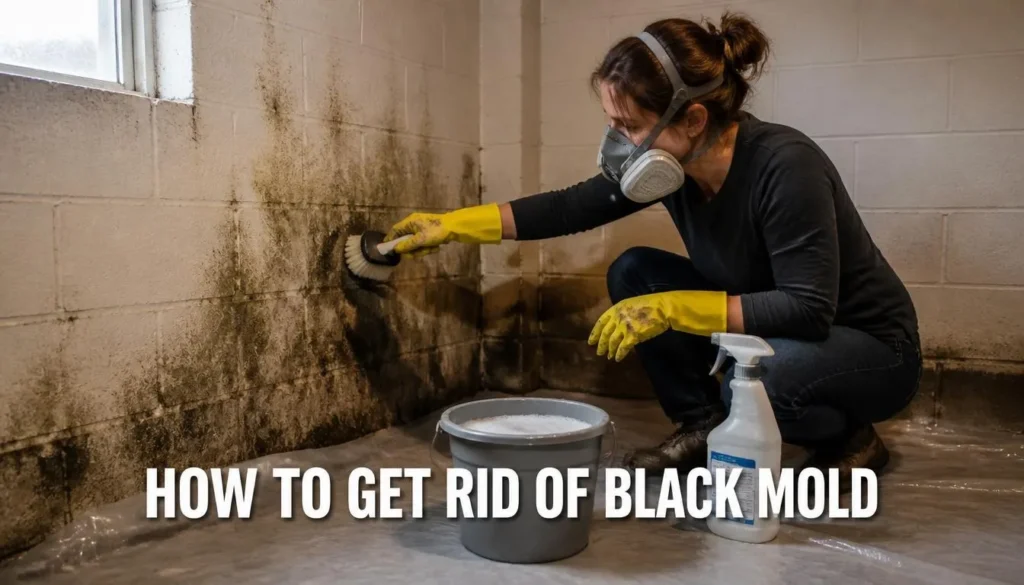
To get rid of black mold on a patch smaller than about 10 square feet, you can use detergent and water, then dry the surface completely, according to the EPA. Larger patches, sewage water, or heavy water damage call for a professional, and the mold will return unless you also fix the underlying water source that feeds it.
This guide walks you through each step in the correct order, so you can work safely and avoid common mistakes. By the end, you’ll know what works on walls, wood, and showers, when to call a professional, and how to keep the mold from returning.
Key Takeaways
- Patches under about 10 square feet can be scrubbed with detergent and water, then dried completely.
- Bleach is optional: use no more than 1 cup per gallon of water, and never mix it with ammonia.
- You don’t need to identify the mold type or pay for testing before removing visible mold.
- Keep indoor humidity between 30 and 50 percent so mold has less moisture to return.
How to Get Rid of Black Mold in 6 Steps
Mold needs moisture to grow, so removing it takes two separate jobs: scrub the mold off the surface, then dry the spot until it stays dry. Each step below follows that logic.
According to the EPA, this plan fits a patch of less than about 10 square feet, which is about a 3 ft by 3 ft area. The CDC adds that you don’t need to identify which type of mold you have, because all molds should be treated the same and removed from the building.
Here is the part many people skip. The CDC says to clean up the mold and fix the moisture problem, because scrubbing a wall that stays damp only restarts the process.
Follow these steps for a patch under 10 square feet:
- Find and fix the leak, condensation, or humidity source first.
- Put on a NIOSH Approved N95 respirator, rubber gloves, goggles without vent holes, and rubber boots, and open a window or door.
- Scrub the mold off hard surfaces with detergent and water.
- Dry the area completely with towels, a fan, or a dehumidifier.
- Throw away porous items, such as ceiling tiles or carpet, if mold has soaked in.
- Wait until the surface is fully dry before you paint, and never paint or caulk over mold.
Is Black Mold Dangerous? What the CDC Says
Black mold can cause symptoms in some people, but the CDC calls those symptoms nonspecific, meaning many other causes look the same. Stachybotrys chartarum is one greenish-black mold that grows on cellulose (plant fiber) materials, such as the paper face of drywall. It needs constant moisture. Color alone does not tell you the species.
When symptoms happen, the CDC lists a stuffy nose, sore throat, coughing or wheezing, burning eyes, and skin rash. Damp, moldy places may cause a variety of health effects, or none at all. People with asthma or a mold allergy may react more strongly, and people with weak immune systems or chronic lung disease may develop lung infections.
No test proves a link between Stachybotrys chartarum and particular symptoms, the CDC says, so it treats all molds alike. That is why you don’t need to name your mold before removing it. The CDC also does not recommend mold testing, since there are no set standards for an acceptable amount of mold in a home. Sampling also cannot predict who will get sick, as our guide on how to test for mold in the air explains.
How to Get Rid of Black Mold on Walls, Ceilings, Wood, and in Showers
The basic steps stay the same on every surface: fix the water problem, scrub, and dry. What changes is how porous the surface is, because porous materials absorb moisture and hold mold deep inside. The EPA says absorbent materials, such as ceiling tiles and carpet, may have to be thrown away if they become moldy. Mold can be impossible to remove fully from them.
On painted drywall, scrub a small patch with detergent and water, then dry it fully. The EPA warns you not to paint or caulk moldy surfaces, because paint over mold is likely to peel. For a ceiling, use a stable step ladder, keep the room ventilated, and look for the plumbing or roof leak above the stain.
Showers and bathrooms stay damp, and the EPA says places that are often wet can be hard to keep free of mold. Run the exhaust fan or open a window during every shower, and plan more frequent cleaning of grout and caulk lines.
Wood sits somewhere between those two groups of materials. Puritisimo’s editorial read: a hard, sealed board can be scrubbed and dried like any hard surface. Have soft or crumbly wood checked for decay, and replace it if it is damaged.
The table below sums up what to do on each surface:
| Surface | What to do | When to replace |
| Walls and ceilings (painted drywall) | Clean a small patch of intact paint with detergent and water, then dry completely | Damaged drywall, or material you cannot fully clean and dry; stains alone are not a reason |
| Ceiling tiles and carpet | Do not try to save them | Right away if moldy |
| Wood | Scrub hard, sealed boards and dry them | Soft or crumbly wood that is damaged after an assessment; stains alone are not a reason |
| Shower tile and grout | Scrub, rinse, dry, and run the fan | Caulk that stays dark after cleaning |
When to Call a Professional and What It Costs
You can usually handle a patch smaller than about 10 square feet yourself with the right protective gear. The EPA points to its remediation guide for schools and commercial buildings, which also fits homes, when mold covers more than 10 square feet. Consider hiring an experienced mold-remediation professional, especially after a lot of water damage, or when the water was sewage or other contaminated water.
Call a professional in these cases:
- Mold covers more than 10 square feet.
- A flood, burst pipe, or leak soaked large areas.
- The water was sewage or other contaminated water.
- You know or suspect mold inside the HVAC (heating and cooling) system, which you should not run. Read how to clean air ducts for the safe limits of doing it yourself.
Cost depends on the size of the area, how far the damage spreads, and how much material must be removed. A fixed figure would mislead you. Ask for a written scope that lists the area, the cause of the moisture, and what will be thrown away. The EPA also says to check that any contractor has mold cleanup experience.
Skip paid testing when the mold is visible, because the CDC says mold sampling can be costly and it does not recommend mold testing. If you have asthma, a mold allergy, or a weak immune system, the EPA suggests talking with a health professional before you start cleanup.
What Kills Black Mold: Detergent, Bleach, and Other Cleaners
Removing black mold means scrubbing it off hard surfaces and drying them completely. If you use a product labeled to kill mold, follow its contact time, because killing mold does not remove it or end its allergy risk. The EPA gives plain advice for hard surfaces: scrub with detergent and water, and dry completely.
The CDC says you can use household products or soap and water. You can also use a bleach solution of no more than 1 cup of laundry bleach in 1 gallon of water. Bleach is optional. Open windows and doors while you work, and follow the product label.
Never mix bleach with ammonia or other cleaners. The CDC warns that the combination produces a poisonous gas, which makes ventilation essential. Wear an N95 respirator, rubber gloves, goggles, and rubber boots, and keep fresh air moving through the room.
How to Prevent Black Mold From Coming Back
Moisture control is the only lasting solution for a mold problem, because mold cannot grow without water. The EPA says to keep indoor relative humidity (the share of moisture the air holds) below 60 percent, ideally between 30 and 50 percent. A humidity meter shows you exactly where each room stands.
Dry anything that gets wet within 24 to 48 hours, since the EPA says that window helps prevent mold growth. Fix leaks quickly, and use the bathroom fan or a window after showers. A dehumidifier can also pull excess moisture out of the air in a damp basement or bathroom.
Puritisimo’s editorial read: an air purifier with a HEPA (high-efficiency particulate air) filter can catch spores floating in the air during cleanup. That filter traps very small particles. It cannot dry a wet wall, so it supports moisture control and never replaces it, as our guide on whether an air purifier helps with mold explains.
How We Research
We check every claim against primary sources. Federal agencies like the EPA and CDC come first. Certification bodies like NSF and AHAM come next. We verify each standard number against the issuing body. We review this guide on a set schedule.
Why Trust This Guide
Puritisimo covers only water and air quality. Our guidance is editorial and independent. We cite every health figure so you can check it. We never present a promotional claim as fact.
Finishing the Job and Keeping Mold Away
Black mold is fundamentally a moisture problem first and a cleaning problem second. Fix the leak, scrub the mold off hard surfaces with detergent and water, and dry everything completely. Throw away porous items that mold has soaked into.
Call a professional when the patch passes 10 square feet. Do the same when sewage or heavy water damage is involved, or when you suspect mold in the heating and cooling system. After cleanup, monitor your humidity and repair new leaks promptly, because dry surfaces give mold little opportunity to grow. Following these steps, from fixing the water source to keeping humidity in check, is the safest way to get rid of black mold for good. For target ranges, see what the humidity should be in your house.
Frequently Asked Questions
How to get rid of black mold on wood?
The way to get rid of black mold on wood starts with checking whether the board is hard and sealed or soft and crumbly. Scrub a sealed board with detergent and water, and dry it completely. Have wood that is soft or crumbly checked for decay, and replace it if it is damaged.
Is black mold toxic?
The CDC says black mold and other molds may cause nonspecific symptoms, such as a stuffy nose, coughing, or burning eyes. The CDC says no test proves an association between Stachybotrys chartarum and particular symptoms, though mold exposure can still cause allergic or respiratory symptoms. People with asthma, allergies, or weak immune systems face more risk. For that reason, remove any mold you find.
Does Dawn dish soap kill mold spores?
Dish soap is a common detergent, and the EPA says to scrub moldy hard surfaces with detergent and water, then dry them completely. That advice rests on removing the mold, not on a claim that soap kills spores. Rinse, dry, and fix the moisture source, or the mold can return.
Can Lysol wipes kill mold spores?
Disinfecting wipes only suit a small patch on a hard surface, and the product label sets the real limitations. The goal is to remove the mold and dry the surface, since wiping does not fix the leak or humidity behind it. Anything larger than about 10 square feet needs a bigger plan.
Do you have to throw everything away with mold in the house?
No. Hard surfaces can be scrubbed with detergent and water and dried completely. The EPA says absorbent items, such as ceiling tiles and carpet, may have to be thrown away if they become moldy. Mold can be impossible to remove fully from them.
References
- CDC. About Mold and Your Health. Centers for Disease Control and Prevention. Accessed November 2026.
- CDC. Mold Facts and Stats: Stachybotrys chartarum. Centers for Disease Control and Prevention. Accessed November 2026.
- EPA. Mold Cleanup in Your Home. U.S. Environmental Protection Agency. Accessed November 2026.
- EPA. A Brief Guide to Mold, Moisture, and Your Home. U.S. Environmental Protection Agency. Accessed November 2026.
Medical Disclaimer: This content is for informational purposes only. It is not a substitute for professional medical advice, diagnosis, or treatment. If you have concerns about your water quality or air quality and their effects on your health, consult a qualified healthcare professional.

