
Knowing how to clean an air purifier filter starts with checking what kind of filter sits inside it. The safe method depends entirely on the type. For most models that means you unplug the unit, vacuum away loose dust, and rinse the filter only if it is washable. True HEPA (high-efficiency particulate air) filters never get wet, no matter how dusty they look.

This guide walks through the exact steps for washable filters and True HEPA filters. It covers the clearest signs a filter needs attention, and how often to clean each type. You will finish knowing exactly which method fits your filter, and how to avoid the mistake that shortens its life.
Key Takeaways
- Most air purifier filters get vacuumed first, and only washable types can be rinsed with water afterward.
- True HEPA filters are never washed, since wetting the pleated fibers can deform them for good.
- A musty smell or noticeably weaker airflow usually means the filter needs cleaning now.
- Pet owners and whole-house systems should clean filters every one to two weeks, not just monthly.
How to Clean Air Purifier Filter
Cleaning restores the airflow. For washable filters, it also restores the capture efficiency that a layer of trapped dust slowly chokes off. The steps below cover both washable filters and True HEPA filters, since the two need different handling from the very first step.
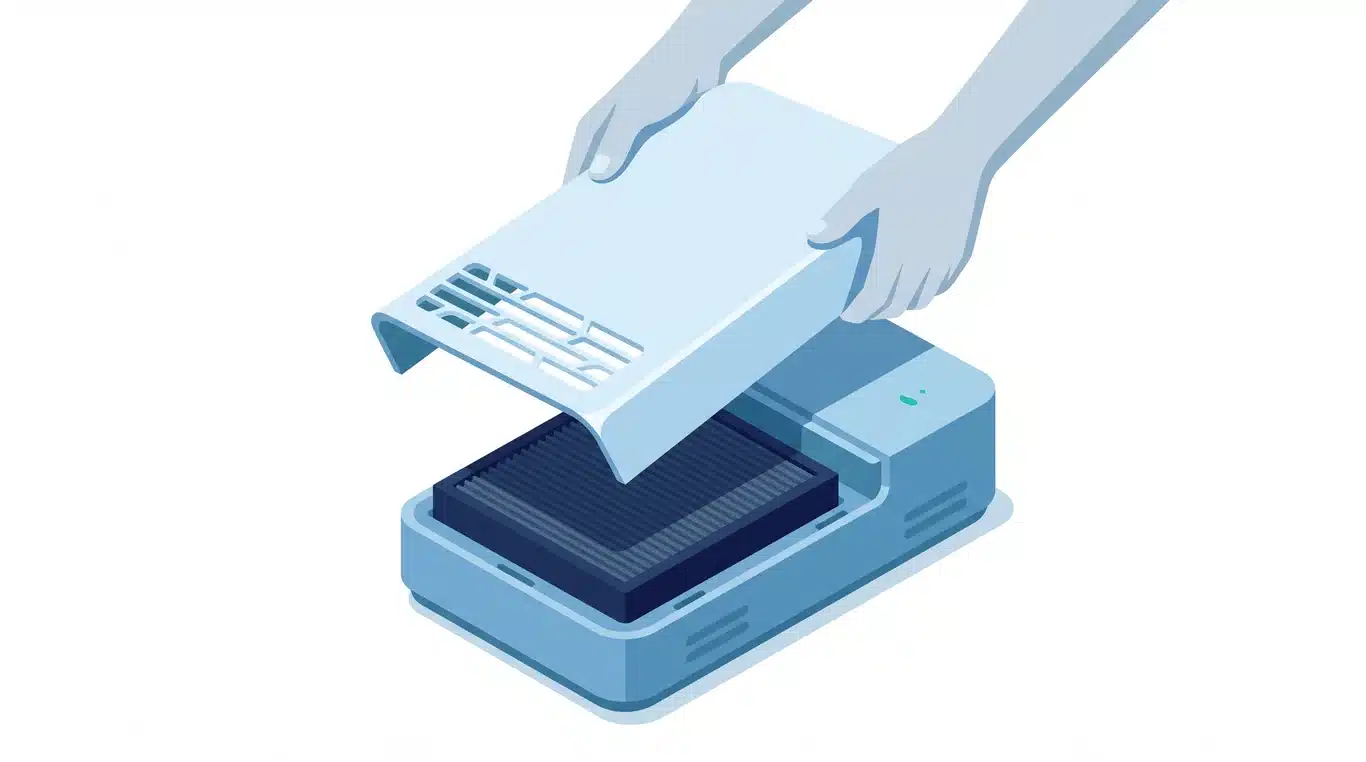
- Unplug the air purifier before touching the filter, both for safety and so the fan is not pulling air while you work.
- Open the housing and slide out the filter, noting which side faces the airflow so you can reinsert it the same way.
- Vacuum both sides of the filter with a soft brush attachment to remove loose dust and hair. This step applies to every filter type, washable or not.
- Check whether the filter is washable. True HEPA filters are never washed, since wetting the pleated fiber media can deform it, so skip straight to reassembly for these.
- For washable pre-filters or permanent filters, rinse under cool running water until it runs clear, using a small amount of mild, unscented soap only if needed.
- Let the filter air-dry fully, which can take 24 hours or more, before sliding it back into the housing and plugging the unit back in. On Levoit units, the filter light typically needs a manual reset after you reinstall a cleaned filter.
That washing ban is not random. True HEPA filters must remove at least 99.97% of particles at 0.3 microns (about 1/100th the width of a human hair). This size is the hardest to trap, known as the most penetrating particle size (MPPS). That benchmark comes from DOE-STD-3020-2015, the U.S. Department of Energy’s HEPA test standard, and wetting the pleated media can quietly undercut it.
Types of Air Purifier Filters and How to Clean Each One

Filter type decides how you clean it. Treating every filter the same way is the easiest way to ruin one. True HEPA (high-efficiency particulate air) media is a dense mat of pleated fibers built to capture at least 99.97% of particles at 0.3 microns. It is never washed, only vacuumed. Washable and permanent filters, plus pre-filters, are built to survive water and a mild soap. Activated-carbon filters sit in between, never washed, but replaced once saturated.
A clean pre-filter does more than protect airflow on its own. By catching hair, lint, and larger dust before it ever reaches the True HEPA layer, a pre-filter kept clean can extend the downstream HEPA filter’s usable life by months. Skipping pre-filter cleaning while only wiping down the housing is one of the most common ways owners shorten the filter they actually paid to replace.
Cleaning method, frequency, and whether water is safe to use vary by filter type:
Their pleated fiber structure is built to meet a 99.97% capture standard.
| Filter Type | Cleaning Method | Frequency | Washable |
| True HEPA | Vacuum gently with a brush attachment | Monthly, between scheduled replacements | No |
| Washable or Permanent | Rinse under cool water, air-dry fully | Every 2-4 weeks | Yes |
| Activated Carbon | Not cleaned, replaced when saturated | Per manufacturer schedule | No |
| Pre-filter | Vacuum or rinse under cool water | Every 2-4 weeks | Yes |
Signs Your Air Purifier Filter Needs Cleaning
A dirty filter usually announces itself before it fails outright. The clearest early clue is airflow that feels weaker even though the unit runs at the same fan setting. A caked filter forces the motor to push air through a smaller effective opening. A musty or sour smell from the vents is another reliable signal. This is common in humid rooms, where trapped moisture lets mold take hold on the filter media.
The airflow drop often starts before it is obvious. A portable air cleaner’s clean air delivery rate (CADR) is the metric used to rate how much filtered air a unit produces per minute. It is only tested with a new, unclogged filter. That means a purifier can fall meaningfully short of its rated output well before reduced airflow feels noticeable by hand.
Watch for these signs it is time to clean or check the filter:
- Visible dust caking or a gray, matted layer across the filter surface
- Noticeably weaker airflow or output at the same fan speed
- A musty, sour, or moldy smell coming from the unit
- The fan running louder as the motor works harder to pull air through
- Allergy or dust symptoms creeping back even though the purifier is running
How Often to Clean or Replace Your Air Purifier Filter
How often you clean a filter depends more on how the unit is used than on the calendar. As a baseline, wash or vacuum a pre-filter every two to four weeks. Vacuum a True HEPA filter monthly between its scheduled replacements, which most makers set between six and twelve months. Activated-carbon filters follow the maker’s replacement window since they cannot be cleaned and extended.
Usage load shortens that baseline fast. A single air purifier running in a small bedroom collects dust more slowly than one covering an entire whole-house or whole-home HVAC system. Far more air, and far more debris, pass through that same filter. Homes with shedding pets, nearby construction, or a stretch of wildfire smoke or heavy pollen need cleaning checks every one to two weeks. That is more often than the standard schedule.
A simple rule works for most households: check the filter every time you vacuum the room it sits in. Treat the maker’s replacement window as a ceiling, not a fixed date. An air purifier in a home with average dust levels rarely needs anything harsher than that.
For a mid-range Levoit option covering larger bedrooms, my Levoit Vital 200S review covers its filter replacement interval and AHAM-certified CADR across different room sizes.
How to Clean Air Purifier Filter Buildup for Allergy Relief
A clogged filter quietly undercuts the exact benefit most buyers install an air purifier for. As dust, pet dander, and pollen build up across the filter media, less air actually passes through it per minute. Fewer allergens get pulled from the air, even though the unit sounds like it is working just as hard.
The stakes are real for a large share of people. In the United States, 8.6% of adults and 6.5% of children live with asthma. That is over 27 million people who depend on steady allergen capture for daily comfort. Add the 31.7% of adults who reported a confirmed seasonal allergy, eczema, or food allergy in 2024. A dirty filter is not a minor lapse. It is a direct hit to indoor air quality for millions of households.
Keeping the filter clean is the single best habit for allergy relief because it protects the capture rate you already paid for. A unit with a fresh, unclogged filter pulls dander and pollen out of the air at its full rated power. A neglected one can fall well short without ever throwing an error or alert.
For a model where that replacement cycle stays predictable, my Levoit Core 300 review covers the filter cost and swap schedule for a sealed bedroom unit.
Filter-Cleaning Mistakes That Shorten Its Life
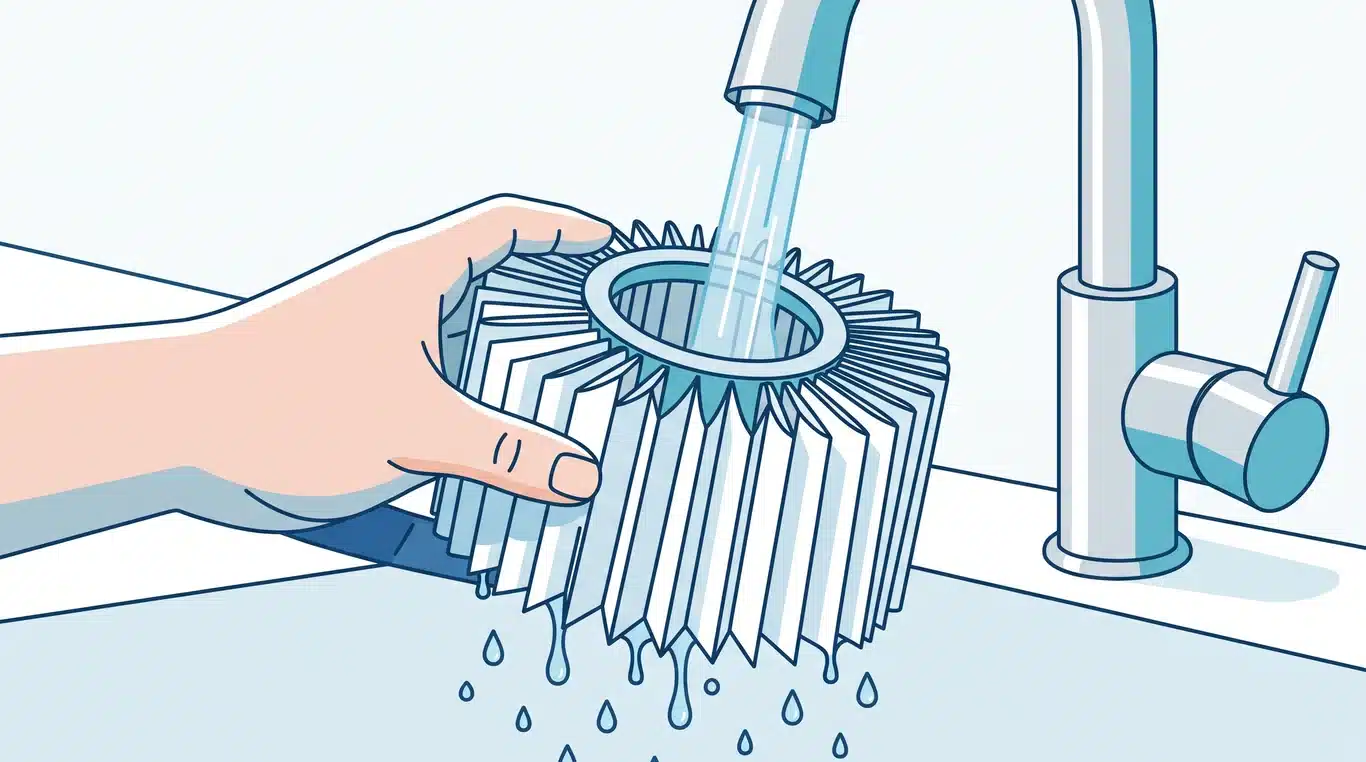
A few habits do more damage than dust ever will. Washing a True HEPA filter under any amount of water is the single most common mistake. Even brief wetting breaks down the pleated fiber structure the filter depends on to hold its capture rate. Putting back any washable filter before it is fully dry is a close second, since trapped moisture invites mold growth inside a sealed housing.
Cleaning products matter as much as timing. Bleach and scented dish soap both leave grime that gets blown back into the room, and hot water can warp thin filter frames. Skipping the pre-filter while only wiping the outer housing is another easy miss. It is usually the pre-filter, not the main filter, that catches the bulk of everyday dust.
The maker’s manual for your exact model overrides any general rule here. Filter materials and housing designs vary between brands. When it lists a different water heat, cleaning schedule, or soap type, follow that instead of this guide. For Levoit units, see our guide to how to clean a Levoit air purifier.
How We Research
We check every claim against primary sources. Federal agencies like the EPA and CDC come first. Certification bodies like NSF and AHAM come next. We verify each standard number against the issuing body. We review this guide on a set schedule.
Why Trust This Guide
Puritisimo covers only water and air quality. Our guidance is editorial and independent. We cite every health figure so you can check it. We never present a promotional claim as fact.
Keeping Your Air Purifier Working at Full Strength
Every step of filter care comes down to matching the method to the filter you actually have. A mismatch does more harm than a missed cleaning ever would. Washable pre-filters and permanent media reward regular rinsing, True HEPA filters reward a light vacuum and a strict no-water rule. Every filter type rewards a schedule that tracks real usage instead of a fixed date on the calendar.
A vehicle’s cabin air filter follows a different maintenance logic, since it is replaced rather than cleaned; my cabin air filter roundup covers the top options with their mileage-based replacement intervals.
Skipping a cleaning is easy to fix later. Wetting a True HEPA filter or putting back a damp one is not, since the damage to the fiber structure does not reverse. Treat filter care as routine maintenance rather than an occasional chore, and the payoff shows up as steadier airflow and fewer allergy flare-ups indoors. In practice, knowing how to clean an air purifier filter the right way is what keeps a purifier running at the output it was built for.
Frequently Asked Questions
How to clean an air purifier filter?
How to clean an air purifier filter starts with unplugging the unit and vacuuming loose dust from the surface with a brush attachment. If the filter is washable or a pre-filter, rinse it under cool water, then let it air-dry fully before putting it back. A True HEPA filter is never washed, only vacuumed, since water can damage the pleated media for good.
Can you clean air purifier filters instead of replacing them?
Filter type determines whether cleaning instead of replacing is possible. Washable pre-filters and permanent or HEPA-alternative filters can be cleaned and reused many times. Most True HEPA filters cannot. Their pleated fiber structure is built to meet a 99.97% capture standard. Washing wears it down, so it gets vacuumed between scheduled replacements instead.
How often should I clean an air purifier filter?
Cleaning frequency depends on filter type and how hard the unit works. Wash or vacuum a pre-filter every two to four weeks, and vacuum a True HEPA filter monthly between replacements. Homes with pets, whole-house systems, or heavy pollen and wildfire seasons often need checks every one to two weeks instead.
Can air purifier filters be washed and reused?
Washable and permanent filters can be rinsed under cool water and reused. They must dry fully before going back into the unit, since trapped moisture invites mold inside a sealed housing. True HEPA filters are the exception: their fiber media is rated for a 99.97% capture standard that washing breaks down, so they are vacuumed only, never soaked.
What can I soak my air filter in to clean it?
For a washable filter, soak it briefly in cool water with a small amount of mild, unscented dish soap, then rinse thoroughly and let it air-dry fully. Skip bleach, hot water, and heavily scented soaps, since all three can degrade the filter material. Never soak a True HEPA filter; it should only be vacuumed.
References
- EPA. What Is a HEPA Filter. 2024.
- EPA. Guide to Air Cleaners in the Home. 2024.
- CDC. Asthma. National Center for Health Statistics Fast Stats. 2024.
- CDC. Allergies in Adults. National Center for Health Statistics Data Brief 545. 2024.
Medical Disclaimer: This content is for informational purposes only. It is not a substitute for professional medical advice, diagnosis, or treatment. If you have concerns about your water quality or air quality and their effects on your health, consult a qualified healthcare professional.