
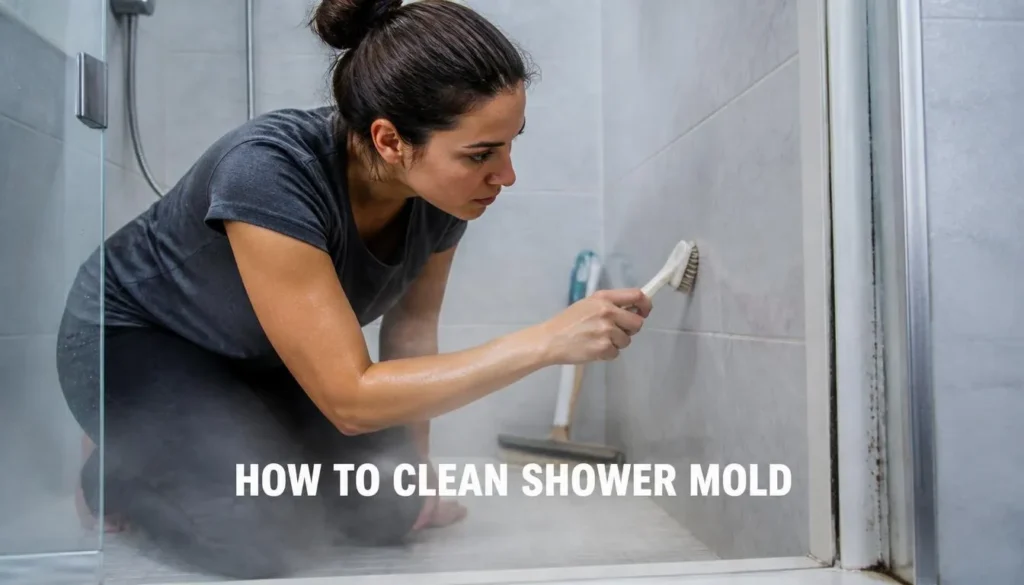
To clean shower mold, scrub it with detergent and water, rinse, and dry the area completely. The EPA and CDC both start with this plain method for hard surfaces, and it works on tile, grout, glass, and rubber door seals. Mold that has grown under caulk is the main exception, because the caulk usually has to come out and be replaced before the problem stays gone.
Below, you get steps for each surface, a plain guide to choosing between bleach and detergent, and a plan that keeps the growth from returning once the shower is clean. By the end, you will know what to scrub, what to replace, and when to call a professional.
Key Takeaways
- Detergent, water, and a stiff brush clean mold from hard shower surfaces. Dry everything afterward.
- Mold under caulk means replacing the caulk, because cleaning the surface cannot reach it.
- Never mix bleach with ammonia or any other cleanser, and keep a window open or the fan running.
- Keep indoor humidity between 30 and 50 percent, and call a professional if mold covers over 10 square feet.
How to Clean Shower Mold: A Step-by-Step Method
Mold needs water to grow, so cleaning it takes two jobs, which are scrubbing the growth off and then removing the moisture it feeds on. According to the EPA, no type of mold grows without moisture. The agency’s mold cleanup guide says to scrub hard surfaces with detergent and water and then dry them completely.
Use these five steps for most shower surfaces:
- Open a window or run the exhaust fan. Put on gloves, goggles, and an N95 respirator (a mask that filters at least 95 percent of airborne particles), which the CDC cleanup sheet lists for mold work.
- Spray the moldy area generously with a mixture of dish detergent and warm water, so every stained patch is wet before you begin to scrub.
- Scrub with a stiff brush, and switch to an old toothbrush for the narrow grout lines and the corners of the rubber seals.
- Rinse the whole area with clean water so that no loosened mold or soap film stays behind on the surface.
- Dry every surface with a towel or squeegee, and then keep the fan running so that the air in the room dries out as well.
Cleaning Mold on Tile, Grout, Glass, and Door Seals
Each shower surface holds mold in its own way, so the scrubbing method needs a few small changes from one surface to the next. Glass and glazed tile are smooth, so mold sits on top of them and a brush and detergent lift it fast. Grout is different, because it is porous (full of tiny holes that soak up water), which is why grout lines turn dark first and stay damp the longest.
To clean mold in shower grout, work a toothbrush along each line, and then rinse and dry the whole area. For the rubber seal around a shower door, pull the seal back and scrub inside its folds, where water pools between showers. Towel the seal dry afterward, and replace it if it is damaged or mold in its folds will not come out.
Mold on a bathroom ceiling follows the same steps on painted surfaces, but porous materials are harder to save. The EPA warns that ceiling tiles and similar absorbent materials may have to be thrown away once they turn moldy. That means scrubbing is not always enough for every surface in the room.
The table below shows the best first move for each surface:
| Surface | Why mold grows there | What to do first |
| Glass and glazed tile | Soap film holds water | Scrub with detergent, rinse, dry |
| Grout lines | Porous and slow to dry | Toothbrush scrub, rinse, dry |
| Door seals and tracks | Folds trap water | Scrub folds, towel dry, replace if damaged |
| Painted ceiling | Steam rises and settles | Wipe with detergent, dry, add ventilation |
| Ceiling tile | Soaks up moisture | Plan to replace it |
How to Clean Shower Mold on Caulk and Silicone
Caulk and silicone seal the joints where water collects, so mold shows up there more often than almost anywhere else in the shower. If the dark spots sit only on the surface, you can remove mold from shower caulking like any other hard surface. Scrub with detergent and water, rinse, and dry.
Mold under silicone caulk is a different problem, because cleaning cannot reach growth that sits behind or beneath the bead, and the dark spots keep coming back. The EPA is direct on this point and says do not caulk moldy surfaces, so the fix is to replace the caulk and not to cover the problem.
In practice, cut out the old bead with a caulk removal tool or a utility knife, and peel the silicone away in long strips. Scrub the empty joint with detergent and water, let it dry completely, and then apply new caulk that is labeled for kitchens and baths.
Check what sits behind the joint, too. If the wall feels soft or the stain keeps returning after you replace the caulk, water may be leaking in from behind it. The EPA advises you to fix plumbing leaks and other water problems as soon as possible, because new caulk will fail on a joint that stays wet.
Pink Slime and Black Mold: What You Are Seeing
Pink or orange slime in a shower is usually not mold at all. It is typically Serratia marcescens, a bacterium (a single-celled organism, not a fungus) that grows on the soap and shampoo film left on wet surfaces. To clean pink mold in the shower, use the same method of scrubbing, rinsing, and drying the surface well, because the slime returns wherever soap film stays damp.
Black mold is a color, not a diagnosis. CDC notes that mold can look like spots of many different colors. You do not need to know the type of mold, because CDC says to remove it whatever the color. To clean black mold in the shower, follow the same steps you would use for any other color, since CDC does not recommend mold testing.
Health effects vary from person to person. CDC says that for some people mold can cause a stuffy nose, sore throat, coughing or wheezing, burning eyes, or skin rash. People with asthma or allergies may react more strongly. If you have health concerns, the EPA advises you to talk with a health professional before you start cleaning.
Bleach, Detergent, and Safer Cleaner Choices
Start with detergent, because the EPA’s advice for hard surfaces is detergent, water, and complete drying. CDC adds that a home with only a little mold and minor water damage may not need bleach. That answers how to clean mold in a shower without bleach: scrub with dish detergent and warm water, rinse, and dry the area well.
If a stain stays after scrubbing, bleach is the cleaner that CDC names for killing mold on surfaces. Its fact sheet gives a limit of no more than 1 cup (8 ounces) of household laundry bleach per 1 gallon of water. Do not make the mixture any stronger than that. Before choosing vinegar instead, read does vinegar kill mold for what the evidence supports.
Follow these four safety rules whenever you use bleach:
- Never mix: CDC says never to mix bleach with ammonia or any other cleanser. That includes ammonia glass cleaners and acidic bathroom cleaners.
- Ventilate: open windows or doors, and run the exhaust fan, for as long as you work with any cleaning product.
- Protect: wear gloves, goggles, and an N95 respirator.
- Clean first: wash with detergent and water before you use bleach. CDC says no product cleans mold well if dirt stays on the surface.
Stop Shower Mold From Coming Back, and When to Call a Pro
Cleaning only resets the clock, because moisture brings mold back and drying is the real fix. The EPA tells you to run the bathroom fan or open the window when showering. It also advises keeping relative humidity (the share of water vapor the air holds, compared with the most it could hold) below 60 percent, ideally between 30 and 50 percent. A small humidity meter (called a hygrometer) shows you where the room stands.
After each shower, squeegee the glass and tile, and leave the door or curtain open so that air can move through the stall. For a leak or a large spill, the EPA says to dry wet areas and items within 24 to 48 hours. An air purifier will not solve this problem, because an air purifier does not lower humidity and moisture is what mold needs.
Call a professional when mold covers more than 10 square feet, which is about a 3 ft by 3 ft patch. Call one as well when a lot of water damage sits behind it. The EPA lists these cases, along with water that came from sewage. A few patches inside a shower stall are a home job, but a stained ceiling the size of a door is not.
How We Research
We check every claim against primary sources. Federal agencies like the EPA and CDC come first. Certification bodies like NSF and AHAM come next. We verify each standard number against the issuing body. We review this guide on a set schedule.
Why Trust This Guide
Puritisimo covers only water and air quality. Our guidance is editorial and independent. We cite every health figure so you can check it. We never present a promotional claim as fact.
A Clean, Dry Shower Is the Lasting Fix
Most shower mold is a small, surface-level job. Scrub with detergent and water, rinse, and dry, using a toothbrush on grout. Replace caulk that hides mold underneath, because cleaning cannot reach it. Use bleach only if a stain stays, at no more than 1 cup per gallon, and never with ammonia or another cleanser. Then fix the cause: run the fan, hold humidity at 30 to 50 percent, and call a pro past 10 square feet. For airborne spores, see our guide on air purifiers and mold. That routine is how you clean shower mold and keep it gone.
Frequently Asked Questions
How to clean shower mold with vinegar?
To clean shower mold, detergent and water are the method the EPA and CDC describe. Vinegar is a common home option, but neither agency lists it, so treat it as a light-duty choice. Scrub, rinse, and dry the surface either way.
Is shower mold the same as black mold?
Shower mold can be black, but color does not name the type. CDC says mold comes in many colors, and you do not need to know the type to remove it. Pink or orange slime is usually a bacterium, not a mold, and it cleans up the same way.
How to clean mold in shower without bleach?
Dish detergent, warm water, and a stiff brush are enough for most hard surfaces. Scrub the mold off, rinse well, and dry the area completely. Use a toothbrush on grout and the folds of door seals. Caulk with mold underneath still needs to be replaced.
Is black mold in shower dangerous?
Effects vary. CDC says mold may cause a stuffy nose, coughing, wheezing, or itchy eyes in some people, or no effects at all. People with asthma, allergies, or lung disease may react more strongly. Color alone does not show risk, so clean any mold you find.
How to clean mold from shower door seal?
Pull the rubber seal away from the glass and scrub the folds with detergent, water, and a small brush. Rinse, then dry with a towel. Staining alone does not prove mold remains. Replace the seal if it is damaged or mold in its folds will not come out.
References
- EPA. A Brief Guide to Mold, Moisture, and Your Home. US Environmental Protection Agency.
- EPA. Mold Cleanup in Your Home. US Environmental Protection Agency.
- CDC. Mold Clean-Up After Disasters: When to Use Bleach. Centers for Disease Control and Prevention. 2018.
- CDC. About Mold. Centers for Disease Control and Prevention.
Medical Disclaimer: This content is for informational purposes only. It is not a substitute for professional medical advice, diagnosis, or treatment. If you have concerns about your water quality or air quality and their effects on your health, consult a qualified healthcare professional.

