
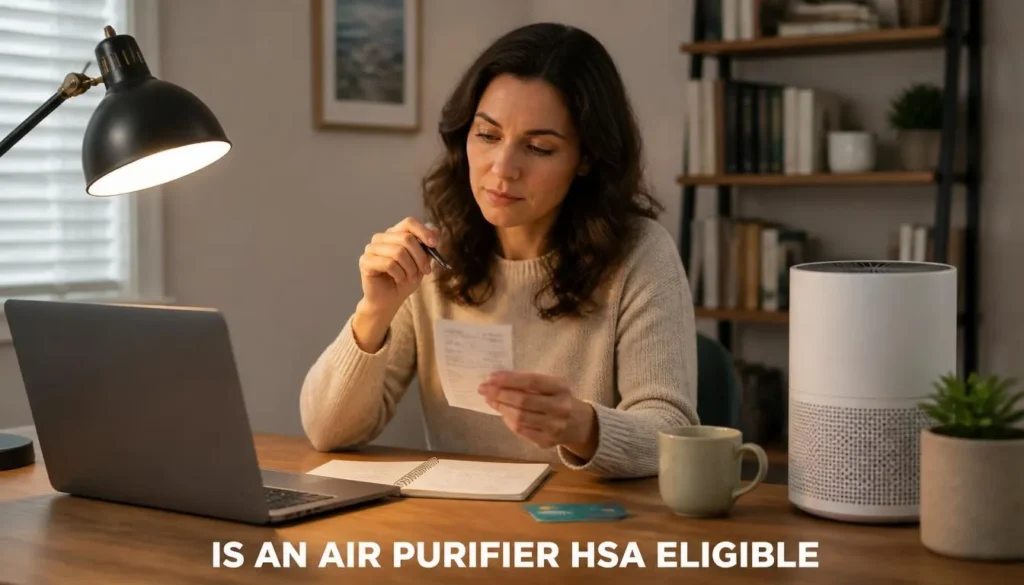
An air purifier can qualify for HSA funds when you buy it primarily to treat or ease a specific diagnosed condition. A purifier bought for general health does not qualify. The IRS applies one medical care test to every purchase, and it publishes no list of approved models. Your reason for buying matters more than the brand on the box.
This guide explains that test in plain terms. You’ll see how an HSA (health savings account, a tax-favored account for medical costs) and an FSA (flexible spending account, an employer plan for medical costs) compare. By the end, you’ll know which conditions can support a claim and what proof to keep.
Key Takeaways
- An air purifier qualifies only when bought mainly to treat a specific diagnosed condition, not for general health.
- HSA and FSA funds follow the same medical care test, but each account has its own proof rules.
- A doctor’s recommendation alone is not enough; the IRS looks at the diagnosis and the main use.
- Keep the receipt and any physician letter. Your plan administrator may ask for both.
Is Air Purifier HSA Eligible? The Short Answer

An air purifier is HSA eligible when you buy it mainly to treat, ease, or prevent a specific medical condition, such as a diagnosed allergy. It is not eligible when you buy it for general health or comfort. The deciding factor is the purpose of the purchase, not the product label.
The rule comes from the IRS. Publication 502 (the IRS guide to medical and dental expenses) says medical expenses include the cost of equipment and supplies needed to diagnose, treat, or prevent disease. The same guide says costs that are merely beneficial to general health, such as vitamins or a vacation, don’t count.
HSA rules point back to that same definition. Publication 969 (the IRS guide to health savings accounts) says qualified HSA expenses are amounts paid for medical care as defined in section 213(d) of the tax code. They count only to the extent insurance or another source has not already covered them.
Take a simple example. A purifier bought for a child’s diagnosed dust allergy has a medical purpose. The same unit bought to freshen a living room does not. Our medical grade air purifier guide explains what that label means when comparing units for a medical need.
Here is the practical result. The IRS sets a test, not a shopping list. That means no agency hands out an HSA approved air purifier badge. Treat any such label on a product page as the seller’s claim, not an IRS ruling.
HSA vs FSA: Same Test, Different Rules
Both accounts pay for the same kind of cost: qualified medical expenses. For an FSA, Publication 969 says payouts must reimburse qualified medical expenses incurred during the plan’s coverage period. So an FSA air purifier purchase faces the same test as an HSA purchase.
The paperwork is where they split. An FSA needs a written statement from an independent third party saying the expense was incurred, plus a statement that no other plan paid it. An HSA puts the burden on you: you keep records showing each withdrawal paid a qualified expense. You don’t send those records with your tax return.
Employers choose their own FSA rules, so two people with the same purifier can get different answers. That is why the plan administrator, not a product page, has the final word on an FSA claim.
The table below sets the two accounts side by side:
| Feature | HSA | FSA |
| Who runs it | You own the account | Your employer sets up the plan |
| Spending test | Medical care under section 213(d) | Qualified medical expenses |
| Proof | You keep your own records | The plan asks for a third-party statement |
| Unused money | The balance generally carries over | Plan rules decide what carries over |
Conditions That Can Support an Air Purifier Claim

The IRS asks what a cost treats, not what it is. Its guide on wellness costs says a cost can qualify when it treats a specific diagnosed condition, and that a general wish to improve your health is not enough. In its wearable-device example, a practitioner’s recommendation is one factor among the facts and circumstances, not a pass.
Situations a physician may tie to a diagnosis include:
- Allergies: the clearest case for an air purifier for allergies is an allergy a physician has diagnosed.
- Asthma: a diagnosed condition where airborne triggers matter to your care.
- Mold sensitivity: a doctor-confirmed mold allergy can tie an air purifier and mold exposure to treatment.
- Pet dander allergy: an air purifier and pets can fit the test when a doctor confirms the dander allergy.
Picture a doctor who diagnoses a dust mite allergy. The letter can name the allergy, name the purifier as part of the treatment plan, and say why it is needed. That is a stronger file than a note that only says the device is good for health.
A diagnosis does not make approval automatic. The EPA notes that filtration does not replace the need to control pollutants and ventilate. The key question is whether you use the purifier primarily for medical care, even when it is one part of a treatment plan. If you need a model after a diagnosis, see our guide to the best air purifier for allergies.
Is Air Purifier HSA Eligible? How to Document Your Claim
No single IRS form proves a purifier qualifies, so your records do the work. A letter of medical necessity (a note from your doctor explaining why you need the item for a condition) is something plan administrators often ask for. Neither IRS guide requires one by that name, but an FSA does need a written third-party statement, per Publication 969.
Follow these steps in order:
- Ask your doctor whether your condition is one an air purifier treats, and get the diagnosis in writing.
- Request a letter of medical necessity that names the condition and the device.
- For an FSA, ask the administrator about required documentation and any advance approval. For an HSA, you decide whether the expense qualifies, and it must come after you open the account.
- Pay directly with account funds where accepted, or pay out of pocket and request an FSA reimbursement or HSA distribution.
- Keep the receipt, the medical letter, and any FSA claim decision together.
The HSA side is simple but strict. You must be able to show that withdrawals paid qualified expenses that no other source had paid, and you store those records yourself.
Do this before you buy, not after. A denied claim is easier to handle while the item is still returnable. Ask for any denial in writing, and ask which proof would change the result.
Which Purifier Features Matter for a Medical Claim
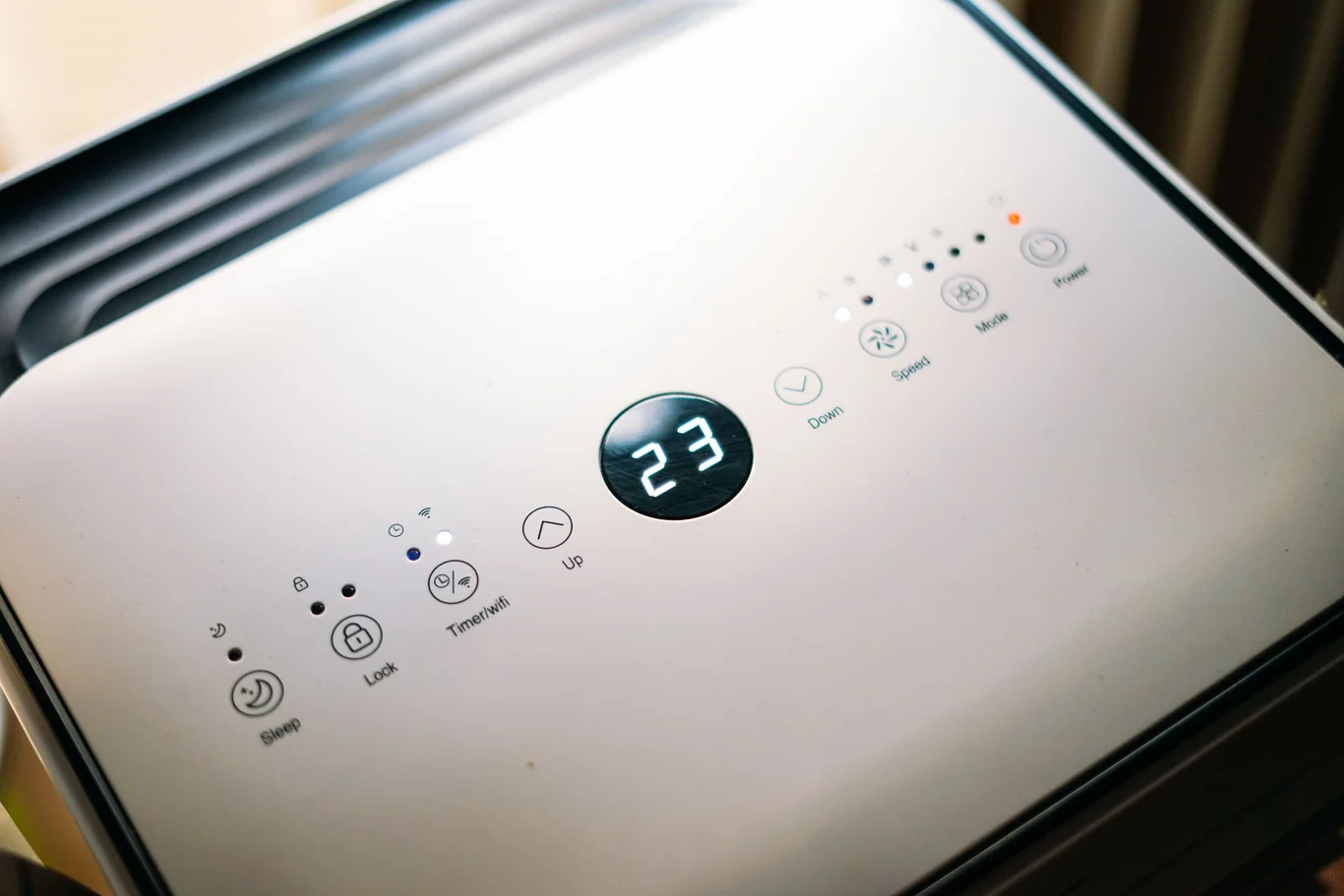
A true HEPA air purifier (HEPA means high-efficiency particulate air, a dense filter that traps very small particles) is the filter type the EPA links to a high CADR. That applies to portable cleaners. CADR (clean air delivery rate) measures how fast a purifier cleans a room’s air. For particle triggers such as pollen or dust, that filter fits the diagnosis a doctor writes.
Plan for each air purifier filter change as an ongoing cost of treatment. The EPA says all filters need regular replacement and that a dirty, overloaded filter won’t work well. Replacement filters follow the same purpose test, so ask your plan administrator before you stock up.
In the air purifier vs humidifier question, the two devices are not a swap. A purifier removes particles, while a humidifier adds moisture, so each device needs its own medical reason. A letter that names one device does not cover the other. If you want the basics first, read what an air purifier does.
Match the device to the trigger in your doctor’s note. A filter built for particles won’t treat a gas or odor problem, so the letter should name the trigger you want to treat.
Skip ozone generators sold as air cleaners. The EPA says they intentionally produce ozone and that no federal agency has approved them for occupied spaces. A device built to make ozone is hard to defend as treatment.
How We Research
We check every claim against primary sources. Federal agencies like the EPA and CDC come first. Certification bodies like NSF and AHAM come next. We verify each standard number against the issuing body. We review this guide on a set schedule.
Why Trust This Guide
Puritisimo covers only water and air quality. Our guidance is editorial and independent. We cite every health figure so you can check it. We never present a promotional claim as fact.
Checking Your Purchase Before You Spend
The answer depends on purpose, proof, and your plan. A purifier bought to treat a diagnosed condition can fit the IRS medical care test. A purifier bought for general health does not. Your account type changes the paperwork, not the test, and no product label can settle the question. Start with your doctor, then ask your plan administrator what it needs to see. If you still need a model, browse our best air purifier picks. Then keep every receipt and letter in one place. After that, decide whether an air purifier is HSA eligible for your situation.
Frequently Asked Questions
Is air purifier hsa eligible for allergies?
An air purifier is HSA eligible for allergies when a physician diagnoses an allergy and you buy the purifier to treat it. It is not eligible for general comfort or health. Plan administrators may still ask for a letter of medical necessity, so check before you buy.
Is air purifier FSA eligible?
An air purifier is FSA eligible under the same medical care test as an HSA: the purchase must treat a specific condition. An FSA adds paperwork, since the plan needs a written third-party statement. Your employer’s plan sets the approval steps, so ask your administrator first.
Is a Dyson air purifier HSA eligible?
A Dyson air purifier is not HSA eligible or ineligible because of its brand. The reason you buy it decides, as with any model. A seller who calls a model HSA eligible is making a seller claim, not an IRS ruling. Check with your plan administrator and keep your doctor’s letter.
Can I buy an air purifier with HSA funds on Amazon?
HSA funds can pay for a qualified medical expense wherever you shop, so the store does not change the test. The purpose of the purchase is what counts. Keep the order receipt and your doctor’s letter, because your plan may ask for both.
Is there a best HSA eligible air purifier?
No official list names a best HSA eligible air purifier. The IRS test looks at your diagnosis and the main use of the device, not the model. Choose a purifier that fits the trigger your doctor named, such as particles for pollen or dust, then keep the proof of purchase.
References
- IRS. Publication 502: Medical and Dental Expenses. Internal Revenue Service.
- IRS. Publication 969: Health Savings Accounts and Other Tax-Favored Health Plans. Internal Revenue Service.
- IRS. Frequently asked questions about medical expenses related to nutrition, wellness and general health. Internal Revenue Service.
- EPA. Guide to Air Cleaners in the Home. US Environmental Protection Agency.
Medical Disclaimer: This content is for informational purposes only. It is not a substitute for professional medical advice, diagnosis, or treatment. If you have concerns about your water quality or air quality and their effects on your health, consult a qualified healthcare professional.

