

You clean a water filter by taking it apart, soaking the filter media or housing in a vinegar-water solution. Then you rinse thoroughly before you put it back together. That acidic soak breaks down mineral scale and biofilm that plain rinsing alone will not touch. The exact steps shift slightly by filter type, whether a pitcher, a faucet-mount cartridge, or a whole-house housing, but the vinegar soak stays the same. For the specific cleaning routine on a gravity-fed stainless-steel unit, my Royal Berkey gravity system review covers the upkeep this format requires day to day.

This guide breaks the process into two parts: what to do, and how often to do it. By the end, you will know the exact cleaning steps and soak times for your filter type. You will also know how to tell when a housing needs replacing instead.
Key Takeaways
- A vinegar-and-water soak dissolves mineral buildup and breaks up biofilm without damaging most filter media.
- Pitcher filters need cleaning about every two weeks; whole-house housings, only at each filter change.
- Whole-house housings hold pressurized water, so shut off the main supply valve before opening one.
- A cracked housing or an off taste that survives cleaning means the filter needs replacing, not scrubbing.
How to Clean a Water Filter With a Vinegar Soak
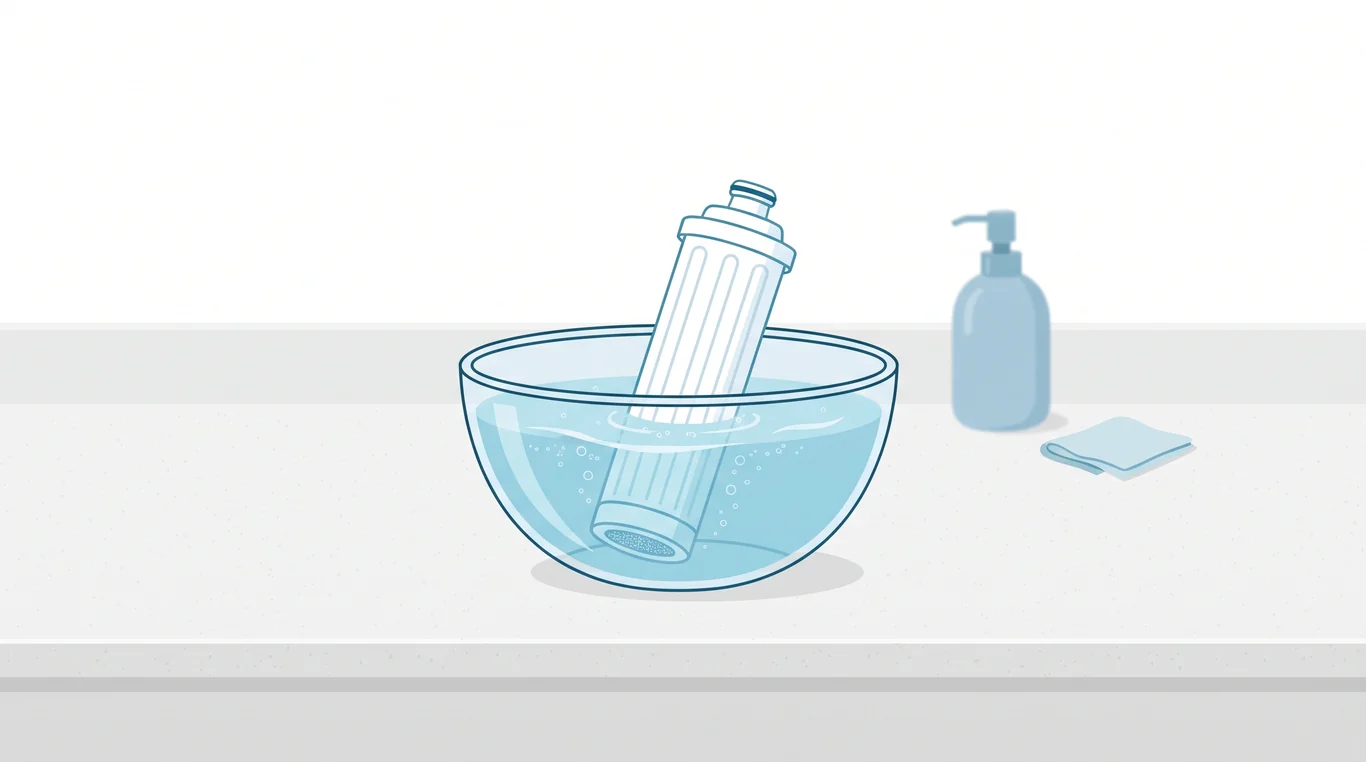
Vinegar’s mild acidity dissolves the mineral scale and breaks up the biofilm that builds up inside a filter housing over time. A soak of 15 to 20 minutes is long enough to loosen both without degrading rubber gaskets or filter media. This same soak-and-rinse approach works whether the filter sits in a pitcher, a faucet-mount unit, or a whole-house housing.
- Shut off the water supply or unplug the appliance if the filter sits inside a refrigerator or a plumbed system.
- Disassemble the housing, removing the filter cartridge or element and any O-rings.
- Mix a solution of equal parts white vinegar and warm water in a bowl or bucket.
- Soak the housing and any reusable components for 15 to 20 minutes.
- Scrub loosened scale and residue with a soft brush, then rinse every part under running water until no vinegar smell remains.
- Reassemble the housing, reinsert the filter, and run water through the system for a minute before regular use.
How Often to Clean Your Water Filter
Cleaning frequency depends on the filter type, not on how the water looks or tastes. A Consumer Reports evaluation found that carbon filters remove neither bacteria nor viruses. They can even grow bacteria if left sitting in stagnant water too long. That is why a fixed schedule beats waiting for a warning sign.
Recommended cleaning cadence by filter type:
- Pitcher and carafe filters: wash the reservoir and lid every 2 weeks with warm, soapy water. My hands-on Waterdrop PT-07B breakdown walks through the exact cleaning routine for that model.
- Faucet-mount and under-sink housings: wipe down and clean the housing at each cartridge swap.
- Whole-house point-of-entry housings: clean the sump and housing at every filter change.
- Ceramic filter elements: scrub the outer surface every 2 to 4 weeks, or sooner if flow slows.
The CDC recommends testing your water first, then choosing a filter matched to the contaminants you find. Keep that filter on the cleaning schedule above instead of waiting for a problem to show up. Skipping a cleaning cycle lets buildup accumulate and gives bacteria more time to settle in.
Faucet-mount clip-on filters have their own cleaning rhythm that differs from pitcher or canister units; my PUR Plus faucet filter review covers the exact upkeep schedule and what long-term owners report about real-world filter life.
Ceramic elements can be scrubbed and reused for one to three years. Each cleaning wears away a small amount of the outer surface. A filter nearing the end of its rated life needs a gentler touch than a new one.
Multi-stage under-sink RO systems have an uneven maintenance cadence across stages; my iSpring RCC7 breakdown covers the exact replacement intervals for each of the five stages.
How to Clean a Water Filter System for Your Entire Home
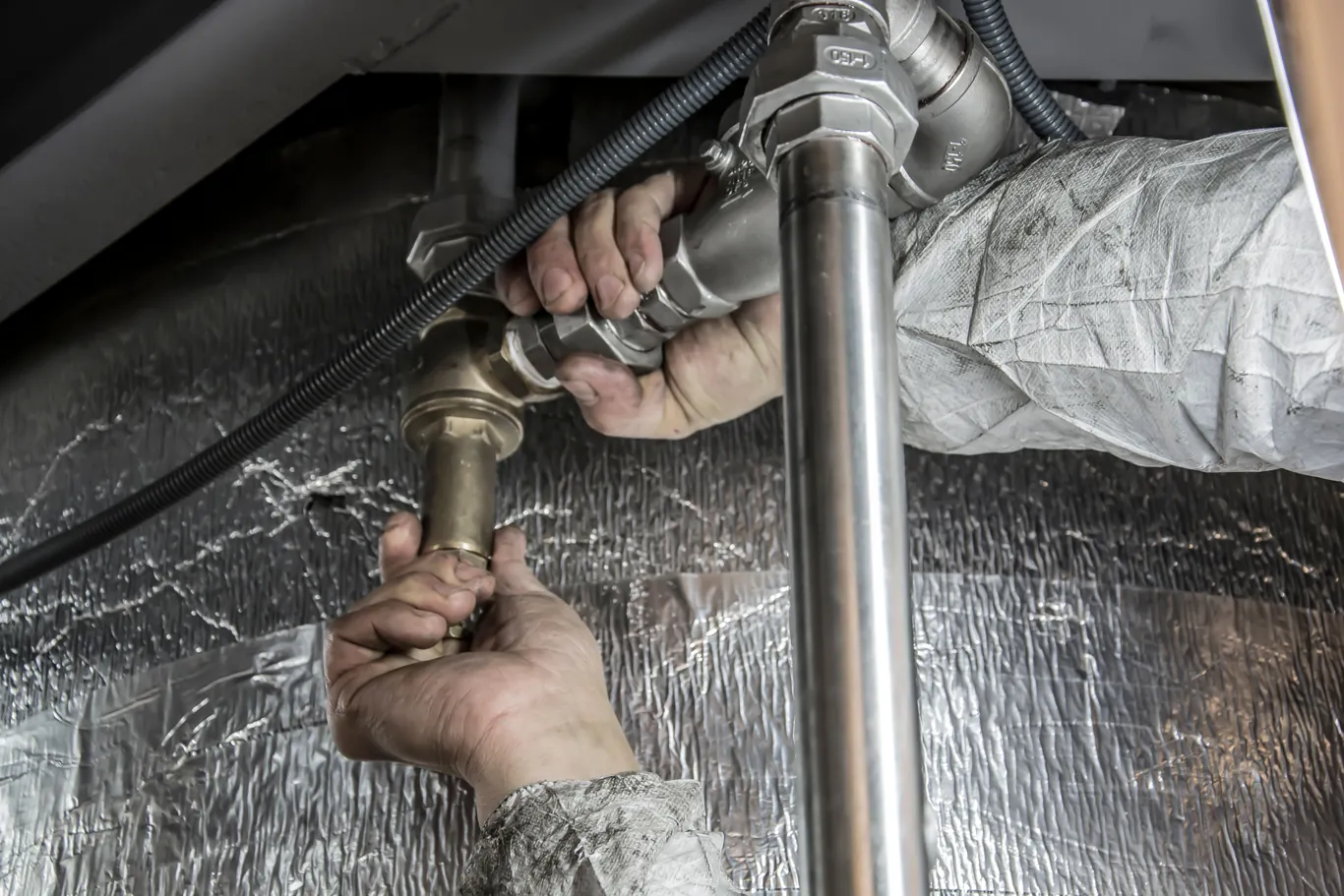
Cleaning a water filter for your entire home starts at the main shutoff valve. The system sits under full line pressure, so the plumbing comes first, not the housing. Shut off the water supply, then open a faucet downstream to relieve the pressure. Use the housing wrench that came with the system to twist the sump free.
Wipe the inside of the sump and the O-ring with a soft cloth. Replace or reseat the O-ring so it sits correctly. Thread the housing back on by hand, then restore the water supply.
The CDC treats this kind of upkeep as routine home water safety, not an optional extra. A housing that is never opened can build up sediment and lose flow over time. The housing might also be hard to reach or refuse to budge. In those cases, or when water pressure runs unusually high, a professional water filter cleaning service is the safer call.
For homeowners handling routine Big Blue housing maintenance themselves, my PUREPLUS cartridge breakdown covers the 5-minute flush procedure and typical replacement cadence on a 5-micron dual-media cartridge.
DIY cleaning and a professional service differ mainly in time, tools, and risk tolerance:
| Factor | DIY Cleaning | Professional Service |
| Time needed | 30 to 60 minutes | Scheduled visit, no time investment from you |
| Tools and skill | Housing wrench and a spare O-ring, no plumbing experience needed for most systems | Licensed technician brings their own tools and parts |
| When it is safer | Valve is easy to reach and water pressure is normal | Valve is hard to reach, housing is stuck, or pressure runs high |
Water Filter Cleaning Mistakes to Avoid
Knowing how a water filter should be cleaned matters less than avoiding a few common mistakes. These mistakes can undo the benefit of cleaning or make the water taste worse. Bleach works well on plastic housings and ceramic elements, but pouring it directly onto activated carbon destroys its ability to adsorb contaminants.
Incomplete rinsing is the second common error. The EPA sets a maximum residual disinfectant level of 4.0 mg/L for chlorine in drinking water. That level is tied to eye and nose irritation when exceeded. Any housing cleaned with a bleach solution needs a thorough rinse, not a quick one, before it goes back into service.
Over-scrubbing is another trap, especially with ceramic elements. A stiff brush and too much pressure can crack the ceramic. Activated carbon has enormous internal surface area, often 900 to 1,100 square meters per gram. Scrubbing the outside of a carbon block does nothing for what is clogged inside its pores.
Cleaning a filter well past its rated gallon or month capacity is the last mistake. At that point the media is exhausted, and no amount of soaking restores its original capacity.
Multi-stage under-sink RO systems run on overlapping schedules rather than a single replacement date; my iSpring RCC7AK hands-on review covers the three-interval cadence the 6-stage alkaline system uses across sediment, carbon, membrane, and post-filter stages.
Signs Your Water Filter Needs Replacing, Not Cleaning

Cleaning restores a dirty housing. It does not restore a filter that has reached the end of its service life. A cracked, warped, or otherwise compromised housing tops the list of warning signs. A compromised seal can let untreated water bypass the filter media entirely.
The EPA has stated there is no safe level of lead exposure. That is exactly why a cracked housing on a lead-reduction filter calls for immediate replacement, not a repair attempt.
Discoloration inside the housing, particularly a pink, orange, or black tint, points to buildup a routine cleaning has already failed to control. An off taste or odor that survives a full vinegar or bleach cleaning is another red flag. It usually means the adsorption media itself is saturated, not simply dirty.
A filter that has passed its rated gallon or month capacity should be replaced on schedule. This holds even if it still looks clean. Rated capacity reflects the media’s chemistry, not its appearance.
When in doubt, replace rather than clean. Any cost saved by stretching a spent filter is not worth drinking water that was never actually filtered. If the filter sits inside a refrigerator dispenser, see our guide on how to change a water filter in a fridge for the swap steps.
How We Research
We check every claim against primary sources. Federal agencies like the EPA and CDC come first. Certification bodies like NSF and AHAM come next. We verify each standard number against the issuing body. We review this guide on a set schedule.
Why Trust This Guide
Puritisimo covers only water and air quality. Our guidance is editorial and independent. We cite every health figure so you can check it. We never present a promotional claim as fact.
Keeping Your Water Filter Working Between Replacements
A consistent cleaning routine keeps a water filter performing the way it did on day one. A pitcher reservoir usually just needs a quick vinegar soak. A whole-house housing often needs a full valve shutoff instead. The method changes by filter type. The logic stays the same: clean on a schedule, rinse well, and know when a filter is simply spent. A countertop water filter canister benefits from the same logic: wipe down the housing exterior and check the cartridge seat at every replacement to prevent sediment buildup at the seal.
A Brita pitcher filter follows that same soak-and-rinse principle on a shorter two-week cycle. The steps translate directly once you know the basic pattern. Getting the timing and technique right matters more than any single product choice. That is really what filter cleaning comes down to.
Frequently Asked Questions
How to clean a water filter?
You clean a water filter by disassembling it, then soaking the filter media or housing in a vinegar-water solution for about 15 to 20 minutes. Scrub gently, rinse thoroughly, then put it back together. The exact steps shift a little by filter type, but that soak-and-rinse sequence covers most pitcher, faucet-mount, and whole-house systems.
Can water filters be cleaned and reused?
Most filter housings, ceramic elements, and pitcher reservoirs can be cleaned and reused many times over their rated life. What usually cannot be restored is the internal cartridge or membrane once it is chemically exhausted. Cleaning removes surface buildup, but it does not renew the media’s adsorption capacity. A cracked housing or a spent cartridge calls for replacement instead.
How often should you wash your water filter?
Cleaning frequency depends on the filter type you own. Pitcher and carafe filters generally need a wash every two weeks. Faucet-mount and under-sink housings need it at each cartridge swap, and whole-house housings at each filter change. Ceramic elements fall in between, needing a scrub every two to four weeks or sooner if water flow slows down.
Can vinegar clean water filters?
Vinegar works well on mineral scale and biofilm coating housings, pitcher reservoirs, and ceramic elements. Its acidity dissolves calcium and lime deposits on contact. What vinegar cannot do is restore a carbon cartridge’s adsorption capacity once the media is exhausted. At that point, only replacement brings performance back to where it started.
How long should you soak a water filter in vinegar?
Most housings and pitcher parts need roughly 15 to 20 minutes in a vinegar-water solution to loosen mineral scale and biofilm. Soaking longer does not meaningfully improve the result, and it can start to degrade rubber gaskets and seals over several hours. A short soak followed by a gentle scrub and a thorough rinse is the more reliable combination.
References
- EPA. Lead and Copper Rule Improvements. 2024.
- EPA. National Primary Drinking Water Regulations. 2024.
- CDC. About Choosing Home Water Filters. 2024.
- Consumer Reports. Best Countertop Water Filters of the Year. 2024.
Medical Disclaimer: This content is for informational purposes only. It is not a substitute for professional medical advice, diagnosis, or treatment. If you have concerns about your water quality or air quality and their effects on your health, consult a qualified healthcare professional.