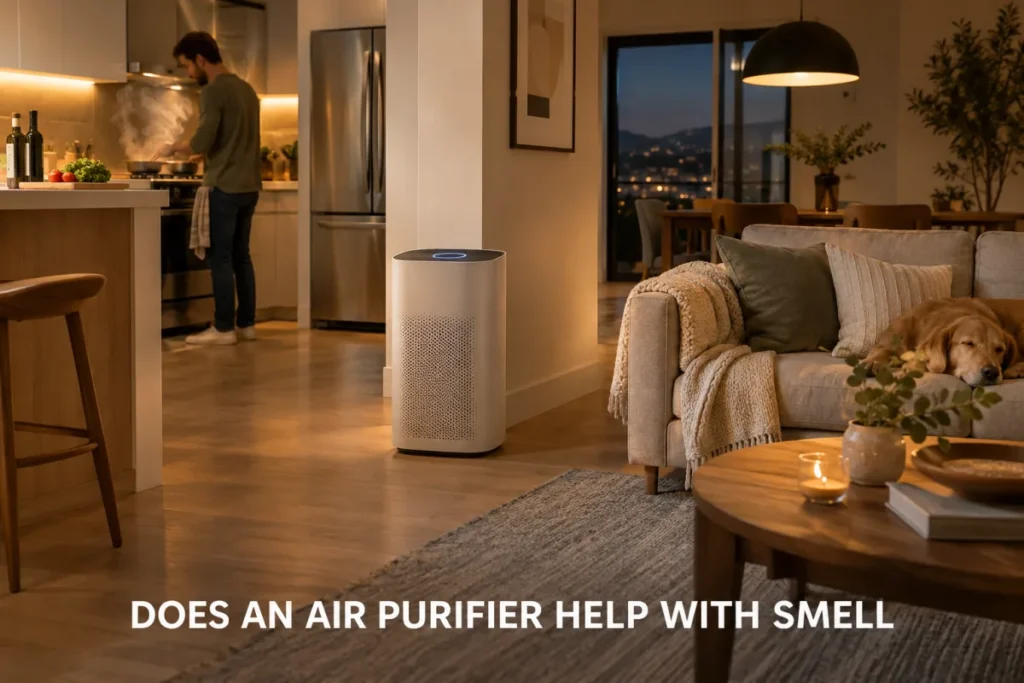
An air purifier helps with smell only when it includes a real activated carbon (a charcoal filter that traps odor molecules) stage alongside HEPA (high-efficiency particulate air) filtration. A HEPA-only unit catches dust, pollen, and pet dander, not the gas molecules that carry an odor. So it will not clear a musty room, pet smell, or lingering cooking odor by itself. That distinction, not the purifier’s price or size, decides whether smell goes away.

By the end of this guide, you will know which filter spec matters for odor, and whether mold, pet, or cooking smells need a different fix. Not every air purifier on the market is built to handle smell, no matter what the box claims.
Key Takeaways.
- HEPA filters trap particles only; removing odor needs a separate activated carbon stage.
- Musty smell usually traces back to mold, so pair a purifier with humidity control for real results.
- Pet odor responds fastest to purifiers with real carbon weight, not HEPA filtration alone.
- Ionizers and ozone generators mask odor rather than remove it; the EPA cautions against relying on them.
Does an Air Purifier Help With Smell? Here’s the Mechanism That Matters

Odor control depends on one part: a real activated carbon (a charcoal filter that adsorbs odor molecules) stage. Standard HEPA filtration traps solid particles like dust and dander, not the gas-phase molecules that carry a smell.
The EPA rates air purifiers mainly on CADR (clean air delivery rate), a measure of how fast a unit clears solid particles from a room. That number says nothing about gas-phase pollutants, the odor molecules a purifier has to catch with a different method.
The weight of carbon inside the filter is the spec that predicts real odor performance, not the words on the box. One pound of activated carbon holds roughly 125 acres of surface area. Budget units often pack in less than 100 grams, a filter that fills up within weeks. Units built for heavy odor work carry several kilograms instead.
A peer-reviewed test measured how well a right-sized carbon stage clears volatile organic compounds (VOCs, gas pollutants released by paint, cleaners, and cooking). The rate reached 72.10 cubic meters per hour. That is about eleven times faster than a hydroxyl-radical generator (a device that uses reactive molecules instead of a filter) tested the same way.
| Filter Type | What It Captures | What It Misses | Typical Filter Life |
| HEPA. | Dust, pollen, pet dander, and particles down to 0.3 microns (about 1/100th the width of a human hair). | Odor molecules and gas-phase pollutants. | 6 to 12 months. |
| Activated Carbon. | Odor molecules, smoke, and volatile organic compounds (VOCs). | Solid particles like dust and pollen. | 2 to 6 months, depending on carbon weight. |
Musty Smells and Mold: What an Air Purifier Can Fix
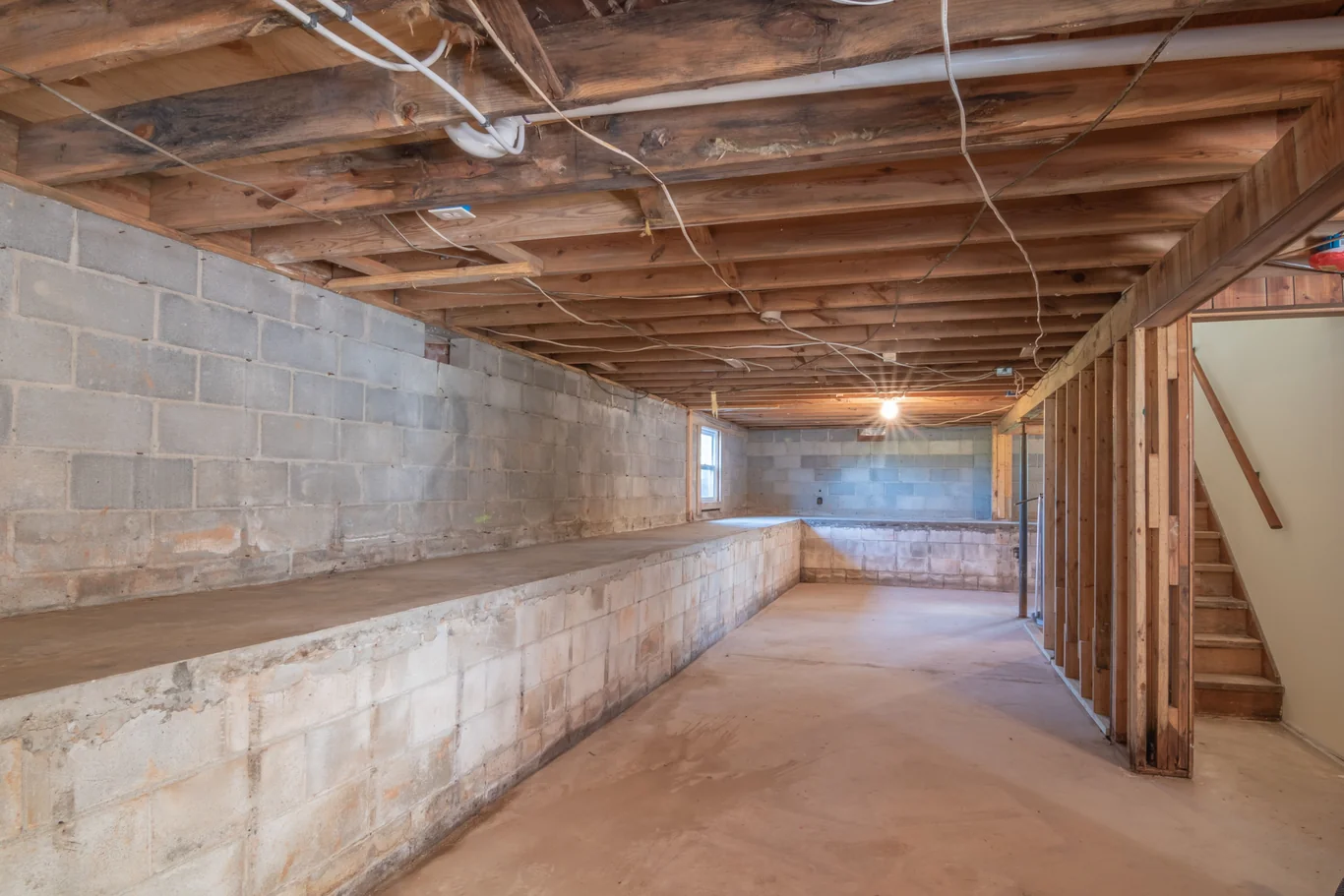
An air purifier does help with the musty smell mold produces, but only part of the way. A true HEPA (high-efficiency particulate air) filter traps airborne mold spores, most of which measure 2 to 10 microns, as they pass through. That lowers both the musty smell and the health risk of breathing the spores in.
What it cannot do is stop mold from growing. The EPA says controlling indoor humidity is the real fix for an active mold problem, not filtration alone.
The pairing worth knowing about is HEPA plus UV-C (ultraviolet light in the germicidal wavelength). HEPA traps spores on the filter surface, and UV-C keeps them from regrowing there between filter changes. Without it, a filter that sits wet or humid can become its own mold colony. That is why some higher-end purifiers add a UV-C stage for bathrooms and basements.
Clearing a musty smell for good usually takes these steps in order:
- Bring indoor humidity below 50 percent with a dehumidifier or better bathroom ventilation.
- Run the air purifier continuously in the affected room, not just occasionally.
- Find and fix the moisture source directly, such as a slow leak or a vent that never gets used.
- Check or replace the carbon filter if the musty smell lingers after humidity is under control.
Pet Odor and Air Purifiers: What Actually Works
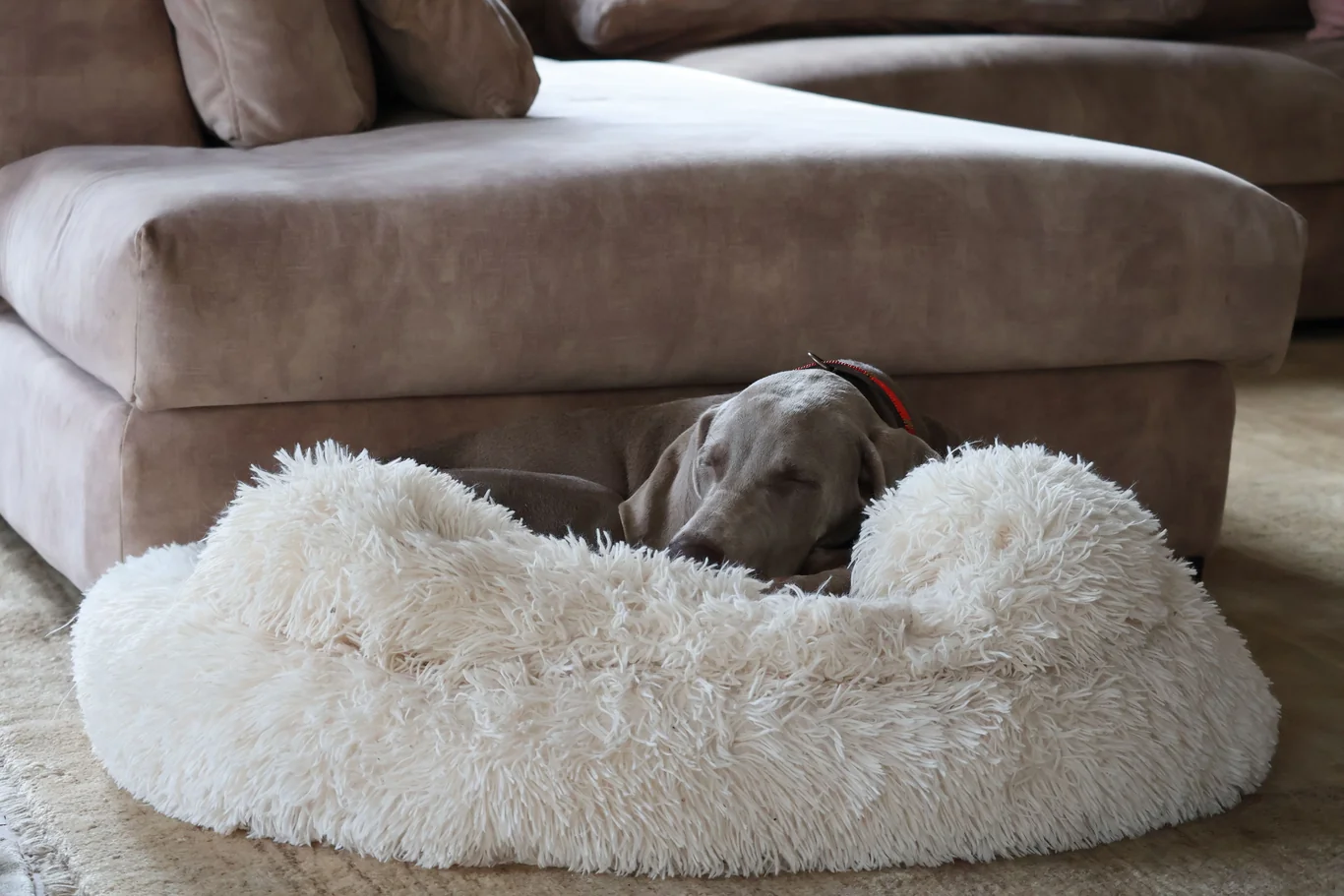
Yes, an air purifier can clearly cut pet odor. How well it works depends on a spec most shoppers skip. That spec is the weight of activated carbon (a sponge-like material with tiny pores that traps odor gases) inside the unit. That number matters more than the name on the box.
A HEPA-only purifier removes dust and other particles, but it will not touch pet smell. That is because litter box ammonia and skin oil compounds are gas molecules, not particles. A model listing a carbon weight of several hundred grams or more is doing the actual odor work. Budget units often carry only a thin sub-100-gram layer that fills up within weeks.
A few other factors decide how much a purifier actually helps with pet smell:
- Carbon amount and freshness: heavier, unsaturated carbon adsorbs more odor before it needs replacing.
- Placement: setting the unit close to the litter box or main pet area treats the smell at its source.
- Room size versus CADR (Clean Air Delivery Rate): an undersized unit in a large room will not keep up with pet odor.
- Washable pre-filter: catches loose fur and dander before it clogs the carbon layer.
Does an Air Purifier Help With Smell in a Large Room or Whole House?
A single air purifier helps with smell in a large room only if its CADR is sized for that square footage. CADR, the Clean Air Delivery Rate, measures how many cubic feet of filtered air the unit moves per minute. The EPA says matching CADR to room size determines whether a unit can clear a space.
An undersized unit running on its “room coverage” number is the most common reason odor control feels incomplete. A simple check is the industry’s two-thirds rule. A purifier’s smoke CADR should cover at least two-thirds of the room’s square footage.
A single portable purifier only treats the room it sits in. Air from another room does not move through it fast enough to matter. One portable unit will not be the honest fix for odor that spreads through an entire house. That includes cooking smells from the kitchen and pet odor in many rooms. A whole-home system tied into the HVAC (heating, ventilation, and air conditioning) ductwork filters air as it moves through the whole house instead of one closed room.
For a single large room where a portable purifier is still the practical choice, my Levoit Core 400S-P large-room purifier review covers how a high-CADR HEPA-plus-carbon unit handles odor reduction in spaces up to around 400 square feet.
Vehicle cabin air runs on a separate activated-carbon filter that targets exhaust odors and road smells inside the car; my Spearhead Breathe Easy BE-157 review covers the coconut-shell carbon option rated for odor defense in a car’s HVAC loop.
Ionizers, Ozone, and the Limits of Odor-Control Technology
Ionizers, ozone generators, and photocatalytic oxidation (PCO, a process that uses UV light and a catalyst to break down odor molecules) are often sold as odor solutions. The evidence behind them is weak. The EPA says ozone-generating devices sold as air cleaners provide little benefit at levels that meet public health standards, and ozone itself is a lung irritant.
PCO traces back to NASA research from the 1990s on spacecraft air purification, which sounds impressive on a product label. In practice, EPA testing found that PCO units can generate formaldehyde as a byproduct. That happens during real-world use, an unwanted trade-off that undercuts the appeal. That is a reason to read “ionizer” and “PCO” claims with some skepticism. It is not a reason to write off air purifiers in general, since a HEPA-plus-carbon unit does not carry the same risk.
How We Research
We check every claim against primary sources. Federal agencies like the EPA and CDC come first. Certification bodies like NSF and AHAM come next. We verify each standard number against the issuing body. We review this guide on a set schedule.
Why Trust This Guide
Puritisimo covers only water and air quality. Our guidance is editorial and independent. We cite every health figure so you can check it. We never present a promotional claim as fact.
What to Check Before You Buy for Odor Control
The specs that matter for odor control are simple once you know what to look for. A real activated carbon stage with enough weight to last plays a part. So does a CADR matched to the room, and so do honest expectations about ionizers and ozone. Musty smells point back to a moisture problem, not just a filtration gap, and pet odor responds fastest to carbon amount rather than brand name.
A single portable unit clears the room it sits in. Anything larger needs either more units or a whole-home system tied into the ductwork. None of this needs the most expensive model on the shelf. It just needs one that lists its carbon weight and CADR honestly instead of a vague claim. Checking those two numbers before you buy is the real test of whether an air purifier helps with smell.
Frequently Asked Questions
Does an air purifier help with smell?
An air purifier helps with smell only when it includes a real activated carbon stage alongside HEPA. A HEPA-only unit clears dust and dander but leaves odor molecules untouched. The EPA says gas-phase pollutants like odors need a sorbent material such as carbon, not particle filtration alone, to be removed well.
Can an air purifier remove odor?
Activated carbon genuinely adsorbs odor molecules rather than masking them, which is different from air fresheners that just cover smells up. That capacity is finite, though: carbon fills up over time, and it needs replacing to keep working. A strong or constant source, like an unscooped litter box or a smoking habit, will outpace what any purifier can keep up with.
Does an air purifier make a house smell better?
A single portable air purifier improves the room it sits in, not the whole house. Odor from other rooms does not travel to it fast enough to make a real difference. Whole-house improvement takes more units placed room by room, or a whole-home system tied into the HVAC ductwork that filters air as it moves.
Is there a downside to air purifiers?
The real downside is not the air purifier itself but certain technology types: ozone-generating devices and some ionizers sold as air cleaners. The EPA says these provide little benefit at levels that meet public health standards, and ozone can irritate the lungs. A standard HEPA-plus-carbon unit does not carry that risk.
How long does it take an air purifier to get rid of smells?
There is no single number. It depends on carbon freshness, room size relative to the unit’s CADR, and how strong the odor source is. A right-sized purifier can clearly cut a light smell within a few hours. Undersized units or an ongoing source, like an unclean litter box, can take days or never fully clear it.
References
- EPA. Guide to Air Cleaners in the Home. 2024.
- PubMed Central. Comparative study of activated-carbon and hydroxyl-radical air cleaning technologies for VOC removal. 2023.
- EPA. A Brief Guide to Mold, Moisture, and Your Home. 2024.
Medical Disclaimer: This content is for informational purposes only. It is not a substitute for professional medical advice, diagnosis, or treatment. If you have concerns about your water quality or air quality and their effects on your health, consult a qualified healthcare professional.