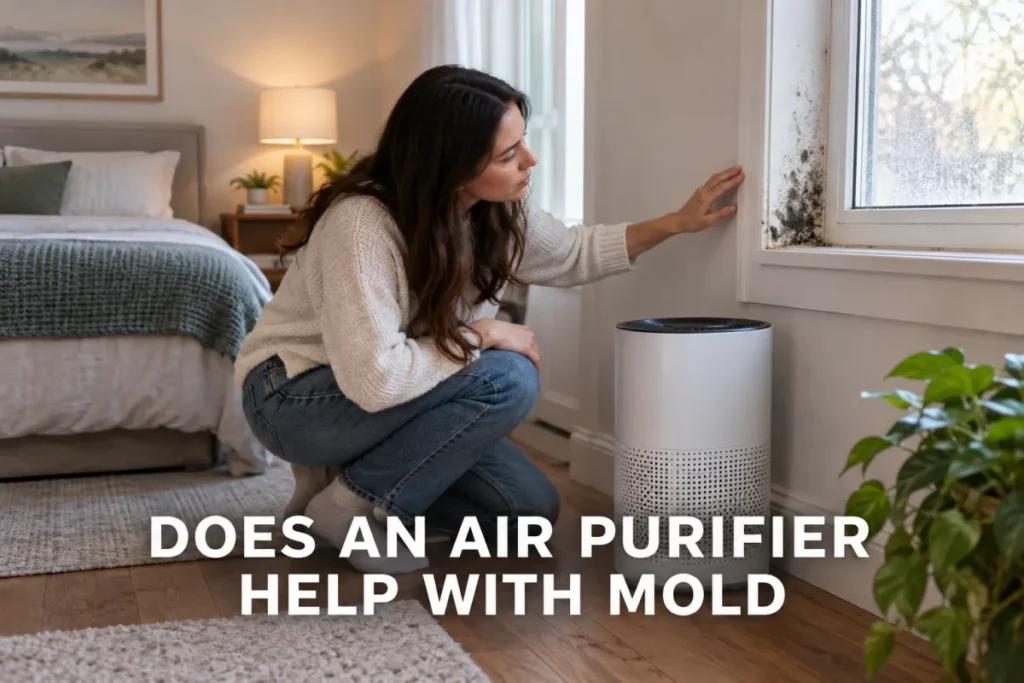
An air purifier helps with mold by trapping airborne spores before you breathe them in, provided it uses the right kind of filter. It will not remove mold that has taken hold on a wall, a windowsill, or bathroom tile grout. That distinction, between the mold spores floating in the air and the mold growing on a surface, is the whole answer to whether a purifier helps.

By the end, you will know which filter type captures mold spores, why an ionizer falls short, and where to run a purifier for the best result. Fixing an active mold problem in a home still takes more than a filter alone.
Key Takeaways
- An air purifier captures airborne mold spores but cannot remove mold growing on a surface.
- True HEPA (a high-efficiency filter) traps 99.97% of particles at 0.3 microns (a tiny size unit), smaller than mold spores.
- Fixing the moisture source comes first; the purifier only handles spores left floating in the air.
- HEPA filtration outperforms ionizers for mold, since ionizers redistribute particles and can generate ozone instead of removing spores.
Does an Air Purifier Help With Mold Spores?
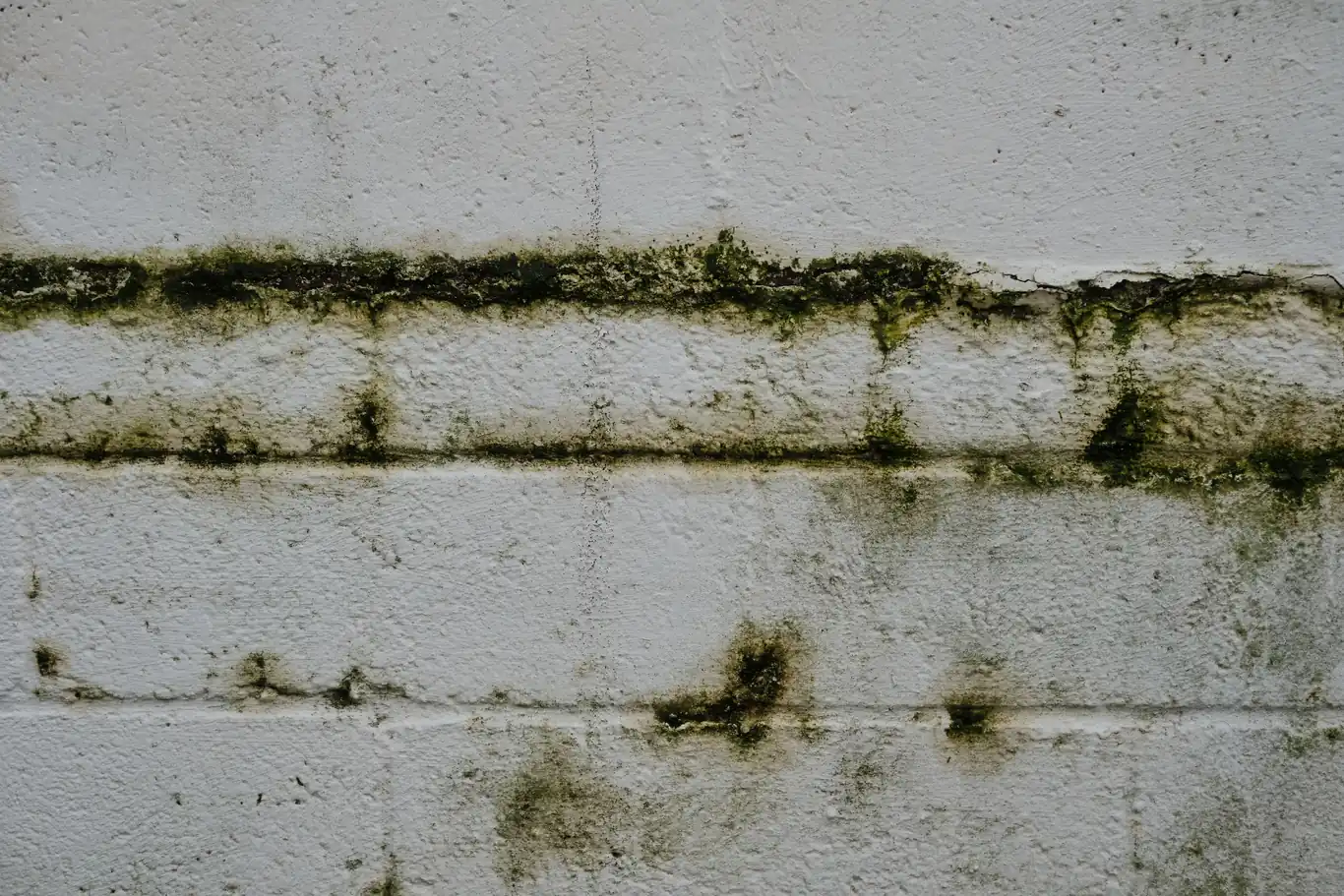
An air purifier helps with mold in one narrow way. It captures airborne mold spores, tiny fungal cells measured in microns (units far smaller than a grain of dust). Spores often run 2 to 20 microns across, and it does nothing to mold that has taken hold and started growing on a wall or windowsill. Mold spores are also a common indoor allergy trigger.
That caveat matters more than the good news. The EPA is direct on this point: controlling indoor moisture, not air cleaning, is what stops mold from growing in a home. A purifier handles the spores in the air; it cannot dry out a leaking pipe or a damp basement.
This distinction is the one people miss most often. Someone dealing with a musty smell or visible spots in a bathroom often expects a purifier alone to solve it, then wonders why the problem keeps coming back. It will not, on its own, because the moisture feeding the mold is still there. What it does reliably do is reduce the number of spores floating in the air you breathe. That matters most for people in the house with allergies or asthma.
A True HEPA filter traps spores well within its rated range.
How HEPA Filters Capture Airborne Mold Spores

A true HEPA filter (high efficiency particulate air filter) captures 99.97% of particles at 0.3 microns (a unit equal to one-millionth of a meter), according to the EPA. That size is called the most penetrating particle size (MPPS), the hardest size for any filter to trap. Mold spores are far larger, often 2 to 20 microns, which works in the filter’s favor.
Trapping something the size of a mold spore is comparatively easy for a HEPA filter. Impaction is the physical process where a larger particle slams directly into a filter fiber. It catches spores efficiently, unlike the far harder job of diffusion capture needed for particles near the MPPS. This is why HEPA units are considered a reliable tool against airborne mold, even though they were never designed with mold specifically in mind. A fan pulls room air through the filter media. The same fiber mesh then traps up to 99.97% of spores. No spray, chemical, or ionizing step is involved.
Some purifiers pair a HEPA filter with a UV-C (ultraviolet light) stage. This does not make the filter better at catching spores, since capture still happens mechanically. It can help limit microbial growth on the filter media between changes. That detail matters in a room where mold keeps coming back.
Fix the moisture problem and clean the visible growth first.
What an Air Purifier Cannot Fix About a Mold Problem
An air purifier only handles what is floating in the room. It cannot fix the reason mold is growing in the first place, which is almost always excess moisture. The EPA states that controlling moisture is the main way to stop mold growth, not air cleaning. Running a purifier next to an active leak treats the airborne symptom while the source keeps producing more spores.
Solving a mold problem that exists follows a specific order:
- Find and fix the moisture source, a leak, condensation, or poor ventilation, before doing anything else.
- Physically clean any visible mold from hard surfaces, since a purifier cannot remove mold growing on a wall or in grout.
- Keep indoor humidity below 50% relative humidity (RH, the share of moisture the air is holding compared to what it can hold at that temperature). Use a dehumidifier if needed.
- Keep the air purifier running afterward to manage the spores still floating in the air while the space dries out.
Skipping straight to the last step is the most common mistake. An air purifier bought as the only fix for a visible mold problem will keep running without ever solving it. No purifier alone gets rid of mold 100%. Full removal means fixing the leak and cleaning growth first. Keeping humidity under 50% RH stops it from returning.
Choosing the Right Air Purifier for a Mold-Prone Room
Not every purifier marketed for mold is built the same way. Check the label before the price. A unit needs to say True HEPA, not the vaguer HEPA-type or HEPA-like. Only the tested and certified version reaches the capture rate described above.
A handful of features separate an effective mold-fighting purifier from a weak one:
- True HEPA filtration: the only tier tested and certified to the 0.3-micron (about one-millionth of a meter) standard covered earlier; HEPA-type filters are not held to that standard.
- Activated carbon stage: absorbs the musty odor compounds mold releases, something a HEPA filter alone does not touch.
- UV-C stage (optional): helps limit microbial buildup on the filter itself between changes.
- Washable pre-filter: catches larger debris before it reaches the main filter, extending its life and cutting replacement cost.
Where the unit runs matters almost as much as which unit you buy. A bedroom near an exterior wall, or one adjoining a bathroom, often carries the highest moisture risk in a home. That is usually the best room for continuous overnight operation. People spend more hours there than anywhere else in the house.
In practice, whether an air purifier helps with mold in any specific room comes down to matching the unit’s stage lineup to that room’s risk. It is not just about price or brand.
HEPA vs. Ionizers for Mold: Which Technology Actually Works
Ionizers work differently than HEPA filters. Instead of trapping particles in a filter media, an ionizer releases charged ions that attach to mold spores and other particles. This makes them heavier, so they fall out of the air and settle on surfaces, a process called agglomeration. That is redistribution, not removal.
The bigger concern with ionizers is byproduct emissions. California caps ozone output from air cleaning devices at 0.050 ppm (parts per million, a unit for measuring gas concentration in air). That limit exists because ion generators can produce ozone at levels harmful to breathe in a closed room. HEPA filtration produces no ozone at all, since it works by physical trapping rather than a chemical or electrical process.
Set side by side, the difference in approach shows up across every dimension that matters for a mold problem:
| Feature | True HEPA Filter | Ionizer |
| Mechanism | Physically traps particles in filter media | Releases charged ions that attach to particles |
| Effectiveness on mold spores | Captures 99.97% at 0.3 microns, well below spore size | Settles spores onto surfaces rather than removing them from the room |
| Ozone and safety profile | Produces no ozone | Can generate ozone above safety limits in an enclosed room |
| Best use case | Primary tool for airborne mold spore control | Best avoided in a mold-prone room; pair HEPA with UV-C instead if extra treatment is wanted |
Other Indoor Air Problems an Air Purifier Also Helps With
A HEPA air purifier’s usefulness is not limited to mold. Tobacco smoke and other smoke particles are largely captured by the same filtration that traps mold spores. Much of visible smoke is fine particulate matter within HEPA’s capture range. The lingering smell, however, is a gas-phase problem a HEPA filter alone cannot solve. An activated carbon stage is what adsorbs the odor compounds, working alongside the HEPA filter rather than replacing it.
Pet dander adds another reason to keep a purifier running. Dander particles are small enough to stay airborne for hours. Proteins shed by a cat or dog show up in the dust of nearly every home, whether or not a pet lives there. A HEPA filter that runs all the time cuts this background load. It cuts airborne mold spores the same way, by trapping the particle no matter what it is made of.
How We Research
We check every claim against primary sources. Federal agencies like the EPA and CDC come first. Certification bodies like NSF and AHAM come next. We verify each standard number against the issuing body. We review this guide on a set schedule.
Why Trust This Guide
Puritisimo covers only water and air quality. Our guidance is editorial and independent. We cite every health figure so you can check it. We never present a promotional claim as fact.
Getting the Most Out of an Air Purifier When Mold Is the Problem
An air purifier is a genuinely useful tool against mold, but only as one part of a bigger plan. On its own, it handles what is floating in the room. It does nothing about the moisture that let mold start growing. It also cannot clean mold that has taken hold on a wall or in grout.
Pairing a True HEPA unit with real moisture control covers both sides of the problem. Add an activated carbon stage for odor, plus a dehumidifier, better ventilation, or a repaired leak. People comparing full units side by side can also look at how a HEPA air purifier performs against mold across specific models. In the end, whether an air purifier helps with mold always comes down to pairing it with proper moisture control.
For households with pets alongside a mold concern, a high-CADR unit with a robust pre-filter handles both pet dander and airborne spores; my best air filter for home with pets covers the top options built around that dual demand.
Frequently Asked Questions
Does an air purifier help with mold spores?
An air purifier does help with airborne mold spores, trapping them the same way it captures other fine particles. It will not remove mold that has grown on a surface. A True HEPA filter traps spores well within its rated range. Continuous use makes a real difference for the airborne share of a mold problem, not the source itself.
What kills mold spores in the air?
Trapping mold spores and killing them are not the same thing. A HEPA filter physically traps spores; it does not kill them. A UV-C (ultraviolet light) stage can inactivate some spores, but only with enough exposure time, more than most portable purifiers can realistically provide as air moves through. In practice, capture is what does the heavy lifting.
Which is better for mold, air purifier or humidifier?
A humidifier is the wrong tool here, since adding moisture to the air can make an existing mold problem worse. A dehumidifier paired with an air purifier is the combination that helps. It keeps humidity low enough to stop new mold growth, while the purifier handles the spores floating in the room.
What are the signs of mold exposure?
Common signs linked to mold exposure include nasal congestion, coughing, and eye or throat irritation, along with worsened asthma symptoms in people who have asthma. These symptoms are associative, not diagnostic, and they overlap with several other causes. Persistent symptoms are worth discussing with a doctor rather than assuming mold is the cause.
Is it safe to sleep in a room with mold?
Sleeping in a room with active mold growth is not recommended, especially for people with allergies, asthma, or other respiratory sensitivities. The safer approach is the same one that applies everywhere else in the home. Fix the moisture problem and clean the visible growth first. Then let an air purifier manage the spores that remain airborne while the room dries out.
References
- EPA. What Is a HEPA Filter? U.S. Environmental Protection Agency. 2024.
- EPA. A Brief Guide to Mold, Moisture, and Your Home. U.S. Environmental Protection Agency. 2024.
- California Air Resources Board. About the Indoor Air Cleaning Devices Regulation. 2024.
Medical Disclaimer: This content is for informational purposes only. It is not a substitute for professional medical advice, diagnosis, or treatment. If you have concerns about your water quality or air quality and their effects on your health, consult a qualified healthcare professional.