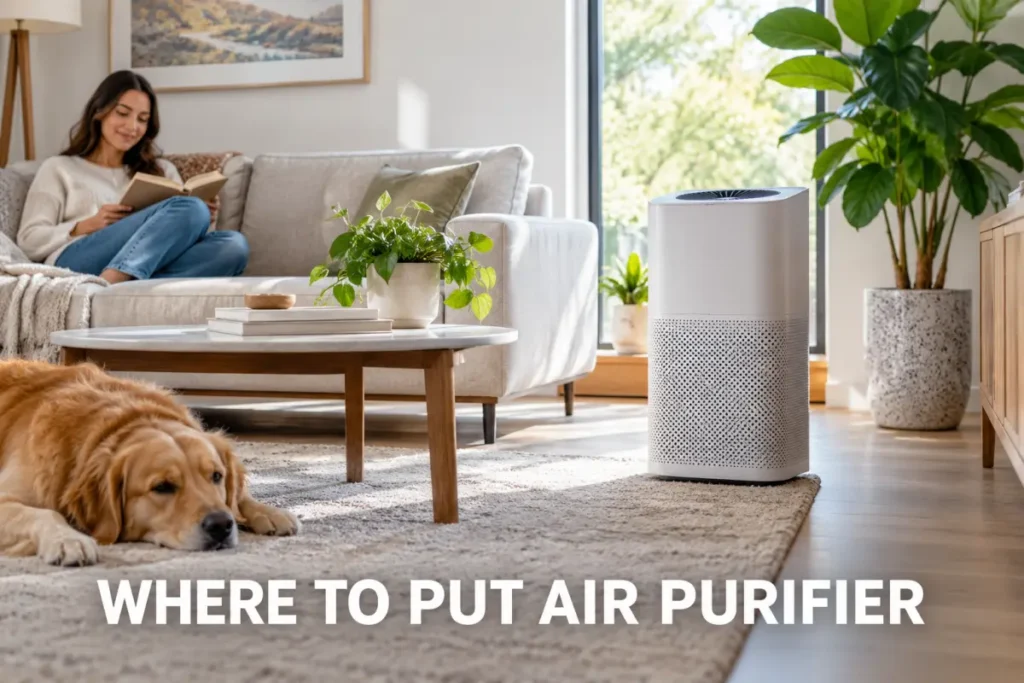
An air purifier is a device that pulls room air through a fan and filter to trap airborne particles. It then sends cleaner air back into the space. It works all the time, moving the same room air through the filter again and again instead of treating the air once. Most models pair a mechanical filter with other methods to expand what the device can capture beyond solid particles.

By the end of this guide, you will know how HEPA (a filter that traps at least 99.97% of very fine particles), carbon, and ionic technologies each work. You will also see which household problems an air purifier really solves and how it differs from a humidifier.
Key Takeaways
- An air purifier uses a fan and filter to trap airborne particles and reuse cleaner air all the time.
- True HEPA traps 99.97% of particles at 0.3 microns (a tiny particle-size unit), the hardest to catch.
- Cat allergen can still be detected in a home 20 or more weeks after the cat leaves.
- HEPA alone cannot remove smoke odor; it needs an added activated carbon stage for the gas-phase chemicals.
What Is an Air Purifier?
An air purifier is a portable device built around a fan and one or more filters. It pulls in room air and traps particles as they pass through the filter media. Then it pushes the filtered air back out, cleaning the same room air over and over instead of treating it once.
A portable air purifier is not the same as a furnace or HVAC filter. The EPA defines it as a device designed to filter the air in a single room or area. It uses its own fan and filter, rather than serving an entire home the way a central HVAC system does.
For anyone curious how a furnace filter fits into that picture, my Filtrete MERV 11 filter review covers what a flat-panel HVAC filter delivers for dust and allergen control across multiple rooms.
Air purifiers exist because using a window does not always work or is not enough. Fire smoke, seasonal pollen, pet dander, and daily dust build up faster inside than most homes can clear on their own. How fast those particles build up in your specific home decides whether you actually need an air purifier. A purifier gives a room a way to keep working on that air continuously.
What Is an Air Purifier Doing Inside the Unit?

The technology packed inside the housing decides what a unit can and cannot remove from the air. A small fan draws room air through one or more filter stages, then pushes the treated air back into the room. Not every stage catches the same thing, which is why the mix of methods matters more than the brand name on the box. Some models add an ionizer stage that works through a different mechanism than mechanical filtration.
Three distinct methods show up inside most units, and they do not work the same way:
- True HEPA: captures at least 99.97% of particles at 0.3 microns, the hardest particle size to trap, not the smallest one it can catch.
- Activated carbon: works by adsorption. Gas-phase odor molecules and volatile organic compounds (VOCs, chemical vapors from products like paint or cleaners) stick to the carbon’s surface as air passes through. HEPA fibers cannot do this.
- Ionizer or ionic purifier: charges airborne particles instead of filtering them, so there is no collector plate or filter media doing the trapping. The EPA cautions that these units can generate ozone, a lung irritant, at levels considered harmful under some use conditions.
The 0.3-micron figure (a unit of length equal to one-millionth of a meter) is not the smallest particle a filter can trap. It is the size that slips past mechanical filtration most easily, which is why regulators use it as the toughest test case. None of that matters if the unit’s clean air delivery rate (CADR, the volume of filtered air a unit puts out each minute) is not sized to the room. An undersized purifier running at maximum speed still will not clear a large room. Our guide to understanding CADR ratings explains how to match capacity to space.
Can an Air Purifier Help With Pet Dander and Cat Allergies?
Pet dander behaves differently from ordinary dust because a large share of it never settles. Roughly a quarter of airborne cat and dog dander measures 2.5 microns or smaller. That is small enough to stay suspended in the air for hours after a pet walks through a room. A HEPA-based unit running continuously, not only when symptoms flare, is what actually lowers the ambient level over time.
How long cat allergen lasts is easy to miss. Fel d 1, the main cat allergen protein, has been found in 99.9% of surveyed U.S. homes no matter whether a cat lives there. It travels on clothing and settles into fabric and carpet. Research has found it measurable more than 20 weeks after the cat leaves the home.
The audience this matters to is not small. Nearly one in three U.S. adults (31.7%) reported a diagnosed seasonal allergy, eczema, or food allergy in 2024, according to the CDC. That puts pet-related filtration in front of a large potential audience.
Does an Air Purifier Get Rid of Smoke and Odors?
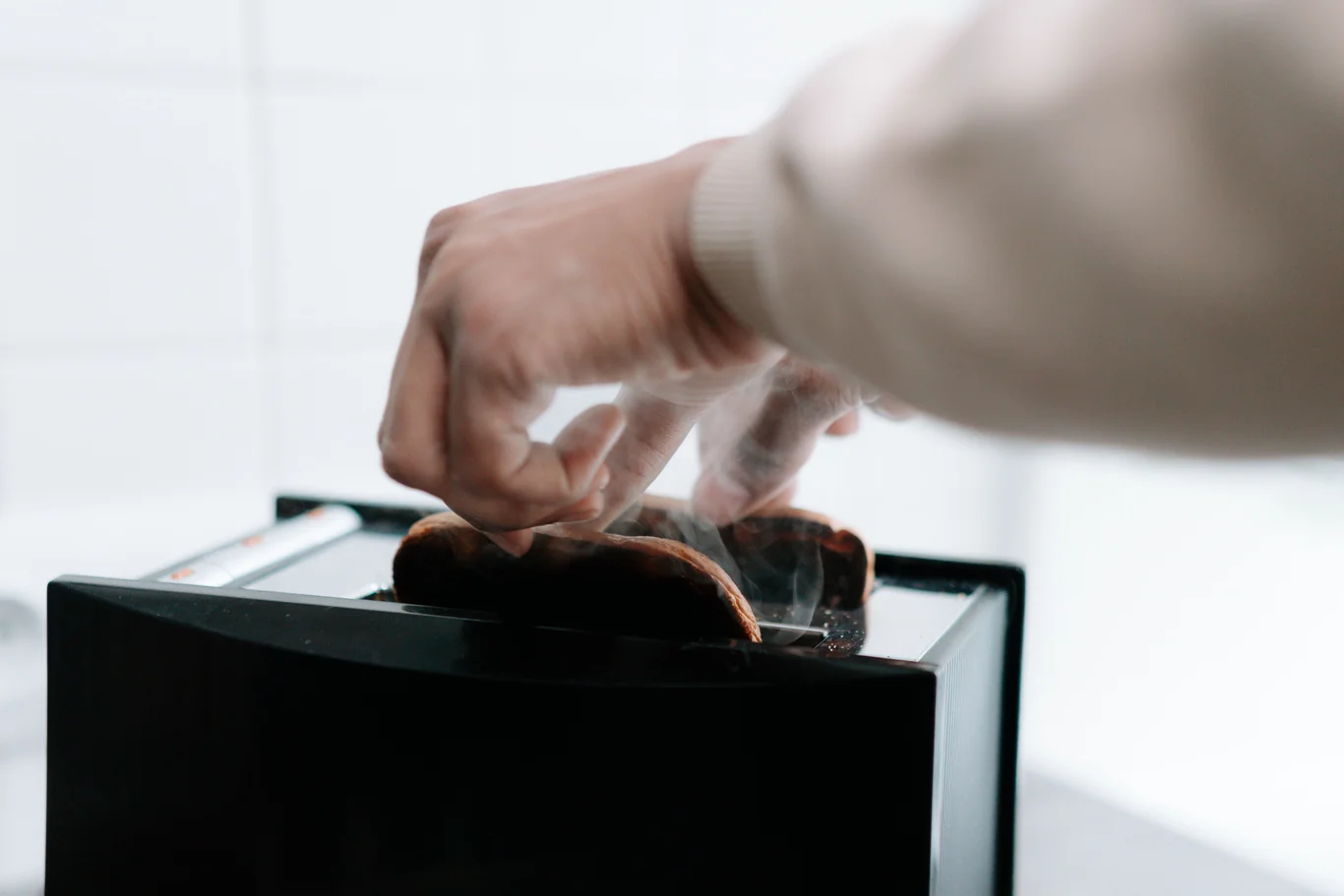
Cigarette smoke is really two pollutants at once, and that distinction decides whether a purifier helps. The particulate phase, roughly 0.1 to 1.0 microns in size, is exactly what a true HEPA filter is built to trap. The odor comes from gas-phase molecules that pass straight through a HEPA filter’s mesh untouched.
That gap is why the EPA’s own review of residential air cleaners points to a HEPA-plus-carbon combination. That combination, not HEPA alone, is the setup that really clears smoke and odor. Activated carbon removes the gas-phase molecules that fibers cannot catch, working by adsorption instead of mechanical filtration.
No filter configuration fully clears a room that is actively being smoked in, and no purifier removes the underlying health risk of secondhand smoke. What continuous HEPA-plus-carbon filtration does is reduce the residual particle and odor load between smoking events, not eliminate exposure entirely.
For a large room where both smoke particles and residual odor are a concern, my Levoit 400S-P review covers how a unit in this class performs when both HEPA and carbon capacity are tested together.
Air Purifier vs. Humidifier: What Is the Difference?
People often confuse an air purifier with a humidifier, but the two solve completely different problems, even though they often sit in the same aisle. A purifier’s fan pulls air through a filter to remove particles, gases, or both; it does not add or remove moisture from the air. A humidifier does the opposite: it releases water vapor to raise humidity and has no filtration stage for dust, dander, or smoke.
Symptom source: a dry throat, cracked skin, or static electricity points to a humidifier. Sneezing, watery eyes, or a persistent smoky smell points to a purifier instead. Both devices are portable and sized to a single room, but they do not overlap in what they treat.
The core differences side by side:
| Feature | Air Purifier | Humidifier |
| Primary function | Removes particles, gases, or odors from the air | Adds moisture to dry air |
| Effect on humidity | None | Increases relative humidity |
| Best for | Allergens, pet dander, smoke, and dust | Dry skin, static, and dry sinuses |
| Ongoing upkeep | Filter replacement on a schedule | Regular tank cleaning |
How We Research
We check every claim against primary sources. Federal agencies like the EPA and CDC come first. Certification bodies like NSF and AHAM come next. We verify each standard number against the issuing body. We review this guide on a set schedule.
Why Trust This Guide
Puritisimo covers only water and air quality. Our guidance is editorial and independent. We cite every health figure so you can check it. We never present a promotional claim as fact.
Choosing the Right Fit for Your Air Quality Problem
The right purifier for a household comes down to matching the technology to the actual problem. A true HEPA filter with a 99.97% capture rate handles allergens and dust. An activated carbon stage clears smoke and cooking odors. An ionizer needs to be weighed against its ozone tradeoff instead of treated as a shortcut.
None of these fixes moisture-related discomfort, which is a humidifier’s or dehumidifier’s job, not a filtration job. That same divide separates an air purifier from a dehumidifier. Buyers who start from their specific symptom end up with a better match than buyers who start from a brand name. That symptom might be a sneezing pet owner, a smoker’s household, or simply visible dust on the shelves. That symptom-first approach is the shortest path to understanding what an air purifier is and does.
Frequently Asked Questions
What are the disadvantages of an air purifier?
Ongoing filter replacement is the biggest recurring cost, often every 6 to 12 months depending on air quality. A standalone HEPA filter also cannot remove gases, VOCs, or odors without an added carbon stage, and higher fan speeds can be noticeably loud. Air quality improves gradually over weeks, not instantly after the unit is plugged in.
What are signs you need an air purifier?
Visible dust that resettles within days of cleaning is a common trigger. So is persistent pet odor that lingers after vacuuming, or indoor allergy symptoms that flare on a seasonal schedule. A smoker in the household, or a home near wildfire smoke or heavy traffic pollution, are two more clear signals worth acting on.
What does an air purifier actually do?
A fan pulls room air through one or more filter stages and traps whatever those stages are built to catch, dust, allergens, or gases. It then pushes the cleaned air back into the room on a continuous loop. That treats just the single room it sits in, not the whole house.
A vehicle cabin air filter applies the same particle and odor capture principle to a car’s HVAC loop rather than a room; my BE-157 cabin air filter review covers the activated carbon option for everyday drivers.
What is better, an air purifier or a humidifier?
Neither one is always better, because they solve different problems. An air purifier removes particles, gases, or odors from the air, while a humidifier adds moisture instead. The right choice depends on the symptom. Sneezing, pet odor, or smoke calls for a purifier. Dry skin, static, or a scratchy throat calls for a humidifier.
What is an air purifier used for?
An air purifier is typically used to reduce airborne allergens like pet dander and pollen. It also cuts down cigarette smoke and cooking odors, and lowers general dust and indoor pollution. Households with pets, smokers, seasonal allergies, or nearby traffic or wildfire smoke tend to see the most noticeable benefit.
References
- EPA. What Is a HEPA Filter.
- EPA. What Are Ionizers and Other Ozone-Generating Air Cleaners.
- PubMed Central. Persistence of Cat and Dog Allergens in Indoor Environments.
Medical Disclaimer: This content is for informational purposes only. It is not a substitute for professional medical advice, diagnosis, or treatment. If you have concerns about your water quality or air quality and their effects on your health, consult a qualified healthcare professional.