
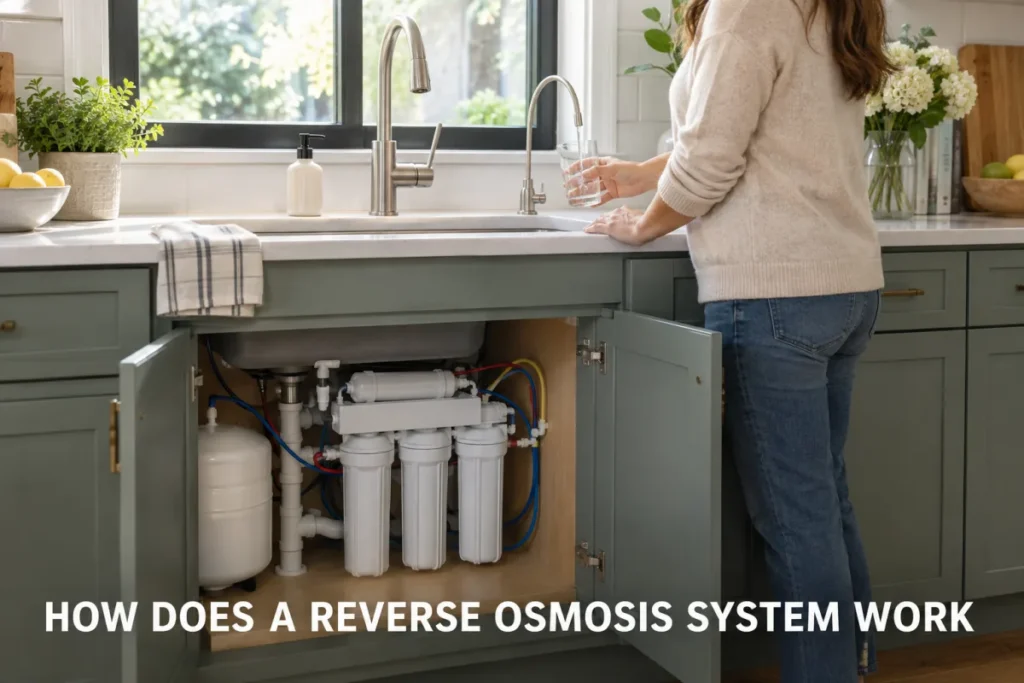
A reverse osmosis system works by pushing tap water through a semipermeable membrane (a filter with pores fine enough to block almost everything except water molecules) using pressure. That step strips out dissolved salts, heavy metals, and most organic pollutants. Understanding how a reverse osmosis system works starts with that single membrane stage. A full unit also pairs it with extra filters that catch what the membrane misses.

By the end of this guide, you will know the exact order those stages run in. You will also know what a reverse osmosis system actually removes. You will learn the one trade-off, wasted water and lost minerals, that catches most first-time buyers by surprise.
Key Takeaways
- Reverse osmosis pushes water through an extremely fine membrane, filtering out most dissolved contaminants.
- Certified systems often remove 85-95% of fluoride, well above what many other home filters can reach.
- Under-sink systems treat one tap. Whole-house systems filter water for the entire home at the main line.
- Traditional RO (reverse osmosis) systems waste 3 to 4 gallons per gallon produced; modern permeate-pump designs get closer to 1:1.
How Does a Reverse Osmosis System Work?
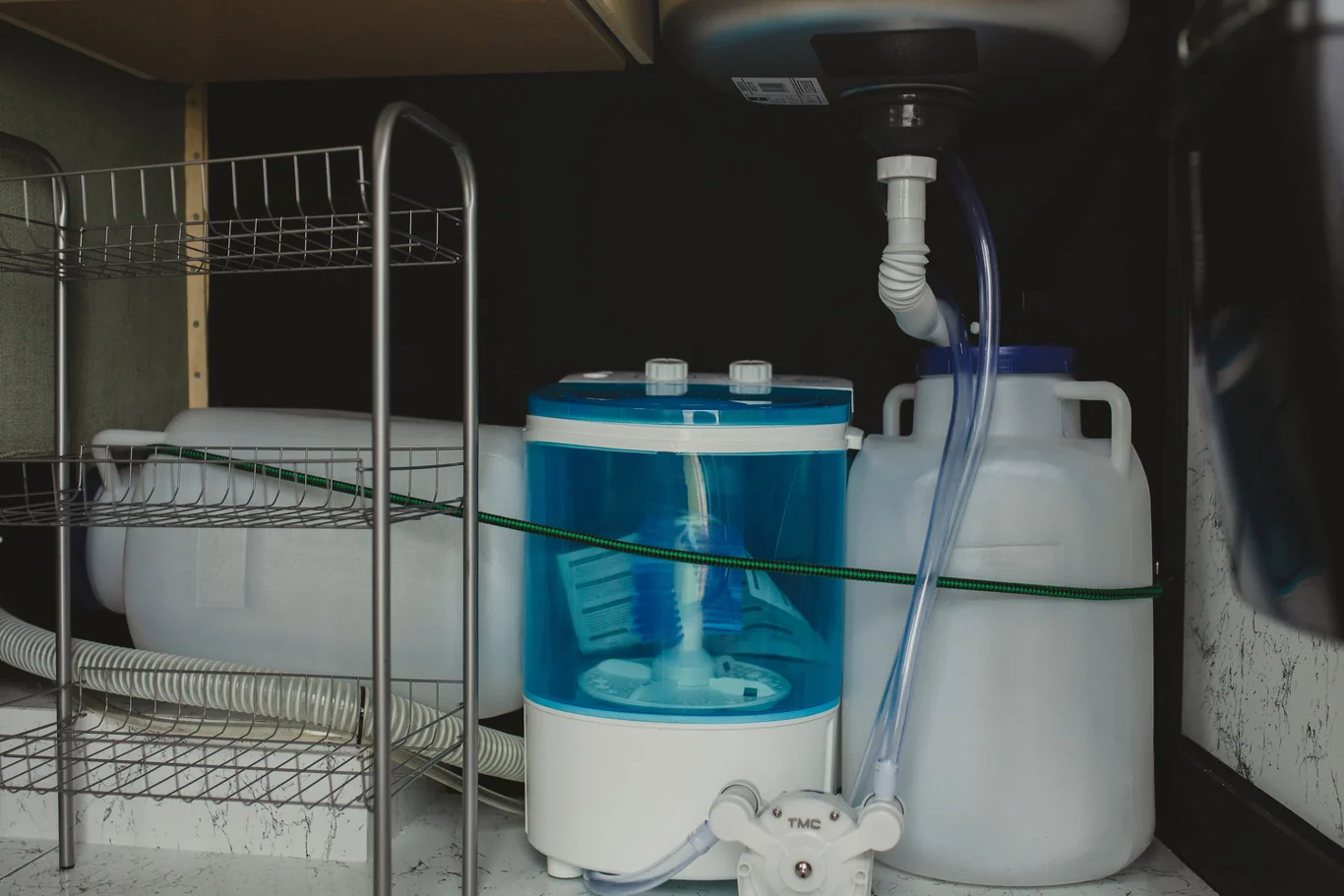
A reverse osmosis system works because pressure beats the water’s own osmotic pull. That force pushes it through a special membrane with pores near 0.0001 microns (about one-millionth the width of a human hair).
A complete system runs water through five stages, in this order:
- Sediment pre-filter: catches sand, rust, and other visible debris, particles about 5 microns and larger, before they reach the finer stages.
- Carbon pre-filter: removes chlorine and other compounds that would damage the membrane, using granular activated carbon (GAC) or a solid carbon block.
- RO membrane: forces water through the semipermeable membrane, splitting the flow into treated water and wastewater. The wastewater stream carries off what the membrane blocked.
- Carbon post-filter: polishes the treated water just before it reaches the faucet, removing any residual taste or odor.
- Remineralization stage (optional): adds calcium and magnesium back into the water for buyers who want the taste and minerals restored.
According to the EPA, reverse osmosis is a pressure-driven process. Pressure forces water through a semipermeable membrane. This creates a treated permeate (the clean water that passes through the membrane) stream. It also creates a separate concentrate stream that carries away what the membrane rejected. Most under-sink systems need at least 40 PSI (pounds per square inch, a measure of water pressure) to run well. Households below that level often add a small booster pump.
Systems certified to NSF/ANSI 58, the industry standard for point-of-use RO units, must clear one bar. They must reduce total dissolved solids (TDS) by at least 75 percent under standard test conditions.
The iSpring RCC7 is an NSF/ANSI 58 certified 5-stage system that consistently exceeds that minimum in real-world use; my iSpring RCC7 hands-on review covers the verified performance figures and what to expect from the staggered filter schedule.
What Does a Reverse Osmosis System Remove From Water?
A reverse osmosis (RO) system removes most dissolved solids, heavy metals, and industrial chemicals. It does this as water passes through its membrane. Certified units often cut total dissolved solids (TDS, the minerals and metals dissolved in water) by 90 to 99 percent. NSF/ANSI 58, the standard covering point-of-use RO units, sets a 75 percent minimum for that reduction, and most certified systems clear it with room to spare.
Yes, an RO system removes fluoride, often reducing it by 85 to 95 percent as water passes through the membrane’s tiny pores. The EPA sets an enforceable fluoride MCL (maximum contaminant level, the legal limit for tap water). That limit is set at 4 mg/L. A secondary guideline of 2 mg/L helps prevent dental fluorosis. RO-treated water lands well under both thresholds.
The same process reduces lead and arsenic by 95 to 99 percent in most certified systems. Both bind to dissolved particles the membrane blocks. Nitrates drop by roughly 85 to 92 percent. PFAS (per- and polyfluoroalkyl substances, a group of persistent industrial chemicals) fall by 90 percent or more. That applies when the system carries an NSF/ANSI 58 optional claim for that specific pollutant.
Removal rates vary by pollutant and by how closely a system meets its certified spec:
| Contaminant | Typical RO Removal | Standard/Source |
| TDS | 90-99% | NSF/ANSI 58 |
| Fluoride | 85-95% | EPA MCL, 4 mg/L |
| Lead | 95-99% | NSF/ANSI 58 optional claim |
| Arsenic | 95-99% | NSF/ANSI 58 optional claim |
| PFAS | 90%+ | NSF/ANSI 58 optional claim |
A faucet-mount filter delivers the same final carbon-polishing stage at the tap for households that do not need a full membrane system.
Types of Reverse Osmosis Systems: Under-Sink, Whole-House, and Tankless
RO systems come in four common types. Each type suits a different install location and water need. Under-sink units often produce 50 to 100 gallons per day, enough for drinking and cooking. Systems built for a whole house scale up to serve every fixture at once.
- Under-sink (point-of-use): Installs beneath the kitchen sink and treats water at a single faucet, the most common setup for drinking and cooking water.
- Whole-house (point-of-entry): Installs where the main line enters the home and treats water for every fixture. This is how a whole-house RO system works. It is the same membrane process, scaled up to household volume.
- Tankless (direct-flow): Uses a higher-output membrane and a small pump instead of a storage tank, and needs an electrical outlet. It takes up roughly 70 percent less under-sink space than a tank-based unit.
- Countertop: Requires no permanent installation, connects directly to a faucet, and is the fastest-growing segment for renters and small kitchens.
Whole-house systems often add a pressure tank. They also add a remineralization stage to protect pipes and appliances. Under-sink units skip that step since they treat only drinking and cooking taps. Membrane capacity for a whole-house point-of-entry system often starts around 1,000 gallons per day, roughly ten times what a single under-sink cartridge handles.
Reverse Osmosis Waste Water and System Efficiency
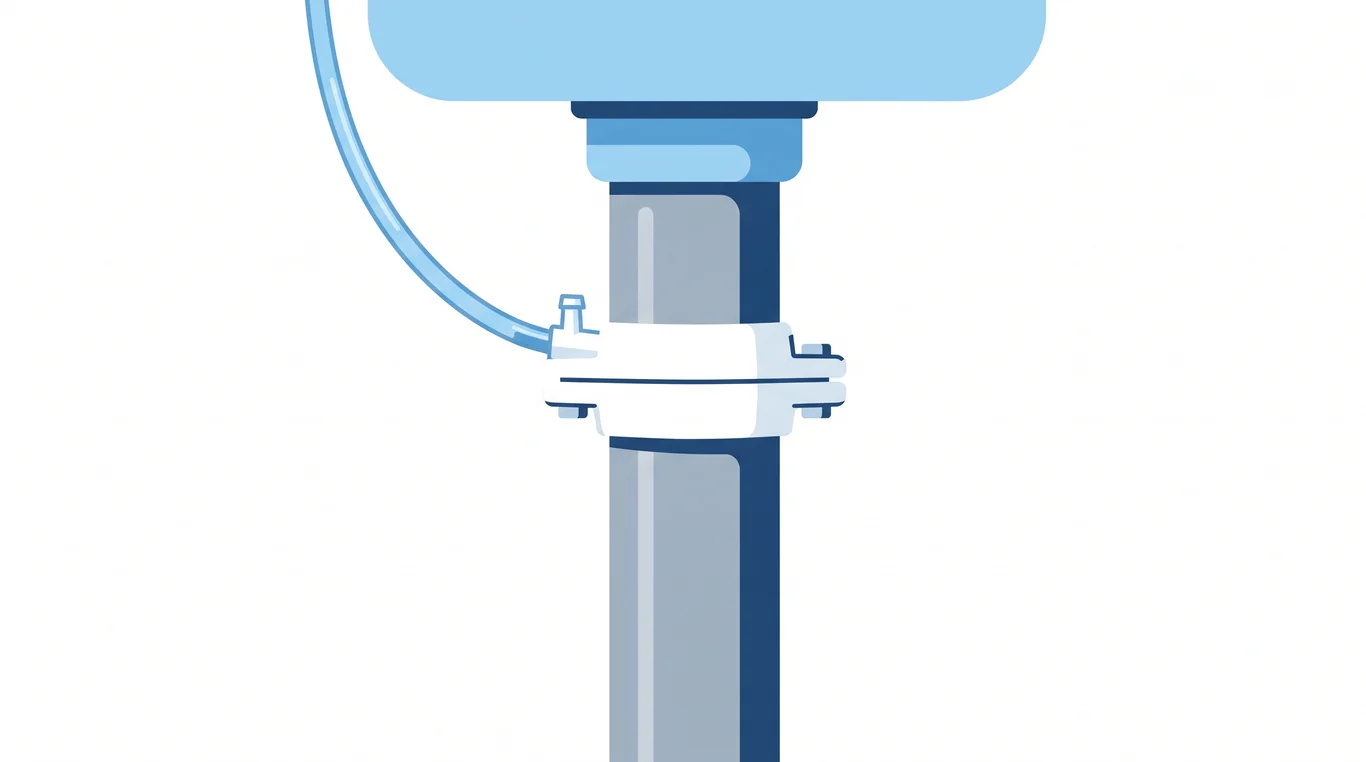
Every RO system produces some waste water alongside the treated water it delivers. Part of the incoming flow does not pass through the membrane. Instead, it flushes trapped pollutants off the membrane surface. Older tank-based systems often waste 3 to 4 gallons for every gallon of treated water produced. That ratio is set largely by the pressure and flow design of a standard membrane housing.
That flushing is not pure waste: it prevents scale and sediment buildup from fouling the membrane. Fouling would otherwise shorten its lifespan and cut pollutant removal over time. Systems built around a permeate pump recover pressure from the waste stream. That recovery can bring the ratio close to 1:1. Modern tankless units often run 1:2 to 1:3 in real-world use, well below the older tank-based standard.
Buyers comparing systems should check the rated waste ratio on the spec sheet before buying. Ratios can range from about 1:1 to 4:1 depending on design and setup quality. A lower ratio means less water sent to the drain. That holds true for the same amount of treated output. That matters most where water is metered or a septic system is already near capacity.
Is Reverse Osmosis Water Safe to Drink Every Day?
RO strips good minerals such as calcium and magnesium alongside pollutants. The membrane cannot tell a dissolved metal from a dissolved mineral, so it removes both together. This is why many systems add a remineralization stage after the membrane, restoring some mineral content mainly for taste rather than nutrition.
The iSpring RCC7AK builds that remineralization stage directly into its 6-stage certified system rather than requiring a separate add-on; my iSpring RCC7AK alkaline stage review covers how the alkaline AK stage works alongside the NSF/ANSI 58 certified membrane.
The World Health Organization reviewed the health effects of low-mineral drinking water. It found no conclusive evidence of harm when people get enough minerals from their diet. Drinking water supplies only a small share of most people’s total mineral intake compared with food. That means daily RO water is not associated with adverse effects. This holds true for someone eating a normal, varied diet.
Kidney health has not been linked to RO water in the cited research. That is largely because dietary minerals supply most of daily intake for healthy adults. Drinking water is not the main source. Buyers who prefer the taste or mineral content of unfiltered water have another option. They can add a remineralization filter rather than avoid RO altogether.
How Does a Reverse Osmosis System Work Over Time? Membrane Maintenance and Lifespan

An RO membrane often lasts 2 to 3 years under normal use. It can extend to as long as 5 years with good prefiltration. Sediment and carbon prefilters catch debris before it reaches the membrane surface. Prefilters need replacement more often: sediment filters every 3 to 6 months and carbon cartridges every 6 to 12 months, depending on incoming water quality.
Two signs tell an owner it is time to service the system. One is falling flow or pressure at the faucet. The other is a rising TDS reading when tested with a simple meter. Either signal means the membrane or a prefilter has stopped doing its job. Treated water quality drops until the part is replaced.
Replacing a membrane is usually a DIY-friendly task. Shut off the feed valve and disconnect the old cartridge. Seat the new one using the housing’s quick-connect fittings. Most owners finish the job in under 15 minutes. Keeping prefilters on schedule extends membrane life more than any other single habit. A clogged sediment filter forces the membrane to work harder and fail sooner.
How We Research
We check every claim against primary sources. Federal agencies like the EPA and CDC come first. Certification bodies like NSF and AHAM come next. We verify each standard number against the issuing body. We review this guide on a set schedule.
Why Trust This Guide
Puritisimo covers only water and air quality. Our guidance is editorial and independent. We cite every health figure so you can check it. We never present a promotional claim as fact.
Getting the Most From Your Reverse Osmosis System
An RO system delivers clean, low-TDS water through a straightforward sequence. Sediment and carbon prefilters protect the membrane, and the membrane blocks most dissolved pollutants. A post-filter, plus an optional remineralization stage, finishes the water before it reaches the tap. The main trade-off is waste water. Modern permeate-pump and tankless designs have narrowed that gap compared with older tank-based units. Membrane life runs two to three years with good prefiltration.
A simple TDS check tells you when it’s time to replace parts. Buyers weighing the cost often start by researching how much an RO system costs. They compare setups after that. Once you understand how a reverse osmosis system works, the stage order and the waste-water trade-off stop being a mystery.
Frequently Asked Questions
How does a reverse osmosis system work?
Understanding how a reverse osmosis system works starts with pressure. It forces tap water through a semipermeable membrane. That membrane is a filter fine enough to block dissolved salts and metals. It also blocks most organic molecules larger than about 0.0001 microns. The EPA describes this as a pressure-driven separation. That separation produces a treated stream and a smaller waste stream. That is the same five-stage sequence covered above.
What is the downside of reverse osmosis?
The two real downsides are waste water and mineral loss. A standard system sends 1 to 4 gallons to the drain for every gallon of treated water. The membrane also strips good minerals like calcium and magnesium along with pollutants. Modern permeate-pump and tankless designs reduce the waste ratio. A remineralization filter addresses the mineral loss.
Is reverse osmosis water good for you to drink?
RO water is safe for most people to drink daily. The World Health Organization reviewed low-mineral drinking water. It found no conclusive evidence of harm when dietary mineral intake is enough, since food supplies most people’s minerals, not water. If you prefer the taste of mineralized water, a remineralization filter restores it.
What happens if we drink RO water every day?
Drinking RO water every day is not associated with adverse effects for people eating a normal, varied diet. That is according to the cited WHO review. The main practical difference is taste, since the water carries fewer dissolved minerals. Buyers who want those minerals back for flavor can add a remineralization stage after the membrane.
Is RO water hard on the kidneys?
No cited research links RO water to kidney harm in healthy adults. Dietary minerals, not drinking water, supply most of a person’s daily mineral intake. Removing minerals from water has little effect on overall intake. Anyone with an existing kidney condition should still follow their doctor’s specific dietary guidance.
References
- US EPA WaterSense. Point-of-Use Reverse Osmosis Systems. 2024.
- NSF International. Standards for Water Treatment Systems, NSF/ANSI 58. 2024.
- US EPA. National Primary Drinking Water Regulations. 2024.
- World Health Organization. Nutrients in Drinking Water. 2005.
Medical Disclaimer: This content is for informational purposes only. It is not a substitute for professional medical advice, diagnosis, or treatment. If you have concerns about your water quality or air quality and their effects on your health, consult a qualified healthcare professional.