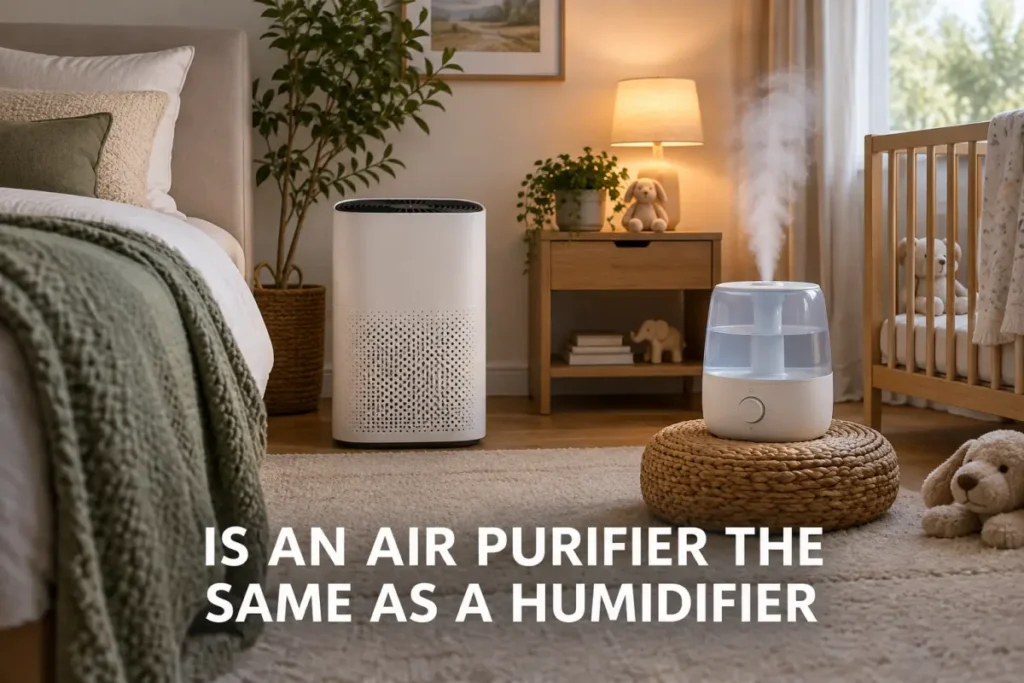
No, an air purifier and a humidifier are not the same device, and they solve opposite problems. An air purifier pulls air through a filter to remove particles such as dust, pollen, and pet dander. A humidifier adds water vapor to the room to raise the moisture level instead. The mix-up makes sense, since both machines are small, sit on the floor, and get shopped for together when a room feels stale or dry.

By the end of this guide, you will know which problem each device really fixes: dirty air or dry air. You will also know whether you can run an air purifier and a humidifier in the same room. You will also see how a dehumidifier fits into the picture.
Key Takeaways
- An air purifier filters particles out of the air; a humidifier adds moisture. They solve different problems.
- A true air purifier filter traps 99.97% of the finest particles but cannot remove odors or gases.
- A stuffy nose or dry cough often comes from low humidity, not dirty air; a purifier will not fix it.
- Dehumidifiers remove moisture, humidifiers add it, and air purifiers do neither; they only remove particles.
Is an Air Purifier the Same as a Humidifier?
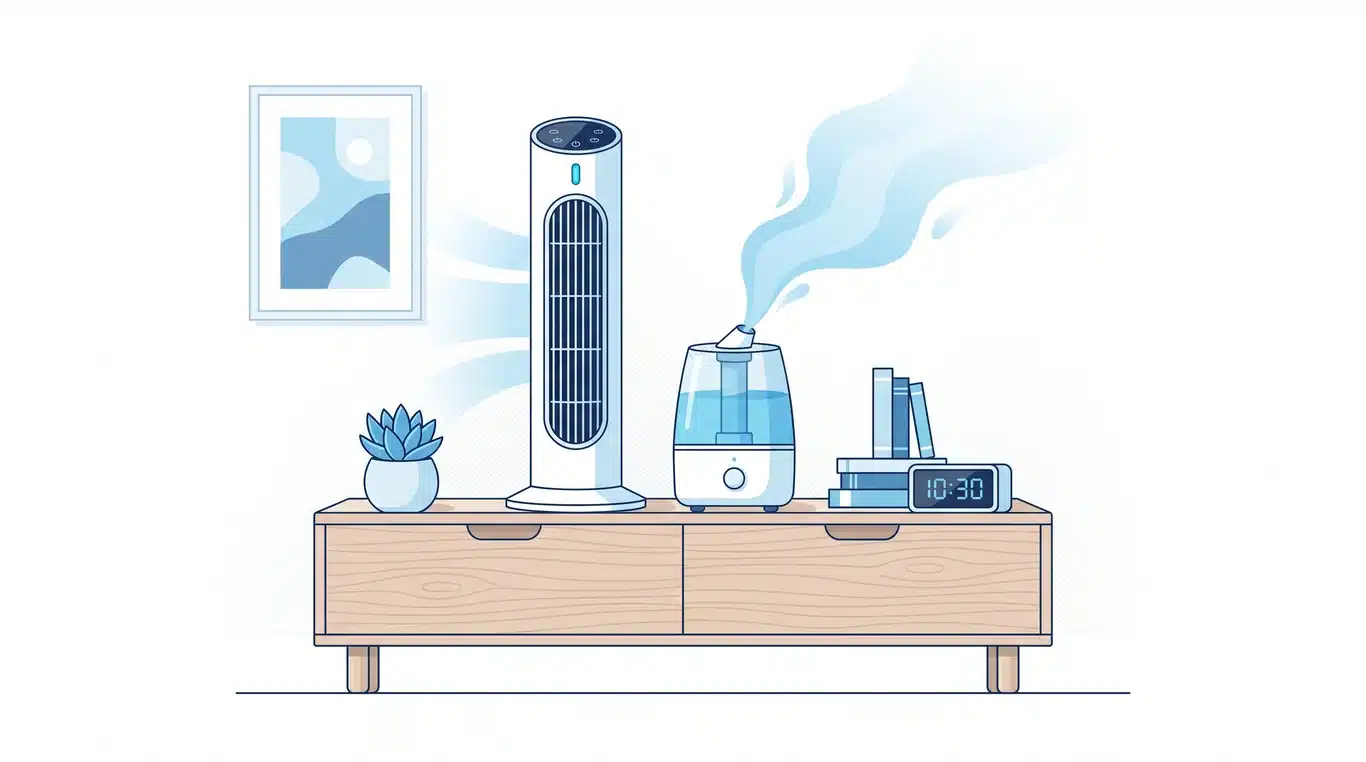
An air purifier and a humidifier are two different machines built for two different jobs. An air purifier draws room air through a filter to trap particles like dust and pollen. A humidifier adds water vapor to the air to raise the room’s relative humidity.
A typical air purifier for home use relies on a HEPA (high-efficiency particulate air) filter. This filter captures at least 99.97% of particles down to 0.3 microns (a unit of length far smaller than a human hair). That is the size range that is hardest for any filter to catch. A humidifier has no filter media like this at all; it works by turning water into vapor or mist in the air, not by trapping anything.
Because the two devices do not overlap, buying one when you need the other will not fix your first problem. If your air feels dusty, smoky, or full of pet dander, a humidifier will not clear it. If your throat and skin feel dry and cracked, an air purifier will not add any moisture at all.
A humidifier helps when dry air is irritating your throat, since moist air soothes the tissue causing the tickle.
What Does an Air Purifier Actually Do?
An air purifier’s only job is pulling particles out of the air you breathe. A fan pulls room air through layered filter media. The EPA defines a true HEPA filter (high-efficiency particulate air) as one that traps at least 99.97% of particles at the hardest size to catch. That size is 0.3 microns. That range covers dust, pollen, pet dander, and most airborne allergens that make a room feel stale.
But that filtration comes with real limits:
- Removes: dust, pollen, pet dander, mold spores, and fine smoke particles as they pass through the filter.
- Traps with a carbon stage: some odors and light gases on select models, though this is an extra feature, not HEPA’s core job.
- Does not add or remove moisture: a purifier has no water reservoir, so it cannot change how dry or humid a room feels.
- Struggles with gas-phase pollutants: VOC (volatile organic compound) gases run roughly 1,000 times smaller than the particles a HEPA filter targets. The EPA says they need their own carbon media to catch them.
None of those steps change how dry or humid the room feels. That distinction is what keeps an air purifier and a humidifier from doing the same job, no matter how strong either one runs.
What Does a Humidifier Do for Sinus Pain, a Stuffy Nose, and a Cough?
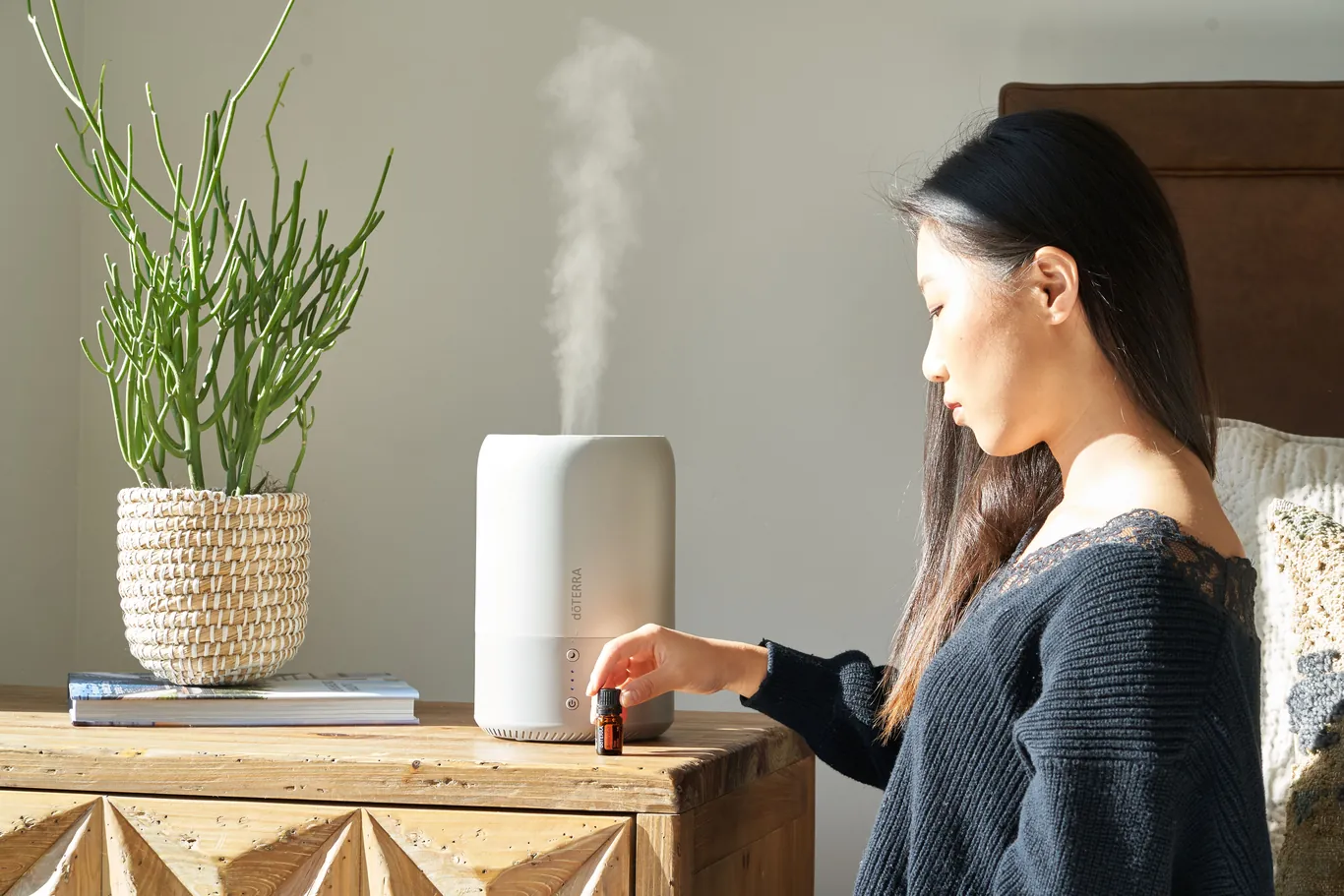
A humidifier works the opposite way: instead of filtering anything out, it releases water vapor into the room. That raises relative humidity (RH), the share of moisture the air holds versus its maximum at that temperature. Low humidity dries the thin mucous membranes lining your nose, throat, and sinuses. The EPA notes indoor air should stay in a moderate humidity band, since overly dry air irritates those same tissues.
That relief only applies to dryness, though. A humidifier will not fix a cough or stuffy nose caused by dust, pet dander, or other allergens. Adding moisture does nothing to remove the particles really causing it. If your symptoms track with pollen season or a shedding pet, an air purifier treats the cause more directly.
Overdoing it backfires too. Pushing RH above roughly 50% for long stretches encourages mold and dust mites. Those are the same allergens an air purifier is built to catch, so a humidifier is not a fix without limits.
Air Purifier vs. Humidifier vs. Dehumidifier: How All Three Differ
A dehumidifier adds a third device to the mix. It does the opposite of a humidifier: it pulls moisture out of the air instead of adding it. Picking the wrong device for the problem, say a purifier in a bone-dry bedroom, wastes the fix without solving anything.
In short, whether an air purifier is the same as a humidifier or a dehumidifier comes down to one property each device changes. On all three, the answer is no. A purifier changes what particles are in the air. A humidifier and dehumidifier both change how much water vapor is in the air, just in opposite directions.
Set side by side, the differences are easier to see:
Read the table by symptom, not by device: pick the row that matches what is really wrong in the room, then choose the machine listed there.
| Feature | Air Purifier | Humidifier | Dehumidifier |
| What It Changes | Particle count in the air | Moisture level (adds) | Moisture level (removes) |
| Solves | Dust, pollen, pet dander, smoke | Dry air and irritated sinuses | Damp air and musty odors |
| Best Season | Year-round | Winter or dry climates | Humid summers or damp basements |
Can You Run an Air Purifier and a Humidifier Together?
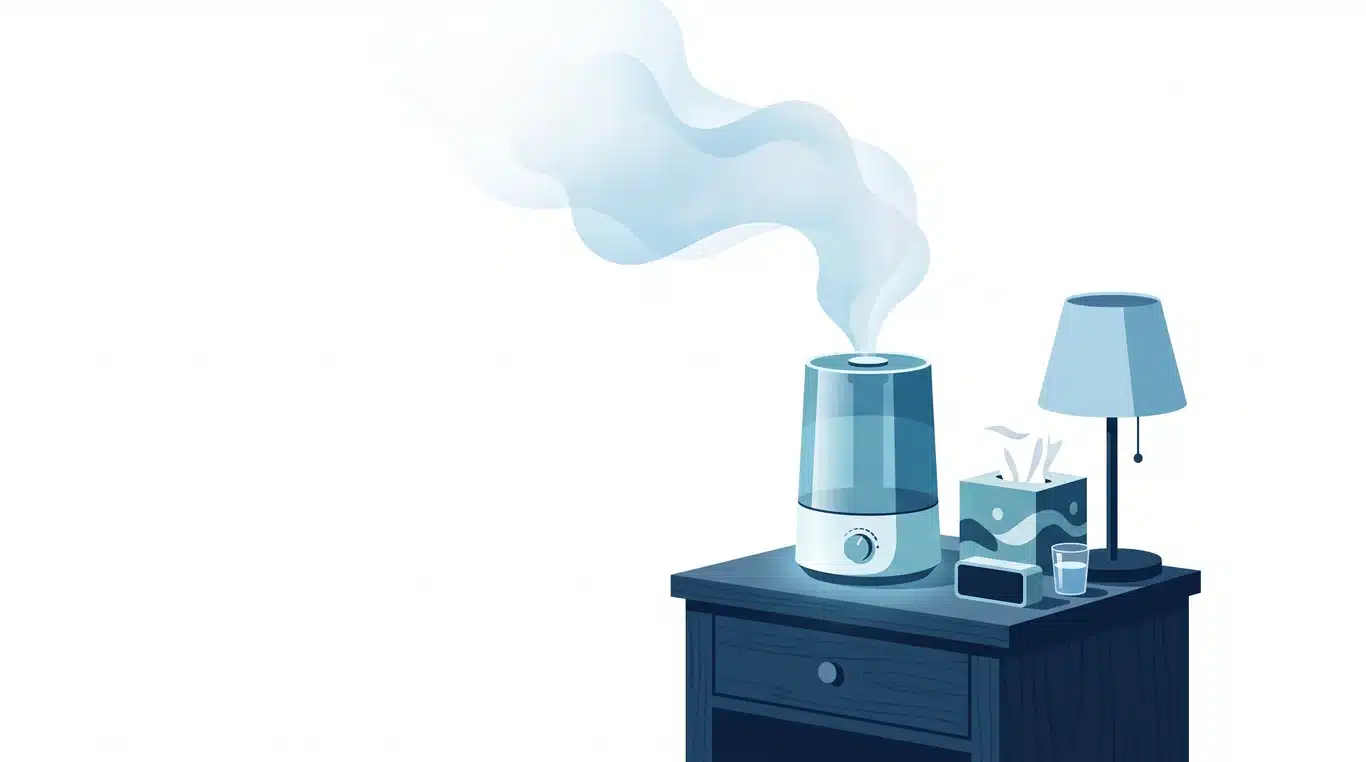
Yes, you can run both in the same room. The two solve different problems, so pairing them causes no conflict. The purifier clears particles from the air. The humidifier manages moisture instead, and neither interferes with the other’s job.
- Keep them a few feet apart: point the humidifier’s mist away from the purifier’s intake. A filter is not built for direct, sustained moisture and can clog or mildew faster when wet.
- Track humidity with a hygrometer: hold relative humidity in the 30 to 50 percent range so the humidifier does not push the room into mold territory.
- Check filters on a shorter cycle: humid air holds onto dust and mold spores longer. A filter doing double duty in a moist room needs checking more often than the manufacturer’s default schedule.
A third option skips the pairing question. A labeled 2-in-1 combo unit, sometimes sold as an all-in-one ‘orb’ style device, houses a small water reservoir alongside a filter stage in one housing. A standard single-purpose purifier has no reservoir at all, so it cannot add moisture no matter how it runs. Only a unit built and labeled for both jobs really does both.
How We Research
We check every claim against primary sources. Federal agencies like the EPA and CDC come first. Certification bodies like NSF and AHAM come next. We verify each standard number against the issuing body. We review this guide on a set schedule.
Why Trust This Guide
Puritisimo covers only water and air quality. Our guidance is editorial and independent. We cite every health figure so you can check it. We never present a promotional claim as fact.
Matching the Right Device to the Right Air Problem
The real question is not which device wins: it is which problem you are solving. Reach for an air purifier when the air itself is dirty: dust, pet dander, smoke, or drifting pollen. Reach for a humidifier when the air is dry and your nose, throat, or skin feel it. A dehumidifier flips that fix for a damp, musty space instead.
Running two together, or choosing a labeled 2-in-1 unit, solves both problems without asking either machine to do a job it was not built for. Once you split the real symptom from the real air quality problem, it becomes clear that an air purifier is not the same as a humidifier.
Frequently Asked Questions
Is an air purifier the same as a humidifier?
No, an air purifier is not the same as a humidifier. A purifier pulls particles like dust and pollen out of the air. A humidifier adds water vapor to raise the room’s humidity instead. They solve two very different problems, and neither one does the other’s job.
What is better to have, a humidifier or an air purifier?
Neither is universally better since they fix different problems. If your air feels dusty, smoky, or allergy-causing, an air purifier is the better pick. Your symptoms might include a dry throat, cracked skin, or a stuffy nose that will not quit in winter. When they do, a humidifier treats the real cause instead.
Can I use my air purifier as a humidifier?
No. A standard air purifier has no water reservoir, so it cannot add moisture no matter how long it runs. Only a unit labeled as a 2-in-1 combo device pairs a small humidifier reservoir with a filter stage in one housing. A regular single-purpose purifier will never do both.
Is a humidifier or purifier better for a cough?
It depends on what is causing the cough. A humidifier helps when dry air is irritating your throat, since moist air soothes the tissue causing the tickle. An air purifier helps more when dust, smoke, or pet dander is the trigger, since it removes the irritant itself rather than soothing it.
Will an air purifier help with a stuffy room?
Yes, if dust, pet dander, or lingering odors are making the room feel stuffy, since a purifier actively removes those particles as it runs. If the stuffiness is really dryness, a scratchy throat or tight sinuses in a heated room, a humidifier fixes it faster than a purifier ever will.
References
- EPA. What Is a HEPA Filter? US Environmental Protection Agency. 2024.
- EPA. Volatile Organic Compounds’ Impact on Indoor Air Quality. US Environmental Protection Agency. 2024.
- EPA. A Brief Guide to Mold, Moisture and Your Home. US Environmental Protection Agency. 2023.
Medical Disclaimer: This content is for informational purposes only. It is not a substitute for professional medical advice, diagnosis, or treatment. If you have concerns about your water quality or air quality and their effects on your health, consult a qualified healthcare professional.