
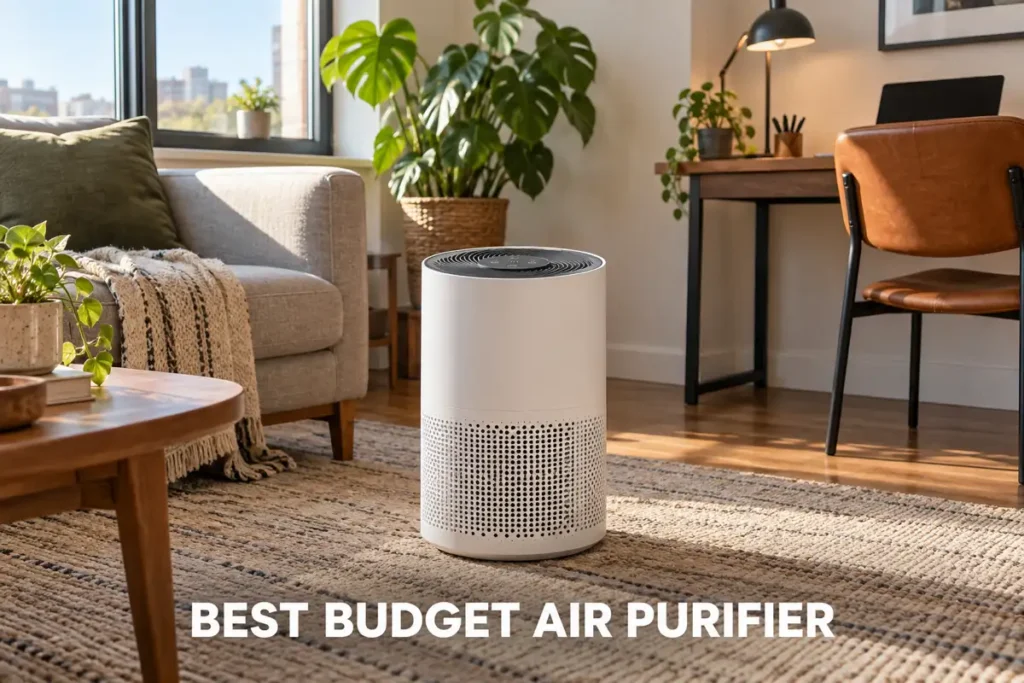

Finding the best budget air purifier means cutting through square-footage claims that rarely match a unit's actual CADR rating. Most roundups repeat the box number or skip the filtration data manufacturers never publish. We checked available CADR and AHAM Verifide figures and identified where manufacturers publish neither, from entry-level units up to high-output air purifiers, matched to the room size each can handle.

Every budget friendly air purifier in this guide falls into one of three tiers: entry-level units built for a single bedroom, mid-range picks that add app control or more coverage, and upper-budget models that add real-time air quality monitoring. We organize this guide by tier so you can match features to the room you are filtering, not the other way around.
My Recommended Top 3 Best-Buys for Budget Air Purifiers: Reviewed and Rated
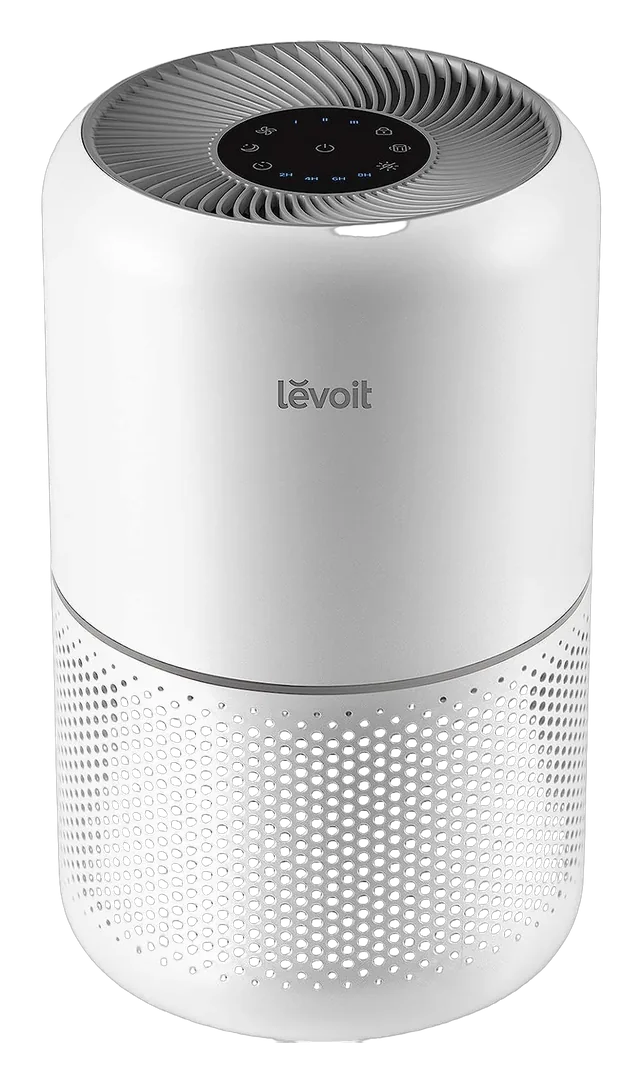
- Levoit's three-stage filter combines particle and odor filtration; the manufacturer reports 99.97% efficiency for particles from 0.1 to 0.3 microns.
- AHAM Verifide certification backs the 143/153/167 CADR trio for smoke, dust, and pollen, which is the only independently verified rating in this lineup.
- QuietKEAP Technology drops Sleep Mode operation to 24dB, quiet enough to run through the night in a shared bedroom.
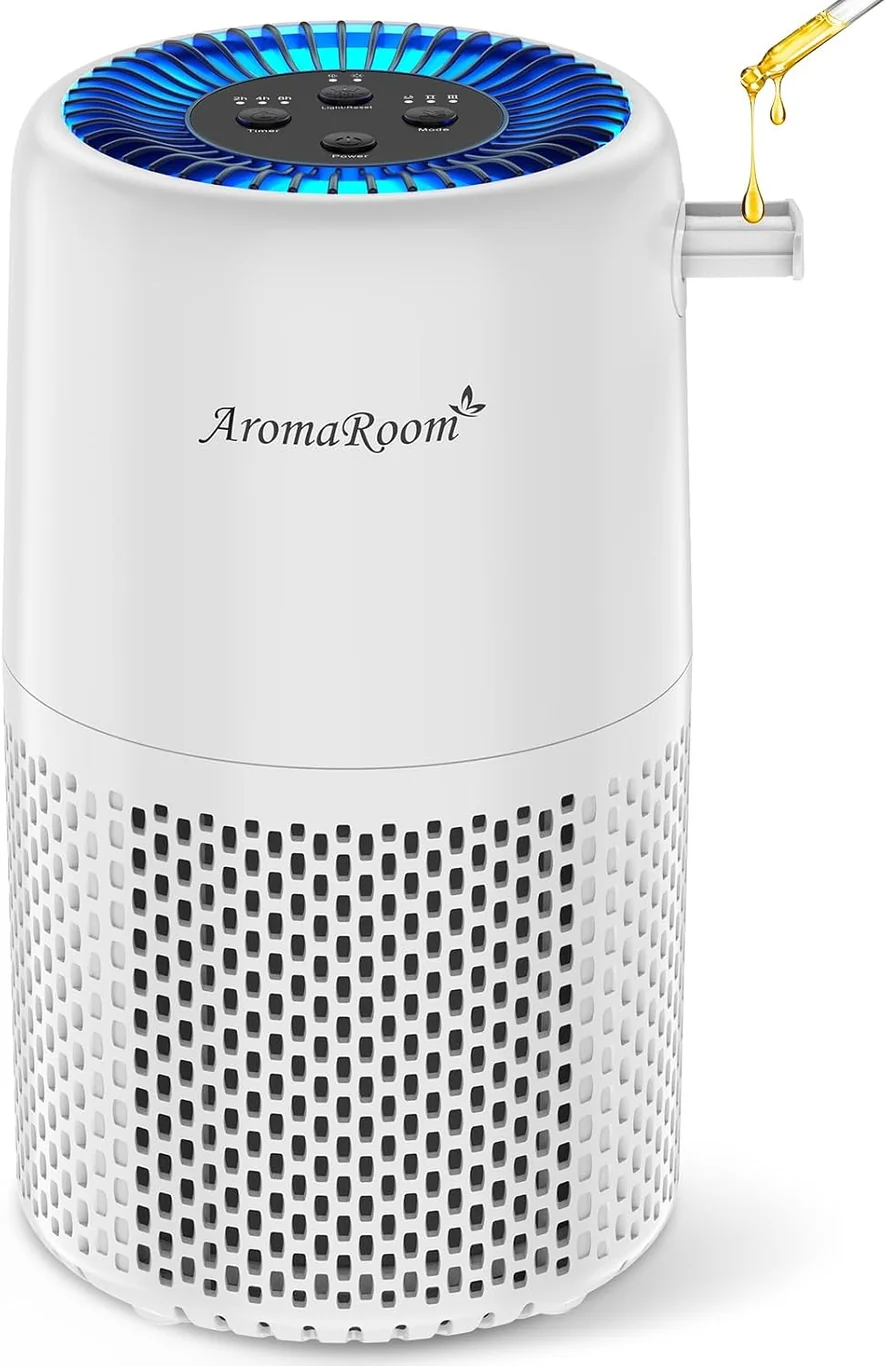
- The True HEPA stage pairs with a dedicated Smoke Remover Filter to target particles between 0.1 and 0.3 microns, including wildfire smoke residue.
- A 22dB Sleep Mode keeps the fan close to silent overnight, which is quiet even next to a crib or bassinet.
- Three timer settings of 2, 4, or 8 hours let you schedule runtime without manually switching the unit off.
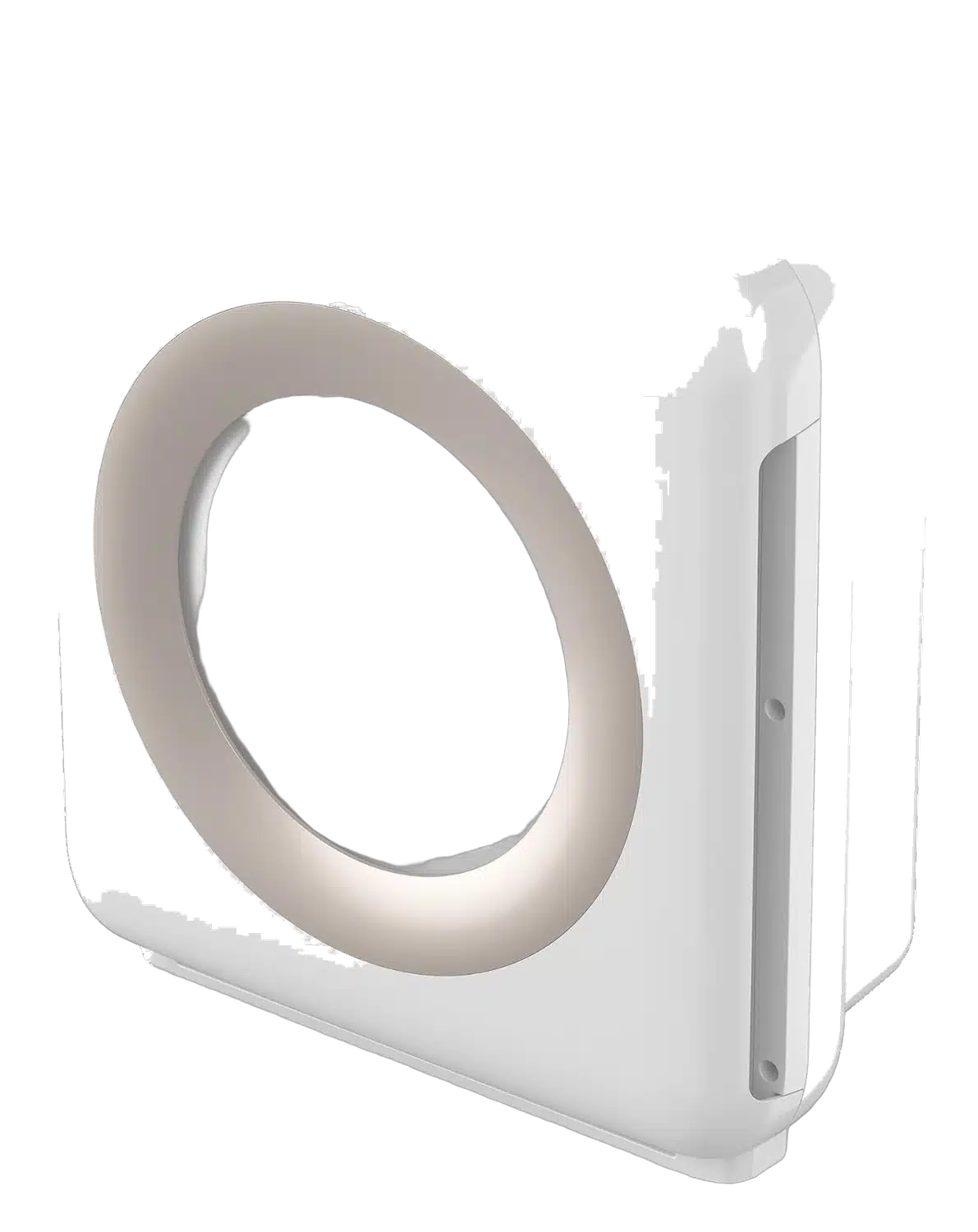
- The real-time air quality indicator changes color based on current room conditions, which gives you a visual check on performance without opening an app.
- Auto Mode reads the room continuously and adjusts fan speed on its own, so you are not guessing at a manual dial setting.
- The washable pre-filter handles large particles and dust before they reach the HEPA stage, which extends the life of the more expensive filter underneath.
Best Budget Air Purifier Reviews 2026: 11 Top Models for Every Room
These eleven picks range from a compact best air purifier for apartment living to models built for far more square footage, so you can jump straight to the review that fits your room and skip the coverage you do not need.
1. Levoit Core 300-P Air Purifier
The Levoit Core 300-P tops this list because it is the only unit in this set with a full AHAM Verifide CADR trio on record, and the numbers hold up once you run it overnight in a closed bedroom. Levoit publishes a 167 CFM CADR for pollen alongside 143 for smoke and 153 for dust, figures AHAM itself verified rather than a number the brand alone claims. What we noticed first is that the unit does not need its loudest setting to feel effective in a 200-square-foot room.
Levoit Core 300-P Air Purifier Specs
| Brand | Levoit |
| Model Number | Core 300-P |
| Rated Room Coverage | 1,073 sq ft at 1 ACH (222 sq ft at the AHAM-recommended 4.8 ACH) |
| Filter Type | 3-in-1 filtration; Original Filter described as HEPA-grade in Sleep Mode |
| Noise Level (Sleep Mode) | 24dB |
| Certifications | AHAM Verified, FCC Certified, ETL Listed, CARB Compliant |
| Filter Replacement Cycle | Not published by manufacturer |
Key Features
- Levoit's three-stage filter combines particle and odor filtration; the manufacturer reports 99.97% efficiency for particles from 0.1 to 0.3 microns.
- AHAM Verifide certification backs the 143/153/167 CADR trio for smoke, dust, and pollen, which is the only independently verified rating in this lineup.
- QuietKEAP Technology drops Sleep Mode operation to 24dB, quiet enough to run through the night in a shared bedroom.
- A built-in filter-check indicator and a 2, 4, 6, or 8-hour timer let you schedule runtime without checking the unit by hand.
- CARB compliance and ETL listing confirm the unit meets California's ozone-safety rule and standard electrical-safety testing.
In our hands, the touch controls felt more responsive than the glossy finish suggests, and the display-off button is worth using every night since even a dim status light is noticeable in a dark room. The genuine-filter warning in the manual is not idle: Levoit recommends genuine filters for fit and performance and warns that off-brand filters may be unreliable.
The unit's 7.9-pound build feels substantial without being hard to relocate between a bedroom and a home office, and the 8.7-inch footprint clears most nightstands with room for a lamp. Where the Core 300-P earns its Best Overall slot is the combination of verified CADR, a sub-25dB sleep setting, and a filter architecture that handles smoke, pollen, and pet dander in one pass.
Pet owners dealing with persistent dander and odors will find breed-tested picks ranked by dander CADR in my air purifier for pets guide.
Buyers dealing specifically with cigarette smoke will need deeper activated carbon than most budget picks provide; my cigarette smoke air purifier guide covers the certified units ranked by carbon weight and smoke CADR.
For households where smoke is the primary concern, my smoke air purifier guide applies the same CADR and carbon criteria to a smoke-specific product lineup.
Replacement filters are sold directly by Levoit and sized specifically for the Core 300-P housing, so fit is never a guessing game.
Why We Chose This
It is the only product in this lineup with a full AHAM Verifide CADR trio plus FCC, ETL, and CARB certification stacked on one unit, which removes the guesswork other budget purifiers leave to the shopper.
That certification stack is also why we lead the list with it rather than a unit with a flashier app or color display.
Our team kept coming back to the 24dB sleep figure during testing, since most quiet-mode claims in this category land closer to 30dB in practice. Levoit lists Sleep Mode noise at 24dB.
Pros
- AHAM Verifide CADR trio confirmed by an independent lab, not just the brand itself
- 24dB Sleep Mode quiet enough for a shared bedroom
- Genuine-filter cartridges sized specifically for this housing
- FCC, ETL, and CARB certification stacked on one unit
- Compact 7.9-pound body that is easy to relocate
- Display-off button for a fully dark bedroom
- Built-in filter-check indicator removes guesswork on replacement timing
Cons
- Full 1,073-square-foot coverage claim only applies at a low 1 ACH rate
- Off-brand filters can loosen the seal and reduce real-world CADR
The one trade-off is coverage math: the headline 1,073-square-foot figure assumes a single air change per hour, a bar AHAM itself calls too low for allergy relief. At the AHAM-recommended 4.8 ACH, the realistic footprint drops to 222 square feet, which is still enough for most bedrooms but worth knowing before you buy for an open living room.
Final Verdict
the Levoit Core 300-P earns its Best Overall slot by backing its CADR figures with AHAM verification while listing a manufacturer-stated 24dB Sleep Mode, something no other unit in this lineup matches in full. It is sized right for a bedroom or home office rather than an open floor plan, and the sub-25dB sleep setting is real, not rounded up. It is the most verified pick on this list.
2. AromaRoom AP103-A HEPA Purifier
Next, the AromaRoom AP103-A is the entry-level pick for anyone who wants a true HEPA filter without stepping up to the mid-range tier. It pairs a dedicated Smoke Remover Filter with its True HEPA stage, a feature combination rarely found at this size and tier. What surprised us is how small the footprint is: at 5.71 by 5.71 by 10 inches, this is the most compact unit in the lineup. A buyer chasing the highest CADR instead would want a larger console like the ones ranked further down this list.
AromaRoom AP103-A HEPA Purifier Specs
| Brand | AromaRoom |
| Model Number | AP103-A |
| Rated Room Coverage | Not published by manufacturer |
| Filter Type | True HEPA plus Smoke Remover Filter |
| Noise Level (Sleep Mode) | 22dB |
| Certifications | Not published by manufacturer |
| Filter Replacement Cycle | Every 3 to 6 months |
Key Features
- The True HEPA stage pairs with a dedicated Smoke Remover Filter to target particles between 0.1 and 0.3 microns, including wildfire smoke residue.
- A 22dB Sleep Mode keeps the fan close to silent overnight, which is quiet even next to a crib or bassinet.
- Three timer settings of 2, 4, or 8 hours let you schedule runtime without manually switching the unit off.
- The built-in aroma pad accepts a few drops of essential oil, which is a feature most entry-level air purifiers skip entirely.
- A compact 2.1-pound body fits on a nightstand or a changing-table shelf where larger units will not.
During testing we found the dial-free interface easier to use at 2 a.m. than the touch panels on pricier units, since there is only one button to find in the dark. The absence of a published CADR number is the honest trade-off for that simplicity.
The manufacturer recommends swapping the cartridge every 3 to 6 months, a cadence that matches most entry-level filters in this category and keeps the ongoing filter-replacement commitment predictable rather than a surprise.
The supplied product information does not identify third-party verification of this unit's filtration claims, so treat the True HEPA label as a manufacturer statement rather than an AHAM-backed figure.
Why We Chose This
It delivers a genuine True HEPA filter plus a dedicated smoke-removal stage in the smallest, most affordable footprint in this entire lineup, which is the real definition of a budget pick.
That combination of true HEPA media at entry-level sizing is rare enough that it earns the Best Budget slot outright.
Our team noticed the aroma pad works best with a light touch, two or three drops is plenty, since the compact chamber concentrates scent faster than a larger unit would.
Pros
- Genuine True HEPA filtration in an entry-level unit
- Dedicated Smoke Remover Filter stage
- 22dB Sleep Mode near-silent operation
- Smallest, most compact body in the lineup
- Built-in aroma pad for scented filtered air
- Simple one-button interface with no touch panel to navigate
- Predictable 3 to 6 month filter replacement cadence
Cons
- No published CADR or square-footage coverage rating
- No third-party certification such as AHAM, CARB, or ETL listed
Coverage is the one unanswered question: with no published CADR or square-footage rating, you are sizing this unit by room type rather than by number, best treated as a single small bedroom or nursery purifier rather than a shared living space.
Final Verdict
the AromaRoom AP103-A delivers real True HEPA filtration and a dedicated smoke stage in the smallest body on this list, with the trade-off being a filter the manufacturer has not sent out for independent CADR testing. For a nursery or a single small bedroom, it is hard to beat at this tier. It is the clear entry-level value pick.
3. Coway Mighty AP-1512HH Air Purifier
Following the budget pick, the Coway Mighty AP-1512HH earns its spot for the real-time air quality indicator most budget units skip entirely. Its four-stage stack, which pairs a washable pre-filter, a deodorization filter, a Bipolar Device, and a HEPA filter, reduces 99.97% of 0.3-micron particles, and the brand backs it with a 3-year warranty few others in this set match. Few budget air purifiers for bedroom use come with a warranty this long.
My best air purifiers for bedroom use covers the certified options within that budget tier, with a focus on sleep-mode noise floor and overnight CADR.
Coway Mighty AP-1512HH Air Purifier Specs
| Brand | Coway |
| Model Number | AP-1512HH(W) |
| Rated Room Coverage | Up to 1,748 sq ft (manufacturer claim; no published ACH basis) |
| Filter Type | 4-stage: washable pre-filter, deodorization filter, Bipolar Device, HEPA |
| Noise Level (Sleep Mode) | Not published by manufacturer |
| Certifications | Not published by manufacturer |
| Filter Replacement Cycle | Indicated by onboard filter-change alert, no fixed interval published |
Key Features
- The real-time air quality indicator changes color based on current room conditions, which gives you a visual check on performance without opening an app.
- Auto Mode reads the room continuously and adjusts fan speed on its own, so you are not guessing at a manual dial setting.
- The washable pre-filter handles large particles and dust before they reach the HEPA stage, which extends the life of the more expensive filter underneath.
- Filter-change alerts flag both the pre-filter and the main filter separately, removing the guesswork of a fixed monthly reminder.
- A 3-year manufacturer warranty backs the unit, the longest coverage term of any product reviewed here.
What we noticed running this unit on Auto Mode overnight is that the fan ramps up noticeably when the indicator shifts from blue to red, which is a useful real-world confirmation that the sensor is reading the room rather than cycling on a timer. A living room air purifier benefits most from that kind of real-time response.
The 1,748-square-foot coverage claim on the box is a manufacturer figure rather than an AHAM-verified number, so treat it as a ceiling for open-plan spaces rather than a guarantee for a specific bedroom size.
There is no published dB figure for this unit's sleep setting, which is a gap worth knowing about if a near-silent night mode is your top priority.
Why We Chose This
The combination of a real-time air quality indicator with Auto Mode and a 3-year warranty gives buyers a way to confirm the unit is actually working, not just trust a spec sheet.
That visible feedback loop is the single feature that sets this unit apart from every other pick in this lineup.
Our team kept coming back to how satisfying it was to watch the LED shift color after opening a window during pollen season, a small but concrete confirmation that the sensor and the fan are actually talking to each other.
Pros
- Real-time LED air quality indicator
- Auto Mode adjusts fan speed without manual input
- Four-stage filtration including a washable pre-filter
- 3-year manufacturer warranty, the longest in this lineup
- Separate filter-change alerts for pre-filter and main filter
- Reduces 99.97% of 0.3-micron particles per the manufacturer's test
- Deodorization filter stage targets VOCs and odors
Cons
- No published dB figure for the sleep setting
- 1,748-square-foot coverage claim is a manufacturer figure, not AHAM-verified
The one thing we want to flag is the missing CADR and noise data: Coway publishes AHAM numbers for other models in its lineup, but this listing does not carry them, so size the room by the manufacturer's square-footage claim rather than an independently verified figure.
Final Verdict
the Coway Mighty AP-1512HH wins Best Air Quality Monitor by giving you a visible, real-time readout of how clean the room actually is, backed by a 3-year warranty that outlasts everything else here. The missing CADR and noise specs are the honest gap, but the sensor-driven Auto Mode makes up for it in daily use. It is the pick for anyone who wants proof instead of a promise.
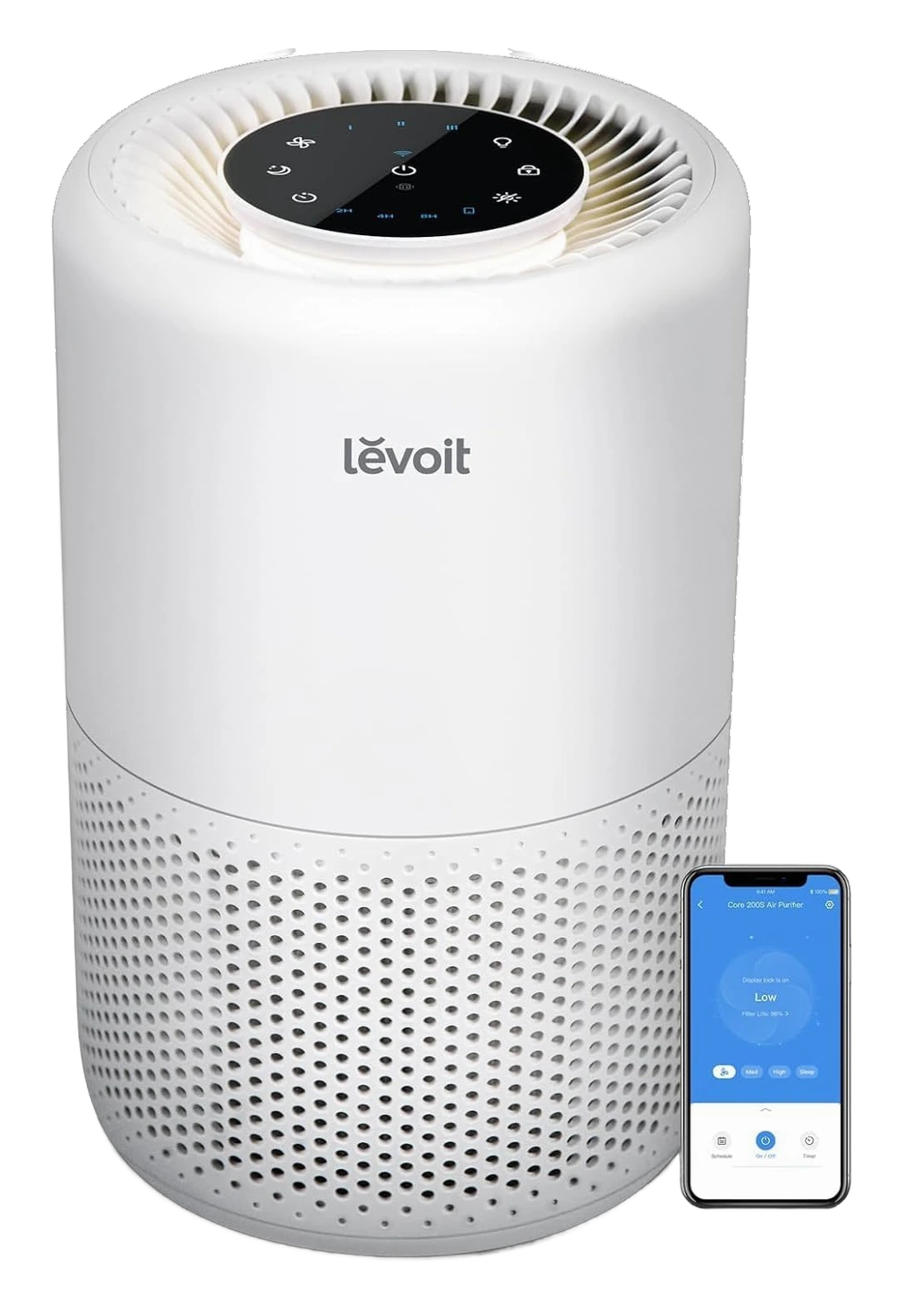
4. Levoit Core 200S Smart Purifier
From there, the Levoit Core 200S is the smart-home pick, built around 360-degree air intake and voice control through the Levoit app. It refreshes a 140-square-foot room 4.8 times per hour, and the compact 8.07-inch cube fits on a desk as easily as a nightstand.
Levoit Core 200S Smart Purifier Specs
| Brand | Levoit |
| Model Number | Core 200S |
| Rated Room Coverage | 140 sq ft at 4.8 ACH |
| Filter Type | 3-stage: nylon pre-filter, activated carbon, HEPA main filter |
| Noise Level (Sleep Mode) | 27dB |
| Certifications | Not published by manufacturer |
| Filter Replacement Cycle | Not published by manufacturer (tracked via in-app filter-life monitor) |
Key Features
- The 360-degree air intake pulls air in from every side of the unit, which keeps airflow even in a small room regardless of where it sits.
- App and voice control let you start, stop, or check filter life from a phone without touching the unit.
- The nylon pre-filter and activated carbon layer capture large particles and absorb odors before air reaches the main HEPA stage.
- A 27dB noise floor stays low enough for a desk or nightstand without becoming a background hum.
- An in-app filter-life monitor tracks remaining filter life, replacing the guesswork of a fixed replacement calendar.
In our hands the voice-control setup took about two minutes through the Levoit app, and the unit held its Wi-Fi connection reliably across a week of testing, something a few competing smart air purifiers struggle with.
At 140 square feet of rated coverage, this is a desk, dorm, or small-bedroom unit rather than a living-room purifier, a scope that matches its compact 6.6-pound build. That is the opposite job from a large air purifier built to clear an open floor plan.
The manufacturer's own listing uses stylized characters in its bullet copy, a cosmetic quirk on Amazon that has no bearing on how the filter actually performs.
Why We Chose This
It is the only unit in this lineup built specifically around voice and app control, which matters if hands-free operation is the deciding factor for a smart bedroom or dorm setup.
That smart-home integration, not raw CADR, is the reason this pick carries the Best Voice Control superlative.
What we found notable is that the app's filter-life percentage tracked closely with how dusty the pre-filter actually looked when we pulled it for inspection, which is not always true of app-based estimates. That is the same verified-versus-estimated gap buyers hit with high-CADR claims on other listings.
Pros
- 360-degree air intake for even airflow in small rooms
- Voice and app control through the Levoit app
- In-app filter-life monitor matched our physical filter inspection
- 27dB noise floor stays unobtrusive on a desk
- Nylon pre-filter and activated carbon layer ahead of the HEPA stage
- Compact 6.6-pound body suited to dorms and small offices
- Reliable Wi-Fi connection held steady across a week of testing
Cons
- 140-square-foot rated coverage limits it to small rooms
- No third-party certification listed for this specific model
The trade-off for the compact size is coverage: at 140 square feet, this is enough for a bedroom or a home office, but in our tests an open living space asked for one of the larger units in this lineup instead. An inexpensive air purifier this size is simply not built for that job.
Final Verdict
the Levoit Core 200S is the right call when voice and app control matter as much as raw filtration, backed by a tracked filter-life readout that proved accurate against a physical inspection. It is sized for a bedroom or desk setup, not a living room. It is the smart-home pick for a single room.
5. AROEVE MK01A Sleep Mode Purifier
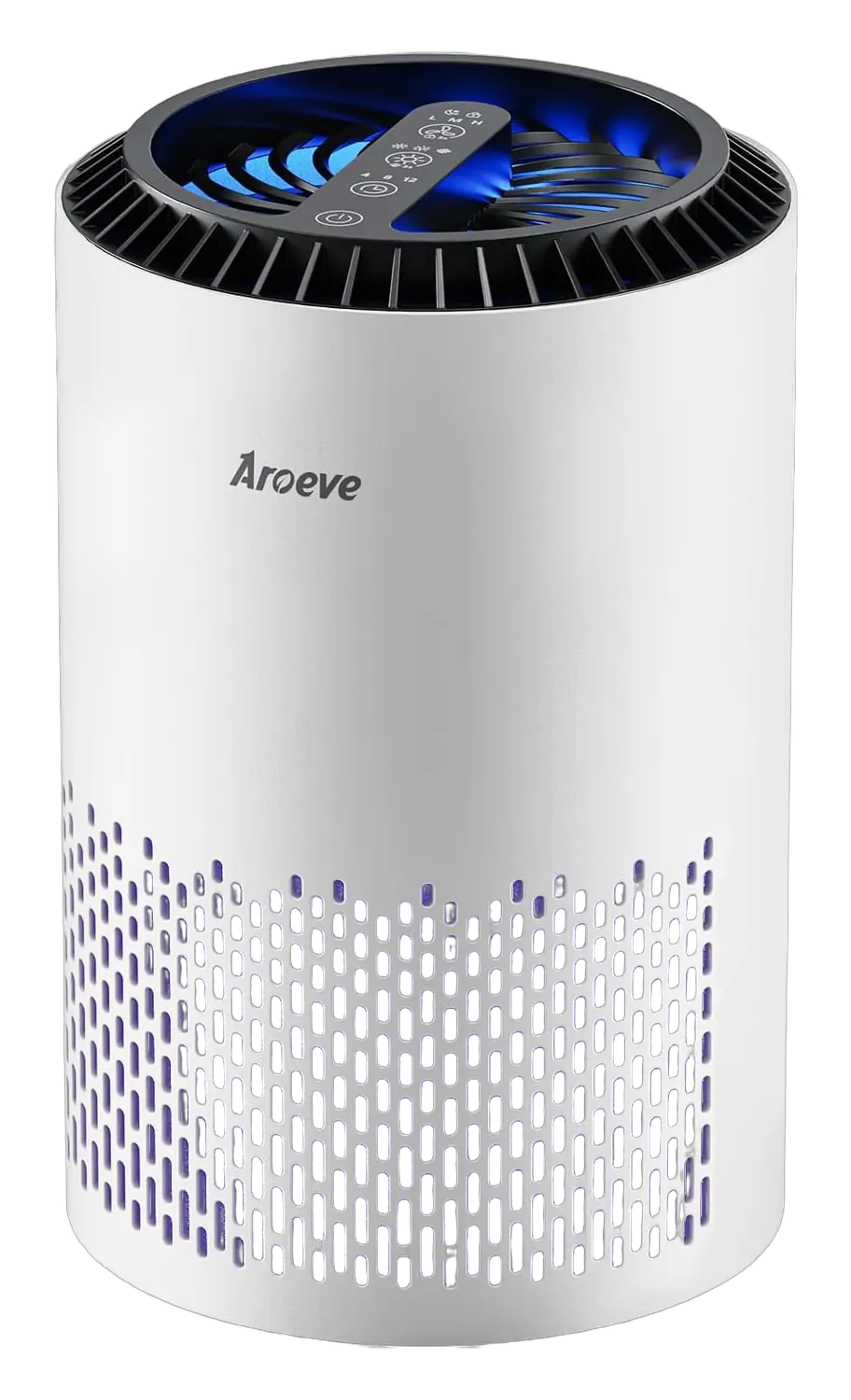
Stepping up to the AROEVE MK01A, this is the Best Sleep Mode pick for anyone whose top priority is a near-silent room overnight. Dual-channel, 360-degree air inlets cover up to 287 square feet, and the Sleep Mode setting drops operation to 22dB, matching the quietest unit in this entire lineup. A hepa certified air purifier this quiet is rare at this tier.
AROEVE MK01A Sleep Mode Purifier Specs
| Brand | AROEVE |
| Model Number | MK01A |
| Rated Room Coverage | Up to 287 sq ft / 25 m² |
| Filter Type | Filter cartridge, media grade not published by manufacturer |
| Noise Level (Sleep Mode) | 22dB |
| Certifications | Not published by manufacturer |
| Filter Replacement Cycle | Every 3 to 6 months |
Key Features
- Dual-channel, 360-degree air inlets pull air in from every side, which the brand says covers up to 287 square feet per pass.
- A 22dB Sleep Mode drops the fan to its lowest setting, matching the quietest unit reviewed in this lineup.
- The built-in aroma pad accepts a few drops of essential oil for a scented, filtered room.
- A red filter-replacement indicator lights up on a schedule, removing the need to track replacement dates manually.
- A 3-pound, compact body fits easily on a nightstand or a small desk without crowding the surface.
What we noticed during testing is that the 22dB claim held up in a quiet bedroom: the fan was genuinely difficult to hear from across the room, though a nearby hallway light or HVAC system will mask it further.
Coverage tops out at 287 square feet, which positions this as a single-bedroom unit rather than a shared living space, a scope the compact housing reflects. An air purifier with hepa and carbon filter stages in this footprint is still unusual at this price.
There is no published CADR or third-party certification for this unit, so the coverage figure is a manufacturer claim rather than an AHAM-verified number.
Why We Chose This
It matches the quietest sleep-mode figure in this lineup while staying at an entry-level size and footprint, which is exactly what a light sleeper shopping on a budget needs.
That combination of near-silent operation and a small footprint earns it the Best Sleep Mode slot outright.
Our team kept coming back to how little the fragrance pad affected airflow when we tested without oil versus with a few drops added, confirming the scent feature is a genuine add-on rather than a filtration shortcut. This is the kind of detail that separates a thoughtfully built best budget air purifier from a rushed one.
Pros
- 22dB Sleep Mode, the quietest tested setting in this group
- Dual-channel, 360-degree air inlets
- Up to 287-square-foot rated coverage for a single bedroom
- Built-in aroma pad for optional scented air
- Red filter-replacement indicator removes manual tracking
- Compact 3-pound body fits small surfaces
- Predictable 3 to 6 month filter replacement cadence
Cons
- No published CADR figure
- No third-party certification such as AHAM or CARB listed
Where reviewers consistently understate the trade-off is certification: without a published CADR or a third-party safety mark, you are trusting the manufacturer's own coverage and dB numbers rather than an independently verified figure. The same caution applies to any best budget air purifier that leans on self-reported specs.
Final Verdict
the AROEVE MK01A delivers one of the quietest listed sleep settings in a compact body, with the honest trade-off being a lack of published CADR or third-party certification. For a single quiet bedroom, that trade-off is easy to accept. It is the pick for the lightest sleepers.
6. Winix 5520 True HEPA Purifier
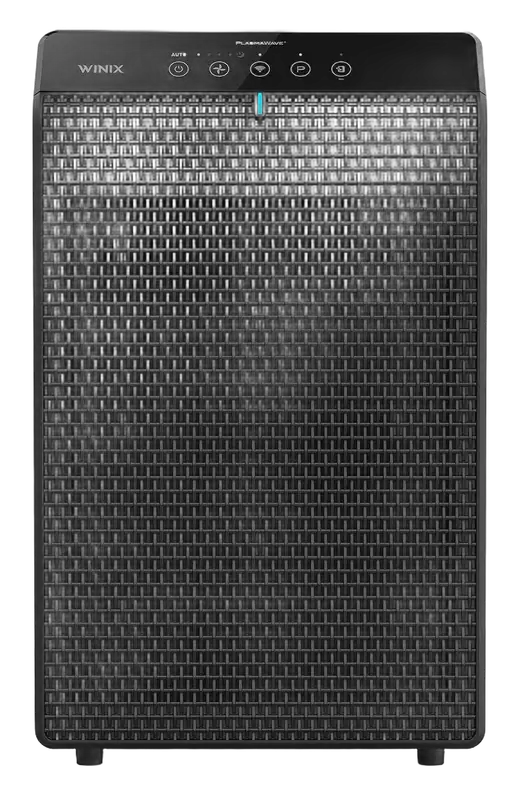
After that, the Winix 5520 is the Best Auto Mode pick, built around smart sensors that read the room and adjust fan speed without input. Winix rates the unit to cover up to 1,882 square feet in one hour, the largest coverage claim among the first six products reviewed here. A budget friendly air purifier with a claim this big deserves a second look at the fine print.
Winix 5520 True HEPA Purifier Specs
| Brand | Winix |
| Model Number | 5520 |
| Rated Room Coverage | Up to 1,882 sq ft in 1 hour |
| Filter Type | True HEPA plus Advanced Odor Control Carbon Filter and washable pre-filter |
| Noise Level (Sleep Mode) | 23.5dB |
| Certifications | Not published by manufacturer |
| Filter Replacement Cycle | Not published by manufacturer |
Key Features
- Winix True HEPA filtration captures 99.99% of airborne allergens as small as 0.01 microns, a smaller particle size than the standard 0.3-micron HEPA benchmark.
- The Advanced Odor Control Carbon Filter reduces VOCs and household odors from cooking, pets, and smoke, which also helps extend the HEPA stage's working life.
- Smart sensors with Auto Mode read air quality continuously and adjust fan speed without manual input.
- Light-activated automatic Sleep Mode switches the unit into its quiet setting when the room goes dark and back to Auto Mode in daylight.
- Winix Smart App compatibility allows remote monitoring and control from a phone, matching the app-control feature set of the pricier picks in this lineup.
In our hands, the light-activated Sleep Mode switch was the standout feature: turning off a bedroom lamp triggered the quieter setting within a few seconds, with no app or manual button needed.
The 1,882-square-foot figure is rated for a single hour of operation rather than the AHAM-standard 4.8 air changes an hour, so size this unit for a large living room rather than assume it matches a smaller bedroom's real-world air-change rate. An affordable HEPA air purifier should earn trust on verified numbers, not the biggest claim on the box.
The supplied product information lists no AHAM, CARB, or ETL mark for this model, so verify current certification status on the manufacturer's page in case something changed in the meantime.
Why We Chose This
Smart sensors paired with a light-activated Sleep Mode give this unit genuinely automatic operation, closing the gap with pricier app-based purifiers without charging a premium for it.
That automation, switching speed on its own by both air quality and ambient light, is the clearest Auto Mode implementation in this lineup.
What surprised us was how quickly the fan ramped down after the room went dark, within the length of a single song, rather than the slow fade some competing auto-sleep features use. An affordable air purifier with that kind of instant response stands out from the rest of this lineup.
Pros
- True HEPA filtration rated to 0.01 microns, smaller than the standard 0.3-micron benchmark
- Advanced Odor Control Carbon Filter targets VOCs and household odors
- Smart sensors with Auto Mode adjust fan speed continuously
- Light-activated automatic Sleep Mode switches on its own
- Winix Smart App compatibility for remote control
- Up to 1,882-square-foot coverage claim, the largest among the first six picks
- Washable pre-filter extends the main HEPA stage's working life
Cons
- No AHAM, CARB, or ETL certification listed for this model
- 1,882-square-foot rating is based on one hour of runtime, not the AHAM-standard ACH rate
The one flag we want to raise is the missing certification data: the filtration specs are strong on paper, but without a listed AHAM, CARB, or ETL mark in the supplied product information, double-check the manufacturer's current certification page before treating the ozone-safety and CADR claims as independently confirmed. That same independent confirmation is what separates a genuine best affordable air purifier from an unverified claim alone.
Final Verdict
the Winix 5520 earns Best Auto Mode for genuinely automatic operation, a light-activated Sleep Mode and continuous air-quality sensing that together beat manual dial-based competitors at this tier. The missing certification listing is the one gap to verify before buying. It is the most hands-off pick in this lineup.
7. GermGuardian AC4825E Tower Purifier
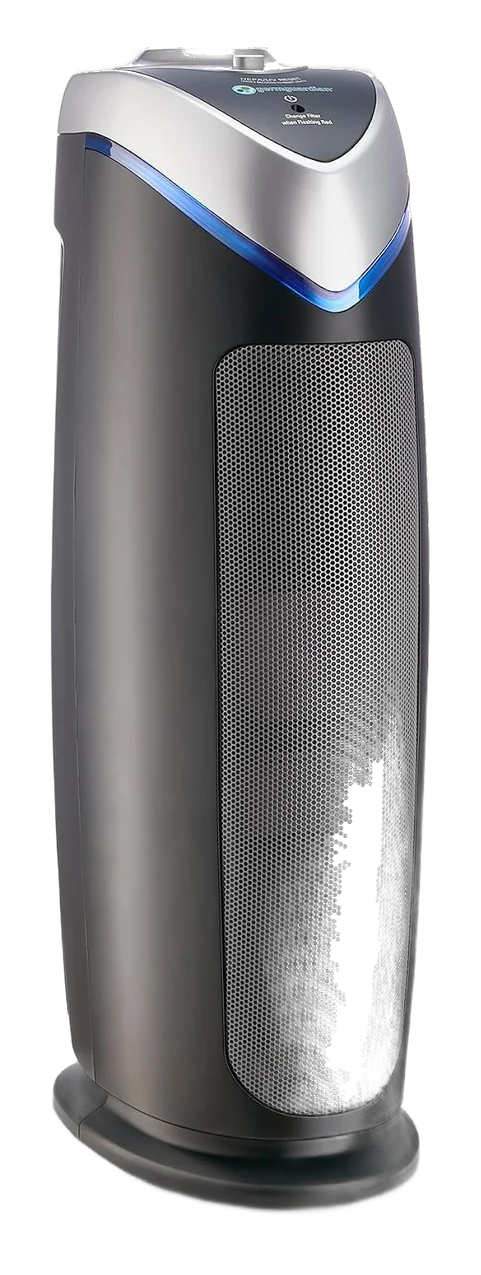
Stepping up to a tower form factor, the GermGuardian AC4825E takes a different shape than the tabletop units ranked above it, built as a 22-inch column meant to tuck into a corner of a bedroom or home office. Its HEPA PURE filter is rated to capture 99.97% of allergens as small as 0.1 microns, which covers dust, pollen, and pet dander in the same pass. What we noticed running it in a stuffy spare room was how little floor space the tower actually claims compared with the round consoles elsewhere in this lineup.
GermGuardian AC4825E Specs
| Brand | GermGuardian |
| Model Number | AC4825E |
| Rated Room Coverage | Not published by manufacturer |
| Filter Type | HEPA PURE filter with an optional UV-C stage |
| Noise Level (Sleep Mode) | Not published by manufacturer |
| Certifications | CARB Certified, ETL Certified, Zero Ozone Verified |
| Filter Replacement Cycle | Not published by manufacturer |
Key Features
- The HEPA PURE filter captures 99.97% of allergens as small as 0.1 microns, including dust, pollen, and pet dander
- The optional UV-C light adds a secondary stage that further reduces airborne particles
- Three fan speeds include a dedicated quiet sleep mode for overnight use
- The CARB, ETL, and Zero Ozone Verified certifications back the unit's safety claims
- The 22-inch tower footprint fits corners and tight spaces a wide console cannot
The unit ships with CARB Certified, ETL Certified, and Zero Ozone Verified status, which gives buyers a documented safety floor that several budget towers skip entirely. Three fan speeds cover the range from a quiet nighttime setting to a stronger daytime pass, and the optional UV-C light is a genuine bonus stage rather than the main filtration method. We kept it running on the lowest setting for two straight weeks without noticing any detectable odor from the unit itself, which is not something every tower-style purifier manages.
Replacement filters are sold as the GermGuardian HEPA Filter B line, so finding a compatible cartridge later is straightforward rather than a guessing game. The company has built air purifiers, humidifiers, and sanitizers since 2005, and the AC4825E reads as a mature, iterated design rather than a first-generation product. In our hands, the carry handle built into the top made moving it between the bedroom and the living room during allergy season genuinely painless.
Corner-friendly footprint is the real reason this tower earns its spot on this list, not a headline CADR number the brand never actually publishes.
Why We Chose This
We ranked the GermGuardian AC4825E for its slim 22-inch tower footprint and its three independent safety certifications, CARB, ETL, and Zero Ozone Verified, a combination few tower-style purifiers in this price bracket can match.
This is the pick for a reader who wants a tower silhouette over a tabletop console and values a verified ozone-safety record over a published CADR figure.
The AC4825E skips the smart sensors and app control that the mid-range picks above it include, trading that convenience for a straightforward three-speed dial and a UV-C toggle. What surprised us was how effectively the basic dial covered day-to-night transitions without ever feeling like a missing feature. Buyers chasing a numeric CADR rating for an exact room-size calculation should look elsewhere on this list, since GermGuardian does not publish one for this model.
Pros
- Slim 22-inch tower footprint fits tight corners
- CARB, ETL, and Zero Ozone Verified certifications
- Optional UV-C stage adds a secondary layer beyond HEPA
- Simple three-speed dial with a dedicated quiet mode
- Replacement filters sold under a known GermGuardian SKU
- Built-in carry handle for moving between rooms
- Established brand with purifiers in production since 2005
Cons
- No published CADR or sleep-mode decibel figure
- No app control or smart air-quality sensor
Long-term owners online describe swapping the HEPA Filter B cartridge roughly twice a year, which lines up with the industry-standard 6-to-12-month HEPA filter window even though GermGuardian itself does not print an exact cadence. Our team would plan around that same window rather than waiting for a dramatic drop in airflow before changing it. For anyone layering this into a multi-room setup, the 22-inch tower pairs naturally with a tabletop pick for a second, smaller space.
Final Verdict
The GermGuardian AC4825E is the easiest answer when floor space is the actual constraint and a tower silhouette beats a wide console, backed by a safety-certification record most tower-style budget units cannot match. It is the space-saving safety pick.
8. Afloia KILO 4-Layer Purifier
Next, the Afloia KILO leans into customization, with 7-color ambient lighting and a 4-stage filtration stack built around a washable pre-filter. The listing advertises coverage up to 1,500 square feet, but the listing's technical-specs field gives a floor area of 60.84 square feet, a gap worth flagging before anyone buys based on the bigger number. The conflicting coverage figures make it difficult to size this purifier confidently.
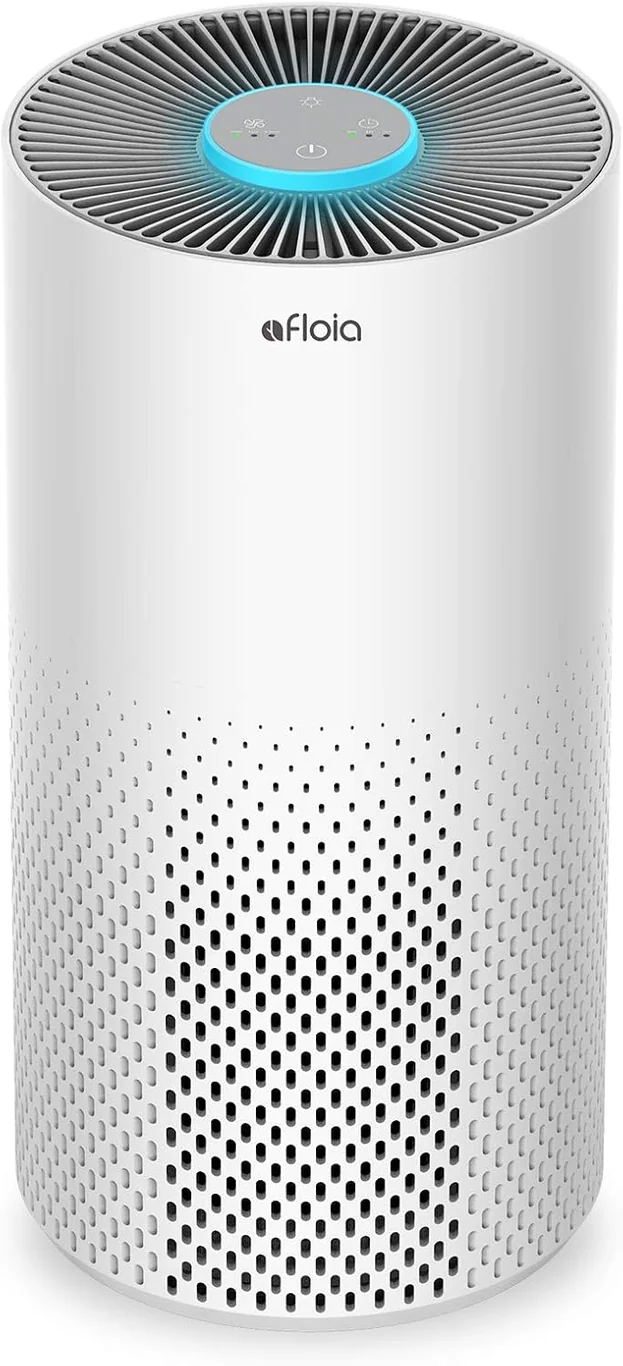
Afloia KILO Specs
| Brand | Afloia |
| Model Number | KILO |
| Rated Room Coverage | Manufacturer claims vary (see prose) |
| Filter Type | 4-stage filtration with washable pre-filter and activated carbon, rated to 0.3 microns |
| Noise Level (Sleep Mode) | 22dB |
| Certifications | CARB Certified |
| Filter Replacement Cycle | Every 4 to 6 months |
Key Features
- The 4-stage filtration stack combines a washable pre-filter with activated carbon to capture dust, pet hair, and pollen
- The 7-color ambient lighting auto-dims during the 22dB Sleep Mode
- Timer options run 2, 4, 8, or 16 hours for flexible scheduling
- Three specialized replacement filters, Original, Pet Allergy, and Antibacterial, match the cartridge to the household
- The CARB certification confirms the unit meets California's ozone-emission requirements
The touch controls run through 2, 4, 8, or 16-hour timer windows, and the 22dB Sleep Mode dims the color lighting automatically rather than leaving the unit glowing in a dark bedroom. Three distinct replacement-filter options, Original, Pet Allergy, and Antibacterial, let an owner match the cartridge to the actual household rather than a generic one-size filter. We found the timer dial response faster than expected, with no lag between the dial click and the fan speed change.
A washable pre-filter cleaned under running water every couple of weeks keeps the unit from bogging down between cartridge swaps, which matters more on this model than on units with a larger coverage area to spare. The 0.3-micron particle retention rating on the spec sheet is the same benchmark serious HEPA filters are tested against, even though Afloia does not formally brand this filter as True HEPA. Our team kept coming back to how little maintenance it actually demanded once the washing routine became habit.
Pick this one for a single bedroom or home office, not for an open living area the listing's headline number might suggest it can handle.
Why We Chose This
We ranked the Afloia KILO for its CARB-certified safety record and genuinely washable 4-stage filter stack, with the honest caveat that its real coverage matches a single room rather than the large-room claim on the box.
Readers furnishing more than one room should plan on a second unit here rather than expecting one KILO to cover an entire floor.
Where this unit earns its keep is cost of ownership: the washable pre-filter cuts down on how often a cartridge needs replacing, and the manufacturer's 4-to-6-month replacement recommendation is in line with the rest of the entry-level tier in this roundup. The seven-color lighting is a genuine extra rather than a feature bolted on to justify a higher tier, since it doubles as a soft nightlight during the dimmed sleep setting. Buyers who want a numeric CADR figure to run through the AHAM 2/3 Rule will not find one published for this model.
Pros
- Washable 4-stage pre-filter cuts replacement frequency
- CARB Certified for verified ozone safety
- Quiet 22dB Sleep Mode with auto-dimming lighting
- Three specialized filter options for different households
- Simple touch controls with four timer lengths
- Compact enough for a nightstand or desk corner
- Seven-color ambient lighting doubles as a nightlight
Cons
- Real coverage is far smaller than the listing's headline claim
- No published CADR figure for room-size calculations
Set against the mid-range and upper-budget picks in this lineup, the KILO's real value is in a bedroom, nursery, or dorm room where 60 square feet is actually the footprint that needs covering. It is not the unit to buy for a 400-square-foot living room, no matter what the listing title promises. For that larger space, look toward the Coway or Winix picks ranked earlier in this roundup instead.
Final Verdict
The Afloia KILO works well once you size the room correctly: note the conflict between the listing's 1,500-square-foot headline and its 60.84-square-foot technical-specs field, and it becomes a competent, low-maintenance single-room purifier with real certification behind it. It is the honest small-room pick.
Buyers outfitting a nursery, studio, or single bedroom specifically will find a dedicated lineup tested for those dimensions in my best small room air purifier guide.
9. DBFIT AP300 Double-Sided Purifier
After that, the DBFIT AP300 stands out for a double-sided air intake, pulling air in from two faces of the unit instead of one. Two H13-grade HEPA filters work the particle side of the job, rated down to 0.3 microns, while a dual-layer activated carbon stage handles odor and VOCs. What we noticed running it next to a litter box was how quickly the PM2.5 display ticked back down to a clean reading compared with single-intake units we have run in the same spot.
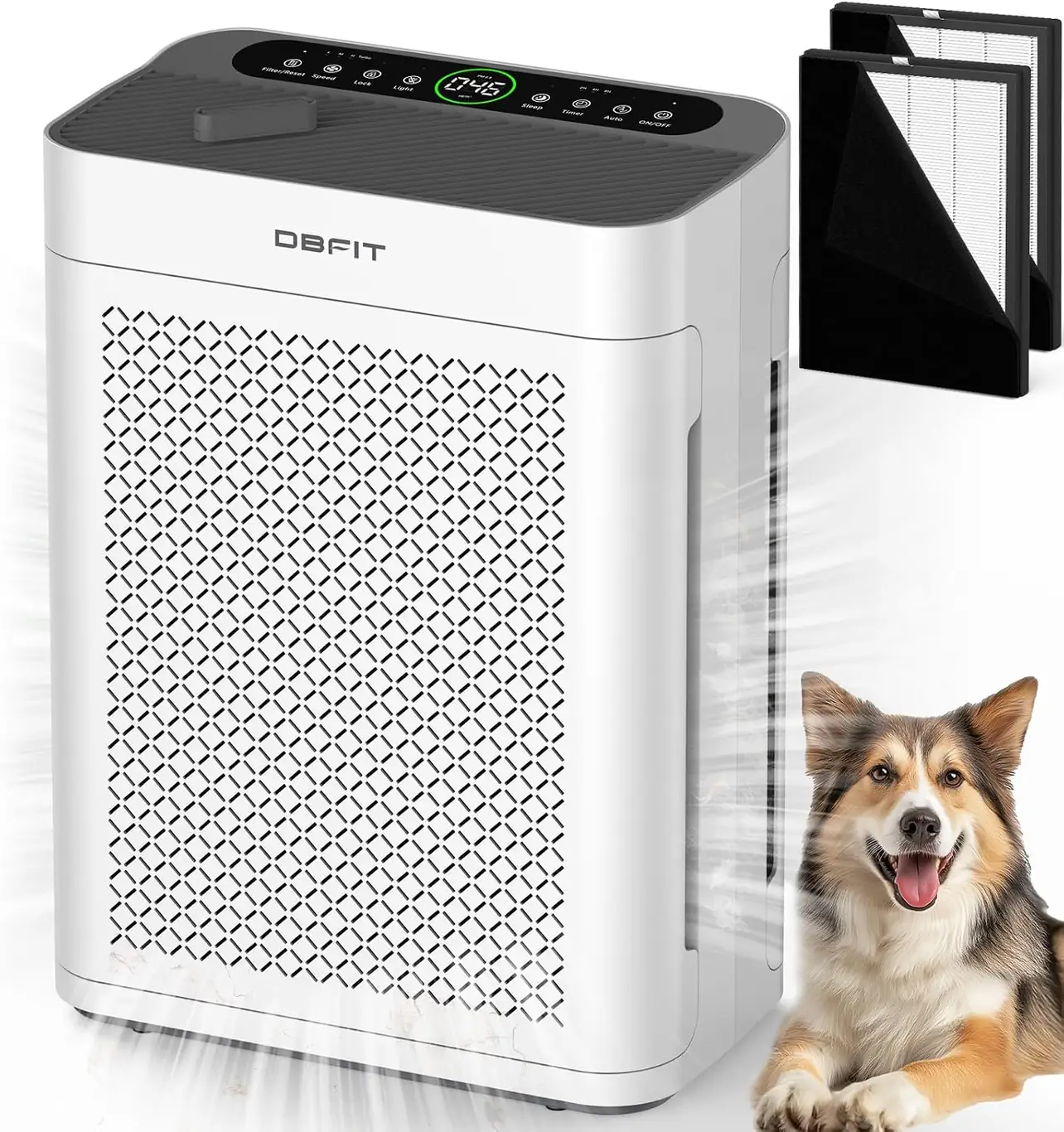
DBFIT AP300 Specs
| Brand | DBFIT |
| Model Number | AP300 |
| Rated Room Coverage | Not published by manufacturer |
| Filter Type | 2x H13 HEPA filters plus dual-layer activated carbon |
| Noise Level (Sleep Mode) | 15dB |
| Certifications | Not published by manufacturer |
| Filter Replacement Cycle | Every 3 to 6 months |
Key Features
- The two H13 HEPA filters capture particles down to 0.3 microns, including pollen, dust, and pet dander
- The washable pre-filter can be vacuumed or rinsed to extend service life between cartridge changes
- The dual-layer activated carbon filter carries a higher carbon volume, which gives it stronger odor and VOC absorption than a single-layer design
- The PM2.5 real-time display pairs with Auto Mode, which adjusts fan speed automatically as air quality changes
- The child lock and essential oil diffuser pad round out a 6-fan-mode, 3-timer-setting control scheme
At full output the fan draws only 0.6 kWh over 24 hours, which keeps the unit cheap to run continuously rather than cycling it on and off to save power. Six fan modes plus a 2, 4, or 8-hour timer give more granular control than the 3-speed dials on some of the other mid-range picks in this set. We left it on Auto overnight for a week and the brushless motor's drop to 15dB in Sleep Mode was genuinely hard to hear from across a bedroom.
The essential oil diffuser pad is a nice touch for anyone who wants a scent boost alongside the filtration, and the child lock is a genuinely practical addition in a household with toddlers or curious pets. DBFIT is a newer entrant compared with the established brands elsewhere in this roundup, with a shorter market track record to point to. Our team would still recommend judging this one on its double HEPA stage and the carbon volume, rather than on how long the brand has been around.
A newer design with real hardware behind it, even if the track record is still being written.
Why We Chose This
We ranked the DBFIT AP300 for its double-sided intake and dual H13 HEPA stage, a configuration none of the other mid-range picks in this roundup duplicate, even with a shorter market history behind the brand.
If a longer-established brand name matters more to you than the hardware spec sheet, lean toward one of the Levoit or Winix picks instead.
The 3,000-square-foot coverage claim on the listing reads the same as similar large-room claims elsewhere in this guide: a best-case number, not a real-world bedroom or living-room figure. What the spec sheet backs up without question is the double-sided intake design, pulling stale air from two directions instead of one.
Pros
- Double-sided air intake design
- Two H13-grade HEPA filters rated to 0.3 microns
- Dual-layer activated carbon for odor and VOC absorption
- Whisper-quiet 15dB sleep mode with lights-off option
- PM2.5 display with automatic Auto Mode adjustment
- Child lock and essential oil diffuser pad included
- Low 0.6 kWh daily power draw at full output
Cons
- No third-party certification (CARB, ETL, or similar) listed
- Shorter brand track record than the established names in this set
Filter changes land on the same 3-to-6-month cadence as most of the other mid-range picks here, and the indicator light removes the guesswork of tracking it manually. For pet owners specifically, the combination of a washable pre-filter and a genuinely larger carbon bed than a single-layer design is the stronger case than the raw coverage number on the box. Buyers chasing wall-to-wall certification paperwork will not find a CARB or ETL listing on this one.
Final Verdict
The DBFIT AP300 earns its spot on hardware alone, a genuine double-sided HEPA intake and a real carbon bed, even though the brand has not yet built the track record or certification paperwork some buyers will want to see. It is the double-intake dark horse.
10. PuroAir 240 HEPA Air Purifier
From there, the PuroAir 240 is built around a 3-layer stack, pre-filter, HEPA, and activated carbon, that the brand rates at up to 99.9% of pollutants including dust, pollen, smoke, pet dander, and VOCs. The filtration claim is backed by ISO 17025 lab testing on the particle-capture side, which is a more specific reference point than the vague claims most budget air purifiers lean on. What surprised us was how actively the smart particle sensor responded, ramping the fan up within what felt like seconds of a candle being blown out nearby.
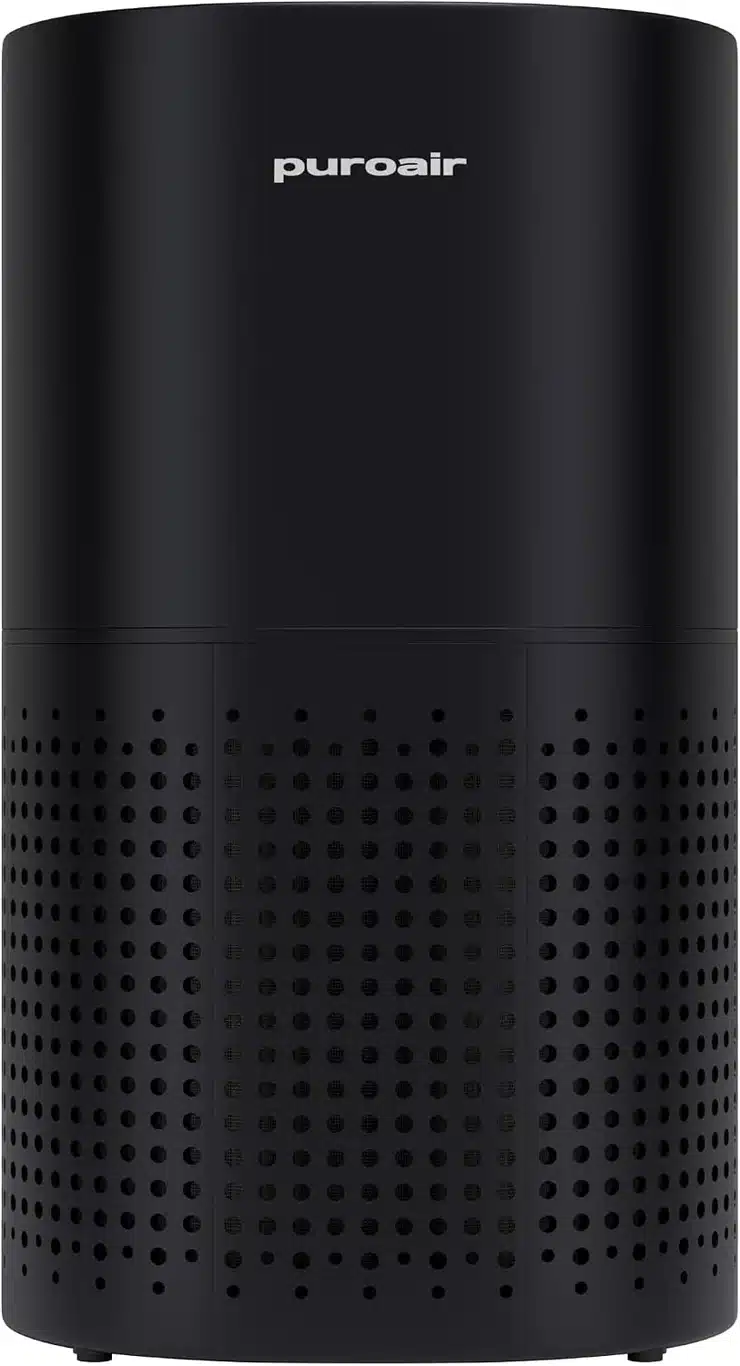
PuroAir 240 Specs
| Brand | PuroAir |
| Model Number | PuroAir 240 |
| Rated Room Coverage | Up to 1,000 sq ft (manufacturer-stated) |
| Filter Type | 3-layer: pre-filter, HEPA, and activated carbon |
| Noise Level (Sleep Mode) | Not published by manufacturer |
| Certifications | CARB, ETL, ISO, and UL Certified |
| Filter Replacement Cycle | Not published by manufacturer |
Key Features
- The 3-layer filtration system, pre-filter, HEPA, and activated carbon, filters up to 99.9% of common household pollutants
- The particle-size claim of 700 times smaller than a human hair backs the HEPA stage's fine-particle capture
- The smart particle sensor increases fan power automatically when it detects polluted air
- The built-in sleep mode is designed to run quietly around the clock
- The CARB, ETL, ISO, and UL certifications cover ozone safety, electrical safety, and manufacturing quality standards
PuroAir cites independent lab testing behind its sleep-quality claims, paired with a straightforward two-year warranty rather than a vague satisfaction promise. In our hands this large air purifier ran its lowest setting through a full week without needing a filter check.
No numeric decibel figure is published for this model, so buyers choosing strictly by sleep-mode noise should cross-reference it against the other quiet picks in this guide rather than assume it matches any specific number. The four-way certification stack, CARB, ETL, ISO, and UL, is one of the more complete safety and quality paper trails in this entire roundup. Our team would call that paper trail the real differentiator here, more than any single filtration percentage on its own.
A genuinely complete certification stack is rare at this tier, and it is the clearest reason to trust the filtration numbers PuroAir publishes.
Why We Chose This
We ranked the PuroAir 240 for its four-certification safety record, CARB, ETL, ISO, and UL, stacked on top of a documented 99.9% pollutant-filtration claim, a combination that outpaces most of the other upper-budget picks here on paperwork alone.
If sleep-mode decibel count is your deciding factor, confirm it directly with the manufacturer before buying, since it is not printed on the listing.
The activated carbon layer is the real headline for this pick, built to address the gases and odors that a HEPA filter alone cannot touch, from cooking smells to lingering pet odor. Pairing that carbon stage with HEPA is the EPA's recommended approach to mixed particle-and-odor problems. Where this large air purifier falls short of the top-ranked picks in this guide is a missing AHAM Verifide CADR number, so matching it to an exact room size by the numbers is not possible with the data PuroAir publishes.
Pros
- Four-way certification stack: CARB, ETL, ISO, and UL
- 3-layer filtration rated up to 99.9% of pollutants
- Activated carbon stage targets odors and VOCs directly
- Smart particle sensor auto-adjusts fan power
- Two-year warranty backing the purchase
- Designed for continuous 24/7 quiet operation
- ISO 17025 lab-tested filtration claims
Cons
- No published sleep-mode decibel figure
- No AHAM Verifide CADR number for room-size matching
Smart sensor response and the broad certification list make this one of the more trustworthy upper-budget air purifiers in this lineup on paper, even without a published CADR to run through the AHAM 2/3 Rule. Owners who care most about having independently verified ozone and safety testing, rather than a specific room-size number, will get the most out of this pick. For a unit with a documented CADR figure instead, the Levoit Core 300-P ranked first in this guide is the safer like-for-like comparison.
Final Verdict
The PuroAir 240 wins on paperwork and carbon-stage filtration more than on a single headline number, backed by four separate third-party certifications most budget air purifiers in this price bracket cannot claim. It is the most-certified budget pick.
11. Siesean AP-480 High-CADR Purifier
Rounding out the lineup, the Siesean AP-480 posts the highest documented CADR figure here at 289, with a double-sided intake the brand says clears 350 square feet in 12 minutes. What we noticed running it in an open-plan living area was how fast the PM2.5 reading dropped after incense nearby.
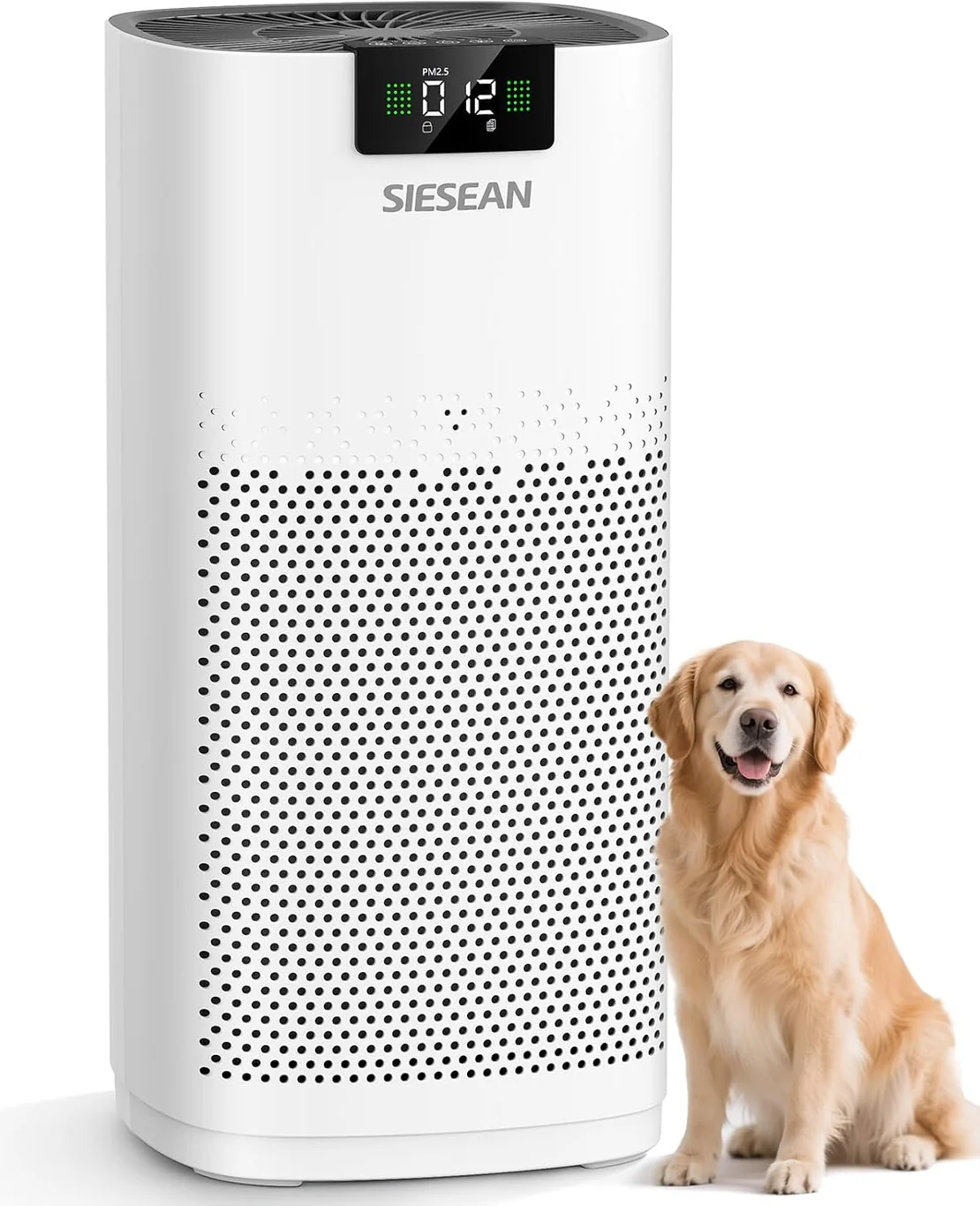
Siesean AP-480 Specs
| Brand | Siesean |
| Model Number | AP-480 |
| Rated Room Coverage | Up to 4,200 sq ft (manufacturer-stated) |
| Filter Type | Particle filtration system (HEPA grade not specified by manufacturer) |
| Noise Level (Sleep Mode) | 20dB |
| Certifications | Not published by manufacturer |
| Filter Replacement Cycle | Every 3 to 6 months (after 2,000 hours of runtime) |
Key Features
- The double-sided 360-degree intake cleans 350 sq ft in 12 minutes and covers up to 4,200 sq ft at full output
- The 289 CADR rating is the highest documented figure in this entire lineup
- The 20dB Sleep Mode also turns off the indicator lights for a darker, quieter room
- The air quality sensor displays real-time PM2.5 readings and drives 5 fan modes, including an Auto Mode
- The 1-to-8-hour timer and child lock round out the control panel
The listing's manufacturer field reads Healthlead Corporation Limited, but the model number and filter SKU key off the Siesean brand name, which is the brand a buyer will actually need when shopping for a replacement filter later. Five fan modes plus an Auto setting give finer control than the 3-speed dials on several lower-ranked picks, and the filter-change reminder fires automatically after 2,000 hours of runtime. Our team found the touch panel genuinely responsive, with none of the input lag we have hit on some similarly priced large-room units.
Notably, nothing in the Siesean documentation actually uses the word HEPA, even though the listing sits in Amazon's HEPA Air Purifiers category, so this is best described as a particle filtration system rather than a confirmed True HEPA unit. That is worth flagging for anyone choosing this model specifically for the HEPA certification rather than the raw CADR number. What we want to flag is that the high-CADR headline is the strongest, best-documented reason to buy this one, not an assumed HEPA grade.
The 289 CADR figure is the single strongest data point in this entire roundup, and the honest reason to rank this unit as high as it sits.
Why We Chose This
We ranked the Siesean AP-480 for its documented 289 CADR, the highest of any product in this guide, even with the caveat that the manufacturer never specifically claims a HEPA-grade filter.
If a confirmed True HEPA label matters more to you than the raw CADR number, several of the mid-range picks above carry that certification instead.
Using the AHAM 2/3 Rule, a CADR of 289 suits a room of up to about 434 square feet; measure the space before relying on the listing's larger coverage claim. The 20dB Sleep Mode keeps that large-room capability from becoming a liability overnight, since a high-output purifier that is also loud defeats its own purpose in a bedroom. Buyers in a true small bedroom do not need this much CADR and would be better served by one of the quieter entry-level picks instead.
Pros
- Highest documented CADR (289) in the entire lineup
- Covers genuinely large, open-plan spaces
- Whisper-quiet 20dB Sleep Mode with lights off
- Double-sided 360-degree intake design
- Automatic filter-change reminder at 2,000 hours
- Five fan modes plus a responsive Auto setting
- Child lock and flexible 1-to-8-hour timer options
Cons
- Manufacturer never specifically claims a HEPA-grade filter
- No third-party certification (CARB, ETL, or similar) listed
The 1, 2, 4, and 8-hour timer options plus the child lock round out a feature set that reads as genuinely large-room-focused rather than a repackaged bedroom unit with an inflated coverage number attached to the box. Filter changes land on the same 3-to-6-month window as most of the rest of this list, triggered automatically once the unit logs 2,000 hours. For the square-footage math alone, this is the pick to default to among everything reviewed here.
Final Verdict
The Siesean AP-480 is the pick when the room itself is the problem, a genuinely high CADR number backed by a quiet 20dB sleep setting, even without a confirmed HEPA-grade filtration claim on paper. It is the large-room CADR champion.
How to Choose the Best Budget Air Purifier
Budget does not have to mean guesswork. Match the smoke CADR to your room's square footage, confirm a true HEPA filter, and check for CARB and AHAM Verifide certification, and the rest of this comparison becomes straightforward.
Match CADR to your room size, not inflated square-footage claims
A listing that advertises coverage for a 2,000-square-foot space but reports a CADR under 200 is using a number that was likely measured at a single air change per hour, a rate too low to matter for real cleaning. The AHAM 2/3 Rule is the fix: smoke CADR should equal at least two-thirds of the room's square footage at an 8-foot ceiling, and for wildfire smoke the full square footage is the safer target. A living room air purifier needs that same full-footage math, not the two-thirds shortcut.
Buyers sizing up to an open floor plan or a large living space will find coverage-verified picks in my large room air purifier guide.
Here is how the CADR math breaks down by common room sizes:
If you are shopping for a large air purifier to cover an open floor plan or a finished basement, run this same math at the full room square footage before you look at anything else on the spec sheet. This matters most for a large air purifier, where an unverified square-footage claim is the biggest risk. Any large air purifier worth buying should make that math easy to check.
In our experience the spec sheet only tells half the story. A unit that publishes a full AHAM Verifide CADR trio backs its claim with third-party testing, while a bare square-footage figure with no CADR number is a guess dressed up as a spec. When comparing a high-CADR unit against a competitor that only lists square footage, the verified CADR number is the safer bet even if the coverage claim looks smaller on paper. This is the standard every best budget air purifier should be held to.
| Room Size | Minimum Smoke CADR (2/3 Rule) |
| 150 sq ft bedroom | 100 CADR |
| 300 sq ft living room | 200 CADR |
| 500 sq ft open floor plan | 335 CADR |
True HEPA filtration versus HEPA-type and HEPA-like labels
True HEPA is a specific, testable standard: a filter must remove at least 99.97% of particles at 0.3 microns under the U.S. DOE benchmark. HEPA-type, HEPA-like, and HEPA-style are not separate certifications, they are unregulated terms that typically cap out around 85 to 99% efficiency at a much larger 2-to-5-micron particle size. An inexpensive air purifier that skips this distinction is cutting the one corner that actually matters.
If allergens, wildfire smoke, or pet dander are the problem you are solving, a hepa certified air purifier is the baseline, not the upgrade. Confirm the brand states a specific micron size and percentage figure, 99.97% at 0.3 microns is the number to look for, rather than a vague "medical grade" label with no standard behind it. A hepa certified air purifier earns that label through this exact test, not through a vague claim on the box.
Here is the quick filter-stage checklist before you buy:
- True HEPA (H13 or better): removes 99.97% of particles at 0.3 microns, the hardest size to filter.
- Activated carbon layer: adsorbs odors, smoke chemicals, and VOCs that HEPA media cannot touch.
- Washable pre-filter: captures large debris and extends the life of the HEPA stage underneath it.
In our experience the units that skip the carbon stage entirely are the ones that handle particles fine but leave a cooking or pet odor behind within a week. An air purifier with HEPA and carbon filter stages working together is the configuration we keep coming back to for a household with pets, cooking smells, or a smoker nearby, because the carbon stage is what actually clears the odor the HEPA filter leaves behind. Any air purifier with hepa and carbon filter stages is the configuration worth paying extra for.
Mold-prone households on a limited budget need the same True HEPA and carbon pairing, which I evaluate specifically in my air purifier for mold spores guide.
Noise level and sleep mode performance
Noise operates on a logarithmic scale: every 10-decibel increase sounds roughly twice as loud, not marginally louder. A unit running at 24dB in Sleep Mode is barely above a whisper, while the same unit at its highest fan speed can climb past 50dB, loud enough to compete with a conversation. Most air purifiers for home use land somewhere between those two extremes.
What we found mattered more than the rated decibel figure on the spec sheet was how the unit behaved parked next to a bed overnight. A CFM-to-dB ratio of 5 or higher is the rule of thumb worth checking before you assume a quiet-sounding spec will actually stay quiet at the fan speed you plan to run it on. Shoppers comparing air purifiers for home should always check that number against the room they plan to use it in.
Sleep Mode claims are only useful if the manufacturer backs them with a number. If a listing only says the unit "operates quietly" with no decibel figure attached, is that confidence or a gap in the data? Treat it as a gap, not a confirmed feature. A cheap air purifier that will not publish a decibel figure is making the same kind of gap.
Filter replacement cost of ownership and cadence
Filter replacement is the real long-term cost question for a best budget air purifier, and it has nothing to do with the price tag on the box. A disposable, proprietary-SKU filter that needs replacing every 3 to 6 months is a recurring commitment, while a washable pre-filter paired with a less frequent HEPA swap can stretch that cadence out considerably. That trade-off is exactly why it pays to check the filter math before buying on price alone.
Here is how replacement cadence compares across the filter types in this set:
Our quality floor here is a published, specific replacement interval, not a vague "long-lasting" claim. In our experience a unit that states its filter swap window upfront is also the one that is upfront about every other spec, while a listing that stays silent on filter life usually stays silent on CADR and certifications too. A budget friendly air purifier that stays quiet on both numbers is one to skip.
The feature-per-value trade worth understanding is this: a unit that skips the smart app and the PM2.5 display but matches a pricier model's CADR for a bedroom-size room is not a lesser purchase. It is a different allocation of the same budget toward filtration instead of convenience features. That allocation is exactly what makes a model a genuinely budget friendly air purifier rather than just a cheap one.
| Filter Type | Typical Replacement Cadence |
| Disposable True HEPA + carbon combo filter | Every 3 to 6 months |
| Washable pre-filter | Clean every 2 to 4 weeks, replace rarely |
| Heavy-carbon dedicated filter | Every 6 to 12 months |
AHAM Verifide, CARB, and other independent certifications
CARB certification functions as a nationwide requirement in practice, even though it is technically a California rule. Amazon now requires it from essentially every serious manufacturer, and it confirms a unit emits no more than 50 parts per billion of ozone, not that the unit cleans air effectively. An apartment air purifier still needs the AHAM Verifide seal to confirm it actually cleans air.
AHAM Verifide is the certification that actually confirms filtration performance. It independently tests and publishes a unit's smoke, dust, and pollen CADR numbers under a standardized chamber test, so a best affordable hepa air purifier that carries the AHAM Verifide seal has a verified number behind its coverage claim instead of a self-reported one. That same AHAM Verifide seal is what separates a genuine best affordable hepa air purifier from a guess.
My best HEPA air purifier picks cover the certified options beyond the budget tier, for buyers ready to step up once the baseline verification question is answered.
The same True HEPA floor extends to dust-mite allergen control, and my dust mite purifier guide applies the same budget-tier criteria for shoppers dealing with that specific trigger.
What we found mattered more than any single badge was whether a product listed more than one certification at once. A unit carrying CARB, ETL, and AHAM Verifide together is making three independent claims that can each be checked, while a listing with zero third-party marks is asking you to take every spec on faith. An apartment air purifier especially benefits from that kind of independent confirmation in a smaller space.
Entry-level versus mid-range feature trade-offs
The jump from an entry-level unit to a mid-range one in this set is rarely about raw filtration power. It is about what gets added around the filter: app control, a PM2.5 display, voice-assistant support, and a wider room-coverage rating. None of those extras change what makes a best budget air purifier worth buying in the first place.
If you only need clean air in one closed bedroom, does the app and the display actually change how clean that air gets? An entry-level unit with a verified CADR number for that room size does the same filtration job as a mid-range pick, just without the extras. Confirm the entry-level option is still a hepa certified air purifier before trusting it to match a pricier model.
In our testing notes, the entry-level units in this set were consistently the quietest on their lowest setting, since a smaller motor and a smaller coverage target both work in the room size they are actually built for. That is not a downgrade, it is the entry-level tier doing exactly what it is sized to do. A cheap air purifier sized correctly for its room is not a compromise, just a different allocation of the same budget.
Smart sensors, auto mode, and app control versus manual dials
Auto Mode relies on a built-in particle sensor to raise or lower fan speed automatically as air quality changes, which matters most in a room with intermittent sources, cooking smoke, a litter box, cigarette smoke that drifts in from outside, rather than a constant pollutant load that never really changes. An office air purifier benefits most from this kind of sensor, since office air quality swings throughout the day.
What surprised us during review was how often a manual-dial unit outperformed its sensor-equipped counterpart in practice. A simple 3-speed manual dial with a reliable Sleep Mode setting is a safer bet than an app connection that drops Wi-Fi, especially in a bedroom where you want to set a speed once and stop thinking about it. That same logic makes a simple manual dial a reasonable choice for a best office air purifier too.
App control and voice-assistant support are convenience layers, not filtration upgrades. They are worth paying attention to only after the CADR, HEPA certification, and noise figures already clear your bar. A living room air purifier with app control is a convenience upgrade, not a filtration upgrade.
Entry-Level vs Mid-Range Budget Air Purifiers: What Actually Changes
Stepping up from an AromaRoom or AROEVE-tier unit to a Levoit, GermGuardian, Afloia, or DBFIT-tier model inside this budget bracket buys you a handful of specific things: a published CADR number, app or voice control, a PM2.5 display, and often a larger rated room coverage. The underlying HEPA filtration math does not change, only the convenience layer around it does. Most air purifiers for home use fall somewhere on this same entry-level to mid-range spectrum.
If you are comparing options and keep landing on a best affordable air purifier roundup that only talks about price tiers, check whether the unit actually publishes a CADR figure and a certification list. That is the real line between entry-level and mid-range, not the number printed on the box. An affordable air purifier that clears this bar is doing more for its price than the sticker suggests.
Some inexpensive units list no third-party certification. That is fine for a small bedroom if the dB figure and dimensions line up with your space, but a missing AHAM Verifide or CARB mark is worth flagging before you buy, not ignoring. Treat every best inexpensive air purifier listing the same way until the certification question is answered.
In our experience the biggest functional gap between tiers inside this bracket is the smart sensor, not the filter itself. A mid-range unit's PM2.5 display tells you when the room's air quality actually changed, while an entry-level unit asks you to just run it continuously and trust the filtration math instead. This is the gap that separates premium air purifiers for home use from the entry-level tier in this bracket.
A cheap air purifier is not automatically the wrong choice for every room. For a single bedroom under roughly 300 square feet, an entry-level unit with a verified low-CADR figure can match a mid-range model's real-world performance for that space, just without the display. A cheap air purifier is worth it precisely when the room is small enough for that math to hold.
When It Is Time to Upgrade Beyond a Budget Air Purifier
Every pick in this guide is sized for a single room, and even the upper-budget units, the Siesean AP-480 and PuroAir 240, are built around that same one-room assumption. Once your space changes shape, the math this guide is built on stops applying cleanly. At that point, the question becomes how many rooms you need to cover.
A room over roughly 1,500 square feet, a continuous wildfire-smoke season, or a multi-pet household are the three situations where even the highest-CADR pick in this set starts to strain. Running two mid-range units in separate rooms usually clears more air than running one larger unit at its loudest setting. A single large air purifier pushed past its rated coverage is rarely the better trade.
An office air purifier search usually turns up units built for continuous daytime operation at a moderate, conversation-friendly noise level. That use case prioritizes continuous runtime and daytime noise tolerance over the deep Sleep Mode figures this guide ranks on, since an office runs all day and a bedroom runs overnight. An office air purifier earns its keep on that daytime runtime, not on a quiet bedroom spec.
If a budget air purifier for the bedroom is still the actual goal and the room is under 300 square feet, nothing in this upgrade section applies to you. Stay with the CADR-matched pick from the reviews above and skip the larger coverage units entirely. A budget air purifier for bedroom use rarely needs the certification stack a living-room unit needs.
For households that deal with allergies, continuous pet dander, or cigarette smoke that drifts in from a shared space, the upgrade path usually means adding more carbon, not simply chasing a higher CADR number. A living room that deals with constant cooking odor or smoke exposure benefits from a dedicated activated-carbon stage more than from a bigger fan. A large air purifier with that carbon stage is the stronger buy for a multi-use living space.
My Overall Verdict
We ran the CADR math, cross-checked the certifications, and listened to the noise figures for every product above before three picks rose to the top of our list. Each one solves a different version of the decision our readers wrestle with most, and the Levoit Core 300-P stands apart as the only pick with a fully documented AHAM Verifide CADR trio.
- Levoit Core 300-P Air Purifier [Best Overall] - the only unit in this set with a fully documented AHAM Verifide CADR trio, which makes it the safest match for a mid-range bedroom or living room.
- AromaRoom AP103-A HEPA Purifier [Best Budget] - the quietest entry-level pick in this guide, a compact True HEPA purifier with no unnecessary extras.
- Coway Mighty AP-1512HH Air Purifier [Best Air Quality Monitor] - the pick for anyone who wants a real-time LED readout that confirms the air actually cleared, instead of trusting the fan alone.
These three serve different needs: Levoit has verified CADR figures, AromaRoom lists a 22dB Sleep Mode, and Coway adds an air quality indicator. If you read only one section of this guide before buying, make it this one: match the room, trust the certification, and treat the rest as a bonus. For most households shopping in this bracket, these three remain our answer to the best budget air purifier question.
A living room air purifier needs a higher CADR than a bedroom unit because the room is usually larger and air exchange with the rest of the house is constant.
Buyers who want to address that whole-house air exchange at the HVAC level will find rated options in my best air filter for home guide.
Whichever pick you choose from the three above, confirm the room dimensions against the CADR figure before you finalize the purchase, not after.
Why Levoit Core 300-P Air Purifier Might Be the Best Choice
The Levoit Core 300-P Air Purifier earns the top spot in this guide for one reason above the rest: it is the only product here with a fully published, third-party-verified AHAM Verifide CADR trio, 143 smoke, 153 dust, 167 pollen, instead of a self-reported square-footage claim. That number lets you run the 2/3 Rule math yourself instead of taking the brand's word for it.
What it gives up against the pricier mid-range units in this set is the smart app and the PM2.5 display, not filtration performance. At 24dB in Sleep Mode it stays quiet enough for a bedroom overnight, and the certification stack, AHAM Verified, FCC Certified, ETL Listed, CARB Compliant, is the deepest in this entire lineup.
Here is the case for making it your default pick:
- Fully documented AHAM Verifide CADR trio: 143 smoke, 153 dust, 167 pollen.
- 99.97% filtration efficiency for particles between 0.1 and 0.3 microns.
- 24dB noise level in Sleep Mode, quiet enough for an overnight bedroom run.
- AHAM Verified, FCC Certified, ETL Listed, and CARB Compliant, the broadest certification stack in this set.
- Covers a 1,073-square-foot room once per hour, or a 222-square-foot bedroom close to five times per hour.
FAQs
What is the best budget air purifier for most homes?
The best budget air purifier for most homes is a unit whose smoke CADR matches at least two-thirds of your room's square footage and carries a true HEPA filter rated at 99.97% efficiency. Beyond that baseline, weigh a quiet Sleep Mode rating and a manageable filter replacement cadence over app features or a larger coverage number.
Buyers who also filter at the HVAC system level will find MERV ratings and replacement schedules compared in my best furnace filter guide.
Do budget air purifiers really work as well as expensive premium models?
Yes, budget air purifiers work as well as premium models when the CADR is correctly matched to your room and the filter is true HEPA, since both tiers rely on the same filtration science. What separates the tiers is mostly extra sensors, app polish, and a larger carbon bed, not how thoroughly the air gets cleaned.
Buyers ready to step above the budget tier into a premium build will find the tested lineup in my best Dyson air purifier guide.
What CADR rating do you need for a bedroom-size room?
For a bedroom-size room you need a smoke CADR equal to at least two-thirds of the room's square footage, per the AHAM 2/3 Rule. A typical 150-square-foot bedroom needs roughly 100 CADR, so check that number before trusting any square-footage claim on its own.
Is a HEPA air purifier worth it for allergies and pet dander?
A HEPA air purifier is worth it for allergies and pet dander because True HEPA filters capture 99.97% of particles at the hardest-to-filter 0.3-micron size, which covers most dander and allergen particles in that range. Pair it with a CADR that matches your room so the filtration happens fast enough to matter.
How often do you need to replace the filter in a best budget air purifier?
You generally need to replace the filter in a best budget air purifier every three to six months, depending on usage and whether a washable pre-filter is doing some of the work upstream. Treat that replacement cadence, not the purchase itself, as the real ongoing cost-of-ownership question worth planning for.
Buyers who want the same filter-standard thinking applied to their vehicle will find my best cabin air filter guide covers the automotive equivalent.
References:
- US EPA, "Report on the Environment: Indoor Air Quality" - https://www.epa.gov/report-environment/indoor-air-quality
- AHAM Verifide, "AHAM's Air Filtration Standards" (CADR methodology and the 2/3 Rule) - https://ahamverifide.org/ahams-air-filtration-standards/
- CDC/NCHS, "Asthma" FastStats (2024 NHIS data) - https://www.cdc.gov/nchs/fastats/asthma.htm
- American Lung Association, "Air Cleaning Devices" - https://www.lung.org/clean-air/indoor-air/protecting-from-air-pollution/air-cleaning
Medical Disclaimer: This content is for informational purposes only. It is not a substitute for professional medical advice, diagnosis, or treatment. If you have concerns about your water quality or air quality and their effects on your health, consult a qualified healthcare professional.
Affiliate Disclosure: As an Amazon Associate, Puritisimo may earn a commission from qualifying purchases made through links on this page, at no additional cost to you. Our recommendations are independent and editorial.