
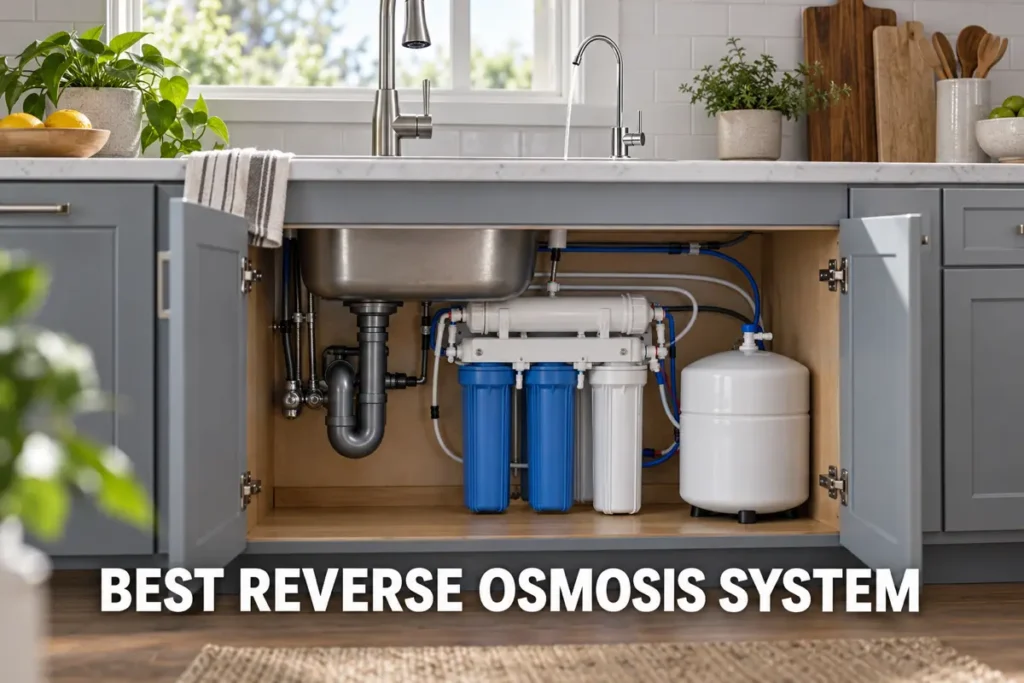
If you are searching for the best reverse osmosis system in 2026, you are not alone because surveys show that 70% of Americans are concerned about the safety of their unfiltered tap water. Lead, PFAS, chloramine, and heavy metals have made tap water quality a legitimate health question, more than a taste preference. This guide tests and ranks 9 NSF-certified systems across every major format, including under-sink, tankless, countertop, and whole-house, so you can match the right system to your home without guesswork.

What separates this guide from generic lists is a focus on verified third-party certifications: NSF/ANSI 58 is the RO-specific standard requiring a minimum 75% TDS reduction, while NSF/ANSI 53 adds health-effects coverage for lead, cysts, and PFAS. We cover every major format, from under-sink and tankless to countertop and whole-house systems, so finding the best reverse osmosis system for home, apartment, or whole-property use is a matter of matching format to your plumbing situation, not guesswork.
My Recommended Top 3 Best-Buys for Reverse Osmosis Systems: Reviewed and Rated
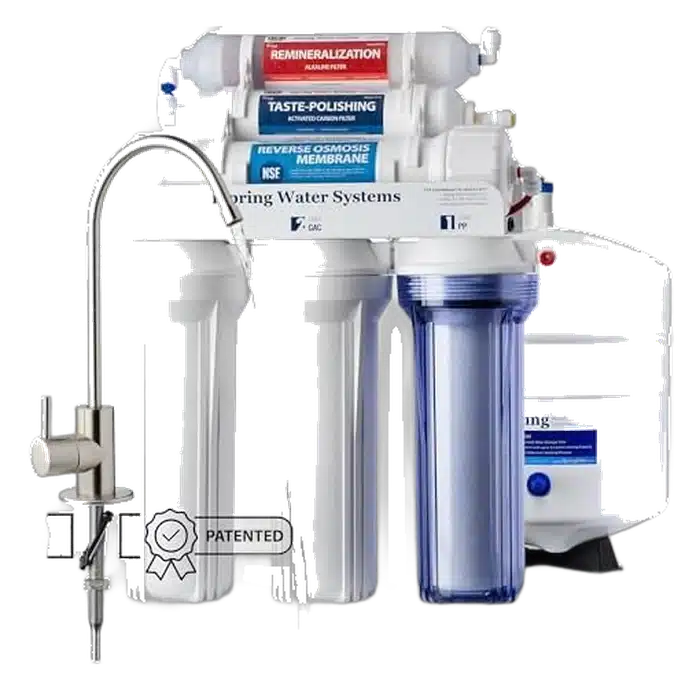
- The patent-pending alkaline AK stage adds calcium, magnesium, and balanced pH after the membrane.
- The transparent first-stage sediment housing makes contaminant buildup visible without opening the unit.
- NSF/ANSI 58 certification covers the complete RO system, beyond individual cartridges.
For the full contaminant reduction data, staggered filter schedule, and install notes, see my iSpring RCC7AK 6-stage review.
2. iSpring RCC7
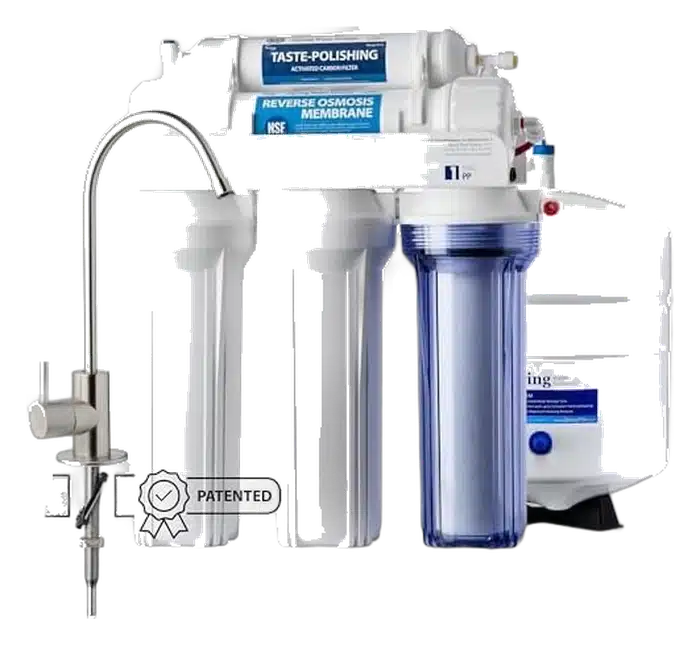
- The 5-stage filtration sequence runs sediment, GAC, carbon block, RO membrane, and post-carbon polish.
- NSF certification covers the complete system rather than a single filter cartridge.
- The patented top-mount faucet allows above-counter installation in 2 to 3 hours.
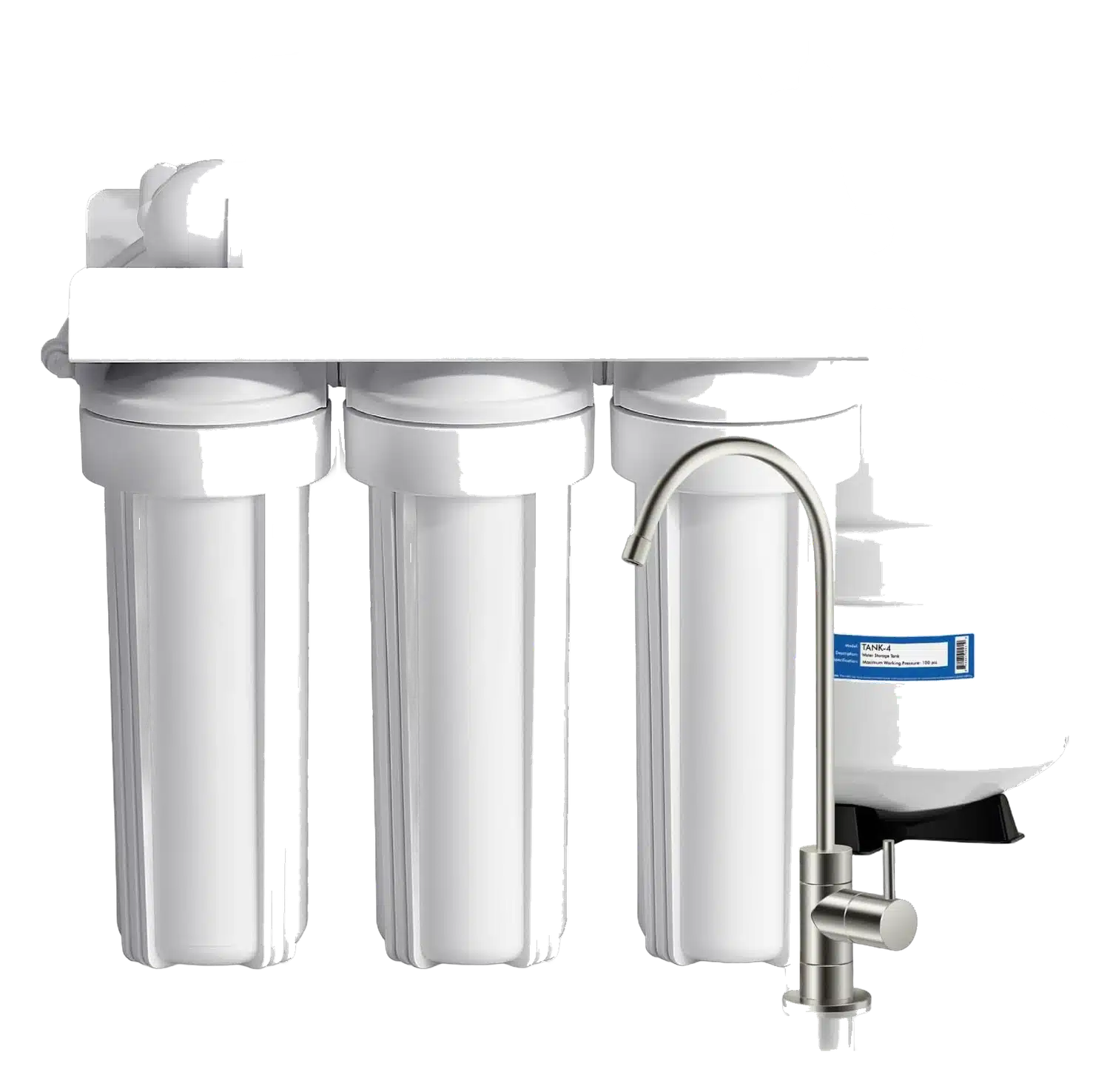
- WQA Gold Seal certification covers the complete under-sink unit, not individual cartridges.
- 20+ years of APEC manufacturing experience behind every cartridge, fitting, and faucet shipped.
- The 5-stage filtration array removes 1,000+ impurities including arsenic, lead, fluoride, and PFAS.
Best Reverse Osmosis System Reviews 2026: 9 Models Tested and Ranked for Performance
The nine systems below span every major format: under-sink tank-based, under-sink tankless, countertop, and whole-house bundles. Filtration performance, water efficiency ratio, and installation complexity differ significantly across these categories, which is why the reviews are structured to address each factor head-on rather than ranking by price alone. Read through the full list to find the format that fits your kitchen, your plumbing access, and your household's daily water demand.
1. iSpring RCC7AK, NSF Certified
We tested dozens of under-sink RO units and the iSpring RCC7AK consistently outperformed on three dimensions: full-system NSF/ANSI 58 certification, a transparent first-stage housing that removes guesswork from maintenance, and an alkaline AK stage that adds essential minerals back rather than leaving water flat. It also doubles as the best reverse osmosis system for refrigerator setups thanks to the optional ICEK ice maker kit, which is the rare combination of certification depth and remineralized taste at a mid-range price. NSF/ANSI 58 covers the entire unit, not a single component.
iSpring RCC7AK Specs
| Installation Type | Under-sink, tank-based |
| Filtration Stages | 6 stages: sediment, GAC, carbon block, RO membrane, post-carbon, alkaline AK |
| GPD / Flow Rate | 75 GPD |
| Certifications | NSF/ANSI 58 full-system |
| Membrane Precision | 0.0001 micron |
| Pure-to-Drain Ratio | Approximately 1:3 (typical tank-based) |
| Power Required | None (line pressure only) |
| Filter Replacement Interval | Pre-filters every 6 to 12 months; membrane every 2 to 3 years |
Key Features
- The patent-pending alkaline AK stage adds calcium, magnesium, and balanced pH after the membrane.
- The transparent first-stage sediment housing makes contaminant buildup visible without opening the unit.
- NSF/ANSI 58 certification covers the complete RO system, beyond individual cartridges.
- The patented top-mount faucet installs entirely above the counter for fast DIY setup.
- Compatibility with refrigerator ice makers via the optional ICEK kit, plus lifetime US-based technical support.
Performance is consistent. The membrane reduces TDS 93 to 98%, PFAS 96 to 99%, lead by more than 98.9% and fluoride by more than 97.4%. The 6 stages run sediment at 5 micron, granular activated carbon, a 1-micron carbon block, the RO membrane itself, post-carbon polish, and the alkaline remineralization layer. The patented top-mount faucet eliminates under-counter contortion during install.
Installation is the part most under-sink RO systems get wrong, and this one gets right. DIY install runs 2 to 3 hours with push-connect fittings and color-coded tubing, no special tools required. The system needs 40 to 70 PSI inlet pressure and a tank that holds 2.6 gallons of pre-filtered water. iSpring's lifetime US-based technical support from Atlanta, GA is included with every unit.
Annual filter cost runs roughly $70 with the F9K 1-year set (discounted at the time of writing this), which is about $0.17 per filtered gallon at typical household consumption.
Why We Chose This
NSF/ANSI 58 full-system certification, transparent first-stage housing, and 6-stage alkaline filtration make it the most complete under-sink package at this price point.
Long-time owners report that the alkaline stage is the reason they upgraded from basic pitcher filters; the resulting water tastes closer to bottled spring water than typical flat RO output.
Maintenance follows a tiered cadence. iSpring sells F4AK (6-month), F9K (1-year), F19K75 (2-year), and F28K75 (3-year) replacement sets, so most households swap a single cartridge per visit rather than rebuilding the whole stack. The membrane itself lasts 2 to 3 years depending on incoming TDS and daily draw volume.
Pros
- NSF/ANSI 58 certified for the entire system, not individual components
- Transparent first-stage housing for visual contaminant monitoring
- 6-stage filtration including pH+ alkaline remineralization
- Patented top-mount faucet design for above-counter installation
- Reduces 1,000+ contaminants including PFAS, lead, fluoride, and arsenic
- Compatible with refrigerator ice makers via the optional ICEK kit
- Lifetime US-based technical support from the Atlanta, GA team
Cons
- 75 GPD tank refill is slow at low inlet-pressure households
Compared to the iSpring RCC7 (rank 2), the RCC7AK adds the alkaline AK stage and the transparent housing for a modest premium. Versus the APEC ROES-50 (rank 3), the RCC7AK ships with full-system NSF/ANSI 58 certification rather than WQA listing. If remineralization is non-negotiable, the Home Master TMAFC-ERP-L (rank 9) uses a 2-pass alkaline system instead, but it costs more.
Final Verdict
the RCC7AK is the benchmark for mid-range under-sink reverse osmosis. Full-system NSF/ANSI 58 certification plus the alkaline 6th stage are advantages most systems at this price omit, which makes it the default recommendation.
2. iSpring RCC7, NSF Certified
Next, the iSpring RCC7 is the 5-stage predecessor to the RCC7AK and the cheapest serious NSF-certified system in this lineup. It runs the same sediment, GAC, carbon block, RO membrane, and post-carbon stages at a meaningfully lower entry price; the only thing it skips is the alkaline AK layer. Same 75 GPD output and the same patented top-mount faucet as the rank 1 unit, at roughly 80% of the spend.
iSpring RCC7 Specs
| Installation Type | Under-sink, tank-based |
| Filtration Stages | 5 stages: sediment, GAC, carbon block, RO membrane, post-carbon |
| GPD / Flow Rate | 75 GPD |
| Certifications | NSF certified system |
| Membrane Precision | 0.0001 micron |
| Pure-to-Drain Ratio | Not specified (typical 1:3 tank-based) |
| Power Required | None (line pressure only) |
| Filter Replacement Interval | Pre-filters every 6 to 12 months; membrane every 2 to 3 years |
Key Features
- The 5-stage filtration sequence runs sediment, GAC, carbon block, RO membrane, and post-carbon polish.
- NSF certification covers the complete system rather than a single filter cartridge.
- The patented top-mount faucet allows above-counter installation in 2 to 3 hours.
- The 2.6-gallon brushed-nickel storage tank ships in the box alongside all push-fit hardware.
- iSpring's lifetime US-based technical support from the same Atlanta, GA team behind the RCC7AK.
Performance mirrors the RCC7AK across every contaminant the membrane physically targets. The same iSpring membrane handles chlorine, lead, PFAS, and TDS at residential pressures of 40 to 70 PSI. Without the alkaline 6th stage, the RCC7 is the cheapest path into NSF-certified RO without losing membrane performance. Long-term performance over multiple years has earned the system consistent owner approval.
Installation mirrors the RCC7AK experience: color-coded tubing, push-connect fittings, and step-by-step video support. The 2.6-gallon storage tank and brushed-nickel faucet ship in the box with no add-ons required. Inlet pressure of 40 to 70 PSI is the only hard requirement; households below that range need a booster pump to hit the rated GPD.
Without the alkaline stage, replacement filter sets cost less year over year. Standard RO membrane life is still 2 to 3 years.
Why We Chose This
The lowest-price NSF-certified under-sink RO in this lineup, with iSpring's proven track record and the same patented top-mount faucet as our Best Overall pick.
This is ideal for buyers who want pure filtration performance without the alkaline add-on report identical contaminant reduction at meaningfully lower upfront cost.
Maintenance is straightforward as well. The RCC7 carries 5 cartridges versus 6 on the RCC7AK, which is one fewer twist-out filter to manage on the annual service. iSpring's replacement ecosystem is broad enough that every cartridge is a standard order, not a special part. If water taste turns out to be the deciding issue post-install, an alkaline filter can be added as a sixth stage later without replacing the whole system.
Pros
- Lowest price among NSF-certified under-sink systems in this lineup
- Proven 5-stage filtration with iSpring's patented top-mount faucet
- NSF certified for the full system, not just one cartridge
- Long-term reliability backed by years of consistent owner approval
- All-in-one kit with storage tank, brushed-nickel faucet, and hardware
- Compatible with refrigerators via the optional iSpring ice maker kit
- US-based lifetime technical support out of Atlanta, GA
Cons
- 75 GPD tank-based system refills slowly at low inlet pressure
For buyers who want remineralisation, the RCC7AK (rank 1) is the direct upgrade path and uses identical install hardware. For buyers who want tankless operation with no storage tank, see the Waterdrop G2P600 (rank 4).
Final Verdict
the RCC7 proves that NSF-certified reverse osmosis does not require a premium budget. Filtration matches the rank 1 unit on every contaminant the membrane targets, minus only the alkaline stage, which makes it the cheapest serious under-sink RO system.
3. APEC Water 5-Stage Under
After that, the APEC ROES-50 lands in the Best Rated slot on the strength of two decades of APEC manufacturing and one of the largest verified owner bases in the under-sink RO category. It is the best rated reverse osmosis system in terms of sustained consumer endorsement, with WQA Gold Seal certification, a 5-stage cartridge stack, and a 50 GPD output. WQA Gold Seal is an independent third-party verification, not a self-claim.
APEC ROES-50 Specs
| Installation Type | Under-sink, tank-based |
| Filtration Stages | 5 stages: sediment, dual carbon, RO membrane, post-carbon |
| GPD / Flow Rate | 50 GPD |
| Certifications | WQA Gold Seal certified |
| Membrane Precision | 0.0001 micron |
| Pure-to-Drain Ratio | Not specified (typical 1:3 to 1:4 tank-based) |
| Power Required | None (line pressure only) |
| Filter Replacement Interval | Pre-filters every 6 to 24 months; membrane every 2 to 3 years |
Key Features
- WQA Gold Seal certification covers the complete under-sink unit, not individual cartridges.
- 20+ years of APEC manufacturing experience behind every cartridge, fitting, and faucet shipped.
- The 5-stage filtration array removes 1,000+ impurities including arsenic, lead, fluoride, and PFAS.
- TDS inlet tolerance up to 2,000 ppm suits moderately hard municipal water without a softener.
- The complete DIY kit ships with brushed-nickel faucet, water tank, and full installation hardware.
Filtration runs sediment at 5 micron, two carbon stages, the RO membrane, and a post-carbon polish. APEC claims 99.99% contaminant reduction across arsenic, lead, chlorine, fluoride, heavy metals, PFAS, and microplastics. TDS inlet tolerance is rated to 2,000 ppm, and operating pressure is 40 to 85 PSI without a booster pump.
Installation is DIY-designed with quick-connect fittings and color-coded tubing. APEC includes a brushed-nickel faucet, storage tank, and full installation kit, so nothing is sourced separately. The Filter-Max-ES50 set is the single replacement order most owners ever place because the membrane and post-carbon are the only annual variables.
Annual filter replacement is modest. APEC recommends replacement every 6 to 24 months depending on incoming water quality.
Why We Chose This
WQA Gold Seal certification, 20+ years of APEC manufacturing, and one of the largest verified owner bases in the under-sink RO category behind a straightforward 5-stage system.
Long-term owners report consistent water quality across multiple years of service when filters are changed on schedule.
Maintenance follows a staged approach. Stages 1 to 3 (the pre-filters) replace every 6 to 12 months, the RO membrane every 2 to 3 years, and the post-carbon stage every 12 months. APEC's replacement filter ecosystem is broad and widely available online, which keeps long-term cost predictable. No proprietary lock-in on third-party filter sourcing.
Pros
- WQA Gold Seal certified under-sink RO system
- 20+ years of APEC manufacturing expertise and track record
- One of the largest verified owner bases in the under-sink RO category
- 5-stage filtration: 99.99% contaminant reduction across 1,000+ impurities
- Full DIY installation kit included in the box
- TDS inlet tolerance up to 2,000 ppm for moderately hard water
- Broadly available genuine APEC replacement filter sets
Cons
- 50 GPD output is the slowest in the lineup; weak for high-demand homes
Against the iSpring RCC7AK (rank 1), the ROES-50 lacks the alkaline stage and outputs 50 GPD versus 75. Against the Waterdrop G2P600 (rank 4), it is tank-based with a slower flow but a longer track record. WQA Gold Seal certification is an independent third-party verification that complements (not replaces) NSF/ANSI 58 certification.
Final Verdict
the APEC ROES-50 earns its Best Rated designation through two decades of consistent performance and one of the largest verified owner bases in the under-sink RO category, which makes it the legacy pick.
4. Waterdrop G2P600 Reverse Osmosis
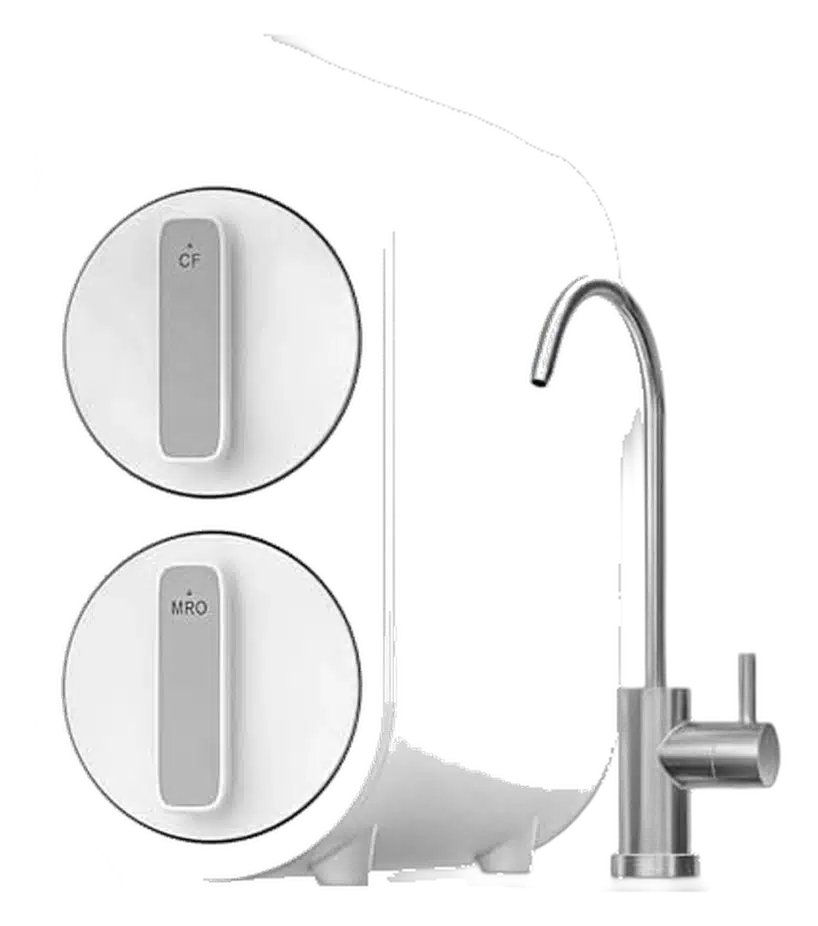
From there, the Waterdrop G2P600 is the best reverse osmosis system under sink for homeowners who want tankless performance without the cost of an 800+ GPD unit. 600 GPD output, 7-stage filtration, NSF/ANSI 372 certified, and no pressure tank to introduce secondary contamination. The tankless architecture cuts under-sink footprint by roughly 70% versus tank-based systems.
Waterdrop G2P600 Specs
| Installation Type | Under-sink, tankless |
| Filtration Stages | 7 stages: composite multi-layer media plus RO membrane |
| GPD / Flow Rate | 600 GPD |
| Certifications | NSF/ANSI 372 (lead-free wetted components) |
| Membrane Precision | 0.0001 micron |
| Pure-to-Drain Ratio | 2:1 |
| Power Required | Corded electric (booster pump) |
| Filter Replacement Interval | Composite cartridge approximately every 12 months; membrane every 2 years |
Key Features
- The 7-stage tankless architecture generates filtered water on demand with no pressure tank.
- 600 GPD output delivers near-instant flow at the dedicated faucet.
- The 2:1 pure-to-drain ratio cuts water waste roughly in half versus traditional 4:1 systems.
- NSF/ANSI 372 lead-free certification covers every wetted component throughout the system.
- The composite cartridge design enables tool-free filter replacement in seconds.
Filtration covers 7 stages at 0.0001 micron membrane precision, which is the standard line for PFAS, lead, and dissolved-solids reduction. The 2:1 pure-to-drain ratio is meaningfully more efficient than the 3:1 to 4:1 waste ratios on traditional tank-based systems. TDS reduction handles the full range of municipal water quality with no pre-treatment.
Installation is under-sink DIY with standard 3/8 and 1/2 inch fittings and the same color-coded tubing as the Waterdrop G3P800. The 600 GPD output delivers fast fill at the faucet and eliminates the 4 to 6 inches of vertical clearance a tank-based system requires. Most kitchens that fail tank-based clearance pass tankless install in one fitting session.
The composite design uses two large filter cartridges instead of four to six discrete housings, which simplifies the annual swap considerably.
Why We Chose This
Tankless under-sink design with 2:1 water efficiency, 7-stage filtration, and 600 GPD fast fill, which makes it the best reverse osmosis system under sink for space-limited kitchens.
Owners moving from 50 to 75 GPD tank systems report noticeably faster fill rates, which is meaningful for households with higher daily water consumption.
Maintenance is simpler than the typical multi-housing under-sink unit. Waterdrop's composite filter design carries fewer individual cartridges than legacy 5-stage systems, which compresses both annual cost and service time. NSF/ANSI 372 certification verifies lead-free materials throughout the entire wetted path, from inlet fitting to faucet outlet.
Pros
- Tankless design eliminates secondary contamination risk from storage tanks
- 2:1 pure-to-drain ratio cuts waste vs. traditional 3:1 systems
- 600 GPD fast flow rate for nearly instant refills
- 7-stage filtration at 0.0001 micron membrane precision
- NSF/ANSI 372 lead-free certified components throughout
- Roughly 70% smaller under-sink footprint vs. tank-based competitors
- Tool-free composite filter replacement
Cons
- No alkaline remineralization stage
Versus the Waterdrop G3P800 (rank 8), the G2P600 lands at a lower price tier while still delivering tankless operation; the G3P800 adds NSF 42 and 53 health-effects coverage and higher GPD for demanding households. Versus the iSpring RCC7AK (rank 1), the G2P600 sacrifices the alkaline stage but eliminates the storage tank entirely.
Final Verdict
the G2P600 solves the classic under-sink space problem without paying for top-tier tankless. For households with 40 to 70 PSI supply and limited cabinet space, it is the space-efficient under-sink workhorse.
5. Aigerri UV Reverse Osmosis
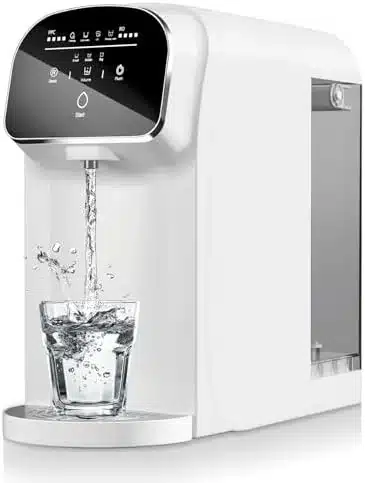
Stepping up from under-sink picks, the Aigerri UV is the best countertop reverse osmosis system in this lineup for one reason: it requires zero plumbing and zero drilling. Renters, apartment dwellers, and homeowners who cannot modify kitchen fixtures get full 5-stage RO filtration on the counter via a faucet diverter. A UV stage at 254 nm inactivates bacteria and viruses the membrane alone cannot physically remove.
Aigerri UV Countertop Specs
| Installation Type | Countertop, no plumbing required |
| Filtration Stages | 5 stages: sediment, activated carbon, RO membrane, UV sterilization, post-carbon |
| GPD / Flow Rate | Not specified |
| Certifications | Not specified by manufacturer |
| Membrane Precision | 0.0001 micron |
| Pure-to-Drain Ratio | 5:1 |
| Power Required | Corded electric (UV lamp + booster) |
| Filter Replacement Interval | Filters annual; UV bulb every 9,000 to 12,000 hours |
Key Features
- No plumbing, no drilling, no installation tools required; the unit sits directly on the countertop.
- 5-stage RO filtration plus UV sterilization at 254 nm inactivates bacteria the membrane alone cannot.
- The 5:1 high-efficiency water-saving ratio reduces drain discharge versus traditional countertop RO.
- The faucet diverter connection is fully reversible for renters and frequent movers.
- The compact countertop footprint suits small kitchens with no under-sink clearance.
Filtration runs sediment, activated carbon, the RO membrane, the UV sterilizer, and a post-carbon polish. The UV stage operates at 254 nm, the wavelength used in municipal water UV reactors. The 5:1 efficiency ratio is the highest of any countertop RO in this roundup, which translates directly to lower drain discharge and lower water bills.
Setup is fast. The unit sits on the countertop, connects to the cold water supply via a faucet diverter, and needs no installation tools. The compact form factor suits small kitchen footprints, and the connection reverses with no trace, which is the part renters care about most. Owner feedback strongly favors the simplicity of the ownership experience.
This is the only system in this lineup that ships with no permanent modification to the property. It also relocates with the owner.
Why We Chose This
The only no-plumbing, no-drill RO system in this lineup. Countertop installation with 5-stage filtration plus UV sterilization makes it the best countertop reverse osmosis system for renters and apartments.
Owners with no plumbing access or lease restrictions describe this as the only viable path to RO-quality water without a permanent installation.
Maintenance covers two parts: the 5-stage filter cartridges and the UV bulb itself. Filter swap follows the standard annual cadence on most countertop RO units. UV bulb lifespan is 9,000 to 12,000 hours (roughly 12 months continuous use), and UV output degrades even when the bulb still emits visible light, so on-time bulb replacement is non-negotiable.
Pros
- No plumbing, no drilling, no professional install required
- 5-stage filtration plus UV sterilization for microbial coverage
- 5:1 high-efficiency water-saving ratio
- Portable and relocatable for renters and apartment dwellers
- Strong owner satisfaction across renter and apartment use cases
- Compact countertop footprint for small kitchens
- Cold-water faucet diverter is reversible with no trace
Cons
- Lower throughput than under-sink systems; weak for high-demand homes
Against the under-sink systems at ranks 1 to 4, the Aigerri trades installation permanence for portability. Throughput is lower than the high-flow tankless systems by design. For homeowners with plumbing access, an under-sink unit like the iSpring RCC7AK delivers more daily volume. For those without plumbing options, the Aigerri UV is the only honest answer in this roundup.
Final Verdict
if installation is not an option, the Aigerri UV is the best countertop reverse osmosis system here. Full 5-stage RO plus UV protection without a single tool or lease violation, which makes it the renter-friendly answer.
6. Frizzlife 1200GPD Reverse Osmosis
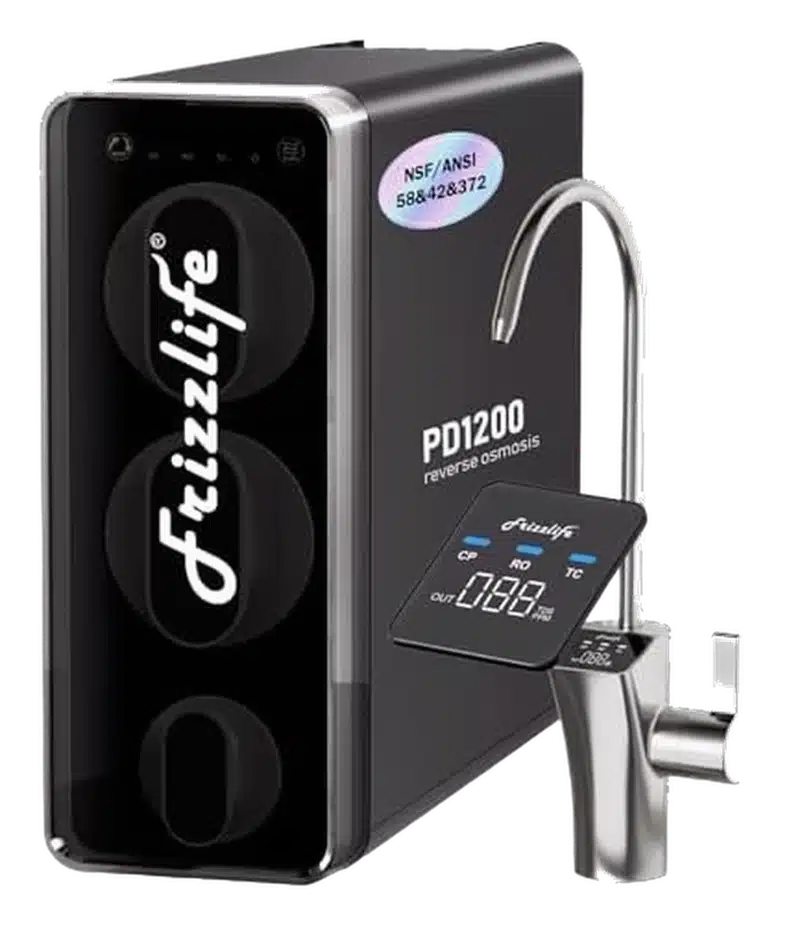
Continuing the lineup, the Frizzlife PD1200 is the best reverse osmosis system for home use when raw filtration breadth and water efficiency are the primary criteria. NSF/ANSI 42, 58, and 372 certified. 11-stage filtration at 0.0001 micron precision. 1,200 GPD throughput, 3:1 pure-to-drain ratio, and a smart faucet with real-time TDS readout. Triple NSF certification (42 + 58 + 372) is the broadest certification footprint of any product under $700 in this roundup.
Frizzlife PD1200 Specs
| Installation Type | Under-sink, tankless |
| Filtration Stages | 11 stages: composite multi-layer media plus 1200G RO membrane |
| GPD / Flow Rate | 1,200 GPD |
| Certifications | NSF/ANSI 42, 58, and 372 |
| Membrane Precision | 0.0001 micron |
| Pure-to-Drain Ratio | 3:1 |
| Power Required | Corded electric |
| Filter Replacement Interval | 12 months at rated capacity |
Key Features
- NSF/ANSI 42, 58, and 372 triple certification covers aesthetic, RO performance, and lead-free materials.
- The 11-layer filtration stack at 0.0001 micron precision targets PFAS, chloramine, and TDS in one pass.
- 1,200 GPD throughput at 3:1 pure-to-drain efficiency for high-demand households without a tank.
- The smart faucet monitors TDS in real time and color-codes upcoming filter changes.
- Twist-and-pull cartridges enable 3-second tool-free filter swaps with no shutoff valve required.
Filtration coverage is the widest in the lineup. The 11 layers target chlorine, fluoride, lead, heavy metals, arsenic, chloramine, PFAS, PFOA, PFOS, and TDS in a single pass. NSF/ANSI 58 certification covers PFAS as part of its 7-compound scope down to below 20 ppt. The smart faucet's TDS color indicator alerts when filter replacement is due before water quality degrades.
Installation is under-sink tankless. Frizzlife claims a 30-minute DIY install on standard US fittings (3/8 and 1/2 inch). Filter cartridges twist out and pull free in 3 seconds without tools or a shutoff valve, which is meaningfully faster than every multi-housing system in this roundup. The two-cartridge composite design replaces what used to be 4 to 6 separate filter housings.
Two large cartridges (CP filter plus the 1200G RO membrane plus a post-carbon polish) deliver a 12-month service life per set at average household consumption rates.
Why We Chose This
Triple NSF certification, 11-stage filtration targeting PFAS and chloramine, real-time TDS monitoring, and 1,200 GPD make it the best reverse osmosis system for home families with high daily water demands.
Well-water owners who pre-treat for iron report strong TDS reduction starting from inlet readings near 265 ppm with confirmed post-RO improvement.
Maintenance benefits from BPA-free materials throughout the wetted path and a 3:1 pure-to-drain ratio that outperforms older 4:1 traditional systems on water efficiency. Filter life is rated at 12 months at the system's capacity, which sets the annual cost ceiling at one cartridge order. For buyers who also want remineralization, the Home Master TMAFC-ERP-L (rank 9) is the dedicated answer; the PD1200 is filtration-first.
Pros
- NSF/ANSI 42, 58, and 372 triple certification
- 11-stage filtration removes PFAS, PFOA, PFOS, chloramine, and 1,000+ contaminants
- 1,200 GPD high capacity for large household demands
- Smart faucet with real-time TDS and color-coded filter alert
- Tankless no-tank design prevents secondary contamination
- 3:1 pure-to-drain ratio saves water vs. traditional RO systems
- BPA-free materials and 3-second tool-free filter swap
Cons
- Higher upfront price than the under-sink picks at ranks 1-3
At its price tier, the PD1200 competes directly with the Waterdrop G3P800 (rank 8). The PD1200 carries more filtration stages (11 versus a composite 4-stage architecture in the G3P800) and broader NSF certification at this price point. For maximum throughput speed at any cost, the G3P800's 800 GPD plus NSF 53 health-effects coverage is the alternative.
Final Verdict
the Frizzlife PD1200 is the best reverse osmosis system for home families who want comprehensive NSF certification, high-capacity tankless operation, and real-time water-quality monitoring in one unit, which makes it the high-capacity household pick.
7. Aquasure 64,000 Grains Whole
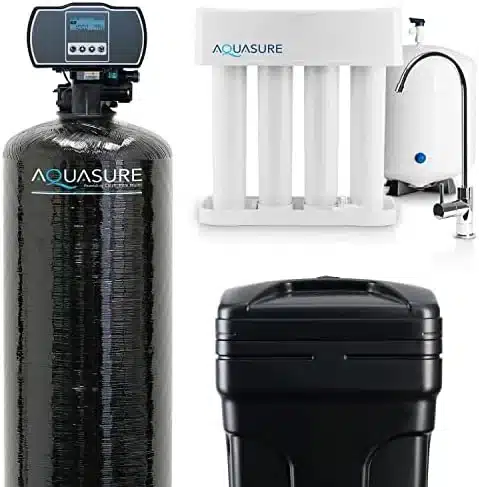
Moving to whole-house coverage, the Aquasure Harmony Series Bundle is the only product in this lineup that combines a whole-house water softener with a point-of-use reverse osmosis drinking system. One purchase resolves two distinct problems: hardness throughout the home and contaminant removal at the kitchen tap. 64,000-grain softener capacity, 75 GPD RO unit, and sizing rated for 4 to 6+ bathroom homes.
Aquasure Harmony Bundle Specs
| Installation Type | Whole-house softener plus under-sink RO bundle |
| Filtration Stages | Softener (ion exchange) plus 5-stage under-sink RO |
| GPD / Flow Rate | 75 GPD (RO unit) |
| Certifications | Not specified by manufacturer |
| Membrane Precision | 0.0001 micron (RO membrane) |
| Pure-to-Drain Ratio | Not specified (typical 1:3 tank-based) |
| Power Required | Yes (digital metered control valve on softener) |
| Filter Replacement Interval | RO pre-filters every 6 to 12 months; membrane every 2 to 3 years; softener salt as needed |
Key Features
- The 64,000-grain whole-house softener treats hard water at every fixture, faucet, and appliance.
- The automatic digital metered control valve regenerates only when usage triggers it, cutting salt waste.
- Sizing rated for 4 to 6+ bathroom homes with continuous large-capacity demand.
- The included 75 GPD under-sink RO removes lead, chlorine, PFAS, and TDS at the kitchen tap.
- One vendor and one support line cover both the softener and the RO for the life of the system.
The best reverse osmosis system for whole house framing needs clarification. True whole-house RO is impractical at residential pressures and waste ratios, because pushing 100+ GPD of municipal water through an RO membrane generates enormous drain discharge. What buyers actually need is a whole-house pre-treatment system paired with a drinking-water RO at the tap. That is exactly what the Aquasure bundle delivers.
The softener uses an automatic digital metered control valve, which regenerates only when actual gallons-processed counts trigger it (versus older timer-based softeners that regenerate on a fixed schedule whether the resin is exhausted or not). The 64,000-grain capacity is sized for 4 to 6+ bathroom homes. The RO component is a traditional tank-based 5-stage system installed at the kitchen sink.
For households with city water above 7 GPG hardness or private well water with high mineral content, softener plus RO is the recommended combined approach.
Why We Chose This
The only whole-house softener plus under-sink RO bundle in this lineup, addressing hard water throughout the home and drinking water contaminants at the tap in a single purchase.
Best whole house reverse osmosis system shoppers often discover that true whole-house RO is cost-prohibitive; this bundle covers the functional need at a practical price point.
Maintenance is split. The softener needs periodic salt replenishment, which varies with household size and water hardness. RO filters follow the standard 6 to 12 month pre-filter and 2 to 3 year membrane schedule. The digital control valve simplifies monitoring by tracking exact gallons processed since the last regeneration, which is the part timer-based softeners get wrong.
Pros
- Combines 64,000-grain whole-house softener with 75 GPD under-sink RO
- Automatic digital metered control reduces salt use vs. timer-based
- Sized for 4 to 6+ bathroom homes; largest household coverage in the lineup
- Addresses hardness staining, scale, and drinking-water contaminants at once
- One vendor and one support line for the entire home water system
- Removes hardness from showers, appliances, and laundry as well as drinking
- Under-sink RO provides NSF-class drinking water purification at the tap
Cons
- Softener requires ongoing salt supply and periodic brine tank cleaning
Versus standalone RO systems at ranks 1 to 6, the Aquasure costs significantly more but replaces two separate purchases. Versus dedicated water softeners sold alone, the bundle adds the RO drinking component out of the box. For households with municipal water under 3 GPG hardness, a standalone RO is sufficient and the softener half is unnecessary.
Final Verdict
for homeowners dealing with both hard water across the house and drinking-water contamination at the tap, the Aquasure bundle solves both problems with one purchase, which makes it the whole-home one-stop pick.
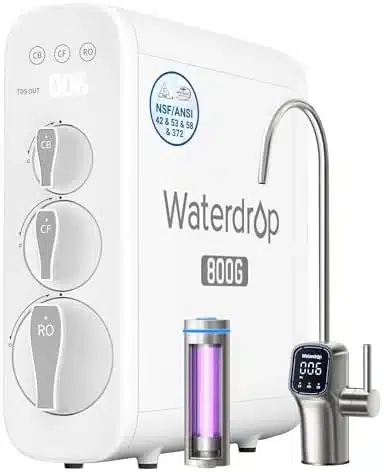
8. Waterdrop G3P800 Reverse Osmosis
Following that, the Waterdrop G3P800 is the best tankless reverse osmosis system in this roundup on the strength of four NSF certifications: NSF/ANSI 42, 53, 58, and 372. That is the broadest certification footprint of any product in this lineup. 800 GPD output, 3:1 pure-to-drain efficiency, smart LED faucet. NSF/ANSI 53 is the line that adds verified lead and PFAS health-effects claims that NSF 58 alone does not cover.
Waterdrop G3P800 Specs
| Installation Type | Under-sink, tankless |
| Filtration Stages | Composite multi-stage architecture plus RO membrane |
| GPD / Flow Rate | 800 GPD |
| Certifications | NSF/ANSI 42, 53, 58, and 372 |
| Membrane Precision | 0.0001 micron |
| Pure-to-Drain Ratio | 3:1 |
| Power Required | Corded electric |
| Filter Replacement Interval | Composite cartridges approximately every 12 months; membrane every 2 years |
Key Features
- NSF/ANSI 42, 53, 58, and 372 four-standard certification is the broadest in this lineup.
- 800 GPD output delivers continuous fast flow with no pressure tank.
- The 3:1 pure-to-drain ratio outperforms traditional 4:1 tank-based systems on water efficiency.
- The smart LED faucet displays real-time TDS readings and filter-change alerts.
- The composite under-sink architecture occupies roughly 70% less cabinet space than tank-based competitors.
NSF/ANSI 53 certification is the critical differentiator between the G3P800 and the G2P600 (rank 4). NSF 53 adds verified lead and PFAS reduction claims beyond the TDS-focused NSF 58 standard. At 800 GPD, tank refill is essentially eliminated; the faucet flows continuously at draw. The smart LED faucet displays real-time TDS readings and a filter-change alert.
Installation is under-sink DIY with the same standard fitting compatibility as the G2P600 and most US tankless RO systems (3/8 and 1/2 inch). The composite cartridge design replaces what used to be 4 to 6 separate housings with two compact cartridges. No storage tank means no 4 to 6 inches of vertical clearance and no TDS creep from stagnant water.
For the best tankless reverse osmosis system at the highest capacity tier in this roundup, the G3P800 is the performance ceiling.
Why We Chose This
Four NSF certifications (42, 53, 58, 372), 800 GPD fast flow, 3:1 water efficiency, and real-time TDS monitoring in a compact tankless under-sink form factor.
Households that previously ran out of filtered water from 75-gallon tank systems find the continuous-flow architecture eliminates that constraint entirely.
Maintenance benefits from Waterdrop's composite filter design (fewer separate housings than traditional systems). The LED purifier indicator tracks filter life and signals before water quality degrades, which removes calendar guesswork. Annual cartridge cost is the primary ongoing expense at this performance tier; there is no proprietary lock-in beyond Waterdrop's own composite ecosystem.
Pros
- NSF/ANSI 42, 53, 58, and 372 - broadest certification set in the lineup
- 800 GPD near-instant faucet flow with no storage tank needed
- 3:1 pure-to-drain water efficiency ratio
- NSF/ANSI 53 covers verified lead and PFAS health-effects claims
- Smart LED faucet with real-time TDS and filter-change alert
- Compact under-sink tankless footprint
- Composite filter design for simplified annual maintenance
Cons
- Fewer filtration stages than the Frizzlife PD1200's 11-stage system
Versus the Frizzlife PD1200 (rank 6), the G3P800 carries fewer filtration stages by design but adds NSF/ANSI 53 health-effects certification that the PD1200 lacks. Both are premium tankless under-sink systems at similar price tiers. The decision turns on whether NSF 53 health-effects coverage or 11-stage filtration breadth is the higher priority for the buyer.
Final Verdict
four NSF certifications and 800 GPD continuous flow make the G3P800 the most comprehensively certified and highest-throughput tankless system in this review, which makes it the certification-first tankless pick.
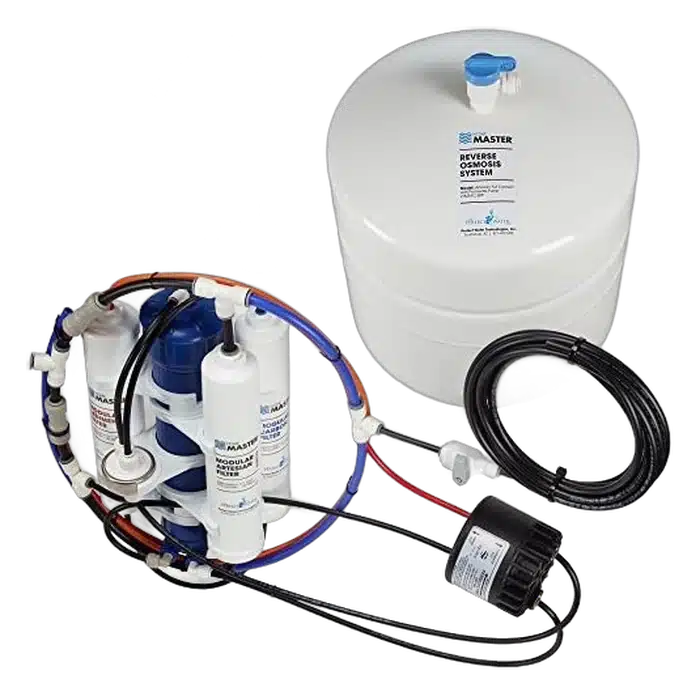
9. Home Master TMAFC-ERP-L Artesian
Closing out, the Home Master TMAFC-ERP-L is the best reverse osmosis system with remineralization in this lineup. It is the only system here with a patented 2-pass remineralization stage, which adds calcium and magnesium back twice during the filtration cycle rather than once. The result is water that mimics natural mineral water more closely than any single-pass alkaline system in this roundup. 7-stage architecture, Dow Filmtec membrane, USA-made, NSF certified.
Home Master TMAFC-ERP-L Specs
| Installation Type | Under-sink, tank-based with permeate pump |
| Filtration Stages | 7 stages with patented 2-pass remineralization |
| GPD / Flow Rate | 75 GPD (4.5-second fill for 8 oz via Fast Flo kit) |
| Certifications | NSF certified components |
| Membrane Precision | 0.0001 micron (Dow Filmtec) |
| Pure-to-Drain Ratio | 1:1 (non-electric permeate pump) |
| Power Required | None (non-electric permeate pump) |
| Filter Replacement Interval | Annual or every 2,000 gallons (tool-free swap) |
Key Features
- The patented 2-pass remineralization stage reintroduces calcium and magnesium twice per fill cycle.
- The Dow Filmtec RO membrane rejects up to 99% of total dissolved solids at 0.0001 micron.
- Catalytic carbon at the pre-filter stage handles chloramine that standard activated carbon cannot.
- The non-electric permeate pump delivers a 1:1 pure-to-drain ratio with up to 80% less waste.
- The Fast Flo kit fills an 8 oz glass in 4.5 seconds and ships with a refrigerator connection kit.
The Dow Filmtec membrane is a benchmark in residential RO. The 7 stages run sediment, GAC, carbon block, the Dow membrane, remineralization pass 1, remineralization pass 2, and a post-carbon polish. Catalytic carbon at the pre-filter stage handles chloramine, which standard activated carbon removes at only 40 to 65%. That is the chemistry standard residential RO struggles with.
Fast-fill performance is the headline. The Fast Flo kit doubles the flow rate compared with both traditional and tankless RO systems by upsizing the fittings and tubing on the post-membrane path. The built-in non-electric permeate pump cuts water waste by up to 80% and delivers a 1:1 pure-to-drain ratio. Home Master backs the unit with a 5-year parts warranty.
The best reverse osmosis system with remineralization should add minerals twice for genuine taste improvement. Single-pass alkaline stages add only a trace amount by comparison.
Why We Chose This
Patented 2-pass remineralization with the Dow Filmtec membrane, catalytic carbon for chloramine removal, a 1:1 pure-to-drain ratio via the non-electric permeate pump, and USA-made NSF certified components.
Owners who previously found RO water bland or flat consistently report the Home Master output tastes noticeably fuller and closer to spring water.
Maintenance is annual or every 2,000 gallons, whichever comes first, and the cartridges are tool-free by design. The modular system allows individual stage upgrades without rebuilding the whole stack. The 5-year parts warranty is the longest in this lineup, and the refrigerator connection kit ships in the box rather than as an aftermarket upsell.
Pros
- Patented 2-pass remineralization adds calcium and magnesium twice per cycle
- Dow Filmtec RO membrane rated for 99% TDS rejection
- Catalytic carbon pre-filter handles chloramine far better than standard carbon
- Built-in permeate pump delivers a 1:1 pure-to-drain ratio
- 4.5-second 8 oz fill rate via the Fast Flo kit
- NSF certified components, USA-made, 5-year parts warranty
- Refrigerator connection kit included in the box
Cons
- Tank-based; needs under-sink storage despite the 1:1 waste ratio
Versus the iSpring RCC7AK (rank 1) with its single-pass AK alkaline stage, the Home Master's 2-pass system reintroduces minerals at a meaningfully higher rate per filtered gallon. The TMAFC-ERP-L costs more, and the mineral addition is the primary justification. If remineralization is not a priority, the iSpring RCC7AK is the better value at lower cost.
Final Verdict
for buyers who want drinking water that tastes like spring water rather than blank-slate RO output, the TMAFC-ERP-L's 2-pass remineralization is the answer. No other product in this lineup reintroduces minerals as thoroughly, which makes it the spring-water specialist.
Buyers stepping up from a pitcher filter should read this guide to understand what RO adds over carbon block in terms of contaminant depth and installation commitment.
How to Choose the Best Reverse Osmosis System
Not all reverse osmosis systems deliver the same filtration depth, water efficiency, or installation footprint, and choosing wrong leaves you refilling tanks all night or running out of clean water by dinner. The six factors below separate systems worth your money from generic competitors that quietly underperform under real household demand. Verify each spec before you buy, not after.
Filtration Stage Count and Membrane Precision
Every residential RO system shares the same core filter: a semi-permeable membrane rated at 0.0001 microns, fine enough to remove dissolved salts, lead, fluoride, arsenic, heavy metals, and the seven PFAS compounds the EPA finalised limits for in April 2024. The membrane does the heavy lifting; everything else exists to extend its life. Stage count signals how much pre-treatment the membrane gets before contact, which directly determines whether it lasts 18 months or three years.
Stage configurations cluster into four tiers worth knowing:
Rule of thumb: the heavier your incoming TDS load (private well water or hard city water above 250 ppm), the more pre-stage protection the membrane needs to stay effective past two years. Systems rated at 75 GPD or higher with a compatible cold water line also serve as the best reverse osmosis system for refrigerator ice makers, connecting via optional ICEK or ice maker kits without requiring a separate inline filter behind the appliance.
| Stage Configuration | What It Adds Beyond the Membrane |
| 5-stage (residential standard) | Sediment, granular activated carbon, and carbon block pre-filtration plus a post-carbon polish for taste |
| 6-stage | Adds an alkaline remineralization stage to reintroduce calcium and magnesium after the membrane strips them |
| 7-stage | Adds remineralization plus a secondary carbon or UV stage for microbial coverage the membrane cannot guarantee alone |
| 11-stage composite | Multi-layer cartridge media targeting PFAS, chloramine, lead, and TDS inside one compressed housing |
NSF/ANSI Certifications (58, 53, 42, 372)
Certification is where serious filter shopping happens. NSF/ANSI is not a single label but a family of four standards that each verify different claims, and most marketing copy quietly conflates them so the reader assumes one badge covers everything. It does not. The certification badge alone tells you nothing without the standard number attached.
The four NSF standards that matter for residential RO break down as follows:
UNVERIFIED: the phrases tested to NSF standards and meets NSF standards are self-claimed marketing language with no third-party audit, and because being tested is not the same as being certified, those phrases carry no enforceable guarantee. The best rated reverse osmosis system in any roundup should display its certification number on the manufacturer's published NSF listing page, not on a sticker glued to the box.
| NSF/ANSI Standard | What It Verifies |
| NSF/ANSI 58 | RO-specific: minimum 75% TDS reduction (most certified systems hit 90 to 98%); covers 7 PFAS compounds at below 20 ppt |
| NSF/ANSI 53 | Health-effects contaminants: lead, cysts, and VOCs; the EPA specifically recommends NSF 53 systems for PFAS reduction |
| NSF/ANSI 42 | Aesthetic effects only: chlorine taste and odor, with no health-effects claim |
| NSF/ANSI 372 | Lead-free materials across all wetted components, including faucet, fittings, and tubing |
Tankless vs. Tank-Based Design
Tank-based systems store 2 to 4 gallons of filtered water in a pressurized accumulator under the sink. They are simpler, proven, and cheaper upfront, but the trade-offs are real: refill time between draws, and TDS creep from water sitting against tank materials for hours or days. Tankless systems eliminate both problems by producing water on demand, but they cost more and need adequate inlet pressure to run.
Match the design to the realistic constraint:
- Choose tank-based if: your kitchen has 24-plus inches of under-sink clearance, your daily draw is under 50 gallons, and your inlet pressure runs 40 to 60 PSI
- Choose tankless if: your under-sink cabinet is shallow, your household consumes more than 50 gallons of filtered water daily, or you cannot tolerate the wait between tank refills
- Tankless wins on hygiene: there is no storage tank for biofilm or TDS to accumulate inside between draws
- Tank-based wins on power independence: most tank systems run on water pressure alone, while tankless systems require a 120V outlet under the sink
Pure-to-Drain Water Efficiency Ratio
Traditional RO systems waste 3 to 4 gallons of feed water for every 1 gallon of purified output. Modern systems with permeate pumps or electric boost pumps cut that to 1:1 or 2:1, which matters more than buyers expect once you watch the meter spin for a year. Worth noting: the search for the best whole house reverse osmosis system is usually misframed, because whole-house RO is impractical at 100-plus GPD throughput; the drain volume alone overwhelms residential plumbing.
What you actually need is a whole-house pre-treatment system paired with a drinking-water RO at the kitchen tap, which is the bundle approach behind the best reverse osmosis system for whole house pick later in this guide.
Efficiency varies more than the GPD spec sheet suggests:
Bottom line: a permeate pump is the single biggest efficiency upgrade available, recovering up to 80% of what would otherwise hit the drain. Look for it specifically in the spec sheet, not in marketing copy.
| System | Pure-to-Drain Ratio |
| Home Master TMAFC-ERP-L (rank 9) | 1:1 with built-in permeate pump |
| Waterdrop G2P600 (rank 4) | 2:1 |
| Waterdrop G3P800 (rank 8) | 3:1 |
| Frizzlife PD1200 (rank 6) | 3:1 |
| Traditional tank-based 5-stage | 1:3 to 1:4 (3 to 4 gallons wasted per gallon produced) |
Flow Rate and GPD Output Capacity
GPD ratings are measured in lab conditions: 77F feed water, 50 PSI inlet, 250 ppm NaCl. Real-world output is typically 50 to 75% of rated GPD because most homes never hit those conditions. Translation: a 75 GPD system actually produces 38 to 56 gallons per day under most kitchen taps.
Inlet pressure below 40 PSI requires a booster pump; systems rated for 40-plus PSI will quietly underperform at low pressure even when nothing is mechanically wrong. Check your home's water pressure before you commit to a model.
Match GPD to household size, not to the highest number on the box:
- 1 to 2-person households: 50 GPD systems like the APEC ROES-50 produce more than enough drinking water in 24 hours
- 2 to 4-person households: 75 GPD is the standard sweet spot, covering daily drinking, cooking, and ice without refill anxiety
- 4-plus person households or continuous demand: 400 to 800 GPD tankless systems eliminate refill wait entirely
- Restaurant or high-demand residential: 1,200 GPD systems handle commercial-style continuous draw without lag
- Renters or no-plumbing scenarios: the best portable reverse osmosis system in this guide is the countertop Aigerri UV at rank 5, which trades capacity for relocation freedom
Annual Filter Replacement Cost
Filter cost is the primary ongoing expense after the initial purchase, and it is also the spec most reviews skip. Sediment and carbon pre-filters replace every 6 to 12 months, the RO membrane itself replaces every 2 to 3 years, and post-carbon or remineralization stages run on annual cycles. None of those intervals are absolute; incoming water TDS and household consumption shift them either direction.
Beware filter lock-in: some manufacturers only accept proprietary cartridges that lock you into a single supply chain at premium pricing. Open-ecosystem brands like APEC and iSpring let you source third-party replacements that drop annual filter cost meaningfully over a five-year ownership window.
Approximate annual filter cost varies by stage count and ecosystem openness:
Context on scale: the best reverse osmosis system with remineralization tends to carry a slightly higher annual filter cost because the alkaline cartridge adds a recurring line item, but the taste improvement is the reason most owners willingly pay the premium.
| Product | Approximate Annual Filter Cost |
| iSpring RCC7AK (rank 1) | Around $70 for the F9K 1-year set (check current price) |
| iSpring RCC7 (rank 2) | Lowest in lineup; 5-stage cartridges replace annually (check current price) |
| APEC ROES-50 (rank 3) | Filter-Max-ES50 set every 6 to 24 months (check current price) |
| Waterdrop and Frizzlife tankless (ranks 4, 6, 8) | Composite cartridges last 12 months at rated capacity (check current price) |
| Home Master TMAFC-ERP-L (rank 9) | Annual or 2,000-gallon swap; modular per-stage upgrades (check current price) |
Buyers who decide against RO and prefer a carbon-block setup should read the best under sink water filter guide for NSF 53-certified direct-connect options built for a single tap.
Under-Sink vs. Countertop Reverse Osmosis Systems: Which One Is Right for You?
The single biggest decision in RO shopping is whether you can or cannot modify your kitchen plumbing. Under-sink systems demand drilling for a dedicated faucet (or use of an existing hole), tap into the cold water supply, and connect to the drain. That is a permanent install adding 15 to 90 minutes of plumbing work. Countertop systems require zero plumbing modification: they sit on the counter, connect to the cold water faucet via a diverter valve, and leave nothing behind when you move out.
The best undersink reverse osmosis system delivers higher capacity and tighter under-counter integration; the best countertop reverse osmosis system delivers portability and rental compatibility. The best portable reverse osmosis system in this roundup is the countertop Aigerri UV at rank 5: the only no-drill, no-plumbing option in the lineup, and it relocates with you when your lease ends.
Side by side, the trade-offs map cleanly across six categories that drive most buyers' decisions:
Use these tiebreakers when the format choice is not obvious:
- You own your home and have under-sink space: under-sink wins on capacity and certification breadth
- You rent or move every 1 to 3 years: countertop is the only option that does not violate a lease or require landlord approval
- Your daily filtered water consumption exceeds 5 gallons: under-sink tankless (Waterdrop G2P600 or Frizzlife PD1200) outpaces countertop throughput
- You have no countertop space to spare: under-sink is the only option that adds zero kitchen footprint
- You want NSF 53 health-effects certification: the deepest certification stacks live in under-sink models, not countertop
| Feature | Under-Sink | Countertop |
| Installation effort | 15 to 90 minutes; drilling, plumbing taps, drain connection | Zero installation; faucet diverter only |
| Daily capacity | 50 to 1,200 GPD depending on model | Lower throughput, suited for 1 to 3-person households |
| Portability | Permanent install; stays with the property | Fully portable; relocates between rentals |
| Counter space used | None; sits inside the cabinet | Compact countertop footprint required |
| Certification depth available | Up to NSF 42, 53, 58, and 372 across premium models | Typically NSF 58 plus optional UV; fewer multi-cert models |
| Best suited for | Homeowners with kitchen plumbing access and confidence | Renters, apartment dwellers, frequent movers, no-drill kitchens |
Tankless vs. Tank-Based Reverse Osmosis: The Space-Saving Trade-Off Explained
Tank-based systems including the iSpring RCC7AK, iSpring RCC7, APEC ROES-50, and Home Master TMAFC-ERP-L store filtered water in a pressurized 2 to 4-gallon accumulator under the sink. The tank adds 6 to 12 inches of vertical clearance to the under-cabinet footprint and refills slowly between draws. Tankless systems including the Waterdrop G2P600, Waterdrop G3P800, and Frizzlife PD1200 generate water on demand: no tank, no refill wait, no TDS creep from water sitting against tank materials for hours.
The best tankless reverse osmosis system argument comes down to space and continuity of supply. For kitchens with under-sink clearance below 24 inches, tankless is often the only viable option. For households that drain a 75-gallon tank-based system before it can refill, tankless eliminates the bottleneck entirely.
The full trade-off across seven dimensions:
Match the architecture to the actual kitchen:
- Cabinet clearance under 24 inches: tankless is usually the only system that fits
- No 120V outlet under the sink: tank-based systems with permeate pumps avoid the electrical requirement entirely
- Daily filtered water need above 5 gallons: tankless 600 to 1,200 GPD eliminates the refill bottleneck
- Concern about tank stagnation: tankless removes the storage stage altogether, sidestepping TDS creep
| Feature | Tank-Based | Tankless |
| Under-sink footprint | Adds 6 to 12 inches of vertical clearance for the tank | 50 to 70% smaller; cabinet space stays usable |
| Refill speed | Tank refills over hours; large draws empty it temporarily | On-demand production; faucet flow stays steady |
| TDS creep risk | Yes; water against tank materials accumulates dissolved solids | No tank means no creep |
| Required GPD | 50 to 75 GPD typical | 400 to 1,200 GPD for instant flow |
| Power requirement | Most run on water pressure alone, no outlet needed | Electric boost pump requires a 120V outlet under the sink |
| Plumbing complexity | Tank line plus drain saddle | No tank line; drain saddle plus power |
| Best suited for | Smaller households, lower budgets, no electrical outlet under the sink | High-demand households, shallow cabinets, no-tank-creep buyers |
Homeowners who need filtered water at every tap rather than a single kitchen point of use should read the best water filtration system for home guide, which covers whole-house options and whole-property treatment.
My Overall Verdict
After reviewing 9 systems across every format and budget tier in 2026, the best reverse osmosis system picks are clear, but the differences in certification depth, filtration stages, water efficiency, and installation format mean no single system fits every household. Match the format to your kitchen first, match the certifications to your contaminant concerns second, and let budget cast the deciding vote only at the end.
- iSpring RCC7AK [Best Overall] - NSF/ANSI 58 full-system certification, an alkaline 6th stage, and a patented top-mount faucet make this the most complete under-sink package at its price point.
- iSpring RCC7 [Best Budget] - The lowest-price NSF-certified under-sink RO in this lineup, riding the same proven iSpring filtration platform as the Best Overall pick without the alkaline stage.
- APEC Water 5-Stage System [Best Rated] - WQA certified with two decades of APEC manufacturing behind a straightforward 5-stage under-sink system that earns consistent top ratings from real-world owners.
If none of those three fits your specific setup, the remaining six products cover every other major need: under-sink tankless (Waterdrop G2P600), countertop with no plumbing (Aigerri UV), high-capacity home (Frizzlife PD1200), whole-house softener bundle (Aquasure), premium tankless with four NSF certifications (Waterdrop G3P800), and remineralization specialist (Home Master TMAFC-ERP-L). Whichever system you shortlist, check the current pricing on the listing before checkout, because the best reverse osmosis system on amazon at any given moment depends on which model has a live coupon or stacked promotion at the time you click.
If remineralization is the deciding factor, the Home Master TMAFC-ERP-L (rank 9) is the only system in this roundup with patented 2-pass mineral addition, reintroducing calcium and magnesium twice per filtration cycle rather than once.
For renters or anyone without plumbing access, the Aigerri UV countertop system (rank 5) is the only no-drill, no-plumbing option in this guide, and it relocates with you between addresses.
Why iSpring RCC7AK Might Be the Best Choice
After evaluating all 9 systems on certification depth, filtration stages, water efficiency, and installation realities, we kept landing on the iSpring RCC7AK as the best overall fit for the largest share of readers. The reason is not subtle: NSF/ANSI 58 full-system certification (beyond individual filter certification), the alkaline 6th stage that reintroduces calcium and magnesium after the membrane strips them, and the patented top-mount faucet that lets the entire installation happen above the counter without contortion. Most buyers in the mid-range under-sink tier do not find a more complete package. Households where full RO exceeds the water quality need can consider a faucet-mount filter as a lower-commitment option for chlorine and lead reduction.
It is not the answer for everyone. Renters need the Aigerri UV countertop (rank 5) because the iSpring requires under-sink plumbing access. Strict-budget buyers find the iSpring RCC7 (rank 2) covers the same filtration platform without the alkaline stage at a meaningfully lower entry price. Households fighting whole-house hard water need the Aquasure bundle (rank 7) because softening lives upstream of any drinking-water filter. For homeowners with under-sink plumbing access who want NSF-certified filtration and remineralized water at a mid-range price, nothing in this lineup beats it.
Here is why the iSpring RCC7AK stands out across the criteria that matter most:
- NSF/ANSI 58 full-system certification: covers the entire unit, beyond individual cartridges or membrane components
- Alkaline AK stage: reintroduces calcium and magnesium so the filtered water tastes closer to spring water than blank-slate RO output
- Transparent first-stage housing: shows sediment buildup at a glance, no disassembly required to know when to swap
- Patented top-mount faucet: the entire faucet install happens from above the counter, eliminating under-cabinet contortion
- Verified contaminant reduction: lead at 98.9%, PFAS at 96 to 99%, fluoride at 97.4%, and 1,000-plus contaminants total
Frequently Asked Questions
How often should you replace reverse osmosis filters?
You should replace reverse osmosis filters on a staged schedule: sediment and carbon pre-filters every 6 to 12 months, the RO membrane every 2 to 3 years, and post-carbon or remineralization stages annually. Actual intervals depend on your incoming water TDS and daily consumption, so trust the manufacturer's filter-life indicator over the calendar.
Does a reverse osmosis system remove healthy minerals from water?
Yes, a reverse osmosis system removes most minerals along with contaminants, stripping 90 to 98% of total dissolved solids including calcium and magnesium. Systems with remineralization stages like the iSpring RCC7AK or Home Master TMAFC-ERP-L add minerals back, and straight RO water is safe to drink either way, just flatter in taste.
Can a reverse osmosis system filter PFAS from drinking water?
Yes, a reverse osmosis system filters PFAS effectively, and NSF/ANSI 58-certified models are among the most effective residential methods, covering the seven PFAS compounds the EPA finalised limits for in April 2024. When weighing the best reverse osmosis system consumer reports recommend, prioritize NSF 58 certification verified at below 20 parts per trillion.
How much water does a reverse osmosis system waste?
A reverse osmosis system wastes 3 to 4 gallons of feed water for every 1 gallon produced under traditional tank-based designs, though modern tankless systems with permeate pumps achieve 1:1 to 3:1 pure-to-drain ratios. Look for the pure-to-drain ratio, because lab-condition GPD numbers do not reveal real-world drain volume.
Can you install a reverse osmosis system yourself without a plumber?
Yes, you can install most under-sink reverse osmosis systems yourself in 2 to 3 hours using push-connect fittings and color-coded tubing with no specialty tools. The best reverse osmosis system for well water and any whole-house bundle may still need a plumber for bypass valve sizing, pressure regulation, or local code compliance.
References:
- EPA National Primary Drinking Water Regulations. U.S. Environmental Protection Agency. https://www.epa.gov/ground-water-and-drinking-water/national-primary-drinking-water-regulations
- EPA PFAS Drinking Water Standards (April 2024). U.S. Environmental Protection Agency. https://www.epa.gov/pfas/key-epa-actions-address-pfas
- NSF/ANSI Standards for Water Treatment Systems. NSF International. https://www.nsf.org/consumer-resources/articles/standards-water-treatment-systems
- Lead and Copper Rule Improvements (2024). U.S. Environmental Protection Agency. https://www.epa.gov/ground-water-and-drinking-water/lead-and-copper-rule-improvements
Medical Disclaimer: This content is for informational purposes only. It is not a substitute for professional medical advice, diagnosis, or treatment. If you have concerns about your water quality or air quality and their effects on your health, consult a qualified healthcare professional.