
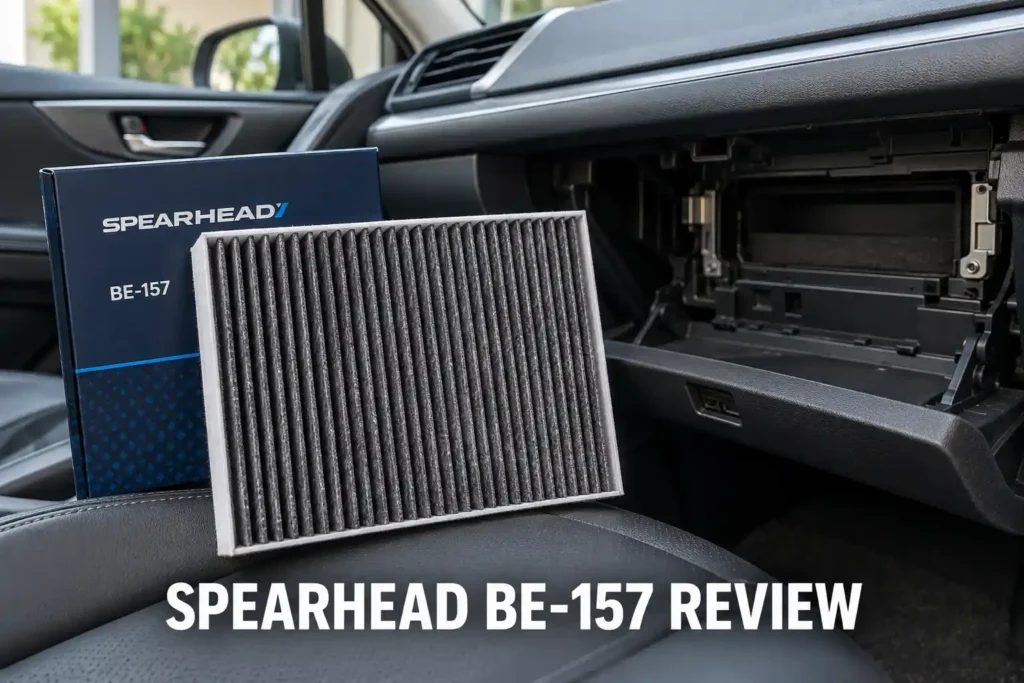
This Spearhead BE-157 review comes down to one number: Spearhead rates the filter at up to 15,000 miles against its own 12,000-mile baseline for a standard filter, and I would treat that top figure as a ceiling, not a target. If you want an activated carbon filter for everyday odor control and your vehicle is on Spearhead’s confirmed fitment list, the BE-157 is a reasonable pick; if allergy relief is the priority, I would point you toward the HEPA sibling instead.

Below, I get into the spec facts behind that mileage claim, where the Spearhead BE-157 sits in Spearhead’s own three-tier lineup, and who should skip it in favor of the Particulate or HEPA sibling. I also cover fitment, since this single part number spans model years 2016 to 2025 across Toyota, Lexus, Subaru and Mazda CX-9, so confirming your vehicle before ordering matters more than usual.
Quick Verdict
Spearhead rates the BE-157 at up to 15,000 miles versus its own 12,000-mile baseline for a standard cabin filter, and the media itself is pleated electrostatic material with an added activated carbon layer for odor control. That figure comes from Spearhead’s own tier chart, not an independent lab, and I would call it an honest not independently certified rather than a mark against the product.
- You get a filter rated to outlast a standard cabin filter by up to 3,000 miles before its next swap.
- You get activated carbon media aimed at cabin odor and fumes as well as dust and pollen.
- You get a toolless DIY install with a manual in the box, as long as you confirm fitment first.
Spearhead BE-157 Review: What This Cabin Filter Actually Is
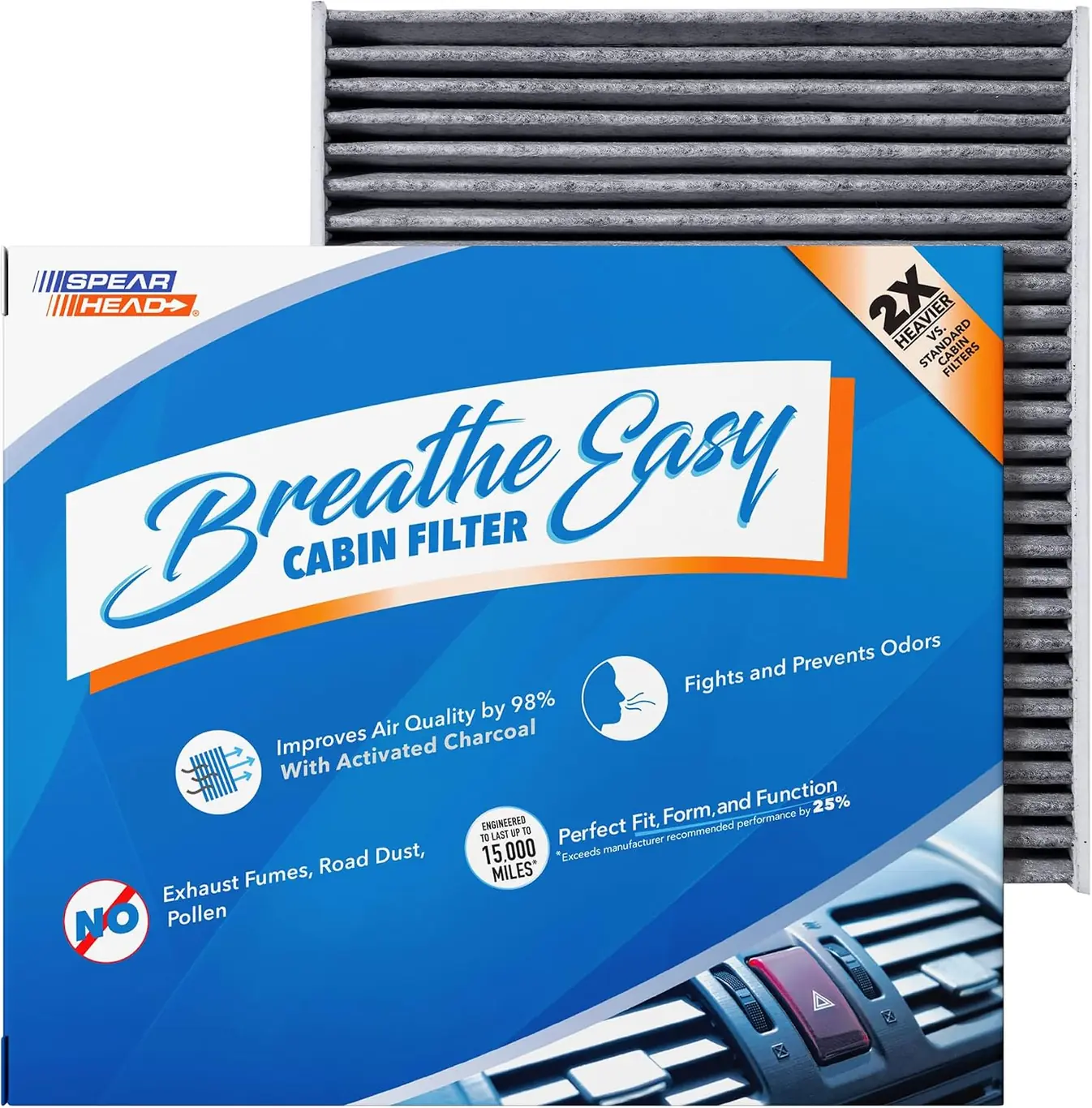
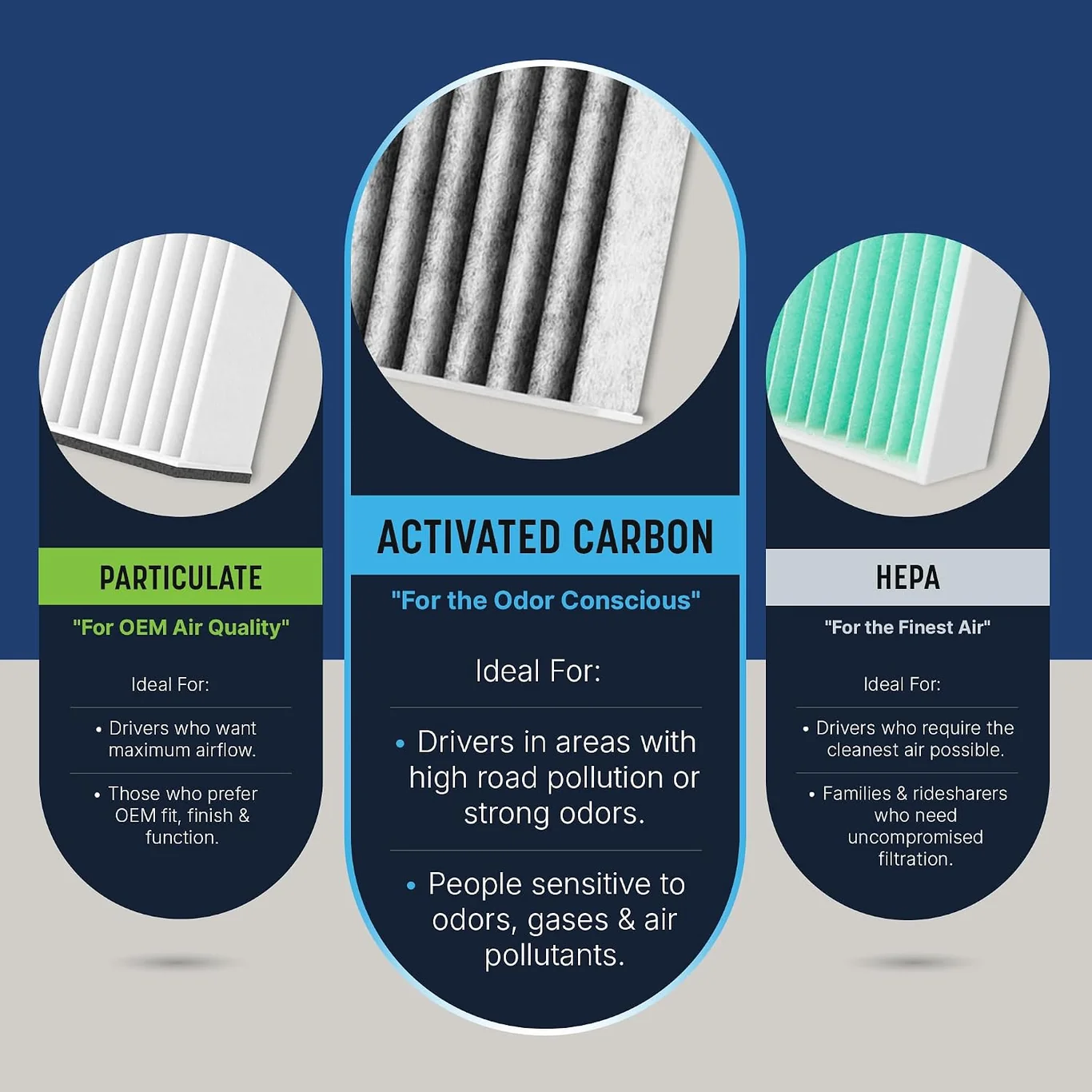
The Spearhead BE-157 is a pleated cabin air filter built from electrostatic media with an added activated carbon layer, sold under Spearhead’s Breathe Easy line. It sits in the middle of a three-filter family that also includes the Particulate-only BE-157P and the HEPA-tier BE-157H, and Spearhead’s own comparison chart recommends this activated carbon version for urban drivers and pet owners who want odor control along with standard filtration.
At 8.5 in by 7.3 in by 1 in thick and 7.04 ounces, it is a straightforward drop-in swap once fitment is confirmed, and the listing currently ranks #2 in Automotive Replacement Passenger Compartment Air Filters on Amazon, which I read as a reflection of how many vehicles this single part number covers rather than a performance claim.
Specifications
| Specification | Detail |
| Rated filter life | up to 15,000 miles |
| Baseline standard filter life | 12,000 miles |
| Filter media | electrostatic media with activated carbon |
| Construction | pleated |
| Item dimensions | 8.5 in L x 7.3 in W x 1 in thick |
| Item weight | 7.04 ounces |
| Amazon category rank | #2 in Automotive Replacement Passenger Compartment Air Filters |
| Filtration efficiency (Activated Carbon tier) | Higher, per Spearhead’s own comparison chart |
Key Features
- Rated filter life up to 15,000 miles, about 3,000 miles beyond Spearhead’s own 12,000-mile baseline for a standard filter.
- Electrostatic pleated media with an added activated carbon layer for cabin odor and fume control.
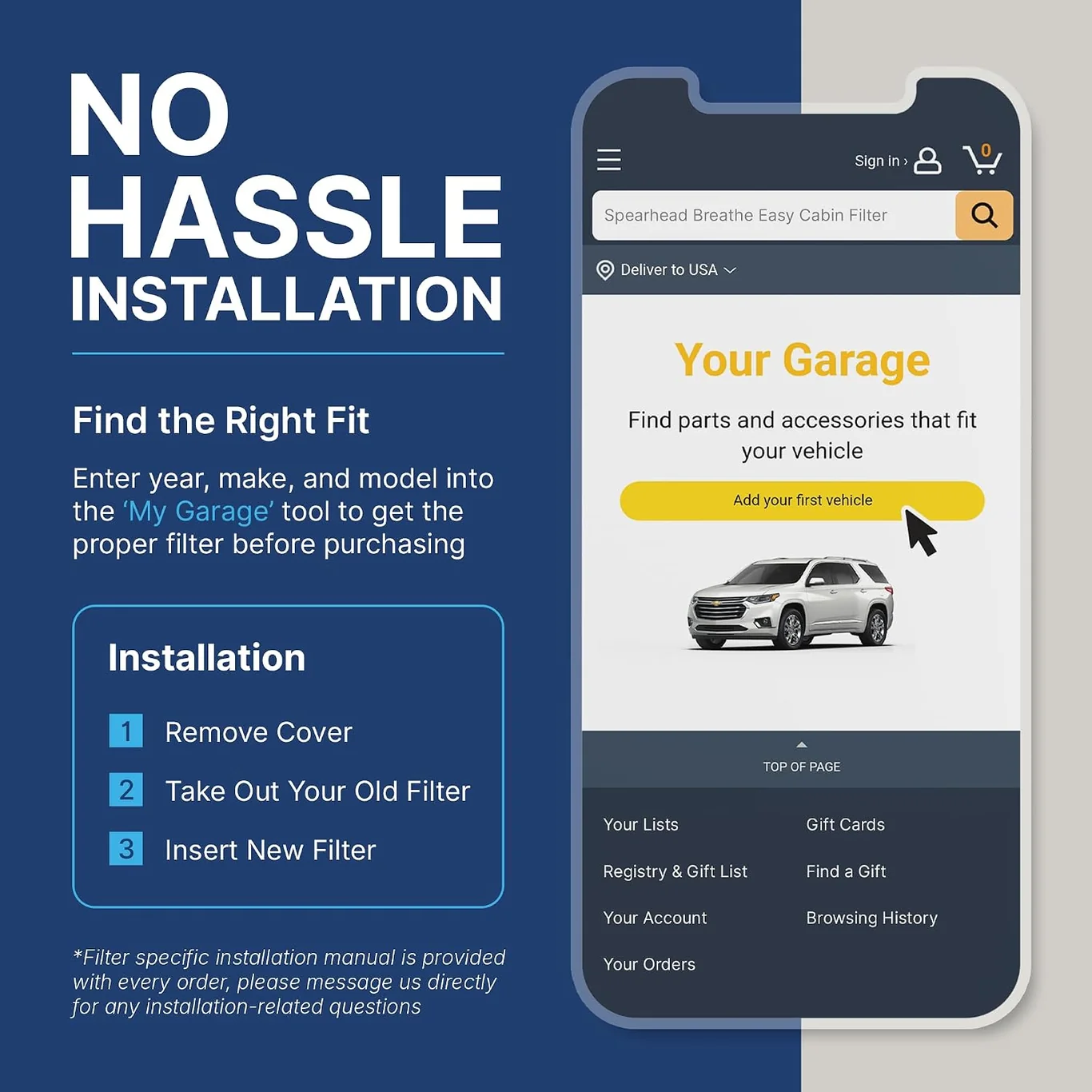
- Toolless DIY install, with an installation manual included in every order.
- Compact 8.5 in by 7.3 in by 1 in cartridge at 7.04 ounces, sized to fit a wide range of Toyota, Lexus and Subaru trims.
- Part of a three-tier Spearhead lineup, so you can size filtration to what your household actually needs instead of over-buying.
What the Spearhead BE-157 Actually Removes
Spearhead builds the BE-157 from electrostatic media layered with activated carbon, in a pleated construction that sits in the Activated Carbon tier of the brand’s own three-way lineup. Spearhead’s own comparison chart rates this tier’s filtration efficiency as Higher and its airflow impact as Great Airflow, recommending it specifically for urban drivers and pet owners. I read that combination as the reason the carbon layer sits at the center of the pitch here: it’s an odor-control filter first, with the electrostatic media doing double duty on particulates.
None of that is backed by outside testing. Spearhead cites no NSF, WQA or equivalent third-party certification anywhere in the BE-157 listing or its own comparison chart, and I think that’s worth stating plainly instead of glossing over: the filtration figures here are the manufacturer’s own tier comparison, not a certified lab result, the kind of result covered under the AHAM Verifide program. I would not assume the sibling BE-157H tier’s up-to-99.97%-at-0.3-micron retailer-listing figure carries over to this Activated Carbon tier, because it doesn’t; each tier in Spearhead’s lineup has its own separate claim. Readers weighing certified options against this one can check the full cabin air filter roundup for the wider category picture.
Living With the Spearhead BE-157
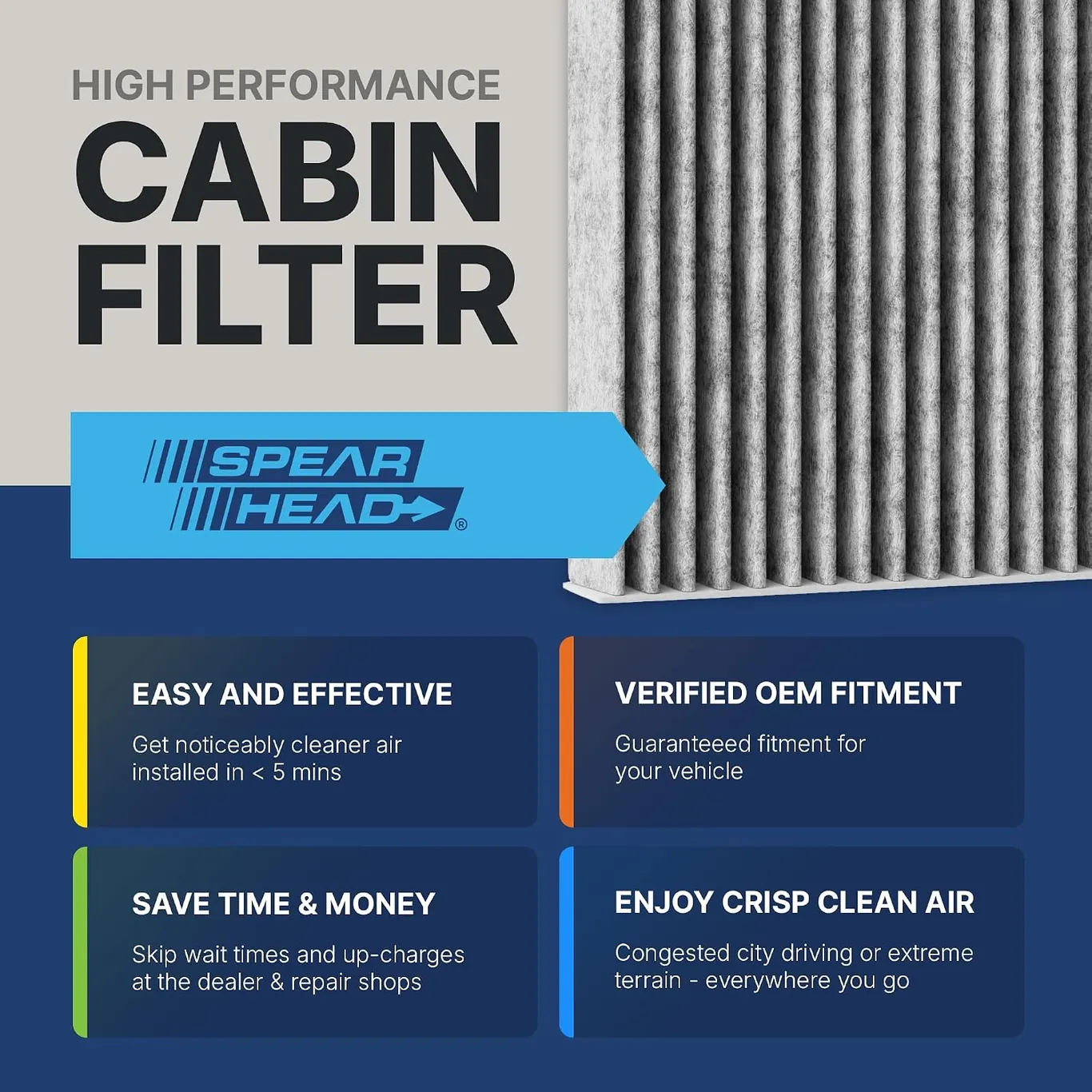
Replacement here is mileage-based, not calendar-based. Spearhead rates the BE-157 at up to 15,000 miles against its own stated 12,000-mile baseline for a standard filter, and I treat that 15,000-mile figure as a ceiling rather than a target: no sourced average-annual-mileage number exists for this filter, so I’m not going to invent a months-per-year estimate the brief doesn’t support. Watch your mileage instead of a date on the calendar, and swap it sooner if you drive dusty rural roads or spend most of your time in stop-and-go traffic.
There’s no noise to report, because there’s nothing powered to make any: this is a passive pleated filter, so the signal to watch for is a drop in HVAC airflow strength or a musty cabin smell as it loads up, not a decibel reading. Installation is DIY with no tools required, and Spearhead ships an installation manual with every order. I’d actually use that manual to double-check fitment, since one BE-157 part number covers a wide span of Toyota, Lexus and Subaru trims and years. On running cost, I can only talk in relative terms: a DIY swap skips shop labor, and Spearhead’s three-tier lineup lets you size ongoing filtration spend to what you actually need instead of over-buying a tier you won’t use. A filter like this only addresses a small slice of the broader outdoor air pollution problem that public health bodies track at a population level, which is useful context even though it doesn’t change your replacement schedule. If you’re also due for other cabin-adjacent maintenance, this is a reasonable point to check your furnace filter replacement schedule at the same time.
Pros
- Combines electrostatic media with an activated carbon layer in one filter
- Rated for up to 15,000 miles versus Spearhead’s own 12,000-mile baseline filter
- DIY installation with no tools required, plus an included installation manual
- Ranks #2 in Amazon’s Automotive Replacement Passenger Compartment Air Filters category
- Part of a three-tier family, so you can size filtration to your actual need
- Compact, lightweight cartridge at 7.04 ounces that stores easily as a spare
Cons
- No third-party certification (NSF, WQA or equivalent) backs any of Spearhead’s filtration claims for this tier
Who Should Skip the Spearhead BE-157
This tier fits the driver Spearhead built it for: someone in a smog-heavy commute or a car that regularly carries pets, who wants a filter doing double duty on odor and standard particulates without paying for a HEPA-rated tier they won’t fully use. I’d put it in exactly that car and not worry about it further.
I would skip this specific tier, though, if the vehicle isn’t on Spearhead’s confirmed fitment list for this part number, since the compatibility span is wide but not universal and a mis-ordered filter simply won’t seat. I would also skip it if fine-particulate or allergen filtration is the actual goal: Spearhead’s own chart rates the HEPA tier higher for microscopic contaminants and recommends it specifically for families, kids and carpooling, which matters if anyone in the car has allergies or asthma and respiratory health is already a concern. That’s the sibling SKU I’d point an allergy-sensitive household toward instead, not this one. Anyone shopping mainly on price within the family should also look at the Particulate tier, which Spearhead itself positions as the best-value pick for standard commuters without paying for a carbon layer they don’t need. For households dealing with pet allergens specifically, it’s worth cross-referencing an air filter for a home with pets alongside whichever cabin filter tier you land on.
| Model | How it differs | Pick it instead if |
| Spearhead BE-157 (Activated Carbon, this review) | Electrostatic pleated media plus an activated carbon layer; Spearhead’s own chart rates it Higher for filtration efficiency and Great Airflow, recommended for urban drivers and pet owners. | You want odor control alongside standard filtration and don’t need HEPA-tier particulate performance |
| Spearhead BE-157P (Particulate) | Same physical filter line without the carbon layer; Spearhead rates it High for filtration efficiency and Max Airflow, positioned as the best-value pick for standard commuters. | Odor control isn’t a priority and the lowest-cost tier in the family matters most |
| Spearhead BE-157H (HEPA) | Same family and part-number prefix; the retailer listing states this tier filters up to 99.97% of particles at 0.3 microns, and Spearhead’s chart recommends it for families, kids and carpooling. | Fine-particulate or allergen filtration is the deciding factor |
| FRAM CF10157 Fresh Breeze | A different brand entirely; FRAM states on its own product page that the CF10157 blocks 98% of road dust and pollen particles. | You specifically want a FRAM-branded part or already run FRAM elsewhere in the vehicle |
Common Problems With the Spearhead BE-157
There’s a real data gap worth naming instead of papering over: the review data behind this listing includes no verified owner-review text to mine for recurring failure patterns on this exact ASIN, so I’m not going to manufacture a claim about rattling fans or early clogging that has nothing sourced behind it. What I can brief instead comes from the listing structure itself, not from invented complaints.
The single highest-risk purchase error here is fitment mismatch, and it’s a structural risk built into the part number rather than a reported defect: this one SKU spans 2016 to 2025 across Toyota, Lexus, Subaru and Mazda CX-9 fitments, and Spearhead repeatedly tells buyers to verify fitment before ordering. I’d treat that repeated warning as a genuine signal, not boilerplate, given how wide the compatibility span is.
The second risk is picking the wrong tier inside Spearhead’s own family. Because the brand sells Particulate, Activated Carbon and HEPA versions under the same BE-157 name, a buyer chasing maximum allergen filtration who orders this Activated Carbon tier by mistake gets odor control instead of the HEPA tier’s higher particulate rating. I see that as a labeling risk the product line creates for itself, not a manufacturing flaw, and it’s sourced directly to Spearhead’s own comparison chart rather than to any complaint pattern. Anyone weighing that risk against general particulate exposure can also read up on how particulate matter in outdoor and in-cabin air is classified.
My Overall Verdict
I’d summarize the Spearhead BE-157 as a competent, mid-family choice rather than a top-spec one: the activated carbon layer earns its place for odor control, and Spearhead’s own Higher filtration-efficiency rating for this tier is a real step up from the Particulate version, just not the step all the way up to the HEPA tier’s particulate claims.
\n
For homeowners also managing indoor air quality at the HVAC level, my best air filter for home covers furnace and whole-house filtration options across MERV ratings.
I’d also flag the 15,000-mile figure as the number to watch rather than trust blindly. It’s Spearhead’s own ceiling against its own 12,000-mile baseline, not an independently certified result, and I would size my replacement schedule to my actual driving conditions rather than the number on the box. Fitment verification matters just as much as filtration tier here, since the part number’s wide compatibility span is exactly where I’d expect buyers to make their first mistake.
\n
For a certified MERV 11 furnace filter that follows a calendar-based swap schedule rather than mileage, my Filtrete 20x25x1 review covers the 3M option with a 90-day change interval.
Final Verdict
I’d recommend the BE-157 to a driver who wants odor control alongside standard filtration and is willing to confirm fitment carefully first, which is the honest conclusion of this Spearhead BE-157 review.
Frequently Asked Questions
What is the Spearhead BE-157 cabin filter?
You’re looking at Spearhead’s Activated Carbon tier cabin filter, built from electrostatic pleated media with a carbon layer for odor control, and rated for up to 15,000 miles against Spearhead’s own 12,000-mile baseline. If you want the fitment specifics, check Spearhead’s listing directly, since no third-party lab has independently certified any of these filtration figures.
Does cabin air filter brand really matter?
Brand matters less than which of the three tiers you actually pick, since Spearhead sells the same filter line in Particulate, Activated Carbon and HEPA versions with real differences in filtration efficiency and airflow. Match the tier to your priority first, then let brand reputation and confirmed fitment decide between similarly rated options.
Which fram cabin air filter for my car?
FRAM sells the CF10157 Fresh Breeze as its cabin filter, and the brand states on its own product page that it blocks 98 percent of road dust and pollen particles. Confirm your vehicle’s exact fitment on FRAM’s listing before ordering, since the right part number still depends on your specific make, model and year.
What brand is the best for cabin filters?
No single brand wins across the board here, since cabin filters mostly differ by tier rather than by badge: activated carbon versions target odor, particulate versions target basic dust and pollen, and HEPA-rated versions target fine allergens. Compare the specific filtration claim and your vehicle’s confirmed fitment before checking brand names.
How do I know if the Spearhead BE-157 fits my car?
Spearhead’s own listing covers a wide span of Toyota, Lexus and Subaru trims and years under this one part number, so you need to check your exact make, model and year against that listing before ordering. Every order also ships with an installation manual, which is a useful cross-check once the filter arrives.
References
- U.S. EPA. Particulate Matter (PM) Basics. epa.gov/pm-pollution/particulate-matter-pm-basics
- CDC. Air Pollution and Respiratory Health. cdc.gov/air-quality/php/health-effects
- World Health Organization. Ambient (Outdoor) Air Pollution. who.int/news-room/fact-sheets/detail/ambient-(outdoor)-air-quality-and-health
- AHAM. AHAM Verifide Air Cleaner Certification Program. aham.org
Medical Disclaimer: This content is for informational purposes only. It is not a substitute for professional medical advice, diagnosis, or treatment. If you have concerns about your water quality or air quality and their effects on your health, consult a qualified healthcare professional.